Government plans to reverse PACCAR signal end to ‘turbulent time’ for litigation funding

The Ministry of Justice has today (17 December) announced plans to regulate the litigation funding sector, bringing an end to more than two years of uncertainty following the 2023 Supreme Court judgment in PACCAR – but uncertainties over the nature of the reforms remain.

The plans will see the government legislate to allow funding agreements that offer returns as a percentage of damages,  amid a raft of other measures that the government says will aim to make funding ‘fair and transparent’ for claimants and help maintain the competitiveness of English and Welsh courts.

The moves will undo the decision in PACCAR, in which the Supreme Court found that third-party litigation funding agreements (LFAs) that allowed funders to recover a percentage of damages were prohibited under the damages-based agreements (DBA) regulations, and therefore unenforceable.

Justice minister Sarah Sackman said in a statement: ‘this government intends to take action to mitigate the impact of the 2023 Supreme Court judgment in PACCAR and implement proportionate regulation of third-party LFAs.’

The government proposal has two limbs. First, ‘to legislate to clarify that LFAs are not damages based agreements, with prospective effect.’ And second, to ‘introduce proportionate regulation of LFAs.’

The PACCAR judgment saw funders race to renegotiate their agreements as multiples-based agreements, in which funders agree returns as multiples of their investment, rather than as a percentage of the eventual damages awarded.

While this process was largely smooth, some have since noted that the experience left the litigation funding market chilled, as well as providing opportunities for ‘bad actors’ to contest their LFAs – as in Bugsby Property’s failed attempt to use PACCAR to invalidate an agreement it held with Therium Litigation Funding.

‘The very fact that this government has now committed, which it had not done before, is very welcome to see,’ said Susan Dunn, co-founder of Harbour Litigation Funding and chair of industry body the Association of Litigation Funders (ALF).

‘I don’t remember a more turbulent time than the last couple of years for funders’

Funders were frustrated after earlier plans to overturn the ruling put together by the previous Conservative government were shelved ahead of the 2024 general election, and not picked up by Labour after.

Earlier this year, the Civil Justice Council (CJC) published its review of litigation funding, which recommended the government take action.

Dunn pointed to the ongoing effects of PACCAR, in particular on activity in the Competition Appeals Tribunal (CAT): ‘The statistics have clearly shown that the number of claims issued in the CAT has fallen off a cliff since PACCAR. There was a clear, evidence-based, negative impact from this ruling. It wasn’t just funders having a moan – the stats speak for themselves.’

Richard Swallow, head of the disputes and investigations group at Slaughter and May, said that the main concern looking ahead is the nature of the proposed regulations.

‘The key issue for businesses will be the proposed safeguards and regulation around the use of funding to avoid speculative litigation that rewards funders (not consumers) and deters investment,’ he told Legal Business.

Addleshaw Goddard disputes partner Richard Wise took a middle position. ‘A reversal of PACCAR would provide welcome certainty and would be a recognition of the important role funding can play as one of the options available to claimants,’ he said.

He continued: ‘It will be interesting to see which of the CJC’s proposals the Government envisages should form part of its intended “new framework.”‘

Still, despite the uncertainties, funders welcome the announcement.

‘I’ve been funding for 23 years, and I don’t remember a more turbulent time than the last couple of years for funders,’ said Dunn. ‘Removing one of the big factors driving that instability is only a good thing.’

[email protected]

Global 100 2025: elite tier set the pace as powerhouse firms pull away

All of the world’s 100 largest law firms saw revenues increase during the last financial year, as a thriving market also helped push average profit per equity partner (PEP) through the $3m milestone for the first time.

The performance marks the first time in three years that the entirety of the Global 100 have boosted revenues, while almost half (46%) posted double-digit growth, up from a quarter (26%) last year.

Combined revenues rose by 12% to hit $177bn, after reaching the $150bn mark last year.

Average revenue growth for the group was 10.5%, with the strongest performers including elite US trio Paul Weiss (32%), Davis Polk (25%) and Simpson Thacher & Bartlett (24%).

Paul Weiss, which now has total turnover of $2.63bn following a sustained period of international expansion, jumped eight spots in the revenue rankings from 27th to 19th. Davis Polk moved up five spots to 21st with turnover of $2.54bn, while Simpson Thacher rose from 18th to 15th with $2.9bn.

The top 10 fastest growers also included the world’s two largest firms, Latham & Watkins (23.1%) and Kirkland & Ellis (22.1%), which between them generated almost $16bn in revenues – more than the next four firms combined.

Latham and Kirkland were also among 15 of the top 25 firms to post double-digit growth for both revenue and PEP, as an elite tier of firms continues to pull away from the pack.

Thirty Global 100 firms now have revenue per lawyer of $1.5m or more, with seven above $2m – Wachtell, Lipton, Rosen & Katz ($4.48m), Sullivan & Cromwell ($2.33m), Ropes & Gray ($2.33m), Kirkland ($2.28m), Cravath ($2.26m), Skadden ($2.06m) and Davis Polk ($2.02m).

Another significant climber this year was A&O Shearman, which recently confirmed post-merger revenues of £2.86bn ($3.65bn) for its first year as a combined firm.

The figures, detailed in the firm’s first LLP accounts, mean it now sits in 5th place, up from last year’s placings of 12th and 75th for Allen & Overy and Shearman & Sterling respectively.

Freshfields also recently published its LLP accounts for 2024-25, revealing that revenue rose by 6% to £2.25bn ($2.87bn) during the year, placing the firm in 17th.

New entries

UK representation among the group was boosted this year by the new entry of Addleshaw Goddard, which was among the firms enjoying double-digit growth, posting a 14% increase to break through the $700m mark.

The firm has eschewed the merger strategies of many of its contemporaries to notch double-digit revenue increases for each of the last five years.

Addleshaws is now the 19th LB100 firm in the Global 100, with the next largest, Taylor Wessing, in line to join the group next year when it merges with Winston & Strawn to form Winston Taylor.

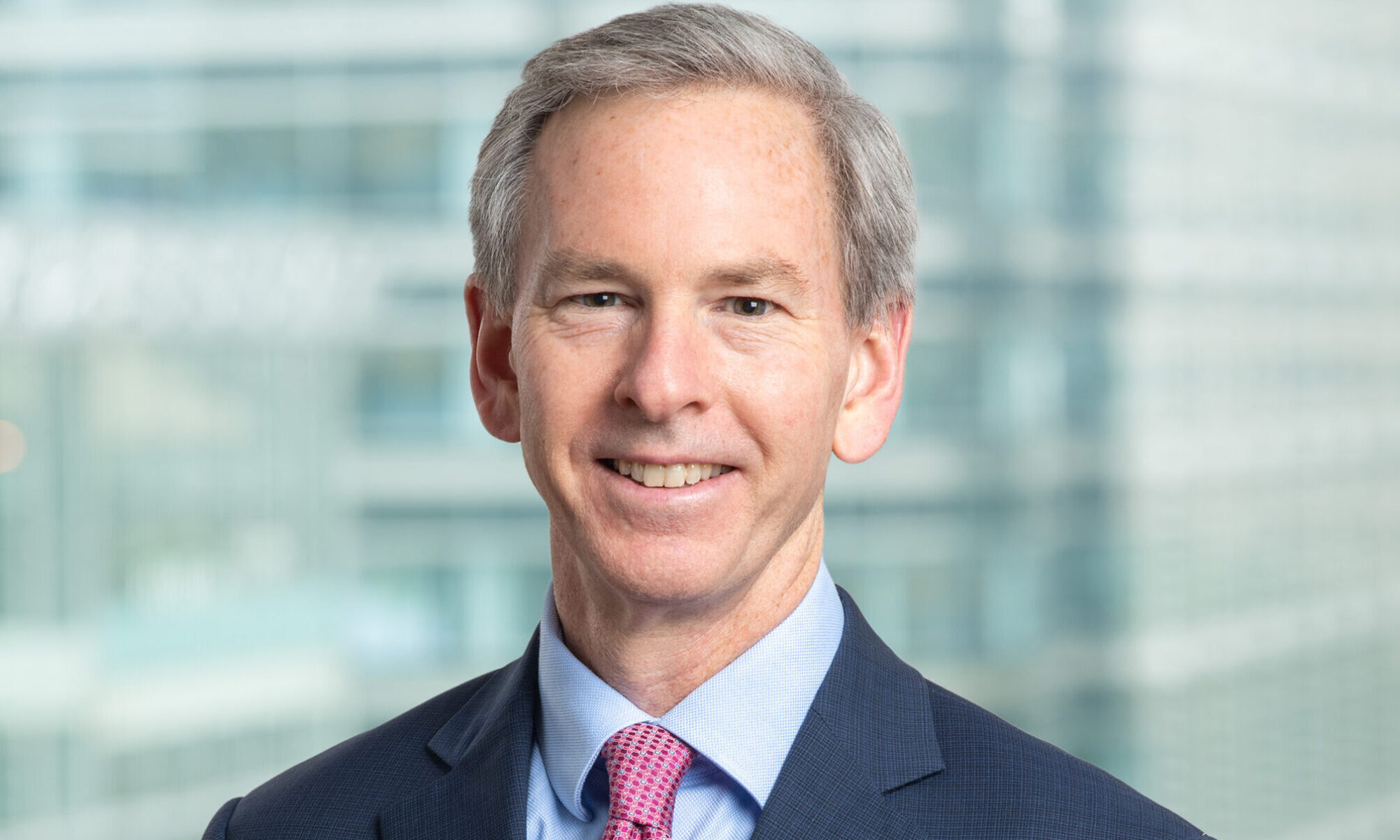
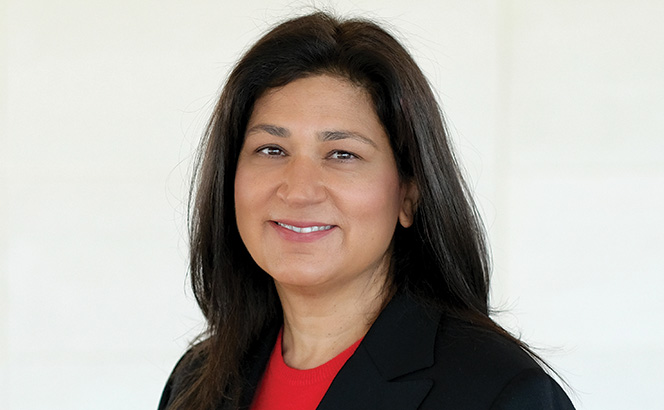
AG managing partner Andrew Johnston (pictured) put the firm’s success down to ‘the combination of a strong focus on domestic markets and clients, coupled with international growth.’

‘Bringing those two things together has been really powerful for us,’ he said. ‘We’ve seen great traction across our European platform, but that’s come off the back of a really strong focus on growth in the UK, staying very close to our clients, and being very consistent, with quality right across the platform.’

There were four other new entrants this year, all which are national US firms – Husch Blackwell, Taft, Jackson Lewis, and Gordon Rees Scully Mansukhani.

PEP and purpose

Average PEP across the Global 100 grew even more sharply than revenue over the past year, rising nearly 13% to $3.18m on the back of last year’s 11% increase to $2.8m.

Eight Global 100 firms now have PEP of more than $7m, led by Kirkland & Ellis ($9.25m), Wachtell Lipton Rosen & Katz ($9.04m) and Quinn Emanuel Urquhart & Sullivan ($8.64m).

Hogan Lovells was one of 37 firms to achieve double-digit growth for both revenue and PEP, with revenue up 10.6% to $2.97bn and PEP up 12.1% to $3.07m.

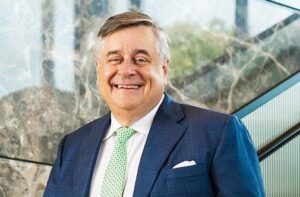
CEO Miguel Zaldivar (pictured) described it as a ‘special year for the firm’, coming 15 years after the transatlantic merger of Hogan & Hartson and Lovells.

‘We are seeing tremendous momentum in the market,’ he said. ‘Our approach has been that if we achieve a good profit margin then the wider economic benefits will follow, without compromising our client base, style of practice or culture. We have accomplished three consecutive years of record growth, and very low attrition.’

[email protected]


Global 100 2025: main table

The Global 100 table provides key financial metrics for the 100 largest law firms in the world by revenue. For more, see Global 100 2025: global elite continue to pull away from the chasing pack.

wdt_ID wdt_created_by wdt_created_at wdt_last_edited_by wdt_last_edited_at 2025 ranking 2024 ranking Firm Total revenue ($m) YOY revenue change % Profit margin RPL PPL PEP % change PEP Lawyers 2025 Total partners 2025 Equity partners 2025
2 andrew.mckenzie1 17/12/2025 12:30 PM andrew.mckenzie1 17/12/2025 12:30 PM 1 1 Kirkland & Ellis 8802 22.1% 60 2,276 1,370 9,253 16.3% 3,868.0 1,676 573
4 andrew.mckenzie1 17/12/2025 12:30 PM andrew.mckenzie1 17/12/2025 12:30 PM 2 2 Latham & Watkins 7000 23.1% 57 1,953 1,116 7,140 29.4% 3,584.2 957 553
6 andrew.mckenzie1 17/12/2025 12:30 PM andrew.mckenzie1 17/12/2025 12:30 PM 3 3 DLA Piper* 4170 10.7% 27 864 237 3,403 9.0% 4,827.0 1,370 336
8 andrew.mckenzie1 17/12/2025 12:30 PM andrew.mckenzie1 17/12/2025 02:26 PM 4 5 Skadden 3669 12.2% 58 2,059 1,195 6,049 12.0% 1,782.2 352 352
10 andrew.mckenzie1 17/12/2025 12:30 PM andrew.mckenzie1 17/12/2025 02:26 PM 5 12 A&O Shearman**1 3650 n/a 38 1,149 442 2,552 n/a 3,178.0 776 776
12 andrew.mckenzie1 17/12/2025 12:30 PM andrew.mckenzie1 17/12/2025 12:30 PM 6 7 Gibson Dunn 3558 15.7% 61 1,615 977 7,175 28.4% 2,203.0 587 300
14 andrew.mckenzie1 17/12/2025 12:30 PM andrew.mckenzie1 17/12/2025 12:30 PM 7 6 Sidley 3440 10.9% 42 1,690 707 5,157 12.3% 2,035.0 662 279
16 andrew.mckenzie1 17/12/2025 12:30 PM andrew.mckenzie1 17/12/2025 12:30 PM 8 8 Ropes & Gray 3416 14.1% 44 2,330 1,015 4,989 10.5% 1,466.0 298 298
18 andrew.mckenzie1 17/12/2025 12:30 PM andrew.mckenzie1 17/12/2025 12:30 PM 9 4 Baker McKenzie 3400 3.4% 38 740 283 2,100 6.0% 4,594.6 1,432 601
20 andrew.mckenzie1 17/12/2025 12:30 PM andrew.mckenzie1 17/12/2025 12:30 PM 10 9 White & Case 3317 12.5% 51 1,238 633 4,007 27.0% 2,679.0 689 349
22 andrew.mckenzie1 17/12/2025 12:30 PM andrew.mckenzie1 17/12/2025 12:30 PM 11 10 Morgan Lewis 3099 6.9% 56 1,527 860 2,118 7.7% 2,029.0 824 824
24 andrew.mckenzie1 17/12/2025 12:30 PM andrew.mckenzie1 17/12/2025 12:30 PM 12 11 Clifford Chance**2 3063 6.3% 39 1,094 430 2,693 5.3% 2,800.0 660 0
26 andrew.mckenzie1 17/12/2025 12:30 PM andrew.mckenzie1 17/12/2025 12:30 PM 13 14 Hogan Lovells* 2967 10.6% 34 1,098 369 3,074 12.1% 2,703.0 812 325
28 andrew.mckenzie1 17/12/2025 12:30 PM andrew.mckenzie1 17/12/2025 02:33 PM 14 17 Linklaters**3 2961 12.5% 47 919 428 2,807 17.9% 3,220.0 565 0
30 andrew.mckenzie1 17/12/2025 12:30 PM andrew.mckenzie1 17/12/2025 02:27 PM 15 18 Simpson Thacher 2896 24.0% 54 1,944 1,050 7,664 19.1% 1,489.8 315 204
32 andrew.mckenzie1 17/12/2025 12:30 PM andrew.mckenzie1 17/12/2025 02:28 PM 16 15 Jones Day 2880 8.0% 49 1,189 583 1,599 2.0% 2,422.1 883 883
34 andrew.mckenzie1 17/12/2025 12:30 PM andrew.mckenzie1 17/12/2025 02:29 PM 17 16 Freshfields 4 2869 7.8% 51 1,025 521 3,061 2.6% 2,800.0 477 477
36 andrew.mckenzie1 17/12/2025 12:30 PM andrew.mckenzie1 17/12/2025 12:30 PM 18 13 Dentons**** 2750 1.1% 30 458 137 906 n/a 6,010.0 2,145 0
38 andrew.mckenzie1 17/12/2025 12:30 PM andrew.mckenzie1 17/12/2025 12:30 PM 19 27 Paul Weiss 2634 31.6% 57 1,967 1,113 7,539 14.7% 1,339.5 217 198
40 andrew.mckenzie1 17/12/2025 12:30 PM andrew.mckenzie1 17/12/2025 12:30 PM 20 19 Greenberg Traurig 2619 13.7% 33 985 329 2,632 9.7% 2,659.0 1,312 332
42 andrew.mckenzie1 17/12/2025 12:30 PM andrew.mckenzie1 17/12/2025 12:30 PM 21 26 Davis Polk 2540 25.1% 55 2,021 1,114 7,800 25.8% 1,257.0 186 186
44 andrew.mckenzie1 17/12/2025 12:30 PM andrew.mckenzie1 17/12/2025 12:30 PM 22 24 Quinn Emanuel Urquhart & Sullivan 2457 18.2% 63 1,988 1,245 8,643 18.9% 1,236.0 294 178
46 andrew.mckenzie1 17/12/2025 12:30 PM andrew.mckenzie1 17/12/2025 12:30 PM 23 21 Goodwin 2449 9.1% 46 1,402 650 3,621 11.7% 1,746.2 609 313
48 andrew.mckenzie1 17/12/2025 12:30 PM andrew.mckenzie1 17/12/2025 12:30 PM 24 20 Norton Rose Fulbright†† 2436 7.8% 35 663 231 1,620 15.7% 3,676.6 1,087 523
50 andrew.mckenzie1 17/12/2025 12:30 PM andrew.mckenzie1 17/12/2025 12:30 PM 25 22 King & Spalding 2373 11.0% 49 1,782 880 5,932 11.3% 1,331.3 522 198
52 andrew.mckenzie1 17/12/2025 12:30 PM andrew.mckenzie1 17/12/2025 12:30 PM 26 23 CMS* 2244 6.0% 32 426 134 931 1.0% 5,268.0 1,318 762
54 andrew.mckenzie1 17/12/2025 12:30 PM andrew.mckenzie1 17/12/2025 12:30 PM 27 33 Paul Hastings 2236 23.2% 51 1,903 970 6,715 24.5% 1,175.0 332 170
56 andrew.mckenzie1 17/12/2025 12:30 PM andrew.mckenzie1 17/12/2025 12:30 PM 28 28 McDermott Will & Emery 2231 16.1% 43 1,670 722 4,578 21.7% 1,335.9 633 211
58 andrew.mckenzie1 17/12/2025 12:30 PM andrew.mckenzie1 17/12/2025 12:30 PM 29 25 Cooley 2152 5.8% 40 1,632 656 3,867 9.4% 1,318.4 384 224
60 andrew.mckenzie1 17/12/2025 12:30 PM andrew.mckenzie1 17/12/2025 12:30 PM 30 30 Sullivan & Cromwell 2051 10.0% 57 2,333 1,327 6,740 7.8% 879.0 178 178
62 andrew.mckenzie1 17/12/2025 12:30 PM andrew.mckenzie1 17/12/2025 12:30 PM 31 31 Holland & Knight 2044 10.5% 32 1,141 371 2,291 4.8% 1,791.4 877 290
64 andrew.mckenzie1 17/12/2025 12:30 PM andrew.mckenzie1 17/12/2025 12:30 PM 32 32 Weil 2025 10.7% 46 1,543 709 5,371 15.6% 1,312.0 285 173
66 andrew.mckenzie1 17/12/2025 12:30 PM andrew.mckenzie1 17/12/2025 12:30 PM 33 29 Mayer Brown 1983 3.8% 32 1,123 362 2,791 14.3% 1,765.8 651 229
68 andrew.mckenzie1 17/12/2025 12:30 PM andrew.mckenzie1 17/12/2025 12:30 PM 34 36 Milbank 1859 22.8% 62 1,913 1,190 6,812 33.2% 971.8 212 170
70 andrew.mckenzie1 17/12/2025 12:30 PM andrew.mckenzie1 17/12/2025 12:30 PM 35 37 Willkie Farr & Gallagher 1775 18.3% 55 1,500 823 4,540 17.5% 1,183.0 355 215
72 andrew.mckenzie1 17/12/2025 12:30 PM andrew.mckenzie1 17/12/2025 12:30 PM 36 35 Covington 1747 12.8% 49 1,383 674 2,671 15.3% 1,263.0 319 319
74 andrew.mckenzie1 17/12/2025 12:30 PM andrew.mckenzie1 17/12/2025 12:30 PM 37 34 Herbert Smith Freehills**5 1733 5.9% 36 636 228 1,822 10.6% 2,726.0 513 341
76 andrew.mckenzie1 17/12/2025 12:30 PM andrew.mckenzie1 17/12/2025 12:30 PM 38 39 Cleary Gottlieb 1700 14.0% 59 1,453 853 5,223 15.8% 1,170.0 191 191
78 andrew.mckenzie1 17/12/2025 12:30 PM andrew.mckenzie1 17/12/2025 12:30 PM 39 40 Eversheds Sutherland 6 1630 10.1% 0 482 0 1,788 18.2% 3,382.0 899 250
80 andrew.mckenzie1 17/12/2025 12:30 PM andrew.mckenzie1 17/12/2025 12:30 PM 40 45 Debevoise & Plimpton 1623 19.7% 50 1,741 863 5,336 32.0% 932.0 151 151
82 andrew.mckenzie1 17/12/2025 12:30 PM andrew.mckenzie1 17/12/2025 12:30 PM 41 38 WilmerHale 1602 6.9% 52 1,614 839 3,271 5.3% 992.7 255 255
84 andrew.mckenzie1 17/12/2025 12:30 PM andrew.mckenzie1 17/12/2025 12:30 PM 42 41 Orrick 1593 8.8% 30 1,513 447 3,632 16.7% 1,053.0 381 130
86 andrew.mckenzie1 17/12/2025 12:30 PM andrew.mckenzie1 17/12/2025 12:30 PM 43 48 Dechert 1511 16.8% 49 1,707 835 4,868 35.7% 884.8 303 152
88 andrew.mckenzie1 17/12/2025 12:30 PM andrew.mckenzie1 17/12/2025 12:30 PM 44 42 Reed Smith 1500 4.9% 33 938 314 1,820 13.8% 1,599.4 627 260
90 andrew.mckenzie1 17/12/2025 12:30 PM andrew.mckenzie1 17/12/2025 12:30 PM 45 44 Akin 1490 8.8% 43 1,616 687 3,885 23.5% 922.3 320 163
92 andrew.mckenzie1 17/12/2025 12:30 PM andrew.mckenzie1 17/12/2025 12:30 PM 46 43 Wilson Sonsini 1432 4.1% 38 1,392 525 3,085 2.8% 1,028.5 283 175
94 andrew.mckenzie1 17/12/2025 12:30 PM andrew.mckenzie1 17/12/2025 12:30 PM 47 47 Yingke 1419 8.5% 7 74 5 538 n/a 19,104.0 4,962 1,938
96 andrew.mckenzie1 17/12/2025 12:30 PM andrew.mckenzie1 17/12/2025 12:30 PM 48 46 Morrison Foerster 1410 5.0% 38 1,340 506 3,052 11.4% 1,052.2 348 174
98 andrew.mckenzie1 17/12/2025 12:30 PM andrew.mckenzie1 17/12/2025 12:30 PM 49 51 Proskauer 1392 13.1% 46 1,805 839 4,460 23.7% 771.0 235 145
100 andrew.mckenzie1 17/12/2025 12:30 PM andrew.mckenzie1 17/12/2025 12:30 PM 50 50 Squire Patton Boggs 1361 9.6% 22 934 204 2,344 15.2% 1,458.0 458 127
102 andrew.mckenzie1 17/12/2025 12:30 PM andrew.mckenzie1 17/12/2025 12:30 PM 51 57 Alston & Bird 1331 15.8% 48 1,424 684 4,086 25.6% 934.9 401 157
104 andrew.mckenzie1 17/12/2025 12:30 PM andrew.mckenzie1 17/12/2025 12:30 PM 52 49 K&L Gates 1328 3.5% 19 767 149 1,511 7.3% 1,732.0 827 171
106 andrew.mckenzie1 17/12/2025 12:30 PM andrew.mckenzie1 17/12/2025 12:30 PM 53 53 Ashurst**†† 1319 9.6% 35 617 219 1,774 6.0% 2,137.0 516 264
108 andrew.mckenzie1 17/12/2025 12:30 PM andrew.mckenzie1 17/12/2025 12:30 PM 54 56 Foley & Lardner 1276 9.2% 26 1,189 306 2,298 10.9% 1,072.9 501 143
110 andrew.mckenzie1 17/12/2025 12:30 PM andrew.mckenzie1 17/12/2025 12:30 PM 55 55 Winston & Strawn 1270 6.7% 32 1,363 440 3,521 9.4% 932.1 346 117
112 andrew.mckenzie1 17/12/2025 12:30 PM andrew.mckenzie1 17/12/2025 12:30 PM 56 52 Perkins Coie 1259 4.0% 25 1,184 292 1,895 15.9% 1,063.6 467 164
114 andrew.mckenzie1 17/12/2025 12:30 PM andrew.mckenzie1 17/12/2025 12:30 PM 57 54 King & Wood Mallesons 1250 4.2% 20 440 88 357 24.0% 2,841.0 701 701
116 andrew.mckenzie1 17/12/2025 12:30 PM andrew.mckenzie1 17/12/2025 12:30 PM 58 61 Slaughter and May** 1244 11.2% 48 1,307 630 5,551 10.8% 952.0 116 108
118 andrew.mckenzie1 17/12/2025 12:30 PM andrew.mckenzie1 17/12/2025 12:30 PM 59 60 Sheppard Mullin 1213 8.2% 35 1,258 435 2,434 4.7% 964.4 411 172
120 andrew.mckenzie1 17/12/2025 12:30 PM andrew.mckenzie1 17/12/2025 12:30 PM 60 62 Cravath, Swaine & Moore 1200 9.1% 51 2,256 1,159 6,850 13.2% 532.0 116 90
122 andrew.mckenzie1 17/12/2025 12:30 PM andrew.mckenzie1 17/12/2025 12:30 PM 61 59 Wachtell, Lipton, Rosen & Katz 1195 5.6% 65 4,476 2,910 9,036 6.2% 267.0 86 86
124 andrew.mckenzie1 17/12/2025 12:30 PM andrew.mckenzie1 17/12/2025 12:30 PM 62 58 Arnold & Porter 1194 4.8% 43 1,244 532 1,636 1.6% 959.4 312 312
126 andrew.mckenzie1 17/12/2025 12:30 PM andrew.mckenzie1 17/12/2025 12:30 PM 63 63 Troutman Pepper 1178 9.9% 40 1,089 440 1,918 18.0% 1,081.4 471 248
128 andrew.mckenzie1 17/12/2025 12:30 PM andrew.mckenzie1 17/12/2025 12:30 PM 64 66 Fried Frank 1136 12.6% 50 1,583 790 5,180 18.9% 718.0 184 109
130 andrew.mckenzie1 17/12/2025 12:30 PM andrew.mckenzie1 17/12/2025 12:30 PM 65 65 McGuireWoods 1114 9.2% 43 1,208 514 2,297 11.8% 921.8 405 206
132 andrew.mckenzie1 17/12/2025 12:30 PM andrew.mckenzie1 17/12/2025 12:30 PM 66 68 Kim & Chang 1100 10.6% 10 775 77 468 8.1% 1,420.0 235 235
134 andrew.mckenzie1 17/12/2025 12:30 PM andrew.mckenzie1 17/12/2025 12:30 PM 67 64 Clyde & Co** 1085 2.5% 21 393 82 989 6.8% 2,760.0 509 229
136 andrew.mckenzie1 17/12/2025 12:30 PM andrew.mckenzie1 17/12/2025 12:30 PM 68 70 O'Melveny 1071 8.4% 46 1,408 649 3,049 10.9% 760.8 227 162
138 andrew.mckenzie1 17/12/2025 12:30 PM andrew.mckenzie1 17/12/2025 12:30 PM 69 69 Faegre Drinker 1062 7.1% 40 1,001 401 1,276 12.7% 1,060.0 500 333
140 andrew.mckenzie1 17/12/2025 12:30 PM andrew.mckenzie1 17/12/2025 12:30 PM 70 71 Baker & Hostetler 1053 8.4% 25 1,059 266 2,229 22.6% 994.1 429 119
142 andrew.mckenzie1 17/12/2025 12:30 PM andrew.mckenzie1 17/12/2025 12:30 PM 71 67 Vinson & Elkins 1050 4.6% 45 1,542 696 4,016 10.1% 681.0 194 118
144 andrew.mckenzie1 17/12/2025 12:30 PM andrew.mckenzie1 17/12/2025 12:30 PM 72 74 Polsinelli 964 12.6% 28 939 264 2,502 31.2% 1,027.0 582 108
146 andrew.mckenzie1 17/12/2025 12:30 PM andrew.mckenzie1 17/12/2025 12:30 PM 73 80 Nelson Mullins 935 18.0% 39 957 377 2,219 32.7% 976.8 545 166
148 andrew.mckenzie1 17/12/2025 12:30 PM andrew.mckenzie1 17/12/2025 12:30 PM 74 73 Seyfarth Shaw 933 6.0% 39 1,043 405 1,655 11.5% 894.3 446 219
150 andrew.mckenzie1 17/12/2025 12:30 PM andrew.mckenzie1 17/12/2025 12:30 PM 75 94 Littler 916 n/a 37 696 255 802 n/a 1,316.0 519 424
152 andrew.mckenzie1 17/12/2025 12:30 PM andrew.mckenzie1 17/12/2025 12:30 PM 76 72 Fragomen 900 1.1% 18 1,049 192 2,457 9.9% 858.0 156 67
154 andrew.mckenzie1 17/12/2025 12:30 PM andrew.mckenzie1 17/12/2025 12:30 PM 77 77 Hunton Andrews Kurth 874 5.1% 31 1,182 361 2,090 22.0% 739.3 292 128
156 andrew.mckenzie1 17/12/2025 12:30 PM andrew.mckenzie1 17/12/2025 12:30 PM 78 78 Pinsent Masons** 868 6.6% 29 429 123 1,017 3.8% 2,024.0 492 201
158 andrew.mckenzie1 17/12/2025 12:30 PM andrew.mckenzie1 17/12/2025 12:30 PM 79 81 Katten 861 10.2% 37 1,287 478 2,667 20.2% 669.0 324 120
160 andrew.mckenzie1 17/12/2025 12:30 PM andrew.mckenzie1 17/12/2025 12:30 PM 80 79 Venable 858 5.7% 32 1,089 343 1,364 1.9% 788.3 410 198
162 andrew.mckenzie1 17/12/2025 12:30 PM andrew.mckenzie1 17/12/2025 12:30 PM 81 76 Bryan Cave Leighton Paisner* 857 2.6% 22 717 157 923 -2.8% 1,194.6 438 182
164 andrew.mckenzie1 17/12/2025 12:30 PM andrew.mckenzie1 17/12/2025 12:30 PM 82 85 Baker Botts 820 11.8% 35 1,302 449 2,889 17.6% 630.2 249 98
166 andrew.mckenzie1 17/12/2025 12:30 PM andrew.mckenzie1 17/12/2025 12:30 PM 83 82 Fenwick & West 793 3.0% 46 1,750 803 3,773 2.1% 453.1 138 97
168 andrew.mckenzie1 17/12/2025 12:30 PM andrew.mckenzie1 17/12/2025 12:30 PM 84 83 Pillsbury 793 4.4% 30 1,218 371 2,415 1.9% 651.0 276 100
170 andrew.mckenzie1 17/12/2025 12:30 PM andrew.mckenzie1 17/12/2025 12:30 PM 85 87 Simmons & Simmons** 785 9.1% 35 621 217 1,439 6.5% 1,264.0 346 191
172 andrew.mckenzie1 17/12/2025 12:30 PM andrew.mckenzie1 17/12/2025 12:30 PM 86 89 Fox Rothschild 773 11.3% 33 828 271 1,109 25.0% 934.0 342 228
174 andrew.mckenzie1 17/12/2025 12:30 PM andrew.mckenzie1 17/12/2025 12:30 PM 87 0 Gordon Rees Scully Mansukhani 760 24.0% 15 570 85 2,035 n/a 1,334.0 661 56
176 andrew.mckenzie1 17/12/2025 12:30 PM andrew.mckenzie1 17/12/2025 12:30 PM 88 86 Lewis Brisbois 760 5.5% 23 484 111 1,230 7.7% 1,569.0 950 142
178 andrew.mckenzie1 17/12/2025 12:30 PM andrew.mckenzie1 17/12/2025 12:30 PM 89 88 Gowling WLG** 752 4.7% 0 515 0 0 n/a 1,460.6 627 385
180 andrew.mckenzie1 17/12/2025 12:30 PM andrew.mckenzie1 17/12/2025 12:30 PM 90 91 Barnes & Thornburg 747 8.1% 45 970 433 1,274 2.7% 770.0 481 261
182 andrew.mckenzie1 17/12/2025 12:30 PM andrew.mckenzie1 17/12/2025 12:30 PM 91 100 Blank Rome 743 18.7% 38 1,127 433 1,686 14.9% 659.1 356 169
184 andrew.mckenzie1 17/12/2025 12:30 PM andrew.mckenzie1 17/12/2025 12:30 PM 92 93 Bird & Bird**† 741 8.5% 20 448 90 916 1.1% 1,655.0 405 162
186 andrew.mckenzie1 17/12/2025 12:30 PM andrew.mckenzie1 17/12/2025 12:30 PM 93 96 Ogletree Deakins 719 10.5% 29 720 212 1,060 13.6% 998.0 428 199
188 andrew.mckenzie1 17/12/2025 12:30 PM andrew.mckenzie1 17/12/2025 12:30 PM 94 90 Blake Cassels & Graydon 717 3.6% 39 1,043 406 1,010 2.4% 688.0 277 277
190 andrew.mckenzie1 17/12/2025 12:30 PM andrew.mckenzie1 17/12/2025 12:30 PM 95 95 Cozen O'Connor 708 8.4% 33 905 295 1,170 2.7% 782.0 407 197
192 andrew.mckenzie1 17/12/2025 12:30 PM andrew.mckenzie1 17/12/2025 12:30 PM 96 0 Husch 708 15.6% 25 754 192 1,006 20.8% 939.0 401 179
194 andrew.mckenzie1 17/12/2025 12:30 PM andrew.mckenzie1 17/12/2025 12:30 PM 97 0 Addleshaw Goddard** 703 14.1% 27 440 118 1,276 4.3% 1,599.0 435 148
196 andrew.mckenzie1 17/12/2025 12:30 PM andrew.mckenzie1 17/12/2025 12:30 PM 98 0 Taft 701 17.2% 42 851 358 1,171 19.0% 824.0 470 252
198 andrew.mckenzie1 17/12/2025 12:30 PM andrew.mckenzie1 17/12/2025 12:30 PM 99 98 Mintz Levin 700 8.5% 40 1,304 523 2,570 22.2% 537.0 265 89
200 andrew.mckenzie1 17/12/2025 12:30 PM andrew.mckenzie1 17/12/2025 12:30 PM 100 0 Jackson Lewis 697 11.7% 37 680 253 851 9.0% 1,024.6 463 304
2025 ranking 2024 ranking Firm Total revenue ($m) YOY revenue change % Profit margin RPL PPL PEP % change PEP Lawyers 2025 Total partners 2025 Equity partners 2025

*Financials reported in pound sterling and converted to US$ with average exchange rate of 1.2787 for 2024 calendar year
**Financials reported in pound sterling and converted to US$ with average exchange rate of 1.2761 for year ending March 2025
***Firm provided no information, £ estimates converted into US$
****Firm did not provide financial information, figures are estimated
† Firm declined to provide equity/non-equity split, equity partner numbers is estimated.
†† Net income and profit margin estimated
1 Firm did not disclose net income, profit before tax used instead. The merger of A&O and Shearman went live on 1 May 2024 so YOY revenue and PEP comparisons have been omitted as a result.
2 Firm did not disclose net income, partnership profit used instead. Lawyer numbers estimated
3 Firm did not disclose net income, pre-tax profit used instead
4 Firm did not provide financials, numbers with the exception of revenue are estimated
5 Figures are for the last full financial year for Herbert Smith Freehills before the 1 June 2025 merger with Kramer Levin to create Herbert Smith Freehills Kramer
6 PEP is for Eversheds Sutherland (International), the firm’s business outside of the US; other figures are for the full global firm.

‘Technology pervades everything’: Addleshaw Goddard on why it has made tech a key sector as it eyes £1bn

‘Technology pervades everything, every client from retail and consumer to financial services,’ Damon Rosamond-Lanzetta, head of Addleshaw Goddard‘s tech sector explains. ‘I’m pleased that we are reinforcing that tech is important.’

While the firm has had a technology focus for some time, AG did not formalise tech as one of its core sectors until last year.

The move is part of the firm’s AG 2030 strategy, with technology – both internal and external – a core component of the ambitious plan to double in revenue to £1bn by 2030.

‘This sector brings together existing lawyers from across the firm to pool our sector knowledge and understanding in one place,’ Rosamond-Lanzetta says. 

‘We’ve been doing lots of work in the tech space,’ Andrew Johnston, the firm’s managing partner tells Legal Business. ‘Historically we haven’t brought that together and told the market the full story about what we do and our capabilities. It’s about bringing clarity and consistency… so our partners can sell it and build relationships.’ 

Rosamond-Lanzetta’s role is ensuring there is fluid cross pollination between various parts of the team. ‘If we’re talking to a retailer, we have a vast amount of sector knowledge whether that’s on economic dynamics or the regulatory side that we can bring in,’ he explains. 

Bringing these lawyers together has created a coherent, almost one-stop-shop, to make it easier for clients to access the most appropriate talent within the firm. ‘Technology pervades and supports all business, so we need to bring that approach to business.’

As well as streamlining and improving experiences, the new sector has allowed Rosamond-Lanzetta to spot new synergies within the firm: ‘We have Equinix as a client in France, a huge provider of data centres. We’ve done data centre deals in Germany, and we have our energy team looking at energy supply. These teams hadn’t always connected that much, so the role gives me the ability to bring them all together.’ 

‘Clients generally would like the answer to be yes or no, even if there is 40 pages of legal advice behind it’

Technical solutions themselves are becoming more bespoke, Rosamond-Lanzetta said. The days of single, monolithic tech systems which solve all the clients’ problems are gone. Instead, clients are looking for a ‘multiplicity of solutions that allows organisations to identify individual processes that work efficiently and add them into a broader solution,’ Rosamond-Lanzetta explains.

The method of delivering legal advice has also been changing with the adoption of new technologies. Just as Rosamond-Lanzetta is always in dialogue to see what other sector heads are doing in the technology space, he is also engaging with Kerry Westland, the head of the firm’s innovation group, to develop novel ways of presenting legal advice.

‘Clients generally would like the answer to be yes or no, even if there is 40 pages of legal advice behind it,’ Rosamond-Lanzetta says. Whether this is through dashboards, maps or traffic light pieces, the focus is on presenting the outcome and not the workings that led there. ‘In the tech space we recognise it is not about the technology itself but rather what it allows you to do. Whether the client wants improved customer engagement or a more efficient supply chain, what you’re selling is that outcome.’

Rosamond-Lanzetta asks his team to engage with Westlake’s innovation group right from the inception of a matter. ‘There is a real integrated and symbiotic relationship that feeds into how we differentiate ourselves and sell our expertise,’ he says.

This summer AG had an opportunity to support Haylo Labs on acquiring Plessey Semiconductors, one of the UK’s leading innovators of microLED technology. ‘James Dawson, one of our corporate partners, came to me and asked if this was something we were able to do,’ Rosamond-Lanzetta recalls. ‘I was able to say, “Yes, we know that business and we’ve got great expertise.” It is great when someone has an opportunity and we can bring these people together and deliver for the client.’

Naturally, Rosamond-Lanzetta is always horizon scanning for the next thing. He has one partner who is assuring him quantum computing is where the focus needs to be. Though the Financial Conduct Authority recently provided advice on preparing for quantum computing, it’s still unclear if it is five years away, or 20 years away.

‘It’s probably not my priority for 2026,’ he says, citing more pressing areas like agentic AI. ‘But having the sector gives us that community to share knowledge which improves our ability to deliver for clients.’

[email protected]

Sullivan & Cromwell swipes Kirkland PE and tax duo

Sullivan & Cromwell has hired two partners from Kirkland & Ellis into its London office, the firm announced today (16 December), in the next step of the City buildout it began earlier this year.

The US firm has brought over private equity partner Aprajita Dhundia and tax partner Ian Ferreira, with the duo set to start in the new year.

The move marks the latest step in what has been a notable shift away from S&C’s traditionally unhurried lateral hiring strategy towards a more aggressive buildout, first signalled in September when the firm announced its hire of former Weil City head Mike Francies and restructuring partner Kon Asimacopoulos, who also joined from Kirkland.

Dhundia had been at Kirkland for just under 12 years, making partner in 2015, and has built a broad practice advising private equity sponsors and their portfolio companies on corporate transactions, including leveraged acquisitions, disposals, consortium and joint venture arrangements, and hybrid capital solutions.

She will join the firm’s private equity and M&A practices, coming into a team that has acted for financial sponsors such as Advent, Apex, Goldman Sachs Asset Management and Silver Lake.

Also making the move is Ian Ferreira, who joins S&C’s tax group after a decade as a partner at Kirkland. Prior to that, he spent four years at Weil as an associate in the fund formation group, and earlier trained and qualified at Clifford Chance.

Ferreira brings experience advising on tax matters across the asset management industry, including M&A and restructuring, fundraising, GP liquidity solutions, and management company structuring.

The dual hire underscores S&C’s determination to deepen its private capital capabilities in London at a time when competition among US firms for elite City talent and high-value transactional work remains intense.

While London is the firm’s second-largest office globally, it lags New York in terms of scale. As of September, the City office comprised 18 partners and 90 lawyers, compared with 650 lawyers in New York, including 114 partners.

Speaking to LB in September, S&C co-chair Scott Miller emphasised the need for scale, and cited a 50% increase in headcount as a growth objective for the office.

Commenting on the latest arrivals, co-managing partners Kon Asimacopoulos and John Horsfield-Bradbury said: ‘As we continue to execute on our growth plan in London, we remain focused on attracting only the very best lawyers who will add value to our clients as key parts of our integrated global team.’

They added: ‘Both Aprajita and Ian are standout practitioners whose arrival will further strengthen our position in the European market and put us in an even stronger position to support clients in their most complex, mission critical matters.’

[email protected]

The banking crisis, Brexit and why he prefers in-house: HSBC’s GC on a career of once-in-a-lifetime experiences

Few GCs have steered their legal teams through as many crises as Bob Hoyt.

Now chief legal officer at HSBC Holdings in London, Hoyt – a veteran of some of the world’s biggest banks and government bodies – has been at the heart of some of the toughest moments for global finance on both sides of the Atlantic, from the financial crisis, to Libor, to Brexit.

When he was GC at the US Treasury Department, Hoyt says he regularly ‘worked 24 hours a day and often slept on the couch’. Given he took up the role in December 2006 shortly before the height of the financial crisis, he isn’t exaggerating.

Taking up the post after an 18-month stint at the White House, Hoyt and his team found themselves leading the legal response to the financial meltdown. They were central to the department’s response to the crisis, working on emergency measures to stabilise the economy and the legislation for the federal rescue of Fannie Mae and Freddie Mac.

Unsurprisingly, this experience remains his proudest professional moment. ‘Treasury was at the centre of it all,’ Hoyt recalls. ‘It wasn’t the sort of excitement you look forward to, but it was fascinating. I hope it was once in a lifetime – you wouldn’t want to repeat it.’

One standout aspect of the experience for Hoyt – who was a partner at WilmerHale before joining the White House – was seeing the legal community come together to try to save the country’s financial institutions.

‘There were so many learnings. The Treasury and IRS legal team had about 2,200 lawyers and we did quite a bit of the work. But then we also had many law firms working on the more operational components – like the takeover of Fannie Mae and Freddie Mac. They stepped up and essentially did the work pro bono, to help out in a dire situation. They contributed massive hours, knowledge and experience and got paid virtually nothing for it. It was a great showing of goodwill by the legal community to help the US and global economy.’

‘It wasn’t the sort of excitement you look forward to, but it was fascinating. I hope it was once in a lifetime– you wouldn’t want to repeat it.’

For Hoyt, who had always been set on a career in law, this governmental experience at the White House and Treasury paved the way for the long career he’s enjoyed in-house since.

‘I realised I preferred the in-house dynamic to the law firm dynamic. The broad generalist view really appeals to me.’

Part of this preference is driven by being part of a single team working together to help a single company.

‘There’s one team working on all of the institution’s challenges, whatever they might be. But, when you’re at a law firm, at any given time you have a dozen different clients, all with their own problems so you find yourself stretched in many different directions. Even when you’re very busy in-house you know what the priorities are so you can balance and align everything towards one set of objectives.’

From the Treasury, Hoyt moved to Pittsburgh-based financial services company PNC in 2009, initially as chief regulatory affairs officer, before working up to GC by the time he left in 2013.

‘That was where I really learned about banking. I did not know much about banking before that job as I wasn’t a banking lawyer. I went in there knowing next to nothing about the industry so it was a tremendous learning experience for me.’

The experience paved the way for his move across the Atlantic to join Barclays in 2013.

‘If you look back at the big global banks at the time, pretty much all of them had, as general counsel, Americans who had spent some time in government. It was very common because, in that era, the biggest legal challenges facing these institutions tended to arise from their business in the US, and Barclays was in that position as well.’

‘I thought it was an exciting opportunity. Barclays had a lot of challenges and my background made me a good candidate for helping them with that.’

‘I realised I preferred the in-house dynamic to the law firm dynamic. The broad generalist view really appeals to me.’

Hoyt arrived shortly after the bank’s involvement in the Libor scandal, which saw Barclays fined £290m in 2012 for rate manipulation between 2005 and 2009.

‘There were many other industry-wide issues that Barclays also needed to resolve and put behind them. I would say I spent the better part of my tenure helping them deal with those.’

‘There was a big program of remediation and cultural change underway when I joined. The bank was very open about taking responsibility and putting these legacy issues behind them as best they could. If you look around at other financial institutions, almost every one I can think of has gone through a period like that. Nobody likes it because it distracts you from your business, your strategy and your core mission to serve customers.’

In addition to holding the top legal position at one of the UK’s largest banks, during his tenure at Barclays, Hoyt also chaired the Brexit Task Force for UK Finance and was on the board for the British Bankers Association.

He describes the task of separating the UK from the EU as like ‘untangling a bowl of spaghetti’.

‘It involved helping the government and regulators understand what the consequences of the separation were and how to avoid the undesirable ones,’ he says. ‘I thought of it as a great public-private partnership. It was something nobody had done before; a big task that was in everyone’s interests to go smoothly.’

Hoyt’s role was focused entirely on the practical aspects of the separation rather than the politics, a position aided by his comparatively recent arrival in the UK before the vote.

‘I hadn’t been in the UK all that long before the Brexit vote happened, so I don’t think I really had enough perspective to have a view of whether it was a good thing or a bad thing.’

‘There are certainly advantages and disadvantages for the financial sector but how successful it is is a story that is still to be written. Even very big, longstanding policies can change. That’s the nature of democracies and how they work. It’s always disruptive when there’s a big change. But life moves on.’

As do careers and, after seven years at Barclays, Hoyt made the switch to HSBC as chief legal officer in the middle of Covid in 2021.

Despite his long financial services career, the move represented a new chapter and new challenges for Hoyt. He was attracted to the geographic reach of HSBC – and, in particular, its significant Asia-Pacific presence.

‘The highlight has been the geographic spread of the organisation. It’s not just the number of countries we are in but our unique scale and depth in those countries. It’s very fresh and exciting,’ he says.

‘I’ve been incredibly fortunate, and I’ve enjoyed and am proud of what I’ve accomplished at every place I’ve been at’

Having led through some highly pressured situations Hoyt is clear that it takes a team to do the GC role effectively, rather than individual heroics. ‘You’re not in it alone. That’s one of my big beliefs. I rely hugely on the talented people on my team and they need to be able to rely on me and on one another.’

‘If you do the job with integrity, and you do it with a great team, taking advantage of all the resources that you have, that’s the most anyone can ask of you. You don’t win every case, you don’t succeed in everything you do but, if you approach your job from that perspective, you won’t stress about it because you’ll know you did the best you could with the resources available to you at the time.’

That said, Hoyt is the first to admit his job would not be for everyone.

‘I’d recommend my job to anybody who would enjoy it, but it wouldn’t be right for everybody. I remind my colleagues that you better really love doing this, because you’ll work very hard, you’ll sacrifice a lot of your work-life balance, and there is stress. If you really love the job, you won’t mind that stuff but, if you don’t love what you’re doing, it can burn you out.’

Certainly, even after decades in high profile GC roles, Hoyt remains energised by the work. ‘I’ve been incredibly fortunate, and I’ve enjoyed and am proud of what I’ve accomplished at every place I’ve been at.’

Career Timeline

1990-2005: Associate and partner, WilmerHale

2005-06: Special assistant and associate counsel to the president, The White House

2006-09: General counsel, US Department of the Treasury

2009-12: Deputy general counsel & chief regulatory affairs officer, PNC

2012-13: General counsel & chief regulator affairs officer, PNC

2013-2020: Group GC, Barclays

2020-21: Vice chair, Barclays

2021-present: Chief legal officer, HSBC

HSBC Holdings plc – key facts

HSBC Holdings plc, the parent company of HSBC, is headquartered in London. With assets of $3.234trn at 30 September 2025, HSBC is one of the world’s largest banking and financial services organisations, serving customers from offices in 57 countries worldwide.

Employees worldwide: 211,304

Freshfields accounts reveal 6% revenue rise for 2024-25 as US sees fastest growth

Freshfields saw revenue grow by 6% to £2.25bn during the 2024-25 financial year, the firm’s newly filed limited liability partnership accounts have revealed.

This is the second year that the firm has not announced financial results in line with other UK peers in the summer, instead opting to hold back confirmation until its LLP filing with Companies House.

The accounts show that profit available for division amongst members dipped by 2.5% from £664.9m to £648.3m, although operating profit climbed by 3.2% to £664m. The firm does not formally announce profit per equity partner (PEP).

Net cash rose from £36.1m to £87.4m, an increase of £142%. The accounts state that the firm now has no bank loans, down from £50m last year, while committed bank facilities are up from £150m to £200m.

The US was the firm’s fastest-growing region, with revenue up 21% from £391.1m to £473.3m. Asia saw turnover increase by 5% to £133.5m, with more modest growth in Middle East and North Africa (3.5%) and Europe (2.3%).

The US now accounts for 21% of all revenues, with Europe contributing 71%.

Total salary costs rose 11% from £954.5m to £1.058bn over the year, with the average number of fee earners rising from 3,703 to 3,901. The average number of members remained steady at 296, marginally up from 294 last year.

Profit and remuneration to key management personnel – the senior partner, managing partner and heads of global practice groups – was £25.8m, down 1.5% on the previous year.

The revenue growth of 6% is slightly behind the figures announced by the firm’s peers earlier this summer. Linklaters posted 11% revenue growth to reach £2.32bn, while Clifford Chance saw revenue rise by 9% to £2.4bn.

A&O Shearman also filed its first set of accounts as a merged firm earlier this month, with revenue at the combined firm up by 33% over the year to £2.86bn, up from legacy Allen & Overy’s £2.15bn.

[email protected]

Revolving Doors: Latham swipes German transactions team from Freshfields as Ropes rebuilds in private equity

Frankfurt

Latham & Watkins has significantly bolstered its German PE and M&A practices with the hire of a total of four partners from Freshfields, including the firm’s global co-head of M&A.

Private equity specialists Markus Paul and recently promoted PE and M&A partner Carsten Haak will join Latham in Frankfurt, while Freshfields global co-head of M&A Wessel Heukamp and M&A and PE expert Verena Nosch are joining in Munich.

Latham already boasts a strong practice in both PE and M&A, with Legal 500 rankings in Tier 1 and Tier 2 for PE transactions: large deals (€500m+) and M&A: large deals, respectively.

Latham’s corporate department global chair, Charles Ruck commented: ‘Private equity has long been a core pillar of our global strategy and the arrival of this fantastic team of dealmakers further strengthens our practice in every major market globally.’

Burc Hesse, managing partner of Latham’s German offices, added: ‘Their arrival is a testament to the exceptional growth we have achieved in recent years and our preeminent position in the market. The team not only strengthens our practice in Germany but also reinforces our commitment to delivering outstanding results for our clients, both in Europe and worldwide.’

In London, Ropes & Gray has hired EQT’s group general counsel of M&A and investments, Paul Dali, into its private capital transactions practice, set to start at the firm in 2026.

Before his stint in-house Dali worked as an associate at Swedish commercial firm Advokatfirman Vinge KB, and before that Linklaters.

A spokesperson for the firm said: ‘Paul joins us from our client EQT, where he led significant asset management M&A as Group General Counsel of M&A and Investments.’

At the start of November, Ropes lost private equity duo Dan Oates and Angela Becker to Akin, which came off the back of further private equity departures earlier in the year.

Helen Croke moved to White & Case in June, while PE real estate partners David Seymour and Will Bryant departed the group in July for Freshfields.

In addition to Dali’s hire, Gretchen Greene has joined the firm as the first ever chief of artificial intelligence strategy. Greene joins the firm from Meta, where she has spent the last three years as AI policy senior manager. She joins the firms San Francisco offices.

Ropes chair Julie Jones commented: ‘The AI revolution demands bold leadership and innovative thinking, Ropes & Gray has been leading the legal industry, and Gretchen will help us catalyze our early action to deliver differentiated value to our clients.’

In London, Eversheds Sutherland has continued to expand its corporate department with the hire of Simon Arlington from Morrison Foerster. Foerster spent nearly eight years at MoFo, and specialises in tech M&A and PE transactions.

In the last two months, Eversheds has made a number of key hires in London. Last month, Laura Marcelli and Matt Davies joined the firm’s transactional risk insurance group from DLA Piper, and in September finance partner Martin Corrigan and corporate partner Kashif Siddiqui joined, from Latham and Pepco Group respectively.

Baker McKenzie has bolstered its real estate finance team with the addition of Luke Harber as a partner. Harber has spent the last seven and a half years in-house at Citi, first as vice president and then as a director. Before his stint at Citi, Harber was a senior associate at legacy Allen & Overy.

Trowers & Hamlins has hired Georgie Messent from Squire Patton Boggs to its environmental and regulatory practice in London.

Messent spent just over a year at Squires’ as head of environment and advises on all aspects of environmental regulatory and compliance issues, transactions and litigation. Before this Messent was at PwC handling environmental and sustainability legal advice.

Elsewhere in the UK, Brodies has launched in Leeds with the hire of construction expert Bill Barton and an eight-lawyer team.

Barton joins from his own construction boutique Barton Legal. He is ranked as a leading partner in the Legal 500 construction ranking in Yorkshire, and handles both contentious and non-contentious matters within construction.

Squire Patton Boggs has hired Deborah Brown to its restructuring and insolvency group in Birmingham from Keystone Law.

Brown has been with DLA Piper since 2007, where she began as a trainee solicitor and rose to the rank of legal director in 2020, while also leading the restructuring and insolvency team in the Midlands. She will join Squire Patton Boggs as a partner and is particularly well-versed in non-contentious corporate recovery, restructuring and turnaround.

Last up in the UK is Ward Hadaway, which has hired Weightmans private wealth team lead Louise Miller as a partner in Newcastle. Miller brings experience across estate planning, wills, trusts and probate, and joins the firm’s private client team.

Finally, in Europe, Herbert Smith Freehills Kramer has announced that Esteban de Santos Smith will join the group’s Spanish corporate practice in January 2026.

De Santos Smith has spent the last eight years at Linklaters, recently as a managing associate. He will join the firm’s Madrid office as a partner.

[email protected]

‘A merger of complementaries’ or ‘transatlantic panic’? – the market view on Winston Taylor

‘The Ashurst tie-up seems to have kicked people into action – there’s quite a panic about transatlantic mergers.’

Whether panic or pure coincidence, the news that Taylor Wessing and Winston & Strawn are in talks to combine in May next year under the banner Winston Tayor, is the latest evidence that the market for transatlantic mergers is busier than ever. The talks, confirmed by both firms on Friday (12 December), came just weeks after the announcement of Ashurst’s deal with Perkins Coie.

The proposed combination of Taylor Wessing’s UK arm with the Chicago-headquartered Winston & Strawn, which has 10 offices across the US, would create a firm with total revenues of around £1.23bn ($1.65bn) and more than 1,400 lawyers.

If the deal goes ahead and partners agree to the union, the merger will see Taylor Wessing’s UK-led business (which has operations in the UK, Ireland, Dubai and lawyers in San Francisco) leave the existing Taylor Wessing verein to join forces with Winston & Strawn to create Winston Taylor.

The Netherlands and Belgium will also leave the Taylor Wessing verein but are expected to enter into an agreement to operate under the Winston Taylor brand. The German and French arms are expected to break away and operate independently.

Steve D’Amore, chair of Winston, who will continue as chair of the combined firm, said: ‘Once combined, we will have a London-headquartered partner that fulfills our long-held ambition to grow in the UK, while preserving the culture, agility, focus, and relentless client service that define Winston & Strawn. Winston Taylor will be positioned to lead on the most sophisticated litigation and transactions in the world’s most defining industries.’

Shane Gleghorn, managing partner of Taylor Wessing UK, who will serve as managing partner of Europe and Middle East for the merged firm and will sit on the executive committee added: ‘In Winston & Strawn, Taylor Wessing UK will have a US partner that shares our vision, our values, and culture, and absolute focus on the highest levels of client service. By combining Winston & Strawn’s strength in the major hubs across the US with our coverage of the key centers of London, Europe, and the Middle East we will have created a firm with the highest level of transatlantic capabilities in key practices and sectors.’

So as more and more firms look for partners across the pond, is this a match made in heaven – or a marriage of convenience?

In their joint press release, the firms highlighted corporate, private equity, real estate, finance, antitrust, regulatory, and private wealth. They also pointed to intellectual property as a key area of overlap, where Taylor Wessing holds tier 1 Legal 500 rankings in London in both patents (contentious and non-contentious) and trade marks, copyright and design for the tech, media and telecoms (TMT) sector.

Winston, meanwhile, holds US Legal 500 rankings in tier 2 for patents: litigation (full coverage), and tier 3 for copyright.

Taylor Wessing’s key sectors include TMT, life sciences, private wealth and real estate, while Winston has top-tier Legal 500 US rankings for mid-market M&A, renewables, sport, as well as strong credentials on the contentious front, across antitrust, white-collar and commercial disputes.

For one City corporate partner, the differing expertise of both firms could be seen as a positive. ‘It seems to be a merger of complementaries,’ the partner said. ‘They bring different things to the table – there’s no overlap.’

Scott Gibson, director at legal recruiter Edwards Gibson, strikes a more cautious tone. ‘At first glance, it’s not an obvious fit. Taylor Wessing is a tech and life science powerhouse, and although Winston & Strawn has some life sciences clients, it’s not known to be in the same space,’ he says. ‘It’ll be interesting to see what form the combination takes.’

‘There’s a finite list of suitable merger partners, and there’s a panic borne from running out of dance partners’

Winston is the much larger of the two firms, with 2024 revenues of $1.27bn (£946m) compared to Taylor Wessing’s UK revenues of £284m and firmwide turnover of £526m for 2024-25.

The US firm’s profit per equity partner of $3.5m (£2.6m) is also much higher than Taylor Wessing’s UK PEP of £1.1m, a disparity that Gibson notes will add an element of difficulty to the proposed merger.

One corporate partner at a US firm in London points to the value of increased scale for Taylor Wessing, given the potential to build out its offering for venture capital clients, another area for which the firm is top-ranked.

‘The balance for tech-focused firms is to be flexible early on for companies in the series A, B and C funding stage – but then to also be credible later on when they are ready to list,’ the partner said. ‘Without sufficient scale, they risk losing large chunks of mandates when these venture companies become bigger – they need the expertise to help them through the next stage.’

For Winston, which has a relatively small presence in London, with just under 30 lawyers in its City base, the benefits are clear, according to another City recruiter: ‘It’s a good deal – it makes a lot of sense. Winston has been desperate to do something big in London for years and they have some shared clients like Abbott.’

While there are undeniable positives, some in the market are more circumspect about the current rush of transatlantic merger interest.

‘The Ashurst-Perkins Coie tie-up seems to have kicked people into action. Economies on the European side of the Atlantic are low growth, and America is a driver over and above what we have in Europe’, notes one partner in management at a UK top 25 firm. ‘However, there’s a finite list of suitable merger partners, and there’s a panic borne from running out of dance partners. People need to make sure they’re doing it for the right reasons.’

Another managing partner at a UK top 25 firm acknowledged the heightened sense of urgency. ‘A lot of other law firms may be thinking: “crikey, do we have to go down this route?” It will definitely freak a lot of people out.’

Within Taylor Wessing itself, the news is less of a shock. One Continental Europe partner said the UK arm of the firm had been pursuing a US merger for some, saying ‘this approach is not new’, while another was even more blunt, remarking that talk of a US tie-up has been circulating at the firm ‘for the last 20 years’.

On the spinoff of France and Germany, one partner told Legal Business that the partnerships in those countries had decided ‘in their strategy decisions of 2023 and 2024’ that they did not want to be part of a US merger.

Additional reporting by Theresa Hargreaves, Will Lewallen, and Alex Ryan.

[email protected]

Sidley London partner promotions up despite smaller global round

Sidley Austin has promoted three lawyers to the partnership in London, with a total of 29 new partners made up around the globe.

The new City partners are Florian Kamp in private equity, Jonathan Lafferty in commercial litigation and disputes, and Azeem Sulemanji in global finance.

By comparison, last year Sidley promoted only one lawyer to partner in its London office – life sciences specialist Chris Boyle.

The increase in London numbers comes despite a decline in total promotions of almost 24%, with a total of 29 lawyers making partner this year compared to 38 in 2024.

This year’s is the smallest partner promotions round since 2020, when the firm made up 28 partners, with two in London.

Most of the promotions this year are again in Sidley’s New York office, where nine lawyers made partnership. Of these, three were in the firm’s global finance team and two in private equity, with additional promotions in tax, M&A, restructuring, and commercial litigation and disputes.

Also in the US, Sidley has promoted six lawyers to partner in its Chicago office, four in Washington DC, two each in its Los Angeles and Century City offices, and one each in San Francisco and Dallas.

Meanwhile, the only other new partner made up in Europe was private equity lawyer Thomas Komanek, based in Munich.

Chair of Sidley’s management committee Yvette Ostolaza said in a statement: ‘This is an exceptional group of lawyers that have been elected to partner and promoted to counsel.’

She continued: ‘Each of them has demonstrated the attributes that are necessary to practice at the highest levels of our profession.’

The promotions will come into effect on 1 January 2026.

Also announcing new partners recently was Willkie, which made up 30 this year, including seven in London, up from 19 new partners total last year, of which one was in London.

Cooley made up a total of 23 new partners, up from 20 last year, with three new partners in London in each of the last two years.

Additionally, Mayer Brown promoted 36 new partners, with four in London, compared to 39 in total last year, with three in London.

King & Spalding promoted 27, with two in London, while Cleary‘s promotions round totalled 20, also with two in London.

Partner promotions at Weil and Vinson & Elkins were also down by one this year, as Weil made up 17 new partners compared to last year’s 18, while V&E made up ten, down from 11 last year.

In October, both White & Case and Latham & Watkins announced partner promotions, with the former promoting a total of 45 new partners, and the latter promoting 40.

Later in the month, the newly merged McDermott Will & Schulte promoted a total of 74 partners, with two in London.

Paul Weiss has also announced its promotions, with a total of 28 new partners made up firmwide, including eight in London.

The new partners promoted at Sidley are:

Europe:

  • Florian Kamp, private equity, London
  • Jonathan Lafferty, commercial litigation and disputes, London
  • Azeem Sulemanji, global finance, London
  • Thomas Komanek, private equity, Munich

United States:

  • Dustin Anderson, tax, New York
  • Rachel Fridhandler, M&A, New York
  • MK Han, private equity, New York
  • Emily Hunter, private equity, New York
  • Luke Maiman, global finance, New York
  • Michael Sweeney, global finance, New York
  • Aleana Thomas, global finance, New York
  • Jon Nuenz, commercial litigation and disputes, New York
  • Patrick Venter, restructuring, New York
  • Anika Hermann Bargfrede, M&A, Chicago
  • Katie LaVoy, SEC and corporate governance, Chicago
  • Abigail Molitor, commercial litigation and disputes, Chicago
  • Takayuki Ono, white collar defense and investigations, Chicago
  • John White, insurance, Chicago
  • Caroline Wong, securities and shareholder litigation, Chicago
  • Aaron Applebaum, global arbitration, trade and advocacy, Washington DC
  • Ameneh Bordi, restructuring, Washington DC
  • Stanley Boris, banking, payments and fintech, Washington DC
  • Erin Kauffman, securities enforcement and regulatory, Washington DC
  • Caleb Bowers, environmental health and safety, Los Angeles
  • Alexandra Ruiz, commercial ligation and disputes, Los Angeles
  • Shayona Schiely, global finance, Century City
  • Jonathan Westreich, tax, Century City
  • Lauren Freeman, antitrust and competition, San Francisco
  • Jeri Leigh Miller, restructuring, Dallas

[email protected] 

Taylor Wessing UK in transatlantic merger talks with Winston & Strawn

Taylor Wessing‘s UK arm is in talks to combine with US firm Winston & Strawn, in a transatlantic tie-up that could create a firm with combined revenue of around £1.23bn ($1.65bn).

The proposed union is expected to see Taylor Wessing’s European verein splitting apart, with the German and French partnerships understood to be outside the merger discussions. The Netherlands, Belgium, Ireland and Middle East offices are understood to be part of the merger talks.

In a statement, the firms said: ‘Winston & Strawn and Taylor Wessing UK confirm that they are in discussions regarding a potential combination, which would build upon the complementary strengths, shared ambitions, and combined international reach of the two firms going forward.’

The firms went on to add that ‘there is nothing to formally announce at this stage’.

In its most recent financial results, Taylor Wessing reported a 15% increase in UK revenue to £283.7m, with UK profit per equity partner (PEP) up to £1.1m.

Topline turnover for Taylor Wessing’s entire business, including France and Germany, stood at £526.2m (€619m) for 2024-25, up 10% from £480.7m in the previous year’s financial results.

Winston, meanwhile, recorded revenue of $1.27bn (£946m) in 2024, with net profit of $410m and PEP of $3.5m (£2.6m). The firm has 10 US offices and a small presence in London and Paris.

Taylor Wessing has long sought to build a platform in the US, with the firm initially signing a non-exclusive relationship with West Coast tech firm Wilson Sonsini in 2019.

News of the merger plans come only weeks after Perkins Coie and Ashurst announced their own plans to combine, in a financially integrated merger that would create a firm with revenue of around $2.7bn, with roughly 3,000 lawyers worldwide.

If voted through, the merger would see the two firms unite as Ashurst Perkins Coie, a firm that would focus on tech, energy & infrastructure and financial services. Partners at both firms are expected to vote on the deal next spring and,  if successful, the merger would go live in the middle of 2026.

[email protected]

Meal Deal Maker: LB lunches with top City partners – Ropes & Gray’s Libby Todd

In the latest in our Meal Deal Makers series, Libby Todd, co-leader of the European private equity transactions practice at Ropes & Gray, discusses everything from her career path in law, to how much tea it takes to get through a tough deal negotiation.

Hungry for more Meal Deal Makers? Check out our previous interviews with Skadden’s Rich Youle, Clifford Chance’s Melissa Fogarty, Weil’s Tom Richards, and more.

Don’t hesitate to get in touch if you’re interested in taking part.

[email protected]

Norton Rose Fulbright EMEA chair appointed to the House of Lords

Farmida Bi (pictured), chair of Norton Rose Fulbright’s EMEA group, has been granted a peerage by Prime Minister Keir Starmer.

Bi, a partner at NRF since 2008, was previously awarded a CBE in the Queen’s birthday honours list in 2020, for her services to the law and charity. She has chaired NRF’s EMEA group since 2018.

Recognised in the Legal 500 Hall of Fame for both debt capital markets and Islamic finance, Bi has worked on promoting UN social development goals through unlocking ESG funding.

Previously, Bi advised the International Committee of the Red Cross on its ‘Humanitarian Impact Bond’ in 2017, the world’s first fundraising mechanism that attracted private investment to the NGO’s healthcare programmes across Africa.

Bi also serves as vice chair on the Disasters Emergency Committee’s board of trustees, which supports 15 UK charities raise money to aid crises overseas.

Additionally, Bi formerly sat as a chair of trustees for the Barbican Centre Trust between 2021 and 2025, raising funds for performing arts, and the Patchwork Foundation from 2018 to 2025, which promotes political engagement for young people from disadvantaged backgrounds.

Commenting on Bi’s peerage, Peter Scott, global managing partner and EMEA managing partner at NRF said: ‘Farmida’s appointment is a testament to her exceptional leadership and unwavering commitment to public service.’

He continued: ‘Her achievements have inspired countless colleagues and set a benchmark for excellence in our profession. We are immensely proud to see her contributions recognised at the highest level.’

The prime minister nominated a total of 25 peers in this announcement, with a further five from the Liberal Democrats, three from the Conservative party and one from crossbench peers.

Nominated peers are expected to become members of the House of Lords in the new year.

[email protected]

Power hungry: how big tech’s demands are supercharging the energy market

‘Clients in the tech space are more interested in energy than they’ve ever been, and clients in the energy and infrastructure space are taking a greater interest in tech.’

The energy sector is in sharp focus right now, and as Herbert Smith Freehills Kramer global energy co-head Lewis McDonald notes, its convergence with big tech is a key factor behind that.

According to a recent report by Goldman Sachs, demand for power for data centres is expected to accelerate by 175% from 2023 to 2030, as tech giants race to build capacity to support the rise of AI.

This has set the stage for a lively lateral market, as top law firms position themselves to take advantage. Paul Hastings has been among the busiest firms of late, hiring a team of nine energy and infrastructure partners around the world, while other notable moves have included former Linklaters infrastructure heads Jessamy Gallagher and Stuart Rowson landing at Freshfields after two years at Paul Hastings, and Jones Day recruiting ex-Eversheds Sutherland duo Michelle Davies and Rob McNabb from EY Law.

‘The scale is simply massive’

‘The biggest change has been the rise of data centres and the pressure it’s putting on the system,’ says HSFK’s McDonald (pictured right). ‘It’s been bubbling away for some time, and in the last 12 months it’s become a really big issue, and a really big opportunity.’

Sebastien Bonneau, a digital infrastructure specialist in McDermott Will & Schulte’s London office, puts it into numbers: ‘Ten years ago, a 10 megawatt (MW) data centre was considered large, and a 15-25 MW facility was very large. Today, a typical campus consists of several buildings, each ranging from around 30 MW to 100 MW – and we’ve seen some as high as 1.5 to 3.5 gigawatts in the US for a single campus. The scale is simply massive.’

This enormous demand for power forms a large part of an energy market that is staggering in its size. ‘In the last twelve months, more than $2trn was spent globally on energy transition technologies across the board,’ says McDonald. ‘In the same time period, less than $1trn was spent on conventional fuels.’

The question that now needs to be addressed, according to Hillary Holmes, who co-leads Gibson Dunn’s capital markets practice group and Houston office, is where the energy is going to come from to power the exponential growth of technology. ‘We went through the industrial age, and now we’re in the computer age, and we don’t yet know what we’re going to need for that.’

As McDonald and others note, this convergence of priorities has seen many firms bring together energy and infrastructure expertise with their tech practices to more effectively cater to clients spanning both sectors.

‘Data centre expertise can’t be housed in one person – it’s ten different types of practice, so you need ten different lawyers’

This view of ever-greater overlap between tech and energy is core to the strategy of not just HSF Kramer, but Ashurst, which recently announced a transatlantic merger with Perkins Coie to form a 3,000-lawyer, $2.7bn global firm.

The two firms set out the combination of the two sectors as central to the pitch for the merger, citing the convergence of tech, energy and infrastructure, and financial services.

‘The digitalisation of everything has had a huge impact in the energy space,’ says Michael Burns (pictured right), global energy industry co-chair at Ashurst. ‘One of the exciting journeys we’ve been on over the last few years has been working with practices that we might not have worked with as much in the past. As an example, today our digital team are a fundamental part of our offering in the energy sector.’

McDonald points to a trend of ‘energy projects integrated with tech projects, where you’re generating energy and delivering it all the way to bits at the end.’ To capture the full value available from advising on such a project, a law firm must be able to cover the needs of tech, investment, and traditional energy clients across a range of disciplines, from finance and development through construction, permitting, and more.

‘Data centre expertise can’t be housed in one person, because it’s a multidisciplinary function,’ says Holmes. ‘It’s ten different types of practices, so you need ten different lawyers, and you need them to work as one unit.’ To this end, many firms, Gibson Dunn included, are organizing their lawyers into teams and groups focused on data centre work.

Energy: top firms for client service

Every year, Legal 500 gathers hundreds of thousands of scores from clients on a range of criteria, providing detailed insight into the service they get from their law firms. The top-scoring firms for some of the headline metrics are highlighted below.

‘Staying the course’ – still room for oil and gas

Big tech’s enormous appetite for power makes it the perfect investor to fund large-scale projects. And this ready source of capital makes investment more attractive to other investors too.
Sovereign wealth funds and pension funds have been pumping money into energy and infrastructure, while top private equity houses have also doubled down on the sector, with Brookfield closing a record $30bn infrastructure fund in late 2023, and BlackRock acquiring Global Infrastructure Partners in 2024.

Conventional power majors are also in on the action. Holmes (pictured right) notes: ‘We have clients that have traditionally been in the oil and gas space who are taking advantage of the fact that they have access to a lot of land and regulatory expertise, and the ability to build lots of infrastructure quickly and efficiently, to leverage that towards data centres.’

The ongoing importance of oil and gas majors has been another major trend. Chris Strong, corporate partner at Vinson & Elkins, does not mince words: ‘A major trend over the last 12 months has been reality setting in around the energy transition,’ he says.

‘It’s going to be a longer transition than people thought it would be a few years ago. We’re going to need hydrocarbons for longer than people were thinking or hoping we would, and that’s just a reality that people are going to have to adapt to.’

He continues: ‘Clients that might not have been interested in investing in hydrocarbons a year ago are now more willing to. The old supermajors stayed in hydrocarbons, banks are more willing to invest, and a lot of investment funds that had been pulling away from hydrocarbon investment are also now much more willing to invest.’

In this environment, it is crucial that firms maintain a presence in conventional power. ‘Staying the course is important,’ says Ashurst’s Burns. ‘We haven’t made any strong negative moves on oil and gas.’

Biggest energy sector deals in 2025

Deal Value Law firms
Macquarie’s sale of Aligned Data Centers to a consortium comprising the AI Infrastructure Partnership, MGX and Global Infrastructure Partners $40bn Kirkland & Ellis (for the consortium), Latham & Watkins (for Macquarie)
Constellation Energy’s acquisition of Calpine $26.6bn Kirkland (for Constellation), White & Case (for Calpine)
Acquisition of a 45% stake in Sempra Infrastructure Partners by a KKR-led consortium, alongside CPP Investments Approx. $10bn Kirkland (for CPP), Sullivan & Cromwell (for Sempra), Simpson Thacher (for KKR), Milbank (for the lenders)
Cenovus Energy’s acquisition of MEG Energy $5.7bn Paul Weiss (for Cenovus), Latham (for MEG)
Diamondback Energy’s acquisition of Double Eagle $4.1bn Kirkland (for Diamondback), Vinson & Elkins (for Double Eagle)

It ain’t easy being green

This shift in sentiment has been accompanied by a shift in policy, perhaps most pronounced in the United States. ‘It’s very clear that in the US, the focus is on fossil fuels,’ says Strong, noting the high number of administration staff that have backgrounds in the fossil fuel industry.

‘There’s less willingness to provide subsidies to renewables,’ he concludes.

Katie Williams (pictured right), a projects partner at Ashurst, notes that a heavy reliance on subsidies is not unusual for a sector so defined by new and novel technologies. ‘You can’t just build and switch on new technologies overnight,’ she says. ‘Development, construction and commissioning takes time and money, and investors need to be comfortable with how certain risks (including with respect to new technology and offtake revenues) will be addressed or otherwise mitigated; sometimes this needs the support of government.’

This also means some reallocation of assets. ‘Different buckets of capital need to find their right home,’ says Burns, ‘and we have seen a changing of focus and strategies which are resulting in more of the right types of assets ending up in the right hands.’

‘Europe is the major economy that’s still clinging the hardest to net zero’

At HSF Kramer, meanwhile, McDonald sees opportunities even in distress: ‘Issues with support for renewables in the US are causing businesses operating in that space to think about how they structure or restructure,’ he says.

‘Through the merger we have a large bankruptcy practice, and we’re trying to join up those capabilities to our broader energy capabilities, to make sure we can support those clients as well.’

For Alex Msimang, who served as managing partner of V&E’s London office for 13 years, and recently moved to Baker Botts alongside fellow projects partner Nadine Amr, this process of reallocation also presents opportunities around the world. ‘There’s a theme of localisation,’ he says. ‘In regions like Africa and Latin America, you have more homegrown companies buying and investing in the energy space.’

In Europe, meanwhile, while changing energy needs are not as prominent a topic as they were a year or two ago, energy security remains a concern. ‘There’s no doubt that the switching off of Russia as an energy source in Europe has heightened the importance of energy from sources in Africa and the Middle East,’ says Msimang.

Still, the question of how long clean energy policy can be sustained looms. ‘Among the major economies, Europe is the one that’s still clinging the hardest to net zero,’ says one London-based partner. ‘That’s caused rapid increases in prices for consumers and industry, and that’s driving some industry out.’

[email protected]

Gibson Dunn and Latham score roles on Apollo’s investment in Wrexham Football Club

Gibson Dunn and Latham & Watkins have advised on a deal that has seen private equity giant Apollo take a stake in Wrexham AFC, the football club owned by actors Ryan Reynolds and Rob McElhenney.

Wrexham, Reynolds and McElhenney were advised by Gibson Dunn, which fielded a team led by New York corporate partner Stefan dePozsgay.

The firm’s team also included US-based capital markets co-chair Stewart McDowell, with London corporate real estate partner Sean Tierney handling UK real estate and stadium finance aspects. Fellow City partner Rob Dixon advised on UK corporate aspects, working alongside employment partner James Cox.

Other US partners on the deal included Pamela Endreny (tax), Kate Napalkova and Melissa Farrar (regulatory), while Brussels partner Attila Borsos led on the competition front.

Latham advised Apollo Sports Capital (ASC), a new investment vehicle launched by Apollo earlier this year, fielding a cross-border team led by New York corporate partners Justin Rosenberg, Salvatore Vanchieri, and Tracey Zaccone, alongside London sports partner Patrick Mitchell and London corporate partner Hector Sants.

Real estate matters were handled by London partner Quentin Gwyer and Chicago partner Robert Fernandez, who worked with global tax chair Katharine Moir and competition partner David Little, who splits his time between London and Brussels.

The deal comes after ASC recently acquired Spanish football club Atlético Madrid, in a deal reportedly valued at more than €2bn.

The role for Latham also follows the firm’s recent involvement on investments in Brentford FC and Rangers Football Club.

The deal will see majority shareholders Reynolds and McElhenney remain in control of the club, but the investment from Apollo Sports Capital provides fresh funding for the stadium redevelopment.

Earlier this year, Wrexham sold a minority stake to the US-based Allyn family through Red Dragon Ventures LLC, a joint venture between the American family and Wrexham’s two owners, a deal which Gibson Dunn also advised on.

[email protected]

Goodwin boosts City private equity with Paul Hastings trio

Goodwin is set to hire private equity partners Anu Balasubramanian, Jamie Holdoway and Chetan Sheth from Paul Hastings, as the firm continues to expand its PE practice in the City.

Balasubramanian (pictured), who has more than two decades of experience in the practice, has been a partner at Paul Hastings since the summer of 2018.

She will join as Goodwin’s chair of European private equity, working with the M&A, debt finance and private investment funds teams in London, Paris, Munich, Brussels and Luxembourg.

Balasubramanian is a Legal 500 Hall of Famer for mid-market PE deals, and currently heads Paul Hastings’ City PE practice. She joined Paul Hastings after spending five years at DLA Piper, having previously worked at both Kirkland & Ellis and Ashurst. 

Anthony McCusker, Goodwin’s chair, said: ‘Continuing to invest in our London and European private equity capability is core to our global Goodwin 2033 strategy, which sees us providing excellent legal counsel and strategic business advisory to clients across the private equity ecosystem, from fund formation, to growth, buyout and portfolio transactions. Anu has an outstanding reputation in the market.’

In the seven years she has spent at Paul Hastings’ London office, Balasubramanian has advised PE clients such as Abry Partners, Oakley Capital and Francisco Partners. With experience in complex leveraged buyouts, corporate M&A and portfolio advice, she also featured as a Legal Business deals ‘alpha’ in both 2023’s Alphas Revisited and the original 2018 feature.

Holdoway made partner at Paul Hastings in 2022, and has also worked on multiple deals for Abry Partners, including most recently as part of a team, led by Balasubramanian, that advised on the PE house’s acquisition of AA Ireland.

Sheth, whose PE practice spans exits, divestures and public M&A, joins Goodwin after 18 months at Paul Hastings where he made partner this summer. Prior to this, Sheth spent three years at Skadden as counsel.

A spokesperson from Paul Hastings said: ‘We wish them well.’

The hires represent the latest additions to Goodwin’s PE practice this year, after the firm added Travers Smith leveraged finance head Matthew Ayre and Kirkland & Ellis partner Tom Roberts this summer.  Other additions in London over the past two years include Ian Keefe, George Weavil and Jacqueline Eaves.

Meanwhile, Paul Hastings has seen number of exits and additions to its City base. Those leaving include former London co-chair and Legal 500 restructuring and insolvency leading partner Mei Lian, who departed for Linklaters and infrastructure partners Jessamy Gallagher and Stuart Rowson, who left for Freshfields in February after two years at the firm. The duo had previously co-headed Linklaters’ global infrastructure practice.

Elsewhere, the firm recently added high-profile finance partner duo Corey Wright and Lisa Collier from Latham in New York, and, since April, has recruited around nine energy and infrastructure partners into its offices around the world, largely from White & Case.

Meanwhile, in London, the firm has added five partners in six weeks, as it moves to build up in practices including tax and funds.

New additions in November include tax partners Jenny Doak and Catherine Richardson, who joined from Weil and Cadwalader respectively, structured finance partner Thomas Picton, who moved across from Ashurst,  with Jennifer Passagne joining from Haynes Boone.  Stephen Diosi joined from Mishcon de Reya this month as London head of remuneration and incentives.

The London office is on track to increase revenue by around 20% year-on-year in 2025, a growth rate that is expected to take the office’s revenue up around 70% over two years.

[email protected]

End of the merger: King & Wood Mallesons to split into two

APAC firm King & Wood Mallesons is to split in two, with the China and Australia partnerships set to separate 14 years after the merger of King & Wood and Mallesons Stephen Jacques.

The partnerships will formally split on 31 March 2026, at which point the China business will return to practising as King & Wood, with the Australia partnership practising as Mallesons.

Following the split, King & Wood will comprise the firm’s offices in mainland China, Hong Kong, Japan and the US, while Mallesons will be made up of five offices across Australia and a base in Singapore.

The decision comes after the two firms combined in March 2012 in a deal that created a 2,100-lawyer Asia-Pacific giant, before going on to agree an ill-fated union with legacy UK player SJ Berwin in late 2013. The UK arm of the business subsequently collapsed into administration in January 2017. 

Announcing the split earlier today (9 December), the firms said the decision to separate reflected the two partnerships’ differing strategic priorities and future aspirations.

In a statement, KWM said that all client work would continue on a business-as-usual basis, with joint matters unaffected. Going forward, the pair will work together on a non-exclusive basis.

KWM global chairman Wang Junfeng said: ‘This development reflects the different strategic horizons of our firms. We thank the Australian firm for the years of teamwork and partnership. We sincerely appreciate the long-term support and trust shown by our clients. We will continue to put clients first while striving for excellence in everything we do.’

‘We remain committed to our international strategy and will continue to expand our geographic coverage through both organic growth and collaboration with other leading firms globally. King & Wood’s Hong Kong office, the largest law firm in Hong Kong by number of lawyers, will continue to take on a strategic role in this effort.’

Renae Lattey, chief executive partner for Australia, said: ‘We thank the partners and colleagues of KWM China for their professionalism, collegiality and friendship over the past 14 years. Mallesons is a trusted and respected brand with nearly two centuries of legal excellence and 50 years of international experience and relationships. We will continue to build on this proud legacy as we become the only top tier independent firm operating from Australia with the flexibility to collaborate more broadly with global elite firms to meet the needs of our clients and our people here, across the region and around the globe.’

Following the collapse of legacy SJ Berwin in 2017, KWM maintained a limited European presence, and in July 2023, reached a formal cooperation agreement with Eversheds Sutherland that saw KWM agree to refer all international work to the firm, with Eversheds agreeing to refer any clients in need of PRC legal counsel to KWM. 

KWM lawyers in London, Frankfurt, Milan and Dubai subsequently transferred over to Eversheds, while Addleshaw Goddard took on a 13-partner team in Madrid.

In a statement, Eversheds Sutherland confirmed that its cooperation agreement with KWM’s China arm was not impacted by the news of the split, and would ‘continue to operate as it has done historically.’

Elite US duo advising Paramount on $108bn hostile bid for Warner Bros

Cravath, Swaine & Moore and Latham & Watkins are advising Paramount as the media conglomerate launches a $108.4bn hostile bid to acquire Warner Bros.

Also involved are Cleary, which is advising the special committee of the board of directors of Paramount Skydance in connection with the offer, and Cahill, which is acting as counsel to the bridge agent and the lead arrangers of the debt financing for the bid.

The bid sees Paramount offer $30 per share in cash to acquire all of the outstanding shares of Warner Bros Discovery (WBD), and calls on WBD shareholders to reject the $83bn takeover deal that WBD agreed with Netflix last week.

The Paramount offer is for the entirety of WBD, including the Global Networks segment, home to a raft of US cable and European free-to-air channels, including CNN, TNT Sports, and Discovery

Global Networks is not included in Netflix’s purchase offer.

The Cravath team is being led by presiding partner Faiza Saeed and fellow corporate partners Daniel Cerqueira and Claudia Ricciardi in New York.

Other partners on the firm’s team include Alexander Greenberg and Minh Van Ngo (M&A); Andrew Pitts and Daniel Haaren (capital markets); George Zobitz (banking); Lauren Angelilli and Andrew Davis (tax); Jonathan Katz (executive compensation and benefits); Sasha Rosenthal-Larrea (intellectual property); Andrew Finch and Noah Joshua Phillips (antitrust); Elad Roisman (regulatory); John White and Michael Arnold (corporate governance); and Matthew Morreale (environmental).

The Cleary team advising the special committee, meanwhile, includes Americas M&A co-lead Paul Shim and M&A partner Kelsey Nussenfeld, both in New York.

Finally, Cahill is fielding a team from New York, including corporate department co-chair Jim Clark, executive committee member and finance partner Joe Slotnick, strategic committee member and finance partner Ted Lacey, and finance partner Tristan Manley.

The press release announcing the bid states: ‘Paramount’s strategically and financially compelling offer to WBD shareholders provides a superior alternative to the Netflix transaction, which offers inferior and uncertain value and exposes WBD shareholders to a protracted multi-jurisdictional regulatory clearance process with an uncertain outcome along with a complex and volatile mix of equity and cash.’

‘The Paramount offer for the entirety of WBD provides shareholders $18bn more in cash than the Netflix consideration. WBD’s Board of Directors recommendation of the Netflix transaction over Paramount’s offer is based on an illusory prospective valuation of Global Networks that is unsupported by the business fundamentals and encumbered by high levels of financial leverage assigned to the entity.’

Skadden has been advising Netflix on its bid, which values WBD at $27.75 per share, with a team led by M&A partners Kenton King and Sonia Nijjar fom the Palo Alto office and Lauren Kramer in New York.

Debevoise & Plimpton and Wachtell Lipton Rosen & Katz have been acting as legal counsel to WBD.

On the Paramount bid, Centerview Partners and RedBird Advisors are acting as lead financial advisers to Paramount, while Bank of America Securities, Citi and M. Klein & Company are also acting as financial advisers.

[email protected]

Paul Weiss London push continues apace with eight new partners

Paul Weiss has made up eight new London partners in a 28-strong promotions round, as the firm continues the rapid build-out of its English law practice.

The promotions, which are effective as of 1 January next year, also include 16 new partners in New York, three in Washington DC and one in Tokyo.

With almost a third of the cohort based in London, the announcement cements the UK as the firm’s primary area of investment outside of its US heartlands.

In London, the latest partner class includes two tax lawyers and two competition specialists, with the other four promotions spread across corporate, M&A, finance and funds.

They join the 44-partner City practice led by debt finance partner Neel Sachdev and PE partner Roger Johnson, whose headline-grabbing move from Kirkland & Ellis in August 2023 was the firm’s first decisive move in the rapid build-out of its London platform.

Before their arrival, Paul Weiss had just three London partners, all practising US law. As of January 2025, its London lawyer count had risen to 215, placing the firm in 13th spot in LB’s Global London rankings, between Goodwin and Sidley.

The near-300% year-on-year headcount increase came on the back of an intensive period of lateral recruitment, which included a number of Sachdev and Johnson’s former colleagues at Kirkland.

The firm also last year introduced a non-equity partnership tier for the first time, bolstering its ability to compete for up-and-coming talent with peers already operating similar models.

Announcing the promotions, chairman Brad Karp said: ‘Our new partner class reflects the best of Paul, Weiss – extraordinary talent, unwavering commitment to our clients and our community, and a deep dedication to collaboration across practices and geographies.’

London partner promotions in full

  • Marco Bagnato (corporate finance)
  • Jamie Chambers (tax)
  • Lauren O’Brien (antitrust)
  • James Parkinson (antitrust)
  • Rohit Pisal (tax)
  • Hein Visser (M&A)
  • Hannah Wilson (investment funds)
  • Matthew Wilson (corporate finance)

[email protected]