
Sponsored briefing: What awaits companies that advertise on digital platforms?

Bilge Derinbay describes an effect of developments on technology to marketing activities in digital platforms under the sense of recently published regulations in Turkey

With the development of technology and the rapid growth of digitalisation in each sector, it is seen that companies are also sustaining their business to digital in order to increase their business capacity and customer group. At the same time, they carry on work and co-operate to easily adapt to digitalisation and changing conditions. An example of this is the emergence of NFTs, which have been trending lately – Nike, one of the important companies in sportswear, announced that it had purchased a company that is a creator of virtual sneakers and collectibles, merging realities in fashion and gaming. With this sale, it can be said that Nike has already taken its place in the metaverse ecosystem. Continue reading “Sponsored briefing: What awaits companies that advertise on digital platforms?”
Sponsored briefing: Do temporary uses longer than three months before the vulnerability date of a trade mark meet the requirement of a genuine use?

Simge Şahin, a partner of NSN Law Firm, reviews the final court order of Istanbul Anatolian 1st Intellectual Property Court regarding the non-use cancellation of a registered trade mark that was being used for a temporary period in Turkey

Article 9 of the Turkish Intellectual Property Code (the IP Code) regulates that a trade mark shall be revoked if it has not been put into genuine use in Turkey by the trade mark holder for the goods or services within the registration scope within a period of five years following the date of registration (or where such use has been suspended for an uninterrupted period of five years), unless there are proper reasons for its non-use. Continue reading “Sponsored briefing: Do temporary uses longer than three months before the vulnerability date of a trade mark meet the requirement of a genuine use?”

Sponsored briefing: Q&A: Caner Durgut, Isıkal Law Office

Given Turkey’s recent economic problems including the currency crash and inflation together with continued problems created by the Covid-19 pandemic, how is this affecting your firm?

As is obvious, the world can be faced at any time with unexpected situations such as a pandemic, economic crisis, economic war, and even an actual war. The effects of those situations are worldwide since communications, trade, the economy itself, and every other thing today has become global. On the other hand, it is undeniable that we, as human beings, must move forward in order to save our world and in so doing save our own lives. This rightfully may be called our main purpose. Continue reading “Sponsored briefing: Q&A: Caner Durgut, Isıkal Law Office”

Sponsored briefing: Hot topics in Turkish renewable energy market

As of February 2022, Turkey’s renewable energy capacity is approximately 53,500 MW amounting to just over half of Turkey’s total installed capacity. This was largely thanks to YEKDEM, Turkey’s USD-based feed-in tariff. Depending on the renewable energy source, this mechanism provided guaranteed purchase prices between US$7.3 and US$13.3 per KWh for the first ten years of the operation period.

The USD-based YEKDEM was replaced by a TRY-based YEKDEM for the power plants commissioned after 30 June 2021. Although the TRY-based prices are escalated, this new YEKDEM has not provided a meaningful contribution to the installation of new renewable capacities. This is mainly due to the heavy devaluation of TRY, which triggers higher interest rates and equity contribution requirements. Continue reading “Sponsored briefing: Hot topics in Turkish renewable energy market”

Sponsored briefing: Recent developments on media and entertainment sector in Turkey

As a consequence of the pandemic, the perspective on the media and entertainment sector and the way of consuming media content has changed as well as in all areas of life. Streaming platforms play a central role in the economy and its rapid development since the birth of the public commercial internet over 20 years ago has produced many societal benefits and new opportunities for free expression and innovation. Consumers are now turning to streaming platforms where they have many more options and can access them at an affordable price over the internet. From the consumers’ perspective, this has led them to over-the-top (OTT) media services and digital platforms offering on-demand streaming services. The OTT industry is actually in a period of maturation. We’re seeing a period in which the technology informing OTT trends is becoming more settled.

In particular, the demand for platforms offering on-demand streaming services has increased since more original content can be produced as a result of both the greater variety of productions and the fact that it provides a freer space in terms of time limit and content control. With the increasing demand for digital media, investments in this area and the number of digital media platforms have also increased. Continue reading “Sponsored briefing: Recent developments on media and entertainment sector in Turkey”

Sponsored briefing: An overview of recent court decisions in Turkey: Are Turkish courts becoming more pro-arbitration?

Yazici

In this article, we take a look at some of the Turkish Court of Appeals decisions concerning international arbitration from 2019 onwards, with a view to identifying whether Turkey is shifting towards a more pro-arbitration approach.

Turkey is hardly known as a particularly pro-arbitration jurisdiction. Although there are a number of pitfalls in the legislation, this is not quite the reason – the International Arbitration Act numbered 4686 is, after all, based on the UNCITRAL Model Law. Turkey has been a party to the New York Convention since 1991, and as the lex specialis, the Convention prevails over the International Private and Civil Procedure Law numbered 5718 (IPPL). The IPPL, which applies to enforcement of awards falling outside the scope of the Convention, was amended to accommodate the needs of a more arbitration-friendly environment. Continue reading “Sponsored briefing: An overview of recent court decisions in Turkey: Are Turkish courts becoming more pro-arbitration?”

Sponsored briefing: Fiscal regime and main incentives under Turkey’s oil and gas exploration and production legislation

Yazici

Turkey has been historically highly dependent on oil and natural gas imports, due to low local production levels. The recent discovery of a natural gas reserve in the Black Sea as well as extensive exploration activities in the Mediterranean Sea have increased foreign and Turkish investors’ interest in exploration and production activities. The recent conflict between Ukraine and Russia and Turkey’s dependency on Russian natural gas also stressed the importance for Turkey for diversifying its natural gas sources. In that context, this article aims to give an overview of the fiscal regime and the main incentives for investors under the Turkish Petroleum Law as well as the tax legislation, with a specific focus on incentives regarding exploration activities.

Exploration and production activities (E&P) related to petroleum and natural gas in Turkey are governed by Turkish Petroleum Law no. 6491 (TPL) based on the ‘tax and royalty’ regime. Continue reading “Sponsored briefing: Fiscal regime and main incentives under Turkey’s oil and gas exploration and production legislation”

Risk management and professional indemnity survey 2022: Do the right thing

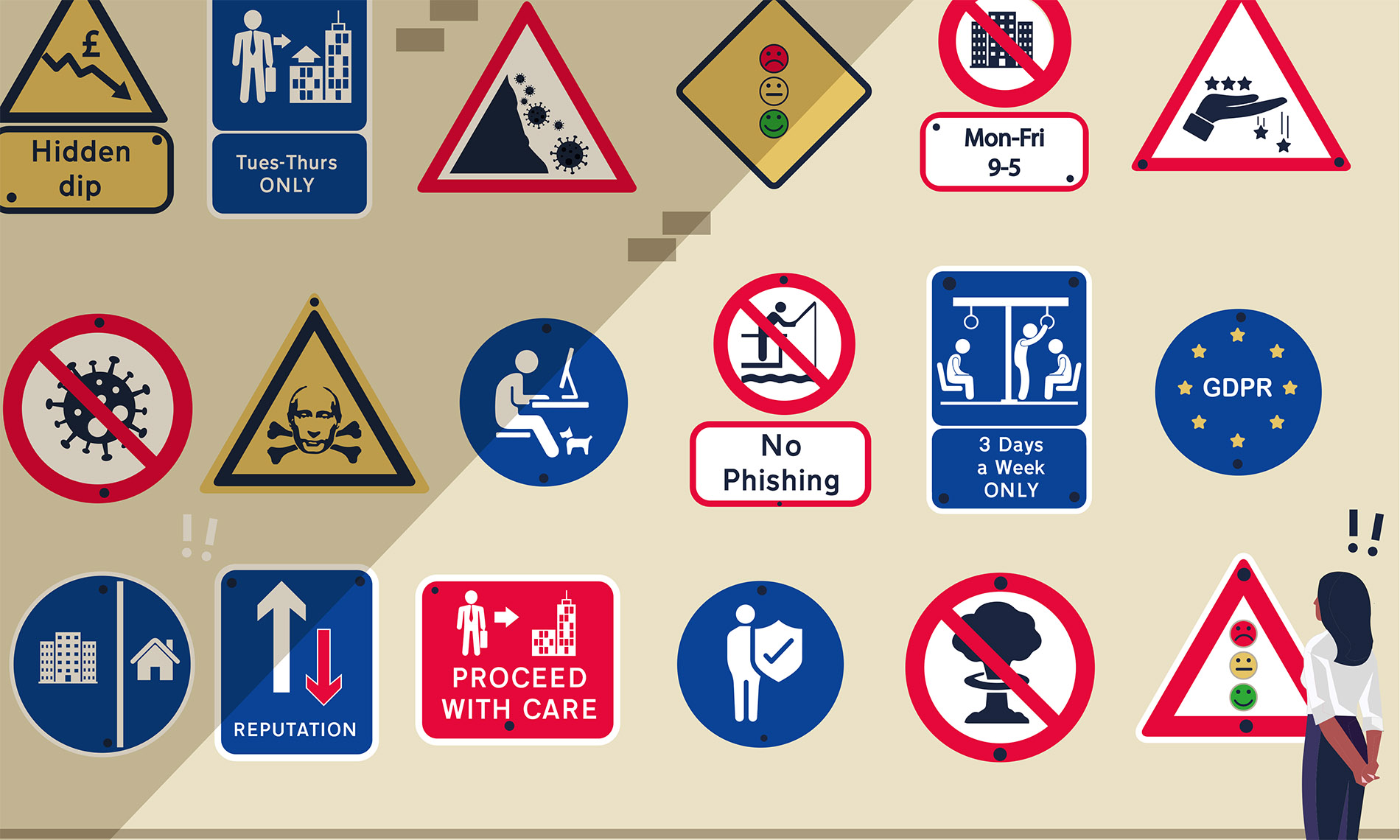
If the risk management team could be described as a law firm’s conscience, then it follows that the past two years have pricked that conscience to new heights. Of course, Covid-19 has changed the way everyone does business forever and firms are scrambling to align themselves with a new corporate culture that clients are espousing – doing business the right way, not turning a buck at the expense of the planet and taking a genuine interest in maintaining a happy and productive workforce. Our annual risk and professional indemnity report in conjunction with Marsh Specialty reflects these new priorities, with firms understandably preoccupied with reputational risk tied to ethical behaviour under solid environmental, social and corporate governance (ESG) principles, as well as dealing with the new normal of nurturing a workforce that now operates predominantly outside the office. Continue reading “Risk management and professional indemnity survey 2022: Do the right thing”

The Client profile: easyJet

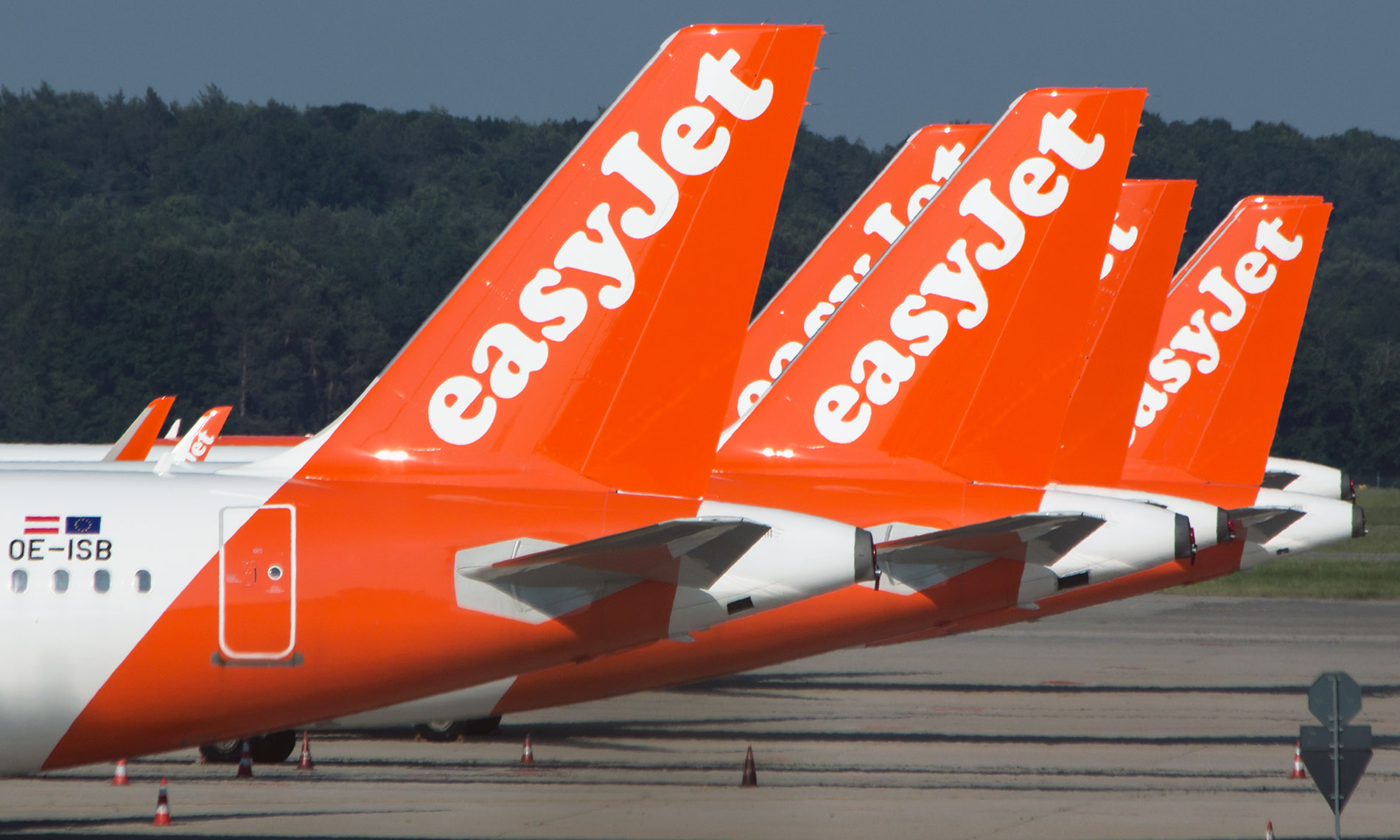
‘The pandemic hit the airline sector hard and fast. We went from really being in growth mode, preparing forward-looking projects and a successful year in 2020, to very quickly having to ground our fleet almost overnight. We then had to deal with the implications of that for the company, which were severe,’ says Rebecca Mills, deputy general counsel (GC) of easyJet.

For most companies 2020 was a struggle but the airline sector, and easyJet specifically, was hit harder than most. Dealing with grounded flights, plummeting profits and a high-profile data breach, its General Counsel’s Office (GCO) went into overdrive. Continue reading “The Client profile: easyJet”

Sponsored briefing: Impact of ESG on M&As and financings and trends to watch

Economic decisions over the years have had major impacts on the scarce resources of the planet. Overconsumption and over-production brought the environment to a state of destruction and degradation. Consequently, all these alarming developments have led the academics, analysts, commentators, and scientists to work on the solutions to prevent a catastrophic future. As a result, sustainability has become one of the key considerations in decision-making processes.

Sustainability often consists of interdependencies that exist between environment, society, and economy. These three factors can be referred to as Triple Bottom Line and 3Ps as they may also be called as people, planet and profit. Under this Triple Bottom Line measuring system, unlike the traditional reporting framework, organisational performance is measured using environmental and social dimensions along with economic aspects. These are also important elements to measure the sustainability goals. Continue reading “Sponsored briefing: Impact of ESG on M&As and financings and trends to watch”

Sponsored briefing: Q&A with ASC Law’s senior management

What do you consider are the biggest achievements of ASC Law since being founded 21 years ago? (MA, ZC, OB)

Murat Aksu (MA): I think I can speak for all of us in that we are all thrilled, 20 years on, by what we have built. All three of us had been working for large organisations before we started ASC Law, and we all dreamed of starting our own business. And here we are. From just a handful of lawyers in 2001, ASC Law now has more than 70 lawyers, with total staff of some 170. It is now one of the top five largest law firms in Turkey. Continue reading “Sponsored briefing: Q&A with ASC Law’s senior management”

Sponsored firm focus: Focus on Aksu Çalıskan Beygo Attorney Partnership

Esentepe Mah. Harman Sok. No. 5, Harmancı Giz Plaza Kat 16, Şişli, İstanbul, Turkey 34394
T: +90 212 284 98 82 | E: [email protected] | www.aschukuk.com

Practice areas: arbitration, banking and finance, capital markets, commercial (including project development and finance), corporate, debt restructuring, labour/employment, litigation, M&A, probate, real estate Continue reading “Sponsored firm focus: Focus on Aksu Çalıskan Beygo Attorney Partnership”