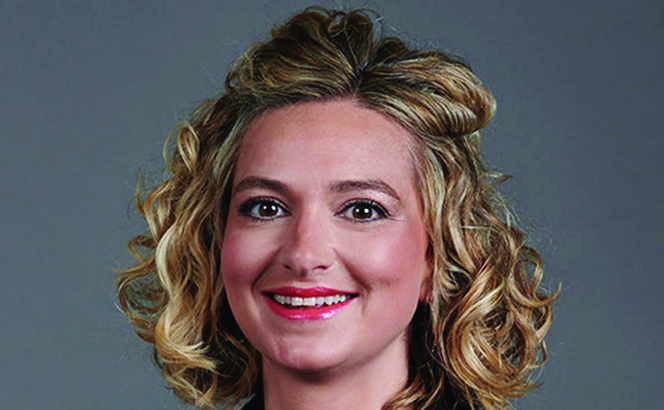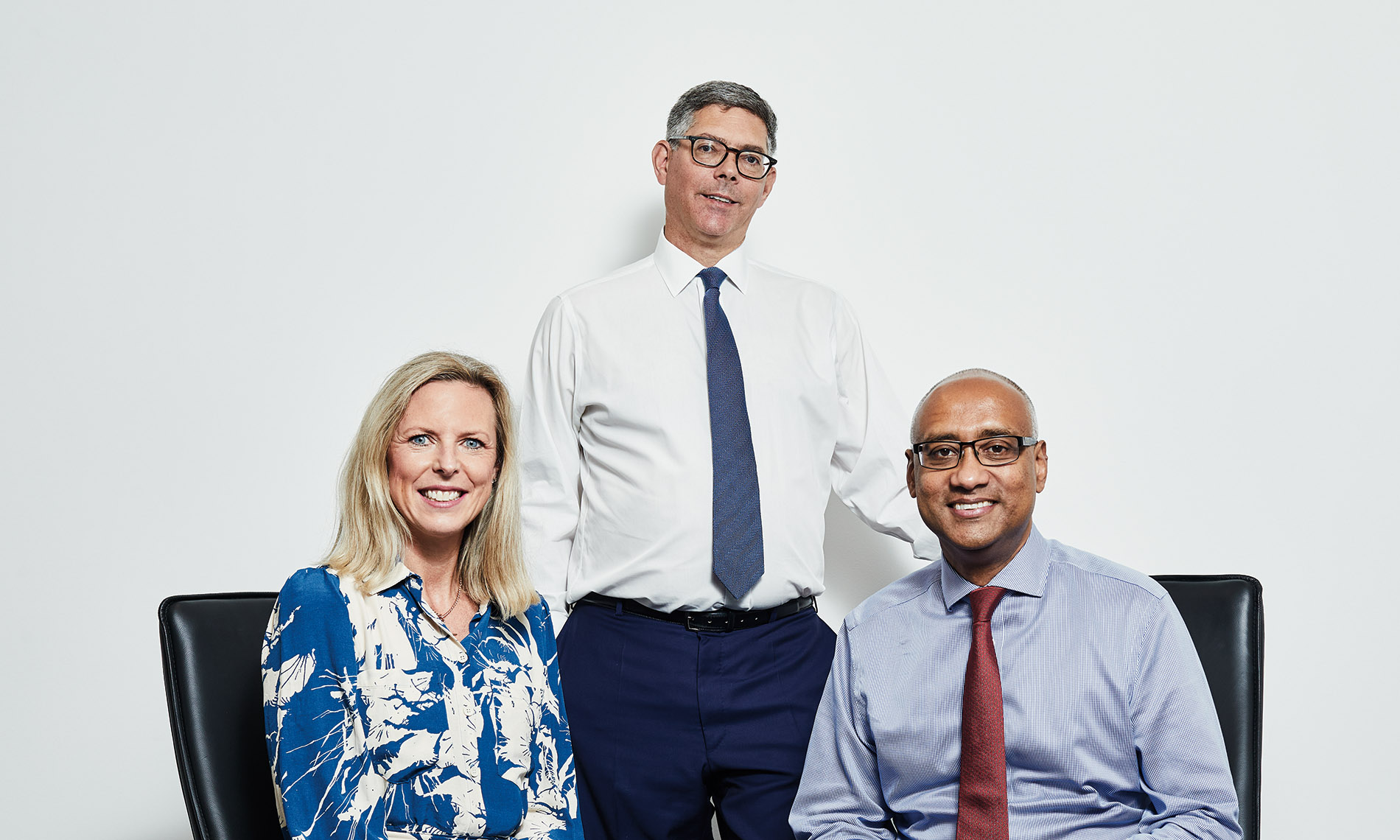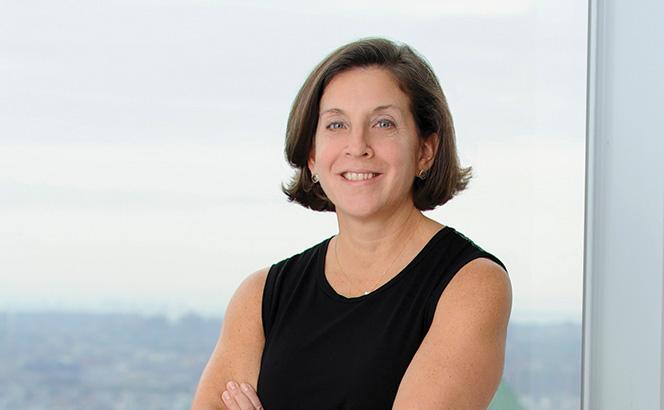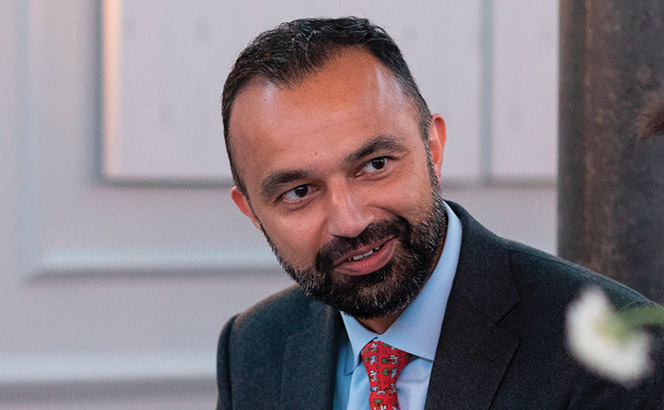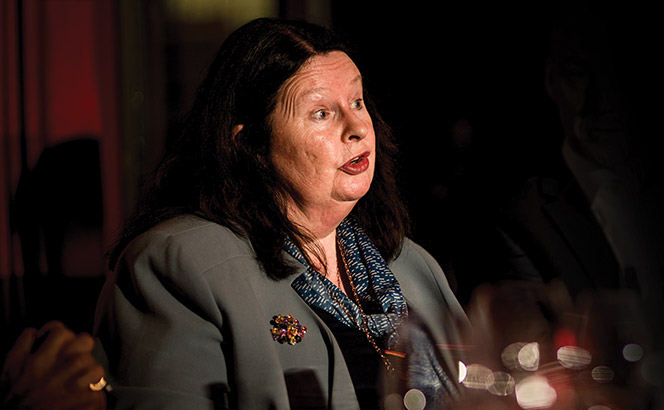

Deals Yearbook 2022: Alex Tilley, Allen & Overy – partner since 2020

What has been the absolute deal highlight of your career so far and why?
Advising Liberty Global on its fixed and mobile UK telecoms joint venture in the UK to create what is now Virgin Media O2. We negotiated the transaction over a relatively short period right at the start of the first Covid lockdown, and it was amazing to watch a huge team adapt and still find a way to get the deal agreed. Continue reading “Deals Yearbook 2022: Alex Tilley, Allen & Overy – partner since 2020”

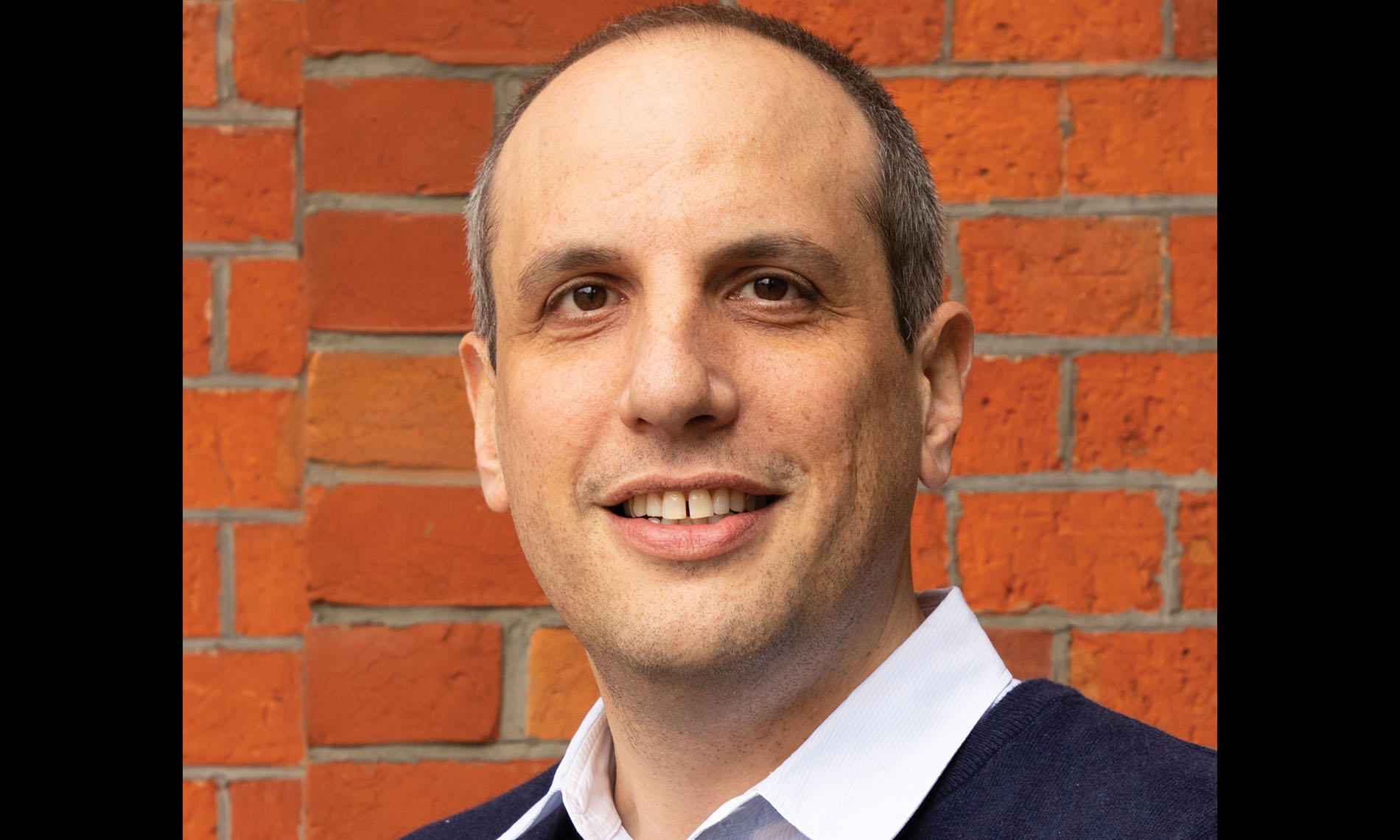
Deals Yearbook 2022: Derek Tong, Linklaters – partner since 2019

Why did you decide to become an M&A lawyer? Was there anyone who inspired you early on in your career?
I sat with the M&A team in my second trainee seat and within a fairly short period I knew that I really wanted to qualify into that team. It felt like the M&A lawyers were at the centre of all the action and had more exposure to the broader commercial and strategic drivers for the deal. One of my mentors was our former corporate partner Iain Wagstaff, who sadly passed away a few years ago – I learnt an immeasurable amount from him and he was definitely one of the people who has inspired me most during my career. Continue reading “Deals Yearbook 2022: Derek Tong, Linklaters – partner since 2019”

Deals Yearbook 2022: Fionnghuala (Finn) Griggs, Linklaters – partner since 2017

Why did you decide to become an M&A lawyer? Was there anyone in particular who inspired you early on in your career?
I started off my training contract with Linklaters sitting in the M&A team and quickly realised that I really valued and enjoyed the opportunity to work closely with clients on strategically important transactions, and to work with a broad range of teams and offices within the Linklaters network. It’s a great way to build relationships. During that first seat I worked on a demerger of a company and its UK listing, and 15 years on I am still working with that company as a key client of the firm – which is a real testament to the opportunities that you have as an M&A lawyer to build relationships and become a trusted adviser. Continue reading “Deals Yearbook 2022: Fionnghuala (Finn) Griggs, Linklaters – partner since 2017”

Deals Yearbook 2022: Caroline Rae, Herbert Smith Freehills – partner since 2016

Why did you decide to become an M&A lawyer? Was there anyone in particular who inspired you early on in your career?
Once I had decided to become a lawyer there was never a doubt that I would specialise in M&A. When I was younger, I wanted to be in the cCty and to work on deals on the front page of the FT. For me, that meant M&A and it never crossed my mind that I would do anything else. It was a great source of disappointment when I realised that lawyers never get mentioned in the FT of course… but by then it was too late. When I interview graduates, I do encourage them to have an open mind about different areas of law, but I confess for me it was only ever M&A. Continue reading “Deals Yearbook 2022: Caroline Rae, Herbert Smith Freehills – partner since 2016”

Deals Yearbook 2022: Nick Withers, Shearman & Sterling – partner since 2020

What has been the absolute deal highlight of your career so far and why?
The refinancing of Eddie Stobart plc in late 2019 was a real highlight. Being able to navigate a complex situation, working as an integrated team with our financing colleagues, and deliver a great result for our client was very satisfying, doing so to save a company that is a household name even more so. After the transaction closed our client received a letter of thanks from one of Eddie Stobart’s long serving employees for saving the company, which really brought home the real-world significance of what we did. Continue reading “Deals Yearbook 2022: Nick Withers, Shearman & Sterling – partner since 2020”

Sponsored briefing: The Invasion of Ukraine is Catastrophic for the Russian Economy. Now What?

Has Russia violated its promises to Turkish Investors under the Turkey-Russia Bilateral Investment Treaty?

When the Russian Federation unleashed its deadly invasion of Ukraine, it was fully aware unprecedentedly severe sanctions would be imposed. As a direct result of these completely foreseeable sanctions, and other knock-on effects of the invasion, Turkish and other foreign investors in Russia will have seen the value of their investments take a serious hit, with further hits certain to come1. Continue reading “Sponsored briefing: The Invasion of Ukraine is Catastrophic for the Russian Economy. Now What?”

Turkey focus: Chronology of a crisis

Turkey is still defined as an emerging market economy; over the last 20 years, it established itself increasingly among the top-25 global markets, but could not maintain this upward trend in recent times. Recently, it has had to face a currency crisis due to the Turkish lira decreasing dramatically in value. At the same time, inflation levels are skyrocketing, which is especially reflected in high prices for food and drink. Adding a global pandemic to the mix is certainly another spanner in the works, but according to Osman Ertürk Özel, managing partner at ÖZEL Attorney Consultancy: ‘The economic recession in Turkey existed a year before the beginning of Covid. It just made this situation obvious. Serious fluctuations in currency along with over 100% inflation rate have deepened the existing economic crisis. This has caused a disruption in all kinds of production in the markets. The fact that banks kept up the markets through loans has greatly disrupted the balance.’

To blame for this development, at least in part, is Turkey’s president Recep Tayyip Erdoğan. His name has dominated the Turkish political scene for a long time. In 2001, his party AKP (Justice and Development Party) was created, and it quickly rose to power. Even though Turkey’s constitution established the country to be a secular state, AKP is traditionally favoured by religious conservatives and is in western media often referred to as a (mildly or reformed) Islamist party. At the same time, the party pursued a pro-liberal market economy and is keen to join the European Union. It seemed to be the recipe for victory: only a year after its formation, it had a sweeping success in the 2002 election, gaining an outright majority in parliament. After having a moderate stronghold over the political landscape for several elections, Erdoğan finally became president in 2014. However, only five years later, local elections marked the beginning of the end for the current leader. He and his party lost significant footing in major Turkish cities due to accusations of mismanagement of the Turkish economic crisis, its shortcomings during the Syrian refugee crisis as well as rising authoritarianism. After year-long rule, AKP also lost all support with Turkey’s largest ethnic majority, the Kurds. Officially, 2023 is a year for new elections and opposition parties are gearing up for it, but Erdoğan is doing everything he can to hold on to power. Continue reading “Turkey focus: Chronology of a crisis”

Global London Overview: Power plays

Had Legal Business’ Global London report come out at the end of 2021, a familiar narrative would have played out. The story would have been one of diverging fortunes as the London practices of some foreign firms looked to further strengthen their operations off the back of a booming transactional market, while others struggled to keep their head above water amid the fallout of a coronavirus pandemic that put both operational practices and client relationships to the test.

Last year of course, even the most sceptical of market commentators could scarcely have predicted the fresh disaster of Russia’s invasion of Ukraine. As the conflict casts a long shadow over all areas of life in 2022, the legal sector is no exception. Many of the top 50 Global London firms have responded by closing their Moscow offices and market sentiment, aside from dismay as events unfold, is that the full impact of the crisis is far from being fully felt for firms and clients alike. Continue reading “Global London Overview: Power plays”

ESG – What is it good for?

When Legal Business rounded off our inaugural ESG report last summer, we concluded that the coronavirus pandemic had given law firm leaders the opportunity to crystallise their stance on environmental, social and governance (ESG) imperatives.

For one thing, partners were not jetting around the world, flying in the face (quite literally) of their carbon footprint reduction targets, yet they still managed to be exceptionally successful. Looking back, it was a time when it was easy to be virtuous. Continue reading “ESG – What is it good for?”

Time for a reality check on salaries

standing on coins

That one of the chief concerns among law firm leaders in Legal Business’ annual Global London report is the retention of talent and the salaries required to do that in an ultra-competitive recruitment market is of course not ground-breaking news. Pundits have for years bandied around the term ‘the war for talent’, and with ever-more frequency in connection with demand for deal lawyers as the seemingly unstoppable private equity boom continues apace.

But when these phrases take hold they tend to stick and get churned out at every available opportunity when senior lawyers talk about the manifold challenges facing their businesses. Critical as the pipeline of talent unquestionably is, now that there is a real war on, the term seems hyperbolic. Continue reading “Time for a reality check on salaries”

Life During Law: Diala Minott

My mum is Syrian and my father’s Iraqi. I was raised in Saudi Arabia and Lebanon. I was influenced by the war in Lebanon and then the war in Iraq. Constantly moving and never having a place that you can call your own, but also fighting to be educated.

As a girl in Saudi Arabia, I had to dress up as a boy to go swimming and horse riding. All the things women weren’t allowed to do. When I became a teenager, I wasn’t allowed to any more. It was very obvious that I was not a boy and I found my world cut in half. Continue reading “Life During Law: Diala Minott”

Sponsored briefing: Turkey: A paradise for startups and angel investors

New and bold ideas often come from young people. We see the effect the new generations have on innovative technologies, especially due to the increase in digitalisation and the adaptation of the older generation to digital life being slower than the younger generation. Startups are on the minds of most of the young business people who think that their creative ideas cannot grow within the huge bureaucratic and cumbersome holdings and joint stock companies.

The startup, in words of famous entrepreneur Neil Blumenthal, is a term used for companies working to solve a problem where the solution is not obvious and success is not guaranteed. Since a not-so-distant past, we have often heard this term and have seen entrepreneurs’ success and failure stories. The number of entrepreneurs who do not want to be a part of corporate culture, who have new and extraordinary ideas and who adopt a flexible working culture is rapidly increasing. When it comes to startups, success, investment, growth and earnings are on one side of the coin; whereas the other side holds the problems of the crawling period, financial difficulties and the difficulty of finding investment. Perhaps even those of you who are reading this article have or have had a successful or unfortunate startup adventure. Not everyone who touches, nurtures and feeds on the startup ecosystem is immune to the difficulties experienced in that painful birth and crawling process of a startup. Perhaps one of the most challenging of these difficulties is the problem of financing. While some entrepreneurs in Turkey benefit from sources such as KOSGEB or TÜBİTAK funds or micro-loans, some of them are knocking on venture capital companies’ and angel investors’ doors to solve the financing problem that can determine the fate of a startup. Apart from these, another source of financing frequently used is the savings that the entrepreneur has made up to that day or the financial support they received from family, relatives and friends. Continue reading “Sponsored briefing: Turkey: A paradise for startups and angel investors”

Sponsored briefing: Understanding SAFEs and complexities in the ‘Simple’

I. Understanding SAFEs

SAFE is an acronym for ‘Simple Agreement for Future Equity’ that is concluded between investors and the target startups; where the investors give the funds to startups in advance, in exchange for a promise from the company to give shares to the investor at a future date when the startup raises money on a priced round. It is possible for the startups to sign SAFEs with numerous investors at the same time with different terms, as by nature, SAFEs let startups reward investors who are willing to move first by taking more risk, with lower valuations. Continue reading “Sponsored briefing: Understanding SAFEs and complexities in the ‘Simple’”

Sponsored briefing: The metaverse law – are we ready for the challenge?

We are witnessing unexampled times… In the light of the pandemic, there have been economic ramifications in Turkey and all around the world. Yet, this was also an opportunity for finding tools in order to ensure business continuity, since no one had any idea on when the pandemic will cease. Thankfully, we are in an era where we can get the most out of technological developments. In that regard, virtual interactions have become an essential part of life for businesses. Needless to say, the legal sector is no different than any other sector. The trend has even accelerated during the pandemic, with both clients and law firms inclining towards video-conferencing and other appropriate forms of virtual interactions, eg, e-hearings and e-meetings.

Not long ago, interest in virtual interactions has focused on the ‘metaverse’, which seems to be the latest fashionable concept in tech viewed as a form of cyberspace. What makes the metaverse different? Well, basically, it allows us to immerse a version of ourselves as avatars in its environment via augmented reality or virtual reality. However, at this point, lawyers are inclined to ask who or what will govern the metaverse? Continue reading “Sponsored briefing: The metaverse law – are we ready for the challenge?”

Sponsored briefing: Legal developments in the retail and e-commerce sector in Turkey

The organised retail sector is one of the largest sectors in Turkey with an annual business volume of $80bn, 100,000 stores and a capacity of direct employment of 1.5 million people. These are the sales and service areas visited by most of the Turkish population to meet their daily needs and demands.

Especially retail e-commerce, among the trade transactions made on the internet, has achieved a significant growth rate with the potential it has in the world and in our country. Removing time and place restrictions from shopping and providing momentum in transaction increases the attraction of the customers day by day. Continue reading “Sponsored briefing: Legal developments in the retail and e-commerce sector in Turkey”

Sponsored briefing: Istanbul Arbitration Centre (Istac) and some key numbers

Today if you travel to east from Europe on board a plane, it is most likely that you will make a transit connection in Istanbul Airport, which is now a hub. As Istanbul is located in a unique geography and joins two continents, it is very likely that Istanbul will be similarly a hub in the field of law, with a particular focus on arbitration.

Backed by its modern international Arbitration Act, Turkey has also had a modern arbitration centre since 2015. Founded and launched in 2015, the Istanbul Arbitration Centre (ISTAC) has made great advances to turn Istanbul into a significant arbitration centre that unites East and West. Continue reading “Sponsored briefing: Istanbul Arbitration Centre (Istac) and some key numbers”