

From navigating the complexities of global IT services to helping steer one of the world’s largest technology companies through rapid digital transformation, Pia Ullum, vice president of legal at Dell Technologies, has spent more than two decades shaping what modern in‑house leadership looks like.
Today, Ullum’s remit spans EMEA, India and Canada, while she also oversees the legal dimension of Dell’s global partner strategy and programmes – reflecting both the scale of Dell’s reach and the trust she has built as a strategic partner to the business. But the journey began far from the technology world.
‘First and foremost, legal is designed to enable the business, not block it’
Ullum trained in private practice before moving into IT in 2004, taking on senior roles at CSC (now DXC) and later Dell. Yet from the earliest stages of her career, she challenged the stereotype of legal as a function that slows things down.
‘First and foremost, the legal function is designed to enable business, not block it,’ she says. ‘That starts with understanding the company’s priorities and risk appetite.’ This alignment is something she actively builds, not something she waits to be invited into. Regular dialogue with decision‑makers is central, as is ensuring that legal advice comes framed in business terms.
‘I make sure our advice is focused on impact and solutions, not just compliance. When you do that consistently, legal is seen as a partner in driving growth.’ Ullum is intentional about how the legal function shows up within the business. Rather than delivering advice anchored solely in rules or formal compliance obligations, she consistently ensures that her team frames their guidance in terms of commercial impact and practical pathways forward.
For her, legal’s value lies in clarifying how the business can progress safely and effectively, not in highlighting barriers. This approach, rooted in solutions and strategic relevance, is one she applies rigorously.
And when legal advice is presented through that lens time and again, she notes, the function naturally evolves from being perceived as a checkpoint to being recognised as a genuine partner in driving growth.
‘Even when we don’t have all the answers, communication matters’
Over the years, Ullum has led teams through significant organisational and technological change, from large‑scale transformation programmes to the current era of AI acceleration. Her leadership philosophy rests on three cornerstones: transparency, clarity of vision and fostering adaptability.
‘Communication and transparency are critical – even when all answers are not available,’ she says. Without that, uncertainty fills the vacuum. With it, teams feel anchored. She encourages her team to concentrate on what they can influence, which creates direction even in ambiguous phases. And she places great value on cultivating curiosity within her team, encouraging them to experiment with new tools, explore emerging technologies and adopt an interactive, learning‑driven mindset. ‘Celebrating an exploratory mindset, trying new tools, embracing technology and learning through experimentation helps maintain momentum and confidence during transformation.’
For her, transformation is not simply a process to be managed but an opportunity to rethink how legal delivers value. By celebrating this exploratory approach, she helps the team maintain both momentum and confidence during periods of significant change. It is this openness to innovation, she believes, that enables legal to evolve alongside the business rather than react to it.
Like many seasoned legal leaders, Ullum sees AI and automation as ushering in a decisive shift in the nature of legal work. ‘AI will take on repetitive, low‑risk tasks, freeing us for high‑risk, complex and ethical decisions,’ she says. But that requires more than technical know‑how. It requires judgment.
In her view, the future of the legal function will demand a combination of strong critical thinking, greater conviction in working with data, and the ability to collaborate closely with technology teams. Just as crucial will be adopting a business‑aligned decision‑making mindset, ensuring that legal guidance consistently supports strategic objectives as the function operates ever more squarely at the intersection of law, technology and commercial strategy.
‘Legal is increasingly operating at the intersection of law, business and innovation’
Embedding legal in the business strategy, Ullum is clear-eyed about the importance of connecting legal advice to the company’s overall mission. ‘Each function has its responsibilities, but ultimately we are all here to support the company strategy and transformation,’ she says.
Dell’s legal department uses the enterprise strategy to shape its own priorities – a framework that drives decision‑making, resource allocation, as well as the way legal support is delivered. ‘How we spend time, how we deploy resources, it all ties back to the organisation’s strategic goals.’
The impact of a modern GC hinges not just on technical expertise, but on the relationships they build. For Ullum, the foundation of those relationships is curiosity and commercial understanding. ‘Making a real effort to understand our business partners’ priorities and challenges goes a long way,’ she says. ‘If you’re genuinely interested in solving business issues alongside your colleagues, trust builds naturally.’
That trust is what earns legal a seat at the table. ‘When advice is framed as enabling informed risk‑taking, not avoiding risk altogether, legal becomes a true strategic partner.’
As Dell continues to evolve at the pace of technological change, Ullum’s approach reflects a modern vision for the in‑house function: commercially grounded, technologically fluent and deeply connected to the business it supports. Her focus on curiosity, clarity and strategic partnership underscores not just how legal can keep up with transformation, but how it can help lead it.
Across continents, transformations and technologies, one theme has remained consistent: the belief that legal should help the business move forward, not hold it back.
And for Ullum, that principle continues to define her leadership.





 Freshfields London managing partner Mark Sansom (pictured) put the firm’s increased scores down to its
 The Epstein files also show that Ruemmler (pictured right), then a partner at Latham & Watkins, sent edits to another draft article, which was never published, but which Epstein was considering submitting as an op-ed to the Washington Post.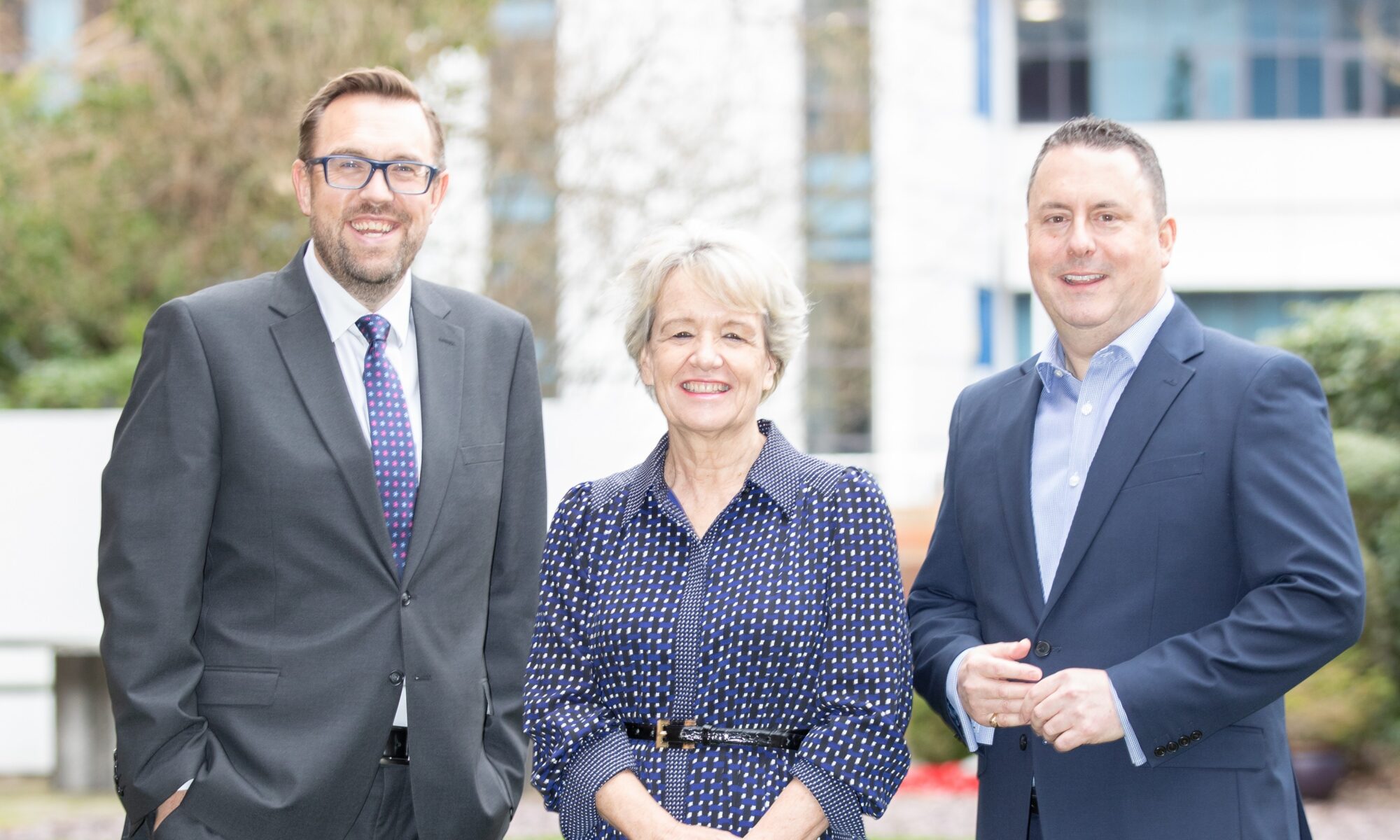

 Recently, Landsbert (pictured right) was part of the White & Case team which advised Cathexis Holdings on the sale of Yondr, a hyperscale data centre operator, to DigitalBridge and La Caisse – which, with a value of $5.74bn, was one of the biggest deals of the year.
 Rae (pictured right) says that widening the net across the UK can mitigate the environmental impact of data centres.
 Looking to the international markets, Bruce (pictured right) says: ‘For real estate, the Middle East remains a very active region for us as a firm – you can transport the real estate expertise that we have on investment and development in the UK and apply it with our Saudi colleagues to a Saudi law situation, and help bring international best practice to a market.’
 One firm that has been active in the high-end City scene is Taylor Wessing, which last year advised Park Tower Hotel in Knightsbridge on its £348m refinancing, as well as a refinancing for Arlington House properties, located behind the Ritz Hotel.












 In the email conversation – which took place seven years after Epstein was first jailed for sex offences, including one charge relating to a minor – Karp (pictured) describes his time at Epstein’s house as ‘truly “once in a lifetime” in every way.’