
In celebration of Black History Month, V&E partner Miguel Colebrook shared his perspectives on his legal career during a recent conversation with Legal Business.
Continue reading “Black History Month Q&A: Miguel Colebrook, Vinson & Elkins”

In celebration of Black History Month, V&E partner Miguel Colebrook shared his perspectives on his legal career during a recent conversation with Legal Business.
Continue reading “Black History Month Q&A: Miguel Colebrook, Vinson & Elkins”

1. Can you provide an overview of the current employment law landscape in Bahrain, highlighting any recent legislative changes or notable court cases?
The current employment law landscape in Bahrain is predominantly governed by the Labour Law. It is important to note that there have been no recent legislative changes to this law as of the current date. Continue reading “Q&A: Hassan Radhi & Associates”

Allen & Overy (A&O) and Shearman & Sterling are set to go ahead with their transatlantic merger, after partners at both firms voted overwhelmingly in favour of the union, with support from more than 99% of votes cast at each firm.
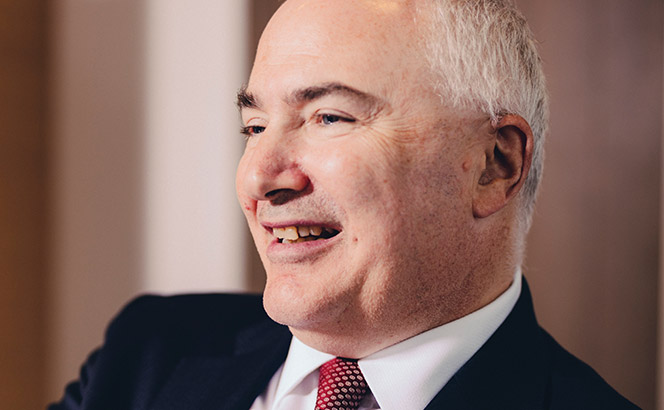
Longstanding Weil Gotshal & Manges London managing partner Mike Francies is set to step down after more than 20 years in the role. Francies, who joined Weil from Clifford Chance in 1998 and started leading the office two years later, will retire at the end of 2024.
Public M&A partner David Avery-Gee and private equity partner Jonathan Wood will work alongside Francies as co-managing partners for a transition period starting in January 2024. Continue reading “Weil set for new London leadership as longstanding office head Mike Francies prepares to step down”

Following the announcement of its move to a new office space at 8 Bishopsgate, Legal Business spoke to King & Spalding London managing partner Tom Sprange KC (pictured) about the move, the firm’s expansion plans and cracking the private equity market.
‘I can’t emphasise enough how important the new office is to us, on a strategic, symbolic, practical, and professional level. The firm launched in London in 2003 with a handful of people in rented office space so announcing a new state-of-the-art office is a perfect way to not only mark our 20th anniversary but also to secure the foundations for further growth over the next two decades and beyond,’ Sprange responded when asked about the rationale behind the move. Continue reading “‘We opted for ambition’: King & Spalding’s Tom Sprange KC on the firm’s London move and expansion plans”

The beginning of October has seen the lateral hire market leap back into action following the summer lull, with several high-profile hires across disputes, arbitration, and IP.
Goodwin has strengthened its litigation offering with the appointment of government investigations and enforcement partner Mark Beardsworth. Beardsworth is a Legal 500 Leading Individual for white-collar crime and will lead the firm’s European investigations and enforcement practice. He carries out internal investigations for corporations and regulators and advises on a range of risk and governance issues. Alongside this he has been involved in prosecutions by HM Revenue and Customs, the Serious Fraud Office, the Financial Conduct Authority, and the Financial Reporting Council. Continue reading “Revolving Doors: lateral hiring market picks up pace again”

Drawing a long-running saga to its inevitable conclusion, the Solicitors Regulation Authority (SRA) has today (3 October) announced that it has closed down Axiom Ince with immediate effect following its intervention to protect the interest of clients and former clients of the firm.
This intervention by the SRA prevents Axiom Ince from operating, while it takes ownership of all documents held by the firm and all money, including client money, held by the firm. It has appointed intervening agents to deal with all live matters held by Axiom Ince across its network and to deal with the closure of its offices. Continue reading “SRA closes Axiom Ince with immediate effect following intervention”

Clifford Chance began last week by revealing that it had acquired two new partners, Craig Nethercott and Chirag Sanghrajka, to its global energy and infrastructure practice in both London and Dubai respectively.
Nethercott joins from Latham & Watkins, where he spent nearly 14 years as a partner, before which he spent seven years as a partner at White & Case. He brings to CC a wealth of experience handling work involving banking, capital markets, Islamic finance and energy transition projects. His clientele includes energy, metals, and infrastructure companies, as well as capital providers.

Like Anne Brontë said ‘… but he that dares not grasp the thorn should never crave the rose… ’. Argentina happens to be an attractive alternative to develop business in South America despite it showing some uncertainty when it comes to its economic situation. Taxes and its tax policy are not an exception and companies as well as individuals might find themselves involved in tax controversy processes. Since 2017 taxpayers faced a tax growing situation without precedents. The most important tax changes at a federal level since then that can be mentioned are: Continue reading “Sponsored thought leadership: Hot topics of tax controversy in Latin America”

Just months after the second pre-pack rescue of Ince & Co, the firm’s latest owner, Axiom Ince, is set to be wound down, with hundreds of business services staff facing unemployment as the firm’s lawyers find new homes.
News of the wind-down comes after a tumultuous period for Axiom following its acquisitions of former shipping leader Ince and insurance firm Plexus out of administration. Continue reading “‘Left in the lurch’: Beleaguered Axiom Ince to be wound down as employees face uncertain future”

The latest in a series of departures from Kirkland & Ellis in London has seen partner Philipp Kurek join City boutique firm Signature Litigation after 14 years at the Chicago-bred disruptor. Kurek specialises in international arbitration and represents clients in various sectors, including technology, real estate, and private equity.
The move followed on from the news earlier this month that Kirkland debt finance partner Stefan Arnold-Soulby was leaving to be reunited with his colleague Neel Sachdev at Paul Weiss. Arnold-Soulby is known for his experience in handling complex financings and representing financial sponsors, with key clients that include Bain Capital Private Equity and Accel-KKR. Continue reading “Revolving Doors: Kirkland exits stack up as firms invest in arbitration benches”

The ‘Prevention of Sexual Harassment Law (5758-1998)’ was enacted in 1998 with the primary goal of safeguarding the individual’s freedom, dignity, and privacy, and furthering gender equality. This statute proscribes a range of actions which constitute Sexual Harassment, encompassing:
With the global war for talent and ‘star’ employees being branded as assets, non-compete agreements have emerged as a contentious subject for most industries.
Non-compete agreements are employment contracts that limit the ability of an employee to join or start a competing firm after a job separation.1 Parenthetically, these agreements limit the post-employment opportunities of employees within a set industry over a certain period of time.
Continue reading “Sponsored thought leadership: Non-compete covenants in Philippine employment agreements – current views and future direction”

1. What are the key labour laws and regulations that employers in Taiwan need to be aware of?
Employers should be aware of several key labour laws and regulations. These include the Labour Standards Act (LSA), Enforcement Rules of the Labour Standards Act (Enforcement Rules of the LSA), Labour Pension Act, Regulations of Leave-Taking of Workers, Occupational Safety and Health Act, Employment Services Act, Act of Gender Equality in Employment, Labour Incident Act, and the Labour Union Act, among others. Continue reading “Sponsored Q&A: Dentons”

Driven by the coalescing forces of greater employee willingness to raise grievances, heightened interest from regulators and the desire of employers and shareholders to maintain company reputations and safe working environments, conduct investigations into senior employees are more common than ever before. Against this backdrop, it is crucial that in-house legal teams are aware of both when and how to run an investigation process, as well as the likely ramifications.
Continue reading “Under the lens: the rise of senior investigations”

1. What are the key employment laws and regulations in Malaysia that employers and employees should be aware of?
Employment in Malaysia is governed, primarily by contract, statute and collective agreements where there is a registered trade union at the employer’s place of work. Continue reading “Sponsored Q&A: Shook Lin & Bok (Malaysia)”

1. What are the key labour laws and regulations that govern the employer-employee relationship in Brazil?
In addition to the Federal Constitution, which provides an exemplary list of social rights in article 7, the main and most important regulation governing the employment relationship is the Consolidation of Labour Laws (CLT). In such law it is possible to find the consolidation of all the norms that regulate the relationship between capital and work. Continue reading “Sponsored Q&A: Tortoro, Madureira & Ragazzi”

Howard Kennedy, Dentons and Mishcon de Reya have emerged as some of the firms doing the best job at keeping their London employment clients satisfied, according to new research from The Legal 500 that canvassed the opinions of hundreds of clients.
Howard Kennedy, Dentons and Penningtons Manches Cooper top a table of firms achieving the highest overall client service scores for London employer work, with Mishcon, Shoosmiths and CM Murray among other firms achieving high enough scores to appear within the top ten. Continue reading “The Legal 500 view: Employment”

Welcome to the first-ever Employment Yearbook from The Legal 500 and Legal Business.
This annual publication aims to provide a one-stop shop of interviews, insights, legal developments and data, looking at everything on the agenda for employment advisers and their clients. Continue reading “Editor’s letter – Employment Yearbook 2023”

The 1990s felt like the Golden Age of employment law – employment protections were expanding rapidly (thanks to Europe), opportunities for pushing the boundaries and progressing in employment law seemed limitless; even the Prime Minister and his wife were employment lawyers. All of life was in employment law – power imbalances, relationship struggles, societal prejudices and biases, human ambition, vulnerability and frailties, and so much more. It was the most exciting area of law to go into at that time (and probably still is now), and everyone wanted to be an employment lawyer. I was lucky enough to have great mentors and sponsors who supported my progress and gave me international work that I loved, fantastic opportunities to learn, and, in time, the potential to travel. Employment law opened doors for me that I never expected and which, to this day, I genuinely appreciate. Continue reading “Perspectives: Clare Murray, CM Murray”