

The boutique boom has reshaped large swathes of the London disputes market in recent years, with litigators peeling away from global firms to set up more agile, high-margin practices.
In contrast, the corporate market has remained relatively untouched, with few credible start-ups making their mark – though there are some exceptions.
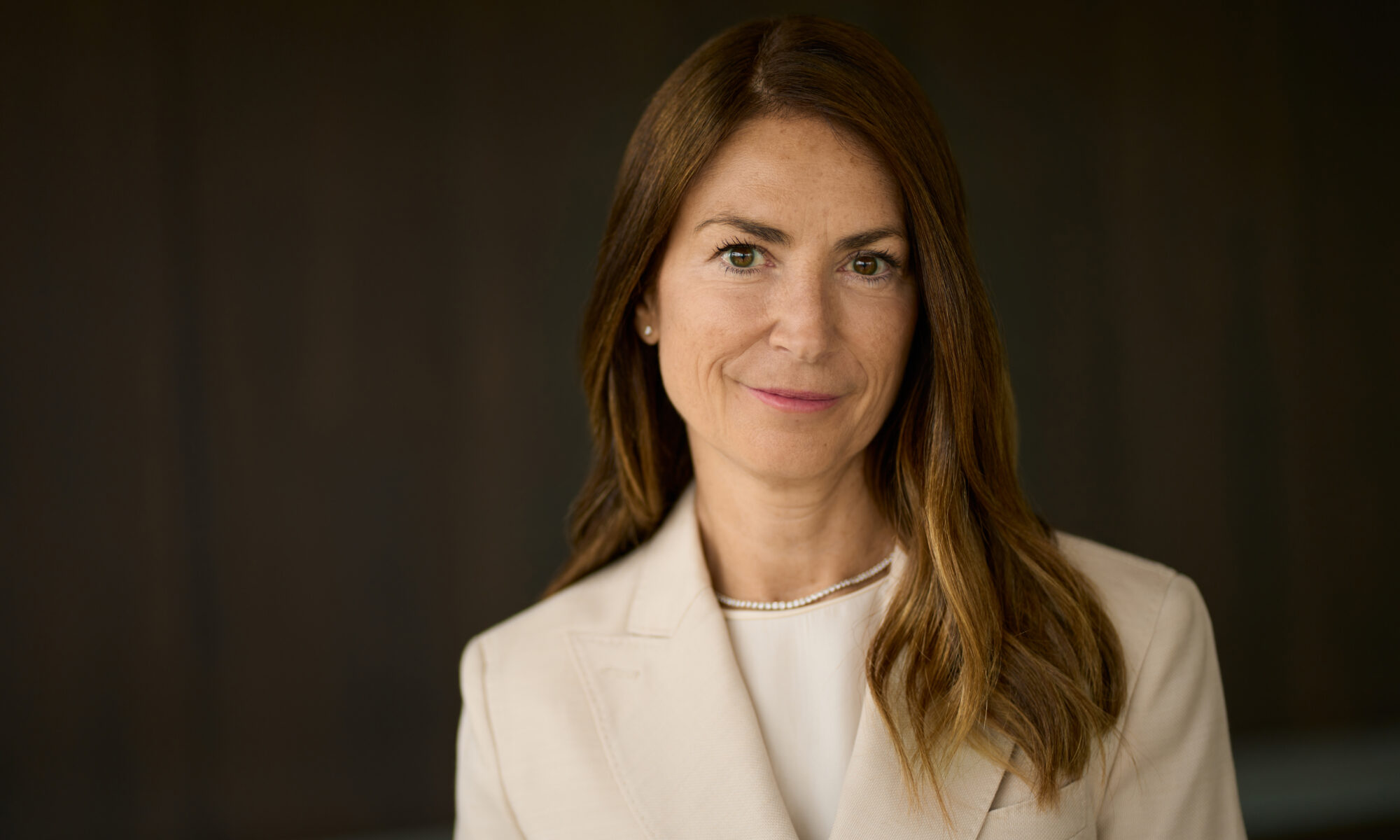
For Angeli Arora, founder of corporate boutique Allectus – the winner of Boutique Law Firm of the Year at the 2025 Legal Business Awards – the imbalance reflects not a lack of opportunity, but a missed one.
Arora set up Allectus in 2023 as the sole employee and partner, a move she acknowledges ‘takes a certain personality and a certain crazy to do.’
But the gamble seems to be paying off. For its first full financial year, to March 2025, the firm posted partner profit of £1.26m, and Arora – still the firm’s sole equity partner – is expecting next year’s figure to be ‘substantially higher.’
The conviction to strike out alone, she says, was shaped by a career spent repeatedly operating in ‘start-up mode’.
After training at Linklaters, she joined US firm Bingham McCutchen, going on to spearhead the firm’s Hong Kong office launch in 2007, making partner just five and a half years after qualifying.
After her practice was absorbed by Akin as Bingham dissolved in 2014, she eventually joined Dentons, where she built its South African offering, becoming Africa lead for the global private equity practice.
In 2021 she returned to London as a partner at Mishcon de Reya, but after building platforms for big law brands for the best part of two decades, she began to ask herself: ‘can I now do this for myself?’
‘That’s never a good reason to start a firm,’ she caveats, ‘there must be a problem you are solving.’
For Arora, that problem lay at the heart of the legal offering itself. ‘It is becoming more commoditised,’ she says, ‘It’s always about chasing high volume or big deals, rolling out transactions. It’s losing that personal touch, the ability to think through complex issues and the trusted adviser role.’
‘The talent war, the salaries, the fees – there is a part of me that says: at what point does it all just explode?’
The areas of strategic advisory work that Allectus was set up to focus on, such as shareholder activism, can sit awkwardly within the large firm model. It demands heavy partner involvement, quasi-litigation strategies, and a willingness to take on big corporates – precisely the kind of work bigger firms are disincentivised from prioritising.
‘A partner is most profitable if they’ve got ten juniors underneath them – and that requires massive transactions,’ Arora says, describing the Big Law leverage model as ‘clunky’ and ‘unwieldy.’
The imbalance is also financial. Scale means a ‘high cost base,’ she continues. ‘Lawyers now have to bring in many multiples in terms of revenue to service the costs. They end up taking home a very small percentage of the work they generate.’
‘If you flip into a lower cost base, you can take home the same number from much lower revenues. Firms are focused on revenue when they should think harder about profit margin.’
Allectus was designed to operate in this gap. But Arora notes that there is ‘no point just adding another firm that does the same as everyone else to the mix,’ or ‘being the cost-effective solution.’
‘That is not what I am out there to do. I am out to be a market leader in my niche,’ she adds.
Hidden behind large brands, too many lawyers at large firms have lost confidence in their own judgement, Arora argues. ‘Clients don’t get a direct answer – they get a memo,’ she says. ‘No one will give you an assessment. Lawyers can be afraid to give opinions beyond restating what the law states.’
Her approach takes a different tack: ‘When my clients come to me, I will tell them what I truly think,’ she says. ‘They’re coming to me for my experience, my knowledge, and that includes my viewpoint on things,’ she says. ‘It is about not being afraid to give that to your clients. It’s about giving proper answers efficiently.’
The emphasis on independent thinking underpins what Arora describes as Allectus’s ‘grown-up’ culture. In large bureaucratic structures, ‘people don’t necessarily have the freedom to embrace the lawyer they are, but rather fit into what they believe is expected of them,’ she says.
Early mandates suggest the proposition is resonating. Allectus recently advised on one of the largest shareholder activism claims in 2024, targeting natural resources giant Rio Tinto. The campaign secured c.19.35% shareholder support for her client’s resolution, far exceeding typical backing for board-opposed proposals in FTSE 100 companies – a significant result in governance terms.
Arora notes, ‘We illustrated that shareholder activism benefits from a senior-led agile approach focused on navigating complexity and strategy, rather than a scale-driven Big Law model built for volume.’
Other major corporate clients include Canadian shipbuilder Davie, which Allectus has advised on deals including its acquisition of Finnish energy company Enersense Offshore and major shipbuilding assets in Texas.
‘The biggest challenge for a partner wishing to move is ensuring they’ve got a portable book’
Running a boutique, however, comes with its own pressures. Resource constraints are constant, particularly during busy periods. ‘We just work crazily when we have to,’ she admits.
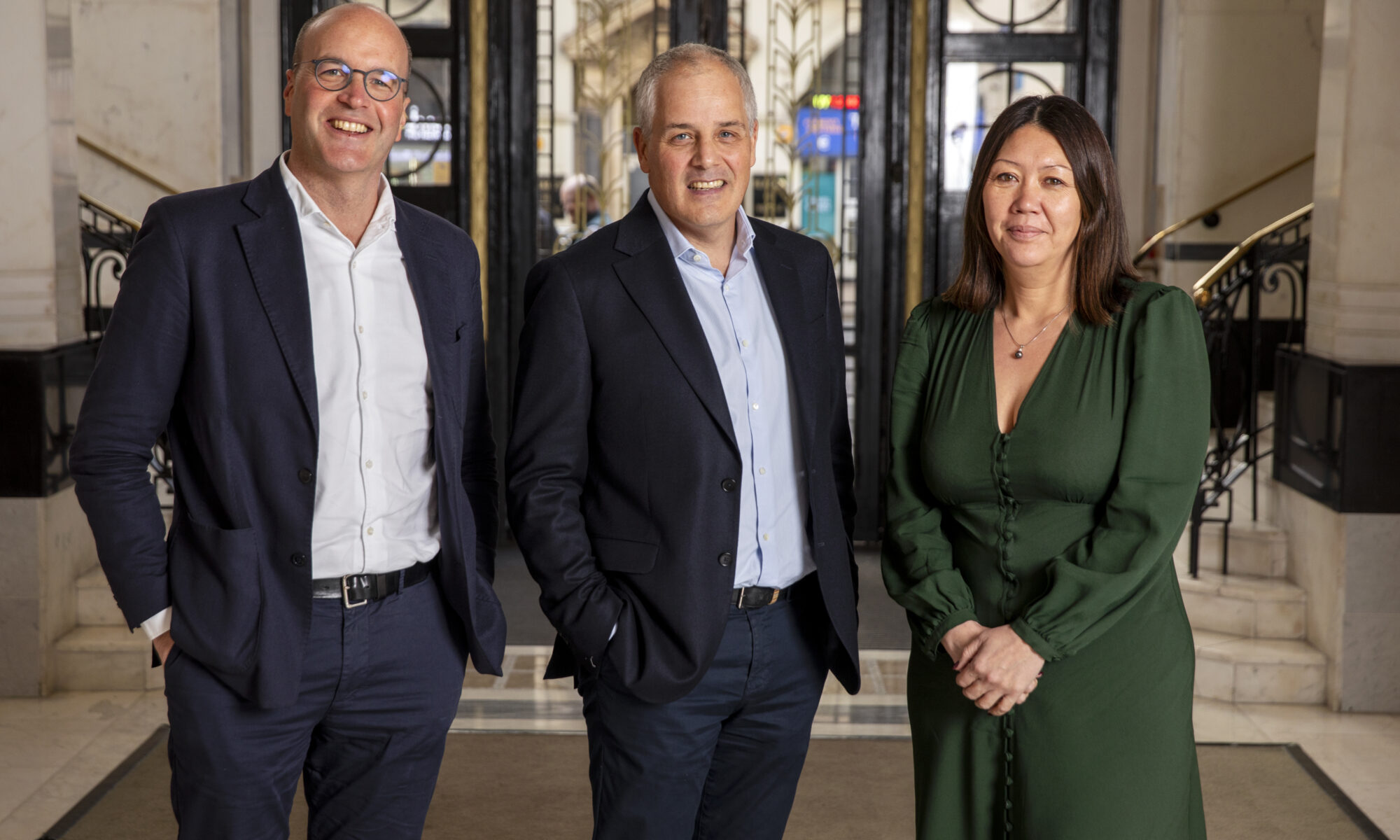
In terms of headcount, Allectus currently comprises two partners: Arora and Ian Frost, a finance partner with more than two decades of experience at Freshfields. The wider team includes senior consultant Andrew Pollard, managing associate Rupert Cullen – who has been at the firm since day one, taking the leap to start-up life after training at Akin – and South Africa qualified consultant Zinhle Hlatshwayo.
Hiring remains the greatest risk to her personality-driven formula: ‘Each hire can have a dramatic influence on the culture that I am creating. I am acutely aware that one misstep could have draconian consequences,’ she says.
But boutique life does offer its own support structures. ‘What I quickly realised is that elite boutique law firms have created a bit of an ecosystem,’ she says. Drawing on specialists, former colleagues, and local counsel across relevant jurisdictions helped her consolidate a network into what Arora describes as a ‘legal platform in itself.’
‘It’s about knowing who to call at the right time, from a talent pool of lawyers that is much broader than just those in your firm,’ she says.
Equally, client loyalty is critical. ‘The biggest challenge for a partner wishing to move is how one ensures that they’ve got a portable book,’ she says. At a large firm, lawyers can rely on institutional backing, but Arora warns this can be a ‘golden cage.’
‘There was a time where each lawyer had their own client book personal to them. That’s got lost in the big brands – and that’s intentional, because they’re creating firm clients that are separate and distinct from the lawyers serving them.’
Having the confidence to know that clients would follow her has been a major confidence-booster, but required courage. ‘The key point is to ensure that you stand by your billable rate and don’t start short-changing yourself,’ she says. ‘You have that confidence in yourself that you’re worth it.’
Looking ahead, Arora expects a multiplication of boutiques in the UK landscape, as pressure builds on mid-market full-service firms caught in between US giants and specialist firms, and this goes back to her initial point: ‘If you strive to be a market leader in whatever you’re doing, then you’ll always retain a place in the market.’
The current model of lots of juniors, she says, is not necessarily sustainable: ‘The talent war, the salaries that are getting paid, the fees being charged, and then AI coming… they’re not going to be able to sustain that model. There is a part of me that says: at what point does it all just explode?’
Arora is keen to stress that the boutique move, however, is not a retreat, particularly for women in law.
Recalling a time when being pregnant was something to be hidden at work, she is emphatic: ‘I don’t want it to be seen as women doing something ourselves because the existing legal market does not offer something suitable. That’s not the truth for me – I am incredibly grateful to my previous firms. The truth is that I believe I can create something interesting and different in the market. And I can do it more efficiently and authentically from a blank canvas. It comes from a positive place, not a negative one.’








 In the email conversation – which took place seven years after Epstein was first jailed for sex offences, including one charge relating to a minor – Karp (pictured) describes his time at Epstein’s house as ‘truly “once in a lifetime” in every way.’
 The emails also contain email correspondence from Ruemmler (pictured). After a Christmas Day 2015 message in which Epstein asked his assistant to organise a trip for her, Ruemmler says in a subsequent email: ‘Jeffrey is just being wonderful Jeffrey… I adore him. It’s like having an older brother!’

 A tech showdown in the CAT: Epic Games v Alphabet and Google
 Below the surface: Various investors v Glencore, Ivan Glasenberg and Steven Kalmin
  Controlling the flow: the Thames Water restructuring
 Show me the money: Municipio de Mariana v BHP, phase two
 Dieselgate: Various claimants v Mercedes-Benz Group, Volkswagen, Ford Motor Company, Nissan Motor Co


 Commercial knowledge
 Quality of partners
 Overall client service
 Ravi Aswani, 36 Stone
 Rosemary Davidson, 6KBW College Hill
 Timothy Killen, 3 Verulam Buildings
 Christopher Knight, 11KBW
 Alasdair Mackenzie, Doughty Street Chambers
 Laura Newton, Brick Court Chambers
 Caroline Pounds, Quadrant Chambers
 Nehali Shah, One Essex Court
 Professor Philippa Webb, Twenty Essex
 Nicholas Wilkinson, 1 Hare Court