
1. What are the key regulatory developments in Vietnam’s banking and finance sector over the past year, and how have they impacted the legal landscape?
Key regulations and their impacts include: Continue reading “Sponsored Q&A: EP Legal”
1. What are the key regulatory developments in Vietnam’s banking and finance sector over the past year, and how have they impacted the legal landscape?
Key regulations and their impacts include: Continue reading “Sponsored Q&A: EP Legal”

Latham & Watkins has strengthened its private credit practice in London by adding two partners from Akin. Fergus Wheeler and Paul Yin are set to become part of Latham’s banking practice, having each spent less than 10 months at their previous firm.
The duo brings significant expertise in advising global private credit funds, direct lenders, commercial and investment banks, private equity sponsors, and corporate borrowers on diverse and intricate cross-border debt financing matters, with a specific emphasis on private credit transactions. Continue reading “Revolving doors: Latham hires Akin duo as firms strengthen finance, disputes and family practices”

1. Could you explain the key differences between secured and unsecured loans in the context of Dutch banking and finance transactions?
In a secured loan the payment obligations of the borrower are secured by security rights over assets of the borrower or a third party. In a bankruptcy scenario, a secured creditor can enforce these security rights as if there were no bankruptcy and in principle ranks ahead of all unsecured creditors subject to exceptions. Unsecured creditors rank pari passu in terms of payment with the claims of the borrower’s other unsecured creditors, have to submit their claims for verification with the bankruptcy trustee and cannot unilaterally enforce their claims as if there were no bankruptcy.
Continue reading “Sponsored Q&A: Rutgers & Posch”

1. What are the key regulatory bodies and authorities overseeing the banking and finance sector in Bosnia and Herzegovina, and what are their primary responsibilities?
It should be noted that regulatory bodies and authorities overseeing the banking and finance sector in Bosnia and Herzegovina (BH)1 are established on the state level, ie BH level and on the level of BH sub-jurisdictions, namely Republic of Srpska (‘RS’) and Federation of Bosnian and Herzegovina (‘FBH’). Continue reading “Sponsored Q&A: Dimitrijevic & Partners”

1. What are the key regulatory requirements and compliance considerations for financial institutions operating in Switzerland?
Any entity active in or from Switzerland in the financial sector, depending upon the type of activity, may become subject to regulatory approval requirements. A large range of legal, prudential and self-regulatory provisions aim at securing appropriate client protection, as well as the stability and integrity of the Swiss financial market. The main regulatory requirements in this regard would be the license or authorisation requirements for: Continue reading “Sponsored Q&A: Walder Wyss Ltd.”

1. What are the key regulatory bodies overseeing the banking and finance industry in Nigeria, and what is their role in ensuring legal compliance?
In Nigeria, the primary regulatory and supervisory body for the banking and finance industry is the Central Bank of Nigeria (CBN). The CBN authorises, regulates, and supervises banks and other financial institutions (finance houses, merchant banks, financial technology companies, etc). Continue reading “Sponsored Q&A: G. Elias”
1. What is your experience in banking and finance law in Portugal, and can you provide examples of cases or transactions you’ve handled?
The banking and finance team of CTSU, a Deloitte Legal Practice in Portugal, has extensive experience in supporting clients with transactions and to advise on governance and regulatory changes to their activity and internal organisation. Continue reading “Sponsored Q&A: CTSU, a Deloitte Legal practice”
1. What types of banking and finance law cases do you typically handle in Kuwait?
Typical cases include debt recovery, fraud and financial crimes, contractual disputes, dispute resolution, and banking regulations. Continue reading “Sponsored Q&A: ASAR – Al Ruwayeh & Partners”

1. Could you provide an overview of the licensing and registration requirements imposed by the Monetary Authority of Singapore for foreign financial institutions seeking to establish a presence in Singapore?
Foreign financial institutions looking to establish a presence in Singapore must consider a range of licensing and registration requirements based on their intended business activities. The Monetary Authority of Singapore (MAS) is the singular regulatory authority overseeing the financial services sector in Singapore, and regulates and supervises financial institutions and their operations in Singapore. Continue reading “Sponsored Q&A: Drew & Napier”

Why did you want to become a lawyer?
I always wanted to. I wanted to fight injustice. It began when I watched Crown Court on TV – although I wanted to be the judge rather than any of the lawyers. So, my first inclination was after watching a TV programme, and thinking ‘I want to do that’.
Continue reading “Banking and Finance perspectives: Dr Sandie Okoro”

Why did you want to become a lawyer and what drew you to the financial services regulatory side?
As much as the law itself, it was the draw of international work that led me to the City and to Herbert Smith, as it was then. I had read languages at university and was excited about the prospect of working on high-profile international matters.
Continue reading “Banking and Finance perspectives: Jenny Stainsby”

I actually started practising law in California, way back in the dark ages. I moved over here for two years, and I’ve been here ever since. I never really intended to be a lawyer in London at all. My lifetime ambition was to be a criminal lawyer in Baltimore. My early career could be characterised as wanting to work at a big law firm in a big city before I would go back to a smaller city and a very different law practice. As you can see, all that planning never really turned out. I haven’t touched a criminal case in a very long time. Continue reading “Banking and Finance perspectives: Chris Kandel”

1. What are the key regulatory frameworks that govern the banking and finance sector in France?
The key regulatory frameworks that govern the banking and finance sector in France are: Continue reading “Sponsored Q&A: Lacourte Raquin Tatar”

1. What are the key regulatory requirements and compliance challenges that law firms operating in Uruguay’s banking and finance sector currently face?
Capital Markets Act No 18.627 enacts the framework for companies operating in the Uruguayan Capital Market (issuers, brokers, investment advisers, etc); Law No 15.322 regulates the same for banks and all relevant entities acting as financial intermediators; Law No 16.426 regulates insurance and reinsurance framework (as well as Law No 19.678 that sets certain terms and conditions that shall be stipulated in the insurance agreements/policies); Laws No 16.713 regulates the Pension Funds Administrators (law that has been recently modified by Law No 20.130, that modified the Uruguayan pension regime); Law 16.774 rules mutual funds; and Law 19.210 and 18.573 regulates the payment system. Continue reading “Sponsored Q&A: Deloitte”

Nearly a year after joining the Financial Conduct Authority as CEO in 2020, Nikhil Rathi committed to making the organisation ‘more innovative, assertive and adaptive’. Two years later, some of this change is evident – particularly in its leadership. Continue reading “Steadying the ship: Can the FCA strike the right balance between protection and innovation?”

1. What are the key regulatory bodies and laws that govern the banking and finance industry in Luxembourg, and how do they impact financial institutions? Continue reading “Sponsored Q&A: SJL Jimenez Lunz”

The Legal 500 rankings contain a wealth of information on the top firms for banking and finance, from those advising on big-ticket acquisition finance and restructuring mandates to those with focused expertise in specialist areas such as Islamic finance and high yield bonds. Continue reading “Banking balances – which firms have the healthiest Legal 500 accounts?”

Please see below for a link to an online pdf of the Banking and Finance Yearbook 2023. This will only be accessible to subscribers. Please make sure you are logged into the site to see the link.
Continue reading “Banking and Finance Yearbook 2023 – online PDF”
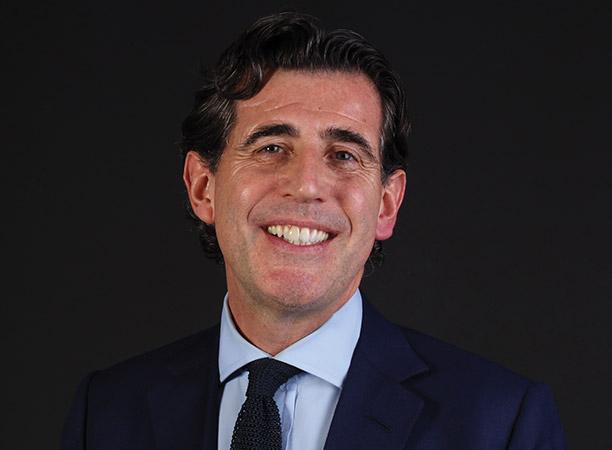
Slaughter and May’s eminent senior partner Steve Cooke has become the latest law firm leader to embrace a change of direction post-retirement with the news that he is to join PR agency Brunswick Group.
Cooke (pictured) will finish his term as Slaughters’ senior partner on 30 April 2024 after which he will join Brunswick as a partner, tasked with advising clients on matters including M&A, crisis, disputes and litigation.