The release of the Epstein files has revealed the huge scale of Jeffrey Epstein’s sprawling network of personal and professional contacts, with lawyers and law firms featuring prominently in much of the communications – many of which reveal relationships that went beyond just legal advice.
While many of the references to law firms are in the context of informal conversations, and inclusion in the files is not an automatic indication of wrongdoing, the files provide rare insight into interactions that would not normally see the light of day.
From favours, gifts, career advice and off-the-books efforts to help Epstein with a range of legal and reputational issues, some of the most notable references to law firms and lawyers are detailed below.
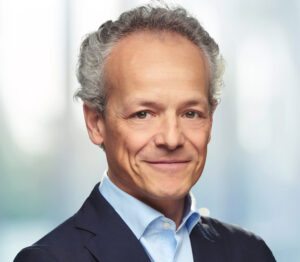
Former Paul Weiss chair Brad Karp
Former Paul Weiss chair Brad Karp, who stepped down from his leadership role following days of headlines scrutinising his connections to Epstein, is mentioned in hundreds of documents within the files.
Karp’s email communications with Epstein paint a picture of a relationship sustained over several years from the mid-2010s up to the months before Epstein’s arrest and death in custody in 2019.
The emails include Karp thanking Epstein in 2015 for a ‘once in a lifetime’ evening, enquiring about work experience for his son with film director Woody Allen in 2016, and mulling an invitation to lunch with Epstein and former Israel prime minister Ehud Barak the same year.
In 2018, Epstein and Karp discussed the shock resignation of Latham & Watkins managing partner Bill Voge, and debated whether Kathy Ruemmler – then a litigation partner at Latham, and herself a contact of Epstein’s – would be suitable as a successor.
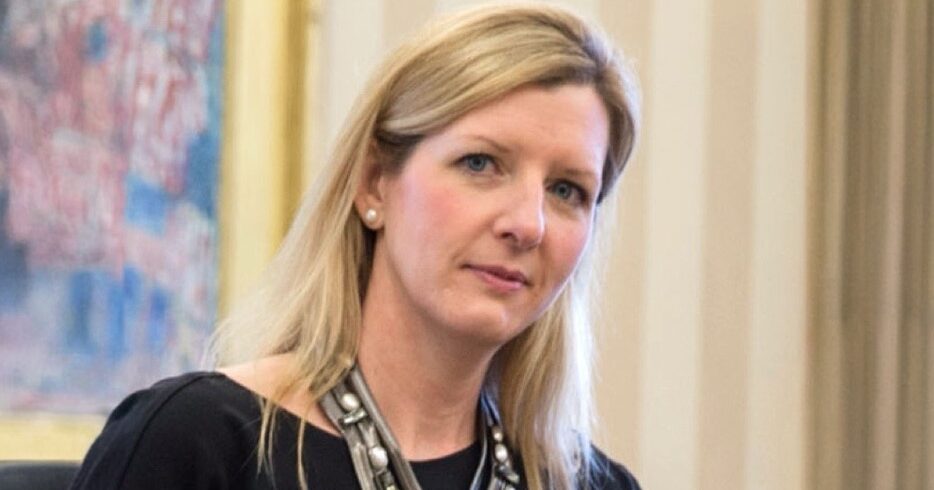
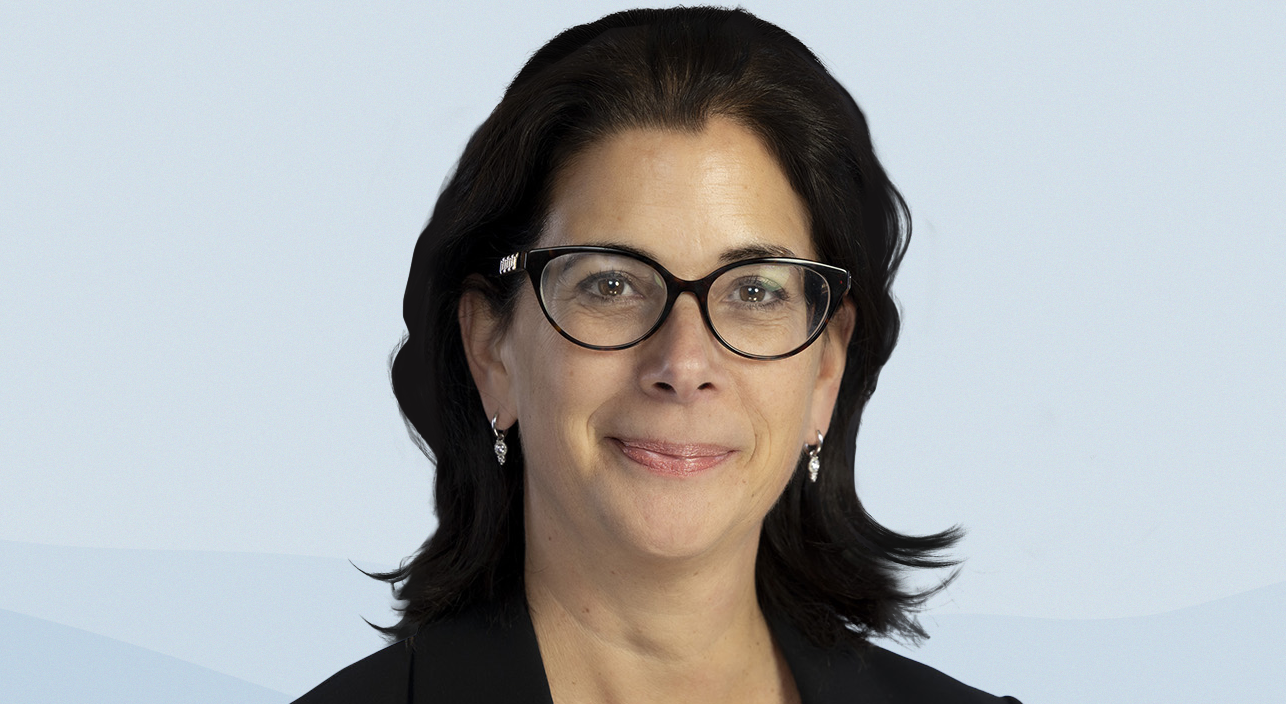
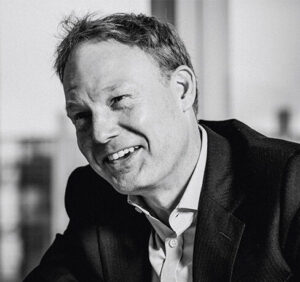
 And in 2019, Karp (pictured right) reviewed drafts of a letter to the New York Times defending Epstein’s 2008 plea deal, and a court filing that has been widely reported to show Epstein’s legal team arguing against the reopening of the plea deal.
That plea deal had been struck by Epstein in 2008, and saw the financier serve less than 13 months in custody after being convicted of procuring a child for prostitution and soliciting a prostitute.
‘The draft motion is in great shape,’ Karp wrote on 3 March 2019.
In a statement announcing that he would be succeeded as Paul Weiss chair by M&A partner Scott Barshay, Karp said: ‘Recent reporting has created a distraction and has placed a focus on me that is not in the best interests of the firm.’
In an earlier statement, Paul Weiss had specified that Karp met Epstein ‘through his representation of the former chairman and CEO of Apollo Global Management, a significant firm client.’
‘During the course of that representation, which spanned several years, Karp never witnessed or participated in any misconduct. Karp attended two group dinners in New York City and had a small number of social interactions by email, all of which he regrets.’
Goldman Sachs GC and ex-Latham partner Kathy Ruemmler
Another long-term Epstein contact from the world of law is Goldman Sachs general counsel Kathy Ruemmler, a former partner at Latham and head of the firm’s white-collar defence group.
Ruemmler’s departure from Goldman was announced last week after the files revealed extensive communications with Epstein, described by her in emails as ‘wonderful Jeffrey’ and ‘Uncle Jeffrey’.
On Christmas Day 2015, Epstein instructed his assistant Lesley Groff to ‘please organize Kathy’s first class trip to Geneve and wherever,’ and in a subsequent email to Groff, Ruemmler wrote: ‘Jeffrey is just being wonderful Jeffrey.’
Their relationship also appears to have involved gifts, with mentions in the files of flowers delivered to Ruemmler in 2015 and bags from Prada and Hermes bought for her the next year.
This aspect of the relationship also appears to have extended across the duration of their correspondence. In a January 2019 email to Epstein, Ruemmler wrote: ‘Am totally tricked out by Uncle Jeffrey today! Jeffrey boots, handbag, and watch!’
Ruemmler also discussed her career choices with Epstein, again on multiple occasions.
One exchange, dated 30 September 2014, appears to show Ruemmler and Epstein discussing how different political factions viewed Ruemmler. The conversation occurred five days after then-US attorney general Eric Holder resigned from his post.
Ruemmler stepped down as White House counsel that June, and was widely reported to have been a potential candidate to replace Holder before she withdrew from consideration the next month.
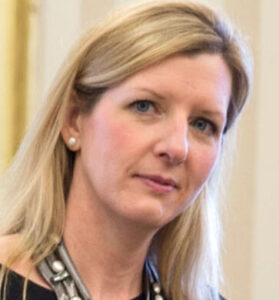
These discussions continued after Ruemmler’s (pictured right) return to private practice.
In 2016, she forwarded Epstein an email from Steve Immelt, then chief-executive at Hogan Lovells. Immelt offered a meeting with Michael Davison, then global head of litigation at the firm, and now its deputy CEO.
Ruemmler shifted her conversation with Immelt to the matter of her compensation, and forwarded the email to Epstein.
‘Good,’ Epstein replied, ‘however in writing would be best.’
Ruemmler did not leave Latham until 2020, and was never a partner at Hogan Lovells.
Epstein and Ruemmler appear to have discussed another potential career move for Ruemmler in March 2019, just months before Epstein’s arrest that July.
In an exchange with the subject line ‘goog,’ Epstein sent Ruemmler an email advising her on how to set out her compensation expectations, stating: ‘tell him that google is going to come back with a comp offer, they already offered you the position.’
Ruemmler never worked at Google, according to her LinkedIn. She rejoined Latham after her time at the White House, and stayed there until she moved to Goldman.
The files also show that Ruemmler discussed Epstein’s legal and reputational troubles with him. The day before the 2019 ‘goog’ exchange, Ruemmler emailed Epstein regarding potential advisers who could ‘quarterback’ Epstein’s response to his mounting reputational issues.
Earlier correspondence also shows that Ruemmler reviewed an op-ed Epstein considered submitting to the Washington Post defending his plea deal. The op-ed was never published.
Ruemmler will leave Goldman by the end of June. In a statement, CEO David Solomon said: ‘Throughout her tenure, Kathy has been an extraordinary general counsel, and we are grateful for her contributions and sound advice on a wide range of consequential legal matters for the firm.
‘As one of the most accomplished professionals in her field, Kathy has also been a mentor and friend to many of our people, and she will be missed. I accepted her resignation, and I respect her decision.’
Former Linklaters arbitration co-head Matthieu de Boisséson
The files also include a series of emails from 2015 between Epstein and arbitrator Matthieu de Boisséson – who at the time was co-head of international arbitration at Linklaters – in relation to a dispute involving French model scout Jean-Luc Brunel.
In 2015, Brunel, whose modelling agency had been founded with financing from Epstein, took legal action against him, alleging that he had lost business as a result of reputational damage stemming from Epstein’s actions.
That April, de Boisséson contacted Epstein via email, saying: ‘Jean-Luc has suggested that we meet to talk about the present situation, and perhaps explore the conditions of a way out.’
De Boisséson specified in the messages that he was acting in a personal capacity and that he was ‘not willing to act as a lawyer but just as a friend,’ adding: ‘I do not want any fees neither from JL nor from you.’
The two men arranged to meet, and Epstein offered to pay de Boisséson’s travel expenses, for which de Boisséson said he was ‘grateful.’ Days later, de Boisséson emailed both Epstein and Brunel to summarise his meetings with both men, and again recommended that they reach ‘a fair settlement.’
A Linklaters spokesperson confirmed to LB that the firm has never acted for Epstein or Brunel.
De Boisséson left Linklaters in 2016 after spending less than three years at the firm. He has since been operating as an arbitrator from London set Littleton Chambers, although his membership of the chambers is currently suspended pending a full investigation. De Boisséson has repeatedly denied any wrongdoing.
In a statement to LB, he said: ‘I have never been a friend of Mr Epstein, and I reserve my rights against any alleged association with Mr Epstein or Mr Brunel’s wrongdoings.’
Kirkland & Ellis partner Jay Lefkowitz
The files also provide details on the connections between Epstein and Kirkland & Ellis – which advised Epstein on the non-prosecution agreement (NPA) that was part of his 2008 plea deal – and litigation partner Jay Lefkowitz.
The files include a June 2013 letter sent by Kirkland to Epstein, signed by Lefkowitz, setting out a $50,000 retainer.
The letter reads: ‘We are very pleased that you have asked us to represent you in connection with the effort in Florida by private litigants to unwind the NPA.’
The emails also show that Lefkowitz invited Epstein to his son’s bar mitzvah in 2011, and include an email from Epstein’s assistant Groff the same year, which shows that Epstein allowed Lefkowitz to ‘fly out to the Hamptons with his wife for their anniversary.’
[email protected]













 Freshfields London managing partner Mark Sansom (pictured) put the firm’s increased scores down to its

 Recently, Landsbert (pictured right) was part of the White & Case team which advised Cathexis Holdings on the sale of Yondr, a hyperscale data centre operator, to DigitalBridge and La Caisse – which, with a value of $5.74bn, was one of the biggest deals of the year.
 Rae (pictured right) says that widening the net across the UK can mitigate the environmental impact of data centres.
 Looking to the international markets, Bruce (pictured right) says: ‘For real estate, the Middle East remains a very active region for us as a firm – you can transport the real estate expertise that we have on investment and development in the UK and apply it with our Saudi colleagues to a Saudi law situation, and help bring international best practice to a market.’
 One firm that has been active in the high-end City scene is Taylor Wessing, which last year advised Park Tower Hotel in Knightsbridge on its £348m refinancing, as well as a refinancing for Arlington House properties, located behind the Ritz Hotel.