

Tom Hambrett first heard about Revolut while travelling. He had left his job at Herbert Smith Freehills in Sydney in 2017, and while in Mexico, interviewed for a role as its first in-house lawyer.
After becoming the two-year-old company’s 23rd employee, he relocated from Australia to London to help build what would become one of the UK’s most successful fintechs.
Now, almost a decade on, he is chief legal officer of a company valued at $75bn.
‘When I joined Revolut, we had less than six months of cash runway, so it was very much a big bet and a risk to jump into something that was unproven, unstructured, and growing quickly – but that also had big ambitions.’
After six years in the corporate team at HSF, focusing on equity capital markets and M&A, Hambrett had already decided he wanted to move in-house. With his sights set on companies in the financial services and technology space, the vacancy at the fast-growing fintech came at just the right time.
‘There was definitely an element of ‘this may not work out’, but it was invigorating and exciting,’ he recalls.
In the years since, the company has gone from strength to strength, becoming a household name, with more than 70 million customers and operations in markets across Europe, America, Mexico, Brazil, Australia, Singapore, Japan and New Zealand. Revenues grew by 72% to $4bn in 2024, and at the end of last year, the company completed a share sale valuing it at $75bn.
Hambrett looks back on his achievements at the company with pride. ‘It’s always challenging building anything for the first time – building an in-house legal team from scratch, having never done it before, is going to require a lot of self-development,’ he says. The rewarding thing about doing it from the beginning is that you can design it in a way that fits into the wider organisation.’
And Hambrett has done exactly that; going from having sole responsibility for not only legal but also customer support, sponsorships and marketing, to building a team of nearly 300 lawyers spread across London, Singapore, Japan, India, and Australia, to name a few.
‘There was definitely an element of “this may not work out”, but it was invigorating and exciting’
The combination of excitement, hard work and developing a team is more than enough to keep Hambrett motivated. ‘I love the diverse nature of the problems that I get to solve every day, and I love the colleagues that I get to work with,’ he says. ‘There’s no substitute for that hard work and that feeling that everyone is on the same team, driving towards the same outcome. The power of a single goal is really important.’
These motivators have remained constant throughout Hambrett’s career. He explains that he became ‘hooked’ on the fast-paced corporate environment at HSF, which he joined in 2011, a year before the merger of Australia’s Freehills and UK firm Herbert Smith.
‘My time at HSF was really exciting,’ he recalls. ‘I had access to big-ticket matters and deals with blue-chip clients. It was a fantastic learning experience.’
His time in private practice also equipped him with the fundamentals to succeed. ‘It’s really important to get training at a top-tier firm and to work with the best clients, to understand how they structure their engagements with lawyers, what they want to get out of dealing with those lawyers, what they expect in terms of the advice and the service.’
He stayed with the firm for six years before deciding to go in-house.
‘There is never a dull moment. The privilege of being in this role is that I have the opportunity to always be at the pointy end of the work that we do.’
These days, his time is occupied with the group’s ongoing application for a UK banking licence. While the Prudential Regulation Authority (PRA) granted the fintech a restricted licence in July 2024, the full licence remains pending after a significant delay.
‘The bank application process is very unique because of the size and the scale of Revolut. It’s a big process; it’s a big application. It involves a lot of interaction and engagement with multiple regulators. It’s a once-in-a-lifetime process – I can’t think of any UK bank with truly global banking ambitions.’
The UK banking licence remains a priority for the group and means that the platform operates under a number of restrictions in the UK at the moment.
‘What I’ve realised is that there are always going to be stressful periods’
While that process continues, the fintech has been busy opening its new global HQ in Canary Wharf, and last year announced plans to invest £3bn in the UK and create 1,000 high-skilled jobs over the next five years.
‘It’s a big commitment, but it’s our biggest market, and it’s our home – it’s where we started. We’ve made a huge investment in the UK with new offices, with our employees, and with future products that we’re looking to roll out throughout the UK or from the UK.’
In addition to his legal role, for the past five years Hambrett has also been one of the twenty partners at the group involved in executing the product strategy.
‘We meet frequently – we all report directly into the CEO and the founder of Revolut,’ he explains. ‘Throughout the year, we run structured sessions ensuring that the long-term product strategy is being executed, ensuring our people initiatives and talent retention programmes are effectively managed, and ensuring that the culture and the values that the partnership is entrusted to uphold and demonstrate through our own conduct and performance are being adhered to. It’s a fantastic opportunity – I’m very privileged to be a part of this.’
Among the highs have been a number of stressful moments. While the ‘incredibly chaotic and unstructured’ early days are long behind him, Hambrett acknowledges that with such a huge and growing operation, it’s hard to avoid the stress that comes with it.
‘What I’ve realised after almost a decade at Revolut is that given the size and scale that we are, and the ambition that we hold, there are always going to be challenges and stressful periods. It’s how you engage with these moments that defines you and your team’s value.’
The high levels of public and media scrutiny that have come over the years have also been a big learning experience for Hambrett.
‘There’s a lot of pressure and stress around the media scrutiny over the company’s financial performance, and the comings and goings of employees or former executives. Revolut is such a big brand, and it’s such an exciting company for people to talk about. So, when you’re in the spotlight, there’s a lot of scrutiny.’
‘It’s not just 9-5. This is all-encompassing, and it requires 100% commitment’
‘It’s always difficult when you receive negative feedback that you don’t want to hear,’ he adds. ‘It’s always hard to process that, and so I remove the emotion, and I look at how I can find something useful from this scrutiny. How can I improve myself and improve the organisation, so that we can actually turn something that’s potentially negative into a learning opportunity.’
And there have been many highs. While financial success and global expansion are undeniable markers of success, Hambrett also finds the development of his team as especially rewarding.
‘We implemented a trainee programme where junior paralegals and qualified lawyers could train with us. They’ve then gone on to roles at impressive firms, like Latham & Watkins, Norton Rose Fulbright and Baker McKenzie, and then come back to us as post-trainee lawyers with a wealth of experience working on a range of matters.’
For those looking to succeed within legal, Hambrett stresses the importance of finding an industry that is both exciting and interesting, and then diving in head-first. ‘It’s not just 9-5. This is all-encompassing, and it requires 100% commitment – and for you to be fully engrossed in what you’re doing.’
Career timeline
2011-17: Solicitor, equity capital markets and M&A department, Herbert Smith Freehills
2017-18: Senior counsel, Revolut
2018-20: Director, Revolut
2020-21: Senior director, Revolut
2021-present: Partner & chief legal officer, Revolut
Revolut: key facts
Size of legal team: 240
External legal spend: £20m
Preferred advisers/panel firms: Latham & Watkins, A&O Shearman, Baker McKenzie, Linklaters, Cravath Swaine & Moore, Davis Polk
2024 revenues: $4bn (£3.1bn)
Employees worldwide: 10,500
















 Freshfields London managing partner Mark Sansom (pictured) put the firm’s increased scores down to its
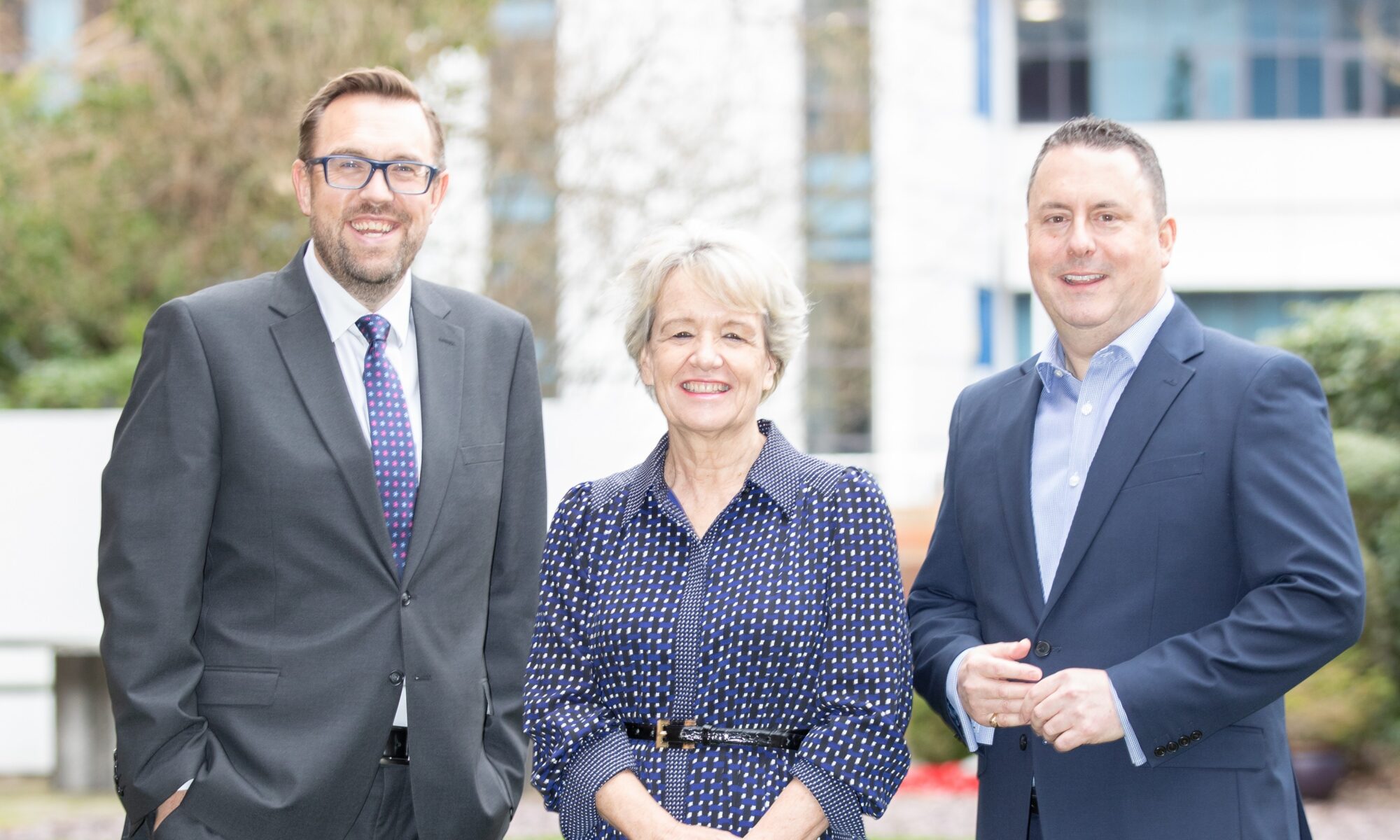

 Recently, Landsbert (pictured right) was part of the White & Case team which advised Cathexis Holdings on the sale of Yondr, a hyperscale data centre operator, to DigitalBridge and La Caisse – which, with a value of $5.74bn, was one of the biggest deals of the year.
 Rae (pictured right) says that widening the net across the UK can mitigate the environmental impact of data centres.
 Looking to the international markets, Bruce (pictured right) says: ‘For real estate, the Middle East remains a very active region for us as a firm – you can transport the real estate expertise that we have on investment and development in the UK and apply it with our Saudi colleagues to a Saudi law situation, and help bring international best practice to a market.’
 One firm that has been active in the high-end City scene is Taylor Wessing, which last year advised Park Tower Hotel in Knightsbridge on its £348m refinancing, as well as a refinancing for Arlington House properties, located behind the Ritz Hotel.