Green is the new black

The Norwegian continental shelf and its production of petroleum and gas resources has contributed substantially to Norway’s economic success, pushing the country to the forefront of oil and gas exportation and counting for a notable proportion of the country’s GDP. Norway currently exports roughly 70% of its oil production to the wider European region (with the combined exportation for oil and gas equating to 50% of the country’s total value of exported goods) and sits in the top 10 countries for crude oil exports by dollar value.

However, Norway also stands out as a leader among nations in its dedication to renewable energy and sustainability. In a recent survey conducted by energy tariff comparison site Utility Bidder, Norway was ranked as the top user of renewable energy, with the vast majority of the country’s energy coming from green sources. For Norway, the primary source of sustainable energy is hydropower plants, and the country has utilised its extensive coastline and steep valleys to generate hydroelectricity since the early 1900s.
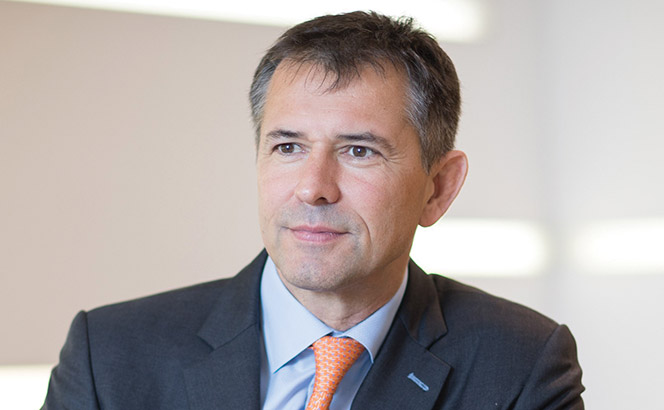
Aksel Tannum | Head of renewable energy | Haavind

Offshore and onshore wind projects are also increasingly common across the Norwegian landscape and, alongside carbon capture and storage (CCS) projects, are receiving increased investments from both the Norwegian government and the private sector; in 2021, the Norwegian government announced the first licensing round for the construction of offshore wind farms in two areas of the North Sea.

For Norwegian law firms, this dichotomy has forced notable changes in the approach taken to energy work, but these adaptations are not as antagonistic or as new as one might expect.

‘Norway’s ambition to be an international leader in combating climate changes could, in certain respects, be argued to run counter to our status as one of the world’s significant oil and gas exporters’, say state energy expert June Snemyr and managing associate Ole Christoffer Ellingsen at Thommessen. ‘The move may have created difficulties for some law firms which have been primarily assisted oil and gas and oil service clients, but not for us. We have always had a designated team for renewable energy and infrastructure, with close connections to the renewable energy industry’.

Aksel Tannum, who is head of the renewable energy practice at Haavind, agrees: ‘Haavind has a long tradition of working for the power industry in Norway, which has been based on hydropower and wind power in more recent years. This legacy provides us with relevance in the market and insight into, and experience with, a complex and heavily regulated sector’.
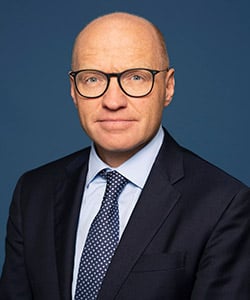
Peter Aall Simonsen | Head of infrastructure and renewable energy | Simonsen Vogt Wiig

This long-standing expertise has allowed Norwegian firms to place themselves well in response to the general societal shift at a national and international level regarding climate change and sustainability, a move which has seen key businesses in the wider energy market take action.

Notable Nordic companies (and clients of the leading firms) have made substantial moves away from the oil and gas sector in recent years, framing their businesses in a more eco-friendly light. DONG Energy (which stood for Danish Oil and Natural Gas) rebranded in 2017 to Ørsted and dedicated itself to green energy solutions, while Norwegian company Statoil followed suit in 2018, changing its name to Equinor and investing heavily in clean energy projects.

With long-standing relationships with many of these changing businesses, firms are able to leverage the practical experience of their established oil and gas departments when assisting clients on clean energy projects.

‘Traditionally, Simonsen Vogt Wiig’s practice (like that of many other long-standing firms) has been geared towards international shipping, transportation, and oil and gas – some of Norway’s historically most important exports’, states Peter Aall Simonsen, who leads the firm’s infrastructure and renewable energy department. ‘Our experience in working with these industries has given us considerable expertise in international infrastructure investments and project financings generally. Combined with in-depth knowledge of the domestic regulatory framework, this makes us a valuable partner for developers and investors within all sectors of the new renewables landscape’.
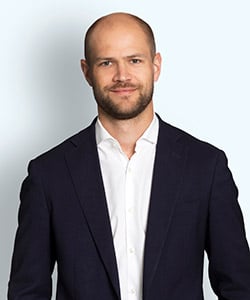
Ole Christoffer Ellingsen | Managing associate | Thommessen

Notable examples of this energy project expertise bearing fruit include Simonsen Vogt Wiig’s recent work advising Biojet on the development of pioneering technology for the production of organic biofuels; Haavind’s substantial involvement in new power production mandates encompassing wind, hydro and grid projects, including the largest onshore wind power projects in Norway – the Fosen and the Øyfjellet wind farms; and Thommessen’s work regarding the licensing, development and operation of onshore wind power facilities, as well as advising on the merger between Lyse Produksjon’s hydropower business and Norsk Hydro’s Røldal-Suldal power plants to create one of the largest hydropower producers in Norway.

Beyond assisting clients directly, firms have also played a key role in the regulatory shift in the wider legal framework across Norway.

As Tannum comments, ‘While we have assisted major players in the market with making the transition from oil and gas activity to renewable energy sources, we have also aided the decision makers to set up a viable legal framework, especially within the offshore and hydrogen arenas’.

Snemyr and Ellingson continue, ‘Law firms’ expertise in renewable energy law is an important source for the authorities, and an important factor for the development of a legal framework that facilitates investments in renewable energy or sustainability’.

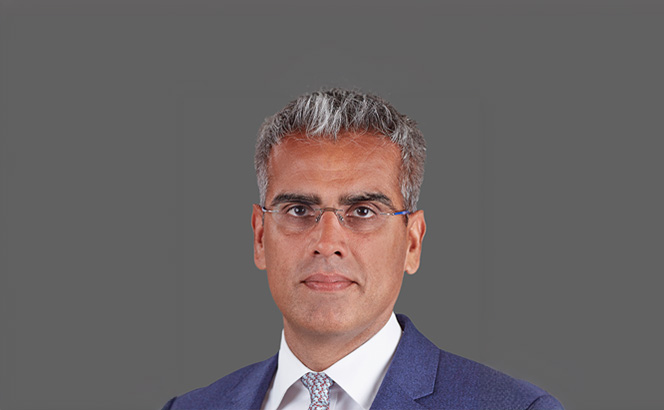
June Snemyr | State energy expert

Similarly, beyond billable work, firms in the market have also taken up the green gauntlet directly and adapted their own internal processes for the sustainability movement. Haavind has set its sights on being carbon neutral by the end of 2022, while Thommessen has created the freely accessible Sustainability Database, a tool which provides clients and others with analysed and summarised information both on hard law and soft law developments in the field of sustainability, as well as establishing ThommessenZero, an internal team aimed at making the firm more environmentally sustainable.

So, what does the future hold? For the team at Thommessen, ‘We consider the Norwegian energy and industrial market to be an important part of the solution to climate change related challenges. Both the existing energy industry and new innovative companies must contribute if Norway is to continue to assert itself as an important energy producing nation in the future. Existing energy companies have valuable expertise that is crucial for the success of the transition to a sustainable low-emission society’.

However, the journey ahead may not be entirely smooth sailing for the green movement. Simonsen proposes, ‘While we believe the market will continue to grow, the next few years will likely also see a significant number of poorly funded and/or less viable projects, which will not last. We also believe the market going forward will be dominated by large industrial players, as deep pockets might be necessary to fund many early projects, especially within (for the time being) less bankable pioneer industries’.

To sum up, as Tannum states: ‘We have had a substantial amount of projects and transactions for many years now, and with traditional oil and gas players turning to new sources within renewables, we see no signs of this sector cooling down’.


ESG in the DACH region: from soft topic to hard fact

Environmental, social and corporate governance compliance has become a household term for companies, investors and law firms. All across Europe, sustainable investments are booming, and surges in ESG considerations have been widely reported. In the DACH region alone, the market is said to have more than doubled from 2019 to 2020.

The DACH countries Germany, Austria and Switzerland are not only located next to each other in Central Europe, but also have de-facto nation-wide language as well as a strong, stable economy in common. The countries, with a population of just under 100m between them, all have a high density of SMEs as well as significant activity in the industrials and chemicals, IT and telecoms, and consumer goods industries.

While the most common transactions are still purely corporate ones, other forms of investment have increased steadily over the years. With the world’s continuous high interest in the aforementioned sectors, it is no surprise that private equity and venture capital funds as well as other investors often look to the DACH countries for promising and secure business.

Although a focus on the ‘E’ aspect of ESG has been around for some years, it started to have an undeniable influence on the private sector when the Paris Agreement was finalised in 2016. Germany, Austria, and Switzerland all ratified the agreement in October 2016. Since then, various laws have been passed in the countries to reduce or neutralise greenhouse gas emissions. Nonetheless, as the recent elections in Germany have shown, even in 2021 it remains a divisive topic.

Investors, however, have continued to increasingly take a target’s impact on the perceived factors of climate change, as well as sustainability efforts, into account in their investment decisions. While it is too early to have a fully number-backed link between ESG investing and financial returns, the market has had to react to the growing demand from consumers, employees and limited partners.

According to Lucina Berger, who focuses on corporate governance at German full-service firm Hengeler Mueller, society is a key driver: ‘Campaigns such as the Fridays for Future or the Black Lives Matter movement contribute further to making ESG an omnipresent topic.’

In Berger’s opinion, it is also due to the public’s interest that ESG could hold its ground during the last two turbulent years. With Covid-19 spreading across the globe, the demand for transparency and an environmental conscience took centre stage for consumers. This has led to an all-time high in instructions for law firms to advise on ESG-related matters.

Berger sees not only large companies inquiring but also SMEs – or the Mittelstand – seeking advice.

While ESG concerns climb higher on DACH region companies’ agendas, one of the main challenges continues to be the directive – or rather the lack thereof. Austria, Germany and Switzerland all struggle with the sheer volume of guidelines, laws and standards existing at federal, state and international levels.

Lucina Berger | Partner | Hengeler Mueller

Mandatory sustainability reporting, as well as incentive structures, seem to be measures that have caught on well in all aforementioned jurisdictions. Nevertheless, ‘due to the lack of a uniform rating and classification systems, the risk of greenwashing cannot be excluded,’ according to Wolf Theiss partner Sarah Wared.

As a corporate and M&A lawyer in Austria, Wared increasingly assists clients with developing their sustainability efforts and ESG compliance. ‘It is a challenge to adhere to all regulations as there has been no real uniformity,’ she states, but is also hopeful about the new EU regulation which intends to address this issue: The EU Taxonomy, a classification system establishing a list of environmentally sustainable economic activities.

A first delegated act was formally adopted in June 2021, with more to follow. These acts aim to provide companies, investors and policymakers with appropriate definitions, protect from greenwashing and subsequently increase sustainable investment. ‘Time will tell how the Taxonomy plays out but it’s a step in the right direction,’ says Wared.

While not a part of the EU, Switzerland also has an eye on the new classification system. ‘We have to make sure that whatever we do here isn’t in a vacuum. Alignment with the EU and other jurisdictions is of massive importance,’ says Christoph Vonlanthen, a partner in Schellenberg Wittmer’s M&A and Capital Markets teams in Switzerland, and an ESG specialist.

‘Climate change is going to have a profound impact on the economy,’ he states, and refers to a tangible example in the form of a study published by the Swiss Sustainable Finance (SSF) association. In its Swiss Sustainable Investment Market Study 2021, data on the funds and mandates reported by banks and asset managers and internally managed asset owner volumes shows that sustainable investment funds overtake conventional funds for the first time.

Sarah Wared | Partner | Wolf Theiss

‘Besides the regulatory changes and the public’s role, climate-related disputes are another key driver for awareness’ says Berger, referring to the recent, prominent Shell litigation. Dutch environmental group Milieudefensie, together with four Nigerian farmers, brought proceedings against the oil giant alleging pollution caused by oil spills that took place in 2004-2007. In early 2021, the Dutch Court of Appeal in The Hague held Shell liable, and the company is now also required to install equipment to prevent damage in the future.

These cases set precedents and serve as a warning sign for those who neglect to keep their house in check. However, by now, most take heed: ‘Wanting to get ESG expectations right is at the forefront of board members’ minds and for that, they seek counsel more than ever,’ says Berger. All three firms report a significant uptick in ESG due diligence mandates.

By implication, clients also expect their law firms to have integrated ESG criteria into their business. ‘Especially if you want to get on a panel, companies will request insight into their providers of legal services’ initiatives; interestingly enough, while this was traditionally more regarding (gender) diversity, sustainability efforts are now equally inquired about,’ says Berger.

In 2021, being involved in ESG matters as well as working on internal sustainability efforts contributes to a law firm’s competitiveness. In conversation with Schellenberg Wittmer, COO and Sustainability task-force member Alexander Rohde mentions, ‘When hiring new talent, you want to be a firm that’s at the forefront of contemporary behaviour.’

As part of the firm’s measures, Schellenberg Wittmer launched a working group to reduce its carbon footprint, and as Rohde states, ‘It is important to engage the full breadth of firm members here; thinking with ESG in mind is in our DNA.’

Alexander Rohde | COO | Schellenberg Wittmer

‘By involving firm members across the board in our initiatives, we can advise on the full spectrum of the matter,’ Sarah Wared agrees. Wolf Theiss, a firm with offices not only in Vienna but in numerous CEE/SEE countries, recently launched a dedicated ESG practice which also recognises that ‘the assistance in drawing up new business models needs to be tailor-made to the industry. A company in oil and gas has to work out a different plan than others.’

Even though ESG is often called upon in connection with finance and litigation expertise, it is a cross-sectional topic both in regard to legal practice areas and industry sectors. Hengeler Mueller therefore also pursues a holistic approach with ESG specialists in the various different practice groups. ‘This way positions you closer to the market requirements as well as being able to provide specific advice,’ according to Berger.

With this rise in ESG practices and internal ESG pledges by various law firms in the market, a sensitive question arises: will it be controversial for them to advise companies that are either environmentally harmful or not genuine in their efforts?

‘So far, I’m not familiar with law firms doing ESG due diligence on their own clients, except for what is statutorily required or needed from a reputational perspective, but I’d be curious to see how this area develops,’ says Berger.

Wared adds, ‘It always depends on which areas of ESG are neglected. It is always important to differentiate.’

Christoph Vonlanthen | Partner | Schellenberg Wittmer

Vonlanthen agrees: ‘At the end of the day, there are very few black and white cases. Most companies want to do the right thing, even though they might be in the wrong industry and have to reposition themselves. Our legal assistance would be very valuable here.’

While all three partners share the opinion that the number of guidelines can be challenging at times, they are in good spirits. ‘It is telling how pervasive the whole conversation has become. ESG used to be a soft topic, rather reputational and a lot of commercial consideration would trump it; this is no longer the case in Switzerland. Enormous progress was made in a short amount of time,’ says Vonlanthen.

Berger adds, ‘Even though it comes with hurdles and additional effort, ESG has made it into the German boardrooms. The fact that this topic gained so much significance and attention at the highest levels of companies is a positive signal. In a few years, these efforts will hopefully pay off.’

Wared also highlights that: ‘In Austria, you can even see companies which are not subject to regulatory obligations establishing a dedicated ESG task force. To sum it up, all in all, quite positive developments.’

AI: ‘Is it going to destroy humankind? No. The good parts are worth pursuing’

AI may appear to be a relatively nascent development but in reality this is far from the case. John McCarthy first coined the term back in 1956, and since then we have seen IBM’s Deep Blue and Watson machines beat chess and Jeopardy champions, and Apple create its virtual assistant, Siri. Now, the rise of generative AI models such as ChatGPT have not only significantly changed the performance of AI but have also caught the attention of the mainstream media, exploding into the public consciousness with their accessibility.

At a foundational level, AI uses computer science and datasets to enable problem-solving. The technology takes on a human-like function – learning, reading, writing, analysing and researching. AI can be applied to an extensive range of systems and products, from customer service and recommendation engines to supply chains and document creation, which effectively creates a new world of possibilities. Continue reading “AI: ‘Is it going to destroy humankind? No. The good parts are worth pursuing’”

Sidley continues infrastructure push as firms hire in antitrust, finance and funds

City of London

Sidley Austin has continued to expand its London energy and infrastructure team with its hire of Ben Thompson from Travers Smith. The new hire enhances the firm’s London offering in this practice, which it strengthened in March last year with the hires of James MacArthur and Ed Freeman from Weil, Gotshal & Manges. Continue reading “Sidley continues infrastructure push as firms hire in antitrust, finance and funds”

The future is now – how tech expertise shot to the top of the agenda

For law firms, tech credentials are perhaps more important than ever before. The AI revolution has captured the imagination of all forward-thinking advisers, with its potential to improve process, save costs, and impress clients.

And when it comes to tech clients, it isn’t just about the Apples or Alphabets of this world – with the UK ranking third globally for venture capital investment and home to more than 150 unicorn companies worth more than $1bn, firms are also chasing the next big thing. Continue reading “The future is now – how tech expertise shot to the top of the agenda”

Life During Law: Nick Scott

I’m the only one in my immediate family who isn’t a scientist – they’re all biologists and engineers. My grandfather, though, was a lawyer in a small market town in Fife so I’d always been interested in law as a career. He was a traditional high street lawyer – doing very little corporate work – so training at Clifford Chance (CC) was a completely different professional life from his. But from him I saw someone who was regarded as an upright person in the community.

I began my career at CC which, at the time, was the biggest firm in the world. I came to London to follow my then girlfriend who was a professional violinist, but we’d split up by the time I got there! I wanted the experience and challenge of working in a huge organisation. Continue reading “Life During Law: Nick Scott”

‘We’re all talking about it, but what’s going to happen?’ Why this year’s LIDW is promising in-house lawyers answers around greenwashing, AI, and group litigation

The chairs of next week’s London International Disputes Week (LIDW) are urging in-house lawyers to attend the event to learn about all the latest litigation risks.

Continue reading “‘We’re all talking about it, but what’s going to happen?’ Why this year’s LIDW is promising in-house lawyers answers around greenwashing, AI, and group litigation”

The path to net zero: the legal sector’s blueprint for climate leadership and competitive advantage

With a wave of environmental disclosure legislation on the horizon – CSRD, SECR, and many more – legal firms are filling a new niche: advising clients and organisations with sustainability compliance, greenwashing-proof marketing, and financial communications with new emissions line items. And more than ever, legal firms are recognising the need to implement their own carbon reporting and to build meaningful reduction plans.

This article will explore the main drivers and benefits of carbon emissions reduction in the legal sector, as well as the challenges organisations face and a path forward. Continue reading “The path to net zero: the legal sector’s blueprint for climate leadership and competitive advantage”

Latham lands Cahill City finance trio as Greenberg, McDermott and Cleary bolster London ranks

In the most notable London lateral move of recent weeks, Latham & Watkins bolstered its banking and finance practice with its hire of partners Jonathan Brownson, Joydeep Choudhuri, and Prue Criddle from New York banking heavyweight Cahill Gordon & Reindel’s City office.

Continue reading “Latham lands Cahill City finance trio as Greenberg, McDermott and Cleary bolster London ranks”

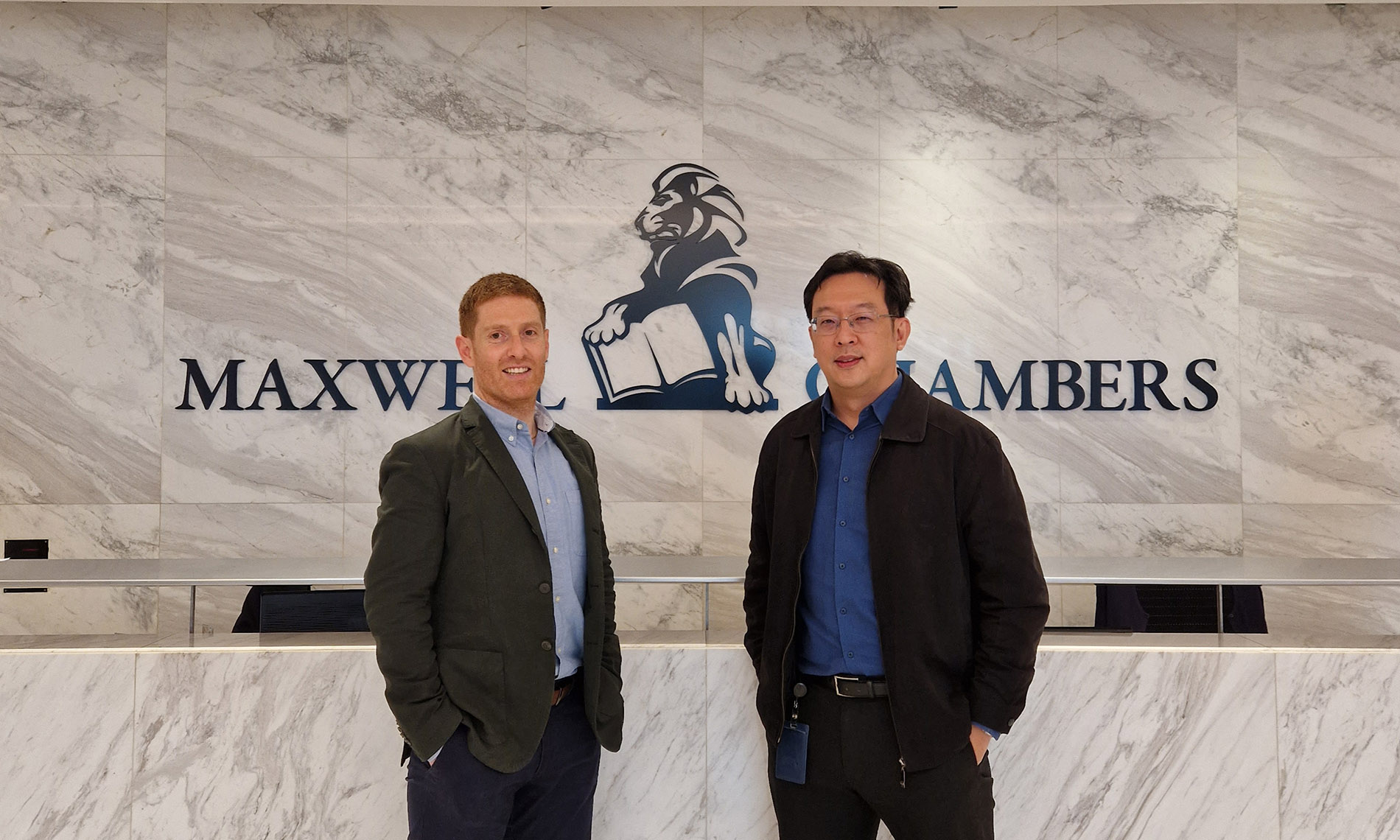
‘Your mindset is more important than it seems’ – how Maxwell Chambers shook up Singapore’s disputes landscape

Jiun Ean Ban, chief executive of Maxwell Chambers in Singapore, recently sat down with Legal 500 senior research editor Allan Cohen to share the story of his journey to his current position, as well as the latest developments from Maxwell Chambers, the influence of technology in disputes, and his sideline in fantasy novels and educational board games Continue reading “‘Your mindset is more important than it seems’ – how Maxwell Chambers shook up Singapore’s disputes landscape”

‘Ultra-focused on culture and hungry to build’ – McDermott’s new London head sets out stall

Earlier this month McDermott Will & Emery announced that leveraged finance partner Aymen Mahmoud will take the reins from Hamid Yunis as managing partner of the US firm’s London office.

Mahmoud (pictured), who has been at the firm since 2020 after joining from Willkie Farr & Gallagher, will take the helm on 1 June, while also continuing as co-head of the firm’s London transactions group and the finance, restructuring, and special situations group.

Continue reading “‘Ultra-focused on culture and hungry to build’ – McDermott’s new London head sets out stall”

‘I have this condition, and I’m owning it’: HSF’s Samantha Brown on managing mental ill health alongside a legal career

For Mental Health Awareness Week, Samantha Brown, partner and regional head of Herbert Smith Freehill’s employment, pensions, and incentives group, spoke to LB about her own experiences with anxiety and depression, lessons from returning to work after taking time off, and how attitudes and language around mental health have changed for the better

Continue reading “‘I have this condition, and I’m owning it’: HSF’s Samantha Brown on managing mental ill health alongside a legal career”

‘I mistakenly thought severe anxiety was a good thing’ – Vinson’s London head on opening up about mental health

For Mental Health Awareness Week, Vinson & Elkins London managing partner Nick Henchie talked to LB about recognising mental health issues, seeking support, the importance of openness and honesty, and supporting the next generation of lawyers facing similar challenges
Continue reading “‘I mistakenly thought severe anxiety was a good thing’ – Vinson’s London head on opening up about mental health”

Bird & Bird to launch in Tokyo with Ashurst corporate hire as firm sets sights on €1bn revenue mark

Bird & Bird has announced it will open in Tokyo before the end of the year, with the new base set to be led by corporate partner Hiro Iwamura, who is joining from Ashurst.

The launch marks the first significant move for the firm since February’s unveiling of its new five-year strategy – which includes the ambitious goal of reaching €1bn in revenue within the next half-decade.

Continue reading “Bird & Bird to launch in Tokyo with Ashurst corporate hire as firm sets sights on €1bn revenue mark”

‘We have an insatiable appetite for recruiting’: Keystone posts double-digit revenue rise as hiring picks up

James Knight

Keystone Law has released its financial results for 2023-24, posting a 15.1% revenue boost to reach £87.9m.

The results, which cover the financial year to 31 January 2024, come after a sustained period of recruitment for the firm, which is continuing to sign up lawyers attracted to its non-traditional, decentralised model. Continue reading “‘We have an insatiable appetite for recruiting’: Keystone posts double-digit revenue rise as hiring picks up”

‘I have near total freedom to build a practice’: ex-Kirkland Hall of Famer Tumani on his new challenge

Legal 500 Hall of Famer Satnam Tumani, previously head of the SFO’s anti-corruption and bribery unit and a longstanding partner at Kirkland & Ellis, recently moved to boutique firm Edmonds Marshall McMahon. He spoke to LB about his brief to build a new practice, the contrasts between Big Law and boutique law, and his nostalgia for the days of letter-writing

Continue reading “‘I have near total freedom to build a practice’: ex-Kirkland Hall of Famer Tumani on his new challenge”

Travers departures continue as Linklaters and Fried Frank pick off transactional trio

Selecting recruits

In another blow for Travers Smith, respected corporate M&A and ECM partner Richard Spedding has left to join Linklaters, on the back of the departure of a private equity duo to Goodwin late last month.

A Legal 500 Hall of Famer for small to mid-cap equity capital markets, Spedding was at Travers or 25 years. Experienced in public M&A and the UK Takeover Code, Spedding recently co-led the firm’s team advising key private equity client Inflexion on its £342m takeover of DWF.

Continue reading “Travers departures continue as Linklaters and Fried Frank pick off transactional trio”