A SUSTAINABLE JOURNEY IN INVESTMENT MANAGEMENT: CELEBRATING TWO DECADES OF ESG ADVOCACY

During our last trip to São Paulo, Brazil, the GC Powerlist team had the opportunity to sit down for a compelling conversation with an exceptional and accomplished in-house lawyer, for another amazing segment of GC on Tour.

In 2023, Pilar Perez celebrated 20 years at the investment management firm Lorinvest, a company founded by Norwegian entrepreneur Erling Lorentzen, credited with shifting the alignment of the forestry industry from the northern to the southern hemisphere, who has inspired the pursuit for bigger and fresher projects which completely revolutionised the sector’s market.

After two decades, Pilar is today the company’s compliance, human resources and – you guessed it – legal director. During our informal conversation, we delved into her legal team’s proactive initiatives aimed at fostering environmental responsibility and sustainability within not only her company, but the entire investment management industry. With impassioned dedication, Pilar articulated the strategic vision driving their efforts, highlighting innovative approaches to corporate social responsibility and environmental stewardship.

In today’s world, Pilar is a unique case where her ideas for our future intersect law, ethics and business responsibility, with a commitment to driving positive change in the corporate landscape. As you’ll be able to grasp from our conversation below, Pilar exemplifies a new wave of legal professionals shaping a more sustainable future for companies worldwide.

GC: In 2023, you celebrated 20 years at Lorinvest. Back then, when you joined the company, how were Environment, Social and Governance (ESG) issues addressed?

Pilar Perez: Lorinvest – driven by the DNA of the Norwegian entrepreneur Erling Lorentzen – has continuously, throughout its history, been linked to sustainability matters. In fact, there has always been this sustainability perspective, not only from an environmental and social perspective, but also from a financial perspective, something we address as E2SG (where the extra “E” stands for Economy). This approach has helped us create more opportunities and open new doors to further reinvestment.

Initiatives rooted in robust economic principles not only generate employment but also pave the way for prospects. In turn, Lorinvest as a company, undergoes a transformative journey, becoming guardian of the environment, broadening horizons, and sowing the seeds of new possibilities.

I would mention our pioneering milestones: Aracruz was the first company listed on the Down Jones sustainability index (2006) and Erling Lorentzen was one of the founders of the WBCSD – World Business Council for Sustainable Development and the forerunner of an ecological footprint study in the forestry industry that has been widely adopted in multiple markets.

GC: Do you feel that your role had an important impact on any changes that may have occurred during that period?

PP: I like to believe so. During my time, I have consistently taken initiatives to the group’s executives on these issues. As an example, in the rural areas of interior north of Minas Gerais, one of our companies embraced a project tailored for women entrepreneurs. Many of these women, whose husbands were engaged in agricultural work, lacked employment opportunities. Through empowerment initiatives, these women were equipped with the skills to cultivate their own gardens, produce organic goods, and craft artisanal products. This not only generated additional income for their families but also instilled a sense of productivity and fulfilment among the women involved. This case is just one of the many ideas we’ve successfully implemented during my years at the company.

GC: In your opinion, what are the main factors that brought about this change in wanting to address ESG issues with more resolve?

PP: Our commitment to a long-term perspective shapes every investment decision we undertake. This approach enables us to view ESG factors through distinct lens. Without this engagement, our ability to maintain a cohesive connection with the long term would be considerably challenged.

By connecting in the long-term, we try to mitigate risks and predict accidents and casualties even before they occur. I can highlight that we have greatly improved our corporate governance so that our anti-corruption practices and anti-money laundering practices have been introduced and improved, not only in relation to our direct business partners, but also to our indirect business partners. For us, it is essential that all companies involved in business with us conduct themselves in a completely transparent and legal practice.

GC: Before, you mentioned some initiatives you’ve led. Can you provide any examples related to ESG you are currently involved in?

PP: I have been participating in a social investment panel for about three years. Norsul – a logistic and shipping company – makes social investments through a fragment that comes from taxes that can be applied to social projects. Additionally, the company takes part of its capital and applies it to social projects. Norsul promotes volunteer work among its employees and at the end of nine months, several NGOs and social businesses present their projects, and a budget is allocated to their initiatives. This platform has been running for about four years and I participate annually on the panel.

GC: How do you stay up to date on new regulations and developments on ESG, and how does this change your company’s strategy?

PP: One important statement to make is that in ESG, there is no “one size fits all”. Each company, through its mission, vision and purpose can understand what problem it wants to solve and what positive and negative externalities that business generates. So, within any company involved in an activity, whether harmful or not – and if it generates any pollutants or if it affects a community – the legal team has a fundamental role in mitigating those risks, as it increasingly begins to have this business perspective and a more executive thinking to understand the business and its purpose, to effectively establish priorities and how to best address the problem.

For us, it is essential to create a relationship with each community where we are located, not just on environmental matters, but also in terms of employability, better pay and social responsibility. This is all a matter of learning and taking care of your own land. Basically, a holistic look beyond the general micro and financial perspective.

GC: Is your entire legal department involved in these matters, or just a part of it is tasked with ESG responsibilities?

PP: The entire department is well aware of these situations. We must always stay updated. It is very important that we  follow legislation, not just in Brazil, but internationally.  We are also very attentive to the practices of other companies in other parts of the world, with whom we work with. Having international parameters has also helped the company to become more competitive and able to provide its services in a more efficient way, in all aspects.

An example of sustainability in our business is one of our companies’ out dry ore treatment. An ore that would otherwise be discarded, we use a microwave technique in order to use this material without any waste of resources, including wastage of water. This technology avoids the use of dams and environmental catastrophes. The company named New Steel was sold to Vale therefore allowing it to offer more security in its operations, not only benefiting its workers but also the community.

GC: What do you feel is missing in terms of regulation, especially in your sector? How do you believe governments should empower companies with greater responsibility?

PP: From our perspective, it is very important to have regulation and surveillance over carbon emissions, so that it gives confidence to operators and so that we can use it without any interpretation of greenwashing. Today, there is also a lack of parameterized indicators and ways of measuring the applicability of ESG in a reliable way, thus leaving some room for greenwashing marketing.

GC: Are you of the opinion that the C-suite management within your company is aligned with the concerns surrounding ESG matters?

PP: Yes. We are convinced that identifying and developing innovative and scalable projects led by sustainable principles and economic prosperity is the leading strategy to success. Each new step in this journey is an opportunity to reaffirm our definition of what E²SG means. My role as an executive director is to reinforce these principles, not only at Lorinvest but throughout our invested companies.

GC: Some time back, The Economist published an article critiquing the ESG acronym, suggesting it amalgamates distinct topics that merit separate consideration. Does your legal team assign greater significance or priority to any one of these components?

PP: Definitely not. At Lorinvest, we have the three acronyms very well connected, because – in my opinion you cannot take care of the environment without taking care of people and you cannot take care of people without taking care of the environment. There is a clear interconnection among them. Investing in companies requires looking at the positive and negative externalities that each one generates.

For each business, we always identify that each case is different, and each requires a specific strategy, always keeping an eye on the three themes, simultaneously. As mentioned before, something we have covered a lot in the company is the economy aspect – hence E2SG. Why is economics so important to us? This strategy allows us to make new investments and maintain business sustainability, which then allows for greater care in other areas in the long term. Ultimately, the path to environmental sustainability, depends largely on a company’s financial sustainability.

GC: How do you see legal departments tackling ESG in the future?

PP: It will go from a ‘nice to have’ to a ‘must have’. It will have a huge corporate impact and legal departments are increasingly taking this view. If the company is created with a well-defined purpose, vision and a clear intention of positive impact, it has a better chance of addressing these issues from the beginning.

Implementing policies supportive of ESG does not necessarily imply incurring high costs. In fact, some are financially sustainable and not only yield substantial long-term economic benefits but also enhance the company’s reputation. It’s imperative to debunk the misconception that ESG is expensive and complex; rather, it’s something pragmatic and actionable that can be pursued here and now. Every company, regardless of its size and budget should think of what are the possible things that are viable to be implemented now.

GC: What do you think is missing in the experts’ approach?

PP: A conciliatory look, moving away from the dogma that activism is all radical and creating a consensus and commitment on both sides as it will not be possible to do everything immediately – it is a lengthy process with several steps to be taken.

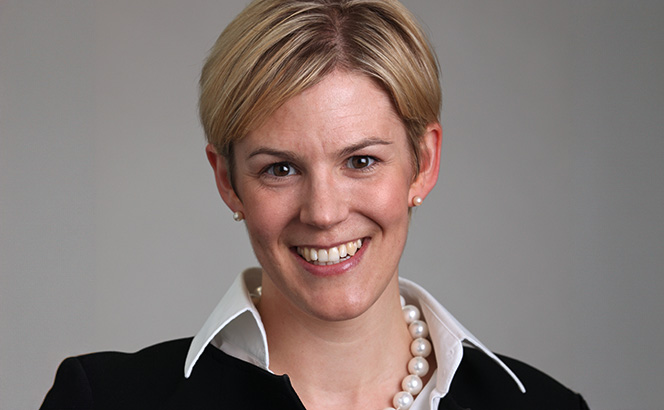
Pilar Perez – Legal, Compliance and HR Director

Editorial:
Francisco Castro, GC Powerlist series

No shoo-ins at the Legal Business Awards, and beware the perils of TL;DR

Awards season. It should be viewed as a time of joy and anticipation, when law firms clamour to showcase their finest achievements of the last year, whether that’s an especially standout deal or matter, or an extraordinary individual moving the dial for the profession.

Amusingly, one of my colleagues forwarded this message onto me in Teams from a law firm comms person (apparently intent on gaming the system) who will, to save their blushes, remain nameless: ‘Can you ask Nathalie what is an easy category to apply for in the LB Awards?’ Continue reading “No shoo-ins at the Legal Business Awards, and beware the perils of TL;DR”

Hong Kong in Change: The GC View

Hong Kong is at a particularly interesting time in its development. Historically, the trading gateway between the vast riches of China and the upstart European powers before becoming one of the world’s pre-eminent international finance hubs, recent developments have seen much commentary on a perceived swing back towards China which has left many wondering about the viability of its long-term future as an international business powerhouse. At a time when IPO activity has slowed to a trickle, and some lawyers have relocated their Asia headquarters to Singapore, much remains uncertain – though Hong Kong still retains a unique character that no other city can fully emulate.  

So, how is the situation on the ground really? During a trip to the Pearl of the Orient in September of last year, we had the pleasure of chatting with a number of highly regarded general counsel in Hong Kong to get their take on things. Two particularly enlightening interviews were with Michelle Hung, general counsel and company secretary of COSCO Shipping Ports, and Victor Ding, general counsel – CLPe at CLP. For the on-the-record part of the interview, the following question was asked to both: 

GC: Taking a strategic view, what do you see as the main economic and geopolitical factors that you think will impact your industry over the next five to ten years? 

Michelle Hung: The ever-changing global political and economic landscape will inevitably cause uncertainties to our businesses.  Recent changes in international trade and global supply chains following the COVID-19 pandemic have impacted our operations.  However, we are still optimistic about our ports’ businesses as global economic recovery is underway. The workforce aging trend will also have an impact on our industry.  As the workforce ages, increased attention to staff training, career planning, new skillsets requirements, and medical benefits is essential.  Addressing the workforce aging is crucial for maintaining productivity and developing necessary capabilities in the following decade. Producing and burning fossil fuels creates air pollution and generates toxic emissions that cause climate change.  New forms of renewable energy for the transportation, marine and aviation industries might be developed as a replacement for fossil fuel in the near future.

Victor Ding: ‘ESG will remain important in the next five to ten years given the pace at which countries and companies are trying to achieve each’s respective ESG goals.  Although we have seen at COP 28countries prioritising stability of their own economies and citizens, climate change is not going away. In particular, our industry has commenced and will continue the energy transition journey, moving away from carbon-intensive electricity generation. In addition, geopolitics will likely continue to play a role in the Asia Pacific region. From a legal perspective, seeking approval for investments into jurisdictions with foreign investment review requirements adds a layer of uncertainty in deal-making.’ 

MH: In terms of how we tackle problems in our day-to-day work, AI is set to be a transformative force in the coming years, reshaping the way people work and live.  Leveraging AI’s capabilities can enhance industry efficiency and productivity, allowing more focus on high-value issues.  Allocation of sufficient investment in AI technology and knowledge building is crucial for staying competitive and enhancing competence in the long run. 

GC: Are in-house counsel in a strong position in times of change?

MH: In-house legal counsel play a multifaceted role beyond providing legal advice, and will be at the forefront of dealing with these challenges.  We are instrumental in formulating optimal legal solutions in line with the corporate long-term development objectives and strategy.  The foreseeable challenge lies in legal advice on future global acquisitions which will involve considerations on geopolitical and sanction issues. One consistent challenge for in-house legal teams is resource constraints. In-house legal departments often lack the sufficient manpower to cater for the workload arising from non-routine substantial transactions – all future progress must be made in light of this.


Lead partner: The year the United Kingdom becomes a globally leading life sciences hub?

Herbert Smith Freehills

As part of its ambition for the United Kingdom to become a tech and science superpower by 2030, in 2023, the government announced a range of initiatives aimed at boosting investment and innovation in the life sciences sector. Innovators will have welcomed the R&D tax relief reforms whilst the Mansion House Compact (the largest UK pension providers committing 5% of their assets to unlisted equities by 2030) announced in July has provided some hope of alternative pools of capital to unlisted UK life sciences companies.

Whilst the impact of those initiatives remains to be seen (and of course with a general election looming) the UK life sciences industry is being positioned to play an integral part in the growth of the country’s economy with many recent legal and regulatory developments also seeking to enhance the attractiveness of the UK as a leading life sciences hub. The UK’s offer to prospective investors will be centred around access to innovation, the financial firepower of the City, the introduction of progressive and pragmatic regulation and a robust advisory ecosystem, which it hopes will allow it to differentiate itself from the EU.
Continue reading “Lead partner: The year the United Kingdom becomes a globally leading life sciences hub?”

‘You’d be a brave innovator to ignore the UK’ – why patent work is booming in the post-Brexit UK life sciences market

Buzz about blockbuster drug developments, expiring patents and the launch of the European Union’s Unified Patent Court – 2023 certainly kept the life sciences sector on its toes.

Against a backdrop of several of the world’s best-selling drugs nearing their patent expiration dates and the market getting to grips with the implications of the long-awaited EU patent court, leading practitioners at UK law firms provide their perspective on the evolving world of IP and patent litigation in the life sciences sector – and what these changes mean for corporates and their in-house legal teams.
Continue reading “‘You’d be a brave innovator to ignore the UK’ – why patent work is booming in the post-Brexit UK life sciences market”

Taking back control – the post-pandemic landscape for life sciences regulation

After years of delays caused by geopolitical instability and the Covid-19 pandemic, the new regulatory landscape for the life sciences industry is beginning to take shape in both the UK and the EU.

As the UK pushes ahead with its post-Brexit journey of divergence, establishing itself as an innovation-friendly environment in the global life sciences market has become of paramount importance. In contrast, the EU’s attempts to draft comprehensive laws on AI have attracted criticism from the medical devices industry, prompting overburdened innovators to turn to more investment-friendly locations. Continue reading “Taking back control – the post-pandemic landscape for life sciences regulation”

Life Sciences perspectives: Grant Castle

Why did you decide to specialise in life sciences?

I have a science background – a PhD in organic chemistry – and worked for a short time as a medicinal chemist for Glaxo. I also had an interest in the humanities at school, so law had always seemed to be an option, and life sciences law made sense. I had assumed that I would go into IP/patents, but was lucky enough to meet a life sciences regulatory lawyer from Covington and spent some time there before my training contract. I came back to Covington on qualification and I am still here 25 years later. I clearly made the right choice. Continue reading “Life Sciences perspectives: Grant Castle”

Rising stars: Zina Chatzidimitriadou – ‘It is the one legal area that affects every single one of us and is, above all, human-centred’

Zina Chatzidimitriadou, senior managing associate at Sidley, on why she picked a career in life sciences law

Why did you decide to specialise in life sciences law?

In 2009, in my previous life as a molecular biologist at the Cancer Research UK institute, I experienced the multiple issues and complexities facing researchers and people involved in the development of life-saving treatments and methods. Life sciences emerged as the natural field of law for me and, while I am biased, I believe it is the most exciting field of law. Continue reading “Rising stars: Zina Chatzidimitriadou – ‘It is the one legal area that affects every single one of us and is, above all, human-centred’”

Rising stars: Jaspreet Takhar – ‘EU regulators are preparing an avalanche of new laws that are going to have a monumental impact on pharma and medtech’

Baker McKenzie’s Jaspreet Takhar on the future of digital health solutions

What made you decide to specialise in life sciences law?

I specialise in advising on digital health solutions – that means advising on the regulation of health data, digital health solutions (including AI solutions, software and medical devices), as well as contracting in this space. I genuinely find the digital health space as exciting as it gets! The legal landscape is changing at breakneck speed, and I spend a few minutes every morning scanning for new regulations, new announcements and new guidance. Hot topics for legal developments include the regulation of AI, the European Health Data Space, and local laws on medical confidentiality. Continue reading “Rising stars: Jaspreet Takhar – ‘EU regulators are preparing an avalanche of new laws that are going to have a monumental impact on pharma and medtech’”

Rising stars: Dr Chris Boyle – ‘AI is going to have a transformative impact on the life sciences industry’

Dr Chris Boyle, counsel at Sidley, on the risks and opportunities facing the industry

What do you most enjoy about being a life sciences lawyer?

My passion for science led me to qualify and practice as a veterinary surgeon before I discovered that scientists and clinicians are uniquely placed to make a big impact in law, and I requalified as a life sciences lawyer. The best thing about being a life sciences lawyer is that I can harness my scientific interest and knowledge to serve clients on a far greater scale than I could in veterinary practice, to help them develop the health technologies and services of tomorrow. It is particularly helpful to ‘speak the same language’ when I am advising on matters that require interactions with healthcare professionals and regulators – for example it has proven key in assisting clients with NICE health technology assessments. Continue reading “Rising stars: Dr Chris Boyle – ‘AI is going to have a transformative impact on the life sciences industry’”

Rising stars: David Gibson – ‘There are so many great new technologies and medicines with potential to make a difference to populations and treatment pathways but key challenges remain in regulating them’

David Gibson, senior associate at McDermott Will & Emery

Why did you decide to specialise in life sciences law, and what’s the best thing about being a life sciences lawyer?

I find the subject matter fascinating, and I am genuinely curious about new technologies and medicines and how they can be used, shared and applied to improve healthcare for patients across the world. We are often involved in helping our clients with strategic projects and transactions, partnering with other organisations and bringing products to market and to scale – often across different jurisdictions. As a transactional and projects lawyer, I enjoy working with clients to bring the commercial, financing, regulatory and other legal elements together: it is an area of law that has a bit of everything! Continue reading “Rising stars: David Gibson – ‘There are so many great new technologies and medicines with potential to make a difference to populations and treatment pathways but key challenges remain in regulating them’”

Life Sciences Yearbook 2024 – Editor’s letter

Welcome to the 2024 Life Sciences Yearbook from the Legal 500 and Legal Business, sponsored by Herbert Smith Freehills.

This yearly publication will offer insight into the issues facing life sciences companies in the wake of Brexit, as well as interviews with leading private practice lawyers in the sector and a data-driven snapshot of the top firms and practitioners from the Legal 500. Continue reading “Life Sciences Yearbook 2024 – Editor’s letter”

Life Sciences Yearbook 2024: Sponsored foreword – Herbert Smith Freehills

Herbert Smith Freehills

‘Economic and geopolitical pressures continued throughout 2023, making the global business landscape a volatile one. It might even be asked whether disruption is simply the new business norm.’

Global themes in 2023 and outlook

The disruption felt globally at the end of 2022 continued to impact life sciences companies and investors in 2023. Continue reading “Life Sciences Yearbook 2024: Sponsored foreword – Herbert Smith Freehills”

Sponsored thought leadership: China life sciences – Transaction insights and notable industry trends

China’s life sciences and healthcare (LS&H) industry underwent an unprecedented transformation in 2023 consisting of numerous challenges and opportunities. Within this year, BD transactions primarily included out-licensing of ex-China rights, China commercialisation partnering, asset acquisition and regaining drug product rights, which reflected the courage of China’s LS&H market players to proactively seek changes and rebuild corporate strategies in a quickly shifting market landscape.

Fangda Partners’ life sciences team remained active in advising on LS&H corporate transactions in 2023 and recent key deal highlights included (a) Hengrui Pharma (600276.SH)’s out-licensing partnership with Aiolos Bio to exploit the innovative anti-TSLP mAb (SHR-1905) outside of Greater China; (b) Kanghua Biological (300841.SZ)’s grant of exclusive rights to HilleVax for exploitation of recombinant hexavalent VLP norovirus vaccine outside of Greater China; (c) CStone Pharma (2616.HK)’s sale of the Tibsovo® (Ivosidenib) business, asset and goodwill thereof in Greater China and Singapore to Les Laboratoires Servier; and (d) a number of commercialisation arrangements entered into by multinational pharmaceutical companies with leading CSOs. Continue reading “Sponsored thought leadership: China life sciences – Transaction insights and notable industry trends”

Sponsored Q&A: Fangda Partners

1. What are the current regulatory frameworks governing the life sciences industry in China, and how have they evolved in recent years?

Legislation wise, the Drug Administration Law and its implementation rules are pivotal to the pharmaceutical sector, overseeing the entire lifecycle of chemical and biological products. For medical devices (including in-vitro diagnostics), the Regulations for the Supervision and Administration of Medical Devices form a fundamental framework. Continue reading “Sponsored Q&A: Fangda Partners”

Sponsored thought leadership: Healthcare and pharmaceutical regulation in Portugal

The health sector in Portugal, which encompasses the pharmaceutical market, is a prominent and fast-evolving sector that has undergone significant growth in recent decades.

Sérvulo & Associados law firm is proud to have a highly specialised, experienced and well-balanced team in the life sciences field. The team covers all the main legal matters of the health and pharmaceutical industry, acting and providing guidance on a broad range of issues. These include patent trademark litigation within the pharmaceutical sector, but also advice on regulatory matters, data privacy for clinical research, and patient support programmers, as well as distribution and supply agreements to the industry. Continue reading “Sponsored thought leadership: Healthcare and pharmaceutical regulation in Portugal”

Baker McKenzie: One eye open

‘What defines Baker McKenzie over the last few years is the sheer amount of work that has gone into financial integration. This is a massive achievement but it has come at a cost. Now, establishing the differentiator to attract the next generation is important. It isn’t going to turn into Kirkland & Ellis, but what is going to drive that entrepreneurial aspect now Bakers looks more like other firms?’ So speaks one commentator of the quandary facing Baker McKenzie, a sentiment reprising a prevailing theme of our 2017 deep dive into the firm, ‘Waking the Giant’, which found a firm struggling to maintain its unique international selling point amid escalating globalisation of Big Law.

Then, the firm had just embarked on a new and ambitious phase, with the respected veteran intellectual property (IP) partner Paul Rawlinson instated as its first British chair in October 2016. The mandate? To implement the firm’s 2020 strategy, which focused on integrating Bakers across three profit pools, increasing profitability and growing the firm’s transactional practices in London, New York and China. Continue reading “Baker McKenzie: One eye open”