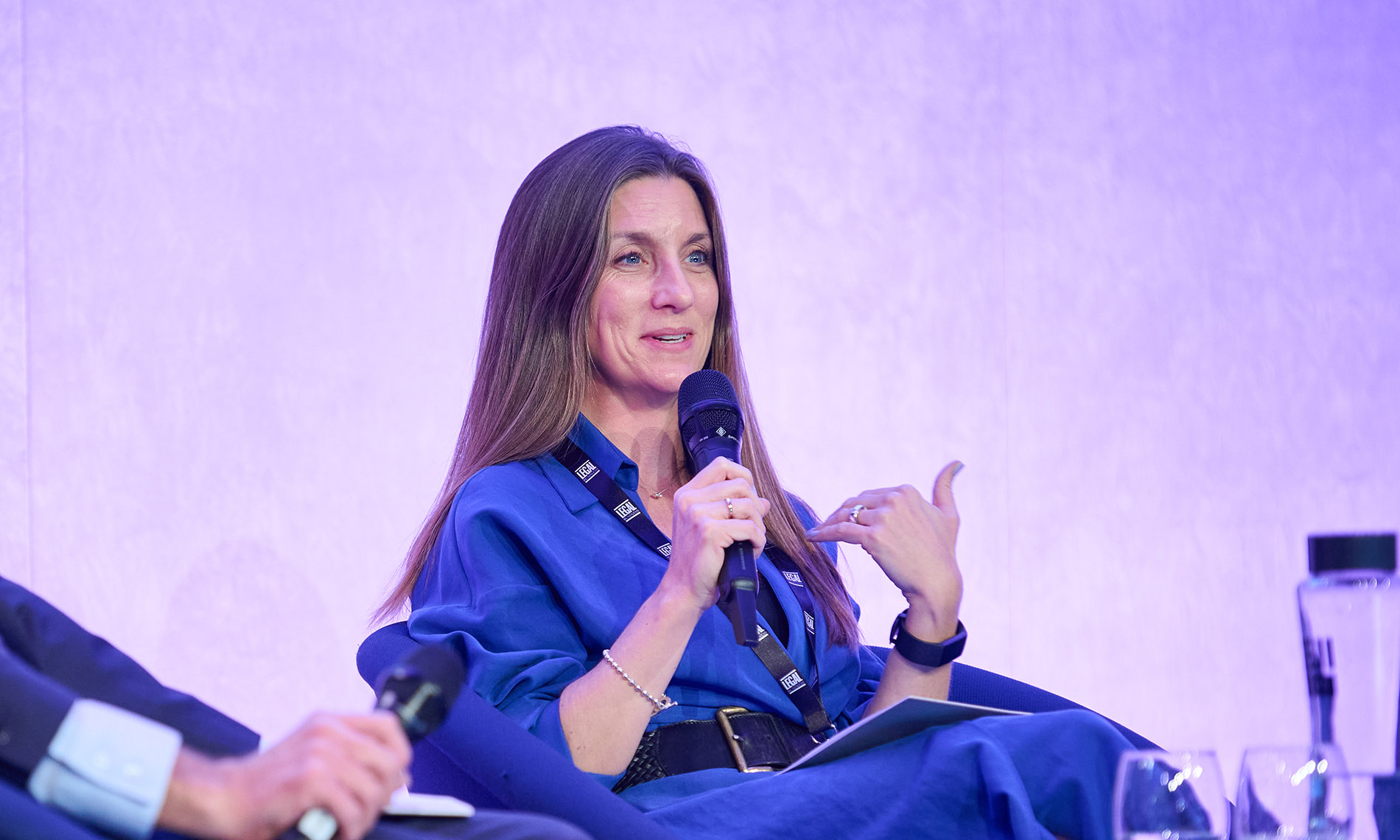
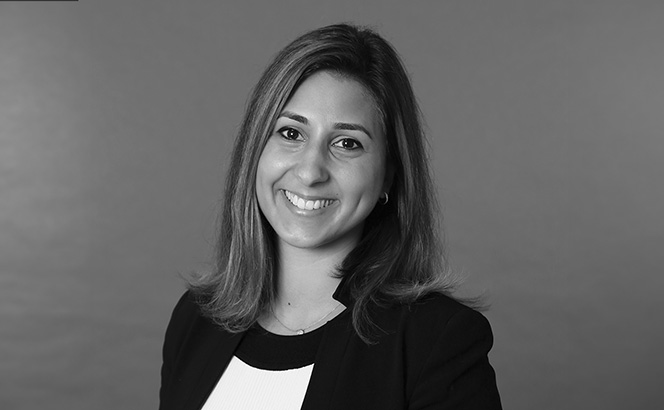
During our last trip to São Paulo, Brazil, the GC Powerlist team had the opportunity to sit down for a compelling conversation with an exceptional and accomplished in-house lawyer, for another amazing segment of GC on Tour.
In 2023, Pilar Perez celebrated 20 years at the investment management firm Lorinvest, a company founded by Norwegian entrepreneur Erling Lorentzen, credited with shifting the alignment of the forestry industry from the northern to the southern hemisphere, who has inspired the pursuit for bigger and fresher projects which completely revolutionised the sector’s market.
After two decades, Pilar is today the company’s compliance, human resources and – you guessed it – legal director. During our informal conversation, we delved into her legal team’s proactive initiatives aimed at fostering environmental responsibility and sustainability within not only her company, but the entire investment management industry. With impassioned dedication, Pilar articulated the strategic vision driving their efforts, highlighting innovative approaches to corporate social responsibility and environmental stewardship.
In today’s world, Pilar is a unique case where her ideas for our future intersect law, ethics and business responsibility, with a commitment to driving positive change in the corporate landscape. As you’ll be able to grasp from our conversation below, Pilar exemplifies a new wave of legal professionals shaping a more sustainable future for companies worldwide.
GC: In 2023, you celebrated 20 years at Lorinvest. Back then, when you joined the company, how were Environment, Social and Governance (ESG) issues addressed?
Pilar Perez: Lorinvest – driven by the DNA of the Norwegian entrepreneur Erling Lorentzen – has continuously, throughout its history, been linked to sustainability matters. In fact, there has always been this sustainability perspective, not only from an environmental and social perspective, but also from a financial perspective, something we address as E2SG (where the extra “E” stands for Economy). This approach has helped us create more opportunities and open new doors to further reinvestment.
Initiatives rooted in robust economic principles not only generate employment but also pave the way for prospects. In turn, Lorinvest as a company, undergoes a transformative journey, becoming guardian of the environment, broadening horizons, and sowing the seeds of new possibilities.
I would mention our pioneering milestones: Aracruz was the first company listed on the Down Jones sustainability index (2006) and Erling Lorentzen was one of the founders of the WBCSD – World Business Council for Sustainable Development and the forerunner of an ecological footprint study in the forestry industry that has been widely adopted in multiple markets.
GC: Do you feel that your role had an important impact on any changes that may have occurred during that period?
PP: I like to believe so. During my time, I have consistently taken initiatives to the group’s executives on these issues. As an example, in the rural areas of interior north of Minas Gerais, one of our companies embraced a project tailored for women entrepreneurs. Many of these women, whose husbands were engaged in agricultural work, lacked employment opportunities. Through empowerment initiatives, these women were equipped with the skills to cultivate their own gardens, produce organic goods, and craft artisanal products. This not only generated additional income for their families but also instilled a sense of productivity and fulfilment among the women involved. This case is just one of the many ideas we’ve successfully implemented during my years at the company.
GC: In your opinion, what are the main factors that brought about this change in wanting to address ESG issues with more resolve?
PP: Our commitment to a long-term perspective shapes every investment decision we undertake. This approach enables us to view ESG factors through distinct lens. Without this engagement, our ability to maintain a cohesive connection with the long term would be considerably challenged.
By connecting in the long-term, we try to mitigate risks and predict accidents and casualties even before they occur. I can highlight that we have greatly improved our corporate governance so that our anti-corruption practices and anti-money laundering practices have been introduced and improved, not only in relation to our direct business partners, but also to our indirect business partners. For us, it is essential that all companies involved in business with us conduct themselves in a completely transparent and legal practice.
GC: Before, you mentioned some initiatives you’ve led. Can you provide any examples related to ESG you are currently involved in?
PP: I have been participating in a social investment panel for about three years. Norsul – a logistic and shipping company – makes social investments through a fragment that comes from taxes that can be applied to social projects. Additionally, the company takes part of its capital and applies it to social projects. Norsul promotes volunteer work among its employees and at the end of nine months, several NGOs and social businesses present their projects, and a budget is allocated to their initiatives. This platform has been running for about four years and I participate annually on the panel.
GC: How do you stay up to date on new regulations and developments on ESG, and how does this change your company’s strategy?
PP: One important statement to make is that in ESG, there is no “one size fits all”. Each company, through its mission, vision and purpose can understand what problem it wants to solve and what positive and negative externalities that business generates. So, within any company involved in an activity, whether harmful or not – and if it generates any pollutants or if it affects a community – the legal team has a fundamental role in mitigating those risks, as it increasingly begins to have this business perspective and a more executive thinking to understand the business and its purpose, to effectively establish priorities and how to best address the problem.
For us, it is essential to create a relationship with each community where we are located, not just on environmental matters, but also in terms of employability, better pay and social responsibility. This is all a matter of learning and taking care of your own land. Basically, a holistic look beyond the general micro and financial perspective.
GC: Is your entire legal department involved in these matters, or just a part of it is tasked with ESG responsibilities?
PP: The entire department is well aware of these situations. We must always stay updated. It is very important that we follow legislation, not just in Brazil, but internationally. We are also very attentive to the practices of other companies in other parts of the world, with whom we work with. Having international parameters has also helped the company to become more competitive and able to provide its services in a more efficient way, in all aspects.
An example of sustainability in our business is one of our companies’ out dry ore treatment. An ore that would otherwise be discarded, we use a microwave technique in order to use this material without any waste of resources, including wastage of water. This technology avoids the use of dams and environmental catastrophes. The company named New Steel was sold to Vale therefore allowing it to offer more security in its operations, not only benefiting its workers but also the community.
GC: What do you feel is missing in terms of regulation, especially in your sector? How do you believe governments should empower companies with greater responsibility?
PP: From our perspective, it is very important to have regulation and surveillance over carbon emissions, so that it gives confidence to operators and so that we can use it without any interpretation of greenwashing. Today, there is also a lack of parameterized indicators and ways of measuring the applicability of ESG in a reliable way, thus leaving some room for greenwashing marketing.
GC: Are you of the opinion that the C-suite management within your company is aligned with the concerns surrounding ESG matters?
PP: Yes. We are convinced that identifying and developing innovative and scalable projects led by sustainable principles and economic prosperity is the leading strategy to success. Each new step in this journey is an opportunity to reaffirm our definition of what E²SG means. My role as an executive director is to reinforce these principles, not only at Lorinvest but throughout our invested companies.
GC: Some time back, The Economist published an article critiquing the ESG acronym, suggesting it amalgamates distinct topics that merit separate consideration. Does your legal team assign greater significance or priority to any one of these components?
PP: Definitely not. At Lorinvest, we have the three acronyms very well connected, because – in my opinion you cannot take care of the environment without taking care of people and you cannot take care of people without taking care of the environment. There is a clear interconnection among them. Investing in companies requires looking at the positive and negative externalities that each one generates.
For each business, we always identify that each case is different, and each requires a specific strategy, always keeping an eye on the three themes, simultaneously. As mentioned before, something we have covered a lot in the company is the economy aspect – hence E2SG. Why is economics so important to us? This strategy allows us to make new investments and maintain business sustainability, which then allows for greater care in other areas in the long term. Ultimately, the path to environmental sustainability, depends largely on a company’s financial sustainability.
GC: How do you see legal departments tackling ESG in the future?
PP: It will go from a ‘nice to have’ to a ‘must have’. It will have a huge corporate impact and legal departments are increasingly taking this view. If the company is created with a well-defined purpose, vision and a clear intention of positive impact, it has a better chance of addressing these issues from the beginning.
Implementing policies supportive of ESG does not necessarily imply incurring high costs. In fact, some are financially sustainable and not only yield substantial long-term economic benefits but also enhance the company’s reputation. It’s imperative to debunk the misconception that ESG is expensive and complex; rather, it’s something pragmatic and actionable that can be pursued here and now. Every company, regardless of its size and budget should think of what are the possible things that are viable to be implemented now.
GC: What do you think is missing in the experts’ approach?
PP: A conciliatory look, moving away from the dogma that activism is all radical and creating a consensus and commitment on both sides as it will not be possible to do everything immediately – it is a lengthy process with several steps to be taken.
Pilar Perez – Legal, Compliance and HR Director

Editorial:
Francisco Castro, GC Powerlist series