‘A fast-evolving phenomenon’: City partners on how GCs can get ahead of the ESG curve

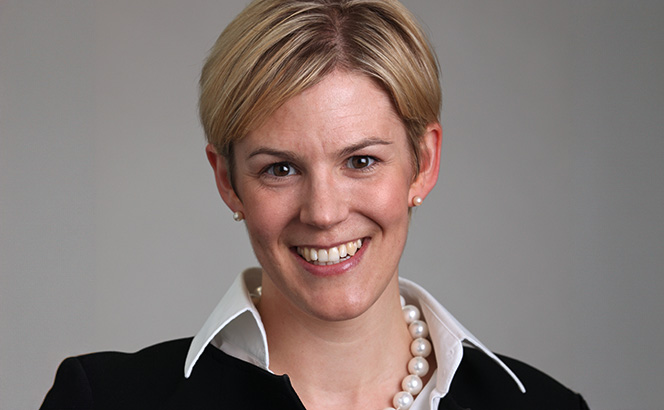
‘ESG is a huge opportunity for lawyers, including in-house counsel, to play a different and more strategic role, and be really plugged into the business. But that is also big change and change can be quite difficult,’ asserts Rachel Barrett, environment and climate change partner at Linklaters. Continue reading “‘A fast-evolving phenomenon’: City partners on how GCs can get ahead of the ESG curve”

Seismic changes

At the advent of 2024, in-house lawyers and general counsel are cautiously observing the ramifications of Nick Ephgrave’s new leadership at the UK Serious Fraud Office with bated breath. The organisation has faced intense scrutiny in recent years due to unsuccessful prosecutions and overall inactivity. Yet, with the appointment of the former senior Metropolitan Police chief, new challenges are expected to emerge for corporations and their in-house teams from a rejuvenated enforcement authority. Continue reading “Seismic changes”

Revolving Doors: A&O bolsters City structured finance team with Milbank hires

City of London

Leading this week’s high-profile moves, Allen & Overy has appointed John Goldfinch as a partner in its global structured finance practice in advance of its planned merger with Shearman & Sterling. Previously at Milbank, Goldfinch has experience dealing with derivative products and securitisation asset classes including CLOs and CDOs (cash and synthetic), lease receivables, trade receivables, equity, credit rates, NPLs, covered bond transactions and secured structured lending.

Goldfinch brings with him a team of four senior associates from Milbank: Adrian Kwok, Peter West, Eleanor Cripps and Alexandra Wells. A&O has highlighted private capital as a key strategic focus for the firm, with its private capital revenue growing by over 60% over the past two years. Continue reading “Revolving Doors: A&O bolsters City structured finance team with Milbank hires”

Changing of the guard: DLA Piper elects next managing partner

DLA Piper has today (23 February) announced the election of Charles Severs as its next managing partner. His tenure will begin on 1 January 2025.

Severs moved to DLA Piper as a partner in 2003 from Herbert Smith Freehills.  A Legal 500 Hall of Famer for M&A: Lower Mid-Market Deals, Severs has an impressive client book including John Menzies, Symphony Technology, Science Group, Elekta, Hexcel, Puretech and Keller Group. Continue reading “Changing of the guard: DLA Piper elects next managing partner”

‘Clients want to come to the best’: Quinn Emanuel breaks $2bn barrier with 26% revenue jump

Quinn Emanuel today announced its firmwide financial results for calendar year 2023, with the litigation powerhouse joining an elite band of firms to notch revenue over $2bn, with a 26% jump taking it from $1.65bn last year to $2.08bn.

The firm also broke $1bn in profit, which reached $1.35bn. Revenue per lawyer was up nearly 16% from $1.61m to $1.86m, despite an increase in total headcount of 108, to 1,120. The results are even more impressive on PEP, which rose 39% from $5.23m to $7.29m – higher than any firm in last year’s Global 100 apart from first-place Kirkland & Ells ($7.52m) and second-place Wachtell ($7.29m). Continue reading “‘Clients want to come to the best’: Quinn Emanuel breaks $2bn barrier with 26% revenue jump”

Dealwatch: US firms lead on household names The Body Shop and Yodel as restructuring returns

The long-dormant restructuring market has had a shot in the arm recently, with the City teams of US stalwarts winning lead mandates on the administration of The Body Shop and a rescue deal of Yodel.

Jones Day and White & Case are handling the administration of cosmetic group The Body Shop, while Dechert and Weil advised parcel delivery business Yodel to secure a rescue deal backed by one of its rivals. Continue reading “Dealwatch: US firms lead on household names The Body Shop and Yodel as restructuring returns”

Resistance is agile – Euro Elite firms adapt to survive amid global turbulence

Last year, our annual Euro Elite survey of 100 leading independent firms across more than 40 jurisdictions found partners in a positive mindset but nervous about the potentially bleak outlook for 2023. Those fears had some foundation.

Key market players – both new and old – said that the continent’s law firms would be remiss to forget that geopolitical conflict, the energy market crisis, the tightening of monetary policy and economic contraction loomed around the corner. The subsequent belt-tightening and inertia in the European deals market over the past 12 months has shown this has come to pass. Firms generally are quieter in terms of major corporate mandates and have a larger headcount than the boom year of 2021. This has inevitably taken its toll. Continue reading “Resistance is agile – Euro Elite firms adapt to survive amid global turbulence”

Breaking barriers: Garrigues tops €450m revenue in milestone for Euro Elite firms

Fernando Vives

Spanish leader Garrigues has continued its pacesetting reputation among the Euro Elite firms by becoming the first in the group to break the €450m turnover barrier.

The results, announced on Tuesday (20 February) continue a decade-long purple patch for the firm, with a 2.5% revenue increase on last year to €454.3m marking a banner year. Continue reading “Breaking barriers: Garrigues tops €450m revenue in milestone for Euro Elite firms”

Financial Regulatory and Disputes Summit: Stranger than fiction

Even amid a stellar agenda at Legal Business’ Financial Regulatory and Disputes Summit 2023 last November, CMS’ session – Shams and charades: Lessons learned from abusive litigation against banks – made shockwaves around the auditorium of the Queen Elizabeth II Centre in London’s Westminster.

Indeed, it’s not often that a panel discussion elicits gasps of astonishment from delegates, but that’s exactly what happened when CMS’ finance disputes partners Tom Dane and Vanessa Whitman (pictured) sat down with Neil Kitchener KC of One Essex Court to discuss their experience representing Allied Irish Banks in the curious case of Kallakis v AIB. Continue reading “Financial Regulatory and Disputes Summit: Stranger than fiction”

Paul Hastings scores double win from Latham after recent London losses

City of London

Paul Hastings has hired litigation and trial partners Oliver Browne and Stuart Alford KC from Latham & Watkins, just days after it lost structured finance partner Blake Jones to Clifford Chance. Paul Hastings confirmed the moves today (16 February).

Browne leaves Latham after 18 years, having most recently served as the London co-chair of the litigation and trial department. He advises on cross-border disputes, both in court and arbitration, spanning various sectors and involving high-net-worth individuals. Continue reading “Paul Hastings scores double win from Latham after recent London losses”

‘Bolder, pragmatic, more proactive’: Regulators bare teeth, but will they bite?

Solicitors Regulation Authority SRA

2024 started with uncharacteristically decisive action from the Solicitors Disciplinary Tribunal (SDT), when in January it issued its joint highest-ever fine against Clyde & Co, following a slew of anti-money laundering breaches. It was a bold move from the regulator, which in recent months has drawn criticism over its perceived lack of action during the collapse of Axiom Ince.

As the fallout from Axiom Ince continues, both the Solicitors Regulation Authority (SRA) and the Legal Service Board (LSB) have announced reviews into the handling of Axiom Ince in the run up to the SRA’s intervention. Both regulators have highlighted the need to centre consumer protection in their regulatory approach, as the scandal threatens to derail confidence in the profession. Continue reading “‘Bolder, pragmatic, more proactive’: Regulators bare teeth, but will they bite?”

Revolving Doors: Fried Frank expands London team with Goodwin trio as Orrick faces global losses

Leading the high-profile moves this week, Fried Frank has strengthened its London private equity practice with a triple hire from Goodwin. Christian Iwasko , Michelle Tong, and Priya Rupal have departed from Goodwin after a three-year stint, and bring with them experience at Sidley and Kirkland & Ellis.

Elsewhere in the City, Clifford Chance has bolstered its finance team with the addition of Blake Jones from Paul Hastings. Jones departs from Paul Hastings after five years, bringing extensive expertise in structured finance, having previously worked at Linklaters earlier in his career. Continue reading “Revolving Doors: Fried Frank expands London team with Goodwin trio as Orrick faces global losses”

‘Firing on all cylinders’: Akin sees double-digit growth in revenue and PEP

In keeping with Hogan Lovells’ recently released financial results, Akin has reported strong financials for 2023, contradicting fears of diminished returns for the global elite.

Revenue at the firm is up 11% to $1.37bn from $1.23bn, while profit per equity partner (PEP) has jumped 22% to $3.15m from $2.58m. This follows a sluggish 2022 for the firm, which saw global revenue grow by only 1% and PEP drop by 17%.

The firm highlighted its financial restructuring, private credit, traditional energy, energy transition, international trade and litigation practices as particularly high performers over the last financial year. Continue reading “‘Firing on all cylinders’: Akin sees double-digit growth in revenue and PEP”

Simpson Thacher unveils new London head as office posts double-digit revenue growth

Simpson Thacher has announced that Wheatly MacNamara will take over from Jason Glover as London managing partner in October. Glover, who has led the office since 2016, will remain at the firm in a strategic role. The news comes as the City office recorded a 23% rise in revenue for 2023.

MacNamara (pictured), whose practice focuses on real estate acquisitions, dispositions and joint ventures, joined the firm in 2005 and has been a partner since 2016. Her client book includes Blackstone, KKR, KSL, Apollo and Northwood. Continue reading “Simpson Thacher unveils new London head as office posts double-digit revenue growth”

‘It’s a differentiating year’: Hogan Lovells sees double-digit growth in revenue and PEP

Miguel Zaldivar

As financial reporting season kicks off in earnest, Hogan Lovells has today (13 February) reported a 10% boost in global revenue to $2.68bn as profit per equity partner (PEP) jumped 20% to $2.74m.

This performance represents a $250m increase in the firm’s top line, contrasting with a $174m decline last year. After a 7% drop in revenue and an 8% decrease in PEP in 2022/23, this year’s double-digit growth strikes an optimistic tone for other Global 100 players. Continue reading “‘It’s a differentiating year’: Hogan Lovells sees double-digit growth in revenue and PEP”

A SUSTAINABLE JOURNEY IN INVESTMENT MANAGEMENT: CELEBRATING TWO DECADES OF ESG ADVOCACY

During our last trip to São Paulo, Brazil, the GC Powerlist team had the opportunity to sit down for a compelling conversation with an exceptional and accomplished in-house lawyer, for another amazing segment of GC on Tour.

In 2023, Pilar Perez celebrated 20 years at the investment management firm Lorinvest, a company founded by Norwegian entrepreneur Erling Lorentzen, credited with shifting the alignment of the forestry industry from the northern to the southern hemisphere, who has inspired the pursuit for bigger and fresher projects which completely revolutionised the sector’s market.

After two decades, Pilar is today the company’s compliance, human resources and – you guessed it – legal director. During our informal conversation, we delved into her legal team’s proactive initiatives aimed at fostering environmental responsibility and sustainability within not only her company, but the entire investment management industry. With impassioned dedication, Pilar articulated the strategic vision driving their efforts, highlighting innovative approaches to corporate social responsibility and environmental stewardship.

In today’s world, Pilar is a unique case where her ideas for our future intersect law, ethics and business responsibility, with a commitment to driving positive change in the corporate landscape. As you’ll be able to grasp from our conversation below, Pilar exemplifies a new wave of legal professionals shaping a more sustainable future for companies worldwide.

GC: In 2023, you celebrated 20 years at Lorinvest. Back then, when you joined the company, how were Environment, Social and Governance (ESG) issues addressed?

Pilar Perez: Lorinvest – driven by the DNA of the Norwegian entrepreneur Erling Lorentzen – has continuously, throughout its history, been linked to sustainability matters. In fact, there has always been this sustainability perspective, not only from an environmental and social perspective, but also from a financial perspective, something we address as E2SG (where the extra “E” stands for Economy). This approach has helped us create more opportunities and open new doors to further reinvestment.

Initiatives rooted in robust economic principles not only generate employment but also pave the way for prospects. In turn, Lorinvest as a company, undergoes a transformative journey, becoming guardian of the environment, broadening horizons, and sowing the seeds of new possibilities.

I would mention our pioneering milestones: Aracruz was the first company listed on the Down Jones sustainability index (2006) and Erling Lorentzen was one of the founders of the WBCSD – World Business Council for Sustainable Development and the forerunner of an ecological footprint study in the forestry industry that has been widely adopted in multiple markets.

GC: Do you feel that your role had an important impact on any changes that may have occurred during that period?

PP: I like to believe so. During my time, I have consistently taken initiatives to the group’s executives on these issues. As an example, in the rural areas of interior north of Minas Gerais, one of our companies embraced a project tailored for women entrepreneurs. Many of these women, whose husbands were engaged in agricultural work, lacked employment opportunities. Through empowerment initiatives, these women were equipped with the skills to cultivate their own gardens, produce organic goods, and craft artisanal products. This not only generated additional income for their families but also instilled a sense of productivity and fulfilment among the women involved. This case is just one of the many ideas we’ve successfully implemented during my years at the company.

GC: In your opinion, what are the main factors that brought about this change in wanting to address ESG issues with more resolve?

PP: Our commitment to a long-term perspective shapes every investment decision we undertake. This approach enables us to view ESG factors through distinct lens. Without this engagement, our ability to maintain a cohesive connection with the long term would be considerably challenged.

By connecting in the long-term, we try to mitigate risks and predict accidents and casualties even before they occur. I can highlight that we have greatly improved our corporate governance so that our anti-corruption practices and anti-money laundering practices have been introduced and improved, not only in relation to our direct business partners, but also to our indirect business partners. For us, it is essential that all companies involved in business with us conduct themselves in a completely transparent and legal practice.

GC: Before, you mentioned some initiatives you’ve led. Can you provide any examples related to ESG you are currently involved in?

PP: I have been participating in a social investment panel for about three years. Norsul – a logistic and shipping company – makes social investments through a fragment that comes from taxes that can be applied to social projects. Additionally, the company takes part of its capital and applies it to social projects. Norsul promotes volunteer work among its employees and at the end of nine months, several NGOs and social businesses present their projects, and a budget is allocated to their initiatives. This platform has been running for about four years and I participate annually on the panel.

GC: How do you stay up to date on new regulations and developments on ESG, and how does this change your company’s strategy?

PP: One important statement to make is that in ESG, there is no “one size fits all”. Each company, through its mission, vision and purpose can understand what problem it wants to solve and what positive and negative externalities that business generates. So, within any company involved in an activity, whether harmful or not – and if it generates any pollutants or if it affects a community – the legal team has a fundamental role in mitigating those risks, as it increasingly begins to have this business perspective and a more executive thinking to understand the business and its purpose, to effectively establish priorities and how to best address the problem.

For us, it is essential to create a relationship with each community where we are located, not just on environmental matters, but also in terms of employability, better pay and social responsibility. This is all a matter of learning and taking care of your own land. Basically, a holistic look beyond the general micro and financial perspective.

GC: Is your entire legal department involved in these matters, or just a part of it is tasked with ESG responsibilities?

PP: The entire department is well aware of these situations. We must always stay updated. It is very important that we  follow legislation, not just in Brazil, but internationally.  We are also very attentive to the practices of other companies in other parts of the world, with whom we work with. Having international parameters has also helped the company to become more competitive and able to provide its services in a more efficient way, in all aspects.

An example of sustainability in our business is one of our companies’ out dry ore treatment. An ore that would otherwise be discarded, we use a microwave technique in order to use this material without any waste of resources, including wastage of water. This technology avoids the use of dams and environmental catastrophes. The company named New Steel was sold to Vale therefore allowing it to offer more security in its operations, not only benefiting its workers but also the community.

GC: What do you feel is missing in terms of regulation, especially in your sector? How do you believe governments should empower companies with greater responsibility?

PP: From our perspective, it is very important to have regulation and surveillance over carbon emissions, so that it gives confidence to operators and so that we can use it without any interpretation of greenwashing. Today, there is also a lack of parameterized indicators and ways of measuring the applicability of ESG in a reliable way, thus leaving some room for greenwashing marketing.

GC: Are you of the opinion that the C-suite management within your company is aligned with the concerns surrounding ESG matters?

PP: Yes. We are convinced that identifying and developing innovative and scalable projects led by sustainable principles and economic prosperity is the leading strategy to success. Each new step in this journey is an opportunity to reaffirm our definition of what E²SG means. My role as an executive director is to reinforce these principles, not only at Lorinvest but throughout our invested companies.

GC: Some time back, The Economist published an article critiquing the ESG acronym, suggesting it amalgamates distinct topics that merit separate consideration. Does your legal team assign greater significance or priority to any one of these components?

PP: Definitely not. At Lorinvest, we have the three acronyms very well connected, because – in my opinion you cannot take care of the environment without taking care of people and you cannot take care of people without taking care of the environment. There is a clear interconnection among them. Investing in companies requires looking at the positive and negative externalities that each one generates.

For each business, we always identify that each case is different, and each requires a specific strategy, always keeping an eye on the three themes, simultaneously. As mentioned before, something we have covered a lot in the company is the economy aspect – hence E2SG. Why is economics so important to us? This strategy allows us to make new investments and maintain business sustainability, which then allows for greater care in other areas in the long term. Ultimately, the path to environmental sustainability, depends largely on a company’s financial sustainability.

GC: How do you see legal departments tackling ESG in the future?

PP: It will go from a ‘nice to have’ to a ‘must have’. It will have a huge corporate impact and legal departments are increasingly taking this view. If the company is created with a well-defined purpose, vision and a clear intention of positive impact, it has a better chance of addressing these issues from the beginning.

Implementing policies supportive of ESG does not necessarily imply incurring high costs. In fact, some are financially sustainable and not only yield substantial long-term economic benefits but also enhance the company’s reputation. It’s imperative to debunk the misconception that ESG is expensive and complex; rather, it’s something pragmatic and actionable that can be pursued here and now. Every company, regardless of its size and budget should think of what are the possible things that are viable to be implemented now.

GC: What do you think is missing in the experts’ approach?

PP: A conciliatory look, moving away from the dogma that activism is all radical and creating a consensus and commitment on both sides as it will not be possible to do everything immediately – it is a lengthy process with several steps to be taken.

Pilar Perez – Legal, Compliance and HR Director

Editorial:
Francisco Castro, GC Powerlist series

No shoo-ins at the Legal Business Awards, and beware the perils of TL;DR

Awards season. It should be viewed as a time of joy and anticipation, when law firms clamour to showcase their finest achievements of the last year, whether that’s an especially standout deal or matter, or an extraordinary individual moving the dial for the profession.

Amusingly, one of my colleagues forwarded this message onto me in Teams from a law firm comms person (apparently intent on gaming the system) who will, to save their blushes, remain nameless: ‘Can you ask Nathalie what is an easy category to apply for in the LB Awards?’ Continue reading “No shoo-ins at the Legal Business Awards, and beware the perils of TL;DR”