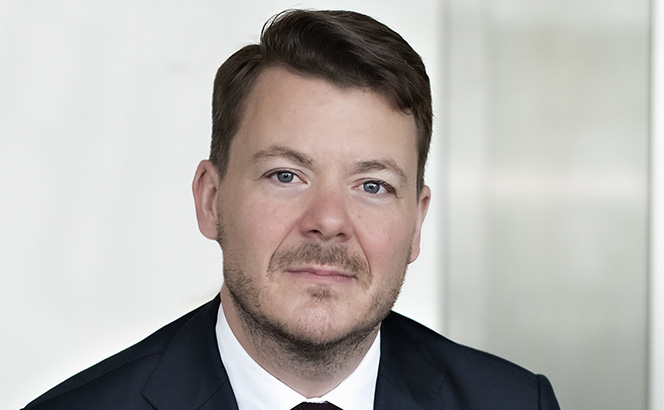
A&O high yield head retires ahead of Shearman tie-up as firm makes first combined partner promos

Allen & Overy

Prominent high-yield partner Kevin Muzilla has retired from Allen & Overy, in the latest departure from the practice ahead of next month’s A&O Shearman mega-merger.

Ranked in the Legal 500 Hall of Fame for London high-yield, Muzilla joined A&O from Milbank as a partner in 2009, and has since headed up the firm’s leveraged finance teams, first the US and then Europe.

Continue reading “A&O high yield head retires ahead of Shearman tie-up as firm makes first combined partner promos”

DLA to open new Germany base as Paul Weiss hires from Simpson and Macfarlanes for Brussels bow

Düsseldorf

DLA Piper has expanded its presence in Germany with the opening of its fifth office there, with confirmation of the move coming as Paul Weiss pushes ahead with a competition launch in Brussels.

Adding to its offices in Frankfurt, Hamburg, Cologne, and Munich, DLA Piper is set to establish in Düsseldorf on 15 April this year. Continue reading “DLA to open new Germany base as Paul Weiss hires from Simpson and Macfarlanes for Brussels bow”

Jaco Theunissen: The evolving role of the GC in South Africa

As one of Africa’s leading economies, South Africa boasts a sophisticated legal market that encompasses a wide range of practice areas and industries. In recent years, the role of the general counsel in the country has undergone significant transformation, reflecting broader shifts in the global business landscape. Traditionally focused primarily on legal compliance and risk management, general counsel in South Africa are now being called upon to play a more strategic role within their organisations.

We have had the privilege of speaking with Jaco Theunissen, group legal and company secretary at ACTOM (Pty) Ltd, to gain first-hand insights into this evolving landscape.

Jaco’s journey into the legal profession began with the completion of his LLB degree in 2008, followed by a master’s degree in law. He then embarked on his legal career by undertaking articles in the capital of South Africa in 2010, ultimately being admitted as an attorney and conveyancer in the North Gauteng High Court, Pretoria in 2011.

Subsequently, Jaco gained valuable experience as a contracts engineer at Foster Wheeler (now Wood PLC), contributing to significant projects such as the Sasol FT Wax Multi-Billion project in Sasolburg. Joining ACTOM (Pty) Ltd in 2013, he assumed the role of divisional legal officer and steadily progressed to become group commercial and legal officer by 2018. In 2022, Jaco was appointed as group legal and company secretary, entrusted with overseeing legal and corporate governance affairs for the ACTOM group.

GC: What was it that attracted you to working in-house? 

Jaco Theunissen (JT): I have always been fascinated by the intersection of law and business. Working in-house allows me to merge these two disciplines in a unique way. What excites me even more is the opportunity to collaborate not just with other lawyers, but also with professionals from various backgrounds like engineers, accountants, and project managers. This dynamic setting offers a rich and diverse perspective that I find both stimulating and fulfilling.

GC: How do you perceive the traditional role of the general counsel evolving in South Africa? 

JT: I am enthusiastic about the evolving role of general counsel in South Africa, especially within larger organisations. A dedicated general counsel is indispensable for effective organisational functioning. The essence of a general counsel’s contribution lies in being hands-on, proactive, and forward-thinking, establishing proper governance practices and robust legal mechanisms to prevent disputes, amongst others, and alignment with the organisation’s strategic goals. Thus, the role of the general counsel is transitioning from traditional back-office support to actively engaging in high-level decision-making processes, where they contribute valuable insights spanning beyond legal considerations.

GC: Are there any new regulatory changes or market dynamics that have influenced this? 

JT: The landscape of statutory compliance in South Africa is undergoing rapid expansion, with new regulations being introduced frequently. This influx of regulatory changes spans various sectors and industries, ranging from financial services to environmental protection. As a result, organisations operating in South Africa must remain vigilant and adaptive to ensure compliance with these evolving legal requirements, not only from a compliance point of view but from a strategic operational point of view as well. In addition, the professional management of contractual relationships is gaining importance. In the past, informal agreements may have sufficed for certain business transactions. However, in today’s complex and highly regulated environment, precise execution of contractual obligations is essential for mitigating risks and fostering successful business relationships.

GC: What do you see as the key challenges facing general counsel in South Africa today, and how are these challenges reshaping the responsibilities and priorities of the role? 

JT: It is often said that great ideas can encounter obstacles in the legal department, and there is some truth to that notion. Despite this perception / challenge, general counsel must identify and communicate all potential legal risks, even when they may not align with the preferences of colleagues in sales and operations. Another challenge for general counsel is the wide range of laws they need to keep up with, which mandates that general counsel obtain and continually refresh their legal expertise across a diverse array of legal domains rather than focusing solely on one area of specialisation.

GC: With the evolving role of the general counsel in South Africa, how do you see the dynamics of the relationship between in-house legal teams and external counsel shifting, and what strategies do you employ to ensure effective collaboration and maximise value?

JT: Both in-house and external legal counsel fulfil essential functions. Nonetheless, I contend that organisations could cut down on legal expenses by bolstering their in-house legal teams to address both legal and commercial issues, rather than consistently turning to external counsel. Echoing the saying: ‘horses for courses’, it is important for general counsel to identify the most suitable external counsel for each task and to ensure that external counsel thoroughly understands the organisation’s risk appetite and business conduct. Fostering and maintaining strong relationships with external counsel, along with providing comprehensive briefings on the instructions at hand, are also particularly important.

GC: Could you provide examples of innovative approaches or initiative that you have implemented or observed in the South African legal landscape that reflect the evolving role of the general counsel?

JT: From a group perspective, an effective strategy we are implementing involves integrating in-house general counsel within organisational divisions to ensure that group divisions receive consistent and comprehensive legal and commercial guidance on a daily basis. By embedding general counsel within day-to-day operations, we proactively address potential disputes and legal issues, minimising the need for reactive measures and litigation.

GC: As the role of the general counsel continues to evolve in South Africa, do you believe it has an impact on your leadership style within the legal department of organisation as a whole? If so, how has this evolution influenced your approach to leading and managing your team? 

JT: Through my experience, I have found that adopting a coaching style of leadership, as opposed to a strictly results-oriented and autocratic approach, is more conducive to effective management of in-house lawyers. This leadership style empowers members of the legal team to leverage their legal expertise and judgment on a case-by-case basis. Given their integration into day-to-day operations, general counsel can provide valuable insights and guidance that are rooted in a thorough understanding of the intricacies of the organisation.

GC: Looking ahead, do you anticipate further changes in the role of the general counsel within South African organisations, and how do you plan to adapt and prepare for these changes?  

JT: The emergence of artificial intelligence (AI) may lead some organisations to rely more on AI. However, it is crucial to educate businesses on integrating AI to automate legal processes, amongst other things, rather than aiming to replace human expertise. AI should be seen as a tool to streamline workflows and improve efficiency, complementing rather than replacing human judgment. Aside from advancements in AI, there is a notable trend emerging where general counsels are transitioning into more strategic and operational roles, moving beyond their traditional back-office support function.

Jaco Theunissen, group legal and company secretary, ACTOM (Pty) Ltd
Sara Maggi, editorial – GC Powerlist

Brand capital can drive your law firm’s growth

There remains a tendency for law firms to treat ‘branding’ as a one-off initiative, which they look at, on average, every eight years. Sadly, this often results in a great deal of wasted time and money, and consequently a great deal of frustration.

Is this to suggest there is little or no value in branding? Far from it. It’s merely that the approach is flawed and leadership teams need a better understanding of how to gain maximum value and momentum. Continue reading “Brand capital can drive your law firm’s growth”

Revolving Doors: Mayer Brown, CRS and BCLP boost tax teams as Linklaters and Fieldfisher join firms announcing partner promotions

City of London

Mayer Brown has strengthened its London tax practice with the addition of tax partner Sam Riesenberg. US-qualified Riesenberg has joined the firm’s City base from KPMG in Washington, where he worked within the firm’s national tax practice. His hire bolsters Mayer Brown’s international tax offering across the asset management and funds sectors as he has significant experience in the space, working with clients including fund sponsors, sovereign wealth and pension funds, institutional investors, family offices and fund managers.

His hire is Mayer Brown’s second into its London tax practice this year, following closely on the heels of real estate investment specialist Ben Eaton’s appointment hire in January this year. Continue reading “Revolving Doors: Mayer Brown, CRS and BCLP boost tax teams as Linklaters and Fieldfisher join firms announcing partner promotions”

Shearman’s McKimm steps aside ahead of A&O tie-up as US firms continue to snap up top London talent

With just a month to go until the A&O Shearman tie-up goes live, Shearman has announced that Europe managing partner and EMEA finance team leader Ward McKimm is retiring, marking one of the highest-profile pre-merger exits to date.

‘Shearman & Sterling and Ward McKimm jointly confirm that, after a nearly 30-year career as a leading high-yield and leveraged finance lawyer based in London, he has decided to retire,’ a firm statement confirmed. ‘Shearman & Sterling thanks Ward for his many years of service to the firm and its clients, and wishes him the best in his next chapter. Ward’s retirement will take effect in a few weeks as he transitions work to other partners.’ Continue reading “Shearman’s McKimm steps aside ahead of A&O tie-up as US firms continue to snap up top London talent”

Sponsored thought leadership: Bulgaria expects record energy investments in 2024-25

In 2023 Bulgaria adopted key legislation amendments that are expected to lead to a boom in green energy investments in the following years. The measures are taken in response to the decline of renewable energy sources’ share in the country’s end consumption for the last two years. The 2022 share of renewable energy sources in the end consumption of electricity in Bulgaria was 19.1% remaining far from the 2030 goal of 27%. Continue reading “Sponsored thought leadership: Bulgaria expects record energy investments in 2024-25”

Sponsored Q&A: Pellerano Nadal

1. What are the primary laws and regulations governing the energy sector in the Dominican Republic?

The General Electricity Law No. 125-01, dated 26 July 2001, as amended (the Electricity Law), regulates all stages of production, transmission, distribution and commercialisation of electricity, as well as the functions of the competent government agencies that oversee the energy sector. These agencies are essentially the National Energy Commission (CNE), responsible for national energy policy development and the Superintendence of Electricity (SIE), as the regulatory/supervisory body. In 2007, the Renewable Energy Incentives Law No. 57-07 (Law 57-07) was enacted to provide a number of incentives to businesses developing renewable energy technologies. Continue reading “Sponsored Q&A: Pellerano Nadal”

Energy perspectives: Clare Burgess

What made you decide to become a lawyer and why did you choose to go into infrastructure transactions?

I chose to study law with thoughts of becoming a barrister. While at university I was introduced to City law firms through the milk rounds and was drawn to the emphasis on working as a team, opportunities to work on headline deals, international secondment opportunities… and the law school grants! Continue reading “Energy perspectives: Clare Burgess”

Energy perspectives: David Bone

What made you decide to become a lawyer and, once you’d made that decision, why energy?

I decided to become a lawyer in my early teens, through watching courtroom dramas on TV. As it turned out, however, I have only appeared in court once and that was sitting on the bench (another story!). Becoming a renewable energy lawyer was somewhat fortuitous. I had been doing fairly high-value commercial property work for a number of years, and a developer who had worked on early wind farms in Cornwall and Wales wanted to try and develop the first ones in Scotland. He asked his English lawyer who to use and they recommended a large Scottish law firm. After a short period, the developer decided that firm wasn’t showing enough interest in his work so turned to someone in Scotland he had done a joint venture with and asked him. I was that company’s lawyer and I was recommended. The developer made an appointment, ca+me into my office and asked (this was 1993) if I knew anything about wind farms. Being honest, I said no. He then asked if I would be interested in learning, and I said it sounded fascinating. The rest is history and 30 years on I am still learning! Continue reading “Energy perspectives: David Bone”

Sponsored Q&A: Oppenheim

1. How does the Hungarian regulatory framework govern renewable energy projects, and what are the latest amendments or proposals that could impact such projects?

Renewable energy projects are not regulated separately, the respective rules are embedded in the regulation of the given sector. For example, solar and wind projects have their rules within the frame of the electricity regulation, geothermal investors can look up the relevant provisions in the mining law. Note that investors will face turbulent legislative changes in the Hungarian energy sector, especially in respect of renewables. Therefore, renewable investors should pay meticulous attention to the actual legislative framework when considering an investment in Hungary.

Continue reading “Sponsored Q&A: Oppenheim”

Sponsored Q&A: Osborne Clarke

1. Can you describe the current legal framework governing renewable energy in Germany and any significant regulatory developments that have occurred in the last year?

In a nutshell, the legal framework for renewable energy in Germany consists of a priority grid connection claim and support via the Erneuerbare-Energien-Gesetz (EEG) feed-in tariff for smaller installations and the market premium for larger installations. The market premium is paid by the grid operator and compensates for the difference between a bid awarded in a tender and the market prices.

Continue reading “Sponsored Q&A: Osborne Clarke”

On the horns of a trilemma

For close to two years now, energy sector commentators have spoken of a ‘trilemma’: a struggle to balance the three competing imperatives of energy transition, security, and affordability. Of these three, energy transition arguably looms largest. For John Dewar, project, energy and infrastructure finance partner at Milbank and Legal 500 Hall of Famer for power: ‘The push to the energy transition has been the most disruptive change in the energy market in decades.’

Continue reading “On the horns of a trilemma”

Energy perspectives: Maria Connolly

What made you decide to become a lawyer and, once you’d made that decision, why energy?

I chose to do law at university as I felt it would be a good base for a future career choice, whether that was law or otherwise. Even the prospect of doing a degree was pretty daunting at first, as the first in a generation to do so. However, I genuinely loved it, particularly all things land law, and it was therefore a natural career choice for me to secure a training contract – which was with TLT!  Continue reading “Energy perspectives: Maria Connolly”

Stepping on the gas – the factors behind the rise of green hydrogen

At COP28 last year, all parties acknowledged that renewable and low-carbon hydrogen will be an essential factor in meeting global energy needs while decarbonising industry. With law firms advising clients on green hydrogen projects which seek to replace conventional fuels within heavy transport, thermal power stations, domestic heat grids, and industrial activity, hydrogen has the potential to make a vital contribution toward decarbonising hard-to electrify processes.

Continue reading “Stepping on the gas – the factors behind the rise of green hydrogen”