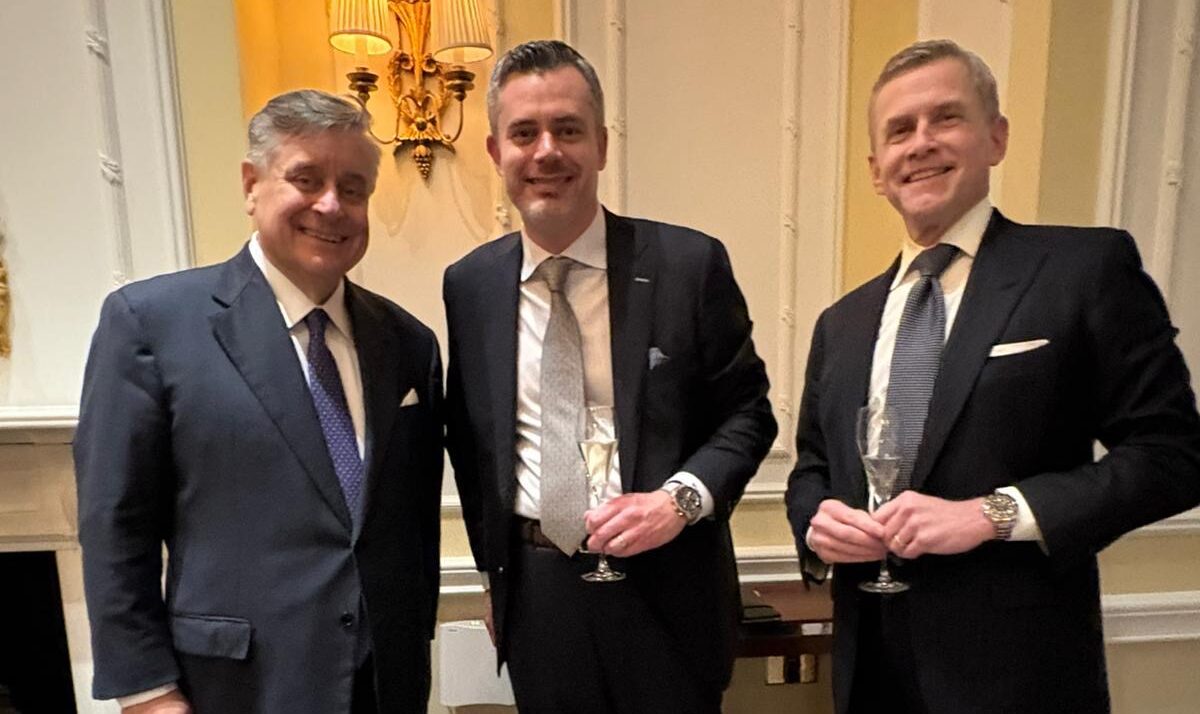

After several years in private practice with leading Swiss firm Bär & Karrer, Philippe Huber went in-house with Transocean just before the company’s Deepwater Horizon oil rig was involved in a major environmental disaster. Building on the experience he gained during this crisis and other major projects, his career went from strength to strength, and he is now chief legal officer and company secretary of Switzerland-headquartered packaging giant SIG.
You have had a very multicultural academic and professional journey, and you now lead a highly cross-regional team. What does that diversity of backgrounds and cultures really bring to the table?
First and foremost, multiple viewpoints and perspectives, which allow for a more differentiated approach to issues. This is not only an advantage when assessing risks, particularly to avoid blind spots. It also proves essential to effectively shaping culture.
To give you an example, having team members with different backgrounds involved in designing and delivering compliance training is particularly valuable. Greater cultural awareness and sensitivity allow us to tailor our programmes more effectively to the needs of our global workforce.
Issues need to be addressed early, candidly and constructively – to “put the fish on the table”
From a broader business perspective, having teams with diverse backgrounds provides a significant advantage, particularly in understanding the needs of our customers and the environment in which we operate.
That said, building and working with diverse legal teams does come with challenges. Diversity can make it more difficult to achieve alignment and find common ground within teams. However, the solutions developed are often more robust and better accepted, precisely because multiple voices have contributed to the process.
What practices have you found most effective for building cohesion and trust across regions and cultures within your team?
For me, open and transparent communication is fundamental to building trust and cohesion across regions and cultures. Issues need to be addressed early, candidly and constructively – to “put the fish on the table” (as per an expression originating from Sicily) – rather than letting problems or conflicts linger. I believe this is key to effective leadership, particularly in diverse, geographically dispersed teams.
In my role, this translates into regularly bringing the whole team together. We use these meetings to exchange insights and best practices, discuss shared challenges, and develop common approaches and solutions.
Beyond these scheduled meetings, I actively encourage peer-to-peer interaction in global projects and day-to-day work. Peer coaching is another effective tool to support one another and to grow as a team across regions and cultures.
As part of your in-house career, you played a central role during the Deepwater Horizon crisis and in leading a proxy fight against a US shareholder activist. What leadership principles do you rely on during intense periods, and which of them remain most relevant in today’s increasingly volatile corporate environment when managing crisis?
While the Deepwater Horizon incident and the proxy fight against a US shareholder activist were very different in nature, there are leadership principles that apply to virtually any crisis.
The first and perhaps most important principle is to stay calm. This sounds simple, but when confronted with a burning platform or “barbarians at the gate”, it is anything but. Remaining calm is essential to being able to think clearly, take sound decisions, and provide stability to the organisation.
Preparation also plays a critical role. While it is impossible to anticipate every crisis scenario, companies should regularly perform risk and vulnerability assessments and prepare accordingly. This includes drawing up a playbook and identifying a core crisis team, composed of key internal people and external advisers with all relevant functions represented. Having a playbook to fall back on in the first hours of a crisis is invaluable, although regularly reassessing the situation and adapting to developments is equally important.
Another critical principle is disciplined communication. It is essential that the organisation speaks with one voice, both externally and internally. In a crisis, defining a single spokesperson becomes key. Communication requires careful handling, as the potentially lasting impact on a company’s reputation is often decided in the court of public opinion long before legal proceedings are concluded.
Two further principles are worth mentioning. First, business continuity must be ensured. Even in a serious crisis, day-to-day operations cannot be neglected. This often requires a small, focused crisis team to manage the situation while the wider organisation continues to operate as smoothly as possible. Second, effective crisis leadership requires strong energy management. Crises are marathons, not sprints, and leaders must manage their own and their teams’ stamina over prolonged periods.
Ultimately, crisis leadership comes down to preparation, clarity, discipline and resilience.
Nowadays, “thinking outside the box” seems to be part of every GC’s playbook. What does it mean for you?
As lawyers, we are trained to quickly analyse the facts, apply the rules and make reasonable legal judgements. While these are essential skills, they carry the risk of thinking one-dimensionally and remaining confined within the “box of legal thinking”. When dealing with complex business challenges, I try to take a deliberate step back and look beyond the obvious solution.
Reframing an issue can help to better understand the interests and pressure points of the other party or parties. Looking for solutions that address their concerns without undermining my own core interests fundamentally changes the dynamic. This often results in outcomes that are not only legally sound, but also commercially sensible.
Particularly when facing challenges with a customer, success is not about winning a legal argument but about finding a mutually satisfactory solution that allows the business relationship to continue and grow. Unconventional and innovative thinking can lead to genuine win-win outcomes that strengthen trust and create value beyond the immediate issue.
Looking back at your career from private practice through to executive leadership, what advice would you give young lawyers aiming for senior in-house roles?
First, establish yourself as a business partner, not just an adviser. In private practice, the job is usually done with providing the advice. In-house, that is only the starting point. To succeed, you must be seen as someone who not only identifies risks but also proposes pragmatic, commercially relevant solutions. Understanding and speaking the language of the business is essential. When you consistently deliver value, you earn credibility and a genuine seat at the table.
Second, be curious. We are operating in a fast-changing environment, turbocharged by AI. Younger lawyers should ask themselves what their role might look like in the future, where they can add value, and how they can have an impact. Curiosity, openness and exploration create access to opportunities.
Third, embrace change and seize opportunities. Challenging situations and crises often provide the greatest opportunities to show leadership. Lawyers are trained to stay calm, analyse complexity quickly and bring structure to uncertainty. These skills position us well to lead through change.
Rather than backing away from challenges, young lawyers should step forward, take ownership and aim to make a lasting impact.











 Slaughter and May corporate and M&A co-head Simon Nicholls (pictured) also has faith in the strength of markets going into the new year, saying: ‘There’s a lot of assets looking for a home, and you need to find homes for them.’
 One area partners all agree is not in any danger of slowing down is the technology sector, and the data underlines this, with global tech M&A values up 66% to $1.08trn, making it the top-performing sector by some distance.
 Regardless of how the market shapes up, it’s clear that partners are excited for the year ahead.
 Interviews
 Features
 Data
Data News
News In-house
 Lateral moves
 Deals
Deals

 Allen & Overy and Shearman & Sterling, 2024
 McDermott Will & Emery and Schulte Roth & Zabel, 2025
 Ashurst and Perkins Coie, 2025
 Clifford Chance, Rogers & Wells and Punder Volhard Weber & Axster, 2000
 Norton Rose and Fulbright & Jaworski, 2013
 Hogan & Hartson and Lovells, 2010
 DLA, Piper Rudnick and Gray Cary Ware & Freidenrich, 2005
 Dentons and Dacheng, 2015
 CMS, Nabarro and Olswang, 2016
 Herbert Smith and Freehills, 2012
 King & Wood Mallesons and SJ Berwin, 2013
 Honorable mentions