ESG: Evolution or revolution?

Jonathan Bower, partner, planning and infrastructure team leader and partner lead for net zero by 2030 strategy at Womble Bond Dickinson, sets out the case for a clear ESG vision with a focus on inspiring behavioural change

Historical events have often led to transformative changes. The Industrial Revolution was one such moment and, today, we’re on the brink of another significant shift – an environmental, social and governance revolution. Although centuries apart, there are clear parallels between the two, not least the considerable cultural and social change needed to create a revolution. Continue reading “ESG: Evolution or revolution?”

Political persuasions – what City partners are hoping for from the next Government

On the eve of a general election that looks set to promise a wipeout for the Conservative Party and the first Labour government in 14 years, LB checked in with a range of City partners across a variety of practice area to gauge the temperature of the UK legal industry, find out what they think will change, what won’t, and what to watch out for.

Continue reading “Political persuasions – what City partners are hoping for from the next Government”

Osborne Clarke breaks through €500m revenue target with double-digit financial surge

As UK financial reporting season kicks off, Osborne Clarke (OC) has today (2 July) posted a robust 19% revenue boost, passing the firm’s target of €500m to reach €525m.

The increase in international revenues – up from €442m last year – comes after the firm last September launched its third US office in Miami, marking its 26th international location.

Meanwhile, UK revenues jumped 11% from £217.3m to £240.5m, while net profit of £84.8m marks a 14% increase on last years’ £74.7m figure. Profit per equity partner (PEP) saw a parallel 11% increase, climbing from £687,000 to £771,000.

This revenue growth surpasses last year’s performance when the firm navigated weaker global economic conditions and a stagnant deals market to achieve a 9% increase in both international and UK revenues. However, the current PEP still falls short of the 2021-22 figure of £796,000.

Speaking with Legal Business, UK managing partner Conrad Davies expressed satisfaction with the strong results. ‘Given the market conditions we’ve experienced over the past 12 months, I believe we have maximised our top line and overall business performance,’ adding that the 2021-22 results should be viewed as ‘exceptional’ due to post-Covid market conditions.

Reflecting on this year’s growth, international chief executive Omar Al-Nuaimi (pictured) said: ‘We’re really pleased with the outcome; it’s been great across the board. A feature of the previous year was a flat transactional market. However, the past 12 months have been more consistent for us on the transactional side. Coupled with strong growth in advisory areas like ESG and energy, it’s meant that all parts of the business are firing at the same time.’

Davies added: ‘The service line growth in the UK mirrors our international performance. We observed modest growth in transactions compared to the previous year, which was relatively flat, but saw double-digit growth across all other practice groups.’

OC’s priority UK sectors – life sciences & healthcare, retail and consumer, and mobility and infrastructure – saw growth rates of 60%, 33%, and 26% respectively, while energy & utilities grew by 15%.

‘We have focused on areas with potential for profitable growth, investing in and concentrating our efforts on these sectors, which has paid off this year,’ Davies explained.

The year also saw a record promotion round, with 11 partners made up in May, complemented by the addition of 13 partner hires over the year. Notable laterals included Charles Russell Speechlys construction disputes partner Rupa Lakha and Stephenson Harwood restructuring specialist Nick Axup.

‘We’ve been identifying areas where we need to promote internal partners or bring in lateral hires to ensure we fill all gaps in our network,’ Al-Nuaimi noted.

In recognition of the firm’s strong performance, all UK staff this June received a 5% profit share bonus based on annual salaries. Additionally, August will mark the launch of a long-term incentive plan, with the firm set to reward high performers with bonuses of up to 40%, paid over three years.

‘This is the largest distribution we’ve provided to our people to date,’ Conrad commented. ‘Our philosophy is that when we succeed as a business and enhance profitability, we must reinvest in the business, while also rewarding our people.’

Looking ahead, after achieving the firm’s €500m target a year ahead of schedule, Al-Nuaimi characterised 2024-25 as a ‘free hit’, without specific new targets.

‘While I would be surprised if we achieve the same level of growth as last year, which was exceptional, we remain ambitious. The transactional market, in particular, feels very healthy compared to the past two years, and there are promising signs across all levels. I would be disappointed if this isn’t another successful year,’ he explained.

[email protected]

The state of UK general counsel in 2024: Key insights and challenges

The legal landscape for general counsel (GCs) in the United Kingdom is undergoing significant challenges and transformations in 2024. A comprehensive survey conducted by Wakefield Research and commissioned by Axiom provides crucial insights into the current state of in-house legal departments, shedding light on budget constraints, talent management issues, and the quest for innovative solutions.

Continue reading “The state of UK general counsel in 2024: Key insights and challenges”

What Gen Z lawyers really want from their careers

Gen Z – including its lawyers – are often characterised as being overly concerned about the social and political issues that come under the ESG umbrella. It’s an issue that was discussed at Legal Business’s April Enterprise GC event in a panel called: ‘The ideal employer for an idealistic lawyer’, during which one audience member dismissed concerns in the somewhat facetious terms: ‘Everybody’s gone woke!’

The truth is – as always – more nuanced. While Gen Z lawyers do care about ESG issues, this does not mean there is a cultural clash between the generations, even if they are more vocal about their expectations than older generations may have been. Continue reading “What Gen Z lawyers really want from their careers”

Beyond ‘nice to have’ – ESG goes business fundamental

‘In the old days, it was about having a nice brochure with some green pictures, but then getting on with the serious matter of running our business. We’ve moved way beyond that now – it’s a business fundamental now.’

Norton Rose Fulbright head of environment, health and safety, Europe, Middle East and Asia, Caroline May neatly sums up the transformative shift in attitudes in recent years, with law firms now more attuned than ever to the importance of ESG, both in their capacity as commercial advisers and in terms of their reputation as progressive employers. Continue reading “Beyond ‘nice to have’ – ESG goes business fundamental”

Making an ESG lawyer – law firms search for the magic formula

‘I don’t believe there is such a thing as an ESG lawyer’ – the words of one environmental, social and governance (ESG) practice head in an interview for this month’s lead feature aptly sums up one of the key challenges for firms trying to establish themselves at the top of this much-hyped market.

That individual is not alone in this view; it has also been a repeated refrain in the research interviews for the Legal 500’s first UK ESG rankings, which will be published later this year. And it’s not a stretch to see why this opinion persists, given the myriad practice areas that fall under the ESG umbrella – from greenwashing disputes to sustainable finance, and regulatory matters to ESG transactions; not to mention the traditional environment and governance work that make up two letters of the acronym. Continue reading “Making an ESG lawyer – law firms search for the magic formula”

The new £150k benchmark for Magic Circle associates – ‘rewarding the best’, or ‘slightly alarming’?

Associate pay reaches eye-watering heights as the war for talent at the top of the market goes further into the salary stratosphere

With all eyes on the upcoming election to see what a potential new government might do about the cost of living crisis, this May saw things get a little easier for the notoriously hard-done-by Magic Circle associate demographic, as their salaries reached new heights. Continue reading “The new £150k benchmark for Magic Circle associates – ‘rewarding the best’, or ‘slightly alarming’?”

Enterprise winners

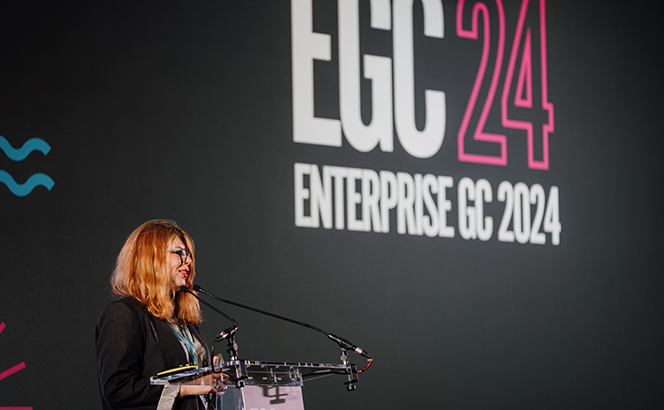
On 29-30 April, more than 200 senior in-house counsel gathered at the Hilton London Wembley for the seventh annual Enterprise GC event.

The event – which was sponsored by Walker Morris, Luminance, Lex Mundi, SSQ, EY, Taylor Wessing, Trowers & Hamlins, Cilex, Flex Legal, Winston & Strawn, Thomson Reuters and LexisNexis – saw two packed days of dynamic sessions, panel discussions and networking, bringing together top in-house professionals and speakers from broader business and academic communities to discuss the evolving role of GCs. Continue reading “Enterprise winners”

MENA focus: Middle Eastern dreams

‘Saudi Arabia is trying to put itself on the map and establish itself as a place where international businesses want to make significant inward investments,’ says Clyde & Co’s Susie Abdel-Nabi, of the busiest Middle Eastern legal market today.

Abdel-Nabi, who is based in Dubai, leads the international firm’s dispute resolution group across the Middle East, where she has been based since 2002. Continue reading “MENA focus: Middle Eastern dreams”

ESG Award winner Ranajoy Basu on leveraging structured finance expertise to support ESG causes in emerging economies

McDermott Will & Emery partner Ranajoy Basu, recently named Environmental/Sustainability: Private Practice Champion of the Year at the Legal 500 ESG Awards, discusses how he learned to leverage his structured finance expertise to support ESG causes in emerging economies

Continue reading “ESG Award winner Ranajoy Basu on leveraging structured finance expertise to support ESG causes in emerging economies”

Legal 500 US: Latham tops the charts in new US rankings

The Legal 500 United States 2024 rankings have arrived, and with it a bevy of new numbers to crunch.

Leading Individual rankings rose by 14% – an increase of 246 lawyers on last year’s rankings. More lawyers than ever are being nominated, and with the market active in many areas, attorneys have a greater body of work to put forward for consideration – with clients increasingly willing to sing their praises. Continue reading “Legal 500 US: Latham tops the charts in new US rankings”

Lebanon’s struggle for stability amid economic and geopolitical challenges

Lebanon finds itself trapped in a profound political, economic, financial, and social crisis, the effects of which have echoed across its public services and societal fabric for half a decade. This multifaceted crisis has created a stark escalation in poverty levels, marking a troubling descent in the standard of living for almost half the population. Concurrently, the efficacy of public sector institutions has faded, with service provision faltering under the strain of fiscal constraints and administrative inefficiencies.

Inflation and workforce exodus

At the heart of this turmoil lies a relentless inflationary spiral, driving up prices and eroding the purchasing power of ordinary citizens. However, in the first quarter of 2024, inflation showed signs of slowing down while the exodus of skilled workers from the public sector, lured by more promising prospects in the private sector or abroad, continues.

Armed conflict and damages

The situation is further aggravated by ongoing conflicts, notably the war along Lebanon’s Southern border in conjunction with the war in Gaza. This ongoing conflict has taken a heavy toll on the country’s physical infrastructure, destroying houses, roads, and agricultural lands with extensive forest fires and the destruction of thousands of acres of farmland, and soil damage due to the use of white phosphorus bombs. Moreover, since 8 October 2024, over 90,000 people have been displaced from southern Lebanon, further exacerbating the humanitarian crisis, and highlighting the severe impact of the regional instability on civilian lives.

Syrian refugee crisis

Lebanon hosts more than two million Syrian refugees who have fled their homes in search of safety due to the civil war, marking the highest per capita globally. This influx has placed a severe strain on Lebanon’s resources and infrastructure. Syrian refugees often work without permits, do not pay taxes, and do not pay for electricity. Even before the Syrian refugee crisis began in 2011, Lebanon faced a shortage in electricity production relative to consumption. Over the past five years, the number of refugees has increased significantly, leading to a surge in electricity consumption. This has exacerbated the strain on Lebanon’s already struggling power grid, leading to more frequent and prolonged power outages. Additionally, a large number of refugees are involved in criminal activities, and more than half lack residency status, exacerbating social tensions and straining the country’s infrastructure. The burden is particularly evident in public services. There is an overload on healthcare services, schools are operating in two shifts to accommodate the influx of refugee children, and roads and other infrastructure are under significant pressure.

Furthermore, the security services are weakened due to inadequate wages and resources, making them less effective in dealing with ordinary crime. The proportion of Syrian detainees compared to the overall prison population is higher than that of Lebanese detainees. Despite efforts by Lebanese authorities, the international response, particularly from Europe and the United States, has been inadequate, ignoring the calls for facilitating the refugees’ return to safe zones
in Syria.

‘Lebanon faces an uphill battle to salvage its economic vitality and restore normalcy for its population amid these challenges.’

IMF Negotiations

Since May 2020, Lebanon has been in negotiations with the International Monetary Fund (IMF) for a rescue package that would help stop the deterioration of its macroeconomic outlook. An initial Staff Level Agreement (SLA) was signed between Lebanon and the IMF in April 2022 for a four-year extended fund facility that envisioned restructuring the financial sector, undertaking fiscal reforms, and strengthening governance. However, progress in implementing the actions mandated by the 2022 agreement has been extremely slow. In such a scenario of limited progress, the IMF has warned that continued inaction and weak willingness for reform could lead to a ‘never-ending crisis’.

World Bank initiatives

The World Bank has initiated several projects to support Lebanon’s recovery. One major initiative is the US$34m Fiscal Management Project in February 2024, aimed at restoring core fiscal management functions to support revenue mobilisation and ensure the accountable use of public resources. This project focuses on stabilising revenue administration, enhancing tax compliance, and upgrading ICT systems for tax and customs functions. It also seeks to restore fiscal controls, improve budget preparation and fiscal reporting, and strengthen oversight and accountability mechanisms.

Currency stability

Despite the challenging environment, the Lebanese pound (LP) maintained a stability against the US dollar on the parallel FX market due to:

  1. high dollarisation as Lebanon’s economy heavily relies on the US dollar for transactions and savings;
  2. convergence between official and parallel exchange rates: Since mid-February 2024, there has been a relative convergence between the official exchange rate and the parallel market rate for the Lebanese pound against the US dollar;
  3. growth in BDL’s liquid FX buffers: The Banque du Liban (BDL), Lebanon’s central bank, has experienced continuous growth in its liquid foreign exchange (FX) reserves; and
  4. due to quasi-balanced public and external accounts: Lebanon’s public finances (government revenues and expenditures) and external accounts (foreign trade and financial transactions) were somewhat balanced or stable.

Conclusion

Lebanon faces an uphill battle to salvage its economic vitality and restore normalcy for its population amid these challenges. Continued efforts towards fiscal reforms, international support, and effective governance will be crucial for its recovery.

Law Offices of Naoum Farah as a law firm deeply invested in Lebanon’s future, we are committed to supporting legal reforms that promote transparency, accountability, and sustainable development. We believe that through strategic legal interventions and robust policy frameworks, Lebanon can overcome its current challenges and build a more stable and prosperous future.

For more information, please contact:

Law Offices of Naoum Farah
Farrania Building, Said Freyha Street, Hazmieh
Po Box 16 7055
Achrafieh, 1100-2180 Beirut
Lebanon

T: 961 5 957 600
E: [email protected]

Q&A: Sarah Thompson, Arthur Cox

What is the current state of Irish legislation on ESG?

Environmental, social and governance considerations have always been important to our clients but in recent years conversations about ESG matters have risen to the top of many organisations’ agendas, especially following the pandemic.

At Arthur Cox, we have seen demand for ESG-related advice increase over recent years and we expect that trend to continue as ESG considerations are pondered by governments, regulators, companies, investors and wider society.

The Irish legislative landscape on ESG matters is made up of domestic and EU measures (all of which exist in the context of global initiatives and discussions).

ESG touches upon multiple policy areas, such as climate action, biodiversity, energy, water, financial services, commercial enterprise, and transport. This means that legislation on ESG covers a broad range of topics and has an impact on multiple stakeholders.

When we talk about ESG, many of the legislative measures over the past decade have focused on the E of ESG, ie environmental goals (particularly those related to climate), but it is important to remember that there have also been significant legislative and policy initiatives connected to the S and the G.

Irish domestic initiatives over recent years are many and varied. They include the publication of Ireland’s first statutory National Adaptation Framework in 2018, the passing of the Climate Action and Low Carbon Development (Amendment) Act in 2021, committing Ireland to specific greenhouse gas emission reduction targets by 2030 and 2050, the Circular Economy and Miscellaneous Provisions Act in 2022 (supporting Ireland’s transition to a circular economy) and the Work Life Balance and Miscellaneous Provisions Act in 2023 (setting new ‘S’ rules for Irish workers).

At an EU level, measures such as the European Commission’s 2018 Action Plan on Financing Sustainable Growth, 2019 Green Deal and 2021 Sustainable Finance Strategy have led to a proliferation of European legislative measures, some of which are directly effective in Ireland with others being transposed into Irish law.

Are there any recent or upcoming changes to Irish ESG legislation that our readers should be aware of?

There are a number of measures that Irish businesses should be aware of and the key one to mention is the Corporate Sustainability Reporting Directive (CSRD).

Irish legislation transposing the Corporate Sustainability Reporting Directive (CSRD) is expected to be published ahead of the 6 July 2024 deadline. Companies within scope of the first phase will be preparing to report in 2025 on FY 2024.

We recognise that ESG considerations are impacting all of our clients across sectors not just through law and regulation but through other potential ESG-related exposures.

What legal obligations do Irish companies have in terms of ESG reporting?

Many of the legal obligations concerning ESG in Ireland stem from EU legislation. The focus of EU ESG measures in recent years has been on disclosure and reporting (as opposed to mandating specific actions).

The measures include those set out in:

  • the Non-Financial Reporting Directive (2014/95/EU)
  • the Corporate Sustainability Reporting Directive (EU) 2022/2464
  • the Sustainable Finance Disclosures Regulation (EU) 2019/2088
  • the Taxonomy Regulation (EU) 2020/852
  • the Capital Requirements Regulation (EU) No 575/2013
  • the Low Carbon Benchmarks Regulation (EU) 2019/2089
  • the Climate Law Regulation (EU) 2021/1119
  • the Gender Balance on Corporate Boards Directive (EU) 2022/2381

How does Irish law enforce ESG disclosure by companies?

Enforcement covering matters that are now labelled ESG is not new. Up to now, Irish law has overseen ESG disclosures under general rules of company law, eg, through examining company reports for material misstatements. Given the new and upcoming ESG-specific disclosure requirements, we expect enforcement to become increasingly robust with companies’ sustainability information being scrutinised by various stakeholders including regulators, lenders, insurance companies, shareholders and the general public.

The reach of ESG regulation is very broad and the regulatory sanctions will vary depending on the particular regulator engaged by the event that triggers an investigation. The regulatory and reputational implications of investigations are likely to be particularly significant if greenwashing allegations emerge.

It is important to remember that enforcement action by regulators is not the only means by which company disclosure will be scrutinised and challenged and we expect a rise in actions through litigation.

What are the penalties for non-compliance with ESG regulations in Ireland?

Regulatory sanctions will depend on the nature of the specific regime engaged. They can include directions, cautions, reprimands, fines, suspensions or revocations of authorisations.

Given the number of different sources of ESG regulations in Ireland, it may be most helpful to give an illustrative example. Taking the CSRD as that example, the CSRD will require companies to report sustainability information in compliance with new reporting standards. Failure to comply with these standards can result in substantial fines, eg, financial penalties of up to €50,000 and administrative fines of up to 2% of a company’s annual average revenue if it exceeds €400m.

Outside formal, financial penalties, it is also important for companies to consider the reputational risks associated with getting ESG disclosures wrong.

How does Irish ESG legislation address social issues such as employment rights and diversity?

Irish ESG legislation has been increasingly attentive to social issues, including employment rights and diversity, which underscores a broader commitment to equality, diversity and inclusion issues.

The introduction of the Gender Pay Gap Information Act in 2021 marked a significant step towards transparency in the workplace, requiring organisations with more than 250 employees to report gender pay gap metrics. From 2024, companies with 150 employees or more will be required to submit gender pay gap reports, and from 2025 this will be extended to companies with 50 employees or more.

How does Irish legislation ensure the environmental aspect of ESG, specifically in terms of sustainability and climate change?

Irish legislation has taken significant steps to ensure the environmental aspect of ESG, particularly focusing on sustainability and climate change.

The Climate Action and Low Carbon Development (Amendment) Act, signed into law in 2021, commits Ireland to a legally binding path to net-zero emissions by 2050 and a 51% reduction in emissions by 2030 from a 2018 baseline.

This act is a cornerstone in Ireland’s framework to meet its international and EU climate commitments, aiming to transform the economy towards a greener future.

What is Arthur Cox’s approach to ESG issues in its legal practice?

At Arthur Cox, we recognise that ESG considerations are impacting all of our clients across sectors not just through regulation but through impacts on their business proposition.

Our ESG group works with our clients to identify and integrate ESG priorities at all levels of their businesses. We advise clients on areas such as energy transition, climate action, sustainable finance and green bonds, ESG disclosures and sustainability reporting, sustainable real estate investment and development and green leases.

What sets us apart from other firms is the breadth and cutting-edge nature of our ESG practice. Our ESG group is at the forefront of the market, providing clients with advice across the entire ESG space.

We have assembled a cross-disciplinary team of experts who bring a wealth of knowledge and experience across sectors to work with our clients to meet their ESG-related goals and obligations.

Our approach is collaborative and client-focused. We work closely with clients to understand their unique goals and challenges, providing tailored solutions that reflect the latest legal updates and industry insights.

What measures has your firm taken to improve its own ESG performance?

Sustainability for us involves a commitment to robust governance, policies, and practices. That commitment includes a relentless focus on diversity and inclusion, respect for human rights, responsible procurement and environmental sustainability. The integration of each of these elements is a key part of the decision making for our business.

Our ESG strategies are overseen by our Sustainable Business Committee, which manages our Sustainable Business Programme. At the core of this programme is the annual publication of our Sustainable Business Impact Report. Launched in 2021, this report is a comprehensive overview of our initiatives and accomplishments across four essential dimensions: community, workplace, marketplace, and environment. By aligning with the UN Sustainable Development Goals, we aim to show our commitment to global sustainability standards.

We aim to play an active role in contributing to positive change while minimising our environmental impact through a programme of monitoring and continuous improvement.

What are the biggest ESG challenges your firm currently faces, and how are you addressing them?

As a firm, we have set ambitious targets in relation to reducing our Scope 1, 2 and 3 emissions. Over the past 12 months, we have continued to work with our people and external stakeholders to assist us in the delivery of the key measures required to achieve our carbon reduction goals.

Our work in this area is continuing and we are very aware that we need to continue to work with our people to reduce our carbon footprint as an organisation. To address this, we are working hard to explore alternatives so that we can provide more sustainable options through an updated travel policy, online meetings, events and other operations.

How does the firm assist clients in integrating ESG factors into their business strategies?

We assist clients in navigating reporting obligations and advise boards on strategic planning, risk management and internal controls to support disclosure in relation to their business operations and value chains.

Our ESG group advises on disclosure and sustainability reporting obligations in relation to climate, diversity and other aspects of ESG in compliance with local and international legislation and voluntary frameworks, including the CSRD, the Taxonomy Regulation and Task Force on Climate-related Financial Disclosures.

We also advise companies on all aspects of their governance arrangements. Board governance and oversight is essential in developing and delivering effective ESG strategy, managing risks including activism and litigation, supporting robust disclosure and maintaining stakeholder engagement.

We provide regular ‘horizon scanning’ insights to legal teams and company boards regarding ESG-related developments and advise boards on topical issues including board diversity, executive remuneration, directors’ duties and the implications of new legislation such as the proposed Corporate Sustainability Due Diligence Directive (CSDDD).

Can you share some examples of how Arthur Cox has helped clients navigate complex ESG issues?

Our ESG team offers advice on a multitude of complex ESG issues, such as:

Environmental: Under the environmental pillar we advise on energy system transition, energy efficiency and demand side response, resource management and the circular economy, carbon sequestration and emissions reduction, sustainable finance, climate-related plans, disclosures and activism and environmental due diligence.

Social: On the social side, we have extensive experience advising on the social impacts of organisations on internal and external stakeholders. We advise on equality and discrimination matters, environment, health and safety issues, community investment and capacity building as well as human rights and the rule of law.

Governance: Good governance is a core aspect of ESG, and our team regularly advises clients on all aspects of their governance arrangements, including areas such as strategic oversight, risk management, shareholder engagement and reporting and transparency.


For more information, please contact:

Sarah Thompson, partner, Arthur Cox

E: [email protected]

www.arthurcox.com/esg-hub

Understanding the EU Directive on Corporate Sustainability Due Diligence: A comprehensive guide

The European Union has taken a significant step towards promoting sustainable and responsible business practices with the adoption of the Corporate Sustainability Due Diligence Directive (CSDDD). Approved on 24 April 2024, this directive mandates large companies operating within the EU to integrate human rights and environmental due diligence into their operations and value chains. This article delves into the key aspects of the CSDDD, its implications for businesses, and the expected outcomes for various stakeholders. Continue reading “Understanding the EU Directive on Corporate Sustainability Due Diligence: A comprehensive guide”