What do clients really think about the service they receive from law firms? At Legal 500, we hear from hundreds of thousands of clients every year, rating firms on key metrics such as lawyer quality and availability, billing, and levels of communication and expertise.
The answers we receive allow us to evaluate firms using a set of client service data scores, covering Lawyers and Team Quality, Value: Billing and Efficiency, and Sector and Industry Knowledge – all of which combine to produce an overall Client Service Score.
This article focuses on Lawyers and Team Quality, for which Paul Weiss scores 86.64. (The rest of this article is available to logged-in users only. If you are unable to log in above right, please click ‘Forgot your password?’ below to gain access to the full article). Continue reading “Paul, Weiss, Rifkind, Wharton & Garrison: The Client’s View”
What do clients really think about the service they receive from law firms? At Legal 500, we hear from hundreds of thousands of clients every year, rating firms on key metrics such as lawyer quality and availability, billing, and levels of communication and expertise.
The answers we receive allow us to evaluate firms using a set of client service data scores, covering Lawyers and Team Quality, Value: Billing and Efficiency, and Sector and Industry Knowledge – all of which combine to produce an overall Client Service Score.
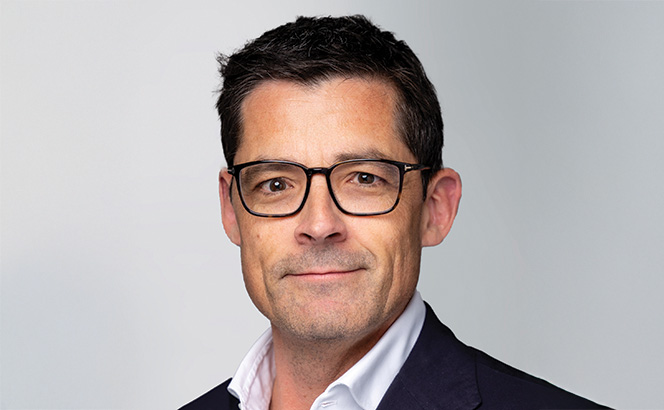
This article focuses on Lawyers and Team Quality, for which CMS scores 80.60. (The rest of this article is available to logged-in users only. If you are unable to log in above right, please click ‘Forgot your password?’ below to gain access to the full article). Continue reading “CMS: The Client’s View”
What do clients really think about the service they receive from law firms? At Legal 500, we hear from hundreds of thousands of clients every year, rating firms on key metrics such as lawyer quality and availability, billing, and levels of communication and expertise.
The answers we receive allow us to evaluate firms using a set of client service data scores, covering Lawyers and Team Quality, Value: Billing and Efficiency, and Sector and Industry Knowledge – all of which combine to produce an overall Client Service Score.
This article focuses on Lawyers and Team Quality, for which Bird & Bird scores 79.96. (The rest of this article is available to logged-in users only. If you are unable to log in above right, please click ‘Forgot your password?’ below to gain access to the full article). Continue reading “Bird & Bird: The Client’s View”
Speak to almost any major firm active in the finance space and you’ll hear about private credit. The industry matured as banking regulations tightened in the wake of the 2008 crash, and has surged since banks pulled back on lending after the interest rate hikes from early 2022.
According to merchant banking, global advisory, and asset management firm M Capital Group, the overall size of the private credit market has grown from $1trn four years ago to $1.7trn in 2023.
The market is big, and growing – and law firms want a piece of it.
More than 20 of Latham & Watkins’ equity partners have made it into the elite firm’s ‘super points’ band, which is intended to better reward star performers by allowing them to earn nearly double the profit share of those at the top of the firm’s core lockstep.
Legal Business has learned that 22 Latham partners now sit within the so-called ‘super points’ tier.
Fourteen partners worldwide are understood to sit on the first additional tier at 1,300 points, with a further eight now on the maximum 1,700 points. Two partners in London – including chair Richard Trobman – are understood to be at the top level. All of the remaining super pointers are based in the US.
Latham’s core modified lockstep ladder runs from 350 to 900 points, with 900 points equating to more than $5m last year, meaning that 1,700 points would nearly double this figure.
On top of this, Latham also has a bonus pool of up to 15% of its profits available for discretionary division among partners. Combining this bonus with super points it is understood that total partner comp can now climb above the $15m mark for star performers.
Latham partners approved the new remuneration structure in July, with equity partners taking part in a weighted vote based on points allocation rather than a one-person, one-vote system.
The move came amid intense competition to attract and retain talent at the very top of the US market, where firms like Kirkland and Paul Weiss have been linked with packages above $20m for a handful of partners.
Sources told LB that no partner joining as a lateral will be granted immediate access to the higher remuneration rungs. Instead, they will have to wait at least two years before being eligible for consideration, suggesting that, for Latham, the changes are focused on retaining, rather than attracting star performers.
A spokesperson for Latham said: ‘Changes to the firm’s equity compensation structure were made after an in-depth review and extensive discussions and meetings in each office to ensure a transparent and thorough process. This provided the firm’s leadership with the opportunity to receive direct feedback from the partnership before moving forward. The changes to the firm’s compensation structure allows the firm to reward more partners in its year-end bonus process.’
Earlier this year, litigation and trial partners Oliver Browne and Stuart Alford KC left for Paul Hastings. Browne’s exit from Latham came after 18 years at the firm, having most recently served as the London co-chair of the litigation and trial department. This follows the departure of restructuring and special situations partner Simon Baskerville who moved over to Willkie Farr at the end of last year.
Its partner remuneration overhaul comes amid intense competition at the top of the US market, prompting numerous firms to reconsider how to attract and reward their standout performers.
Latham posted a 6.9% revenue hike to almost $5.7bn for the 2023 calendar year, with profit per equity partner up 7% to $5.52m.
LB has decided not to name the partners on super points.
It’s not news to anyone that the legal profession is stressful. As Michael Cavers, head of debt capital markets at CMS and chair of trustees at the Mindful Business Charter (MBC) puts it: ‘Lawyers are high achievers and perfectionists. Law firms – and our clients – have high expectations of our lawyers, and they have high expectations of themselves. We acknowledge that this can be a trigger for poor mental health.’
Launched six years ago to the day on World Mental Health Day 2018, the MBC – which takes the form of a commitment that member firms sign up to – aims to tackle the mental health issues prevalent in the industry, by raising awareness, reducing stigmas and supporting those in distress, focusing on factors such as openness, respect and the need to ‘switch off’.
Since inception, it has grown from 12 to over 130 members, with signatories now including firms such as A&O Shearman, Baker McKenzie, Clifford Chance, Linklaters, Hogan Lovells, CMS, Travers Smith and Bristows.
But City law firms would not be worth their salt if they signed up without doing their due diligence. So what is it about the MBC that appeals to so many firms?
Morwenna Scholes, head of HR at Bristows, highlights the role that the MBC plays in the firm’s wellbeing efforts: ‘‘It acts as a spotlight on the issues, and anchors the many wellbeing initiatives we had in place at Bristows – I’m delighted to say that it has found its way into our daily language, with people across the firm saying: “That’s not very MBC”.
Cavers believes the independent nature of the MBC and its popularity among law firms is a key part of the appeal. ‘It’s a framework that allows us to have conversations with other law firms, our clients, and internally – conversations that we might otherwise find a little bit awkward,’ he explains.
Signatories are quick to acknowledge the role that the MBC has played in helping to transform attitudes towards mental health. As Moira Slape, chief people officer at Travers Smith and deputy chair of trustees at the MBC puts it: ‘What I’m most proud of is the fact that the vocabulary that we have in the firm around mental health is so much more developed. People in the firm who have had their mental health challenges are braver about sharing them.’
This point is echoed by Cavers: ‘During Mental Health Week, and throughout the year, people across the firm share their stories and experience of mental health quite openly in a way that I’m absolutely convinced they wouldn’t have done not that many years ago.’
A new set of best practice guidelines were released on 24 September, which Cavers believes will give firms a chance to ‘reinvigorate their efforts’ when it comes to mental health in the workplace.
CMS recently put together a new mental health senior steering committee, which has dedicated some time to reviewing the new MBC guidelines. These include: encouraging senior leaders to role-model care for their mental health; introducing regular senior board reporting on mental health; and developing effective mechanisms to understand and identify risks to particular demographic groups and practice areas.
MBC CEO Richard Martin (pictured top) – himself a former City employment lawyer at firms including Speechly Bircham and Jones Day – believes that modern life is creating a more challenging environment for junior lawyers: ‘The working world is much more intense and demanding than when I was coming through the ranks. Some people in my generation will say, “I had to go through that so why shouldn’t you?” My response is, first of all – you didn’t. And secondly, that feels like a fairly sad way to justify difficulty.’
One issue that is frequently brought up as a factor behind rising stress levels is the salary wars currently roiling the London legal market. As Martin puts it: ‘It doesn’t take a genius to recognise that if you’re paying 180 grand, you’re going to expect quite a lot in return for that.’
Travers’ Slape echoes this sentiment: ‘The salary wars do layer on an additional level of expectation for very young people in the profession. It’s a problem that is not going away.’
She adds that the stresses of the sector are leading to a change in aspirations for young people entering the legal profession: ‘Some still want to be partners, but increasingly others don’t want to deal with the added pressures and stress that comes with partnership.’
As Layla Tow, chief marketing officer and head of business development at Bristows, sums up: ‘The MBC has given some structure and commonality of goal across the sector at leadership level. It’s kept workplace wellbeing front and centre – and that’s a powerful thing.’
How firms are supporting their staff and partners
CMS
– The establishment of a mental health and wellbeing committee that provides a safe forum for members to discuss and share ideas and feedback
– The establishment of a responsible business board committee for board-level discussions about mental health and wellbeing.
– Time Out, No Questions Asked’ programme – employees can take one month of unpaid leave per year, in addition to their regular annual leave, no questions asked
– 200+ wellbeing ambassadors, located across all UK offices, trained in mental health awareness and able to offer confidential support.
Travers Smith
– A dedicated menopause policy – including a number of paid-for benefits, to provide support to people who are experiencing symptoms associated with the perimenopause and menopause.
– Free counselling services to all employees and partners, alongside a 24/7 helpline facility
– Free membership of Calm.com, facilitating access to mindfulness and meditation sessions.
– Establishing a group of volunteers across the firm who are members of the mental health first aid aware group.
– Employee-led groups, such as the Menopause Awareness Group, Bereavement Support Group and Cancer Support Network, which provide support to those dealing with the mental impacts of the menopause and loss respectively.
Bristows
– A wellbeing consultation day, with a specialist medical provider providing 1-2-1 sessions that staff can book for a physical and mental health screening
– A massage day – staff can book an ‘above clothes’ 15-minute massage slot
– Free 1-2-1 consultations with a financial wellbeing coach – covering everything from savings, mortgages, budgeting to retirement
– A team of 30 qualified mental health first aiders across the firm – just under 10% of the staff and partners.
Efforts to improve mental health in the legal profession will be among the many law firm initiatives recognised at the upcoming UK ESG Awards 2025 in London next year – for more details and how to submit, click here.
While its London transactional credentials are undeniable, it is fair to say that Latham & Watkins has not to date boasted a similarly heavy-duty reputation on the contentious front.
However, the firm is doubling down on its efforts to shift this perception, with a series of recent eye-catching hires pointing to a renewed push in the capital, as the US giant continues its efforts to dig into a market still largely dominated by UK heritage firms.
Earlier this year, the disputes practice saw a significant shift with the departures of Oliver Browne and Stuart Alford KC to Paul Hastings.
Browne had spent 18 years at firm, co-leading the London litigation and trial department for the past six, most recently alongside Oliver Middleton, while fellow former co-head Alford had been at the firm since 2016, after joining from the Serious Fraud Office (SFO).
While the duo had championed ambitious expansion plans for the US firm’s London litigation practice during their time at the helm, those ambitions remain firmly in place.
Now under the leadership of Middleton, the London litigation and trial department is continuing its growth trajectory. The team’s headcount now stands at almost 70, including 19 partners – up from seven partners and 24 associates in 2017.
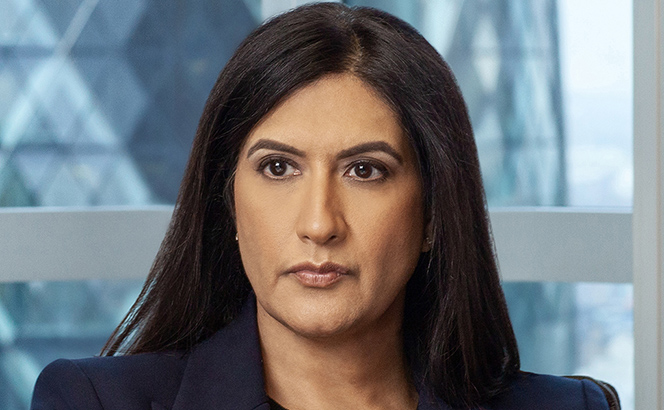
Speaking to Legal Business, Middleton and white collar specialist Pamela Reddy (pictured top), who joined from Norton Rose Fulbright at the start of the year, are clear that litigation growth is a strategic priority for the firm, which is targeting a mix of lateral hires and organic growth.
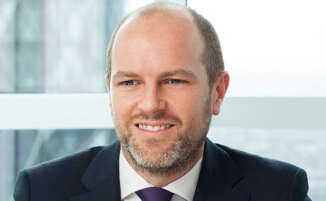
As Middleton (pictured) underlines: ‘We are focused on attracting top talent that enhances our firm’s growth, success, and culture.’
Alongside Reddy, other key appointments in recent years have included former Orrick partner James Lloyd, who joined in October 2021 to focus on litigation and investigations relating to cybersecurity and privacy, and last year’s hire of Linklaters partner Simon Pritchard, who has brought substantial credentials on the competition litigation front.
The firm has significantly bolstered its City white-collar credentials with the hire of Reddy, who Middleton notes has ‘hit the ground running.’ Her recent work has included advising a consortium in a multijurisdictional SFO investigation, as well as securing the dismissal of a criminal probe against a prominent shipping company by the Insolvency Service.
Looking ahead, Reddy anticipates a ‘significant uptick’ in corporate crime investigations driven by forthcoming failure-to-prevent fraud offences under legislation such as the Bribery Act and the Criminal Finances Act, given that ‘the failure-to-prevent fraud offence is incredibly broad, covering anything under the Fraud Act.’
Competition litigation is a key growth area for Latham, building on last year’s addition of Pritchard, who joined after 15 years at Linklaters and Allen & Overy, before which he spent five years as senior director at the Office of Fair Trading.
As Middleton highlights, the growing complexity of competition litigation plays to Latham’s strengths in managing large-scale litigation. ‘Handling large-scale litigation is just as crucial as having specific competition experience,’ he explains. ‘We excel in this area with our extensive team of litigators who are adept at managing enormous class action cases and other large-scale litigations.’
On the defence side, Middleton and London deputy managing partner Andrea Monks are leading teams from the firm representing Barclays in two high-profile cases: one involving allegations of misleading statements about its trading system and another related to foreign exchange market manipulation.
The firm is also aiming to push into other key areas such as shareholder claims, as well as disputes relating to data privacy, AI, ESG, and crypto.
On the data front, Ian Felstead, vice chair of the firm ‘s complex commercial litigation practice, has advised Meta on contentious matters concerning data transfers from the EU, while in the ESG realm, London disputes partner Samuel Pape was recently part of a team which secured victory for the Republic of Colombia at the World Bank’s International Centre for Settlement of Investment Disputes, defending the Colombian government’s ban on mining in the sensitive páramos ecosystem in the Andes.
While expansion of the broader disputes offering is a clear strategic priority for Latham, Middleton argues the firm does not want to ‘pursue growth for growth’s sake’.
‘As the firm continues to expand, we will grow organically, focusing on key areas such as data privacy, ESG, and complex commercial disputes,’ he explains. ‘We want to be thoughtful about where and how we grow.’
Alongside these external hires, the firm’s contentious bench in London has also seen a healthy degree of organic growth, with four partner promotions in the past two years – an increase on previous years, after none from 2016 to 2019, and just one in both 2020 and 2021 – Middleton and litigator and arbitrator Robert Price.
New names joining the partnership since 2021 include Pape, white collar specialist Clare Nida, competition partner Gregory Bonné, and Nell Perks, who focuses on disputes and contentious regulatory investigations.
Looking ahead, Middleton says the growth strategy will have an emphasis on the scale of Latham’s international platform: ‘There is a lot to be gained from having breadth of experience. It’s important for us that our people have specific expertise that we can effectively market. However, our primary strength lies in our flexible litigators who excel at handling large-scale litigation and effectively collaborate across the global platform. Our approach sets Latham apart from competitors.’
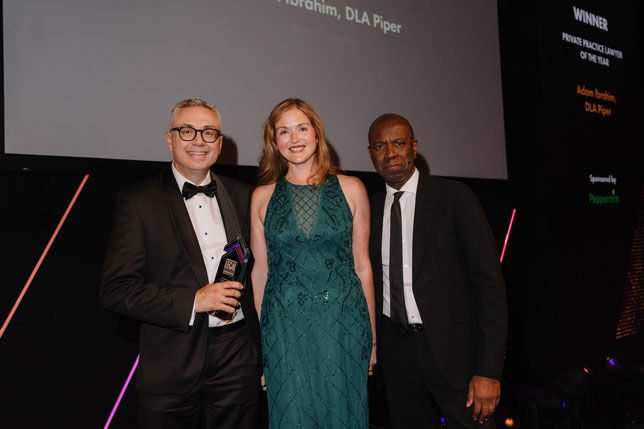
Adam Ibrahim, UK co-head of litigation and arbitration at DLA Piper, was last month named Private Practice Lawyer of the Year at the Legal Business Awards, following a standout year in which he led a large DLA team to victory in a complex mass claimant action over break fees on loans to small businesses, dubbed “the biggest banking case out there” by top-tier silk Bankim Thanki KC.
This March, Mr Justice Zacaroli handed down a 185-page judgment in the case, Farol v Clydesdale Bank and National Australia Bank, comprehensively dismissing all claims against both banks, as well as allegations of deceit against 15 current and former employees of the banks, including four senior executives.
Here, Adam talks to LB’s Anna Huntley about what it was like to be involved in such a huge and long-running case, the rise of class actions, his approach to leadership and management, and what it was like to win the Lawyer of the Year award.
African firm Bowmans announced today (3 October) that it has hired all the lawyers from A&O Shearman’s shuttered Johannesburg office, including eight partners and a further six lawyers who are set to join as partners.
In their first interview since leaving Latham & Watkins, Jayanthi Sadanandan and Sam Hamilton discuss their new roles as global co-heads of Sidley Austin’s leveraged finance practice
‘Sidley wants to provide a best-in-class financial sponsor legal service – Sam and I have built out a practice before and we know how to do this,’ says Sadanandan as she and Hamilton sit down to talk to LB on their first day at Sidley.
‘This is an exciting opportunity for us – we have a remit to build and Sidley has been very clear in its commitment to this area.’
Legal 500 Hall of Famer Hamilton and leading partner Sadanandan, who have worked together for 20 years, joined Sidley this week (1 October) having quit Latham in August after nearly 15 years at the firm.
The pair have joined alongside fellow Latham alumni Fergus O’Domhnaill, Joseph Kimberling and Ben Wright – with all five partners now sitting within Sidley’s global finance practice, and Sadanandan and Hamilton taking up newly created roles leading the leveraged finance offering worldwide.
The team will focus primarily on building a borrower-side practice for private equity sponsors, corporates and private credit funds, although it may extend to lender work at clients’ request.
‘Our focus is on the private equity finance side to better support the private equity platform,’ confirms Sadanandan. ‘As a transactional lawyer my goal is always just to get the deal done but, particularly in challenging market conditions, I think the interests between borrower side and lender side can diverge so it can be more challenging trying to manage both sides.’
Sadanandan, who featured as a deal star in LB’s ‘Alphas Revisited’ feature last year, has worked with clients including Permira, Blackstone, and CVC, while Hamilton’s key clients include Nordic Capital, Advanz Pharma, and Soho House.
Sidley’s regular PE clients include Apollo Global Management, KKR and Carlyle.
Hamilton says there were two main reasons for choosing to join Sidley. ‘We know everyone in the market who does our type of law and we felt that Sidley was a firm that has a lot of momentum and we liked the management mindset of wanting to grow in London, which we can help with. Secondly, when we began talks with Sidley, we enjoyed meeting the people and there was a cultural match in terms of how we all think about the world.’
‘In terms of size and the number of people, we don’t have a specific target in mind. It’s client-driven – if you do a great job, clients give you more work, and other clients will hear about it, creating a snowball effect. We expect that will happen.’
Sadanandan adds: ‘After we were approached, we realised there were a lot of synergies. Sidley is a longstanding law firm with a heritage that goes back 158 years, and we liked how it is a full-service law firm already in London. It already has the pieces in play and what Sidley is looking to do now is deepen the breadth of the bench and the breadth of the offering for their private equity clients.’
Sidley has been making a concerted push in the lucrative PE space as part of its broader expansion plans, bringing in Ramy Wahbeh as co-leader of the firm’s global private equity practice and co-head of the London corporate group, along with M&A partner Kaisa Kuusk, both of whom joined from Paul Weiss in June of last year.
Commenting on the hires Sidley management committee chair Yvette Ostolaza says: ‘I think if you’ve got the right team, then you will be delivering the type of service clients are expecting. And that’s what we’re going to be focused on, a very team-oriented approach that will deliver results for the client; with clients very much at the front and centre of our practice.’
The latest hires take Sidley to more than 200 lawyers in London, including more than 50 partners – meaning the office has grown by nearly a third over the last seven years.
And the expansion is far from over, with Ostolaza highlighting capital markets, high yield, and disputes and investigations as areas for further expansion in London, as well as additional growth in private equity.
There will also be an emphasis on building cross-border teams that serve clients in APAC, the Middle East, and London. ‘We’re speaking to a number of laterals in these areas,’ she comments.
The plans come after Sidley reported another strong financial performance, with the firm’s total revenues reaching the $3bn mark in 2023, a 6.1% increase from the previous year.
The firm has enjoyed a long streak of revenue increases after making a strategic decision in the mid-2010s, to increase its focus on the private capital sector and Ostolaza says it is on track for another good year.
‘Our first half of 2024 is off to a roaring start. Transactional activity has increased, disputes has also risen, so we’re expecting to have surpassed all metrics. We’re excited about this team because it’s part of our growth strategy,’ she adds.
In the US, the firm is aiming to strengthen its offices in San Diego, which launched in August, and South Florida and Miami offices, which opened in 2022. Alongside its emphasis on private equity, Ostolaza pointed out that there will also be a strong focus on key industry sectors, including life sciences, healthcare, energy, transportation, technology, media, sports, and entertainment.
She concludes: ‘We are still in a growth mindset, although we’re established. There’s disruption going on in the legal industry – we’re seeing more and more mergers, and we want to be one of the beneficiaries of this disruption on behalf of our clients. I think we’re going to have another banner year.’
Sadanandan and Hamilton were part of a four-partner team that moved to Latham from White & Case in 2010 in a move that planted the seeds for the Los Angeles-bred firm’s dominance in Europe’s leveraged finance market.
Almost 1,200 law firms have secured spots in the new Legal 500 UK rankings, which have been revealed today after months of research into the legal markets up and down the country.
The rankings, which are based on extensive analysis of the legal markets across England, Wales, Scotland and Northern Ireland, have been put together based on the insight gained from rankings submissions, thousands of interviews with firms, and new record levels of feedback from their clients.
The UK guide includes a total of almost 10,000 practice rankings, of which around 50% are in the London section. The rankings feature 1,176 unique law firms and other legal services providers, with 620 ranked in London.
In addition to the practice rankings, there are almost 13,000 rankings for individual lawyers, including around 2,000 deemed worthy of inclusion in the prestigious Hall of Fame.
Referee response rates once again saw double-digit growth this year, soaring to a new high of almost 65,500, 15% up on the equivalent total last year.
In terms of the most well-represented firms, Pinsent Masons has the most practice rankings across the UK as a whole, with Herbert Smith Freehills holding the most rankings in London.
DLA Piper, Eversheds Sutherland, Addleshaw Goddard and Shoosmiths round out the top five most-ranked across the UK, while in London, HSF is followed up by CMS, DLA, Pinsents and Norton Rose Fulbright.
Pinsents has the highest number of top-tier rankings across the UK as a while, while Clifford Chance has maintained its position as the firm with the most tier one rankings in London.
In terms of promotions, lawyers at three firms will be happier than most – Trowers & Hamlins, which achieved 10 promotions, and Eversheds Sutherland and TLT, with nine apiece.
Norton Rose Fulbright (NRF) has today (24 September) formalised its leadership structure, with interim global managing partners Jeff Cody and Peter Scott to head a global management committee to coordinate regional leadership.
Former Allen & Overy senior partner Wim Dejonghe was named Management Partner of the Year at the Legal Business Awards in September 2024, at a glittering ceremony at London’s Grosvenor House Hotel.
Dejonghe signed off from a 23-year career at the magic circle firm in May that year after pushing through the long-awaited, transatlantic merger deal with US firm Shearman & Sterling.
In this Life During Law interview, originally published in the run-up to the transformational deal going live, he looks back on his career at A&O, discussing lessons learned from previous merger talks, his future plans and his views on the ‘unhealthy’ levels of money in law.
Freeths, Freshfields Bruckhaus Deringer and Vodafone were among the big winners at this year’s Legal Business Awards, which were revealed last night to a packed house at London’s Grosvenor House Hotel.
Twenty-seven prizes were handed out on the night, with the event hosted by BBC journalist, broadcaster and Mastermind host Clive Myrie and introduced by global head of research and reporting Georgina Stanley (pictured right).
Freeths took the award for law firm of the year, narrowly pipping Freshfields, which was highly commended in the headline category. The national firm took the honour on the back of another consecutive year of double-digit growth, during which it also became one of the first law firms to achieve B Corp certification.
It also enjoyed an unprecedented year in the spotlight for its role in the Post Office inquiry, which was captured in the hugely successful Mr Bates vs The Post Office TV drama.
Freshfields went home with two of the top practice area awards, including corporate team of the year for successfully steering UBS through its historic acquisition of Credit Suisse, and competition team of the year for its work for Facebook parent company Meta on the Competition and Markets Authority’s investigation into its collection and use of advertising data.
The top two individual awards, Lawyer of the Year and Management Partner of the Year, went to DLA Piper’s Adam Ibrahim – described by one client as “the Magnus Carlsen of the banking litigation world – always three steps ahead of his opponent” – and former Allen & Overy senior partner Wim Dejonghe, for sealing the long-awaited, transformational transatlantic merger with Shearman & Sterling.
The award for US law firm of the year went to Paul Weiss, which has has made a huge splash in the London legal market over the last year, building a top tier English law practice at lightning speed through a series of eye-catching hires from leading UK and US firms.
The awards, which were decided on by a judging panel of senior business figures – including Lloyds Banking Group chief legal officer Kate Cheetham, Rio Tinto COO Chris Fowler, Financial Times GC Dan Guildford and News UK GC Angus McBride – also recognised the very best of the Bar and in-house.
Vodafone was named In-house Team of the Year after an eventful year which included the proposed merger of Vodafone and Three’s UK businesses, the defence of the Phones4u litigation and a major in-house transformation project, while the company also shared the Legal Technology Team of the Year with TLT for their work on an interactive digital dawn raid simulator.
Awards host Clive Myrie
Everton Football Club chief legal counsel Katie Charles was named GC of the Year, while on the Bar side, Edward Henry KC of Mountford Chambers took the Barrister of Year award, with 3VB named Chambers of the Year.
The charity partner for the event was Hand in Hand International, which supports the 400 million women and girls around the world living below the poverty line by providing skills, education, training and resources to start their own businesses and generate jobs. Click here for more information on the charity’s work.
Full list of winners
Energy/Infrastructure Team of the Year – Baker Botts
Highly commended – Bracewell
Life Sciences Team of the Year – Gowling WLG
Highly commended – Pinsent Masons
Private Practice Lawyer of the Year – Adam Ibrahim, DLA Piper
Highly commended – Jenine Hulsmann, Weil
Barrister of the Year – Edward Henry KC, Mountford Chambers
Highly commended – Tahina Akther, Wildcat Law
Marketing Initiative of the Year – RPC
Highly commended – A&O Shearman
Boutique Law Firm of the Year – Milberg London
Highly commended – Powell Gilbert
Boutique Law Firm of the Year (outside London) – Hawkswell Kilvington
Highly commended – Han Law
Chambers of the Year – 3VB
Highly commended – Twenty Essex
Commercial Litigation Team of the Year – Mishcon de Reya
Highly commended – Willkie Farr & Gallagher
Competition Team of the Year – Freshfields Bruckhaus Deringer
Highly commended – Morgan Lewis
Corporate Team of the Year – Freshfields Bruckhaus Deringer
Highly commended – Latham & Watkins and Dorsey & Whitney
ESG Programme of the Year – Green Tech Legal Collaborative
Highly commended – Bates Wells
Finance Team of the Year – Baker McKenzie
Highly commended – DLA Piper
GC of the Year – Katie Charles, Everton Football Club
Highly commended – Keith Austin, DHL
In-House Team of the Year – Vodafone
Highly commended – BAE Systems
International Arbitration Team of the Year – Skadden
Highly commended – Vinson & Elkins
Law Firm of the Year – Freeths
Highly commended – Freshfields Bruckhaus Deringer
Legal Technology Team of the Year – TLT and Vodafone
Highly commended – Dentons
Management Partner of the Year – Wim Dejonghe, Allen & Overy
Highly commended – Jason Glover, Simpson Thacher & Bartlett
Most Transformative In-House Team of the Year – DHL
Highly commended – Jones Lang LaSalle
Private Client Team of the Year – Hughes Fowler Carruthers
Highly commended – Stevens & Bolton
Private Equity Team of the Year – Simpson Thacher & Bartlett
Highly commended – Kirkland & Ellis
Real Estate Team of the Year – Eversheds Sutherland
Highly commended – Ashurst
Regional/Offshore Firm of the Year – Michelmores
Highly commended – Brodies
Restructuring Team of the Year – Kirkland & Ellis
Highly commended – Latham & Watkins
Rising Star In-House Counsel of the Year – Amman Ayub, Advanz Pharma
Highly commended – Benedikt Meyer, American Express
US Law Firm of the Year – Paul Weiss
Highly commended – Willkie Farr & Gallagher
Addleshaw Goddard (AG) has strengthened its intellectual property offering with the hire of IP litigator Geoff Steward and several members of his team from Stobbs.
Shortly after the news broke that A&O Shearman would be shutting down its South Africa office, Hogan Lovells has announced it will close three global offices in the coming months.
McDermott Will & Emery is pushing forward with ambitious plans to prioritise its ‘power alley’ transactional practices in London, following the departure of its last remaining private client partners in London.
The firm has been one of the last major US players in London with a private client practice, but following the recent departures of co-heads Nick Holland and Simon Gibb to Maples and Trowers & Hamlins respectively, the firm now no longer has any dedicated private client partners left in London. Continue reading “McDermott sets sights on big-hitters in London as private client team moves on”
Cooley has moved to bolster its London ranks following a number of recent senior departures with the hire of a trio of partners from Taylor Wessing, Goodwin and White & Case.
The US firm has recruited Angus Miln, Ali Ramadan and Helen Pantelides, all of who will join the emerging companies and venture capital (ECVC) practice in London. The hires come just weeks after Cooley’s London managing partner Justin Stock and two other transactional partners left to join Akin’s London office.
Miln, a Legal 500 Hall of Famer for venture capital, joins Cooley after almost eight years at Taylor Wessing, where he led the VC practice. He also previously worked at Bird & Bird, where he made partner in 2008, as well as Latham & Watkins and Simmons & Simmons.
Pantelides, who made partner at White & Case last year, previously worked alongside Miln at Taylor Wessing before leaving to join the US firm in 2019.
The duo will be joined at Cooley by Legal 500 leading individual Ramadan, also an ex-Bird & Bird partner, who has spent the past five years at Goodwin after a brief stint at Orrick. All three focus on venture capital and high-growth companies , handling the life-cycle of corporate and financing matters for tech and life sciences clients.
London chief Stock, one of the founding partners of Cooley’s London office, quit the firm this summer, moving to US rival Akin with corporate head Stephen Rosen and fellow tech transactions partner David Bresnick.
The city base is now led by capital markets head Claire Keast-Butler and disputes head James Maton.
In a statement, Keast-Butler said: “Angus, Ali and Helen are among London’s most outstanding and well-regarded advisers to emerging companies and the venture capital industry. We are excited about the huge opportunity our expanded ECVC practice in London will bring as we continue to execute on our ambitious growth strategy.”
Keast-Butler has been at the firm since joining from Latham in 2019, while Maton is one of the remaining founding partners of Cooley’s London base, which opened in 2015.
The West Coast leader made a splashy launch in the City that year, taking partners from Morrison & Foerster and legacy Edwards Wildman Palmer to create a 55-lawyer UK practice.
Of the 20 partners who opened that office, just five now remain – Maton, Chris Coulter (tech transactions), Ann Bevitt (employment and privacy), Ryan Naftulin (corporate) and Laurence Harris (disputes).
According to its website, Cooley now has 30 partners in London and around 65 associates and counsel.
The firm recently appointed a new CEO to replace the long-serving Joe Conroy, who had held the position since 2008. Rachel Profitt stepped into the new role this January, with Conroy staying on as chairman.







 As Middleton (pictured) underlines: ‘We are focused on attracting top talent that enhances our firm’s growth, success, and culture.’