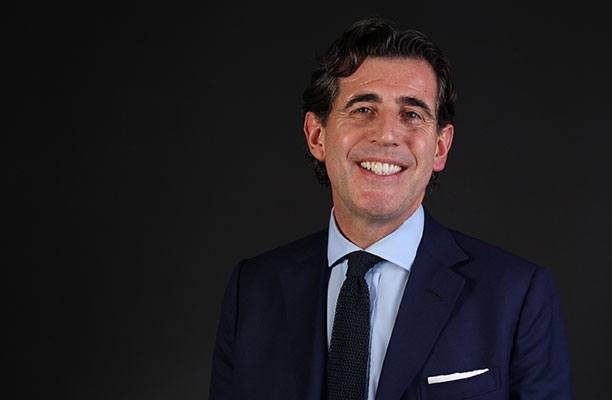
Be an Entrepreneur: Barbara Mayer-Trautmann

I come from a strong corporate background and never imagined becoming a lawyer. I had done an apprenticeship at a global company before beginning my studies and planned to go back afterwards – you know, make it up to the board someday. At school, I was torn between engineering and the law, but decided to go with what made me happy. The law classes were much more fun and interactive.

I stayed with the company part-time and, after graduation, asked to be relocated to London. They said they would do it after another year in Germany. That wasn’t fast enough, so I asked my brother, who was studying law at Oxford, to recommend a firm that had offices in London and Germany. Clifford Chance had been recruiting there the night before, so that was his suggestion. I interviewed a week later and got an offer the same day. The deal was: three months in Germany, then two years in London.

I started on the M&A team but, after moving to London, discovered that finance law is more transportable. The documents are more commercial and, therefore, less affected by local governing law, so I switched to acquisition finance. I’m definitely in the right field. My practice is connected to living companies, and I enjoy working with high-profile clients and making things happen. I also love the independence of being a partner, aligning my own strategy with the firm’s and figuring out how to be successful.

One thing I’ve learned is that you will never get there alone. No one does everything well, but as a team, you can do it all. I find it easy to develop client relationships and run complex deal meetings. But ask me to give a public speech, and I will go straight to a particular colleague and say, “let’s do this together.” That’s her strength, and she loves doing it. Then I make sure I am super prepared for my part.

I encourage everyone on my team to be entrepreneurial. For junior lawyers, my advice is to get close to a few key clients. Work on repeat assignments, give speeches at closing dinners and find ways to connect at a plain level. Then balance that with other projects for broader exposure. It’s never too soon to build relationships and help sell your firm.

My first child was born right after I was made a partner. I took my full leave but worried about being out of the market for six months. I had great support, so it was all in my head. When I returned, people said things like, “Oh! You’re back after only two weeks?” After that, taking leave for my other three kids was much easier.

Childcare is not the place to count pennies. Get the help you need, and then learn to let go and trust what you’ve done. My own feelings of success thrive when I manage to balance, and find compromise in an enjoyable way, the competing demands of family and my personal passions – downhill skiing, the opera and my two greater Swiss mountain dogs – and being a partner at an elite global firm.


Step-by-Step: Thais Garcia

The key milestones in my career have all involved taking some risk and not necessarily following the traditional path – trusting my instincts. The first of those moments was deciding not to be afraid to experiment, and even fail, for the sake of getting the right exposure. During law school, I explored different practices and environments, such as clerking for a federal tax prosecutor, an internship at a litigation firm and working in-house at a tech start-up. There was no mortgage to worry about, so I just went for it! These experiences have been extremely valuable not only because they broaden my perspective of what it meant to be a lawyer, but also helped me make a more informed decision about which path to take following graduation. After doing a little bit of everything, I realized that I was better suited to transactional work, which focuses on consensus building and a shared goal of getting the deal done.

Next was a move to Spain for my LLM, which led to a job offer in my firm’s Madrid office. As a Brazilian law-qualified attorney, the safer path would have been to join a local firm back home, but I had a gut feeling that working at an international firm and learning an entirely new legal system would be too interesting to pass up. I remember having a discussion with my parents about whether to take an offer in Spain or in Brazil, and they said something that I will never forget: “Opportunities come and go, and there is no such thing as perfect timing. Don’t miss out on the good ones as they might not be there tomorrow.” When I was later considering a move to New York, Spain had then become the safe choice. I remembered my parent’s words of wisdom and didn’t think twice about relocating to the US to help strengthen our Latin America practice. The key lesson I learned from these experiences, when I look back at the choices I’ve made, is that my most rewarding experiences always involved some risk and trusting my gut.

Regrets are equally part of the process. I don’t have many, but the ones I can think of involve choosing inaction over action, particularly not taking a stand. As a junior lawyer, I participated in a deal negotiation, during which a senior person on the other side spoke disrespectfully to me. I wanted to say something, politely, but completely shut down and later regretted not having the courage to stand up for my principles. Thankfully, my colleague, a senior partner, saw my discomfort. He stopped the meeting and demanded a more respectful tone as a condition of moving forward. Afterwards, he said to me, “I just won’t tolerate that kind of behavior.” He is a good friend and mentor to me to this day.

For those starting out, my advice is to trust your instincts, stand up for what you believe is right and take some risk every now and then, no matter how junior you are. Also, always seek out role models and mentors. It is key to have a good support network and people that you know will be there for you when you need them the most.

Behind the advice: Caroline Meinertz

Self identity: a social construct

I wanted to be an adviser – I enjoyed talking to people and giving them advice – so it was no coincidence that I ended up as a lawyer who gives regulatory advice.

When I started in this career, I didn’t appreciate the importance of networking and spending not just time in the office, but social time with clients, industry representatives, journalists, and the whole ecosystem that comes with the profession.

That changed when I realized the importance of building a market profile. The area of law that I’m in is closely connected to political events, which made it even more important to be out there, and to be seen to be out there. When you are in the business of giving advice, people want to know the market view − not just your view.

You don’t have to meet everybody, but take the right opportunities such as speaking engagements or participation on panels. And if you make the effort to go along, make sure you say something.

A physical and mental workout

The primary skill that I’ve had to develop is resilience, and by that I mean both physical and mental resilience. You learn to operate when you’re feeling less than 100 percent well – things have to be done, and no one else is going to do them for you. It’s partly being a team player and not wanting to let others down.

In terms of mental resilience, you have to make tough decisions and deal with the consequences.

Know your “USPs”

Working on business and management skills as early as possible is really important; being a lawyer is not dissimilar to any other sales role. Ultimately, what we sell is legal advice. You can be the best technical lawyer in the world, but if you can’t sell your skills – your Unique Selling Points – you’re not going to attract clients. People find it hard to talk to clients about charges and ways to structure them so as to be cost-effective, but that’s a good skill to have.

Personal assistance

I was very lucky in that I had a great mentor. My advice to younger lawyers would be to identify somebody who can provide independent advice about your career. This is absolutely invaluable. It doesn’t have to be a lawyer, but someone prepared to give up a bit of time to chat through different challenges or issues when you’re at a turning point.

When building your career, your personal choices are as significant as the professional choices, because if your home life isn’t right, your work life is going to be challenging as well. Building a good and realistic support network is very important.

Believe in yourself

My overall advice is to have confidence in your own abilities, even when you go through stages – and we all do – when you have doubts about whether you’re able to meet a particular challenge. Believe in yourself, because if you don’t, no one else will.