
With firms including Proskauer, Orrick and Paul Hastings building up their disputes teams in the US, litigators in London are predicting an uptick in hiring activity, as firms move to grow their practices ahead of an expected rise in disputes work across a range of sectors.
2025 saw a number of high-profile UK decisions that brought new certainty around everything from case certification, to funding and case management. These decisions – combined with the state of the economy – mean partners expect to see more activity in sectors including securities, tech, sports, and restructuring litigation.
Big Tech and the draw of class actions
One area partners are certain is set for a rise in claims is competition class actions relating to Big Tech, building on momentum from the Competition Appeal Tribunal’s (CAT) decision in Kent v Apple last October, in which the Tribunal found the tech giant liable for abuse of dominance in its App Store operations.
‘The decision will be regarded as a boost to the regime as it comes at a time when a number of other claims in this space had encountered significant issues,’ says Jon Gale, head of Ashurst‘s UK dispute resolution practice.
There are already similar claims proceeding in the CAT against tech giants, including Gormsen v Meta, an opt-out class action seeking up to £3bn in damages, Alex Neill v Sony Interactive Entertainment Ltd (seeking £5bn), Dr Maria Luisa Stasi v Microsoft (£1bn), while the Association of Consumer Support Organisations Ltd v Amazon is also seeking damages on behalf of 45 million UK consumers.
‘The combination of litigation funding and the rise of class actions has changed the way hiring works in London’
And, as multibillion-dollar tech companies with deep pockets attract greater scrutiny, many predict that firms, including US firms that have traditionally kept their City offices focused on transactions, will invest more in their London disputes teams.
These firms are unlikely to make any mass pivot towards full-service commercial litigation. But the rise of this type of competition litigation is already having an impact.
 ‘The combination of litigation funding and the rise of class actions have changed the way hiring in disputes works in the London market,’ says Scott Gibson, co-founder and director at legal recruitment consultancy Edwards Gibson.
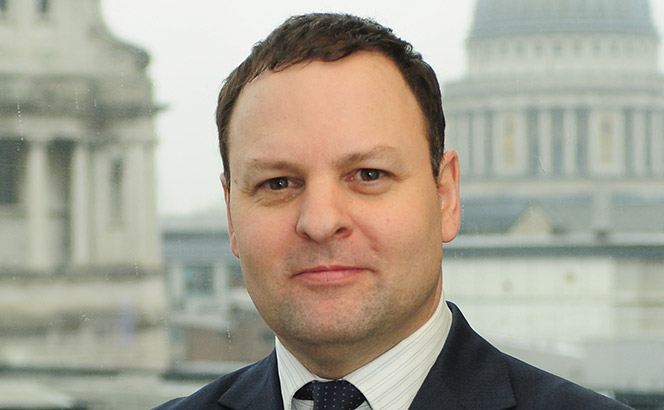
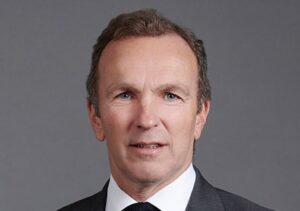
Richard Swallow (pictured), head of the disputes and investigations group at Slaughter and May, notes that the changes in the market have also produced a proliferation of disputes-focused firms: ‘There are more claimant firms out there – it used to be only Hausfeld and Leigh Day, but now there are many more firms acting on the claimant side.’
Securities litigation
Partners also predict a heightened appetite for claims under the Financial Services and Markets Act (FSMA), after a key decision that clarified the scope of ‘reliance’ under section 90a of the Act.
The last year saw courts grapple with the meaning and importance of reliance, with conflicting High Court judgments on the application of reliance to passive and index-fund investor claims in Allianz & Ors v Barclays and Various Claimants v Standard Chartered leaving the law unsettled.
Late 2025 saw a significant development in the Privy Council’s decision in Credit Suisse v Ivanishvili, which overturned prior authorities and found that claimants need not be consciously aware of false representation to establish reliance.
‘It has fundamentally reshaped key aspects of the law of reliance’
Stewarts securities litigation head Keith Thomas says the case ‘has fundamentally reshaped key aspects of the law of reliance.’
He continues: ‘This may have quite dramatic effects on what claimants need to show to prove reliance in s90A open market securities cases. The confirmation that there is no requirement to show awareness is likely to lower the threshold for claimants to bring their claims, particularly where they are index or benchmark funds.’
 Helen Carty (pictured right), head of the London litigation and dispute resolution team at Clifford Chance, also predicts further activity in FSMA claims: ‘People are naturally watching for falls in stock prices and basing claims on those. That is likely to continue until there is a decision that sets the rules on these claims.’
Further guidance will come in October, when the mammoth Aabar Holdings & Ors v Glencore goes to trial. Thomas says the decision on a number of key untried issues ‘will move the whole jurisdiction forward.’
Pallas Partners founder and managing partner Natasha Harrison agrees: ‘This case will clarify areas of law around corporate disclosure and investor protection.’
Cyber attacks and AI
It’s not all high-value group claims predicted for 2026 though, with partners also expecting growth in smaller, technology-related disputes.
‘We are seeing a really wide range of disputes,’ says Addleshaw Goddard’s global head of disputes Mark Molyneux, pointing to ‘lots of cases about investment IT infrastructure through to cyber attacks and data breaches.’
Aaron Le Marquer (pictured right), head of policyholder disputes at Stewarts, notes that, so far, ‘all of the big cyber attacks have been mostly uninsured and have been settled.’ He argues that full-blown litigation is likely to emerge only in the event of ‘systemic cyber loss.’
CC’s Carty echoes this note of restraint: ‘We are clearly seeing a large number of cyber attacks, and that has a massive impact on people,’ she says. ‘But in terms of actual litigation, there are practical limits to what remedies are available against the perpetrators.’
Partners are more broadly in agreement that AI and tech adoption are more likely to generate disputes work, with Molyneux pointing to disputes arising from ‘major IT infrastructure refreshes and investment in different forms of technology, including AI.’
The spectre of recession
Underlying all this is the question of recession – and when, or whether, a long-predicted downturn will produce more claims.
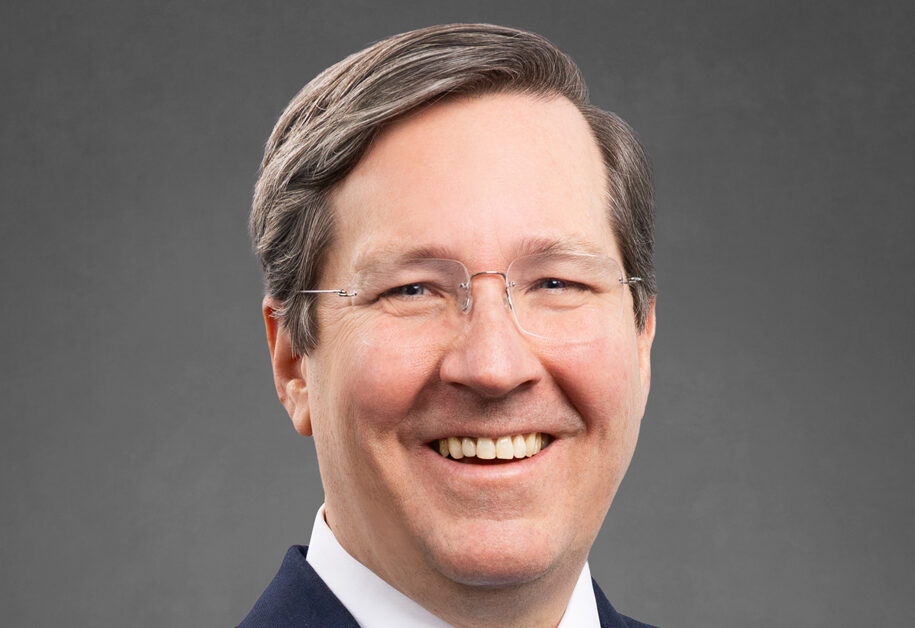
 ‘The business environment is getting increasingly worse, and if we do head into a recession, there will likely be a lot of restructuring and insolvency work,’ says Ted Greeno (pictured right), co-managing partner of Quinn Emanuel‘s London office.
Carty makes a similar point: ‘Economic uncertainty often leads to restructuring and insolvency issues; people have been talking about that for a long time. And it is possible that 2026 may be the year when all of that starts coming through.’
‘Everything that’s been papered over is now starting to come apart’
Even if 2026 did see a recession, this would not necessarily mean an uptick in related litigation any time soon. ‘Litigation happens over a long time frame,’ says Carty. ‘Once you have started proceedings, it might be one to two years, possibly longer than that, before they come to trial. So you want to be reasonably sure you’ve suffered a loss before you incur the cost of actually starting the proceeding.’
Private credit
 Tougher economic circumstances also impact private credit. ‘A lot of private equity money went into the market in the last five years,’ says Molyneux. ‘Perhaps that went into investments that haven’t come through or where the price was too high in a frothy market (which of course is part of the portfolio investing) – some of that is unwinding. And you get disputes as a result of that.’
Pallas’s Harrison (pictured right) has a starker warning: ‘Everything that’s been papered over for the most part is now starting to come apart,’ she says. ‘While there isn’t a private credit crisis yet, many are concerned it’s on its way.’
Back in the game: sports
Slaughters’ Swallow points to sport as another significant growth area. ‘There’s a lot of money in sport, so there’s a lot of money at stake. The second reason is that most of the sports disputes are in fact competition law disputes.’
 By way of example, Slaughters acted for the Premier League in the expedited legal challenges brought against its rules by Manchester City FC, as well as ongoing commercial disputes in F1 and golf.
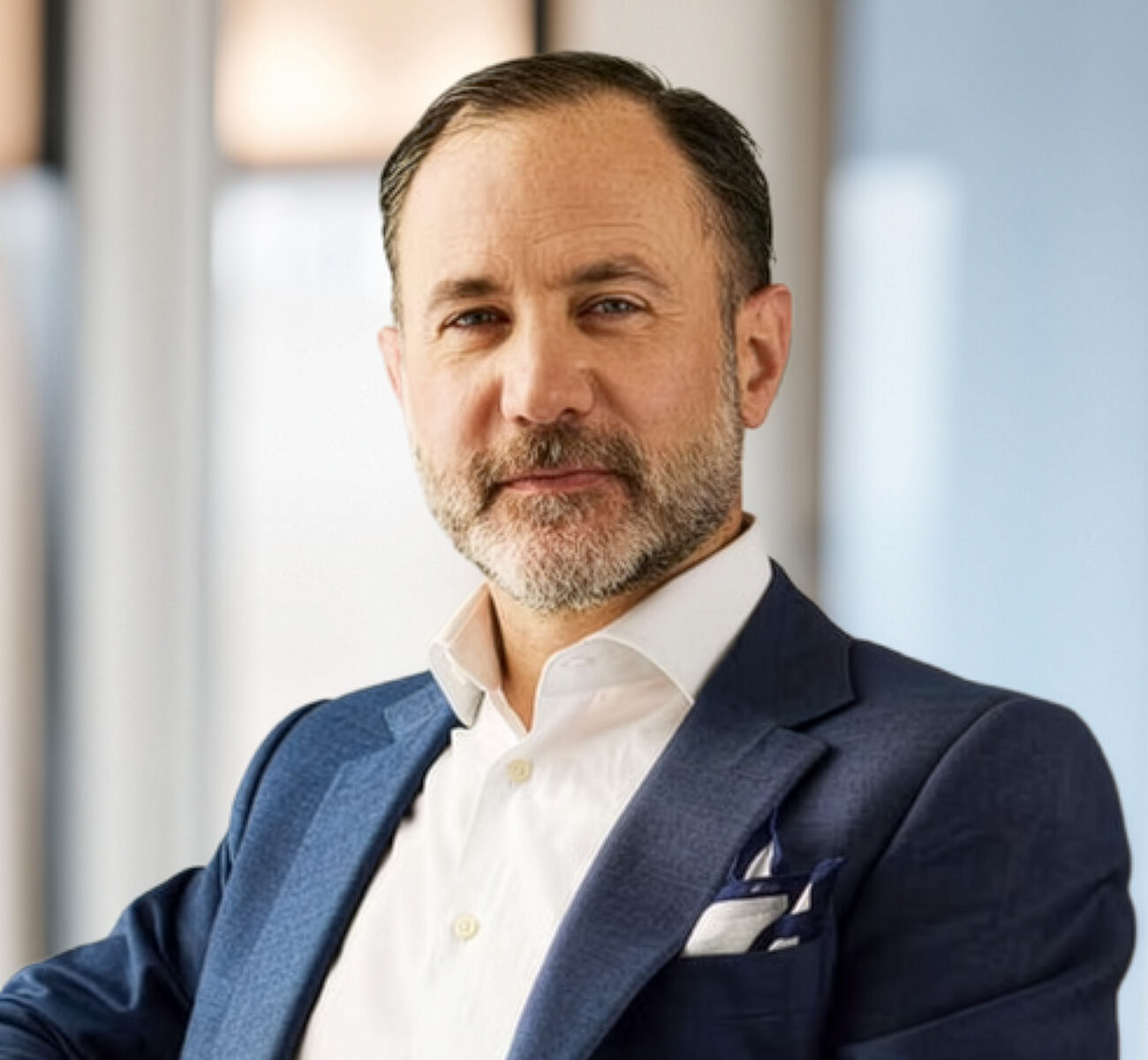
‘Sports law used to be seen as a niche practice area,’ says Ashurst’s Gale (pictured right). But that has changed with ‘investment flooding into traditional sports, and their electronic equivalents.’
‘High-stakes commercial disputes are likely to arise in the sector,’ he says, predicting ‘more litigation and arbitration as club sponsors, broadcasters, associations and even the players and participants in the sports jostle for influence.’

 As he summarises: ‘Firstly, you want to project the kind of confidence that comes from experience. That air of calm when everybody else is panicking is absolutely key.’


 This marks a break from the seller’s market of previous years, which saw deals collapsing on valuation discrepancies. ‘But investment committees are still highly selective as to what they will allow people to run hard at,’ Rodham adds.
 Charlie Hayes, Freshfields’ global co-head of private capital in London, makes a similar point: ‘We’ll continue to see the bifurcation in funds that are readily able to fundraise, and those for whom it’s more challenging; there are great teams out there, and I think this year the consolidation of GPs we’ve already started to see will gain pace – there are some in the market as we speak. And in H2, the IPO market will be buzzing with private capital exits – there is a lot to look forward to.’













 So far the focus has been on building out existing offices, as well as a handful of launches across EMEA, with the firm launching a