Trading places: Paul Hastings hires Cravath investigations chair as Paul Weiss private credit co-head departs

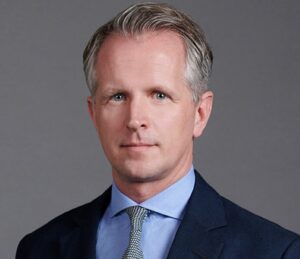
Paul Hastings has hired disputes heavyweight John Buretta (pictured) as co-chair of its litigation department, marking the firm’s fourth partner hire this month.

Buretta joins Paul Hastings’ New York office from Cravath, where he spent more than 12 years, including as chair of its investigations and regulatory enforcement practice.

He brings extensive experience advising clients including corporates, board of directors, and audit committees, as well as company owners, individual board members, and senior management figures, on a wide range of matters including investigations, regulatory enforcements, and civil proceedings.

Before his time at Cravath, Buretta spent 11 years at the Criminal Division of the US Department of Justice (DOJ), most recently as principal deputy assistant attorney general and chief of staff.

While at DOJ he worked on cases related to corporate fraud, money laundering and public corruption, among other crimes, and spent more than two and a half years as director of DOJ’s Deepwater Horizon Task Force.

Global managing partner at Paul Hastings, Sherrese Smith, said: ‘John is widely recognized as one of the best litigators of his generation – a powerhouse whose deep government roots and strategic mindset make him a formidable force for clients facing bet-the-company disputes.’

‘His arrival moves our already top-of-market litigation practice to another level and further demonstrates that Paul Hastings is a destination for elite talent,’ she added.

Also joining Paul Hastings in New York from Cravath was tax partner Andrew Davis, who spent ten years at the firm and made partner in 2021.

Davis brings experience advising on the tax elements of a range of M&A deals, including public-company transactions, PE deals and strategic combinations across industries including tech, manufacturing and financial services.

Paul Hastings has been aggressive in building its M&A practice in recent years, with notable US hires including Eric Schiele, who joined the firm last March as global M&A co-chair from Kirkland & Ellis, and who previously spent just under two decades at Cravath.

The firm hired a further two partners in Washington DC, bringing over two life science regulatory partners from Hogan Lovells: Lynn Mehler and Phil Katz.

Mehler joins as chair of Paul Hastings’ life sciences regulatory practice, having served 15 years at Hogan Lovells, latterly as global life sciences and health care industry co-head. She brings experience advising clients on FDA and US drug enforcement agency regulatory matters.

Meanwhile, Katz joins Paul Hastings after two decades at Hogan Lovells, where she built and led the firm’s pharmaceuticals and biotechnology regulatory practice group before Mehler became practice leader.

Paul Hastings chair Frank Lopez said: ‘The movement of a top-of-the market life sciences regulatory team is incredibly rare and we are grateful that Lynn and Phil share our vision for creating a premier full-service life sciences platform.’

Elsewhere, Latham & Watkins hired Sara Margolis to its complex commercial litigation practice in New York, bringing experience across high-stakes trials and complex disputes in federal and state courts.

Margolis joins following ten years at US litigation boutique MoloLamken, where she made partner in 2021.

Global chair of Latham’s complex commercial litigation practice, Steve Feldman, said in a statement: ‘As regulatory scrutiny intensifies and litigation in these sectors expands, her courtroom experience and proven trial instincts strengthen our roster of young, dynamic trial talent in New York.’

Meanwhile, Paul Weiss has seen its global co-chair of private credit and financial services Anastasia Peterson leave the firm, departing from the New York office to establish a Middle East-focused private capital and advisory platform.

Peterson spent three years at Paul Weiss, based primarily in New York with time also spent in London. She joined as a partner in January 2023, before becoming global co-chair of financial services in November 2023, and spent ten months in as global co-chair of private credit.

Her exit comes as she announces plans to build her own strategic capital and advisory platform ‘focused on structuring and mobilizing capital across the Middle East and other value-adjacent markets, with a core emphasis on private credit, structured finance, and cross-border platform development,’ according to her LinkedIn.

LB understands that her two co-chair roles will not be replaced, with partners Jarryd Anderson and Joe Glatt continuing as chairs of financial services and private credit, respectively.

Also in New York, Simpson Thacher has hired M&A partner Jared Wilner to lead its insurance transactional and regulatory team. He joins from Mayer Brown’s corporate and securities practice and global insurance industry group, where he was a partner for three years.

Fox Rothschild has hired Stephen Aschettino in New York as chair of its new fintech and digital assets practice and co-chair of its financial services industry group.

A fintech veteran, Aschettino joins from Steptoe & Johnson, where he spent two years as payments team leader. Prior to this, Aschettino helped lead and develop fintech teams at Foley & Lardner, Loeb & Loeb, and most recently Norton Rose Fulbright, where he spent three years as US head of fintech.

Also active was Morgan Lewis, with a pair of tax hires in its offices in New York and Miami.

The firm welcomed Daniel Hudson into its Miami private client and taxation practice from Florida business firm Berger Singerman, while in New York it hired Dentons managing associate Alexios Hadji as a partner in its tax practice. Hadji rejoins the firm after six months at Dentons.

Finally in New York, Clifford Chance has brought in Michal Netanyahu as a private equity partner. She joins from Freshfields, where she spent four years as counsel, advising private equity sponsors on cross-border M&A, leveraged buy-outs, joint ventures and restructurings among other matters.

On the West Coast, Arnold & Porter has made two real estate transactions hires as part of its strategic build-out in the region, bringing in partner Katherine Wax in Seattle and counsel Katie McHenry in Los Angeles.

Wax brings the total headcount to 35 lawyers and staff at the Seattle office Arnold & Porter opened last July with a raft of hires from K&L Gtes, including Seattle office head Pallavi Mehta Wahi, now chair of Western US strategic growth at A&P.

Meanwhile, MacHenry joins from K&L Gates, where she spent more than four years as a counsel.

A&P Western US strategic growth chair Wahi said in a statement: ‘With their deep understanding of the West Coast market, they will help drive our continued growth and ability to deliver sophisticated, results-oriented counsel in the region.’


[email protected]

Exclusive: HSF Kramer hires former Mayer Brown Europe finance head in London lev fin play

Herbert Smith Freehills Kramer has brought Mayer Brown’s former head of European finance into its London office, building its leveraged finance offering in the City.

The firm has hired Stuart Brinkworth, who brings two decades of experience advising UK and international sponsors, bidding consortia, and lenders on cross-border transactions across a range of sectors, including financial services, technology, business services and sport.

He joins after almost eight years at Mayer Brown, where he was European head of leveraged finance until September. Before this he was London head of finance at Fried Frank, after joining from Hogan Lovells in 2015.

Kristen Roberts, HSF Kramer managing partner for finance and restructuring in the UK and EMEA, said: ‘Stuart is highly regarded for his commercial acumen, trusted client relationships and technical excellence. His arrival adds further bench strength to our leveraged finance and private capital offerings across our UK and EMEA platform, aligning with one of our strategic growth priorities. We warmly welcome Stuart to the firm.’

Brinkworth added: ‘The opportunities at Herbert Smith Freehills Kramer to cross-sell between practices, such as private equity and restructuring, and across the firm’s international network, create an exciting platform for me to build out my private equity-facing practice.’

Brinkworth’s recent mandates include advising Sullivan Street Partners on the financing of its acquisition of Senior Plc’s aircraft construction business last July, and advising Vitruvian Partners on the financing of its acquisition of rail tour operator Great Rail Journeys last May.

In addition to mid-market private equity-backed leveraged buyouts, Brinkworth also advises on management buyouts and buy-ins, public bids, and matters related to distressed situations.

Brinkworth was also an early adopter of unitranche loans, a hybrid structure that combines senior and subordinated debt, as a funding source in the leveraged finance market in Europe.

His hire comes after HSF Kramer in October hired a five-lawyer banking and finance team from BonelliErede in Milan, including partner Emanuela Da Rin.

In the last year, the firm also saw a trio of departures from its London private equity practice, with its head of international private equity in London, Eleanor Shanks, departing for Morrison Foerster in November.

Shanks’ move was preceded by the departure of two PE partners, Ambarish Dash and David D’Souza, who also left HSF Kramer for Morrison Foerster last May.

The firm currently has five PE partners in London, including John Taylor, who has acted for clients including Inflexion, Three Hills Capital and Carlyle.

A Mayer Brown spokesperson confirmed Brinkworth will be leaving the firm and said, ‘He leaves with our best wishes.’

[email protected]

Weil and A&O Shearman lead on $260bn mining megadeal

Weil and A&O Shearman have secured lead advisory roles as Glencore and Rio Tinto enter preliminary merger talks that, if succesful, could create the world’s largest mining company.

Legal Business understands that Weil is advising Glencore, while A&O Shearman is representing Rio Tinto, as it explores options to acquire Glencore.

If the deal goes ahead, it would be one of the largest mergers on record for companies listed on the London Stock Exchange, with a combined enterprise value of $260bn.

Weil’s team is understood to be led by London office co-managing partner David Avery-Gee and corporate partner Sarah Flaherty.

Avery-Gee, who was at Linklaters for 20 years until his departure for Weil in 2020, has extensive experience working with Glencore, working with the mining company at both Linklaters and Weil.

His mandates at Linklaters include advising on Glencore’s sale of a 40% stake in Glencore Agricultural Products to the Canada Pension Plan Investment Board in 2016. Meanwhile, at Weil, has has advised on matters including Glencore’s 2023 sale of Cobar Management, owner of the Cobar copper mine in New South Wales, Australia, as well as advising Glencore Canada on its acquisition of lithium ion battery recycling company Li-Cycle, in a deal that completed last August.

Weil’s role advising Glencore will be seen as a coup for the US firm, given Glencore’s UK heritage and its historic links to UK law firms. The company’s headquarters is in London, and its primary listing is on the London Stock Exchange, with a secondary listing in Hong Kong.

A&O Shearman’s role for Rio Tinto also marks a major corporate mandate for the firm.

In the past, the mining giant has often relied on Linklaters for M&A support. Most recently, Linklaters advised Rio Tinto on its $6.7bn acquisition of Arcadium Lithium, which completed in March 2025, with a transatlantic team of partners from the firm’s New York and London offices.

Glencore and Rio Tinto have engaged in merger talks before, most recently in 2024, when the discussions fell through due to differences over culture, valuation, leadership and operations.

On the resumed talks, Glencore confirmed in a press release that it is in ‘preliminary discussions’ with Rio Tinto concerning ‘a possible combination of some or all of their businesses, which could include an all-share merger between Rio Tinto and Glencore.’

It continued: ‘The parties’ current expectation is that any merger transaction would be effected through the acquisition of Glencore by Rio Tinto by way of a Court-sanctioned scheme of arrangement.’

Rio Tinto also confirmed the discussions in a press release.

Rio Tinto has until 5 February to either announce a firm intention to make an offer to acquire Glencore or confirm that it does not intend to make an offer.

[email protected]

Hogan Lovells Cadwalader: the data behind the biggest ever law firm merger

The proposed merger of Hogan Lovells and Cadwalader is set to bring together two firms with starkly contrasting recent histories. A closer examination of the data highlights both the rationale for the deal and the story behind how they got to this point.

Patience over pace

Hogan Lovells is already the product of one of the biggest ever law firm mergers – the 2010 combination of UK firm Lovells and Washington DC’s Hogan & Hartson, which created a $1.66bn firm.  While the merged firm’s subsequent growth has not always been spectacular – with only two years of double-digit growth since the tie-up – over the last 15 years, total turnover has climbed by a more than respectable 78% to almost $3bn in 2024.

Indeed, looking at the 10 biggest firms in the Global 100 in 2011, Hogan Lovells has seen the fifth biggest increase in revenue over the years that followed, even if this 78% growth has been dwarfed by the likes of Latham & Watkins and Kirkland & Ellis at 225% and 400% respectively over the same period.

In contrast, Cadwalader has found consistent growth harder to achieve. Its revenues remained broadly stagnant at around $450m between 2011 and 2020, before a post-Covid bump to $638m, meaning its turnover has climbed by 42% since 2011.

Revenues: a comparison of Cadwalader and Hogan Lovells since 2011

Profit and loss

Although revenue growth may have been relatively slow and steady, Hogan Lovells has seen profit per equity partner rise more sharply since the 2010 merger, up 163% from $1.2m (£729,000) to $3.1m (£2.4m).

And while Cadwalader’s 2024 PEP is higher at $3.7m, that figure masks a choppier track record over the same period, with profits falling in as many years as they have risen since 2011, swinging from a low of $2.06m in 2015 to a high of $4.38m in 2021.

This fluctuation is a stark contrast to Hogan Lovells, which has seen PEP tick up almost every year over the same period.

PEP: a comparison of Cadwalader and Hogan Lovells since 2011

What Cads gives Hogan in New York

Given its legacy, Hogan Lovells has a much larger global footprint, with more than 300 Legal 500 practice rankings across the UK, US, Latam, Europe, APAC and the Middle East, compared to just 32 rankings for Cadwalader in the US and London. Hogan Lovells also has almost 300 ranked partners around the world, with the strongest presence in disputes (20) and real estate (16).

In the US, where Hogan Lovells has 12 offices, the firm has 41 rankings, including top-tier practices in healthcare, cyber law and government relations.

However, what the merger offers Hogan Lovells in New York can’t be underestimated. The transatlantic firm has long sought to bulk up in Manhattan and, in Cadwalader, it gains tier 1 practices for securitisation and derivatives & structured products, as well as tax: financial products, a practice with a heavy focus on complex financial restructuring.

Cadwalader also has tier 2 rankings for commercial lending: advice to bank lenders, municipal restructuring and shareholder activism: advice to shareholders, three areas in which Hogan Lovells is unranked.

Cadwalader’s key names for structured finance in the US


Derivatives and structured products
Lary Stromfeld, management committee member, Legal 500 Hall of Fame
Brian Foster, co-head of fund finance, Legal 500 leading partner
Ivan Loncar, co-chair of financial services, Legal 500 leading partner

Securitisation

Michael Gambro, co-chair of capital markets, Legal 500 Hall of Fame
Neil Weidner, partner, Legal 500 Hall of Fame

Tax: financial products
Linda Swartz, tax chair, Legal 500 leading partner
Mark Howe, partner, Legal 500 leading partner

Why it’s the biggest merger of all-time

Hogan Lovells Cadwalader has been billed as the largest law firm combination in history and, based on revenues at the time of announcement, it just pips A&O Shearman – although it’s a very close call.

When the A&O Shearman merger was announced, the firms said in a statement that their combined revenue would be around $3.4bn compared with Hogan Lovells Cadwalader’s equivalent figure of $3.7bn.

However, confirmed revenues for their final years as separate firms show the legacy A&O and Shearman turnover added up to $3.575bn, going on to rise to $3.65bn for the first year of existence – far closer to the most recently announced mega-merger.

Hogan Lovells is also marginally larger than A&O Shearman on lawyer headcount, with a combined 3,130 lawyers in 2025, based on Global 100 figures, narrowly ahead of A&O Shearman’s 3,105.

Where do the two firms gain client plaudits?

In addition to practice rankings, Legal 500 data also offers insight into what clients think about their law firms. While Cadwalader is highly regarded in structured finance and funds, Hogan Lovells scores particularly highly in areas such as commercial litigation, civil fraud and pensions disputes.

Crisis management, communication and ‘putting the fish on the table’ – SIG Group CLO Philippe Huber

After several years in private practice with leading Swiss firm Bär & Karrer, Philippe Huber went in-house with Transocean just before the company’s Deepwater Horizon oil rig was involved in a major environmental disaster. Building on the experience he gained during this crisis and other major projects, his career went from strength to strength, and he is now chief legal officer and company secretary of Switzerland-headquartered packaging giant SIG.

You have had a very multicultural academic and professional journey, and you now lead a highly cross-regional team. What does that diversity of backgrounds and cultures really bring to the table?

First and foremost, multiple viewpoints and perspectives, which allow for a more differentiated approach to issues. This is not only an advantage when assessing risks, particularly to avoid blind spots. It also proves essential to effectively shaping culture.

To give you an example, having team members with different backgrounds involved in designing and delivering compliance training is particularly valuable. Greater cultural awareness and sensitivity allow us to tailor our programmes more effectively to the needs of our global workforce.

Issues need to be addressed early, candidly and constructively – to “put the fish on the table”

From a broader business perspective, having teams with diverse backgrounds provides a significant advantage, particularly in understanding the needs of our customers and the environment in which we operate.

That said, building and working with diverse legal teams does come with challenges. Diversity can make it more difficult to achieve alignment and find common ground within teams. However, the solutions developed are often more robust and better accepted, precisely because multiple voices have contributed to the process.

What practices have you found most effective for building cohesion and trust across regions and cultures within your team?

For me, open and transparent communication is fundamental to building trust and cohesion across regions and cultures. Issues need to be addressed early, candidly and constructively – to “put the fish on the table” (as per an expression originating from Sicily) – rather than letting problems or conflicts linger. I believe this is key to effective leadership, particularly in diverse, geographically dispersed teams.

In my role, this translates into regularly bringing the whole team together. We use these meetings to exchange insights and best practices, discuss shared challenges, and develop common approaches and solutions.

Beyond these scheduled meetings, I actively encourage peer-to-peer interaction in global projects and day-to-day work. Peer coaching is another effective tool to support one another and to grow as a team across regions and cultures.

As part of your in-house career, you played a central role during the Deepwater Horizon crisis and in leading a proxy fight against a US shareholder activist. What leadership principles do you rely on during intense periods, and which of them remain most relevant in today’s increasingly volatile corporate environment when managing crisis?

While the Deepwater Horizon incident and the proxy fight against a US shareholder activist were very different in nature, there are leadership principles that apply to virtually any crisis.

The first and perhaps most important principle is to stay calm. This sounds simple, but when confronted with a burning platform or “barbarians at the gate”, it is anything but. Remaining calm is essential to being able to think clearly, take sound decisions, and provide stability to the organisation.

Preparation also plays a critical role. While it is impossible to anticipate every crisis scenario, companies should regularly perform risk and vulnerability assessments and prepare accordingly. This includes drawing up a playbook and identifying a core crisis team, composed of key internal people and external advisers with all relevant functions represented. Having a playbook to fall back on in the first hours of a crisis is invaluable, although regularly reassessing the situation and adapting to developments is equally important.

Another critical principle is disciplined communication. It is essential that the organisation speaks with one voice, both externally and internally. In a crisis, defining a single spokesperson becomes key. Communication requires careful handling, as the potentially lasting impact on a company’s reputation is often decided in the court of public opinion long before legal proceedings are concluded.

Two further principles are worth mentioning. First, business continuity must be ensured. Even in a serious crisis, day-to-day operations cannot be neglected. This often requires a small, focused crisis team to manage the situation while the wider organisation continues to operate as smoothly as possible. Second, effective crisis leadership requires strong energy management. Crises are marathons, not sprints, and leaders must manage their own and their teams’ stamina over prolonged periods.

Ultimately, crisis leadership comes down to preparation, clarity, discipline and resilience.

Nowadays, “thinking outside the box” seems to be part of every GC’s playbook. What does it mean for you?

As lawyers, we are trained to quickly analyse the facts, apply the rules and make reasonable legal judgements. While these are essential skills, they carry the risk of thinking one-dimensionally and remaining confined within the “box of legal thinking”. When dealing with complex business challenges, I try to take a deliberate step back and look beyond the obvious solution.

Reframing an issue can help to better understand the interests and pressure points of the other party or parties. Looking for solutions that address their concerns without undermining my own core interests fundamentally changes the dynamic. This often results in outcomes that are not only legally sound, but also commercially sensible.

Particularly when facing challenges with a customer, success is not about winning a legal argument but about finding a mutually satisfactory solution that allows the business relationship to continue and grow. Unconventional and innovative thinking can lead to genuine win-win outcomes that strengthen trust and create value beyond the immediate issue.

Looking back at your career from private practice through to executive leadership, what advice would you give young lawyers aiming for senior in-house roles?

First, establish yourself as a business partner, not just an adviser. In private practice, the job is usually done with providing the advice. In-house, that is only the starting point. To succeed, you must be seen as someone who not only identifies risks but also proposes pragmatic, commercially relevant solutions. Understanding and speaking the language of the business is essential. When you consistently deliver value, you earn credibility and a genuine seat at the table.

Second, be curious. We are operating in a fast-changing environment, turbocharged by AI. Younger lawyers should ask themselves what their role might look like in the future, where they can add value, and how they can have an impact. Curiosity, openness and exploration create access to opportunities.

Third, embrace change and seize opportunities. Challenging situations and crises often provide the greatest opportunities to show leadership. Lawyers are trained to stay calm, analyse complexity quickly and bring structure to uncertainty. These skills position us well to lead through change.

Rather than backing away from challenges, young lawyers should step forward, take ownership and aim to make a lasting impact.

US firms top UK and global rankings in record year for M&A megadeals

US firms dominated the M&A rankings in 2025, according to the latest data from the London Stock Exchange Group (LSEG), with Kirkland & Ellis and Latham & Watkins claiming the top spots for UK and global deals by value.

With 2025 the biggest year for global M&A in four years, and partners in London gearing up for a busy 2026 despite geopolitical instability, the LSEG data highlights the extent to which a small group of elite US players are eclipsing rivals on both sides of the Atlantic.

LSEG’s data tracked $4.6trn of deal activity globally throughout 2025 – a 49% increase on 2024, despite the volume of transactions dipping by 3% to 52,000, which represents a five-year low in deal numbers. Included in the haul were 68 megadeals worth more than $10bn apiece – double the number in 2024 and the strongest year for megadeals on record.

Global growth

LSEG Top Principal Advisers full-year 2025 by deal value

Firm Rank (last year) Total deal value Number of deals
Kirkland & Ellis 1 (1) $830bn 745
Latham & Watkins 2 (2) $719.7bn 786
Wachtell 3 (7) $652.9bn 108
Skadden 4 (3) $606.3bn 231
Freshfields 5 (5) $339.4bn 237
Cleary 6 (6) $322.3bn 117
Paul Weiss 7 (4) $318.8bn 257
Cravath 8 (15) $315.6bn 58
Gibson Dunn 9 (11) $280.8bn 269
Simpson Thacher 10 (8) $280.1bn 225

Deal activity increased across the Americas, EMEA and APAC last year, but with US target M&A accounting for half of all deal making, the LSEG adviser rankings demonstrate the growing involvement of US firms.

Despite this, a handful of UK-origin firms claimed spots in the top principal adviser list globally, with Freshfields once again the top-performing non-US firm, working on 237 deals worth $339.4bn to hold onto its fifth place spot from last year’s rankings.

Freshfields was joined in the top 20 principal adviser value table by Clifford Chance, A&O Shearman, and Linklaters, in 12th, 15th, and 20th place respectively.

Kirkland retained its position at the head of the global value table – taking a principal adviser role on 745 deals worth a total of $829.9bn in 2025, with Latham holding onto second place after managing 786 transactions worth $719.7bn.

Both firms won roles on some of the biggest announced deals of the year, with Latham advising Paramount on its $103.56bn joint hostile bid for Warner Bros Discovery (WBD). The firm also served as primary counsel to Silver Lake  on the acquisition of EA Sports by a consortium comprising Saudi Arabia’s Public Investment Fund (PIF), Silver Lake and Affinity for $49bn.

Kirkland meanwhile has been advising on Kimberly-Clark’s $50.62bn acquisition of Tylenol manufacturer Kenvue, as well as advising the consortium on the EA Sports deal.

Fellow US firms scoring well in the global primary adviser rankings include Wachtell advising on 108 deals worth $652.8bn to take third place and Skadden in fourth place with roles on 231 deals worth $606.3bn.

Other US firms in the top 10 include Cleary, Paul Weiss, Cravath, Gibson Dunn and Simpson Thacher.

Both Wachtell and Skadden have also been involved in the WBD deals, with Skadden working for Netflix on its $99.1bn bid, and Wachtell acting for WBD throughout.

As the only non-US firm in the top 10 global value table, Freshfields’ position as a serious M&A player in the US was secured through roles on a number of large mandates. Other UK firms seeing a significant boost in their position in the rankings include Clifford Chance and A&O Shearman, which climbed from 17th place to 12th and 23rd to 15th respectively.

Commenting on deal activity in 2025, Kate Cooper, a London M&A partner at Freshfields, described 2025 as ‘a year of two halves,’ following tumultuous policy decisions in the US at the start of 2025.

‘We saw boards feeling quite uncertain around that time about making commitments, either towards growth in the US or away from or to diversify into different areas or geographies. And that was quite challenging, I think, for most sectors to navigate through.’

She added: ‘The second half of the year, we’ve definitely seen more activity. I think right now, there’s probably quite a few processes that are beginning to ramp up with a view of next year in the first half.’

Looking at global deal activity by volume, Goodwin Procter leads the pack, working on 945 announced deals in 2025, totalling $123.6bn. This pushed DLA Piper into second place, with roles on 804 transactions worth $67.6bn. Latham came third by deal volume globally, closely followed by Kirkland, with Cooley rounding out the top five with roles on 557 deals reaching $108.6bn in value.

M&A in the UK, Europe and Asia-Pacific

LSEG Top Legal Advisers full-year 2025 – any UK involvement by deal value

Firm Rank (last year) Total deal value Number of deals
Latham & Watkins 1 (1) $86.3bn 145
Kirkland & Ellis 2 (6) $81.7bn 85
Linklaters 3 (3) $78.2bn 65
Freshfields 4 (5) $63.8bn 66
Clifford Chance 5 (12) $54bn 68
White & Case 6 (20) $53.6bn 77
Slaughter and May 7 (2) $52.9bn 50
A&O Shearman 8 (14) $47.9bn 85
Debevoise & Plimpton 9 (16) $47.9bn 21
Simpson Thacher 10 (22) $36bn 39

Looking at the UK and Europe, US firms were similarly dominant in the value rankings, with Latham coming top in the UK and second in EMEA by deal value, working on 145 deals worth $86.3bn in the UK and 306 deals in EMEA worth $200.46bn.

Kirkland placed second in the UK, working on $81.7bn worth of deals – this reflects a significant jump on 2024 when it came sixth by value.

Magic circle firms make up the rest of the UK top five, with Linklaters taking third place after handling 65 deals worth $78.2bn, followed by Freshfields, with 66 deals worth $63.8bn and Clifford Chance, which worked on 68 transactions worth $54bn.

Charlie Turner, a Linklaters corporate partner who advised on the $9.2bn Magnum Ice Cream company spin out from Unilever and IPO, predicts that there will be more carveouts in 2026.

‘I think we’re going to see more companies reviewing their businesses and considering carveouts and divestments, as they continue to drive value through the disposal of non-core assets,’ he said.

He added: ‘Carveouts can be a good news story. Companies divest themselves of non-core businesses to allow them to become more streamlined and focused, helping to support and drive greater performance in the remaining business whilst generating returns for shareholders or reinvestment. For a buyer, the carved-out business can offer real opportunity to create value. It can be win-win.’

Over at White & Case, which came sixth in the UK rankings, Patrick Sarch said: ‘We’ve seen more competitive situations in 2024 and 2025 than in any year since 2016, pointing to a sustained period of heightened competition between bidders.’

Across Europe, Freshfields worked on the highest value of deals, advising on 190 transactions totalling $247.58bn.

Latham is the second best performer in the region, with A&O Shearman and Clifford Chance featuring in third and fourth respectively, and Kirkland taking the fifth spot.

Meanwhile in APAC, Linklaters is the top performing British firm, placing second on the highest valued deals announced in the region last year. Acting on 50 transactions valued at $71.7bn, Linklaters’ performance is superseded only by Hong Kong-headquartered King & Wood Mallesons, which worked on 149 deals totalling $98.88bn.

HSF Kramer and Clifford Chance also made it into the top 10 in the APAC rankings, placing sixth and tenth respectively.

In the latter end of the table, Kirkland placed 13th, Ashurst, soon to be merging with US firm Perkins Coie, jumped to 17th from 40th, and Freshfields placed 20th.

Latham was just outside the top 20 in APAC, ranked 22nd – down from first in 2024.

[email protected]

LSEG Top Legal Advisers full-year 2025 – any European involvement by deal value

Firm Rank (last year) Total deal value Number of deals
Freshfields 1 (1) $247.6bn 190
Latham & Watkins 2 (2) $200.5bn 306
A&O Shearman 3 (11) $186.4bn 238
Clifford Chance 4 (10) $153.5bn 220
Kirkland & Ellis 5 (5) $151.6bn 162
Skadden 6 (4) $136.5bn 97
Linklaters 7 (3) $126.4bn 192
Sullivan & Cromwell 8 (7) $116.7bn 55
White & Case 9 (6) $114.5bn 256
Cleary 10 (8) $93.8bn 74

‘We must show our value beyond contracts and advice’ - Nestlé’s MENA GC on taking a seat at the top table

Vera Kolesnik, general counsel and compliance officer for Nestlé’s Middle East and North Africa business, on major MENA projects, thriving during instability and how legal teams can demonstrate their value as a business partner

What are some of the key projects on the horizon for you and your team?  

I have been supporting the construction of the first Nestlé food factory in Saudi Arabia, with an estimated investment of 270 million riyals (£54m). The project is set to open in 2026, and is part of the nearly $1.9bn investment that we announced in 2022.  

Nestlé’s MENA legal and compliance team has also been involved in establishing the legal framework for the partnership with Dubai AI Campus, which aims to develop an AI tool to anticipate consumer trends and shape the future of the food and beverage industry.  

The development and implementation of an anti-counterfeit strategy for the MENA region has been another key operation. The primary focus has shifted from seizing counterfeit goods in the market to identifying and disrupting the sources, such as manufacturing hubs or storage warehouses of counterfeit foods, to interrupt illicit supply lines.  

I am constantly looking to streamline the legal function to reduce non-strategic legal work and enhance efficiency, by moving tactical and low-value adding operations from the regional legal team to Nestlé business service centre. I am also continuing to grow the maturity of our compliance programme, with a roll-out of anti-money laundering and anti-bribery and anti-corruption policies. 

How do you approach managing legal aspects during periods of instability or crises, and how does your legal strategy align with the broader business strategy to ensure the organisation’s resilience? 

Periods of instability and crisis are undoubtedly challenging, but they also highlight the critical role of legal in supporting the business. During such times, the legal team can demonstrate its value as a business partner, providing valuable and practical solutions, and facilitating informed decision-making for business teams.  

This has allowed our lawyers to take a well-deserved seat at the management table

Today, lawyers are expected to set standards for ethics, compliance, and values, making them vital to the organisations and their culture. This is particularly important in turbulent times.  

Aligning legal strategies with business objectives is essential. Understanding both short and long-term goals helps us integrate with business teams, participate in decision-making, and communicate how legal strategies support broader achievements. We must show our value beyond contracts and advice by being proactive partners, and this has allowed our lawyers to take a well-deserved seat at the management table across all clusters of the MENA region.  

What do you think are the most important attributes for a modern in-house counsel to possess?  

Building a future-ready in-house team is a central element of my legal strategy. As artificial intelligence becomes increasingly integrated into our workflows, the competencies required within in-house legal teams are evolving. While digital proficiency will be essential moving forward, ultimate legal judgement will continue to remain with legal professionals. Routine legal analytics will transition toward client-focused legal advisory, emphasising strategic and tailored decision support.  

How can general counsel foster a corporate culture that supports ESG principles and compliance across all levels of the organisation?  

Effective legal departments are actively involved in their company’s ESG agendas and collaborate with business teams. Lawyers increasingly contribute to ESG-related activities, which is an expanding area for legal professionals. Both regulatory and non-regulatory frameworks apply, requiring traditional legal expertise as well as new knowledge.  

Sustainability projects are becoming more complex, involving participants from various sectors such as private enterprises, government bodies, municipalities, and NGOs. Legal professionals must develop new models that address this complexity.  

Specific technical expertise is also necessary, including areas like circular economy, recycling, regeneration, and emissions, as these components are now integrated into standard business practices.

In the MENA region, we are particularly active in extended producer responsibility regulations and waste management policy discussions.

As we progress towards transforming our packaging material to be designed for recycling – to support our ambition that none of Nestlé’s packaging, including plastics, ends up in landfill or as litter – we play an active role in regulatory discussions by engaging with government and industry associations to advance the roadmap on the regulations.  

Nestlé’s responsible sourcing core requirements help us apply global standards for human rights and ethical business practices throughout our supply chain. These include the UN Guiding Principles on Business and Human Rights, OECD Guidelines, the International Bill of Human Rights, and ILO’s Fundamental Principles. They support other Nestlé strategies like our human rights framework and roadmap, our net zero roadmap and our agriculture framework.

Our goal is to consistently apply these requirements across our supply chain to improve how products are made, positively impacting people, nature, and the climate, and laying the groundwork for regenerative food systems at scale.

Revolving Doors: Quinn poaches Milbank partner as S&C adds to City structured finance team

Litigation giant Quinn Emanuel has hired financial disputes and investigations specialist William Charles from Milbank, where he spent 11 years, making partner in 2020.

Charles represents clients ranging from hedge funds to energy firms and last year defended an investment vehicle for a FTSE-100 affiliated fund in a high-profile case.

‘I have enormous respect for Quinn Emanuel … Its unwavering focus on business disputes and investigations, and position as a global powerhouse in these areas, made this an opportunity I simply had to take,’ Charles said.

His arrival takes Quinn’s London partner count to 32, after the firm hired McDermott Will & Schulte arbitration co-head Andrew Savage in November.

Elsewhere, Sullivan & Cromwell has hired Patrick Clancy as counsel within its derivatives and structured products team.

Clancy previously worked as a partner at legacy Shearman & Sterling, but since the firm’s merger with Allen & Overy in 2024, he has been working as a consultant for Peerpoint, A&O Shearman’s flexible resourcing business.

He is the second former Shearman partner to move to S&C in the last year, following financial services and regulatory partner Barney Reynolds in June 2025.

On Clancy’s move, Reynolds said: ‘I have worked with Patrick for many years. He is one of the leading experts in his field, especially on the most innovative structured finance transactions.’

Hogan Lovells has added David Hansom to its global regulatory and IP practice as a partner.

Hansom, who will focus on guiding clients through government contracts and procurement, joins from Clyde & Co where he led the firm’s procurement team as well as co-heading the global education sector.

‘David’s arrival strengthens our ability to advise in the ever-evolving area of public procurement and government contracts both in the UK and beyond, at a time when governments are increasingly looking to the private sector to help deliver their policies,’ said Charles Brasted, deputy practice leader of global regulatory and IP.

Katten has bolstered its London restructuring practice with a double hire. James Davison joins as a partner from DLA Piper, where he led the restructuring and insolvency team. He brings experience across both debtor and creditor-side work, including leading cross-border restructurings across a range of sectors.

He is joined by Victoria Procter, who joins as a counsel, also from DLA Piper. Procter’s focus is on non-contentious financial and corporate restructuring across insolvency practitioners, clearing banks and other financial institutions.

The pair worked together on a number of complex mandates at DLA Piper and bring experience across a broad spectrum of sectors.

Pinsent Masons has hired former Travers Smith pensions head Susie Daykin, who focuses on trustee advisory and pension risk transfer matters.

She follows fellow pensions partner Dan Naylor, who made the move to Pinsents last September.

The firm also added to its litigation team with the hire of Jessica Wicker from UK-based merchant banking group Close Brothers, where she spent just under four years and was head of legal, litigation.

Global labour and employment partner Katherine Gibson has joined Morgan Lewis from DLA Piper, where she spent 12 years. Gibson’s practice includes employment litigation, restrictive covenants and data issues across domestic and international employers.

Akin has bolstered its tax practice with the addition of Sam Riesenberg, who joins in London and adds capabilities in sovereign and asset management across the UK and EMEA, with US tax advice in the UK becoming increasingly important for these clients.

He moves from Mayer Brown after just under two years, and prior to this he spent twelve years at KPMG advising on US and international tax matters from London.

Goodwin has hired Colm Murphy from Cooley in the firm’s life sciences team to build its European patent prosecution practice. Murphy brings three decades of experience advising on IP matters in life sciences across biotech, pharma and medical device patents.

US firm Michelman Robinson continues to grow the London office it launched last autumn with its hire of Harry Dimoulis as a partner in its commercial and business litigation practice.

Dimoulis joins from Linklaters, where he was a senior associate, acting on shareholder disputes, capital market litigation and cross border litigation.

In Leeds, Shoosmiths has hired Tim Pickworth as a litigation and regulatory compliance partner, joining from DAC Beachcroft where he launched and led the firm’s Leeds disputes team for five years.

HFW has also added to its disputes practice with the addition of Vanessa Liborio, who joins in Geneva from Orrick, having previously been a partner at Akin.

HFW Geneva office head Michael Buisset said: ‘Vanessa is one of Switzerland’s top international arbitration experts, with a proven track record in high-value, cross-border disputes, and deep relationships across the Swiss, European, and Middle Eastern markets.’

Also in Geneva, Charles Russell Speechlys has hired Luca Beffa as a partner its litigation and dispute resolution division. Beffa joins from Baker McKenzie, where he was co-head of the disputes team.

In Dubai, White & Case has hired Ian Bevan into its global M&A practice and real estate group.

Bevan joins White & Case’s Abu Dhabi office from A&O Shearman, where he spent over two decades, including as head of Middle East real estate and hospitality. His practice focuses on cross-border real estate funds, property financing and joint ventures.

Also in the Middle East, Akin has hired disputes partner Shane Jury from Ashurst in Dubai, bolstering the firm’s offering in complex litigation relating to shareholder, joint venture and M&A matters.

Before joining Ashurst in 2024, Jury spent just over three years as a partner in Addleshaw Goddard’s Middle East disputes team.

DLA Piper has hired Melusi Dlamini into its Johannesburg office to join its international finance practice.

Dlamini qualified in England and spent ten years at Norton Rose Fulbright, where he made partner in 2024. He brings experience advising sponsors and lenders on large-scale infrastructure projects such as data centres.

In Paris, Benjamin Marché has joined Eversheds Sutherland to head its banking and finance offering.

Marché moves from Squire Patton Boggs after joining in April 2022 as a partner from Shearman & Sterling, where he was a senior associate. His practice focuses on LBO acquisition finance, infrastructure and real estate financing.

Also in the French capital, BCLP has hired Vincent Trevisani as a partner into its energy, environment and infrastructure team. He joins after seven years at Ashurst, where he worked on M&A and project development matters in the energy and infrastructure sectors.

Colin Rice has joined Jones Day as a partner in Singapore from NRF. Rice moves into the financial markets practice, and brings extensive experience advising retail banks and funds on a broad range of financial market transactions, with particular focus on derivatives and structured products.

Finally, Simmons & Simmons has hired ten partners across its offices in the UK, Europe, the Middle East, and Asia.

The partners joining Simmons are:

  • Oliver Wicker, London, structured finance and derivatives, joins from Slaughters
  • Henry Bennett-Gough, London, tax, joins from PwC
  • Mark Chivers, London, corporate, joins from The Takeover Panel
  • Ali Fagan, London, dispute resolution, construction, joins from DLA Piper
  • Emmanuel-Frédéric Henrion, Luxembourg, funds, joins from Clifford Chance
  • Ermine Bolot-Massé, Paris, corporate, joins from Dechert
  • Hannah Shipley, Dubai, tax, joins from DLA Piper
  • Louise Dobbyn, Dublin, financial services regulation, joins from Matheson
  • Michelle Phang, Singapore, corporate, joins from Ashurst
  • Stefan Nerinckx, Brussels, employment, joins from Fieldfisher

[email protected]

Why Wise is heading to the US – Jessica Winter on listings, leadership and working in fintech

Earlier this year, UK fintech Wise announced plans to switch its primary listing from the UK to the US, with the planned move coming only four years after the company made its debut on the London Stock Exchange.

Jessica Winter, chief legal officer at Wise, oversaw the company’s first listing and is enthusiastic about the prospect of expanding in the US, albeit with the hope of a smoother process this time, having had to work on the London IPO entirely remotely during the global pandemic.

‘We had to do the whole thing from our bedrooms, because it was during the pandemic, end to end. It’s a testament to the people involved. We managed to build and forge new relationships, despite doing everything remotely.’

Wise was the first-ever tech direct listing in the UK, meaning that rather than having the stock price determined during the bookbuilding process, price discovery occurred on the day of listing, as shareholders sold to public buyers.

‘We were the first direct listing of a technology company in the UK, and we thought that was the most transparent way of coming to market. One of our core pillars is transparency. So rather than having the price decided before the day, the price was decided live on listing day.’

‘We had to do the whole thing from our bedrooms, because it was during the pandemic, end to end. It’s a testament to the people involved. We managed to build and forge new relationships, despite doing everything remotely.’

While the direct route was riskier, the rewards were high. After the first full day of trading, the company hit a nearly £8.75bn valuation.

Now, four years later, Wise has confirmed plans to move its primary listing to the US, in a bid to tap into new investment opportunities, while also maintaining a secondary listing in London.

‘We had to think long-term about what works best for Wise, and we had heard from our owners about liquidity challenges over the years. It was a combination of factors: the US being such a large capital market, but also the biggest opportunity in the world for our products today. Those factors combined helped us form that decision.’

News of the planned move came at a difficult time for the London Stock Exchange. Dealogic reported the weakest listing figures in three decades for the first half of 2025, while there has been countless press coverage about the decline of London’s position.

Winter though is emphatic about the importance of keeping a listing in London: ‘We are still demonstrating our commitment to the UK. We are still hiring here; over a fifth of our employee base is in London, and we will stay.’

‘We don’t confine decision-making to any one group of people; we try to empower as many Wisers to make decisions as possible’

Winter and her team are heavily involved in the listing process, and not just the legal and functional aspects.

‘We are inherently very inclusive at Wise, and we don’t think of ourselves as super hierarchical. We don’t confine decision-making to any one group of people; we try to empower as many Wisers to make decisions as possible. I encourage my team and myself to think of ourselves not just as the lawyers in the room, but the smart problem solvers in the room.’

Winter herself is well-placed to offer guidance, not only from her experience of the 2021 listing but also from the seven and a half years she previously spent in the corporate department at legacy Herbert Smith Freehills, where she kicked off her lifelong aspiration to work in law.

Winter tells LB that she has wanted to be a lawyer since she was three years old. ‘My grandmother was a lawyer, and I found that very inspiring. I would follow her around the house and take cast-off drafts of her legal documents and pretend they were mine.’

Growing up in the US, Winter studied liberal arts at Yale, before going on to take a master’s in Oxford and another at Stanford Law School as she moved to turn her aspiration into reality.

While she was passionate about the academic aspect of law, Winter found further satisfaction once she began working. ‘What I loved about being a lawyer was really crystallised after I started practising law,’ she says.

‘Some of the biggest lessons you learn in your career are from perceived failures’

Joining legacy Herbert Smith in 2010, she cites the successful listings of Just Eat and AIB as career highlights, while the unsuccessful Prudential takeover of AIA and, a year later, the failed G4S takeover of ISS, are up there with some of her career challenges.

‘Some of the biggest lessons you learn in your career are from perceived failures. These were two really big M&A transactions that didn’t end up happening. I learned so many lessons about the power and importance of communication. If you have conviction about a merger or a proposed transaction, you have to take the time to explain it to your stakeholders, to your employees, to your customers, to your shareholders and that helps to build a consensus on whether or not the deal actually happens.’

On how she handles disappointments like these, her advice is simple: ‘Eyes forward.’

At the beginning of 2018, Winter decided to take a position in-house at the insurance and asset management company Prudential, driven by the desire to gain a deeper understanding of the clients she was working for.

‘As a corporate lawyer, you already have privileged access into whichever company or industry you’re working for on a particular deal. And it stoked this curiosity in me, of wanting to get much closer to a company over a longer period of time than the typical six-month time horizon for a corporate transaction.’

After a brief stint at Prudential, she joined Wise in 2019 as head of corporate and has remained at the company ever since.

While still a fairly young company, Wise has gone from strength-to-strength since its inception in 2011, and Winter, a happy customer of the product, was keen to work for a tech company.

‘I saw the potential of Wise more than any potential pitfalls’

‘Even by the time I joined, we were a profitable company, still private, but they had figured out a way to grow really quickly while being financially sustainable. And that was really attractive. I saw the potential of Wise more than any potential pitfalls. Like others who have joined Wise over the years, I was also a fairly early customer and I was impressed by the product.’

The decision paid off, and Winter hasn’t looked back. In early 2022, she was made chief legal officer, and she now heads a legal function of 70 lawyers globally.

‘I’m almost surprised by how long I’ve been in fintech. The nice thing about financial services is that there is a huge variety. It’s a highly regulated industry. At the same time, you’re dealing with concrete customer problems, and we are so global. So, I can see the combination of these things staying interesting and rewarding for a long time to come.’

Throughout her career, having a strong team around her and a sense of community has kept her motivated and enthusiastic about her work. To foster this in her own team, Winter emphasises the importance of leading by example.

‘I’m almost surprised by how long I’ve been in FinTech. The nice thing about financial services is that there is a huge variety.’

‘I’m a really intentional leader. I like to lead by example. I want my team to know that what we’re doing is aligned to the mission and I’m staying close to the work. I set really high standards for the team because I set really high standards for myself.’

With her enthusiasm for Wise and her role in-house clear, Winter doesn’t believe there’s a right or wrong choice between working in-house or in private practice.

‘I highly encourage both private practice and in-house. If you’re starting out, try to find a way of enjoying the work, and the work itself becomes more interesting. Around the work you’ll build relationships and start building a community. So, gravitating towards the type of law you find interesting, the practice areas you actually enjoy and the people you like to work with.’

[email protected]

Winter’s tips for success:

‘To succeed in the legal field, it’s important to think about the law, and lawyering, as a practice. The law is a living thing and new laws get made all the time, especially at the boundary. To get there, we need to hone our practice, constantly improving our techniques and processes alongside innovation, teamwork, and creativity.’

‘You don’t need to be a certain mold of person when you walk through the door. You don’t need to be a paradigm of a tech founder. What you learn and what you can become at Wise is someone who is very curious who thrives on challenge and is capable of moving at pace. We give people the opportunity to develop those skills.’

Career timeline

2010-2017: Senior associate, corporate department, Herbert Smith Freehills

2018-2019: Senior lawyer, Prudential UK

2019-2022: Head of corporate, Wise

2022-present: Chief legal officer, Wise

Wise – key facts

Size of legal team: 70

External legal spend: not disclosed

Preferred Advisers/panel firms: Cooley, Gibson Dunn, Slaughter and May, Linklaters

Total company revenue: £1.21bn in FY25

Employees worldwide: over 6,500+ across 11 key locations

From legal adviser to trusted partner: speaking the language of business

In-house lawyers are often asked questions such as: what legal risks could affect our upcoming campaign? How can we mitigate those risks without disrupting operations? What are our chances of winning the court case? If we receive a complaint, can we defend ourselves? How do similar organisations deal with the regulatory constraints? What changes do we need in our processes to stay compliant?

These questions point to a simple truth: legal advice alone – even if technically sound – may not fully meet business needs. What business leaders value is advice that is sharp, practical, and attuned to operational realities. They expect legal input to illuminate how legal risks affect business operations, strategy, and reputation.

This article explores how in-house lawyers can learn to speak the language of business and become trusted partners.

Why do businesses hire in-house lawyers?

At first glance, the answer seems obvious: companies need advice to minimise legal risks. But the real reason goes much deeper. Businesses do not just want lawyers to solve legal problems. They look for partners who understand the business, respond quickly, and collaborate across teams to deliver results.

While external counsel often provide excellent advice, they operate at arm’s length. In-house lawyers, by contrast, are part of the organisation, with the advantage of being able to see the bigger picture, understand internal dynamics, and translate legal risks into business implications.

Businesses also expect their lawyers to grasp what drives success, such as revenue targets, customer experience and governance priorities. Without factoring in these elements, advice may be disconnected from reality.

Why is there often a gap between legal language and business language?

Lawyers are trained to think in terms of statutes, precedents, and risk mitigation. Business leaders focus on growth, market share, and competitive advantage. When these perspectives collide, friction naturally follows.

Take a simple example. A lawyer advises the management team that their approach carries significant regulatory risk. The management hears: ‘Your project cannot launch as scheduled,’ and dismisses the advice as impractical. A more effective approach might be: ‘This could expose us to penalties that may harm our brand and delay product launch.’ Framing the issue in terms of business impact shifts the conversation from compliance to strategy.

Business leaders work under tight timelines and performance pressures. If legal advice lacks a business lens, it can feel like a barrier. Legal risks therefore need to be framed in terms of cost, reputation, or operational impact, so that decision-makers can reach informed and balanced decisions.

How can lawyers get closer to the business?

Understanding the business changes how legal advice is delivered. To be a trusted adviser, lawyers need more than legal expertise and should also understand how the business creates value. Familiarising with business objectives, the industry landscape, and organisational risk appetite provides the context that makes advice relevant and actionable.

For instance, when advising on a marketing campaign, knowledge of brand strategy and the regulatory environment helps suggest changes that keep creativity while reducing risk. In contracts, aligning terms with business goals and risk tolerance provides better safeguards and relevance.

Understanding business also means knowing the people, processes, and priorities behind decisions. Staying curious about organisational developments is essential, even those that seem unrelated to law or the scope of the legal department. The real value comes from keeping abreast of changes, looking deeper and considering broader impacts. This perspective enables lawyers to connect the dots and deliver advice that genuinely resonates with business needs.

What mindset shift helps in-house lawyers succeed?

To speak the language of business, lawyers need to embrace a broader mindset.

Law firm lawyers act as independent advisers, typically working with a set of instructions and assumptions. In contrast, in-house lawyers are employees of the organisation and work closely with internal operations and decision-making. Their success is not measured solely by legal accuracy, but by how effectively they can balance legal insights with business requirements.

This shift requires thinking like a business partner. Lawyers need to understand shared objectives and deliver advice that is clear, practical, and based on a solid business understanding, not lengthy legal analysis filled with disclaimers.

For instance, the procurement process in an organisation involves workflows and multiple teams. While lawyers often focus on contract review, those who actively seek to understand the procurement process are better positioned to identify potential internal control issues and recommend solutions to improve governance and operational efficiency.

Collaboration makes this mindset shift possible. Lawyers should invest time and effort in connecting with business teams and building mutual trust and respect. When trust is established, business teams are far more likely to involve lawyers early in their projects rather than waiting until the last minute for compliance checks.

How can legal advice be anchored in business context?

Legal advice has the greatest impact when it is firmly rooted in business realities. One way of achieving this is through the ‘FACTS’ approach (Familiarity, Analysis, Context, Tactics, and Solutions).

Familiarity involves taking time to understand the factual background and identifying the issues that genuinely matter. Without a solid grasp of the facts, any analysis risks drifting away from what the business is trying to achieve.

Analysis requires setting out the legal position in clear, jargon-free language and, where helpful, using simple analogies so complex concepts feel accessible to non-lawyers.

Context is equally important. Legal issues rarely stand alone, so situating them within a wider business setting – whether internal operations, industry practice or developing legal trends – helps decision-makers appreciate their broader implications.

Tactics involve converting observations into different possible approaches. This is where lawyers help the business understand the likely consequences of each option, such as cost, timeline pressures, reputational considerations, and how well each approach aligns with broader organisational goals.

Finally, Solutions pull everything together. This means offering clear direction that is both legally sound and commercially workable.

By following these steps, lawyers can enhance both the depth and practicality of their advice, making it easier for the business to use and far more influential in day-to-day decision-making.

What ultimately makes in-house legal advice valuable?

The real value of in-house legal advice lies in its usefulness and practicality. When lawyers explain legal issues in business terms, businesses can better balance ambition with responsibility, align strategic plans with compliance requirements, and pursue growth while remaining resilient.

By thinking like business partners and putting legal risks in business contexts, lawyers can truly speak the language of business.

Eddie Chan is a legal director at the Hong Kong Tourism Board.

Hogan Lovells makes up 28 new partners firmwide, with slight dip in London promotions

Hogan Lovells has promoted 28 lawyers to partnership, including five in London – down by one on last year’s number.

The global total of 28 new partners was the same as the firm made up both last year and the year before. While the number of promotions in London this year was fewer than the six the firm made up last year, it was still ahead of the previous year’s three.

The new partners in the City are: Francesca Parker in M&A, Aarti Rao in capital markets, Charlotte Monk in private equity and funds , Tom Eyre-Brook in tax, and Naomi Parker in restructuring and special situations.

The firm’s US offices again received the largest share of its promotions, with a total of twelve – eight in its Washington DC office, and one in each of its New York, Miami, Northern Virginia and Denver offices.

Hogan Lovells’ European offices also saw a large number of new partners, with a further ten introduced across the region in addition to the five in London. These included four across offices in Germany, two in both Paris and Amsterdam, and one each in Madrid and Milan.

The firm promoted just one new partner in APAC this year, down from three last year – Stephanie Sun, made up to partner in its international trade and investment team in Shanghai.

It also promoted 53 lawyers to counsel.

The promotions mark Hogan Lovells’ first since its announcement last month that it is in talks to merge with Cadwalader, in a combination that will create a firm with $3.6bn in revenue and 3,100 lawyers.

If it completes, the deal will mark the largest law firm merger of all time.

Miguel Zaldivar, Hogan Lovells CEO, said: ‘These promotions demonstrate our strategy to maintain balance across practices, geographies, and sectors. This next generation of lawyers will play a vital role in the continued growth of our global platform and in delivering outstanding service to our clients wherever they operate.’

Elsewhere, Gibson Dunn announced 42 partner promotions, the largest in the firm’s history.

Of the milestone promotion round, Gibson Dunn chair and managing partner Barbara Becker said: ‘Each member of this incredibly talented group of lawyers does remarkable work on behalf of our clients and makes extraordinary contributions to our firm’s community.’

Eleven new partners were announced in London, including: Valeri Bozhikov, Claire Shepard and Alana Tinkler in antitrust and competition, Osvaldo Galeano in M&A, Michael Skouras in private equity, Jonathan Griffin in litigation, Matthew Squire in business restructuring and reorganisation, James Chandler in tax, Graham Haselgrove in real estate, and Tom Jackson and Mark Leverkus in the firm’s transportation and space team.

The majority of Gibson Dunn’s new partners were announced across its US offices, with a total of 28. Promotions were concentrated in Washington DC, where six lawyers were made up to partnership. Meanwhile, four new partners were promoted in Los Angeles, three each in New York and Houston, two each in Dallas, Orange County and Palo Alto, and one each in San Francisco and Century City. 

The firm promoted three new partners in Europe, with one in each of its Paris, Brussels and Munich offices, as well as one each in Singapore, Dubai and Hong Kong.

Simpson Thacher also made a high volume of partner promotions, with 59 – a 34% increase from the 44 the firm promoted in 2024.

Though 50 of these promotions were announced in the US, Simpson Thacher’s London team also saw five new partners, which include: Alex Ward in M&A, Lauren Brazier and Claudia Upton in litigation, James Ravden in private funds/secondaries and Laura Wallace in private funds/regulatory.

Only one other lawyer was promoted to the partnership in Simpson Thacher’s European offices: Paul-Eric Lifrange in Luxembourg’s private funds/Evergreen private wealth department.

Two lawyers also made partner in the firm’s Hong Kong offices, as well as one in Beijing.

Quinn Emmanuel also increased its partner promotions in its most recent round, with twelve made up at the end of last year compared with 2024’s eleven. Only one of these was from its London office: James McSweeny of the white collar litigation team.

The firm’s Munich office also saw one promotion, with the remaining ten made up across its US offices.

By contrast, Fried Frank’s promotion round decreased by one this year, as nine lawyers have made partnership in 2026 compared to ten last year.

Six of these were in the US, while the firm’s London office will see Athena Tan in asset management and finance lawyer Andrea Thomas introduced to its partnership.

Neda Moussavi of the antitrust and competition division in Brussels is the only other individual to join the partnership in Europe.

Milbank’s new partners are also concentrated in its US offices, where six of the eight promoted individuals are based.

Two of these new partners were made up in Europe: Robert Wyse Jackson of the alternative investments team in London, and Sarah-Maria Resch of the corporate M&A group in Frankfurt.

Finally, disputes boutique Pallas Partners has made up two new partners, elevating Alessia de Quincey in London and Anastasia Cembrovska in New York to the partnership.

The new partners promoted at Hogan Lovells are:

Europe

  • Aarti Rao, capital markets, London
  • Alessandro Borrello, litigation, Milan
  • Chantalle Schoegje, Civil law notary M&A, Amsterdam
  • Charlotte Monk, private equity and funds, London
  • Christophe-Marc Juvanon, M&A, Paris
  • Dirk-Jan Ridderinkhof, IP, Amsterdam
  • Eduardo Pérez, M&A, Madrid
  • Francesca Parker, M&A, London
  • Jessica Goetsch, litigation, Munich
  • Melanie Schub, Strategic Operations, Agreements & Regulation (SOAR), Munich
  • Naomi Parmar, restructuring and special situations, London
  • Oliver Bäcker, IP, Düsseldorf
  • Phillipp Schmidt, litigation, Hamburg
  • Tom Eyre-Brook, tax, pensions and benefits, London
  • Victor Levy, Antitrust, Competition and Economic Regulation (ACER), Paris

United States

  • Ari Fridman, government relations and public affairs, Washington DC
  • Catalina Santos Parkinson, capital markets, Washington DC
  • Daniel Balmori, litigation, Miami
  • Elizabeth C. Carter, litigation, New York
  • Eric Andalman, real estate, Denver
  • George V. John, communications, internet and media, Washington DC
  • Hannah Graae, transportation, Washington DC
  • Josh Gelula, international trade and investment, Washington DC
  • Lance Y. Murashige, litigation, Washington DC
  • Madelyn Healy Joseph, private equity and funds, Washington DC
  • Michael L. Rogers, private equity and funds, Northern Virginia
  • Sally Gu, pharmaceuticals and biotechnology, Washington DC

APAC

  • Stephanie Sun, international trade and investment, Shanghai

[email protected]

Four firms appointed to £200m+ core lot as Network Rail unveils revamped panel

Four firms have won appointments to Network Rail’s core Legal Services England and Wales lot, as the government-owned rail infrastructure manager has unveiled its new legal panel.

Network Rail last updated its panel in 2019, and has tripled the total number of law firms appointed, as well as significantly increasing the value of the contracts.

Addleshaw Goddard (AG) was the sole firm reappointed to the lot after featuring in the last panel, which was valued at £70m – just over a third of the £209.4m allocated for the England and Wales lot in the new panel.

The other firms appointed to the last panel were Dentons and Eversheds Sutherland. Both firms submitted a tender for this category, but were unsuccessful, as was Bird & Bird.

Dentons was appointed to Lot 3: Rail Regulatory, while Eversheds Sutherland was appointed to Lot 4: Health, Safety and Environment Major Incidents.

The other firms appointed to Lot 1: Legal Services England and Wales alongside AG were Burges Salmon, TLT and Womble Bond Dickinson.

Brodies and CMS were the two firms appointed to Lot 2: Legal Services Scotland, while Winckworth Sherwood was the final newly appointed firm, with an appointment to Lot 5: Parliamentary Agents.

Kennedys and Osborne Clarke were the two firms that tendered for a spot on the panel that were not appointed to any lot. Each firm tendered for a place on Lot 4: Health, Safety and environment Major Incidents.

The full panel is set to be in place for a minimum of five years, with the option to extend it by up to two years.

Network Rail Legal Panel

Lot 1: Legal Services England and Wales (Value: £209.4m)

  • Addleshaw Goddard
  • Burges Salmon
  • TLT
  • Womble Bond Dickinson

Lot 2: Legal Services Scotland (Value: £18m)

  • Brodies
  • CMS

Lot 3: Rail Regulatory (Value: £10.8m)

  • Addleshaw Goddard
  • Dentons UK and Middle East

Lot 4: Health, Safety and Environment Major incidents (Value: £9.6m)

  • Addleshaw Goddard
  • Eversheds Sutherland

Lot 5: Parliamentary Agents (Value: £10.2m)

  • TLT
  • Winckworth Sherwood

[email protected]

Latham taps A&O Shearman for three-partner London finance hire

Latham & Watkins has hired three partners from A&O Shearman, including two real estate finance partners and one structured finance partner, the firm announced today (6 January).

David Oppenheimer, global head of A&O Shearman’s real estate finance practice, is set to join Latham alongside David Varne, who has been a partner at A&O Shearman since 2021.

Both partners are key members of the firm’s real estate finance practice, which is ranked in tier 1 in Legal 500.

Also making the move is Lucy Oddy, a leading partner in Legal 500’s London securitisation ranking, who rejoins Latham after a decade at A&O Shearman.

Between them they bring decades of experience advising lenders, private equity firms, companies, and other financial investors on complex, cross-border real estate finance and structured finance transactions.

Oppenheimer has spent more than two decades at A&O Shearman, where he has developed a highly-regarded practice acting for private equity funds and other real estate lenders across the UK and Europe. Varne brings experience advising banks and debt funds on a range of traditional and non-traditional finance banking products.

Oddy advises funds, PE houses and financial institutions across a range of structured finance transactions, with a particular focus on real estate.

Latham chair and managing partner Rich Trobman said: ‘We are delighted to welcome David and David to our team and to have Lucy rejoin us. Each partner is exceptionally talented in their field, and their track record and deep sector knowledge have earned them a reputation as being among the best.’

‘Adding both Davids and Lucy is another significant development for our London practice,’ added London office managing partner Ed Barnett. ‘With years of leadership under their belts, they are exceptional additions to our team in the City.’

He continued: ‘We are uniquely positioned to guide private equity firms, investment banks, investors, growth companies, and PLCs through their most complex, high-value transactions, and adding this group to our platform adds even more heft to our capabilities.’

The moves follow the departure of structured finance duo Franz Ranero and James Smallwood, who left A&O Shearman for Latham in London last spring.

They also come after Mark Manson-Bahr, former global head of real estate debt finance at legacy A&O, left the firm last year – moving to Gibson Dunn in June.

Legal Business previously reported that there had been more than 170 partner exits from A&O Shearman since the Allen & Overy-Shearman & Sterling merger was announced in May 2023.

A&O Shearman has also made a number of hires globally. In December it announced the addition of Fried Frank partner Jan Sysel to lead its US fund finance practice in New York.

Earlier last month, it also announced the London hire of Skadden executive compensation lawyer Louise Batty as a partner. In November it hired Weil capital markets counsel Pierre Brulé, who splits his time between London and Paris, as a partner.

For its part, Latham hired real estate PE partner Jeremy Kenley, who joined from Gibson Dunn in November, as part of its real estate play.

Yen Sum, the global chair of Latham’s private capital practice, previously told LB that the firm’s long-term, global strategy for its private capital business is built around attracting ‘the best talent operating in key financial and capital markets, products, and asset classes.’

John Coburn will now lead A&O Shearman’s real estate finance practice which contains at least two other partners: Peter Mailer and Anneliese Foster. Chris Woolf and Lisa Brill will continue to lead the global real estate practice, the firm added.

‘We thank David, Lucy and David for the contribution they have made to the firm and wish them all the best for the future,’ a spokesperson for A&O Shearman said.

[email protected]

Linklaters chief leads legal figures recognised in New Year Honours List

Linklaters global managing partner Paul Lewis is among a number of senior legal names to have been recognised in the 2026 New Year Honours list, alongside former Law Society president I. Stephanie Boyce and a pair of former Freshfields corporate partners.

Lewis, who has been managing partner at Linklaters since 2021, was awarded an OBE for his charitable work for the ‘Seeing is Believing’ programme in Newport, South Wales.

In a LinkedIn post announcing his OBE, Lewis said he would recommend the Seeing is Believing programme to all CEOs, describing it as ‘genuinely life-changing’. The initiative, which is led by the non-profit organisation Business in the Community, aims to bring together business leaders with disadvantaged communities to support economic growth.

A Linklaters lifer, Lewis was last June re-elected as managing partner and will serve in the role until 2029.

Meanwhile, Boyce was awarded a Commander of the Order of the British Empire (CBE) for services to the legal profession, to diversity, and to access to justice.

Boyce became the first person of colour and sixth woman to become Law Society president in 2021, holding the role until October 2022.

She recently joined the board of The Solicitors’ Charity, while last year she also joined the judging panel for the Legal Business Awards.

In a letter to colleagues and friends, Boyce said that the award reflected ‘the collective endeavour, resolve, and courage of those who have stood alongside me.’

Further honours were handed out to former Freshfields corporate partners Barry O’Brien and Mark Rawlinson.

O’Brien, who left Freshfields in 2014, received his OBE for services to the law, cricket and charity. He previously served as chairman of Glamorgan County Cricket Club between 2011 and 2018, prior to his appointment as chair of the England and Wales Cricket Board in 2021.

Meanwhile, Rawlinson was awarded his OBE for his work as a non-executive director at the Ministry of Justice.

The former corporate partner, who served as London head before leaving the magic circle firm in 2016 to join Morgan Stanley as chair of UK investment banking, has held a number of roles since his departure, including chairing the Rugby Players Association board.

Judges also featured in the 2026 awards, with three former judges of European courts being honoured on the international list for their service and a further three recognised domestically.

They include Sir Ian Forrester KC, former White & Case partner and current member of Ampersand Advocates in Scotland, who received a knighthood.

He was recognised for his contribution to legal practice, writing and teaching in law, pro bono work and services to Franco-British legal relations. He previously served as a judge of the General Court of the European Union between 2015 and 2020.

Stable director Isla Davie KC said: ‘Sir Ian Forrester KC has a formidable reputation as one of our leading legal minds. His stellar career and the regard in which he is held in the legal world are testament to that fact,’ adding ‘this really couldn’t have happened to a nicer person’.

Sir Christopher Vajda KC, who served on the European Court of Justice between 2012 and 2020 before returning to a role as a barrister and arbitrator at Monckton Chambers, received a knighthood for services to international law.

Tim Eicke KC was appointed Knight Commander of the Order of St Michael and St George (KCMG) for his nine-year tenure at the European Court of Human Rights and his service to the protection of human rights in Europe. In September 2025 he returned to Essex Chambers to practise as a counsel and arbitrator.

In the UK, former Scottish judge Lady Rae KC was awarded a CBE for services to the law, to charity and to education in Scotland.

Other barristers recognised included Orlando Fraser KC of Four Stone Buildings, who received a CBE for work as chair of the Charity Commission for England and Wales, and former barrister David Stembridge KC, who was awarded an OBE for community work in Devon.

Top US pair advise as Bridgepoint agrees to acquire KPMG spin-off Interpath

Simpson Thacher & Barlett and Latham & Watkins have claimed the lead roles as private equity house Bridgepoint looks to close a deal to acquire Interpath, a restructuring advisory firm, from H.I.G Capital.

Latham is advising Bridgepoint as the mid-market buyout shop has entered into exclusive negotiations to take a majority stake in a deal worth an estimated £800m. M&A partner Farah O’Brien is heading up the team.

Simpson Thacher is advising is the H.I.G fund responsible for Interpath, with a London-based team led by European M&A practice co-head James Howe and corporate partners Lucy Gillett and Alex Ward.

Milbank is acting as counsel to Interpath’s management with the team led by corporate partners James McClymont and Paul Buchan.

Restructuring outfit Interpath became independent after it was carved out of KPMG in 2021 and acquired by H.I.G., in a transaction that also saw Simpson Thacher advise H.I.G. It currently employs over 1,000 professionals across 12 countries.

Latham has a deep relationship with Bridgepoint. Last summer alone, the firm advised Bridgepoint on at least three deals, including its acquisitions of mydentist and Beekeeper, as well as Bridgepoint Credit’s partnership with Rezonate Music.

For its part, Simpson Thacher has also advised Bridgepoint on several deals in recent years, including on its 2023 acquisition of Energy Capital Partners for €57bn, with a team that also included London corporate partner Gillett.

In December, both Latham and Simpson Thacher advised as Bridgepoint acquired a team from leading secondaries platform Newbury. Simpson Thacher advised Bridgepoint, and Latham represented Apollo, which previously acquired Newbury’s parent company.

H.I.G.’s successful exit from its investment in Bridgepoint may mark a positive sign for the PE market. ‘There is a gradual increase in market confidence,’ one PE partner at a magic circle firm said before the new year. ‘A lot will depend on people seeing successful exits that give them confidence to start processes themselves.’

The sale is also further evidence of private equity’s interest in the professional services arena, as the sector looks for new vehicles to deliver returns, with the legal sector touted as a sought-after market.

Last year offshore firm Walkers partnered with PE house Vitruvian on a deal to co-invest in Walkers’ corporate services business, while DAC Beachcroft again began exploring a sale of its claims business.

McDermott Will & Schulte also expressed its willingness to explore private investment, while stressing that any such moves were at preliminary stage.

The Interpath deal is expected to close in Q2 or Q3 of this year, subject to regulatory approvals.

[email protected]

Hot markets and mega-deals: M&A partners on 2025 trends and hopes for the new year

Despite a tumultuous first half of the year, as Trump’s tariffs shook global markets, a wave of mega-deals in H2 meant 2025 ultimately proved to be one of the best-ever years for M&A.

Total global M&A deal values rose 41% to hit $4.81trn, according to Mergermarket, and while global deal volumes dipped below 40,000, a record 70 $10bn-plus deals helped make the year the second-strongest on record for value, behind only 2021.

Unsurprisingly, the market volatility that unfolded after Trump’s ‘Liberation Day’ tariffs in April did not set the stage for high levels of business confidence during H1.

However, as markets stabilised, M&A activity returned, providing corporate partners with a much more positive second half of the year. But with the new year starting with more geopolitical turmoil, are partners remaining positive? Or are they nervous about what’s in store for 2026?

Hot markets

As things stand, the new normal of unpredictability does not appear to be denting optimism among M&A partners for the new year.

White & Case UK public M&A head Patrick Sarch describes the current landscape as a ‘hot market.’

He says: ‘We’ve seen more competitive situations in 2024 and 2025 than in any year since 2016, pointing to a sustained period of heightened competition between bidders.’

‘We’re also seeing a major surge in strategic stake-building, something that hasn’t featured meaningfully for 10 to 15 years,’ he adds. ‘This combination of competing bidders and stake-building is a clear signal of a hot market and the importance of tactical agility.’

Slaughter and May corporate and M&A co-head Simon Nicholls (pictured) also has faith in the strength of markets going into the new year, saying: ‘There’s a lot of assets looking for a home, and you need to find homes for them.’

Gavin Davies, the global head of Herbert Smith Freehills Kramer’s M&A practice, adds that in the absence of heavily contested auctions, ‘the balance of power has continued its shift back towards buyers’.

‘Buyers are taking the time to test target businesses and derisk as thoroughly as possible through due diligence and price negotiation, and there is often more latitude for buyers to reposition deal terms substantially.’

On the recent surge in mega-deals, Davies believes activity has been driven in part by corporate leaders deciding the time was right to execute transformative deals long under evaluation, or that could no longer be delayed.

Slaughters’ Nicholls concurs, saying: ‘People’s psychological inclination to do deals has really been the key driver.’

Nicholls also notes how markets are now more resilient in the face of market upheaval. ‘The interesting thing in the past few years is how quickly people adapt to geopolitical blowups,’ he says. ‘Even with tariffs, you could have held off doing M&A for a lot longer than people did. There’s no way to price that risk and there’s no way to assess that risk, so people have adjusted to that and gotten used to the uncertainty.’

One standout statistic from the year’s M&A data is that while activity levels saw double-digit increases across many major EMEA markets (including 103% in the Middle East and 81% in Iberia) in the UK, deal volumes fell by 8%.

And for confidence to continue and make an impact on domestic markets, UK partners believe increasing macroeconomic stability remains of huge importance.

Ashurst corporate partner James Fletcher says: ‘If interest rates stabilise, both corporates and sponsors will deploy faster, especially where earnings resilience and cash conversion are clear.’

Taylor Wessing M&A and equity capital markets lawyer Andrew Edge adds: ‘Things are still coming through the door all the time, so we are positive for the new year – the variables are the geopolitical issues and the public equity markets.’

He continues: ‘There’s a much greater focus on passive investment in the public equity markets and while everything’s going up, that’s great. But if things start turning down, you can get into a downward spiral, and that’s one of the structural issues that the economy will face. If that happens, that could be pretty painful.’

High tech

One area partners all agree is not in any danger of slowing down is the technology sector, and the data underlines this, with global tech M&A values up 66% to $1.08trn, making it the top-performing sector by some distance.

Linklaters corporate partner Lisa Chang (pictured), UK tech sector co-head, underlines this. ‘Over the last year, we’ve seen activity pick up and tech continues to be one of the hottest sectors for global M&A.’

Edge also notes that venture capital investment is driving this space. ‘There are much larger fundraisings that are done in the UK with venture capital investors rather than on the public markets. That’s one big change in the market – VC investors have been putting a lot of money into technology companies.’

While enthusiasm about emerging technologies such as AI is driving much market optimism, the question of how tech will be regulated provides a note of caution,

As Chang says: ‘The appetite to do deals is there, but often the challenge will be getting the right valuation and navigating the increasingly complex regulatory environment.’

HSFK’s Davies agrees. ‘The global direction of travel remains more regulators, more areas of regulation, and the risk of compliance missteps as well as negative rulings. For M&A lawyers, the strategic planning for complex multi-filing, multi-jurisdictional processes can be busy workstreams in any significant deal.’

Freshfields corporate and M&A partner Kate Cooper strikes a positive note, observing that regulators are starting to become more business-friendly. She says: ‘We are seeing clearances coming through in a quicker timeframe than they were. We’re seeing the regulator, specifically the Competition and Markets Authority, being more front-footed about what they need and responsive to the parties, which is generally positive.’

‘Hopefully, we are going to continue to see that trend of a somewhat more pragmatic approach, with economically grounded assessments of anti-competitive effects, as opposed to focusing on quite novel theories of harm.’

Another sector experiencing similar growth and fierce regulation is defence, which Sarch identifies as another hot market. ‘In 2026, there is likely to be significantly higher government spending on defence, which could support growing M&A activity in this sector and related areas, driving increased cross-border investment flows, particularly from continental Europe.’

Nicholls also notes the rise in defence deals, but says: ‘I’d be surprised if you see mega-deals in the space, because it’s about maintaining national capability. You will see national champions, and then you’ll see cross-border collaboration – but it will be collaboration through joint contracts; maybe a joint venture or a joint build.’

Regardless of how the market shapes up, it’s clear that partners are excited for the year ahead.


Cooper (pictured) concludes: ‘We’ve seen the mega-deals come back, and I think there will continue to be those big, transformative deals where the parties are big enough to be more insulated from short-term macroeconomic headwinds.’

‘When you’re looking to transact, you look at two things. You look at the price and you look at the execution certainty, and those two issues are uppermost in a board’s mind when they’re considering the viability of a deal. I think we are closer than we have generally been over the last couple of years to having better certainty around getting deals done.’

[email protected]

The most-read articles of 2025

2025 will be remembered as the year of mega-mergers, with a rush of huge deals rounding off a hectic 12 months for the legal industry. While Hogan Lovells Cadwalader, Winston Taylor and Ashurst Perkins Coie have dominated the headlines over the last month, there was plenty of other big news over the year.

Here, we round up the stories which resonated with our readers in 2025 – the year’s most-read articles on Legal Business.

Interviews


Features

Data

News

In-house

Lateral moves

Deals

In-house moves: senior legal hires for Clearbank, the Charity Commission and VodafoneThree

ClearBank, the challenger bank launched by Worldpay founder Nick Ogden,  has hired Angela Roberts as group general counsel. Roberts is joining from global asset management firm Allspring Global Investments, where she has spent three and a half years as head of EMEA legal.

Roberts brings with her extensive in-house experience, having also previously held positions at Wells Fargo, the Financial Conduct Authority and Prudential, among others. Roberts was appointed to the role on 1 December and replaces Philip House, who has moved into the role of senior policy adviser.

Of her move, Roberts commented: ‘I am excited to join ClearBank at such a transformative time for the business. The evolving regulatory environment across the UK and Europe presents both challenges and opportunities for innovation, and I look forward to working with the leadership team to support ClearBank’s ambition and help drive its next phase of growth.’

Elsewhere in the UK, The Charity Commission announced that former National Trust GC Jan Lasik is joining as director of legal and accountancy services. Lasik, who began his career in private practice, first at Allen & Overy and then at Skadden, joined the National Trust in 2018, before which he was deputy head of legal at the Bank of England. He will take on his new role in January next year.

Speaking of his appointment, Charity Commission Chief Executive, David Holdsworth said: ‘We were fortunate to attract an impressive pool of candidates in which Jan stood out. He brings a strong understanding of charity and wider law at a challenging time for the sector, and his experience, including working for an independent statutory regulator from his time at the Bank of England, will be of benefit as the Commission expands its casework staffing and explores the potential for technology solutions to meet increasing demand.’

Newly merged VodafoneThree has hired former Mishcon de Reya partner Alison Geary as head of litigation. Geary joins the telecoms giant from IBM, where she worked as senior counsel, EMEA investigations, regional leader.

Geary moved to IBM in mid-2024 from private practice, having spent two years as a white-collar crime and investigations partner at Mishcon, before which she was a counsel at WilmerHale.

Meanwhile, in the US, the newly departed Snap Inc GC Michael O’Sullivan is joining Berkshire Hathaway as senior vice president and general counsel. The multinational conglomerate announced that this is a new role within the company, which has primarily used external legal counsel in the past.

O’Sullivan, who will take up the role on 1 January, served as GC at messaging service Snap since 2017, having joined from American firm Munger Tolles & Olson, which has strong ties to Berkshire Hathaway. His appointment coincides with the retirement of long-serving CEO Warren Buffett.

Global investment firm Carlyle announced the retirement of long-term GC Jeffrey Ferguson. Ferguson has been in the top legal role since 1999 and will be retiring in 2026.

Carlyle CEO Harvey Schwartz said: ‘Jeff has made important contributions to Carlyle’s legal framework over more than two decades. As we begin the search for our next general counsel, we thank him for his service to the firm and appreciate his support during the transition.’

Insurance company insurance giant Howden US announced the appointment of Chris Aries as GC of its US retail broking and advisory business. Aires joins the group from the professional services firm Aon, where he spent the last 22 years in various senior legal positions and strategy roles.

[email protected]

The biggest law firm mergers of all time

If it is voted through by partners, the Hogan Lovells and Cadwalader merger looks set to be the biggest law firm merger ever, based on revenue at the time of announcement, with combined turnover of $3.6bn. With the proposed union marking the third major law firm tie-up announced within the last month, LB takes a quick look back at the other deals that have defined the legal market.

Allen & Overy and Shearman & Sterling, 2024

Revenue Lawyers
Allen & Overy $2.8bn 2,900
Shearman & Sterling $837m 600


Until news of Hogan Lovells’ planned union with Cadwalader, A&O Shearman was the biggest legal merger of all time, based on combined revenues of $3.4bn at the time of announcement. The combined firm posted turnover of $3.7bn for its first full financial year, putting it into the world’s top five. The deal came five years after A&O’s earlier efforts to merge with O’Melveny & Myers hit the buffers, and 25 years after the last major US-magic circle tie-up, when Clifford Chance merged with Rogers & Wells.

McDermott Will & Emery and Schulte Roth & Zabel, 2025

Revenue Lawyers
McDermott Will & Emery $2.23bn 1,340
Schulte Roth & Zabel $619m 365


Chicago-headquartered McDermott Will & Emery tied up with New York’s Schulte Roth & Zabel to create McDermott Will & Schulte in 2025’s merger mania. The deal was put together in double quick time, with negotiations over the $2.8bn tie-up – led on the McDermott side by chair Ira Coleman (pictured) – taking just three months.

Ashurst and Perkins Coie, 2025

Revenue Lawyers
Ashurst $1.319bn 2,137
Perkins Coie $1.259bn 1,064


For many years, the accepted wisdom on mega-mergers has been that the ideal is a merger of equals, and Ashurst and Perkins Coie are about as close as they come in revenue terms. The combination of Anglo-Australian firm Ashurst with Seattle-headquartered Perkins, led by Paul Jenkins and Bill Malley (pictured), is projected to create a $2.7bn firm.

Clifford Chance, Rogers & Wells and Punder Volhard Weber & Axster, 2000

Revenue Lawyers
Clifford Chance £587m 2,000
Rogers & Wells $220m 400
Punder Volhard Weber & Axster n/a 300


Clifford Chance’s tripartite merger with US firm Rogers & Wells and Germany’s Punder Volhard Weber & Axster, which went live on New Year’s Day in 2000, was an early indicator of how the legal profession would globalise in the 21st century. Adjusted for inflation, the merged firm’s combined revenues of £937m equate to $2.6bn in today’s money. That same year saw another market-defining triple merger – Freshfields’ combination with Germany’s Bruckhaus Westrick Heller Lober and Deringer Tessin Herrmann & Sedemund.

Norton Rose and Fulbright & Jaworski, 2013

Revenue Lawyers
Norton Rose $1.32bn 2,200
Fulbright & Jaworski $597m 800


Norton Rose has done more than its fair share of mergers over the years, including the three-way verein tie-up with South African firm Deneys Reitz and Canada’s Ogilvy Renault in 2011. But its biggest deal was its first major step into the US, combining with Texas firm Fulbright & Jaworski in 2013, a deal which created a $1.85bn firm ($2.5bn adjusted for inflation). And the US expansion did not stop there, with a merger with $250m New York firm Chadbourne & Parke following in 2017.

Hogan & Hartson and Lovells, 2010

Revenue Lawyers
Hogan & Hartson $865m 1,120
Lovells $866m 1,637


While many remain sceptical about the merits of international mega-mergers, the 2010 combination of the UK’s Lovells and the Washington DC-based Hogan & Hartson is often held up as a success story. Another merger of equals, the deal created a $1.66bn firm ($2.5bn adjusted for inflation), which has grown steadily in the 15 years since, and is now set to break through $3bn revenue mark via a merger with Cadwalader.

DLA, Piper Rudnick and Gray Cary Ware & Freidenrich, 2005

Revenue Lawyers
DLA £275m 1,350
Piper Rudnick $500m 1,000
Gray Cary Ware & Freidenrich $213m 380


Often cited as one of the most influential legal mergers, DLA’s three-way verein combination with Piper Rudnick and Gray Cary Ware & Freidenrich came shortly after Baker McKenzie became the first major law firm to adopt the model. The union created a $1.5bn firm ($2.5bn adjusted for inflation), and DLA has maintained separate US and international partnerships and profit pools to this day.

Dentons and Dacheng, 2015

Revenue Lawyers
Dentons $1.275bn 2,600
Dacheng $400m 4,000


Dentons – whose brand dates back to UK firm Denton Wilde Sapte – had already gone through a rapid series of transformative mergers, including the 2010 combination with US firm Sonnenschein Nath & Rosenthal, followed by a three-way tie-up in 2013 with European firm Salans and Canada’s Fraser Milner Casgrain.

However, the biggest of all came in 2015, when it combined with China’s Dacheng to create the world’s largest law firm by headcount, with 6,600 lawyers across 50 countries, and revenue of around $1.7bn ($2.3bn adjusted for inflation). That deal only lasted eight years, as the pair split in 2023 as a raft of international firms pulled out of China amid regulatory concerns.

CMS, Nabarro and Olswang, 2016

Revenue Lawyers
CMS £735m 3,000
Nabarro £130m 420
Olswang £113m 310


In one of the biggest mergers involving only UK firms, in 2016 CMS pulled off an ambitious three-way combination of its UK business, CMS Cameron McKenna, with City firms Nabarro and Olswang. Nabarro’s real estate strengths and Olswang’s TMT credentials added heft to CMS’ capabilities in the UK, forming a $1.3bn firm ($1.8bn adjusted for inflation).

Herbert Smith and Freehills, 2012

Revenue Lawyers
Herbert Smith £475m 1,400
Freehills £382m 800


The merger of UK stalwart Herbert Smith and leading Australian firm Freehills came during a period in which many UK firms looked to APAC as the next big thing for international growth. The merger, which created a $1.2bn firm ($1.7bn adjusted for inflation), took place the same year as another similar tie-up – Ashurst’s £550m merger with Blake Dawson. Herbert Smith Freehills went on to secure a $2bn US merger this year, tying up with New York firm Kramer Levin.

King & Wood Mallesons ShatteredKing & Wood Mallesons and SJ Berwin, 2013

Revenue Lawyers
King & Wood Mallesons $655m 1,900
SJ Berwin £184m 350


While the HSF and Ashurst Blake Dawson tie-ups are generally viewed kindly in hindsight, one other UK-APAC merger serves as the textbook example of a merger gone wrong – the 2013 combination of Sino-Australian giant King & Wood Mallesons and City firm SJ Berwin. The SJ Berwin brand disappeared one year after the merger, and the legacy UK arm was riven with internal politics and financial troubles, collapsing into administration in early 2017.

And the bad news didn’t end there. Earlier this month, KWM announced that its China and Australia partnerships will split next year, reforming as separate firms, 14 years after the merger of King & Wood and Mallesons Stephen Jacques.

Honorable mentions

Winston & Strawn and Taylor Wessing, 2025
$1.65bn, 1,400 lawyers

Arnold & Porter and Kaye Scholer, 2017
$1bn ($1.3bn adjusted for inflation), 1,000 lawyers

Squire Sanders & Dempsey and Patton Boggs, 2014
$870m ($1.2bn adjusted for inflation), 1,600 lawyers

Bryan Cave and Berwin Leighton Paisner, 2018
$900m ($1.2bn adjusted for inflation), 1,600 lawyers

Mayer Brown and Rowe & Maw, 2002
$650m ($1.2bn adjusted for inflation), 1,250 lawyers

Reed Smith and Richard Butler, 2007
$725m ($1.1bn adjusted for inflation), 1,400 lawyers

Eversheds and Sutherland Asbill & Brennan, 2017
$770m ($1bn adjusted for inflation), 2,300 lawyers

‘Every senior partner is asking themselves how their firm fits into this new picture’: sizing up Hogan Lovells Cadwalader

If more evidence was needed that the market for law firm mergers is hotter than ever, last week’s news of the Hogan Lovells and Cadwalader combination provided it.

Coming less than a week after the announcement of Taylor Wessing’s tie-up with Winston & Strawn, and a month after Ashurst Perkins Coie, the latest deal is the biggest of all, creating Hogan Lovells Cadwalader, a 3,100-lawyer firm with projected revenues of more than $3.6bn.

Cadwalader is known as the oldest law firm on Wall Street, with a long-established pedigree in New York’s financial markets. However, following a run of recent partner departures, talk had begun to circulate about a potential merger, with firms including Alston & Bird named as possible partners.

Despite the uncertainty around the firm, revenues rose 15.7% to a record $638m in 2024, and in Hogan Lovells, Cadwalader has now found a partner that provides a full-service international platform covering the Americas, EMEA and APAC.

Hogan Lovells has in recent years been driving towards the $3bn revenue mark, with a 10.5% increase during 2024 taking it to $2.96bn.

The firm is no stranger to large-scale mergers, having been created by the 2010 combination of Washington DC heavyweight Hogan & Hartson and London firm Lovells. In recent years, it has been looking to build up its New York credentials, taking a large team from Stroock & Stroock & Lavan in 2023 and also that year holding talks with Shearman & Sterling, prior to that firm’s subsequent merger with Allen & Overy.

‘It might be as good as you can get there without taking on the top firms in their backyard’

After discussions with Cadwalader which began in November last year, the firms have now agreed a deal which is expected to complete in June 2026, subject to partnership vote in the spring.

So in the context of both firms’ history of merger talks, what does the market make of the deal?

Many observers note how beneficial the combination appears to be for both firms, with one senior partner in London describing it as ‘the most logical of the recent mergers’.

‘Cadwalader provides a piece of the New York puzzle for Hogan Lovells – it might be as good as you can get there without taking on the top firms in their backyard,’ the partner said. ‘They are two super strong and credible brands, and because Hogan Lovells already has a significant US presence it feels like less of a step into the dark. It’s a natural fit that takes both firms further down their own paths.’

Others agree, including one former Hogan Lovells partner. ‘The New York market is a difficult nut to crack, and Hogan Lovells has been looking for some time to get it right,’ the partner said. ‘It is more of a finance play, but it’s not a bad strategy. You crawl a little before you can walk.’

On the Cadwalader side, one partner said: ‘There was some urgency within the firm about trying to get something done, to shore the firm up after some departures, combined with the sense that the firm is too small.’

‘Cadwalader still has some great practice areas. It has been a great year and the firm is still profitable, but I think they want to make people feel comfortable and give the firm some more firepower to make hires.’

‘It was a question of needing to merge, not wanting to’

However, others characterise the merger as more of a necessity than a choice. One London managing partner said: ‘Cadwalader had no choice, so it’s good that they found somebody. It’s a similar situation to what happened at Shearman – they’d lost a lot of good people, and they were going to start losing revenue.’

Freddie Lawson, partner search lead at legal recruiter Montresor, concurred on the motivations for Cadwalader: ‘Firms that are too niche can’t survive, and it is sad that an old institution like Cadwalader has had to put itself up for auction. Post-financial crisis, Cadwalader was always in trouble. It was a question of needing to merge, not wanting to.’

Despite this, Cadwalader’s strength in key markets such as structured finance, combined with its Wall Street bona fides, are a clear draw for a firm such as Hogan Lovells.

Robert Conrad, managing director of partner recruitment at Major Lindsey & Africa in New York, points to Hogan Lovells’ decision to go with Cadwalader after opting against a Shearman merger. ‘Think about it from Hogan’s perspective: they were kicking the tires at Shearman, and they decided to walk away from that. But they decided to go ahead with Cadwalader. That may say something about Cadwalader’s strengths.’ 

One former Hogan Lovells partner agreed, adding: ‘It’s not that Hogan Lovells are merging defensively. Hogan Lovells needed something big in New York, with strength in finance.’

For others, the merger underlines the new norm, as firms at the top of the global legal market continue to seek increased scale.

One partner who heads a finance practice in London described it as the beginning of ‘a further round of transformation in big law’, while another City partner suggested it will push more peers to follow suit, saying: ‘This will put more pressure on international firms that don’t have a substantial US presence – we will start to see a separation of those that do and don’t have that.’

A senior partner at a global firm concluded: ‘Tectonic plates are shifting and there is a new generation of games that are being played – every senior partner is asking themselves how their firm fits into this new picture, which really defines around 20 firms. There are parts of the market in which everyone will be open to a conversation about merging.’

Additional reporting from Will Lewallen, Eliza Winter and Alex Ryan.