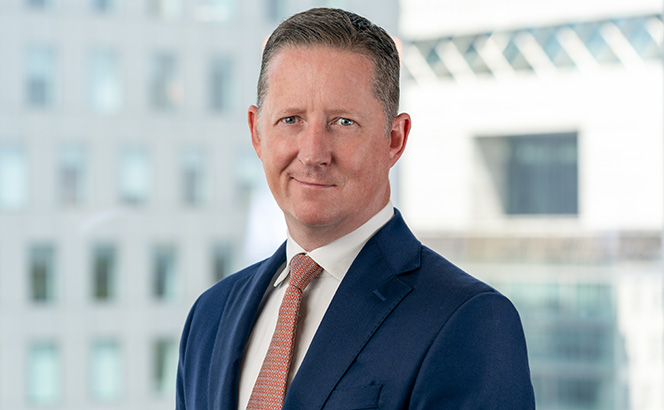

Vera Kolesnik, general counsel and compliance officer for Nestlé’s Middle East and North Africa business, on major MENA projects, thriving during instability and how legal teams can demonstrate their value as a business partner
What are some of the key projects on the horizon for you and your team?
I have been supporting the construction of the first Nestlé food factory in Saudi Arabia, with an estimated investment of 270 million riyals (£54m). The project is set to open in 2026, and is part of the nearly $1.9bn investment that we announced in 2022.
Nestlé’s MENA legal and compliance team has also been involved in establishing the legal framework for the partnership with Dubai AI Campus, which aims to develop an AI tool to anticipate consumer trends and shape the future of the food and beverage industry.
The development and implementation of an anti-counterfeit strategy for the MENA region has been another key operation. The primary focus has shifted from seizing counterfeit goods in the market to identifying and disrupting the sources, such as manufacturing hubs or storage warehouses of counterfeit foods, to interrupt illicit supply lines.
I am constantly looking to streamline the legal function to reduce non-strategic legal work and enhance efficiency, by moving tactical and low-value adding operations from the regional legal team to Nestlé business service centre. I am also continuing to grow the maturity of our compliance programme, with a roll-out of anti-money laundering and anti-bribery and anti-corruption policies.
How do you approach managing legal aspects during periods of instability or crises, and how does your legal strategy align with the broader business strategy to ensure the organisation’s resilience?
Periods of instability and crisis are undoubtedly challenging, but they also highlight the critical role of legal in supporting the business. During such times, the legal team can demonstrate its value as a business partner, providing valuable and practical solutions, and facilitating informed decision-making for business teams.
This has allowed our lawyers to take a well-deserved seat at the management table
Today, lawyers are expected to set standards for ethics, compliance, and values, making them vital to the organisations and their culture. This is particularly important in turbulent times.
Aligning legal strategies with business objectives is essential. Understanding both short and long-term goals helps us integrate with business teams, participate in decision-making, and communicate how legal strategies support broader achievements. We must show our value beyond contracts and advice by being proactive partners, and this has allowed our lawyers to take a well-deserved seat at the management table across all clusters of the MENA region.
What do you think are the most important attributes for a modern in-house counsel to possess?
Building a future-ready in-house team is a central element of my legal strategy. As artificial intelligence becomes increasingly integrated into our workflows, the competencies required within in-house legal teams are evolving. While digital proficiency will be essential moving forward, ultimate legal judgement will continue to remain with legal professionals. Routine legal analytics will transition toward client-focused legal advisory, emphasising strategic and tailored decision support.
How can general counsel foster a corporate culture that supports ESG principles and compliance across all levels of the organisation?
Effective legal departments are actively involved in their company’s ESG agendas and collaborate with business teams. Lawyers increasingly contribute to ESG-related activities, which is an expanding area for legal professionals. Both regulatory and non-regulatory frameworks apply, requiring traditional legal expertise as well as new knowledge.
Sustainability projects are becoming more complex, involving participants from various sectors such as private enterprises, government bodies, municipalities, and NGOs. Legal professionals must develop new models that address this complexity.
Specific technical expertise is also necessary, including areas like circular economy, recycling, regeneration, and emissions, as these components are now integrated into standard business practices.
In the MENA region, we are particularly active in extended producer responsibility regulations and waste management policy discussions.
As we progress towards transforming our packaging material to be designed for recycling – to support our ambition that none of Nestlé’s packaging, including plastics, ends up in landfill or as litter – we play an active role in regulatory discussions by engaging with government and industry associations to advance the roadmap on the regulations.
Nestlé’s responsible sourcing core requirements help us apply global standards for human rights and ethical business practices throughout our supply chain. These include the UN Guiding Principles on Business and Human Rights, OECD Guidelines, the International Bill of Human Rights, and ILO’s Fundamental Principles. They support other Nestlé strategies like our human rights framework and roadmap, our net zero roadmap and our agriculture framework.
Our goal is to consistently apply these requirements across our supply chain to improve how products are made, positively impacting people, nature, and the climate, and laying the groundwork for regenerative food systems at scale.









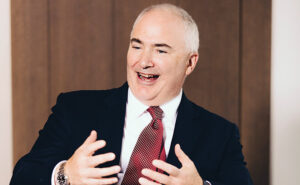
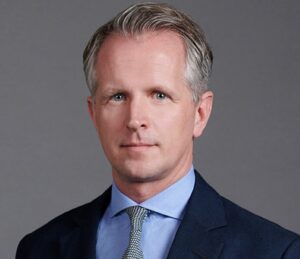 Slaughter and May corporate and M&A co-head Simon Nicholls (pictured) also has faith in the strength of markets going into the new year, saying: ‘There’s a lot of assets looking for a home, and you need to find homes for them.’
 One area partners all agree is not in any danger of slowing down is the technology sector, and the data underlines this, with global tech M&A values up 66% to $1.08trn, making it the top-performing sector by some distance.
 Regardless of how the market shapes up, it’s clear that partners are excited for the year ahead.
 Interviews
 Features
 Data
Data News
News In-house
 Lateral moves
 Deals
Deals

 Allen & Overy and Shearman & Sterling, 2024
 McDermott Will & Emery and Schulte Roth & Zabel, 2025
 Ashurst and Perkins Coie, 2025
 Clifford Chance, Rogers & Wells and Punder Volhard Weber & Axster, 2000
 Norton Rose and Fulbright & Jaworski, 2013
 Hogan & Hartson and Lovells, 2010
 DLA, Piper Rudnick and Gray Cary Ware & Freidenrich, 2005
 Dentons and Dacheng, 2015
 CMS, Nabarro and Olswang, 2016
 Herbert Smith and Freehills, 2012
 King & Wood Mallesons and SJ Berwin, 2013
 Honorable mentions