
Cog on the Tyne – Norton Rose expands Newcastle legal services hub following successful trial

Newcastle, UK

After a year-long trial, Norton Rose Fulbright (NRF) is following up on its recent transatlantic merger with further investment in its Newcastle legal services hub.

Supporting the firm’s operations globally, the Newcastle operation will move to larger premises on 1 November amid plans to increase headcount in the North East from 28 to 100 over the next two to three years. Continue reading “Cog on the Tyne – Norton Rose expands Newcastle legal services hub following successful trial”

CC pushes on with stateside lateral spree adding disputes trio in Washington

As a season of disputes and regulatory hiring for international firms in Washington DC continues apace, Clifford Chance (CC) has continued its significant period of lateral hires in the US by adding two partners and a counsel to its Washington litigation practice.

And with the arrival of partners Joshua Berman and Glen Donath, alongside counsel Joshua Fitzhugh, CC has also ensured that 40% of its 22-strong US litigation contingent are former federal prosecutors. Continue reading “CC pushes on with stateside lateral spree adding disputes trio in Washington”

Eversheds opens three European offices at once to extend international odyssey in line with strategy

Lee Ranson

Seven months after its game-changing transatlantic mergerEversheds Sutherland is continuing its spate of recent international expansion with the opening of three new European offices in Luxembourg, Moscow and St Petersburg, which include a number of lateral hires.

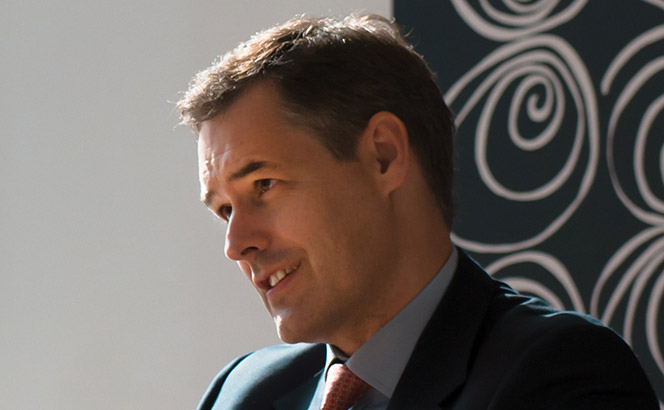
Two partners from Simmons & Simmons and five from Nordic Euro Elite firm Hannes Snellman will join the new offices, which bring the firm’s global footprint to 66 offices in 32 countries, in what Eversheds’ co-chief executive Lee Ranson (pictured) described as a ‘key element’ of the firm’s 2020 strategy. Continue reading “Eversheds opens three European offices at once to extend international odyssey in line with strategy”

Kennedys sustains remarkable growth with NY team as insurance players keep up global push

The internationalisation of insurance law continues apace. Just four months after securing a merger with US practice Carroll McNulty & Kull (CMK), Kennedys has taken a New York team from Sedgwick including the firm’s former managing partner, John Blanchett. Partners Christopher Novak and Matthew Ferguson will also join Kennedys alongside three associates.

Blanchett, who headed up Sedgwick’s financial institutions (FI) practice, focuses on commercial crime, fidelity, professional liability, directors’ and officers’ liability and media liability as well as other types of insurance. Novak specialises in insurance coverage disputes and Ferguson’s practice covers both domestic and international coverage matters. Continue reading “Kennedys sustains remarkable growth with NY team as insurance players keep up global push”

Deal Watch: Third time lucky for Links and Ashurst on software bid as HSF puts PR shop into the headlines

Given the steady hum of deal activity over the summer, the crucial September period has yet to take off with a flurry of big ticket M&A, but LinklatersAshurst and DLA Piper are among firms handling prominent work this week.

The largest deal to hit Europe’s market this week has seen Linklaters and Ashurst advising on the combination between British company Aveva and France’s Schneider Software to create a £3bn tech group. Linklaters’ corporate partner Aisling Zarraga and capital markets partner Richard Good are heading the team for Schneider, a long-time client of the firm with the City giant advising parent group Schneider Electric in 2013 on its £3.3bn takeover of UK engineering group Invensys. Ashurst, meanwhile, fielded a contingent under corporate partners Karen Davies and James Fletcher for the Cambridge-based Aveva. The deal is expected to complete by the end of the year. Continue reading “Deal Watch: Third time lucky for Links and Ashurst on software bid as HSF puts PR shop into the headlines”

Revolving doors: DLA, Kirkland and Pinsents bring in partners as firms gear up for the crucial post-summer period

City of London

With August drawing to a close, London’s simmering lateral hire market is already heating up again with DLA Piper, Pinsent Masons, Kirkland & Ellis and Debevoise & Plimpton among the firms bringing in new partners.

At DLA Piper, the firm’s finance team made its first hires since Maurice Allen’s appointment in March as a consultant, appointing ex-Kirkland & Ellis and Gibson, Dunn & Crutcher partner Philip Crump in London and Kirkland partner Doug Murning.

Continue reading “Revolving doors: DLA, Kirkland and Pinsents bring in partners as firms gear up for the crucial post-summer period”

The new space race

‘For the eyes of the world now look into space, to the moon and to the planets beyond, and we have vowed that we shall not see it governed by a hostile flag of conquest, but by a banner of freedom and peace.’

John F Kennedy

When President John F Kennedy stood before Rice University on 12 September 1962 and boldly declared that not only would the US be the first country to land on the moon, but they would do it before the end of the decade, he captured and captivated the imaginations of a generation.

Continue reading “The new space race”

In conversation: Jean Liu, general counsel, Seattle Genetics

GC: Could you tell me about your background and how you came to be working in-house for Seattle Genetics?

Jean Liu (JL): I started out as a scientist, not a lawyer. I went to grad school to study molecular biology, but when I started my PhD programme, I realised that I didn’t have the temperament to focus on very specific, minute details – I preferred to have a broader vision.

Continue reading “In conversation: Jean Liu, general counsel, Seattle Genetics”

A football life

‘Once a Raider, always a Raider’
Al Davis

In the 1980s and 1990s, few sports teams were as culturally transcendent as the Raiders.

The unmistakable pirate logo, accented in silver and black, was a mainstay on attire around the globe – proudly displayed by countless people, many of whom had likely never seen the team play a game in their life.

Continue reading “A football life”

In conversation: Chris Sundermeier, general counsel, Reputation.com.

GC: Could you start by telling me about your own background and how you came in-house?

Chris Sundermeier (CS): I spent 15 years at a Silicon Valley-based technology law firm Cooley LLP. At Cooley, I spent a lot of time working with tech companies, doing a variety of different types of litigation. I always felt like it would be interesting to go in-house and, rather than consult as an outsider on litigaton and make recommendations about what the company should do, really work on the bigger picture business and make the actual decisions about what the company should do. I came to Reputation.com specifically becausete former CEO of this company was a client of mine, and when I realised he was looking for a general counsel, I reached out to him. It was a good decision and I have been here for the last five years.

Continue reading “In conversation: Chris Sundermeier, general counsel, Reputation.com.”

In the driving seat

Mention the word ‘Uber’ in any European capital city these days and chances are you’ll provoke some kind of emotional reaction. Uber is famous – infamous, some might say – for its revolutionary personal transport booking service, but the company is a major player in the personal food delivery business too, with more services to come.

Continue reading “In the driving seat”

GC Think Tank – Navigating the Corporate Crisis

Attendees

  • Karen Braun, Sullivan & Cromwell
  • Diane Brayton, The New York Times Company
  • Jennifer Daniels, Colgate-Palmolive
  • John Finley, The Blackstone Group
  • Robert Giuffra, Sullivan & Cromwell
  • Howard Harris, BMW of North America
  • Paul Holmes, Finsbury
  • Mihir Mysore, McKinsey & Company
  • Pilar Ramos, MasterCard Worldwide
  • Bob Rooney, Enbridge Inc.
  • Joseph Shenker, Sullivan & Cromwell
  • Catherine McGregor, The Legal 500

The GC’s role in a crisis

What role should the general counsel play in a crisis? How central should they be?

All crises require a point person to be decisive and lead the company through uncertainty. Oftentimes, companies turn to individuals from the c-suite to serve in this role. But increasingly, general counsel are finding themselves both coordinating and leading crisis response, given that the fallout often goes hand-in-hand with legal challenges.

The general counsel needs to act quickly by:

a) Defining the crisis.

b) Assembling a team.

c) Creating a flexible plan.

d) Instilling confidence to successfully implement the plan.

A) Defining the crisis

Crises come in all shapes and sizes. In some cases, the crisis is so huge that a company’s existence is at stake. But it is equally important to identify when a matter is at the lower end of the crisis scale. It is necessary for the general counsel to classify crises against levels appropriate to a company’s culture and industry.

Levels of Crisis:

a) Level 1: Low – problem identified, but probably only has one day in the press cycle.

b) Level 2: Medium – problem identified and seems significant, but diminishes over time.

c) Level 3: High – problem is an ‘existential crisis’ where the brand is at risk, affecting employees, the board of directors and potentially even the public at large. For a public company, this type of crisis will often have a significant impact on the share price.

Real life tip: Some companies have situation alerts, which immediately warn the GC of an impending situation if a certain number of criteria are met. These alerts can help tease out themes. For example, are there systematic compliance failures which could be building to a major crisis? Are there problems with the chain of command in certain departments or jurisdictions?

B) Assembling a team

A general counsel will typically have a substantial Rolodex of contacts in a variety of industries, who will be able to serve as trusted advisers in a crisis. Advisers will include (but aren’t limited to) people in the following areas:

  • Outside counsel
  • Outside financial consultants
  • Public relations professionals
  • Government/regulatory experts
  • Trade groups

Real life tip: Don’t panic and ‘over-lawyer’. Less can often be more, as advice may become confusing and contradictory. If a ‘black swan’ event hits, it might appear that immediately consulting a range of advisers is best, but often this is not the case.

When you are in surgery, you don’t want five doctors, each with a scalpel, performing the operation – just one skilled surgeon being allowed to get on with the job.

C) Creating a flexible plan

Information available during a crisis, particularly in the first 24 hours, will often be imperfect. The general counsel must take steps to assess the facts and how they correspond to plans already in place, adjusting responses to the press, regulators and the public accordingly. As more information is obtained, the response plan must also take into consideration regulatory, litigation and communications issues, aligning the strategy of all three.

D) Instilling confidence to successfully implement the plan

The company’s employees, particularly those in the c-suite and on the board of directors, will look to the GC to provide assurance that they are effectively handling the process, which means that the GC needs to:

  • Educate and secure the trust of executives.
  • Communicate effectively, including with interested parties outside the company.

Real life tip: Understand that not all news is created equally.

Social media can descend into noise, and sound bites can become ‘facts’. To avoid this happening, wait for the facts, and assess them thoroughly before making pronouncements in the media. Initial statements can address that all facts are not known, and that the company is waiting to gather these.

As with any leader, the GC needs to remain calm in a crisis in order to be effective. Therefore, the GC:

  • Must not lie or cover up.
  • Must not speak out of ignorance.
  • Must wait to speak until they have the facts, and avoid adding to legal implications.
  • Must be human, showing heart and compassion.
  • Must manage a news cycle that moves in seconds.

Using these guidelines, GCs across industry sectors can develop a framework that will not only mitigate damage from a present crisis, but could also avoid future crises.

Top 10 tips for managing a crisis

  1. Define the level.
  2. Create a flexible but succinct strategy.
  3. Keep a Rolodex of experts handy – these may vary by geography.
  4. Manage up, down and sideways, working effectively with a variety of constituencies, both internal and external.
  5. Remain poised and juggle issues. While the immediacy of the crisis may seem overwhelming, the general counsel needs to remain attuned to potential follow-on risks, such as litigation and regulatory enforcement.
  6. Manage executives effectively, including providing practical advice for the board.
  7. Understand that not all news is created equally and develop different strategies for different types of outlets, in conjunction with professionals internally and externally.
  8. Practice makes perfect and working through simulated crisis exercises can help GCs be thoughtful and in control.
  9. Identify red flags as soon as possible. Developing an alert system that can identify issues as soon as they are raised can avert or at least give an early warning of an impending crisis.
  10. Understand cultural differences when identifying and dealing with crises. The ability to report concerns and reporting style may vary from jurisdiction to jurisdiction. Similarly, methods of coping with the crisis will not be a ‘one-size-fits-all’ experience.

Trusted adviser: the power of collaboration

Collaboration is cited as one of the key challenges facing business today. That challenge can be exacerbated for lawyers, due to the very nature of what they do. While humans are inherently social animals, we are just as likely to compete with one another when resources are scarce and conditions are dynamic or uncertain. For some, that could characterise the modern law firm!

Continue reading “Trusted adviser: the power of collaboration”