‘It was hard for we Colombians to imagine an end to a war
that had lasted half a century… Very few of us
– hardly anybody – could recall a memory of a country at peace,’
Juan Manuel Santos, 32nd President of Colombia
For more than 50 years, war has been a way of life in Colombia.
Since the early 1960s, when the Colombian Army renewed aggression towards left-wing guerrilla units set on challenging the standing government’s legitimacy, peace has seemed but a distant goal.
The ongoing conflict saw tens of thousands killed, millions more displaced and a culture of fear perpetuated through murder and massacre, torture and terrorism.
The environment allowed organised crime and drug cultivation to flourish, adding further wrinkles to an already tumultuous situation – wrinkles which would prompt the entry of international players to a conflict which had no obvious solutions.
Several attempts were made at resolving the conflict, with a gradual demobilisation of combatants and guerrilla groups, many of whom were afforded the opportunity to convert into civilian political actors – providing a chance to allay their concerns and have their voices heard in a legitimate way.
But while demobilisation and disarmament was successful in pockets, the Revolutionary Armed Forces of Colombia (FARC) – the most prominent of the left-wing guerrilla groups – largely resisted attempts at finding compromise, despite their ranks being depleted and progress waning.
But following four years of negotiations between President Juan Manuel Santos’s administration and FARC, in August 2016, a final ceasefire agreement was announced – an agreement to end the war and, eventually, re-unite the country. While hailed as a monumental feat of diplomacy internationally – one that would finally bring order to a nation ravaged by the effects of the conflict – the response domestically couldn’t have been more divisive.
The peace process, in its current form, drew staunch criticism for a perceived leniency towards FARC – that, while ultimately securing peace, failed to achieve justice for those wronged in the conflict.
In October 2016, the deal – which had already garnered Santos a Nobel Peace Prize – was put to the voting public in a plebiscite. In a shocking turn of events, the agreement failed to pass, with 50.2% voting against the deal. While those based in areas hardest hit were strongly in favour of the agreement, those more insulated in urban areas resisted – causing the initial attempt to fail.
In response, the government signed a revised agreement months later in November, opting this time to ratify through the houses of parliament instead of putting it to the public. The agreement passed unanimously (with the opposition boycotting the vote) and was approved by the courts. But in the absence of a public referendum – the process remains subject to politicisation.
And with elections set for May this year – elections which will feature guaranteed FARC representation in both houses of government – the impact of a new entrant (or even a new government) into an already polarised process has the potential to derail peace and everything achieved so far.
Business blindsided
One of the most difficult aspects in pressing forward with any potential plan for long-term peace in Colombia is an underlying apprehension from large swathes of the public – and subsequently, business. While outward opposition can be a difficult stance to take – particularly for major corporates – the impact they can have either way is tangible.
‘It is very difficult for business to take an open opposition to the idea of a peace agreement, because in essence, who can argue against a peace agreement and the termination of one of the biggest factors of violence in Colombia,’ explains Jaime Trujillo, partner at Baker McKenzie and chair of the Latin America Regional Council.
‘There is no doubt that the peace agreement, by definition, is something positive – particularly in this case, when it tackles one of the primary reasons singled out for the lack of development in Colombia. But business cannot be unanimous and individuals will all have their own views, which tend to emerge in private, or in places like deliberations and trade associations.’
The peace process, in its current form, drew staunch criticism for a perceived leniency towards FARC.
‘Business as a whole tends to be a bit more conservative than the general public, so you do see sometimes that those against the peace process in private, tend to be a bit more vociferous and outspoken than when they are in public. So while public statements from business are generally quite positive, in private, there are sectors that are expressing their opposition or serious concern.’
Speaking to business leaders and general counsel across Colombia in late 2017, finding a vocal opposition to the peace deal was far from difficult – particularly considering the sensitivity of the topic at hand. And while personal qualms about any deal that would see the FARC effectively absolved of their crimes was common, a distinct absence of dialogue with the business community was also frequently cited as a reason for opposing the deal in its current form.
One general counsel from a major multinational transportation firm expressed such sentiment, although was unauthorised to speak on the matter publicly.
‘With the nature of the discussions being rather secretive, business leaders have been largely left in the dark throughout the negotiating process. While that may be necessary, a lack of consultation combined with an expectation for business to play a significant role in facilitating the agreement, has left many feeling, at best, left out of the process and, at worst, blindsided and angry,’ they said.
‘Add in the legal frameworks with which businesses will have to now operate within following the eventual conclusion of the process, and we face not just the prospect of political uncertainty in Colombia, but also a new set of rules governing our business. Whenever there is uncertainty, there is risk – and for a risk-averse business such as our own, that uncertainty is why we’d like to go back to the negotiating table and have a say in shaping the corporate landscape that will govern our industry.’
Complicit companies
While personal opposition and a lack of proper consultation are both genuine concerns that will need to be addressed if there is any hope for a lasting peace agreement, the prospect of being implicated for complicity during the war remains a major hurdle for attaining business backing.
‘The legal framework that is being set up to deal with the peace process and to deal with the crimes committed during the violence, could potentially expose businessmen for their support of illegal armed groups,’ explains Trujillo.
‘Those businessmen who have been involved in financing illegal armed groups are opposing the process. They’re very concerned that their roles could come to bear, and of course they don’t like that.’
Jaime Trujillo, Partner, Baker McKenzie
‘There are a number of programmes being piloted that are focused on employing former combatants. It’s not an easy proposition, but it is one way that I think business can make a concrete and tangible contribution to the peace process. In many cases, the first step can be the toughest – humanising these former combatants, seeing that they are people. Just like the next person down the aisle, they are human, capable of contributing to society and, in most cases, they want to turn the page and get on with their lives.
This is a major objective for society and one that Baker McKenzie is contributing towards. Our firm has been working with the government agency in charge of reincorporating former combatants, be they left or right wing. What we are trying to do is educate our clients and our people on the need for this to happen, while making them realise that this doesn’t need to be as difficult as they think. In our case, as a law firm, we have access to important businesses – we put them into contact with the organisations and the government agencies who are working on this, and it seems to be going well.
Of course, we do get consultations from our clients on the legal issues that arise from the implementation of the peace process – be it relating to the lands that were stolen or concerns about how to engage with a contingent of former combatants without getting into trouble legally, or without endangering their business. These are the types of questions we are starting to get, and anticipate we will continue to get for some time.
One of the other real opportunities for business is to help areas of the country to start anew. Particularly in the rural parts of Colombia, for the first time in their history, a number of these areas and the people who populate them will have the opportunity to play a role in a legitimate economy. It is down to Colombia’s business community to educate the population of these areas and teach them what it feels like to operate in an economy that is driven by market forces.’
‘We understand that this was quite widespread in certain parts of the country,’ adds Marc Chernick, Georgetown University professor and director of the Georgetown-Los Andes Program on Conflict Resolution and Human Rights.
‘Those that most appear are large landowners, cattle ranchers and certain multinational companies related to agribusiness and mining, because you couldn’t really operate in many of these areas without either paying off the guerrillas or supporting private armies to keep the guerrillas at bay.’
The government has set up a Special Jurisdiction for Peace (JEP), a tribunal to investigate humanitarian crimes and determine justice, which participants in the conflict such as guerrilla fighters and the armed forces will have to face. But there has been a change in the JEP’s jurisdiction over third parties such as landowners and businessmen.
‘The way that JEP was first set up was that all actors in the conflict would have to face the tribunal: guerrillas, the armed forces, police, politicians, and third-party actors such as landowners and businessmen that financed paramilitary activity,’ says Chernick.
‘When they put the implementing legislation to Congress at the end of 2017, the law that set up the tribunal specifically exempted third parties – third parties could not be compelled to go in front of JEP. They could voluntarily go, but they could not be compelled. The business community really did not want to have members facing the JEP.’
‘However, part of the reintegration and transitional justice goes beyond the formal justice process. There’s a Truth Commission which will address aspects that the justice portion doesn’t.’
Social struggles
The Truth Commission will comprise a significant portion of the transitional justice component of the peace process. Unlike the Transitional Justice Tribunal, which will conduct investigations into criminal activity, the Truth Commission is tasked with finding out just what happened in Colombia that led to, and perpetuated, the conflict.
‘What victims demand most, even more than reparations or personal justice, is learning the truth. They want to know what happened, how it happened, when it happened, where it happened and why it happened,’ explained President Santos upon ratifying the Commission.
‘This is not about embarking on a witch hunt or a river of random accusations, but rather, it is to encourage those who have had some responsibility for the conflict to simply admit them.’
To that end, the Commission will not have the ability to impose penalties or to transfer any evidence it receives into a criminal court – an extremely contentious portion of the overall transitional justice setup. In the past, when similar efforts have been attempted as part of the restorative justice process – for example, in Bosnia and Northern Ireland – they have failed spectacularly. But there’s confidence abound that Colombia can find a way to make it work.
‘The transitional justice process has generated most of the contradictory comments from the people opposing the peace process – it was difficult for the country to accept. However, it is already working and we should now focus on making it accepted and ensure that the process is trustworthy,’ says Paula Samper, president of the board of the Colombian Chamber of Legal Services.
A lack of faith in the justice process is evident through large sections of society, based on the conversations GC had while in Colombia. Fundamental to this is a disagreement over whether the justice process should be seeking to enforce punitive measures or focus purely on achieving peace for the long-term greater good – as the agreement dictates.
‘Those that are accused of war crimes or crimes against humanity will have to go before the Tribunal, but if they tell the truth – all of the truth – and admit their culpability, then they will be eligible for lenient sentences. Crimes below the level of war crimes or crimes against humanity would be eligible for amnesty,’ explains Chernick.
‘That prompted an outcry from various sectors of the human rights community, but those involved have made it clear that justice, especially transitional justice, is not just about punishing FARC or even holding the armed forces accountable.’
Even those in the human rights community disagree on what the most appropriate course of action is, but taking lessons from past attempts at reintegrating ex-combatants, it is hoped that a more forgiving and proactively positive approach can mitigate the stigmatisation which has plagued previous efforts.
Respite and reintegration
‘It’s important to prove to society that crime doesn’t pay, and we have been working closely with ex-combatants and people with a criminal background. This was necessary because it forms part of the history of our country and we felt that these people needed to be treated with dignity, because that is the only way these wounds would heal,’ says Joshua Mitrotti, director of the Agencia Colombiana para la Reintegración (ACR).
Mitrotti’s organisation plays a crucial role in the reintegration efforts and is responsible for coordinating efforts to return demobilised people from the conflict who voluntarily desire to rejoin society.
‘The main and most important part of the DDR [disarmament, demobilisation and reintegration – key tenets of long-term peacekeeping] process is the reintegration – that is fundamental and therefore there’s no room for failure in this particular aspect,’ says Mitrotti.
In the past, former combatants have been subject to stigmatisation within communities, which, coupled with a lack of education, has meant adjusting to life in civil society has been challenging.
‘In past accords, it was front and centre that former combatants would go through a process of reintegration and re-entering society, and the government would work with the private sector to hire them. The most recent agreement has less of that – there’s still opportunity, and the business sector is still encouraging that kind of thing,’ explains Chernick.
Jorge de los Rios, general counsel and business integrity officer, Central America and Andean Region, Unilever
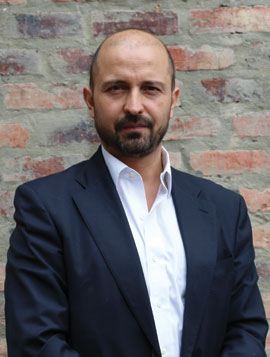 From a company perspective, Unilever absolutely supports the peace process and is willing to contribute. It’s something we see as an opportunity.
We already have a very strong sustainability plan and the peace process gives us the chance to implement and further develop that plan by working with small growers and communities looking for an uplift. We are then able to work with them to give them options for developing entrepreneurial activities, which can raise the productivity and incomes across the board.
In our case, the government hasn’t pushed us to do anything. Instead, we’re looking to replicate an initiative we undertook in India where we worked with women in poor communities. We help them start businesses working as small distributors in their communities – it was hugely successful there and we’ve since brought the concept to Colombia and other countries across Central America.
This was an initiative which we pioneered, but we were also able to obtain support from the Inter-American Development Bank in order to improve the life conditions of some communities. In India, we targeted women in particular, because they tended to have a more submissive role within the communities. The ability to counter this as well as develop entrepreneurial skills and spirit is something we hope will pay dividends with lasting effect within these communities.
From a business perspective, this is excellent for Unilever, but more importantly, it’s a key initiative within our broader plan of sustainability. We want to impact one billion lives through our sustainability initiative – these are our consumers, our employees, our providers and our suppliers.
While some companies have initiatives around sustainability in Colombia – and across the region more generally – it’s not a topic which is very strong yet. It’s going to be in the future, but it’s not quite there yet. This is something that the private sector is taking upon itself to develop.
Turning internally, there are a number of focuses for us.
Looking ahead, our legal team is focusing on two things. The first is simplification. For us, as a team, simplification is key: the simplification of processes, the way we manage processes, of legal counselling, of having more views of technology. Secondly, we want to focus on having our lawyers more as a business tool, rather than as a blocker. That’s very important to us.
As well as that, corruption is always a hot topic. For Unilever, our major area of concern is private corruption. Yes, public corruption is always a threat, but the risk is lower for us because we aren’t involved in public works or similar projects, so therefore don’t have a strong link with the government or public entities. When it comes to private corruption, a big area of concern is antitrust compliance. Our antitrust policy is very strong, and we give constant training to the business population to create a culture of antitrust inside the business. Our internal compliance programme is very active. We have put in place special processes to enable this. For instance, we have a compliance officer as well as a compliance committee in every operation. These committees are in charge of reviewing all of the cases and making a decision, either to close an operation down or implement lesser measures. For example, each year we analyse more than 100 complaints on a variety of compliance matters, which speaks to the alertness of our people in raising a flag whenever there is something suspicious.’
‘FARC has said that they view the accord differently – that they don’t necessarily envision that former combatants will go back into society and get jobs. Instead, they’re promoting a different model where the group stays together and they collectively invest in productive enterprises in different parts of the country.’
The reality for Colombia in the long term is that both FARC’s idea of normalisation and the government’s more traditional approach will provide different – perhaps symbiotic – pathways to peace and post-war life. But without buy-in from society as a whole, finding a long-term solution will prove difficult, if not impossible.
‘It’s not easy, especially for people who were victims of this, but we need to make people realise that we are all Colombian and we need to turn the page. The overwhelming majority of former combatants make very good employees or small businessmen, but we need to give them the opportunities to do that,’ says Trujillo.
‘Business needs to play its part, whether that’s by employing them, buying their products or financing their projects. Of course, that’s not easy, but if we want peace to last for several generations, we need to be open to that.’
Businesses have already played an essential role in reintegration efforts, with companies like Coca-Cola FEMSA and Unilever among those that have offered the demobilised population employment, capacity building through volunteers helping to train and educate, as well as providing opportunities to become directly involved in their supply chains.
‘But there is more that the private sector could do. If we don’t manage to turn the page as a country, we cannot thrive,’ says Samper.
‘Companies should be prepared to support those areas where the population suffered the most, ensure that there is a safe return to society, with employment opportunities, better access to public services and better education. If we don’t work on these basic issues, the social unrest will return.’
Business backing
Decades of war have worn on Colombia’s capacity for business growth, but as the country moves into a post-conflict era, there is finally room for development – on all fronts. The National Association of Financial Institutions (ANIF) is forecasting economic peace benefits of between 0.5% and 1% of additional growth per year from 2017 to 2022.
But the scale of ambition apparent for big business goes far beyond incremental improvements.
‘How our country is branded moving forward will have a big impact in unlocking our potential. When you’ve been branded as a country at war, plagued by guerrillas and paramilitary, that has an impact on your ability to attract investment and, subsequently, growth for the economy,’ says the general counsel of a major international technology company.
‘When security goes up, when you start to instead be branded as a safe country, good things are going to happen on the economic side. Attracting investment into our economy, into our country, opening up the tourist economy – these are all factors which can make a major difference for Colombia.’
‘What victims demand most, even more than reparations or personal justice, is learning the truth.’
Anecdotally speaking, foreign investors, with their distance from domestic politics, have been much more openly positive about Colombia as an investment destination following the peace process than domestic investors. That said, sentiment was positive that this would be likely to change over the medium term, with Trujillo noting that consultations at his firm for projects around infrastructure, tourism and agribusiness were already on the uptick.
‘It’s absolutely undeniable that peace is good for business, and I think that as results start to come in, as businesses start to operate in areas that were previously off limits, as it becomes apparent that former combatants are as good employees, or better than other employees or entrepreneurs, those types of tangible, concrete, practical results will likely put an end to this theoretical hypothetical debate that is going around the peace process,’ says Trujillo.
‘That is perhaps the biggest contribution that businesses can make – getting down to the business of implementing peace, and showing people that whatever you think about it from an ideological and political perspective, from a business perspective it makes absolute sense.’
‘There will come a point where the private sector will have to work closely with FARC, to use their experience and convey their knowledge and expertise,’ adds Mitrotti.
‘The dynamic will change and the private sector will eventually become an ally for these ex-combatants. We feel that the private sector does have a very important role in building the country, but that role is still yet to be defined.’
Evidence of collaboration and co-investment are already apparent in pockets across Colombia, but as time passes, confidence remains high that the breadth and depth of such ventures – as well as business growth as a whole – will continue to perpetuate.
‘The peace process brings the opportunity to explore many regions of our country which were previously impossible for companies to consider because of public order,’ says Samper.
‘The agricultural businesses should be able to thrive in a safer country. Investments in productive lands, forestry and other agribusiness ventures have a wonderful opportunity. This should also ensure that the economic conditions of the people who inhabit these regions also improve, with access to employment, social security and education.’
Opening up land
But in order for agribusiness in particular to have the opportunity to truly thrive in Colombia, one of the most contentious issues of the entire process needs to be resolved: land. Specifically, land distribution.
Land inequality in Colombia is the worst in Latin America – Oxfam reports that over 80% of the land is owned by 1% of the population – and is considered to be a structural cause of the present conflict.
The violence has only exacerbated the problem. The displacement of huge numbers of peasant farmers, combined with the invasion of state-owned land by those without an official claim, has meant that 11.5% of all land has been dispossessed. The result has been a chaos of title throughout rural Colombia.
Now, the peace accord presents an opportunity for order. But the complexity of the task ahead has caused concern among some sections of the private sector, who fear that lands they have been operating may be confiscated. To them, Colombia could become a new Venezuela.
‘The business community stressed that there needs to be greater provision to safeguard private property and to allow landowners to keep their land. In the first accord they would not be able to maintain that title – if they were state lands, they would revert to state lands, and they wouldn’t be able to lay claim. Very few farmers are entitled to their land,’ says Chernick.
‘But there is provision to sort that out – those who illegally occupied state land but have made it productive can make a case that they are doing good, and that their interests weren’t involved in war crimes and crimes against humanity, so they will have an opportunity to keep it.’
This leniency given to those who manage to make their land productive is a move to seize upon the opportunity to finally make use of the long under-exploited Colombian countryside, where recent figures have shown that just 22% of the country’s arable land was being cultivated.

‘The amount of land that is either in the hands of the Colombian government, or that is vacant, or that has been taken away from drug barons and mafia figures – that real estate alone is enormous,’ says Trujillo.
‘To help these areas, in many aspects, to start anew, and for the first time in their history play a role in a legitimate economy – and educating the population of those areas in what it feels like for there to be a market economy driven by economic forces. It could be, in a sense, a very interesting experiment on how you can start from a clean state and develop something from the ground up.’
With opportunity comes challenge. The muddied waters of rural land ownership will need to be carefully unpacked – a job that will inevitably fall to the country’s legal services sector.
‘For law firms in particular, doing the title search and establishing whether or not a piece of land is affected by this is a huge task and we anticipate it’s going to be one of the most relevant new areas of expertise that many law firms will have to develop,’ says Trujillo.
‘The legal framework around these types of land is seeking to create owners and to formalise ownership of these lands and give them deeds of property. What this means is to create a country of landowners, which will generate some very positive effects, perhaps most notable of which is exposure to the financial system.’
Perpetuating lasting peace
Access to the financial system – both at a domestic and global level – in addition to the financial literacy that comes with it, opens up the potential for exponential growth in Colombia over the coming years. And while that is an important factor for improving the quality of life and scale of ambition for the population, it also stands to play a role in maintaining the new status quo.
‘Continual investment is going to be necessary for our economy to remain a going concern. The government is going to have to deal with the costs associated with the major investment being made in the peace process,’ says the general counsel of a domestic infrastructure firm.
‘From a business perspective, how we cope with that from a tax perspective in particular is a critical issue in the coming years. If the government cannot find ways to fulfil their obligations made under the agreement without crippling the business sector, we could be right back where we started before we know it.’
In the shorter term however, the next crucial step in the peace process is the elections coming up in May, which will effectively serve as a second referendum on the peace agreement. With President Santos, who has guided Colombia through the process to date, ineligible to run – the impact his successor will have on the future of the country stands to be monumental.
‘This is when the population will have to vote for or against the agreement. I think in any case, we find ourselves in Colombia experiencing the best humanitarian situation that most of us have experienced in our lifetime,’ says Mitrotti.
‘Colombia can be seen as an example of how a country can rebuild itself – a country who almost failed, was dragged into a war, but found a way to build itself up and offer an alternative way to move forward. It up to the voters now to decide how we can rebuild for future generations.’
Yet despite the potential for years of work to be undone overnight depending on the outcome of the vote, what stood out above all for those GC spoke to was an unbound commitment to pragmatism despite what happens.
‘There is still much work which has to be done. Distribution of wealth, creation of jobs, creating safer environments, fighting other violent groups and building a new society are all issues to be overcome,’ says Samper.
‘But it is certainly better to do that without killing each other.’