Disputes eye: How the talent flow demonstrates the Bar’s strength

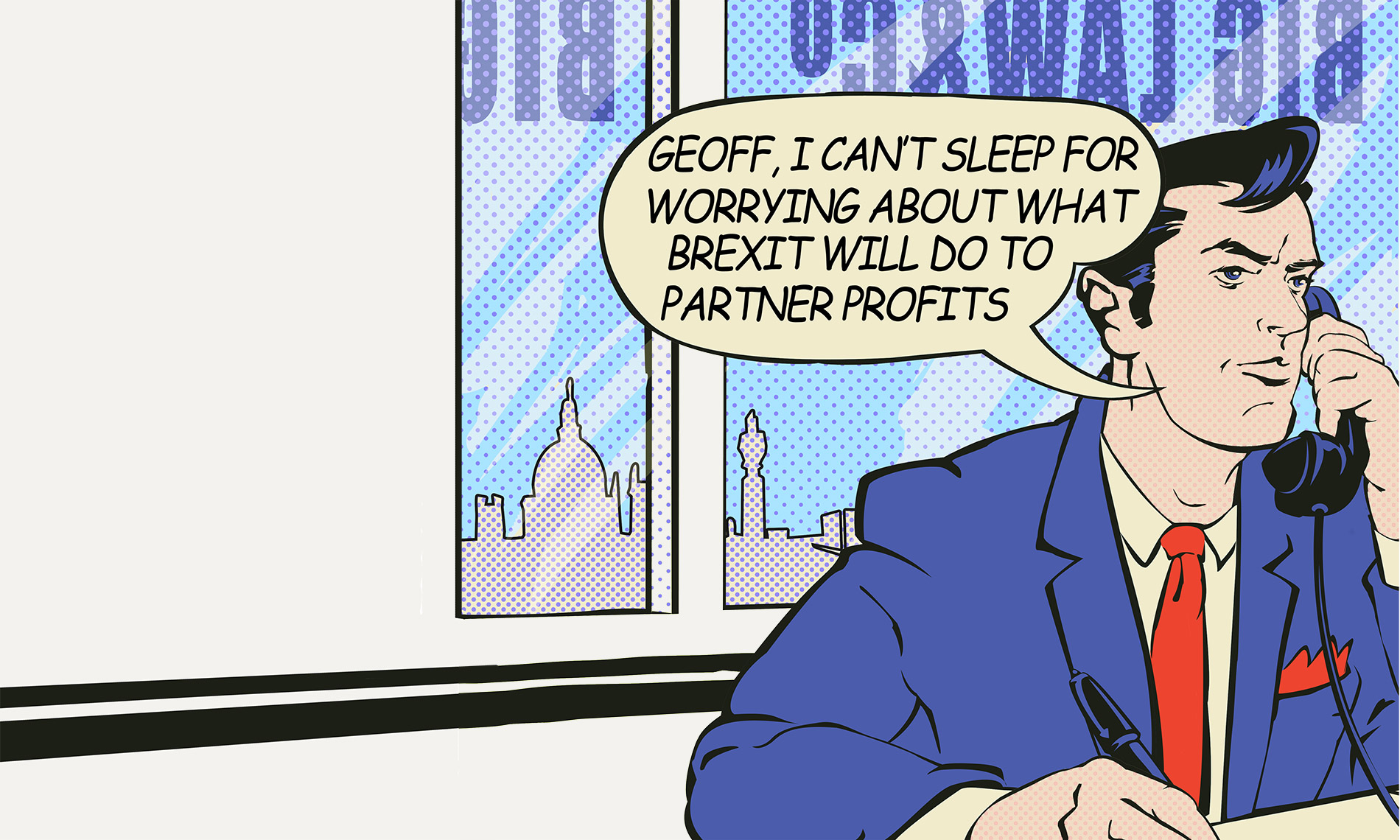
Speaking to Freshfields Bruckhaus Deringer disputes veteran Jon Lawrence this summer on his decision to join Brick Court Chambers, he said he was not ready for the golf course just yet.

But there has been a wave of Freshfields heavyweights of Lawrence’s vintage who have made a similar move, notably former managing partner Ian Terry, who went to One Essex Court and Raj Parker, who went to Matrix Chambers in 2016. Continue reading “Disputes eye: How the talent flow demonstrates the Bar’s strength”

SDT hands Locke Lord record £500,000 fine for ‘dubious financial arrangements’ of former lawyer

Solicitors Regulation Authority SRA

The Solicitors Disciplinary Tribunal (SDT) has handed Locke Lord its largest ever financial penalty imposed on a law firm, fining the US-based firm £500,000 after one of its former UK lawyers engaged in ‘dubious financial arrangements’ with a client’s bank account.

The lawyer in question, Jonathan Denton, had left Locke Lord in October 2015. Details of the decision published this week by the Solicitors Regulation Authority (SRA) disclose that the firm had ‘failed to prevent’ Denton from using a client account for ‘transactions that bore the hallmarks of dubious financial arrangements’. Continue reading “SDT hands Locke Lord record £500,000 fine for ‘dubious financial arrangements’ of former lawyer”

Promotion time: Latham keeps City round at two as new partners focused on Big Apple

latham ship illustration

Latham & Watkins may have been aggressively sweeping up City talent from rivals but the US-based giant is remaining conservative on making up its own in the Square Mile with the firm this week confirming the promotion of two partners in London.

Charles Armstrong in finance and corporate specialist Huw Thomas have been appointed to partnership in the firm’s City office, with the duo coming amid a 31-strong global promotion round. Latham also promoted two partners in London in 2016 amid a firm-wide tally of 27. Continue reading “Promotion time: Latham keeps City round at two as new partners focused on Big Apple”

Deal view: Ashurst strives to reboot M&A brand but deal market is getting tougher

Ashurst

Ashurst’s once-admired M&A reputation has taken a pounding of late. One former partner delivers representative sentiments: ‘Corporate was the jewel in the crown. The firm has changed from what it was six or seven years ago.’ Another notes: ‘It used to be joint number one with Clifford Chance for private equity. The practice faded away as it focused outside London.’

A controversial Australia merger, a soft run of financial performance and the loss in recent years of prominent partners has taken a major toll on its brand as a serious plc deal adviser. Continue reading “Deal view: Ashurst strives to reboot M&A brand but deal market is getting tougher”

Deutsche Bank names former Links veteran as new global law chief

Deutsche Bank

Deutsche Bank has appointed a new legal head, handing its chief compliance officer and head of global governance Florian Drinhausen one of the most powerful general counsel roles in the cross-border legal market.

The internal appointment comes after it was announced that co-general counsel (GC) Christof von Dryander and Simon Dodds are to leave the bank respectively at the end of 2017 and 31 March 2018. Continue reading “Deutsche Bank names former Links veteran as new global law chief”

Comment: BLP’s US merger bid – a certain loss of confidence

St Louis

If nothing else, it is safe to say Berwin Leighton Paisner (BLP)’s not-very-convincing claim that management was not dead set on a US merger was stretching it. Because recent news that the firm is debating a union with Bryan Cave screams: ‘We really want a US merger!’

The talks come after last year having gone through a bruising but short courtship with the far larger Greenberg Traurig, the thrusting Miami shop which had a culture clash with BLP that could not have been more obvious if it had been heralded by fireworks. Continue reading “Comment: BLP’s US merger bid – a certain loss of confidence”

Reforms attempt to curb Rolls-Royce disclosure as litigation costs spiral upwards

Ed Crosse, Simmons & Simmons, Commercial Litigation Summit 2017

Pretty much everyone agrees that the current state of disclosure has grown into an unworkable and extortionate mess… but getting consensus for change has been elusive in recent years. Braving the debate between the supporters of Rolls-Royce disclosure and its critics, reforms are currently being pushed through to substantially scale back document-hunting in most commercial disputes.

The reforms, which were drafted by a group of lawyers, judges and clients called the Disclosure Working Group, will scrap the standard regime in favour of ‘basic’ and ‘extended’ approaches. The system will default to the ‘basic’ disclosure, which will see parties produce only the key documents necessary to the case. Both parties will then be obliged to discuss the manner of extended disclosure, with the court making the final decision to widen the process. The group was chaired by Lady Justice Gloster and included Simmons & Simmons partner Ed Crosse (pictured), Vodafone law chief Rosemary Martin and RPC partner Tim Brown. Continue reading “Reforms attempt to curb Rolls-Royce disclosure as litigation costs spiral upwards”

Revolving doors: Shepherd and Wedderburn taps Scottish rival for London partner as Mayer Brown loses two to Gibson Dunn

In a busy week of lateral recruitment in the UK, Shepherd and Wedderburn has made a key hire in London while Gibson Dunn & Crutcher, Kingsley Napley, and Keystone Law have expanded their teams.

Scottish stalwart Shepherd has tapped local rival Maclay Murray & Spens for London disputes partner Philip Sewell in the same week as Maclays merger with global giant Dentons went live. Continue reading “Revolving doors: Shepherd and Wedderburn taps Scottish rival for London partner as Mayer Brown loses two to Gibson Dunn”

‘A lot of noise without substance’: profession divided on impact of Paradise Papers

As the contents of the Paradise Papers soaks up column inches worldwide, the profession has offered a mixed response so far to the revelations, with some welcoming public scrutiny while others dismiss it as un-newsworthy.

On 24 October, offshore firm Appleby confirmed that a ‘data security incident’ took place in 2016, raising fears that client information could become publicly available. Appleby also acknowledged that it had received enquiries from the International Consortium of Investigative Journalists (ICIJ), which had published the Panama Papers in 2016, regarding the data breach. Continue reading “‘A lot of noise without substance’: profession divided on impact of Paradise Papers”

Under the sword

Tom Baker assesses attempts to revive the flagging Serious Fraud Agency amid a fractious political debate

It is fair to say that David Green QC took over the Serious Fraud Office (SFO) in 2012 at what was, even for the frequently beleaguered agency, a low ebb. The good news is the consensus among hardened white-collar crime specialists is that the veteran silk has had considerable success turning around a body derided as toothless and operationally slack. The bad news is that the biggest remaining sceptic of the SFO happens to be the prime minister, with Theresa May having gone into this year’s general election with the pledge to disband the agency, rolling it into her own creation, the National Crime Agency (NCA). Continue reading “Under the sword”

GC 2.0 – The GC Powerlist Summer Reception

photos from powerlist reception

Do you know your cash-burn phase from your TLDNR? Welcome to the buccaneering, hierarchy-lite world of the fast-growth, tech-driven ‘disruptors’, the kind of business that a growing number of lawyers aspire to work in or advise.

Following the launch earlier this year of the 2017 GC Powerlist, which focused on early-stage companies and rising stars at major plcs, we teamed up with DLA Piper to assemble an audience of more than 70 in-house counsel at London’s private members’ club Home House for an informal discussion from the lawyers working at the digital coal-face. The debate covered the launch of the much-touted Disruptive GC group, the challenges of working with impatient entrepreneurs and how lawyers can slot into the culture of a constantly-evolving company. Continue reading “GC 2.0 – The GC Powerlist Summer Reception”

Privilege: A rock and a hard place

For years, privilege was the invaluable asset taken for granted by the profession. But those days have long since passed, with regulators increasingly testing the boundaries of privilege in a series of investigations and court actions.

This trend has re-opened much of the settled law on privilege and generated several cases – most notably the court battle between the Serious Fraud Office (SFO) and mining group ENRC over the disclosure of internal documents – that have made the area one of the most closely watched fields of civil law. Continue reading “Privilege: A rock and a hard place”

Our leadership: Evolving London’s courts for a global market

Despite post-Brexit challenges to the UK’s legal market and persistent concerns over court funding, confidence remains high among commercial practitioners of London holding its place as a top-tier global disputes centre.

In the first panel of the 2017 Commercial Litigation Summit on 3 July a prestigious line-up of jurists and practitioners assembled to discuss key developments in the commercial courts, focusing on initiatives to improve the London commercial courts and attempts to corral spiralling disclosure. Continue reading “Our leadership: Evolving London’s courts for a global market”

Global investigations: Nowhere to run

The first session of the afternoon tackled key aspects of global investigations from an in-house and external adviser perspective. Clifford Chance partner Judith Seddon began by looking at deferred prosecution agreements (DPAs) and self-reporting. She posed the question: ‘How effective are DPAs in changing corporate behaviour? From a corporate-governance perspective, does the failure-to-prevent offence focus the board’s attention on the importance of ensuring it has adequate or reasonable procedures?’

In her view, the Serious Fraud Office (SFO) regards DPAs as an incentive for a corporate to put in place processes to ensure compliance, but it has recognised that there is a fine line between incentivising companies to put things right and to confront economic crime. Continue reading “Global investigations: Nowhere to run”

The new front

warrior with gdpr flag

As expected – or feared – implementing the incoming General Data Protection Regulation (GDPR) is a mammoth task for some companies. ‘It is all-encompassing,’ says Karen Kerrigan, chief legal officer at equity crowdfunding firm Seedrs. ‘The advantage of being a small business is that you can involve all the other departments. Frankly, I would be terrified of GDPR if I was at a large business, because you have to take a much more decisive risk-based approach in terms of what you are physically able to look at. We were able to sit down with our development team, our marketing team and our investments team, and go through every single one of their activities and the service providers they were using.’

To say GDPR will have wide implications for in-house teams is an understatement. It is unlikely that there will be any client or any part of a client’s business that will remain unaffected by the EU regulation, which has a deadline for implementation of 25 May 2018. Continue reading “The new front”

The new space race

space craft

‘For the eyes of the world now look into space, to the moon and to the planets beyond, and we have vowed that we shall not see it governed by a hostile flag of conquest, but by a banner of freedom and peace.’
John F Kennedy

When President John F Kennedy stood before Rice University on 12 September 1962 and boldly declared that not only would the US be the first country to land on the moon, but they would do it before the end of the decade, he captured the imagination of a generation. Continue reading “The new space race”

Waking the giant

Paul Rawlinson

Making Baker McKenzie stand out was once a simple business. The day in 1948 Russell Baker met John McKenzie by chance in a cab, he had already conceived the notion of an international law firm. Formed in 1949, its first international office was added six years later in Caracas, Venezuela. In the decades to follow, the Chicago-bred firm stood out as a genuinely global operator in a profession that remained largely a domestic concern.

True, having been stitched together from a series of financially separate offices, Bakers never worried the legal elite in New York and London, being dismissed by some as a mid-market franchise thanks to a multi-partnership model that was then unheard of. But Bakers could point to global coverage well beyond any peer, including market-leading practices in many jurisdictions where few rivals dared venture. Passing the $1bn mark in 2001, Bakers turned over more than $2bn just seven years later, making it one of the largest firms in the world. Continue reading “Waking the giant”

The Legal Services Act ten years on – still waiting for the Big Bang

Alex Novarese

As this issue hits desks, it will be ten years since the Legal Services Act gained Royal Assent, ushering in the most liberal services market in the world by some margin. Given that span of time, and the five years since the most radical elements of the act came into force with the regime for alternative business structures (ABS), it is natural to ask if it has lived up to billing.

There clearly was an impact of sorts, supporting an environment where new business models and fresh thinking were encouraged. That renewed the legal ambitions of the accountants, encouraged the pioneering UK launch of Slater and Gordon, and made Co-op as close as we have got to Tesco law. After a slow initial start there are now over 700 licensed ABSs in England and Wales, representing a significant chunk of the market. Also significant is the messy regulatory fallout and ongoing turf war that it triggered, which has continued with varying degrees of intensity ever since. Continue reading “The Legal Services Act ten years on – still waiting for the Big Bang”