Vodafone UK head of legal Karen Thorpe on winning LB’s In-House Team of the Year and Vodafone’s ‘once in a lifetime’ merger with Three

With work including the proposed merger of Vodafone and Three’s UK businesses – a deal that would create the largest mobile operator in the UK; the successful defence of the £1bn Phones 4u litigation – the culmination of a decade’s worth of work for Vodafone’s legal team; and the launch of a major in-house transformation project, it’s fair to say that Vodafone’s lawyers have been keeping themselves busy.

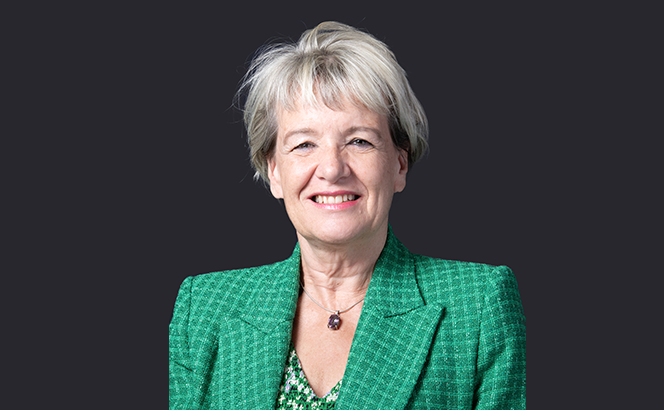
 Legal Business caught up with Vodafone UK’s head of legal, Karen Thorpe (pictured, sixth from left), to discuss an award-winning year.  

Continue reading “Vodafone UK head of legal Karen Thorpe on winning LB’s In-House Team of the Year and Vodafone’s ‘once in a lifetime’ merger with Three”

‘A true win’ – Baker McKenzie on record Ecuador $1.6bn debt-for-nature swap and winning Finance Team of the Year

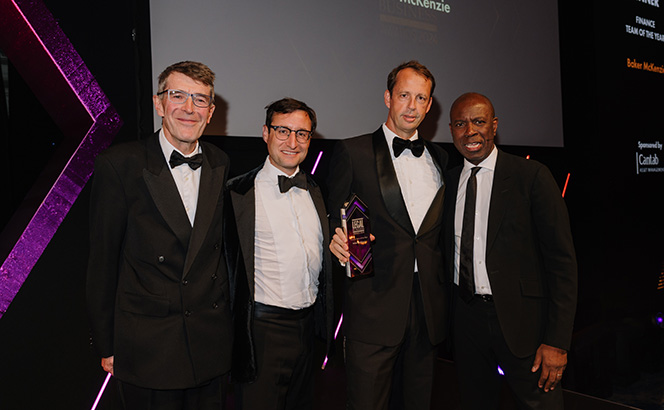
Baker McKenzie won Finance Team of the Year at the Legal Business Awards for representing project manager Oceans Finance Company in structuring and implementing the government of Ecuador’s $1.6bn debt-for-nature swap and providing $300m for the Galápagos Islands – the largest marine conservation debt conversion to date.

LB spoke with partners Matthew Cox and James Tanner (pictured, middle) to learn more about their experience working on this landmark deal, the challenges they encountered, and what it meant to win Finance Team of the Year.

Continue reading “‘A true win’ – Baker McKenzie on record Ecuador $1.6bn debt-for-nature swap and winning Finance Team of the Year”

‘Deals like this act as a catalyst’ – Gowling WLG on its Legal Business Award-winning work for AstraZeneca

coronavirus cells under the microscope

Gowling WLG won this year’s LB Award for Life Sciences Team of the Year for its role in advising AstraZeneca on a collaboration and license agreement with biopharmaceutical company Quell Therapeutics worth more than £2bn. LB spoke with two of the partners who worked on the deal to discuss why it’s important and what it means for the team. 

Continue reading “‘Deals like this act as a catalyst’ – Gowling WLG on its Legal Business Award-winning work for AstraZeneca”

‘What sort of profession do we want to have?’ – young Black lawyers on diversity, inclusion, and what needs to be done

‘There’s lawyers all over the world. The question isn’t whether or not Black people can be lawyers. The question is, what is it about England and Wales that means that Black lawyers don’t get the same opportunities as their white counterparts? And there’s no way to explain that other than racism.’

This comment from one City associate frankly states the issue. ‘When we talk about DEI’, they continue, ‘it’s often a very polite, corporate way of saying “Don’t be racist.”’ Law firms are, perhaps understandably, reluctant to use words like racism in their communications. But failure to acknowledge the problem makes it all the harder to resolve.

Continue reading “‘What sort of profession do we want to have?’ – young Black lawyers on diversity, inclusion, and what needs to be done”

‘Leave no stone unturned’: LB speaks to Barrister of the Year Edward Henry KC

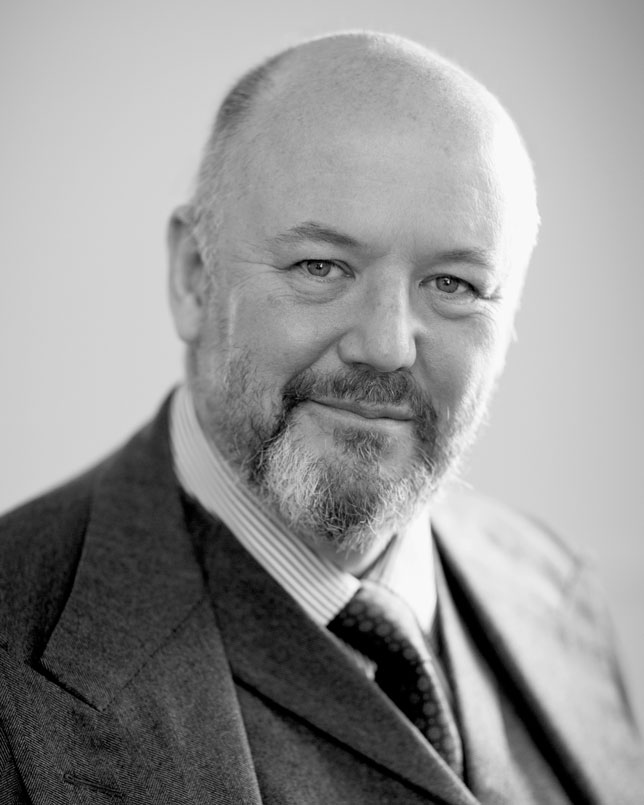
Mountford Chambers’ Edward Henry KC won the title of Barrister of the Year at the Legal Business Awards this past September. LB‘s disputes correspondent Isabel Caine spoke with him to hear about his process, the art of cross examining, and his work on the two major cases that won him his trophy.

Continue reading “‘Leave no stone unturned’: LB speaks to Barrister of the Year Edward Henry KC”

Gowling WLG: The Client’s View


Gowling WLG


Lawyers and
Team Quality

80.33


Quality of partners 83.52


Quality of associates 73.42


Partner availability and engagement 84.12


All scores are global and /100.

What do clients really think about the service they receive from law firms? At Legal 500, we hear from hundreds of thousands of clients every year, rating firms on key metrics such as lawyer quality and availability, billing, and levels of communication and expertise.

The answers we receive allow us to evaluate firms using a set of client service data scores, covering Lawyers and Team Quality, Value: Billing and Efficiency, and Sector and Industry Knowledge – all of which combine to produce an overall Client Service Score.

This article focuses on Lawyers and Team Quality, for which Gowling WLG scores 80.33. (The rest of this article is available to logged-in users onlyIf you are unable to log in above right, please click ‘Forgot your password?’ below to gain access to the full article). Continue reading “Gowling WLG: The Client’s View”

Eversheds Sutherland: The Client’s View


Eversheds Sutherland


Lawyers and
Team Quality

79.57


Quality of partners 82.97


Quality of associates 76.67


Partner availability and engagement 83.19


All scores are global and /100.

What do clients really think about the service they receive from law firms? At Legal 500, we hear from hundreds of thousands of clients every year, rating firms on key metrics such as lawyer quality and availability, billing, and levels of communication and expertise.

The answers we receive allow us to evaluate firms using a set of client service data scores, covering Lawyers and Team Quality, Value: Billing and Efficiency, and Sector and Industry Knowledge – all of which combine to produce an overall Client Service Score.

This article focuses on Lawyers and Team Quality, for which Eversheds scores 79.57. (The rest of this article is available to logged-in users onlyIf you are unable to log in above right, please click ‘Forgot your password?’ below to gain access to the full article). Continue reading “Eversheds Sutherland: The Client’s View”

Smaller footprint, bigger ambition: A&O and Hogan Lovells office cuts underline global pressure on profits

As firms grapple with what it means to be global, while also managing intense pressure on costs, the question of whether less profitable international offices are still a justifiable expense is rising up the agenda for many.

This issue has been underlined by the recent news that both A&O Shearman and Hogan Lovells are making cuts to their international presence, with Johannesburg identified by both as a location which is no longer a necessity.

News broke at the start of September that A&O Shearman would be closing its 32-lawyer Johannesburg office, as part of a broader post-merger play that will include a 10% reduction in its global partnership, and the wind-down of its consulting business.

This was followed swiftly by the announcement that Hogan Lovells was to close three offices in Johannesburg, Warsaw and Sydney, marking a complete withdrawal from the Australian market, where it launched in 2015.

‘It’s very competitive at the top end of the top 20 law firms, and the pressure from US firms is getting increasingly intense. Many of the markets these firms traditionally operated in are no longer a priority.’
Duncan Weston, CMS

Hogan Lovells chief executive Miguel Zaldivar said the decision to close the offices had been driven by ‘a strategic review of our geographic footprint to focus on markets with the strongest client demand’, while emphasising key markets like London, New York, California and Texas. He also pointed to a move by the firm to focus on ‘the most complex, high-value work in major markets’, a strategy which helped drive a record-setting 20% hike in profits per equity partner in 2023.

A&O Shearman managing partner Hervé Ekué’s statement struck similar notes, describing the firm’s exit from Johannesburg, where it opened in late 2014, as ‘a difficult but necessary step’.

While the 2010s saw a stream of international firms move into South Africa, including Herbert Smith Freehills, Clyde & Co and Pinsent Masons, firms on the ground now acknowledge that competition for work is tough in what is a ‘saturated’ market.

Sally Hutton, managing partner at leading South African firm Webber Wentzel, which since 2013 has had an alliance with Linklaters, summed up the challenges firms face. ‘The South African legal market is a fairly saturated domestic environment dominated by well-established, full-service corporate law firms, making it challenging for smaller offices of international firms to compete here without a full suite of specialist services.’

The challenge is exacerbated by the pan-African service offered by many local firms, either via alliances or local offices, which enables them to handle work at much lower rates than international entrants – something which ‘further increases the difficulty for firms to compete’, as Hutton explained.

Reflecting on the historical strategies employed by international firms, Hutton noted that many entered the South African market by offering above-market salaries and undercutting prices to capture market share – tactics that have adversely affected profitability: ‘In 2015-16, many international firms entered the South African market with local offices. Now, nearly a decade later, it seems that the inherent challenges they faced are now being highlighted.’

‘There are two possibilities for such firms: either an office, albeit unprofitable, is so small by global standards that it flies under the radar; or alternatively, even a small office that is not sufficiently profitable is regarded as a diversion of management’s attention,’ she explained.

At CMS, which has had a presence in South Africa since 2019, executive partner Duncan Weston placed the withdrawals by A&O and Hogan Lovells in the context of the war for talent. ‘These cutbacks are driven by intense high-level competition. Firms are up against very tough competitors.

‘South Africa is a fairly saturated legal market dominated by well-established, full-service firms, making it challenging for smaller offices of international firms to compete.’
Sally Hutton, Webber Wentzel

‘It’s very competitive at the top end of the top 20 law firms, and the pressure from US firms is getting increasingly intense. Many of the markets these firms traditionally operated in are no longer a priority. Instead, they’re focusing on regions where they can maintain higher profitability,’ he expanded. ‘In markets like Johannesburg, there are strong local law firms, and the global firms likely feel they can rely on these local players when the occasional deal arises, allowing them to narrow their focus.’

While firms like A&O Shearman and Hogan Lovells are pulling back, other international entrants – including Norton Rose Fulbright, DLA Piper, Clydes, and White & Case – remain committed to South Africa. Peter Scott, co-global managing partner at Norton Rose Fulbright, points to the flexibility of their global structure compared to the more rigid models of firms like A&O and Hogan Lovells, which ‘puts certain parts of the business under stress to meet global metrics – one size essentially has to fit all’.

Similarly, Weston described CMS’s approach as more adaptable, allowing the firm to avoid profitability dilution. ‘Our structure allows us to operate in multiple jurisdictions across Latin America and Africa without impacting profitability in places like London.’

While the future for Hogan Lovells’ lawyers in South Africa is still uncertain, A&O’s Johannesburg team has quickly found a new home, with leading African firm Bowmans confirming that the entire group will be joining them in early January 2025, including eight partners and a further six lawyers who are set to join as partners.

In a statement welcoming the hires, Bowmans chair and senior partner Ezra Davids said that the move ‘aligns with our strategic objective of being the go-to African law firm for advising clients on their most complex legal challenges and opportunities across the continent’.

The question of how Bowmans will integrate the former A&O team is one that will be closely watched in the market, with pay alignment a key consideration. ‘The key question now is what internal disruption will occur for firms that absorb their salaried employees without adjusting their remuneration,’ said Hutton. ‘We know that some of them are earning above-market salaries, so it will be interesting to see how firms manage that,’ she explained.

While law firms leaving a market rarely looks like a positive development, for the law firms that remain in the South African market, there will now be opportunities to absorb talent and gain market share. As Weston summed up: ‘I believe we’re in a good position. With two of the biggest international law firms now out of the market, we’ve solidified our standing, and that’s a great place to be.’

In Hutton’s view, one closure is clearly more significant than the other. ‘The closure of the Hogan Lovells office will have little impact on our local legal market. However, the A&O Shearman office was larger, and its closure will have a more significant impact as they were a disruptive competitor – particularly in relation to paying above-market salaries to attract talent. This may help stabilise the market to some extent in terms of remuneration levels.’

And as to whether there will be more closures, Weston is circumspect. ‘We’re seeing more and more firms pulling out of certain markets – US firms have withdrawn from China, and now we’re seeing firms exit Africa, Central Europe, and Australia – regions where, frankly, they’re not seeing significant returns. But I don’t foresee a mass exodus from Johannesburg, at least not from the firms that are already established here.’

Ultimately, in an ideal scenario, the closures create a win-win situation for all firms, as the top-of-the-market firms boost profitability and the firms in the tier below pick up market share.

However, as major players narrow their focus, the question is whether they can sustain their success in an increasingly competitive landscape. As DLA Piper’s Simon Levine noted, while streamlining geographic footprints may improve profitability, ‘the narrower you go, the more you’re fighting over the same small piece of pie.’

[email protected]

Late bloomer: how Paul Weiss made up for lost time on the global stage

For years, while rivals like Kirkland & Ellis, Skadden and Latham & Watkins disrupted the London legal market, Paul Weiss had bucked the global trend, practising only US law from small offices outside of its domestic heartlands.

Its much-lauded English law launch last year marked a dramatic u-turn, with the firm following up with a new European office in Brussels earlier this year, as well as the launch of a fifth US office in Los Angeles on home ground.

It may still be a long way off truly global but there’s no denying the shift in Paul Weiss’s position. Its office count now stands at 11 worldwide, with its work focused around five core practices: private equity (PE); public M&A; litigation; white-collar regulatory defence; and restructuring.

Since August 2023 the firm has added more than 60 new partners, taking its total partnership to 250 and its lawyer count to more than 1,000.

Domestically, its recent hires include Joseph Glatt, former general counsel for Apollo’s credit arm, who joined as a corporate partner in New York; private equity M&A partner Bianca Levin-Soler, who joined from Ropes & Gray in Los Angeles; and fund finance partner Flora Go, who joined the New York office as head of fund finance from Fried Frank.

Meanwhile, in the UK, the firm most recently added financial regulatory specialist Revathi Raghavan as a partner from Kirkland.

‘We want to continue to attract the most consequential matters from the most important clients in the world in each of the areas in which we practice,’ says Paul Weiss chair Brad Karp of the firm’s expansion plans. ‘The depth of talent in our partnership has never been greater and, as a result, our firm’s market position has never been stronger.’

Cracking Europe

Paul Weiss’s commitment to expanding in the US has been dwarfed by its efforts on this side of the Atlantic in recent months, with the firm building up a sizeable presence at lightning speed. Since making headlines with its English law launch in November 2023 via the eye-catching hire of a Kirkland team led by debt finance star Neel Sachdev and PE partner Roger Johnson in summer 2023, the office has expanded to around 170 lawyers – nearly doubling in size in just over a year. Thirty two of these are partners.

For context, according to LB’s Global London rankings, this puts the firm already at the size of long-term London players like Squire Patton Boggs and Ropes & Gray.

‘London is one of the world’s great financial centres and a gateway to Europe,’ Karp tells LB as he discusses how the London office fits in with the firm’s global strategy, which has been driven in large part by the firm’s PE clients demanding a credible and effective London solution.

Sachdev adds: ‘The growth of our London office and English law practice enables us to offer elite teams to corporate and private equity clients in London and New York.’

According to Sachdev, on the transactional side the London office has already been involved in multiple major European deals, including advising funds managed by Apollo on its £2.7bn acquisition of UK delivery company Evri from Advent International, the largest UK logistics sector private equity buyout in the past five years. A London team is also advising KPS Capital Partners on its €3.5bn acquisition of Innomotics from Siemens.

The hires and the mandates have undoubtedly shaken up the market. ‘The London market will never be the same,’ comments one head at a rival US firm, somewhat dramatically. ‘Paul Weiss seems to be taking a page out of the playbook Kirkland used so successfully in the early 2000s when it captured amazing talent by offering eye-popping deals to move people,’ they add, alluding to the fact Sachdev, who joined Kirkland in 2003, played a large part in driving Kirkland’s phenomenal growth in London.

‘The depth of talent in our partnership has never been greater and, as a result, our firm’s market position has never been stronger.’
Brad Karp, Paul Weiss

After kickstarting its European competition practice with the hire of Nicole Kar from Linklaters, the firm has also made its first move into continental Europe by launching a competition-focused office in Brussels ,with the hires of antitrust partners Ross Ferguson from Simpson, Thacher & Bartlett and Richard Pepper from Macfarlanes. Karp explains that clients had ‘long asked’ for the firm to scale London as well as develop a competition practice based in Brussels.

‘Our goal is to be the leading competition law firm in the world. To achieve that, a firm needs preeminent practice in Brussels,’ he says.

While the firm is continuing to grow in London and now has ten lawyers in Brussels, there are no current plans to extend in Europe beyond this, with the focus only on the most profitable locations that fit in with key client strategies.

It’s a strategy that some rivals believe makes sense. As a US private equity head comments: ‘It’s perfectly viable for Paul Weiss to operate from London and Brussels. You don’t need a presence in every city anymore. For international M&A, banking, and private equity, having London and New York is essential and anywhere else in Europe tends to be a bonus.’

Domestic expansion

At the same time as attempting to crack London, Paul Weiss has also been expanding its presence in key domestic markets in the US, with high profile moves including New York-based Eric Wedel leaving Kirkland with a team to launch the LA office in August 2023. Wedel, who co-chairs the global finance and capital markets group alongside Sachdev, brought along finance partners Ben Steadman, Caroline Epstein, and Matthew Leist.

Karp says the new LA office, the firm’s second California location after San Francisco opened in 2021, will also enhance the breadth of its private equity and alternative investment practice. It currently has 20 lawyers, with recent mandates for Wedel and co including advising Hg Capital on the financing for its acquisition of AuditBoard, valued at over $3bn.

Given the scale of the firm’s expansion in recent months, the obvious question in the market is where next?

Paul Weiss has been linked to a potential launch in Houston, where multiple firms including Kirkland and Latham have been building offices in order to capture lucrative energy and private equity work.

‘It’s perfectly viable for Paul Weiss to operate from London and Brussels. You don’t need a presence in every city anymore.’
US private equity head

With multiple US firms rethinking their approach to Asia, where Paul Weiss currently has small US law offerings in Beijing, Tokyo and Hong Kong, the firm’s name has also been linked with a potential launch in Singapore. Should it open in Singapore it would be following in the recent footsteps of Quinn Emanuel, which launched there in July this year with a boutique arbitration practice.

Karp is reluctant to go into long-term specifics, saying only that the firm is ‘continuing to monitor Asia closely’. In the shorter term he confirms that there are: ‘no presents plans to open an office in Houston or Singapore (or any other location)’.

Whether Karp’s statement ends speculation about the firm’s plans is another matter, given the scale of the firm’s disruption in the US and London in recent months. The firm now sits at 27th place in the Global 100, with revenues of more than $2bn, even without fee income from its most recent launches.

As one head at a rival firm summarises: ‘Paul Weiss has traditionally concentrated on litigation in New York, taking pride in its status as a prominent New York firm. However, over the years, it realised that the legal market extends beyond New York. To increase its revenue, it began exploring opportunities in other major cities. London is a big move – it forms part of the firm’s view that it must consider a wider variety of locations and client needs.’

For more on Paul Weiss, see LB’s feature ‘Market forces: Paul Weiss, Kirkland and the war for London talent’, LB319.

Paul Weiss’s office expansion

Five US offices

  • Los Angeles (2023)
  • San Francisco (2021)
  • Wilmington (2009)
  • Washington (1947)
  • New York (1875)

Canada

  • Toronto (2011)

Three Asia offices

  • Beijing (1981)
  • Hong Kong (1983)
  • Toyko (1987)

Two Europe offices

  • London (initially 2001, built out 2023)
  • Brussels (2024)

[email protected]

‘Freeths who?’ no more: LB’s firm of the year on brand revolution, their ‘watershed’ win – and what’s next

Last month, Freeths was named Law Firm of the Year at the Legal Business Awards, capping off a remarkable period for the firm that has seen it post yet more double-digit financial growth, achieve B Corp certification, and receive unprecedented attention for its role representing the postmasters in the Post Office Horizon scandal.

LB checked in with national managing partner Karl Jansen and London senior partner Philippa Dempster to talk about how the firm got to where it is, its ambitious aim to become the leading UK national law firm, and how its brand has changed beyond recognition as a result of the firm’s media moment.

——————————————————————————————

Continue reading “‘Freeths who?’ no more: LB’s firm of the year on brand revolution, their ‘watershed’ win – and what’s next”

Paul, Weiss, Rifkind, Wharton & Garrison: The Client’s View


Paul, Weiss, Rifkind,
Wharton & Garrison


Lawyers and
Team Quality

86.64


Quality of partners 90.34


Quality of associates 76.66


Partner availability and engagement 89.36


All scores are global and /100.

What do clients really think about the service they receive from law firms? At Legal 500, we hear from hundreds of thousands of clients every year, rating firms on key metrics such as lawyer quality and availability, billing, and levels of communication and expertise.

The answers we receive allow us to evaluate firms using a set of client service data scores, covering Lawyers and Team Quality, Value: Billing and Efficiency, and Sector and Industry Knowledge – all of which combine to produce an overall Client Service Score.

This article focuses on Lawyers and Team Quality, for which Paul Weiss scores 86.64. (The rest of this article is available to logged-in users onlyIf you are unable to log in above right, please click ‘Forgot your password?’ below to gain access to the full article). Continue reading “Paul, Weiss, Rifkind, Wharton & Garrison: The Client’s View”

CMS: The Client’s View


CMS


Lawyers and
Team Quality

80.60


Quality of partners 83.07


Quality of associates 77.37


Partner availability and engagement 82.32


All scores are global and /100.

What do clients really think about the service they receive from law firms? At Legal 500, we hear from hundreds of thousands of clients every year, rating firms on key metrics such as lawyer quality and availability, billing, and levels of communication and expertise.

The answers we receive allow us to evaluate firms using a set of client service data scores, covering Lawyers and Team Quality, Value: Billing and Efficiency, and Sector and Industry Knowledge – all of which combine to produce an overall Client Service Score.

This article focuses on Lawyers and Team Quality, for which CMS scores 80.60. (The rest of this article is available to logged-in users onlyIf you are unable to log in above right, please click ‘Forgot your password?’ below to gain access to the full article). Continue reading “CMS: The Client’s View”

Bird & Bird: The Client’s View


Bird & Bird


Lawyers and
Team Quality

79.96


Quality of partners 82.45


Quality of associates 75.52


Partner availability and engagement 82.28


All scores are global and /100.

What do clients really think about the service they receive from law firms? At Legal 500, we hear from hundreds of thousands of clients every year, rating firms on key metrics such as lawyer quality and availability, billing, and levels of communication and expertise.

The answers we receive allow us to evaluate firms using a set of client service data scores, covering Lawyers and Team Quality, Value: Billing and Efficiency, and Sector and Industry Knowledge – all of which combine to produce an overall Client Service Score.

This article focuses on Lawyers and Team Quality, for which Bird & Bird scores 79.96. (The rest of this article is available to logged-in users onlyIf you are unable to log in above right, please click ‘Forgot your password?’ below to gain access to the full article). Continue reading “Bird & Bird: The Client’s View”

‘Private credit are the new banks’: Proskauer’s A&O and Cahill hires on the US firm’s ambitious finance push

Speak to almost any major firm active in the finance space and you’ll hear about private credit. The industry matured as banking regulations tightened in the wake of the 2008 crash, and has surged since banks pulled back on lending after the interest rate hikes from early 2022.

According to merchant banking, global advisory, and asset management firm M Capital Group, the overall size of the private credit market has grown from $1trn four years ago to $1.7trn in 2023.

The market is big, and growing – and law firms want a piece of it.

Continue reading “‘Private credit are the new banks’: Proskauer’s A&O and Cahill hires on the US firm’s ambitious finance push”

Latham rewards more than 20 star performers with new ‘super points’ rank

Latham & Watkins London office

More than 20 of Latham & Watkins’ equity partners have made it into the elite firm’s ‘super points’ band, which is intended to better reward star performers by allowing them to earn nearly double the profit share of those at the top of the firm’s core lockstep.  

Legal Business has learned that 22 Latham partners now sit within the so-called ‘super points’ tier. 

Fourteen partners worldwide are understood to sit on the first additional tier at 1,300 points, with a further eight now on the maximum 1,700 points. Two partners in London – including chair Richard Trobman – are understood to be at the top level. All of the remaining super pointers are based in the US. 

Latham’s core modified lockstep ladder runs from 350 to 900 points, with 900 points equating to more than $5m last year, meaning that 1,700 points would nearly double this figure. 

On top of this, Latham also has a bonus pool of up to 15% of its profits available for discretionary division among partners. Combining this bonus with super points it is understood that total partner comp can now climb above the $15m mark for star performers. 

Latham partners approved the new remuneration structure in July, with equity partners taking part in a weighted vote based on points allocation rather than a one-person, one-vote system. 

The move came amid intense competition to attract and retain talent at the very top of the US market, where firms like Kirkland and Paul Weiss have been linked with packages above $20m for a handful of partners. 

Sources told LB that no partner joining as a lateral will be granted immediate access to the higher remuneration rungs. Instead, they will have to wait at least two years before being eligible for consideration, suggesting that, for Latham, the changes are focused on retaining, rather than attracting star performers. 

A spokesperson for Latham said: ‘Changes to the firm’s equity compensation structure were made after an in-depth review and extensive discussions and meetings in each office to ensure a transparent and thorough process. This provided the firm’s leadership with the opportunity to receive direct feedback from the partnership before moving forward. The changes to the firm’s compensation structure allows the firm to reward more partners in its year-end bonus process.’ 

Latham has seen a series of departures in London over the last year. This summer a five-partner strong leveraged finance team led by Jayanthi Sadanandan and Sam Hamilton left for Sidley. Around the same time, Milbank announced the hire of a six-strong team of finance lawyers from Latham, headed by collateralised loan obligation (CLO) partner Alex Martin. 

Earlier this year, litigation and trial partners Oliver Browne and Stuart Alford KC left for Paul Hastings. Browne’s exit from Latham came after 18 years at the firm, having most recently served as the London co-chair of the litigation and trial department. This follows the departure of restructuring and special situations partner Simon Baskerville who moved over to Willkie Farr at the end of last year. 

Less than two years ago, Latham also saw the departures of finance partners Mo Nurmohamed, Ross Anderson, Karan Chopra and Rob Davidson who left for Paul Hastings. Nurmohamed joined as co-chair of the firm’s global finance practice. 

The traffic has not gone only one way though, with the firm adding Jonathan Brownson, Joydeep Choudhuri and Prue Criddle from New York banking heavyweight Cahill Gordon & Reindel’s City office, in May this year.

Its partner remuneration overhaul comes amid intense competition at the top of the US market, prompting numerous firms to reconsider how to attract and reward their standout performers. 

Latham posted a 6.9% revenue hike to almost $5.7bn for the 2023 calendar year, with profit per equity partner up 7% to $5.52m.

LB has decided not to name the partners on super points.

[email protected]