

The legal function might not traditionally be associated with the phrase ‘competitive edge’, but many of the general counsel we spoke to are aiming for exactly that. In the here and now, the pressure is on for GCs to be watching competitors, hoping to learn from their successes and mistakes, while also thinking about how to get to the answers to tomorrow’s questions before anyone else.
‘I think of it in three phases – now, near and far. I draw a circle for “now”, I draw a bigger circle around it and I call that “near”, and I draw an even bigger circle around “near” and I call it “far”,’ explains Gayton.
‘I obviously have to spend time in all three areas, but my most significant value can come from thinking about the “far”, because if I can anticipate both where the law is going and where the business is going, we can identify solutions that are out in the far and then try to bend them back to today. If we can reach out to the future in how I’m thinking and bring those solutions back to today, the curve that comes back is my competitive advantage – that’s how we can contribute to beating the competition.’
Developing a nose for the future is especially demanding in today’s world, given the constantly shifting sands of technological capability, societal norms and geopolitical activity (and the subsequent struggle of regulation to keep up). Some sectors might be steering the waves, while others are drowning in them, but all are operating in an environment where little can be taken for granted.
‘The job is harder than it’s been because of those things and I think we need new models and approaches to addressing them – because trying to do it alone isn’t likely to be successful,’ says Tim Murphy, general counsel of Mastercard.
While the challenges are unprecedented, our GCs were full of insights into the future of legal services for both in-house and private practice.
Thinking global
Collaborative efforts, such as building a peer network of general counsel outside the corporation, can provide traction for dealing with the day-to-day. This has always been a common feature of the general counsel’s armory. However, it was common to hear from those interviewed that general counsel increasingly need to think beyond their immediate geographic environment and cultivate a truly global perspective.
‘Not only is the business climate more global, but our regulations around the world are becoming much more collaborative and sharing more, and so are all of our customers. Social media takes an issue that you might think is a local issue, and can make it a global issue pretty quickly,’ says Gayton.
‘You can’t be myopic in terms of solving these issues thinking that they’re simply local – you’ve got to understand the likely global ramifications. Being able to have a global view and understand how to navigate globally and lead a global team and engage with law firms and martial troops together to resolve global issues is critical.’
That means creating and capitalizing on opportunities to experience unfamiliar perspectives and build international relationships, through travel, international deals, setting up international entities or working on international litigation.
‘Being able to understand and value the differences in cultures, and being able to be inclusive in how you work with people, whether they are next to you or whether they’re 5,000 miles away – that’s a skillset; it’s not just your nature,’ adds James Zappa, general counsel of CHS.
At the margins
Like all business leaders, general counsel are no longer strangers to efficiency drives. Creative efforts to position the legal function as a generator of revenue, instead of just a cost center, do not exempt them from needing to demonstrate maximum productivity, on top of adding value. It seems natural to assume that alongside a growing use of systems that track and document workflow, attempts to streamline legal functions will continue well into the future.
‘There will be segmentation. The lower, repetitive work will be commoditized and the margins will be lean,’ says Tom Sager, former general counsel of DuPont.
Private Practice Perspective: An Eye to the Future
Michael Aiello is chairman of the over 600-lawyer corporate department at Weil, Gotshal & Manges LLP and a member of the firm’s management committee. He regularly represents companies in connection with mergers, acquisitions and divestitures involving public companies. In this Private Practice Perspective, Aiello considers the evolving business and technological context within which GCs operate, as well as how this could affect the optimal skillset required for the future.
At Weil, we are privileged to represent sophisticated clients in their most important matters. Having worked with general counsel for more than 20 years, I have watched as their roles and responsibilities have grown, considerably, in number and complexity. Our GC clients possess an unmatched level of legal sophistication and business acumen. They make decisions that influence the reputation and brand of their companies on a daily basis; they evaluate complex legal and business issues to mitigate risk; and work with executive leadership teams to spot strategic growth opportunities.
Given the speed of change in business and technology, the GCs of the future will have to prioritize what they need to focus on today, what can wait until tomorrow and what may not merit their attention at all. This is not easy. Any experienced professional knows that an issue can seem inconsequential at first blush, but actually may hold some key reputational risk. And, as the GCs in this report have noted, the push to drive efficiency continues, requiring more delegation and outsourcing than ever before.
So how can a GC know which issues require their complete and immediate attention? To make these calls in real time, GCs and their outside counsel must have a strong working knowledge of the corporate organization, the board structure and the competitive landscape. In-house counsel are well-situated to address the majority of business decisions. However, there always will be extraordinary business matters where outside counsel is needed.
As an M&A lawyer who handles boardroom issues for a living, I regularly work with GCs on these sensitive c-suite matters. They look to our firm to provide broad-based commercial judgment. Although our most acquisitive client may pursue two or three deals in a year, lawyers in the corporate department at Weil are handling that number of transactions in any given week. Seasoned outside counsel are important strategic partners to their clients, offering key market knowledge and business judgement.
For Weil, this has meant living and breathing our clients. Our partners attend board meetings for clients free of charge to better understand key structural and governance issues so that we can provide clients the most informed counsel. We provide regular trainings for our clients’ in-house teams across all layers of the organization. We follow the news and trends of their industries on a daily basis.
In the future, I see an even deeper embedding of outside counsel with their GC counterparts. The need for interconnectedness will only grow as companies reduce the number of outside counsel with whom they engage and chief legal officers become involved in more diverse aspects of corporate management.
The general counsel of the future – including those who are featured in this report – should have the highest standards and loftiest expectations for their outside counsel. It is our job to see three or four steps beyond the present to help guide you toward the future.
Michael Aiello Chairman of Corporate Weil, Gotshal & Manges LLP
‘It requires a lot of forethought, a lot of knowledge around process, a lot of thought around what is the lowest appropriate level to delegate this work and leverage the contribution of non-lawyer practitioners who can bring immense value in areas such as compliance, ethics, risk management, governance, procurement, crisis management and diversity.’
The word on everyone’s lips, of course, is ‘automation’, which Sager (and many others) believes will displace some in-house professionals. During his own tenure at DuPont, the bankruptcy team shrank from five members to a single paralegal.
‘It starts with some methodology (and it may be Six Sigma) that maps and processes, to understand the steps, understand where inefficiencies or duplication occur, and put in a system which may be facilitated by technology to ensure that process takes hold,’ he explains.
Ford is already using artificial intelligence for e-discovery, and is considering its application in writing patent applications, as well as in evaluating risk in the company’s contract portfolio. Gayton’s appetite for tech-based applications goes further than most, as he imagines virtual reality tools shortening geographical distances, not only in business meetings, but in courtrooms, widening access to justice. But for now, AI-enabled contract management is within the grasp of many in-house practitioners, as evidenced from our sample of general counsel.
Outside of the realm of technological solutions – although certainly enabled by them to some degree – is the growing range of options for streamlining routine work, which has led many, such as Mastercard, to consider shared services as an option in handling work traditionally handled by the in-house team.
‘Now, at Mastercard, if you do a non-disclosure agreement with us, it’s done by staff in the shared service function – and that shared service function has all sorts of automation and it tracks, in a very rich way, timelines and response rates and so on,’ says Murphy.
The future of legal services
While such initiatives are indicative of the diversifying internal marketplace for legal solutions, the external marketplace for non-traditional solutions is also flourishing, as alternative legal services providers, such as on-demand legal professionals, are taking a foothold and challenging law firms for many types of work.
‘We are seeing a trend for law firms to provide one-stop-shops for professional services – not just legal advice, but also things like financial management, media and political consulting – and clients are increasingly coming to expect that,’ says Tom Johnson, general counsel of the Federal Communications Commission.
‘The reality is that the problems affecting corporations and other organizations are not always neatly pigeon-holed as a legal problem, and that’s becoming increasingly true as the world is more becoming more interconnected, as people are becoming more socially conscious, and as information is much more public on a real-time basis through 24-hour news cycles and social media. Law firms are going to be increasingly called upon to expand their traditional skillset.’
The need for law firms to employ lawyers with multiple specialisms, or even non-lawyers, could impact the professional and ethical norms of the legal practitioner, mirroring the in-house partner-guardian tension highlighted by Ben Heineman.
‘It used to be common ground that attorneys did not see themselves as ordinary business people – they saw themselves as officers of the court with a solemn responsibility towards the judicial system as well as to their clients,’ says Johnson.
‘It’s a good thing that lawyers hold themselves to those high professional expectations, but the model is getting to be tested by some of the new trends towards increasingly global professional services organizations.’
If true, this could mean that in-house lawyers are ahead of their private practice peers in negotiating this tension, having walked a similar line for many years. Some believe that for the in-house community, things might be about to come full circle.
‘I expect that, given the brand reputation issues that companies are running into, there will be a greater emphasis on the role of the GC as that internal watchdog, and how their level of responsibility to the owner or the board or whomever is the controlling entity, informs the things that they need to know,’ explains Hannah Gordon, general counsel of the San Francisco 49ers.
But any distancing from the business would seem to be at odds with the seeming proliferation of non-legal responsibilities – and their attendant risk profiles – being absorbed into the GC role.
Subsequently, how law firms adapt to a changing legal marketplace, drew some novel ideas from the GCs we spoke to.
‘I do wonder if we will move away from the very hierarchical law firm model that exists today to one that’s a bit flatter, with more risk that sophisticated clients have to accept. If you don’t have a typical pyramid where you’re paying for review after review after review of work, that could work just fine for a sophisticated law office like ours with sufficiently large numbers, where what you could use in the moment is another junior lawyer,’ says Gayton.
‘I don’t necessarily need the law firm partner’s review of that lawyer’s work, because I have the equivalent of that here. But the law firms would have to be comfortable with the fact that we’d take that risk.’
Business in society
It was Ben Heineman who coined the phrase ‘business in society issues’ – a concept encapsulating the effects of businesses as corporate citizens: ‘The company can get seriously impaired or seriously improved if it does appropriate actions as a citizen, as well as a business performer’.
As the recent sexual harassment scandals spanning numerous sectors have shown, all organizations must be cognizant of the sudden and incalculable damage that can be wreaked by perceived bad conduct, whether or not that conduct amounts to a substantive legal or compliance violation.
These issues, among others, demonstrate the imperative for future general counsel to act with integrity and a keen sense of their responsibility as an ethical guardian for the company, as an influencer in terms of company culture and, at times, as an external ambassador.
‘We’ve seen how incredibly destructive some of these divisive cultural issues can be if they’re not managed the right way,’ explains Murphy.
However the position and the market might evolve, at the core of the role of the general counsel will continue to be sound and nuanced judgement, at times straying into delicate matters that might be tangential to the usual delivery of legal advice.
Our conversations with those at the top of the corporate legal tree supported the view that whatever technological or efficiency-based innovation is around the corner, there will no substitute for the general counsel to steep themselves in the training, experiences and tools that build that balanced view – and subsequently, retain it.


















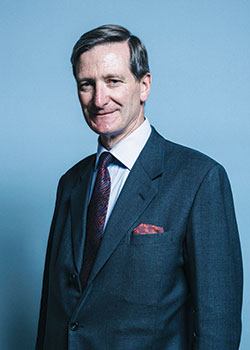 GC: Now less than a year out from the United Kingdom’s scheduled withdrawal from the European Union, how would you characterise the current state of negotiations between the UK and the EU?