Iberia: Off the Richter scale

Richter Scale

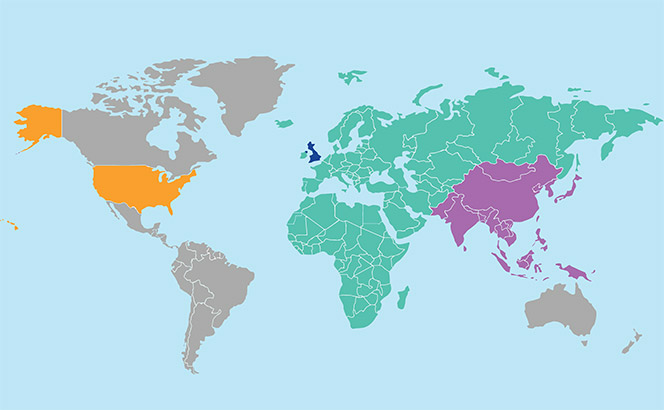
‘An earthquake’; ‘very shocking’; ‘difficult to understand’; ‘one of the most relevant moves in the market over the last few years’: if you want members of the Spanish legal elite to come up with the most melodramatic expressions they can find, mention Juan Picón and Latham & Watkins.

You can easily see why. The news in November that DLA Piper’s senior partner and global co-chair was joining the US giant as Spain managing partner alongside fellow DLA corporate partners Ignacio Gómez-Sancha and José Antonio Sánchez-Dafos put Spain in the headlines of the global legal press. That does not happen every week. Continue reading “Iberia: Off the Richter scale”

Middle East: Mission unaccomplished

Riyadh

‘The Middle East. We will try to make it better, but it is a troubled place’: the words of Donald Trump as he announced the recent military strikes targeting Syrian president Bashar Assad’s chemical weapons facilities. Although there is some truth to his sweeping statement, most of the over 400 million citizens in the 17 countries that comprise the Middle East region beg to differ. While the World Bank estimates that GDP growth in the region slowed from 5% in 2016 to 1.8% in 2017 – fuelled by oil production cuts and geopolitical tensions – this is projected to rebound to 3% in 2018 and 3.2% the following year.

The region’s lawyers point to the six Gulf Cooperation Council (GCC) economies as leading the way, supported by infrastructure investment. ‘It’s a very good time in the region,’ says Doug Peel at White & Case, head of the firm’s Middle East practice, which is spread across five regional offices: Cairo, Riyadh, Doha, Abu Dhabi and Dubai. ‘We are busy all the way around – there’s substantial activity in all the GCC countries and in Egypt.’ Last year White & Case – along with Latham & Watkins – advised JPMorgan, Citi and HSBC on Saudi Arabia’s debut 144A/Reg S Sukuk programme, including the issue of $9bn Sukuk. Continue reading “Middle East: Mission unaccomplished”

Kirkland and Baker McKenzie chart course for €950m sale of Danish shipping giant

DFDS

Kirkland & Ellis and Baker McKenzie have secured key roles as Turkish freight shipping operator UN Ro-Ro launched its sale to Danish shipping and logistics company DFDS in a deal worth roughly €950m.

The Kirkland team, spearheaded by London corporate partner David Arnold, advised Actera Group and Esas Holdings, while the Bakers team was led by Charles Whitefoord (London) and Eren Kurşun (Istanbul). Continue reading “Kirkland and Baker McKenzie chart course for €950m sale of Danish shipping giant”

Deal view: Life after Hatchard – does Skadden hunger to take its peerless M&A team to the next level?

Scott Simspon and Michael Hatchard

‘Theirs is the biggest succession issue faced by any firm in the City,’ says one Magic Circle partner of Skadden, Arps, Slate, Meagher & Flom’s prospects, following the retirement of veteran dealmaker Michael Hatchard (pictured right) at the end of last year.

The widely-admired Hatchard did much to make Skadden a US trailblazer in public M&A work in Europe. Though leveraged finance hogs the headlines these days, Hatchard and Skadden were still the competitive forces most cited by top M&A partners at London rivals. Having moved from Theodore Goddard in 1994, Hatchard (who remains a consultant to Skadden) was one of the most successful transfers ever in City law. Continue reading “Deal view: Life after Hatchard – does Skadden hunger to take its peerless M&A team to the next level?”

KPMG: Still not a law firm, still not being taken lightly

Jürg Birri

KPMG’s global head of legal Jürg Birri (pictured) does not know how much it will cost to reach its target of doubling its legal services arm to 3,000 lawyers in the next three years.

He floats $50m and $100m, but for him it is beside the point. It is the appetite he is seeing from KPMG’s member firms – spread across 154 countries and territories – wanting to invest in setting up a legal services arm. Continue reading “KPMG: Still not a law firm, still not being taken lightly”

McDermott’s mass lawyer swoop casts shadow over DLA financial renaissance

DLA Piper

It has been a bumpy few months for DLA Piper. Just as the dust was settling following McDermott Will & Emery (MWE)’s 20-partner blitz on its US offices, the Chicago-based firm hired another three partners from DLA in London.

What a way to take some of the gloss off a turnaround in global turnover to back above $2.5bn, coupled with double-digit percentage growth in net profit, also announced in April. Continue reading “McDermott’s mass lawyer swoop casts shadow over DLA financial renaissance”

Gamification – the thoroughly modern way to redesign legal services

lawyer board game

You may not have heard the term ‘gamification’, but the chances are you have experienced a form of it.

Perhaps you’re an executive in a FTSE 500 company with a generous bonus triggered when your performance meets certain conditions. You could be a corporate client, flicking through the ranked lawyers in The Legal 500, preparing to draw up a shortlist for your next deal. In each case, you would be responding to an element of gameplay dynamics, subtly influencing your judgement, or motivating particular choices. Continue reading “Gamification – the thoroughly modern way to redesign legal services”

Trust me, I’m a lawyer… technology and the evolving role of GCs

lighthouse illustration

Academic and Thinkers50 honouree Rachel Botsman is focused on trust. Of late, that focus has looked at how technology has shifted our understanding of trust and impacted on both our personal and professional lives.

In particular, Botsman draws a distinction between ‘trust’ and ‘trustworthiness’. The former is generally thought of as a state of mind engendered by the latter. ‘Trustworthiness’, therefore, can be defined as a set of qualities that inspire trust, and is arguably more measurable, because trust can be influenced by emotional factors. There is a symbiotic relationship between the two, but they do not always follow on from each other; hence we can instinctively trust someone, or feel that someone is trustworthy – without trusting them yet. Continue reading “Trust me, I’m a lawyer… technology and the evolving role of GCs”

The New Normal is good news for litigators

Alex Novarese

Returning with our fourth annual Disputes Yearbook, by far the largest we have yet published, it is still a great time to be a quality litigator or arbitrator at a well-positioned team. While the flood of banking-related work that gave such a shot in the arm to the City contentious market post-Lehman has now largely passed – as have the days when London courts were block-booked by Russian clients – there is still plenty to go around.

As can be seen by our cover feature, the commercial Bar continues to thrive, with the Magic Circle of the chambers variety looking rather more confident over the last decade than their larger solicitor counterparts. Continue reading “The New Normal is good news for litigators”

Sponsored briefing: Redefining dispute resolution – challenging orthodoxy

Herbert Smith Freehills

Herbert Smith Freehills reports on evidence that technology and collaboration should drive a new approach to dispute resolution

Herbert Smith Freehills (HSF) has co-led an ambitious project spanning two years, working with the International Mediation Institute (IMI), PwC, and other global corporates and institutions. The Global Pound Conference (GPC) has reviewed how dispute resolution can be improved to respond to the needs and expectations of commercial parties (users).

Unique in terms of scale and format, the research canvassed the views of over 3,000 delegates at 28 conferences in 24 countries worldwide, plus hundreds more who contributed online. Each conference was run around four interactive sessions looking at both the demand and supply sides of the dispute resolution market.

A report published in May 2018 by HSF, PwC and IMI summarises the results of the first analysis of the global data, identifying four key global themes.

1. Efficiency is the key priority in choice of dispute resolution process

Most dispute resolution still has as its frame of reference an adversarial process (litigation or arbitration) based on asserted legal rights. Yet two thirds of users canvassed at GPC events said they require more efficiency in dispute resolution. This questions whether traditional dispute resolution processes meet the needs of users.

Finding the efficient way to resolve a dispute may not always be the fastest or cheapest, but it requires thought and engagement to bring appropriate resolution in acceptable timeframes and at realistic costs. Users may need to communicate their priorities, expectations and underlying interests to lawyers more clearly. In turn, lawyers must challenge themselves to focus relentlessly on their client’s interests, being prepared to initiate or facilitate non-traditional dispute resolution methods.

2. Users expect greater collaboration from advisers

Around two thirds of users also said they need to see more collaboration from advisers. This applies both when lawyers are interacting with clients and opponents. This questions traditional notions of how lawyers should represent clients. Is the zealous advocate, fighting their client’s corner tenaciously, still required? Interestingly, two thirds of advisers said they still saw their role as advocates for their clients.

With the lawyers of Generation Y, Millennials and Generation Z growing into positions of influence within corporates and throughout the dispute resolution community, the concept of collaboration in a way that would have been unthinkable to the litigators of a generation ago may already be an accessible reality to a community that has grown up on crowd-funded solutions and sharing through social media.

The 21st century lawyer needs to deliver dispute resolution process design, collaboration to secure efficient results, as well as traditional tough representation when called for. Greater emphasis on collaboration between in-house and external lawyers, and between disputing parties, will lead the way for more efficient resolution of commercial disputes.

Alexander Oddy, global head of alternative dispute resolution (ADR) at HSF and the driving force at the firm behind the project, said: ‘An early case assessment is a good example of how closer collaboration can increase efficiency with in-house counsel and external lawyers working together to review the wider interests and risks. The results can in turn help inform a more resolution-focused approach with counterparties.’

Whether these differences reflect different experiences between users and advisers, there is a clear challenge to the legal community to listen to clients. They must discuss whether collaboration is wanted and what that means in a given situation (particularly when disputes are acrimonious or thought to be unmeritorious).

3. Global interest in the use of pre-dispute protocols and mixed-mode dispute resolution

With the data pointing towards more collaborative and efficient processes like mediation, delegates unsurprisingly highlighted a near universal recognition that disputing parties should be encouraged to consider processes like mediation before they commence adjudicative dispute proceedings. Interestingly, the data showed a growing desire by users to see non-adjudicative processes like mediation undertaken in parallel with litigation or arbitration.

Anita Phillips, a professional support consultant in the firm’s Hong Kong office, who led much of the GPC initiative across Asia, commented: ‘The data is timely, particularly in Asia. As China’s ambitious Belt and Road Initiative gathers pace, corporates from a broad range of sectors are vying for large international projects and disputes are inevitable. One proposal under consideration by the Chinese government is for Belt and Road disputes to be resolved through mediation, and only failing resolution should parties proceed to arbitration. I expect to see more use of mixed-mode processes like mediation with arbitration or mediation with litigation in the years to come. The GPC data reinforces this direction of travel.’

4. The role of lawyers

The GPC data flagged some uncomfortable truths for lawyers, whether in-house or private practice.

In-house counsel are the agents to facilitate organisational change

The results showed a broad consensus that in-house counsel are change enablers and should encourage their organisations (and, if necessary, their external lawyers) to consider dispute resolution options more carefully, including using processes like mediation. ‘Based on our earlier market research, reinforced by GPC, we’re working with in-house counsel to maximise their value,’ said Justin D’Agostino, global head of disputes at the firm. ‘Disputes are always unwelcome, but speedy resolution and settlement paint in-house legal teams in a far more positive light. Improving internal systems and taking a more strategic approach to dispute avoidance and resolution can help businesses achieve important time and cost savings.’

External lawyers are the primary obstacles to change

70% of global delegates said private practice lawyers are the primary obstacles to change in commercial dispute resolution. This is blocking progress and leading to a perpetuation of the ‘same old processes’: litigation or arbitration. The conferences explored whether advisers might be making recommendations for dispute resolution based on the potential to earn fees. But the voting data suggested that this was not a major factor, or at least it was less significant than factors like the type of outcome required or familiarity with a dispute resolution process.

Rather than rehearsing tired arguments about lawyers not promoting ADR for fear of its impact on their revenues, the data suggests the underlying issue is more closely linked to something beyond training and education – familiarity. This calls into question how we are equipping tomorrow’s lawyers to best advise their clients in disputes. Putting processes like mediation on an equal footing with litigation and arbitration in law schools and on vocational courses may be necessary.

How does the UK stack up?

Lord Woolf’s ground-breaking reforms to the civil justice system in England and Wales in the late 1990s embedded the role of ADR in the case management of civil litigation. Nearly 20 years on, the data from the London GPC Series finale reveals well-informed in-house counsel familiar with dispute resolution processes, focused on collaboration and efficient dispute resolution using non-adjudicative processes in pre-action protocols and mixed-mode dispute resolution.

Delegates in London were by far the clearest in identifying that the parties to commercial disputes typically want lawyers to work collaboratively to navigate the dispute resolution process. In other regions delegates viewed the role of lawyers as advocates as being of broadly equivalent significance, except for North America where the tradition of zealous advocacy on behalf of clients was readily apparent in the preference for lawyers advocating on behalf of their clients.

When delegates in London were asked about the main obstacles parties face when seeking to resolve commercial disputes, insufficient knowledge of the options available was far lower than in other regions.

While the Woolf reforms have been widely celebrated as an enlightened step forward in the administration of civil justice, it seems the GPC data may be providing some real evidence of how changes in civil procedure to promote ADR can bring about progressive attitudes among a generation of users.

Alex Oddy, partner, and Anita Phillips, professional support consultant, Herbert Smith Freehills

What role will technology play?

The GPC data also highlights the important role technology has to play in realising much sought after efficiencies and collaboration. This is not limited to electronic discovery and filing. Dispute management tools and online dispute resolution also have the capacity to change radically the way disputes are resolved over the next decade. Advancement in data analysis enables advisers and legal teams to review and investigate large amounts of data quickly, and assess risk in ever more sophisticated ways. Social tools and online platforms are making it easier for lawyers to work more closely with each other and with their clients. Alexander Oddy commented: ‘Disruptive technology will force greater efficiency and collaboration in dispute resolution. But in many quarters, a mindset shift is required to appreciate that up-front costs in technology can lead to long-term savings.’

Return to the Disputes Yearbook 2018 menu

The disputes funding debate: The value of everything

Sean Upson, Stewarts Law

Craig Arnott, Burford Capital: Litigation finance used to be perceived as a last-ditch resort for impecunious clients. That has transformed, largely because of cost pressure. It is just at the start of the change, especially on the corporate side and what possibilities there are for outsourcing. It seems a little crude, but it is an outsourcing alternative for corporates that involves financing in a way that would be thought of as outsourcing before, but is a way in which they can take books of business off their balance sheet.

Tim Brown, RPC: Several years ago we went to a bank and spoke to somebody fairly high up about the possibility of them instructing RPC to act for them under 100% CFAs [conditional fee agreements]. The offer was for them to select some cases, give them to us, and if we considered they had a good chance of success then we would do them effectively at no cost, which had the benefit of removing the cost risk from the balance sheet. The lawyer there was very interested but he came back about a month later and said the necessary people were interested but not at the moment and we asked why. Continue reading “The disputes funding debate: The value of everything”

Sponsored firm profile: RPC

RPC

A decade ago RPC hardly featured on the radar of hard-hitting City litigation firms. It is now one of the largest and most successful disputes firms in the City.

Tom Hibbert, global head of commercial disputes, concedes: ‘Seven to eight years ago were we an obvious choice for big-ticket commercial and financial litigation? Probably not.’ Hibbert, who joined the firm in 2009, has overseen a remarkable transformation, particularly on the commercial and banking disputes side of what is a wide-ranging disputes portfolio. Continue reading “Sponsored firm profile: RPC”

Boutiques: Highly evolved

cat with lion's shadow

With the disputes market evolving and clients becoming more discerning, it has been a phenomenal ten years for boutique law firms focused on litigation. The pressure on generalist, mid-market dispute teams has played towards this dynamic, leaving true contentious specialists increasingly going head-to-head with the traditional London elite.

A glance at the financial results of some of the main litigation specialists – Stewarts, Signature Litigation and Quinn Emanuel Urquhart & Sullivan – shows dramatic increases in revenue amid a string of major cases. Continue reading “Boutiques: Highly evolved”

Sponsored briefing: The inside view – Joseph Hage Aaronson LLP

Joseph Hage Aaronson

Disputes specialist Joseph Hage Aaronson has achieved extraordinary results in a market packed with high achievers. Here’s everything you need to know

In 2018, specialist disputes practice Joseph Hage Aaronson (JHA) celebrates its fifth birthday. In the half-decade since it was first founded, the firm has experienced meteoric growth, driven by a combination of its integrated approach and unique client offer. Continue reading “Sponsored briefing: The inside view – Joseph Hage Aaronson LLP”

Sponsored briefing: Cyber space – fighting fraudsters in a brave new world

Cooke, Young & Keidan

As cyber crime continues to hit the headlines English courts are starting to adapt the traditional remedies used to tackle tech-heavy disputes

The effect of cyber fraud has increasingly become headline news. From last year’s high-profile ransomware attacks and mass-data breaches across multiple sectors, to this year’s controversy around the use of personal data by Facebook and third parties it works with, cyber fraud poses a devastating threat even to the most sophisticated corporates. Much is written about the increasing boardroom focus on these issues, and the significant penalties and group claims that companies and their directors might face when subject to such cyber attacks. But how, when disaster strikes, can traditional English law remedies assist these companies to fight back and take steps against the perpetrators, even when their identity is unknown? Continue reading “Sponsored briefing: Cyber space – fighting fraudsters in a brave new world”

The Bar Elite: Silk and steel

Helen Davies QC

Despite Brexit, costs pressures and the loss of financial crisis work, reports of the commercial Bar’s decline are overblown. We identify the sets and the silks redefining the modern Bar

Everyone in the global business community seems to know that many of Britain’s brightest lawyers practise at the commercial Bar, helping to maintain London’s position as a world leader in litigation. Over the past decade, nearly 70% of cases in London’s commercial Court have been brought by overseas clients: Russia, Kazakhstan, Switzerland and the US routinely originate the most litigants. Continue reading “The Bar Elite: Silk and steel”

Sponsored briefing: Opportunistic conduct and good faith – the line that joint venturers may not cross

Hardwicke

Hardwicke’s David Lewis and Emma Hynes assess the duty of good faith in a classic relational contract following the recent case of Sheikh Tahnoon Bin Saeed Bin Shakhboot Al Nehayan v Ioannis Kent AKA John Kent [2018]

A genial sheikh and an overly optimistic hotelier enter a joint venture to develop a chain of luxury hotels and an online travel business. What could possibly go wrong? Other than a global financial meltdown, the Greek debt crisis, a volcano in Iceland, threats of physical violence, blackmail, accusations of swindling, furtive double-dealing, rampant opportunism and – it turns out – breach of a contractual duty of good faith. Continue reading “Sponsored briefing: Opportunistic conduct and good faith – the line that joint venturers may not cross”

Perspectives: Stephen Parkinson, Kingsley Napley

Stephen Parkinson

I didn’t intend to become a lawyer. I’m the first of my family; we’ve been teachers and priests. My brother got a place at Oxford to study law. I got unexpectedly good A-Levels – I was meant to be going to Thames Polytechnic to read humanities. Sibling rivalry.

Criminal law was one subject I was good at, at uni. Wasn’t good at much! It’s about people’s behaviour – why they do the unfortunate things they do. Gets me out of bed. Continue reading “Perspectives: Stephen Parkinson, Kingsley Napley”