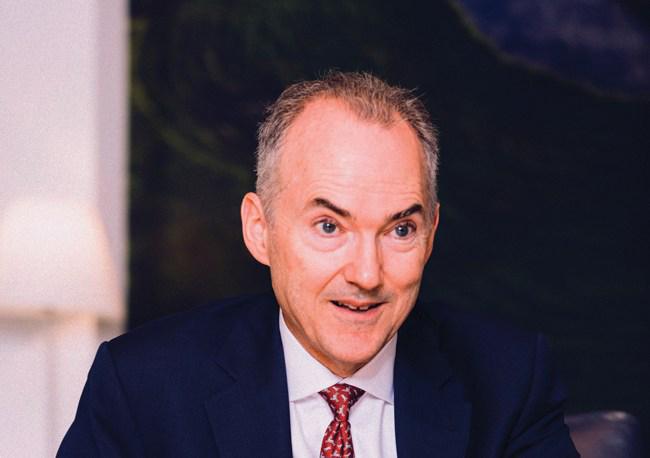
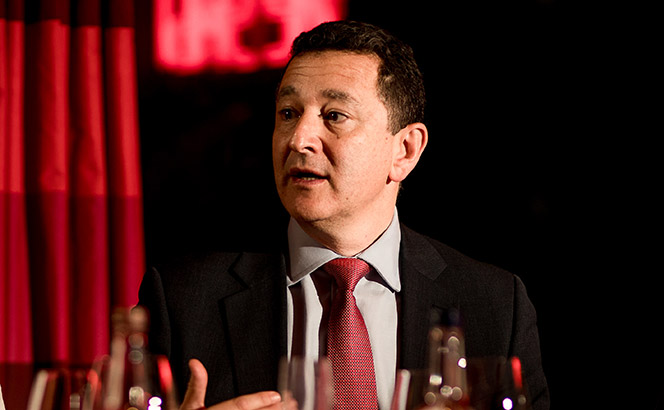
Edward Murray, 60, co-founded Allen & Overy (A&O)’s derivatives practice in 1991 while still a senior associate and was until 2013 the senior partner in its derivatives and structured finance group. On 1 October, The Honourable Mr Justice Murray became one of only three solicitors in history to be appointed directly from private practice as a High Court judge. He will sit in the Queen’s Bench Division. We sat down with the City veteran to talk about an unusual journey.
Taking the gloves off
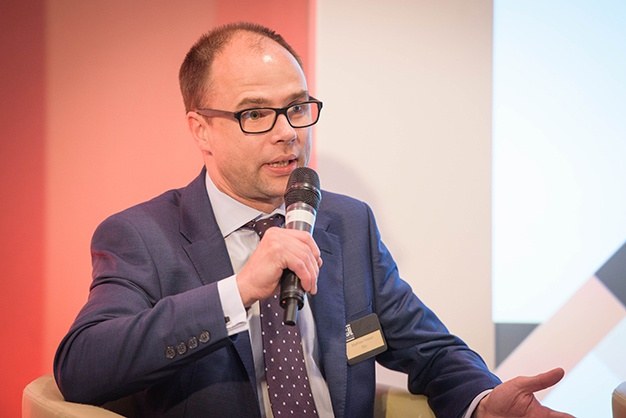
The penultimate session of the 2018 Commercial Litigation Summit drew a large audience to hear the views of the most important players in a major dispute – GCs and senior in-house counsel. This debate featured a panel of two private practice litigators – Jenner & Block’s Jason Yardley and Simon Bushell from Signature Litigation, and two senior in-house counsel – Matthew Hibbert of Sky and Tarun Tawakley of Deliveroo. In the middle was a barrister, moderating – Richard Lissack QC of Fountain Court – and a PR veteran, Tim Maltin. Continue reading “Taking the gloves off”
‘Part of a wider trend’: Flexible lawyering start-up Lexoo secures $4.4m for business development overhaul
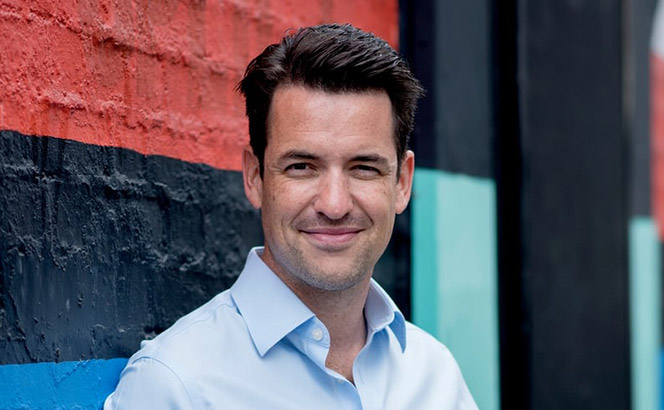
Often described as the legal equivalent of Uber, flexible lawyering start-up Lexoo has secured $4.4m in financing to overhaul its global business development.
The backing has been led by investment house Earlybird with additional financing from Forward Partners and Zoopla general counsel (GC) Ned Staple. Continue reading “‘Part of a wider trend’: Flexible lawyering start-up Lexoo secures $4.4m for business development overhaul”
Linklaters sets sights on future talent as it raises trainee and NQ salaries for second time
Linklaters has announced the second increase in its trainee and newly qualified (NQ) salaries this year, with the latter now bringing home £83,000 in basic pay.
NQs have seen their basic pay increase by £2,000 since the firm last increased its rates in May, while trainees in year one have become the highest paid in the Magic Circle after remuneration rose by £3,000 to £47,000. Second-year trainees have seen salaries grow by £3,500 to £52,500. Continue reading “Linklaters sets sights on future talent as it raises trainee and NQ salaries for second time”
‘The right opportunity’: HFW reacts to client demand with strategic consultancy business
Maritime and insurance specialist HFW has set up a standalone consultancy arm, branded HFW Consulting.
The new business, launched today (3 October), will be headed up by the firm’s director of learning and development, Chris O’Callaghan, and will initially focus on Middle Eastern, Asian and Australian clients. Continue reading “‘The right opportunity’: HFW reacts to client demand with strategic consultancy business”
Disputes round-up: SFO abandons privilege appeal as funder Burford raises £193m
The Serious Fraud Office (SFO) has cut its losses after last month’s landmark Court of Appeal privilege judgment, opting not to appeal the decision.
In the case against the Eurasian Natural Resources Corporation (ENRC), the SFO was denied access to a series of documents that the mining giant claimed were protected by legal professional privilege (LPP). Continue reading “Disputes round-up: SFO abandons privilege appeal as funder Burford raises £193m”
Workplace law: Doyle Clayton
UK Immigration – Rumsfeld déjà vu
Known knowns, known unknowns, unknown unknowns and…
There are few UK organisations where EU citizens living in this country are not clients or customers or, more importantly, employees. Throughout the private and public sectors – from chief executives through to middle management and minimum wage workers, EU citizens have been a cornerstone. Without them – the economic recovery, our attraction to foreign businesses and, of course, investors and entrepreneurs would all have been weakened. Continue reading “Workplace law: Doyle Clayton”
Kirkland continues inexorable rise with record 122-strong promotions round – including 10 in London
In a move befitting of its unstoppable upward trajectory, Kirkland & Ellis has scored a new record in partner promotions, making up a striking 122 partners, of which 10 are in London.
The overall tally across the Chicago-bred firms 14 international offices is an increase on last year’s mammoth round, which saw 97 new partners created, with 13 minted in the City. Continue reading “Kirkland continues inexorable rise with record 122-strong promotions round – including 10 in London”
Five stand as CC kicks off senior partner race but early favourite Sandelson not in contention
Leadership at Clifford Chance (CC) has over the last 20 years swung wildly between prestige and poisoned chalice but the just-launched race to become the London giant’s new senior partner shows no shortage of candidates.
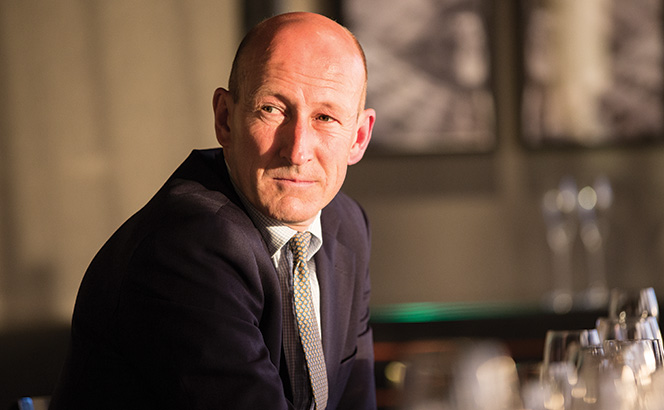
Former London head David Bickerton (pictured) and ex-Europe chief Yves Wehrli launched their bids to become CC’s next senior partner, Legal Business has learnt. Other prominent figures in the race to replace Malcolm Sweeting after eight years include insurance head Katherine Coates, former capital markets chief David Dunnigan and continental Europe litigation chief Jeroen Ouwehand. Continue reading “Five stand as CC kicks off senior partner race but early favourite Sandelson not in contention”
City job cuts loom as Bakers puts 300-plus business staff under consultation in efficiency drive
Support roles in the City are under threat again as Baker McKenzie has launched a review of its entire London professional and business services (PBS) staff, estimated to include around 350 people.
Kicking off at the end of this month as part of the firm’s drive to improve profitability, the consultation will affect Bakers’ finance, business development, knowledge management, human resources, marketing and communications teams. A spokesperson for the firm said a decision had yet to be reached as to how many roles will be impacted. Continue reading “City job cuts loom as Bakers puts 300-plus business staff under consultation in efficiency drive”
International round-up: HFW opens in Abu Dhabi as Morgan Lewis hires new Tokyo head
HFW has added a fifth office in the Middle East, launching in Abu Dhabi after a double-partner hire from US firm Reed Smith.
Finance and corporate partners Vince Gordon and Tania de Swart have made the switch, with Gordon previously acting as Reed Smith’s managing partner for the Middle East. Continue reading “International round-up: HFW opens in Abu Dhabi as Morgan Lewis hires new Tokyo head”
Pre-float DWF aims to sustain momentum with exclusive US alliance with 56-partner LA firm
DWF’s recent eye for international expansion has been extended to the US through an exclusive association with Los Angeles-based Wood, Smith, Henning & Berman (WSHB).
WSHB is much smaller than DWF, with revenue of just $81m and 56 partners across 22 offices in the US, but DWF managing partner and chief executive Andrew Leaitherland says the firms have a number of mutual clients, particularly international insurance businesses. Continue reading “Pre-float DWF aims to sustain momentum with exclusive US alliance with 56-partner LA firm”
Adviser reviews: Lucozade Ribena Suntory completes first post-merger panel
Eversheds Sutherland has won the role of primary UK and Ireland adviser in Lucozade Ribena Suntory’s (LRS) inaugural legal panel review, with nine other firms also making the cut.
The review was a first for general counsel (GC) Mary Guest since joining the drinks giant from Magic Circle firm Linklaters in June 2017, and it is also the first since LRS was formed after Lucozade and Ribena were acquired by Suntory for £1.35bn in 2013. Eversheds will be top of the list for general matters, with the remaining nine firms offering more specialist advice. Continue reading “Adviser reviews: Lucozade Ribena Suntory completes first post-merger panel”
‘Filling in the gaps’: Bircham Dyson Bell and Pitmans eye ABS transition with merger
The partners of Bircham Dyson Bell and Pitmans have voted for a £50m merger and move to an alternative business structure (ABS).
The pair announced today (28 September) that the respective partnerships had overwhelmingly approved the tie-up, which is hoped will propel them into the top 50 of the UK’s law firms. It first announced the plans earlier this month bolstering flagging revenue figures at both firms and align their complementary practice areas. Continue reading “‘Filling in the gaps’: Bircham Dyson Bell and Pitmans eye ABS transition with merger”
‘It’s a marriage of convenience’: Gordon Dadds to make its big splash as Ince merger talks intensify
Gordon Dadds has emerged as the unlikely rescuer to ailing Ince & Co, with the two outfits in merger discussions to create the UK’s largest listed law firm.
The seismic move will create a £114m turnover firm called Ince Gordon Dadds. Gordon Dadds is currently in the due diligence stage, but a partnership vote is yet to take place. Continue reading “‘It’s a marriage of convenience’: Gordon Dadds to make its big splash as Ince merger talks intensify”
‘Going gangbusters’: Freshfields’ woes continue as corporate partner Qureshi joins Fried Frank
A further exit from Freshfields Bruckhaus Deringer’s City bench has seen corporate and capital markets partner Ashar Qureshi join the London offices of Fried, Frank, Harris, Shriver & Jacobson.
The move sees the well-respected Qureshi leave the Magic Circle firm after four years as a partner in its global transactions practice. The US securities veteran was seen as a significant string to the bow of Freshfields’ US-qualified offering when he joined in 2014. Continue reading “‘Going gangbusters’: Freshfields’ woes continue as corporate partner Qureshi joins Fried Frank”
In conversation: Supriya Gogia, Legal Counsel, Asics
GC: Tell me about your role and how you came to be at Asics.
Supriya Gogia (SG): Asics opened its Southeast Asia regional headquarters in 2012 here in Singapore. I joined Asics in 2016. Prior to this, I was working for a retail e-commerce company which was a first mover in the region. After a good run with online retail, I was looking to get some hands-on experience in offline retail as well. That’s how Asics happened. Asics has been in the region for six years. It has expanded exponentially during this period. Asics started off fairly early in Europe, and America, and other regions in the world, purely because these regions were seen to be more health conscious and sports-centric back then. This consciousness came to SE Asia in the last 15 to 20 years or so, and now the fitness industry in Asia Pacific is worth a whopping $16.8 billion – the highest value ever. There hasn’t been a better time to be here.
GC: It must be quite interesting for you – as you said you started in the online retail business and then moved offline – what was that transition like?
SG: E-commerce in Southeast Asia has been very hot for the last five years, as it is elsewhere in the world. The only impediment in Southeast Asia is that regulations and laws catch up slowly with technology. Technology is moving much faster than legislation, and this game of playing catch-up sometimes ends up impacting the industry adversely. In-house counsel need ratification for creative business models that companies are trying to implement; when we go to external counsel, they do not necessarily have black and white advice because the industry is nascent, it’s very niche, and there are very few companies which are acting as disruptors and pushing boundaries. At the same time, jurisdictions are in the midst of formalising relevant legislation, which makes it imperative that we work closely with external counsel as well as government authorities. Regulations in different countries in Southeast Asia keep evolving and it’s important for us to understand if any upcoming legislation is going to have an impact, either positive or negative, on existing business plans.
For me, the move from e-commerce has been very interesting indeed. Offline retail is more traditional, organised and risk averse as compared to e-commerce, even regulations concerning offline retail are better set out. There is a lot to learn as counsel because most consumer retail brands take pride in store concepts and their existence, which means both offline and online sales channels are important for consumers. As such, being in a spot which is ever-changing and still very new is quite challenging, but it’s equally interesting if you want to be an industry expert. My experience has been very fulfilling and I think these skills become advantageous along the way. All companies want to be online – most of them are there already – so it is a very interesting prospect for my personal growth and contribution to the retail industry. Omni-channel experience is something that is likely to become more of a necessity than choice.
GC: Do you have any sense of why e-commerce has exploded the way it has, in Asia specifically?
SG: Yes. I feel the reason for that is: one, Asia has a relatively younger population, compared to other parts of the world. And secondly, I feel that when you talk about the fourth revolution, it is different from the first three because the first three began in different parts of the world – the first one started in Britain, the second in North America and so on, but I feel the fourth industrial revolution – and this is completely a personal opinion – it started all over the globe, all at once. For instance, even if Apple is designing a phone in California, there is a manufacturer assembling it in China. It is a very collaborative revolution, where countries are coming together to give the end product to the consumer. This is what makes Asia very relevant in this revolution because it is not left behind, it is in fact playing a very significant role. This e-commerce explosion is also partly due to cheaper labour costs and strengthening of the manufacturing industry in this region. Because labour is cheaper in Asia, we have a growing service industry which is well equipped to support e-commerce operations and a massive manufacturing set-up. These are industries which give a strong foundation to e-commerce.
GC: Asics is looking to increase presence in other markets in Southeast Asia soon – how do these markets differ from those where Asics is already well-established?
SG: Asia is unique in that sense. Not all Asian countries offer seamless market entry for foreign companies, some economies are closed and protected. When a Japanese company like ours wants to establish a foothold – it’s not free entry. For some countries you either need to partner with a local venture or you need to invest additional capital to be able to engage in industry-specific activities. That said, these markets have immense potential for expansion, with a growing middle class and a surge in awareness surrounding fitness and sporting goods. We work very closely with external counsels in these countries since language can be a barrier at times. The majority of government documents in Vietnam, Indonesia and Thailand are in local languages which require local expertise to decipher.
GC: As a large, recognisable brand, intellectual property must be of particular concern. Could you talk a little about that?
SG: Yes. Intellectual property is the most valuable asset for any global company – for consumer goods it’s the most important piece of brand management. As I mentioned before, the bulk of manufacturing for consumer goods is done in Asia, and this comes with a downside for brand protection. There could be instances where one factory might be manufacturing goods for different brands, and no matter how well you articulate the liability clauses, how meticulous your contracts are, there is bound to be leakage. Leakage is when original products are leaked through the factories into open markets. Brands also face issues of counterfeit products, which originate from factories which create copies of authentic products. When you operate in a region that manufactures, you have to be extra cautious of these infringements, which are potential high risks for the brand.
GC: Is there anything that you see coming on the horizon that might affect the industry?
SG: I do think the concept of augmented reality is quite intriguing, as well as the trend of pop-up stores – which is quite common in Asia – where you can try a pair of footwear, get the “touch and feel” of the product and use a tablet or iPad available at the pop-up to order that product. The product could be delivered to your address the very same day. You don’t need to stock up inventory, the space required is minimal, which ensures you don’t pay exorbitant high street rentals and human resources involved are far less. I do foresee this as being a popular way to shop for countries where internet penetration is high.

‘It hasn’t been easy’: Fieldfisher concludes European odyssey with long-awaited Spanish launch
Fieldfisher’s recent frenetic push into key European markets has culminated today (25 September) with a much-anticipated tie-up in Spain with local firm JAUSAS.
The combination, which will operate under the firm’s Swiss Verein structure, gives Fieldfisher access to offices in Barcelona and Madrid under the name Fieldfisher JAUSAS, a long-stated ambition of managing partner Michael Chissick. Continue reading “‘It hasn’t been easy’: Fieldfisher concludes European odyssey with long-awaited Spanish launch”
Levine bids for second managing partner term as DLA kicks off election
DLA Piper’s partnership is headed to the polls again for its managing partner election, less than a year after eight partners competed in the firm’s first contested senior partner election in a decade.
Incumbent managing partner and co-chief executive of the global giant, Simon Levine, is standing for re-election. Nominations for candidates close Friday 5 October but if nobody else stands, Levine will be re-elected on 8 October. Continue reading “Levine bids for second managing partner term as DLA kicks off election”
Deal round-up: Travers advises Shazam on Apple buyout as Freshfields and Norton Rose strike gold on $18bn mining merger
In the latest flurry of deals, Travers Smith has represented popular mobile app Shazam on its buyout by tech giant Apple, while a raft of international firms have benefitted from recent transactional activity.
Shazam, which was founded in 2002, is a song recognition app which can identify what music is playing via a phone’s inbuilt microphone. The deal for Shazam, reportedly worth $400m, will see Apple offer the app on an ad-free basis for all users. Continue reading “Deal round-up: Travers advises Shazam on Apple buyout as Freshfields and Norton Rose strike gold on $18bn mining merger”