Ashurst sets sights on funds and Brexit fallout work with new Luxembourg arm

Ashurst is targeting a significant uptick in its European funds offering, having received licence approval for a new Luxembourg office from the country’s Bar association.

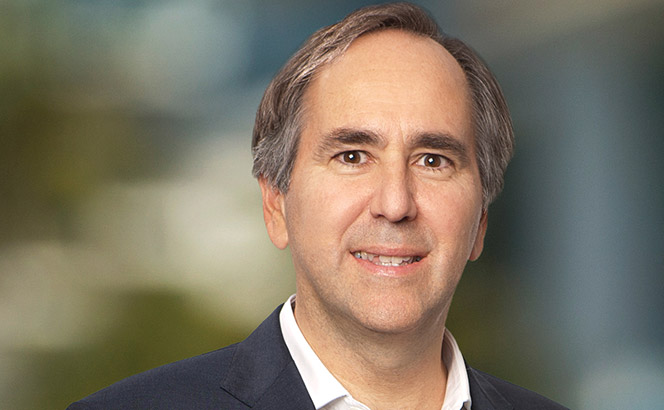
Corporate partner Isabelle Lentz – currently head of its Luxembourg desk in London – will take the helm at the new outpost, which is set to open in October. Continue reading “Ashurst sets sights on funds and Brexit fallout work with new Luxembourg arm”

Another big-dollar mandate for Travers as Micro Focus sells software business to EQT

Extending beyond its reputation for outstanding mid-market deal work, Travers Smith has once again put its name to a multibillion-dollar deal as IT company Micro Focus sells its open-source software business SUSE for $2.5bn.

Swedish private equity group EQT Partners is on the other side of the table and turned to US giants Latham & Watkins and Milbank, Tweed, Hadley & McCloy to advise on the acquisition. Continue reading “Another big-dollar mandate for Travers as Micro Focus sells software business to EQT”

Dealwatch: Europe provides rich pickings for City firms and US giants

Michael Immordino
  • White & Case and a group of Italian elite independents advised CVC Capital Partners on the €3bn acquisition of a 52% stake in Italian drug maker Recordati from the family of the company’s founders. The US firm’s Milan office founder Michael Immordino (pictured), London partners Mike Weir, Steven Worthington, Martin Forbes and James Greene were part of the team alongside Milan-based Ferigo Foscari, Leonardo Graffi, Iacopo Canino and Alessandro Nolet. Italian PE firm Gattai Minoli Agostinelli & Partners also acted for CVC with founder Bruno Gattai and partners Gerardo Gabrielli, Nicola Brunetti and Lorenzo Cairo. Pedersoli advised Recordati’s shareholders, led by Carlo Pedersoli.

Continue reading “Dealwatch: Europe provides rich pickings for City firms and US giants”

Freshfields and King & Spalding secure mandates as Equitable Life completes its turnaround with £1.8bn sale

City of London

Equitable Life put pensions at risk when it nearly collapsed in 2000. But 18 years on it has completed its turnaround with Life Company Consolidation Group (LCCG) agreeing to acquire the UK’s oldest life assurer for £1.8bn.

Equitable Life turned to Freshfields Bruckhaus Deringer, which fielded a team led by corporate insurance partner George Swan and included restructuring and insolvency specialists Neil Golding and Craig Montgomery. Continue reading “Freshfields and King & Spalding secure mandates as Equitable Life completes its turnaround with £1.8bn sale”

The new outlook for City leaders – Casinos hitched with a utility

Clifford Chance

Through much of 2018 the talk has been that major City firms have been extraordinarily busy. GDPR, a rebound in transactional activity as deals put on hold by Brexit are pushed through, a robust showing from the global economy…

And this has translated into… not that much. London’s Big Four Magic Circle firms have packed in closely this year, with revenues up between 4% and 6%. True, in contrast to 2016/17, when currency movements flattered subdued underlying results, this year they have performed modestly better than the headline numbers suggest. But for those whose memories stretch to the 1990s through to 2008, when ‘really busy’ meant routinely sticking 10% to 15% like-for-like on the top line, this remains a very different environment. Continue reading “The new outlook for City leaders – Casinos hitched with a utility”

Law firm IPOs still don’t make much sense (but soon could)

London Stock Exchange Finance

‘Who would possibly invest in a law firm?’ asks one leader this month, reflecting a common view. Yet the current vogue for floating law firms suggests momentum is indeed building, more than a decade after the introduction of the Legal Services Act. In recent weeks, DWF has turned heads with talk of a £1bn float this year. While the price – not officially attributed to the firm – looks fanciful, even a standard £400m-£600m valuation would be by some way the largest legal float yet seen. The last 12 months have seen a series of offerings, with Knights in June raising £50m and others recently braving the market, including Rosenblatt, Gordon Dadds and Keystone Law. And while larger commercial law firms publicly play down the prospects of raising outside capital, there is no doubt it is now getting more active consideration.

Yet for institutional lawyers, the basic tension in attracting outside shareholders remains. Large law firms generate plenty of capital and have the advantage of an owner/manager structure that closely aligns to the business’ needs and interests. It has never been that clear how the very different incentives of outside investors can be aligned with partners, beyond giving a payout to older partners, a poor outcome for the business as a going concern. Law firms are built on ‘elevator assets’, partners bred to expect huge autonomy make a lousy bet for outside shareholders. Continue reading “Law firm IPOs still don’t make much sense (but soon could)”

The Last Word: The Big Long

Gideon Moore

From Trump and Brexit to debt and tech, we ask Global 100 leaders for their assessment of a turbulent 12 months

Trouble ahead

‘Confidence is pretty high, but there are some significant challenges ahead. The growth of tech is going to have a transformational impact, which is going to increase in velocity over the next year or two. At some point we are due for a recession. It is going to happen soon and Trump’s trade war could provoke it.’
Peter Martyr, global chief executive, Norton Rose Fulbright Continue reading “The Last Word: The Big Long”

Comment: A new Global 100 elite emerges as the old ones decline

In the summer of 2017 the world’s top law firms were looking at their next financial year with scant optimism given a turbulent geopolitical backdrop and uncertain economic headwinds. As it turned out, driven by a robust global economy, bullish investors and a re-born enthusiasm for cross-border transactions, the 2017/18 season proved kinder than forecast, equating to one of the stronger years seen by the Global 100 since the banking crisis recast the industry.

Assisted by consolidation, the 100 drove their collective top line up $6bn to reach $104.4bn. US-centric firms heavy on marquee transactions and private capital made the best showing – it was a relatively subdued 12 months in the vast US disputes market, hitting firms overly exposed to it. Continue reading “Comment: A new Global 100 elite emerges as the old ones decline”

Lucky seven: Stevens & Bolton reveals seventh year of growth and posts record partner profits

car following road sign to global britain

Continuing its consistently impressive organic growth, South East heavyweight Stevens & Bolton has posted a 9% hike in turnover to a new high of £26.8m, as the firm maintains its climb up the Legal Business 100.

Profit per equity partner, meanwhile, also hit a record high in 2017/18, increasing by 25% from £330,000 to £411,000. The results mean the Guildford-based firm has secured consecutive growth for the last seven years, with heightened activity in corporate, employment and pensions all contributing. Continue reading “Lucky seven: Stevens & Bolton reveals seventh year of growth and posts record partner profits”

Disputes round-up: Vannin Capital hires Fountain Court’s Martenstyn as managing director as Stewarts makes litigation tech play

In a further indication of the growing prominence of litigation funders, Vannin Capital has turned to Bar stalwart Paul Martenstyn for its new managing director as Burford Capital announces a robust 17% increase in income.

Elsewhere, Stewarts has struck a partnership with tech start-up Solomonic, while the Supreme Court has ‘with reluctance’ dismissed the appeal of a wife who wants to divorce her husband in the Owens v Owens case. Continue reading “Disputes round-up: Vannin Capital hires Fountain Court’s Martenstyn as managing director as Stewarts makes litigation tech play”

Foreign investment in Israel

Israel has been, and continues to be, a highly desired market for foreigners to invest in. 2017 saw total Israeli exit transactions of approximately $23 billion, including Mobileye for $15.3bn. Though this is down in terms of volume, it is up in terms of value. This is perhaps an indicator that the Israeli market is maturing and that Israeli entrepreneurs are now more able and willing to grow their companies to the point of significant market share, or past an IPO, prior to exit, as opposed to historical trends of those entrepreneurs looking for a quick exit. Continue reading “Foreign investment in Israel”

NRF loses veteran litigator Eastwood to Mayer Brown in further exit as Reed Smith scoops Pinsents’ Middle East head

Mayer Brown

Mayer Brown and Reed Smith are continuing their recent expansion trajectories, this time at the expenses of Norton Rose Fulbright (NRF)’s London base and Pinsent Masons’ Middle East operations.

NRF saw the exit of one of its most senior London partners as veteran litigator Sam Eastwood headed for the door after three decades to join Mayer Brown. Continue reading “NRF loses veteran litigator Eastwood to Mayer Brown in further exit as Reed Smith scoops Pinsents’ Middle East head”

Deal watch: HFW acts for Greek government on major state sell-off while US firms score heavyweight mandates

In a deal of major national significance, Holman Fenwick Willan (HFW) and Clifford Chance (CC) have advised the Greek state on the €535m privatisation of its gas network. Meanwhile US leaders  Kirkland & Ellis, Weil Gotshal & Manges and Jones Day have also acted on substantial buyouts recently.

The sale of the natural gas transmission system operator, DESFA, is part of Greece’s wider strategy of disposing assets to reduce the country’s debt following the financial crisis. The deal implies a total equity value for DESFA of €810m. Continue reading “Deal watch: HFW acts for Greek government on major state sell-off while US firms score heavyweight mandates”

#MeToo: MPs slam ‘utterly shameful’ inaction on sexual harassment amid calls for an overhaul of NDAs

Harvey Weinstein

A parliamentary select committee has blasted employers and regulators for failing to tackle sexual harassment in the workplace and has called for a clamp-down on the use of non-disclosure agreements (NDAs).

The report by the Women and Equalities Committee on sexual harassment in the workplace published today (25 July) is the culmination of an enquiry launched by MPs in the wake of the #MeToo movement that saw the legal profession’s handling of these situations thrust into the spotlight. Continue reading “#MeToo: MPs slam ‘utterly shameful’ inaction on sexual harassment amid calls for an overhaul of NDAs”

Foreword: Barry Wolf

At Weil, we consider ourselves strategic business partners with our clients – you, the general counsel of large public companies, complex financial institutions and sophisticated private equity firms. In my 35 years practicing and running the firm at Weil, I have seen how tremendously the role of general counsel has evolved and expanded over the past four decades. The legal head of a large organization has always borne the heavy burden of ensuring excellence across their legal departments, management and oversight of all risk mitigation systems, and the development and enforcement of quality corporate governance protocols. But today, we are seeing the fusing of all these responsibilities with the business operations and over-arching corporate strategy. Senior lawyers are expected to be providing business judgement as well as legal judgement.

As a result, I’ve seen the role that we play, as outside counsel to our clients, also shift in that time. As we heard from the in-house lawyers who contributed to this report, there is now an interconnectedness of all business, strategic and legal issues. We carefully analyze legal issues for our clients, but we do not stop there. We supply commercial and business judgement, to help them answer that key question: ‘What should I do here?’ This makes for a dynamic time to be a lawyer, whether you are in-house or outside counsel.

I’ve also felt, more and more in recent years, that the legal leaders in organizations are expected to be responsible and responsive corporate citizens – far beyond the walls of their organization. We have always embraced that at our law firm, but now employees want their leaders to have an active voice on global issues that are impacting their lives – whether in or outside of the workplace. Again, this provides in-house legal teams and corporate management with a real opportunity to engage in a dialogue with their employees and address important cultural and social issues. It can forge and strengthen the bonds of loyalty so vital to an organization’s success.

There will always be new and changing developments to the practice of law and the issues facing in-house teams. What will never change is the need for bright, driven, collegial, diverse and adaptive lawyers to fill these roles. As the world and businesses grow more complex, the in-house leaders, including those profiled in these pages, will have the opportunity to be business as well as legal strategists. It’s exciting times, and I congratulate all of the dynamic and diverse GCs featured in this issue.

Barry Wolf Executive Partner Weil, Gotshal & Manges LLP

Tony West, Chief Legal Officer, Uber

I was one of these people who actually did not have a burning desire to become a lawyer. I was much more interested in public service, politics and policy, and I decided that I needed to go to law school so that I could have a marketable skill if a career in public service didn’t work out. But I discovered, to my surprise, that I really enjoyed the law.

I spent the first part of my legal career as a federal prosecutor. After I left that, I ended up spending several years at a law firm where I learned civil litigation. But I always harbored my love for public service and so when President Obama asked me to join his administration, it was a great honor and a privilege to go back to the Justice Department, first as the head of the Civil Division (which is the largest litigating division at the DOJ, with 1,000 lawyers) and then eventually as the third most senior official in the Department.

When I was coming to the close of my time at the DOJ, I knew a few things. I did not intend to remain in the administration to the very end, and I didn’t necessarily want to go back to a law firm. When you’re the Associate Attorney General of the United States, that’s sort of like being the general counsel of the Justice Department. There’s a set of skills and talents which are transferable to being the GC of a large company.

It’s always helpful to have the perspective of the regulators and to understand what they are trying to accomplish. I think oftentimes we find ourselves operating in stereotypes – if you’re in the public sector you have stereotypes of what you think people in the private sector are like, and vice versa. The experience of being on both sides of that line helped me to appreciate that there’s actually a lot of common ground and a real opportunity for people to reach resolutions that are mutually acceptable, but also to work together in a very collaborative way.

The other thing that was helpful was the experience of managing a large organization with many competing interests and, of course, one filled with lawyers. Being able to figure out how I could be most effective in that environment was extremely helpful when I became the general counsel of PepsiCo. And it’s extremely helpful to me now.

The learning curve at PepsiCo was steep, because I had never been in-house before. I had never been a business partner before. That made it critical that I immediately learned the business as best I could – and that’s exactly what I did. I got very granular, talking to business leaders and business colleagues throughout the company.

You are forging the law, you are on the cutting edge of creating a legal framework for the gig economy.

There’s no substitute for really learning the business, because your value as a lawyer to your business colleagues is enhanced when you really understand the problems they’re dealing with from their point of view. I think it helps you to come up with more creative solutions, and it helps you to give them advice that is actionable and useful.

That’s exactly what I’m doing at Uber – spending a lot of time with my team, the business teams, and spending a lot of time in the field, in markets like Latin America, which is currently our fastest growing market.

The greatest thing about Uber is that this is a company that is like no other. It offers a job or an economic opportunity to more people around the world than any other company on the planet. That is an amazing reach. This business model is so robust, it is so widespread, it has its reach in so many corners of the world, that you become very aware of the public trust that you have – because so many people rely on your platform to either move themselves or their loved ones from A to B and so many people rely on this platform for economic opportunity. So many cities are increasingly relying on the data we have on our platform to help them make better planning decisions so they can become more sustainable places for their citizens to live and work. To be a part of that, to be an engine for that, and to be able to advise on the development of that is extraordinarily exciting.

The other thing that’s really extraordinary about this place if you’re a lawyer, is that you work on issues which, if they get themselves into the court system, almost inevitably become issues of first impression. It means you are forging the law, you are on the cutting edge of creating a legal framework for the gig economy – and for a lawyer, that is an incredibly exciting environment to work in.

One of the things that being at a company like Uber forces you to do is to look at the existing paradigm, the existing legal framework, and then think very creatively and innovatively about ways in which you can address the basic values that that framework is trying to protect and do it in a way that actually fits the reality of how people live and work.

For instance, something that’s at the heart of our business model is the independent contractor model – the question of whether Uber is an employer of drivers or whether those drivers are independent contractors. We’re all operating within a framework that was constructed for very good reason over a century ago, and the question – can we preserve the values that framework is seeking to protect, creating a safety net for individuals when they change jobs or decide to move to a work environment that allows them to value their time and their freedom and liberty and flexibility? – can’t be a false choice between flexibility and having an array of benefits or a safety net that will help people retire with dignity, that will protect them when they get sick. Being a part of really pushing that conversation and creating a new legal paradigm that fits today’s reality and today’s economy – being a lawyer at Uber gives you the opportunity to play a very significant role in that.

You have to think of yourself as a counselor and partner who can provide legal advice.

One of the things I’m most proud of here at Uber is that we were able to resolve what was our biggest private litigation, the Waymo case, so quickly. I think the fact that we were able to resolve that and the way we were able to do it not only demonstrates that we’re serious about turning the page on the way things operated and that we are serious about striking a new tone, but I think it also creates a path to greater collaboration and co-operation with a company that, just a month ago, was a big adversary.

One of the things I’m most proud of at PepsiCo is that we were able to really enhance our position as an ethical business leader while I was there. I’m excited about bringing some of the innovations and approaches that we developed when it comes to compliance, ethical leadership and integrity in the way that we do business from PepsiCo to Uber.

The other thing I’m proud about at PepsiCo is the work we did to enhance diversity in the legal profession. We were able to create incredibly diverse legal teams, because we know that when we bring diverse voices around the decision-making table we can make better business decisions, and I look forward to doing that here.

Particularly in technology companies, like this one, where there’s a premium placed on innovation and on speed, the general counsel role is extremely important. I always focus on the ‘counsel’ part. You cannot come to this role and think of yourself as a lawyer. You have to think of yourself as a counselor and partner who can provide legal advice – but also general counsel to your business partner on legal, business, policy and reputational issues.

I don’t think Dara [Khosrowshahi, CEO at Uber] has ever asked me what’s the law on this, or what’s the law on that. He needs to know my judgement and my approach – and that will be informed by my legal judgement, but what he’s looking for is counsel. That is really what I want all of my lawyers in the legal department to begin to think of themselves as – they are business partners who need to give sound counsel to their business colleagues – and if someone is interested in this role, that’s what they have to prepare themselves to do.