
Disruption is heading in-house. Discuss

A lively debate over coffee recently with Axiom founder Mark Harris took me back to the discussion that manifests most frequently in my line of work these days: the extent that legal services are transforming with new providers and tools.

While Harris highlights many genuine changes in the industry and buying behaviour we disagree on whether this represents a fundamental shift. He sees the rule changing, for me it remains the exception. To be clear, I am an admirer of Axiom as a pioneer that has been a positive competitive force. And as the architect of the world’s most prominent New Law brand, Harris is positioned to see the bleeding edge of change.

Axiom is now betting on huge advances in technology to revolutionise the way clients create and manage contracts. There can be no sensible dispute that sophisticated automation will ultimately transform how companies and legal professionals approach contractual positions, though what that will ultimately mean is far harder to predict. Utopians cast technology as slashing costs to handle existing work. Were aggregate liabilities stable that would likely happen. But not only can that stability not be taken for granted, the recent path of technology suggests quite the contrary. The proliferation of electronic data has, for example, seen the costs of disclosure in litigation and compliance in general explode as more information becomes open to capture.

Consider the notion of all companies grasping their technical assets and liabilities at all times via technology – that would be an exponential rise in inter-party liability. Will that save money? The counter argument of technologists is: ‘Be patient and costs will ultimately fall.’ With something as narrowly defined as litigation disclosure, that may be true. The vastly more complex ecosystem of the globalised economy is another matter entirely.

But the more immediate issue for general counsel raised by New Law service models and technology is what it will ultimately do to in-house teams themselves. In many contexts, this debate has been framed as one of conventional law firms being disrupted while in-house teams drive change merely as empowered customers. Such a reading defies economic realities and wider trends that have seen companies rethink functions like finance and HR in the face of new technology and options to outsource.

In-house counsel have come a huge way in recent years in sophistication and contribution to business but companies are in the business of business, not legal services and good lawyers are hugely expensive to hire. Privately, more GCs are now talking of the likelihood that disruption and technology will rapidly change the skillsets and size of in-house teams, perhaps leading to dramatic staff reductions. Is it sustainable for some companies to have legal teams that rival the size and cost base of major law firms?

The issues such discussions raise are complex and unpredictable and I won’t insult readers’ intelligence by pretending to have the answers. But these strike me as the kind of questions GCs need to be asking. Because I agree with Harris on one fundamental point: the pressure for substantive change in the legal services market is building. When that pressure finally overwhelms the defined order of the profession, I would not bet on an orderly outcome.

[email protected]

Deal watch: City high-flyers land jumbo £4.4bn BA pension deal as Blackstone’s buying spree continues

British Airways plane over City

City heavyweights Allen & Overy (A&O), Clifford Chance (CC) and Eversheds Sutherland have landed key roles on Legal & General’s £4.4bn buy-in of the British Airways pension scheme as advisers cash in on a brace of Blackstone deals.

UK insurer Legal & General is taking on £4.4bn of historic pension liabilities relating to the Airways Pension Scheme (APS) in a bulk annuity designed to reduce risk in the scheme. Continue reading “Deal watch: City high-flyers land jumbo £4.4bn BA pension deal as Blackstone’s buying spree continues”

The no-plan plan – MoJ sets out disputes contingency guidance for a no-deal Brexit

As the UK careens towards the March 2019 deadline, the Government has released a contingency plan outlining rules for cross-border European disputes in the event of a no-deal Brexit.

Guidance was published yesterday (13 September) by the Ministry of Justice (MoJ), with the main conclusion that if no arrangement is reached with the EU, the UK will have to rely on domestic common law rules currently applied to cases involving non-EU countries for cross-border European disputes. Continue reading “The no-plan plan – MoJ sets out disputes contingency guidance for a no-deal Brexit”

Client profile: Julie Smyth, BAE Systems Air

Julie Smyth

‘My husband has virtually no understanding of what I do,’ admits BAE Systems Air chief counsel Julie Smyth. ‘He thinks I sit in meetings all day.’

Secrecy and security at the £18bn defence multinational is paramount. Its mammoth Warton airfield base, which dominates the village of the same name a short drive from Preston, is classified as a ‘List X’ site, meaning it can hold UK Government information considered ‘secret’ and above. Continue reading “Client profile: Julie Smyth, BAE Systems Air”

Life during law: Simon Konsta

Simon Konsta

My father is Greek, my mother was English. There’s been no law in the family, much more of a trading background on my father’s side. But there is a wonderful circularity between his old Greek shipping mates that would be in my environment as a child, and the fact that Clyde & Co is the world’s number one marine firm.

I had an open mind going into articles. I was lucky to have a seat in Paris, which is disputes and arbitration. A combination of that plus the domestic disputes work I did, I just preferred it to corporate or real estate. Continue reading “Life during law: Simon Konsta”

Grieve on Brexit: No great advantage

Dominic Grieve MP

Alex Speirs: Now less than a year out from the UK’s scheduled withdrawal from the EU, how would you characterise the current state of negotiations?

Dominic Grieve: They’re not going well at all. We are not talking the same language. The UK is seeking a bespoke deal recognising our past membership of the EU, our desire to maintain very close links with the EU in a wide range of fields, to have as near frictionless as possible trade in goods and services, and to participate in a vast range of EU peripheral activities. But we want freedom to operate our own immigration policy, not have freedom of movement, the ability to do third-country trade agreements and the ability to deregulate or change the regulatory framework in areas. Continue reading “Grieve on Brexit: No great advantage”

The talent debate: The war rages on

Sarah Wiggins

James Tsolakis, NatWest: One of the great challenges setting this up with Alex is in the long period I have been a banker to the legal profession, the rate of change is faster than I have seen for a long time. The challenge was defining the discussion. It could have been IPOs, artificial intelligence, international expansion – any number of things. I am pleased we chose a subject that will ultimately touch all these other subjects driving change in the sector.

Alex Novarese, Legal Business: Kicking off, Sharon, what worries you about talent? Continue reading “The talent debate: The war rages on”

Letter from… Moscow: Apocalypse now beckons as sanctions and turmoil batter foreign lawyers in Russia

Moscow graphic

Remember the days when Russia was the El Dorado of the Western legal elite? Potent New York outfits like Cleary Gottlieb Steen & Hamilton and Skadden, Arps, Slate, Meagher & Flom forged hugely lucrative businesses catering to Russian clients, while oligarchs and their top-dollar disputes were regulars in London’s commercial courts.

Just half a decade on and those days seem a distant memory. Chat informally with local partners and, once you get past the party line about it not being so bad, it is clear they are spending increasing chunks of their working lives merely trying to stay in the game. Continue reading “Letter from… Moscow: Apocalypse now beckons as sanctions and turmoil batter foreign lawyers in Russia”

Enterprise GC 2018: Tumbling into crisis

Gorilla graphic

Corporate crises are on the upswing. A faster-paced R&D cycle, improved but riskier technology, 24-hour news… the list of triggers goes on. But our understanding of such events has not always evolved at the same pace. We speak of a crisis as a single incident but, in reality, a chain reaction will likely ensue – and no sooner than one element appears under control, another pops up.

A tumble into crisis

Let us imagine a company that is consumer-facing and has a large, warehouse-based workforce. Imagine it makes toys, sells them online and is called ‘Tumble Toys’. Speed and efficiency in dispatching little Billy or Betty’s heart’s desire is one of its market differentiators – its marketing campaign features a gorilla called Tumble, who makes his way through various perils to ‘tumble’ into the child’s house in various amusing ways. As with many companies, Tumble Toys has outsourced warehouse staffing to a third party. Continue reading “Enterprise GC 2018: Tumbling into crisis”

Mega-deals and convergence stoke M&A but subdued volumes and volatile conditions linger

Andy Ryde

This time last year, a collective sigh of relief from City dealmakers was reverberating around the Square Mile as the M&A market regained momentum despite a backdrop of economic and political uncertainty. Since then, deal counsel have barely paused for breath, with many juggling multiple deals well into the parts of August in which even the most committed deal junkie would expect to be pretending not to check work emails on a sun lounger.

Such boom-time dynamics are borne out by the latest Mergermarket figures for H1 2018, which saw announced global M&A deals hit $1.94trn, its highest value since the financial crisis. Continue reading “Mega-deals and convergence stoke M&A but subdued volumes and volatile conditions linger”

Who Represents Who: The data behind the story

Freeths map

LB100: The rise of Freeths

Freeths has seen revenue almost double over the past five years (see Legal Business 100 table), and are often mentioned to our researchers by partners and general counsel alike as a firm that has significantly impressed. We take a look at the firm’s The Legal 500 rankings and some of the FTSE clients that it represents. Continue reading “Who Represents Who: The data behind the story”

LB100: Smoke, turmoil and a tonne of cash

'LB100 star' tattooed hands

The latest financial year has not been a vintage period for those wishing the legal industry would fall into concise patterns. Glancing at the LB100, separating the winners and losers by breed is more difficult than at any time over the last 20 years.

But murky as the picture is, some broad outlines can still be discerned. The 2017/18 season was one of the best 12 months of trading since the banking crisis a decade ago reset the legal market. Continue reading “LB100: Smoke, turmoil and a tonne of cash”

A decade since Lehman the profession still mired in the New Normal

Lehman Brothers

Within days of this issue hitting desks, it will be ten years since Lehman Brothers’ collapse marked what swiftly became the great financial crisis. That event was only the clearest symptom of a disease that had been infecting the banking system for more than a year before Lehman filed for bankruptcy on 15 September 2008.

Yet the process unquestionably signalled changes that have reverberated through economies, politics, business and, yes, the legal profession ever since. By the summer of 2009 the UK profession had for the first time engaged in industrial-scale job cuts, axing more than 5,000 roles at top 100 UK firms alone. Through the lens of the LB100, the profession starkly divides into performance patterns pre and post-Lehman. During the long boom, London’s elite was utterly untouchable. Within the Circle they could falter and scrap for fleeting inter-club advantage. But as far as the rest of the industry was concerned, they were in a world of their own. The initial advances of major US law firms had by the mid-2000s been comprehensively repelled – what chance did mid-tier rivals have? Continue reading “A decade since Lehman the profession still mired in the New Normal”

The LB100 overview: Crisis? What crisis?

LB100 Rock punk skeleton

Brexit negotiations stalling, trade wars looming, the high street hit by a raft of collapses – at first sight, there is plenty to suggest the UK has taken a trip back in time. Yet for those with a finger on the pulse in the City, it will come as no surprise to find this year’s Legal Business 100 (LB100) speaks of a standout year for Britain’s legal elite. Turmoil has mattered very little against the backdrop of booming transactional activity, interest rates near historic lows and the cheap pound.

While commercial lawyers spoke with wary optimism of healthy markets in the summer of 2017, caution progressively turned into bemused enthusiasm as the City realised it was living through its busiest winter for years during a period that seemed to resemble the Winter of Discontent. By spring, some were hailing the best financial year since the banking crisis. This year’s survey confirms that there is some substance to such claims. Continue reading “The LB100 overview: Crisis? What crisis?”

LB100 case study: Clifford Chance

Matthew Layton

The only firm among London’s big four to have retained its position in the Legal Business 100 table, Clifford Chance (CC) is the second-largest UK-bred shop after DLA Piper, having added £83m to its top line to hit £1.623bn.

But if the 5% uptick in revenue is broadly comparable to Linklaters, Allen & Overy and Freshfields Bruckhaus Deringer, it is the 16% surge in profit per equity partner (PEP) to £1.6m where CC has edged ahead of its rivals. Continue reading “LB100 case study: Clifford Chance”

LB100 case study: Taylor Wessing

Long-serving managing partner Tim Eyles (pictured) received a nice farewell gift in his last year at the helm of Taylor Wessing, as the firm posted one of the strongest financial performances in the top 25.

The tech-focused shop rode hugely on the boom in transactional activity and the high demand for GDPR advice to grow UK revenue by a solid 12% to £144.6m. Globally, Taylor Wessing – which over the last financial year moved from a looser alliance of international firms into a formal verein structure – broke the £300m barrier after hiking turnover 12% to £301.5m. Continue reading “LB100 case study: Taylor Wessing”

Draining the swamp – Do NDAs represent a #MeToo problem for the profession?

Zelda Perkins

A light has lately shone on a legal document which, by definition, should never bask in the sunshine. The saga, which was to trigger reverberations concerning abusive behaviour in many industries – and lawyers’ role in drafting gagging orders – began in October 2017, with disclosures by British producer Zelda Perkins (pictured).

In written evidence to MPs, Perkins called the gagging order she signed nearly 20 years ago with her former boss Harvey Weinstein amid sexual harassment allegations ‘stringent and thoroughly egregious’. Continue reading “Draining the swamp – Do NDAs represent a #MeToo problem for the profession?”

LB100 Second 25: The ex-pistols

Punk-style LB100 badges

The story of last year’s Legal Business 100 (LB100) was the emergence of a group of mobile mid-tier outfits that were threatening to take the market by storm. For some, that has become a reality, with the pacesetting Fieldfisher surging into the top 25 on the back of another stellar year. For those it left behind in the 26-50 bracket, the going has been generally tougher.

Despite a modest 5% jump in average revenue to £122.6m for the mid-market cohort, there was a 3% slump in average profit per lawyer to £65,000. Average revenue per lawyer also slipped 2% to £267,000, although there was a 3% rise in the average profit per equity partner (PEP) figure to £501,000. Continue reading “LB100 Second 25: The ex-pistols”

For good or ill, Kirkland is now redefining high-end law

Kirkland & Ellis wrecking ball

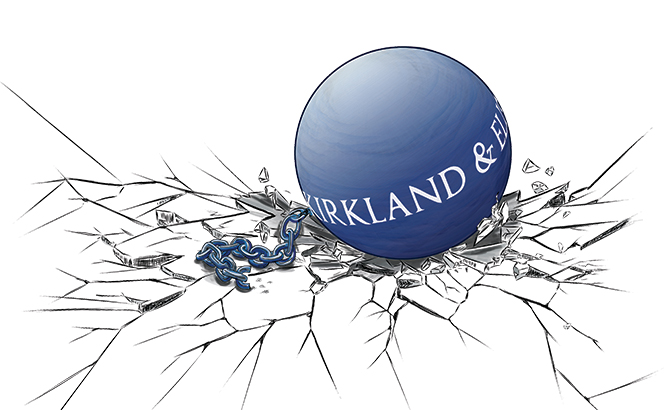
Though I’ve always known that soul-of-a-law-firm cover features are the biggest draw for our readers, the response to our Kirkland & Ellis epic in July has been striking. Not since ‘Branded’ two years ago exposed the state of King & Wood Mallesons’ European business has a piece in these pages provoked such an intense reaction. Our team did a good job but that also reflects the hold the K&E phenomenon has taken over the industry’s imagination. Having covered the law for a good number of years, I cannot think of a firm that has attracted such strong emotions split between appalled detractors and the growing band battered into submissive admiration.

The critics loathe the outfit in part for upending some accepted notions of how global law firms are supposed to excel. But most of the distaste springs from the potency of a challenge emerging from outside the profession’s established London and New York elites. Kirkland’s success, however, isn’t just about defying norms. In some areas, Kirkland took platitudes of focus, meritocracy and leadership and turned them into realities. Sometimes brutal realities but that’s reality for you. Continue reading “For good or ill, Kirkland is now redefining high-end law”