
PwC ups the ante in legal services with new Fragomen US alliance

Building on the Big Four’s sustained attempts to disrupt the legal services market, PwC has extended its presence in the US through a partnership with immigration specialist Fragomen.

The agreement, announced today (24 September), will see the two entities jointly market their respective immigration services in the US.  The alliance gives PwC access to Fragomen’s considerable stateside firepower, with the firm boasting 16 offices across the country. Continue reading “PwC ups the ante in legal services with new Fragomen US alliance”

Highly-rated SFO GC to join Kingsley Napley while HFW breaks US duck

Alun Milford

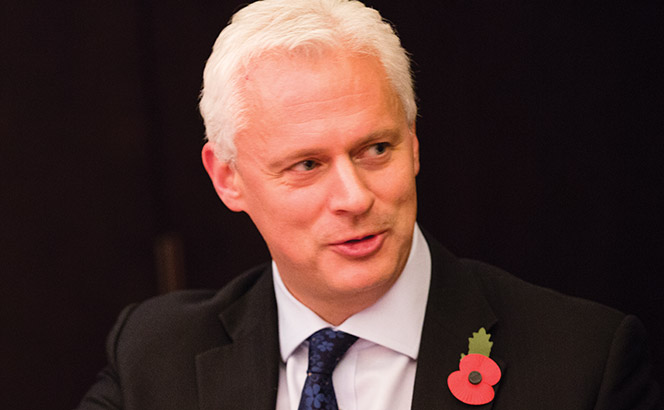
Serious Fraud Office (SFO) general counsel (GC) Alun Milford (pictured), who was widely tipped as the agency’s successor to former director David Green, is joining Kingsley Napley as a partner from next year.

Milford has a storied career in public prosecution, beginning at the Crown Prosecution Service in 1992. He then joined the Attorney General’s Office in 2004, where he dealt with contempt of court and unduly lenient sentences. Later occupying a role with the Revenue and Customs Prosecutions Office, Milford subsequently became GC at the SFO in April 2012. Continue reading “Highly-rated SFO GC to join Kingsley Napley while HFW breaks US duck”

Embattled barristers sets Arden Chambers and 4-5 Gray’s Inn Square to merge

Gray's Inn

After sharing a turbulent recent history of departures, barristers chambers 4-5 Gray’s Inn Square is merging with housing and local government specialist Arden Chambers.

Arden denied the merger following questions from Legal Business earlier today (21 September), before publishing a statement a few hours later confirming the merger from 1 October. The new set will initially be known as 4-5 Gray’s Inn Square incorporating Arden Chambers. Continue reading “Embattled barristers sets Arden Chambers and 4-5 Gray’s Inn Square to merge”

New Law leader UnitedLex targets rapid expansion after acquisition by PE heavyweight CVC

New Law

US legal services provider UnitedLex has landed a $500m war chest to capitalise on a ‘multi-billion dollar opportunity’ after private equity giant CVC Capital Partners acquired a majority stake in the business.

UnitedLex has grown to more than 2,700 lawyers, engineers and consultants since it launched in 2006, providing legal services to clients across 18 countries. It says it has signed contracts worth $1.8bn in the last 18 months, including high-profile deals with DXC Technologies and GE. Continue reading “New Law leader UnitedLex targets rapid expansion after acquisition by PE heavyweight CVC”

Comment: For good or ill, Kirkland is now redefining high-end law

Kirkland & Ellis wrecking ball

Though I’ve always known that soul-of-a-law-firm cover features are the biggest draw for our readers, the response to our Kirkland & Ellis epic in July has been striking. Not since ‘Branded’ two years ago exposed the state of King & Wood Mallesons’ European business has a piece in these pages provoked such an intense reaction. Our team did a good job but that also reflects the hold the K&E phenomenon has taken over the industry’s imagination. Having covered the law for a good number of years, I cannot think of a firm that has attracted such strong emotions split between appalled detractors and the growing band battered into submissive admiration.

The critics loathe the outfit in part for upending some accepted notions of how global law firms are supposed to excel. But most of the distaste springs from the potency of a challenge emerging from outside the profession’s established London and New York elites. Kirkland’s success, however, isn’t just about defying norms. In some areas, Kirkland took platitudes of focus, meritocracy and leadership and turned them into realities. Sometimes brutal realities but that’s reality for you. Continue reading “Comment: For good or ill, Kirkland is now redefining high-end law”

Travers makes pension play with Sackers hire as KFC GC Nelson-Smith decamps to WeWork

Sarah Nelson Smith

Travers Smith has made a rare lateral play with the hire of Sebastian Reger to its pensions sector group as KFC loses highly-regarded general counsel (GC) Sarah Nelson-Smith to WeWork.

Travers announced today (20 September) that Reger will be joining the firm from pensions boutique Sackers & Partners, where he had been a partner since 2015 in the finance and investment team. Reger started his career at Magic Circle firm Freshfields Bruckhaus Deringer. Continue reading “Travers makes pension play with Sackers hire as KFC GC Nelson-Smith decamps to WeWork”

Deal watch: Rich pickings for Links as insurance and education sectors mark busy autumn for City elite

Linklaters

It has been a busy few weeks for Linklaters’ transactional team as the firm scooped spots on two multibillion pound deals, in the insurance and education sectors respectively.

Corporate partners James Inglis and Nick Rumsby joined Magic Circle rivals Clifford Chance (CC) and Slaughter and May as US insurance broker Marsh & McLennan agreed to acquire the entirety of UK listed rival Jardine Lloyd Thompson (JLT) for £4.9bn. Continue reading “Deal watch: Rich pickings for Links as insurance and education sectors mark busy autumn for City elite”

Rosenblatt battles Brexit uncertainty in post-IPO financials as it launches litigation funder

Nicola Foulston

In its first financial results since the £43m IPO in May, Rosenblatt has recorded a slight uptick in revenue and profit as it simultaneously launched its own litigation funding arm.

For the first eight weeks of its listed life, Rosenblatt generated £3m in revenue, compared to £2.6m for a two month average in the last financial year. EBITDA edged up from £0.9m to £1m on the same metric while profit before tax was also marginally up: from £0.8m to £0.95m. Continue reading “Rosenblatt battles Brexit uncertainty in post-IPO financials as it launches litigation funder”

M&A impacts of recent antitrust focus on pre-closing integration

In recent years there have been markedly increased levels of scrutiny from regulators over the sharing of sensitive information between competitors in the process of mergers, takeovers, and other corporate transactions. As a result, M&A deal teams are increasingly turning to clean-team arrangements to ensure that a competing business purchaser can review competitively sensitive data during its due diligence, while addressing ‘gun-jumping’ rules and competition law concerns.

One recent example of the risk resulting from sharing sensitive data between competitors is the record fines imposed by the European Commission (EC) in April 2018 on Dutch cable and telecommunications group, Altice, for receiving commercially sensitive information, among other things, from the target businesses involved in the respective transactions prior to obtaining competition clearance (see box ‘EC takes tougher stance… ’).

The EU Competition Commissioner signalled increased vigilance in May last year and the US Federal Trade Commission Bureau of Competition recently issued a warning and guidance about information sharing during
pre-merger negotiations and due diligence.

How does a clean team work?

A clean team is a select group of named individuals (which may include third-party advisers) who review and analyse relevant confidential data. Clean team members should not be in a position to use such information in their day-to-day commercial activities within a competitor — in particular, in competitive planning, pricing, or strategy. Members operate under strict protocols (agreed on a deal-by-deal basis) to ensure the sensitive information is not shared beyond those individuals. In the event of a deal collapsing, clean team members will usually be prohibited from being involved in competitive pricing or being deployed for a given period to a part of the business that competes with the target.

What type of information is handled by a clean team?

Only the most sensitive information needs to be subject to a clean team, such as future pricing and strategic and planning information. Companies should consider whether the information would normally be disclosed to a rival, or whether the information would allow competitors to align their commercial strategies, especially on pricing and future strategy and planning.

Timing of disclosures to be carefully managed

Companies often only release data to a clean team during the latter stages of a transaction, such as an exclusivity period. Releasing information at an earlier stage can raise questions about the interested party’s intentions and the effectiveness of the information protection protocols. Sensitive information of the sort released to a clean team can be used to verify assumptions, rather than form part of early-stage talks.

To summarise

In the current environment, sensitivity over the sharing of sensitive commercial information is greater. The focus has been even stronger post-Altice. Authorities have become more aggressive and the risk of active scrutiny and sanctions has increased. As such, if a transaction contains a strategic element, clean teams can provide an answer.

EC takes tougher stance on ‘gun-jumping’ violations prior to closing

The EC has imposed a record fine of €124.5m on Dutch cable and telecommunications group, Altice, for a series of actions taken prior to the closing of its acquisition of PT Portugal in 2015. This is the largest-ever fine imposed by the EC for pre-emptive conduct – or ‘gun-jumping’ as it is known in EU merger control parlance – and so the decision marks a more aggressive stance towards gun-jumping that deal teams should be aware of.

The EC’s decision relates to Altice’s strategic acquisition of PT Portugal that was notified to the EC under the EU Merger Regulation (EUMR) in February 2015 and ultimately cleared in April 2015 following the divestment of Altice’s overlapping Portuguese businesses, due to substantive concerns raised by the EC regarding a number of telecommunications markets in Portugal.

Two years after the EC’s clearance decision, in May 2017, the EC issued formal allegations against Altice claiming that it had breached the obligation under the EUMR not to implement the transaction prior to clearance. This led to the EC’s decision on 24 April 2018, in which it imposed a fine of €124.5m on Altice for breach of the standstill obligation.

While the full text of the decision has yet to be published, the EC’s press release announcing its decision provides an indication of the infringing conduct, namely:

Certain interim operating covenants in the purchase agreement that gave Altice the right to exercise control over PT Portugal prior to closing (eg, by granting Altice veto rights over decisions concerning PT Portugal’s ordinary business).

In certain cases, Altice actually exercised control over PT Portugal (eg, by giving instructions on how to carry out a marketing campaign and by seeking and receiving detailed commercially sensitive information about PT Portugal).The decision is a stark reminder that purchasers should generally refrain from assuming any role in the target company’s day-to-day operations prior to closing. While integration planning remains legitimate, no integration steps should be implemented prior to closing. The decision also highlights the risks surrounding the exchange of commercially sensitive information prior to closing. In the context of strategic acquisitions, this should only take place within the context of clean-team arrangements.


Key pointers to avoid gun-jumping issues from the outset of transactions

DO keep selling, promoting, and developing your business, competing vigorously with the other party. DON’T consolidate business activities and operations before closing.
DO check with your legal team if you have questions as to the legality of certain activities (such as joint communication or information exchange). DON’T exchange competitively sensitive information between the buyer and the seller during the interim period, particularly if both parties compete with one another.
DO check with your legal team if you feel that any of the restrictions are unworkable (alternative methods are often available). DON’T sit in on the other party’s corporate meetings, or veto or approve the other party’s strategic business decisions.
DO take steps to protect value of investment (which are typically not a concern), eg:‘Ordinary course of business’ clauses which allow the seller to continue running business without interference from the buyer.

‘Material adverse change’ clauses which delineate the buyer’s ability to intervene; these clauses are only a concern if the threshold is so low that the buyer’s consent amounts to running the target business

DON’T co-ordinate sales, marketing, pricing, and the running of the interested parties’ operations.
DO plan for integrating the interested parties’ businesses post-closing (which is generally permissible). DON’T implement integration plans until after closing.
DO negotiate insurance coverage for the target post-closing (which is typically not a concern since the information required to take out a policy is not competitively sensitive). DON’T hire staff for the target business post-closing if the hiring process affects the standalone competitiveness or viability of the target business during the pre-closing period (eg, because it triggers other employees to leave).


The LB100 Comment: Smoke, turmoil and a tonne of cash

'LB100 star' tattooed hands

The latest financial year has not been a vintage period for those wishing the legal industry would fall into concise patterns. Glancing at the LB100, separating the winners and losers by breed is more difficult than at any time over the last 20 years.

But murky as the picture is, some broad outlines can still be discerned. The 2017/18 season was one of the best 12 months of trading since the banking crisis a decade ago reset the legal market. Continue reading “The LB100 Comment: Smoke, turmoil and a tonne of cash”

Start-up snapshots

The In-House Lawyer profiles some of the start-ups bringing a fresh perspective to the legal tech industry


Daniel van Binsbergen, Lexoo, LB282, May 2018
Daniel van Binsbergen, Lexoo
Apperio
Founded: 2012 (as Legal Tender)
Team size: 17
Investment raised: £3.4m
Leaders: Chief executive Nicholas d’Adhemar
Key clients: Dentons, Network Rail, Deliveroo, Octopus Investments

‘The technology I interfaced with as a lawyer was just woeful, I remember at the time some of the tech was ten to 15 years old, and when I go back there it’s still the same stuff,’ Apperio founder Nicholas d’Adhemar recalls. His painful memories inspired the company’s platform, which monitors information related to legal matters to give corporate legal departments real-time transparency on legal fees. ‘We often talk about running your legal department like a business within your company, and people are starting to do that. The number one way of doing that is going out there and looking
at technology.’

Avvoka
Founded: 2016
Team size: Ten
Investment raised: £500,000-plus
Leaders: Directors Eliot Benzecrit and David Howorth
Key clients: FTSE 250 companies, tier 1 investment backs, top 50 law firms

In a space full of tech jargon, one could be forgiven for being sceptical of Eliot Benzecrit’s claim that there is a ‘big difference’ between Avvoka and the legacy players. However, after spending time around his contagious enthusiasm and obvious intelligence, you realise he might be onto something. Avvoka acts as a live-negotiation and analytics tool for contracts, or ‘Google Docs for contracts’, allowing counterparties to negotiate in real-time. Benzecrit is a former lawyer who is one of many of those leaving firms to innovate: ‘You’ve got a lot of disenchanted ex-solicitors who want to do something else.’

Clocktimizer
Founded: 2014
Team size: Eight
Investment raised: €300,000
Leaders: Chief executive Pieter van der Hoeven (pictured)
Key clients: Hogan Lovells, DLA Piper, Clifford Chance, CMS Cameron McKenna Nabarro Olswang

Peter van der Hoeven, Clocktimizer, LB282, April 2018
In a space with more solutions than problems, the start-up world can be disorienting. But Clocktimizer has a refreshingly simple approach, acting as an intelligent timekeeper and time planner in law. It is run by well-regarded chief executive and co-founder Pieter van der Hoeven, another former lawyer, and uses time data to provide more transparent pricing. Clocktimizer helped Hogan Lovells analyse time cards that previously would have taken weeks in just 36 seconds. ‘If there’s a transparency between what the lawyers do and the client’s expectations, it will make for a more efficient legal market.’

F-Lex
Founded: 2016
Team size: Six full-time, three part-time
Investment raised: £120,000
Revenue: Annualised six monthly growth rate 155%
Leaders: Chief executive Mary Bonsor and chief technology officer James Moore
Key clients: Magic Circle and top 50 UK law firms and FTSE 350 companies

‘Anywhere there’s a legal team we want to be able to help,’ says F-Lex chief executive Mary Bonsor, one of the few female founders in the scene, and another ex-lawyer. With 80 clients, F-Lex is matching Bonsor’s enthusiasm – shared by early investor and former Clifford Chance managing partner Tony Williams. F-Lex acts as an online platform that matches paralegals with law firms and general counsel on a short-term basis. Bonsor describes the challenge: ‘As a lawyer you’re terrified of risk, and in a start-up, you have to fail and you have to fail quickly.’

Juro
Founded: 2016
Team size: 12
Investment raised: $2.75m
Leaders: Co-founders Richard Mabey and Pavel Kovalevich
Clients: Deliveroo, Estée Lauder, Nested

‘I know you told me leaving Freshfields was a terrible idea, to do this weird job you can’t understand and can’t tell your friends about it, but I just won an award,’ Juro co-founder Richard Mabey recently boasted to his mother. Mabey’s words reflect the great professional risk in creating a start-up. However, it might have taken quitting Freshfields for Mabey to start bridging the chasm between law firms’ professed appetite for innovation and their more cautious everyday practice. By aiding the creation and signing of contracts through an AI-enabled workflow, Juro looks to make good on its mission statement of making in-house teams more data-driven.

Legatics
Founded: 2015
Team size: <10 Revenue: 45% growth month-on-month Leaders: Founder Anthony Seale and head of business development Daniel Porus Key clients: Allen & Overy, Herbert Smith Freehills ‘It’s one thing to create technology that’s useful for lawyers, it’s a completely different thing for lawyers to actually use it,’ observes Legatics’ Daniel Porus. Legatics is a live deal platform, and Porus feels making it easy to use is essential to achieving the latter. Founder Anthony Seale is sympathetic to lawyers, and understands that for tech to be adopted, it has to be accessible: ‘It needs to be something a lawyer can look at and say, “This is me, this is how I work’’.’ Lexoo Founded: 2014 Team size: 14 Investment raised: £1.5m Revenue: £3m gross revenue annually Leaders: Chief executive Daniel van Binsbergen (pictured, top) and chief technology officer Chris O’Sullivan Key clients: WorldRemit, Vice, Asos, Travelodge, Babylon Health, Faction Skis, and more than 3,000 SMEs and corporates ‘A lot of lawyers, especially corporate lawyers, aren’t enjoying their work. They might like lawyering but they don’t like the way they have to do it,’ says Lexoo chief executive Daniel van Binsbergen. Lexoo works by posting legal matters and within one to two business days three quotes from experienced lawyers will be chosen, before the client can compare and choose the right lawyer. It has a database of about 750 lawyers in more than 40 countries. Ping Founded: 2016 Team size: 11 Leaders: Chief executive Ryan Alshak (pictured) Key clients: Mishcon de Reya ‘I can’t even tell you the visceral reaction I would have when it came to timesheets,’ says Ping chief executive Ryan Alshak. Informed by his two and a bit years as a lawyer, Alshak spearheads Ping, a labour of love which recently saw him turn down his dream job as an in-house lawyer at the NBA basketball franchise LA Clippers. ‘This is the easiest no I’ve ever had to give,’ he told a friend. Ping is an automated timekeeping device that captures detailed time data. Ping then provides analytics and could be law’s best hope for a timesheet-free world. Orbital Witness Founded: 2017 Team size: Five Investment raised: £170,000 (including grants) Revenue: N/A – beginning first pilots Leaders: Co-founders Edmond Boulle, Francesco Liucci and Will Pearce. When Orbital Witness co-founder Edmond Boulle first entered Mishcon de Reya’s MDR LAB, he identified the problem he wanted to solve: ‘The thing that struck us as was you couldn’t see anybody’s desk. Every real estate lawyer’s desk, we worked with them for ten weeks, about 50 of them, was just covered with paper.’ By providing data-driven site analysis featuring satellite imagery, Orbital Witness looks to identify legal risk in property transactions. It’s not quite Star Wars, but it could be as close as the legal profession ever gets.

Riding Schumpeter’s Gale

Storyteller. Ninja. Scrum Master. Brand Champion. Evangelist. The modern commercial world has created many new genres of work, but sometimes it’s hard to know what they mean. As the London School of Economics’ headline-grabbing anthropologist David Graeber once wrote, ‘It’s as if someone were out there making up pointless jobs just for the sake of keeping us all working.’
Continue reading “Riding Schumpeter’s Gale”

Brexit: counting down

To kick off the debate, Herbert Smith Freehills (HSF) M&A partner Stephen Wilkinson introduced guest speaker Tom White, head of Europe at Global Counsel – who has over a decade of experience working for the UK Government primarily on EU single market negotiations – to give an overview of where the UK is, both in its internal preparedness for Brexit and in its negotiations with the EU. To the surprise of some, he takes an optimistic view: ‘We could have been in a much worse position than we are now.’ However, he did point out that there were a number of major caveats to that optimism. The first being ‘we have an incredibly weak government in the UK that can actually be voted down on an issue any time and could lead to the Prime Minister having to resign and having a general election’.
Continue reading “Brexit: counting down”

Commitment issues

Commitment. Marriage. Honeymoon. Divorce. Conversations about single-supplier legal advisory mandates are rife with relationship-strewn analogies. While no two arrangements are the same, most begin with a commitment from a company and its in-house legal team to reduce external legal spend and get a better handle on its multitude of legal connections.
Continue reading “Commitment issues”

Winds of change

Uncertainty seems to be the only thing lawyers working in Europe’s aviation sector can count on these days. The recent collapse of two established major European airlines demonstrated the volatility facing many sections of the industry, with UK-headquartered Monarch Airlines and Air Berlin becoming the latest casualties of turbulence. ‘Airlines are no longer seen as your triple-A bet,’ says Catherine Ledger, general counsel of UK-based airline Flybe.

Jet-Engine

But, like the aircraft themselves, aviation is a sector that rarely stands still. When a carrier takes a nosedive, there are competitors ready to seize the assets – not only the aircraft, but vacant routes and prized slots at key airports. For airlines, being opportunistic and agile is the key to staying airborne.

‘We had very little overlap with Monarch, but it did allow us to consolidate our presence in London Luton, where we are the second largest operator, and which remains Europe’s largest travel market,’ says Owain Jones, chief corporate officer of Hungarian airline, Wizz Air.

‘The collapse of Air Berlin, which then led to their subsidiary, Niki, disappearing [in December 2017], has enabled us to put in operations in Vienna, and later we’ll be starting a base in Vienna, with routes not just in Central and Eastern Europe but also to some western Europe routes as well.’

Some of the challenges are self-inflicted in a highly-competitive sector with the short-haul market being turned on its head by the advent of low-cost carriers (LCCs), which first arrived in Europe in the mid-90s. The ‘no-frills’ business model stripped the flight experience to the bone, removing seat classes, lounges, in-flight entertainment, complimentary refreshments and baggage check-in, in return for cut-price fares.

We stimulate markets. Our low cost means we stimulate a demand among people who have never travelled by air before.
We bring new people into the flying franchise.
Owain Jones, Wizz Air

The transformative impact of LCCs on the short and medium-haul market has come at a price for full-service, or ‘legacy’, carriers, who have found themselves under pressure to compete on price, or risk losses and even failure.

This pressure has been felt in more than ticket prices, forcing a shift in the business models by which routes are devised and offered to customers. The ‘hub and spoke’ model typically favoured by full-service carriers – whereby airlines fly their aircraft through ‘hub’ airports, and then out along various ‘spokes’ to smaller ‘node’ airports – is increasingly giving way to the ‘point-to-point’ model utilised by LCCs, in which flights are offered directly between destinations.

‘By expanding their presence in airports other than their traditional hubs, a number of large airline groups now operate multiple hubs. There are recent examples of these groups moving aircraft between these hubs, and as a result, these groups have greater buying power than they did in the past,’ notes Danijela Popadic, GC of Serbian flag carrier, Air Serbia.

Making your connection
To spread costs and commercial risk, co-operation and consolidation is increasingly in vogue among legacy operators, as was the case with International Airlines Group, the parent company of flag carriers Aer Lingus, British Airways and Iberia as well as low-cost airline Vueling.

There are also many collaborative arrangements that airlines enter into to extend their reach beyond traditional routes, or increase efficiency. A code-share agreement, for example, enables passengers to book tickets for a route with one carrier, while the flight is operated by a different carrier sharing the flight number.

‘People like to be able to have a seamless flying experience. It makes sense in lots of ways for airlines to have arrangements like codeshares to make the travel experience a lot more straightforward,’ says Ledger.

‘We are now doing far more codeshare arrangements with different airlines, which enables passengers to book a ticket that takes them from Exeter to Manchester, and at Manchester they can connect to a Virgin aircraft to fly to the States. As far as they’re concerned, it is one transaction rather than trying to buy two lots of tickets.’

Other forms of collaboration include wet leasing, where one airline provides and operates the aircraft, crew, maintenance and insurance for an aircraft for a fixed period, but it flies under the brand of a different airline. ‘It is really critical to have the right aircraft for the right route, and if you want the route to fit in with your network, you might have a look at somebody else to operate it for you. The big legacy carriers are leasing more for the shorter-hop regional flying, which doesn’t fit in with the larger aircraft,’ notes Ledger.

Also more common are risk-sharing models, comparable to joint ventures, where two airlines operate a route together, each providing different elements – for example, the aircraft, crew, marketing, advertising, and so on – and then sharing in the risks and rewards.

‘From a legal perspective, it can be interesting because there are lots of new ways of doing things. Sometimes we are doing things that have not been done before. Our team has to be willing to be flexible,’ says Ledger.

Not all airlines are as keen to share, however. ‘We have a very specific business model, of generating growth from our home markets without the need to get into the complications of cooperating with other airlines. A key point at Wizz is achieving low operating costs. When you start dealing with other carriers, that introduces costs into the equation,’ says Jones.

New business
Under pressure from the low-cost sector, established carriers have diversified, offering low-cost options that were previously the domain of the LCCs. However, Popadic believes that consolidation in terms of service levels is happening in all sections of the market: ‘To attract business passengers, most LCCs have modified their practices. These trends imply that LCCs are increasingly competing for business passengers, a demographic that traditionally flew with [traditional carriers].’

The advance of LCCs continues apace, even into the long-haul market. Of the 15 low-cost, long-haul operators launched globally since 2012 according to 2017 CAPA figures, five (Norwegian Air Shuttle, Eurowings, WOW air, French Bee and Level) are European. New aircraft technology has greatly reduced operating costs on long-haul routes, enabling carriers to encroach into intercontinental routes, increasing customer choice of airports in the process through the LCC model of bypassing traditional hub airports.

Popadic is not too concerned: ‘LCCs will operate more on long-haul. However, the long-haul, low-cost business model will not make such a huge impact on the air transport market as on short-haul. Many of the features which enable LCCs to compete so effectively are less applicable on long-haul.’

The politics of flight
Operators like Ryanair and easyJet are opening up new markets by making flying more affordable. Others, like Wizz, harness geopolitical tail winds to drive growth.

‘We stimulate markets. We have the benefit of operating in Central and Eastern Europe, one of the highest GDP growth regions in Europe. GDP growth leads directly to airline growth; there’s always an increase in demand for air travel. Our low cost means we then stimulate a demand among people who, in some cases, have never travelled by air before. We are bringing new people into the flying franchise,’ asserts Jones.

‘It is a very different game to western European airlines, which are battling to take customers from one another. In Central and Eastern Europe, the rate of travel by air is still around a quarter of what it is in western Europe, so significantly higher GDP growth is what’s contributing to our strong growth.’

Despite the scope of expanding economies in an increasingly competitive environment, not everyone can be a winner.

‘Some rationalisation with capacity in Europe was long overdue. One of the functions of a liberalised market tends to be that the strongest survive and the strongest airlines are the ones with very controlled cost bases. If you look at the US, which started liberalisation some time before Europe, there were a very large number of airlines. Now four airline groups provide around 80% of the capacity,’ says Jones.

‘Europe is way, way behind – we’re still a very, very fragmented market, even with the low-cost carriers. Failures are part and parcel of aviation; rationalisation in Europe has to happen and we still have a number of airlines which are supported by the state – whether that’s legally or by contravening state aid laws.’

Following last year’s collapse of Air Berlin, Ryanair was a vocal critic of the German government’s provision of €150m in state aid.

Nevertheless, the European Commission (EC) approved the loan and, in December 2017, approved Lufthansa’s acquisition of certain Air Berlin assets – with the notable exception of Niki.

But the issue of state subsidisation continues to dog the aviation sector, as LCCs and legacy carriers alike condemn perceived attempts by state actors to undermine competition. EC guidelines, however, do not expressly prohibit state aid to airports and airlines.

‘There are a number of other airlines that may be driven by political decisions at the moment. There are some airlines that do not have a particularly rational approach to business. That will shake itself out. There is going to be quite a change in the aviation landscape in the next ten to 20 years,’ argues Jones.

Hurricane Brexit
For established carriers and LCCs alike, the greatest uncertainty currently is Brexit. In an interview with The Telegraph, the founder of Monarch’s major shareholder, Greybull Capital, highlighted a weak pound and Brexit, along with terrorism, as reasons for the airline’s failure.

‘That is at the forefront of every airline’s mind at the moment and, like every other airline, we are talking to every authority that we can to try and get clarity on what’s happening,’ says Jones.

As it currently stands, the UK’s aviation industry will ‘continue to benefit from the existing liberal market access until the end of 2020’ (Department for Transport, April 2018), although the EC has stated that, eventually, after exiting the EU, UK-based carriers will no longer ‘obtain and keep an EU operating licence and benefit from the intra-EU air traffic rights’ (EC, Directorate-General for Mobility and Transport, January 2018) – the EU single aviation market.

Dublin-headquartered Ryanair and Budapest-based Wizz Air have applied for UK air operator certificates, while British easyJet is setting up a new UK subsidiary alongside its European one in an attempt to operate in both jurisdictions.

‘We cannot afford to wait and see. Our view very much is that the liberalised industry, which started back in 1994 in Europe, has produced huge benefits both for businesses and for citizens of Europe,’ says Jones. ‘Liberalisation has resulted in the growth of carriers like Wizz Air, which provides opportunities for people to travel throughout Europe, connecting the newer countries in the EU to the West. Liberalisation is something which was long fought for and, ironically, long fought for by the British.’

Airlines aside, the potential implications of the Brexit deal reverberate around the aviation sector, with even a tariff-free environment likely to prove deeply disruptive to cross-border trade in the hardware keeping the industry airborne.

John Harrison, GC of aircraft manufacturer Airbus, which has 14,000 employees and £6bn of activities in the UK, notes: ‘We make more than 80,000 business trips between continental Europe and the UK every year. If Brexit causes a delay to each of these trips, that will have a big impact – even just the bureaucratic and administrative impact. The turnaround time to load a wing into one of our Beluga aircraft – which fly parts around – is very carefully timed and if you add 45 or 75 minutes, that can have a bad impact on production. If we have to warehouse products because of a slowdown in the supply chain, this is going to add cost. Then there is increased bureaucracy and form-filling for goods coming out of the UK and into the UK. Because 70% of what we do is outsourced, we have more than 4,000 suppliers in the UK, and some of them don’t have the bureaucratic size to be able to deal with form-filling.’

He adds: ‘The problem is, you’ve got the political message up here, but then you’ve got the down-to-earth, practical reality of delivering parts. You can’t deliver an aircraft if the toilet doors are not there. This is all impacted by the single market, by no tariffs, by free movement. By introducing friction, the impact could be absolutely dramatic. So, we were publicly against Brexit – we think it’s a step backwards.’

Innovating on the fly
In a world as competitive as aviation, keeping pace with change is crucial and most players are investing in online platforms. Flybe, for instance, has recently upgraded its digital platform.

‘Technology generally has been a big issue over the last few year for airlines – there’s a need to get on board and make the passenger experience as good as possible,’ says Ledger.

We were publicly against Brexit – we think it’s a step backwards. John Harrison, Airbus
‘We are adopting a programme that will help us with a lot of things like GDPR, but also in terms of our IT position. It provides us with a whole new ticketing system, a whole new passenger booking platform, a central e-commerce platform to enable us to do our marketing and a departure control system, interfacing with all the airports in terms of check-in, managing baggage and assessing aircraft load.’

Jones echoes the need for a strong online presence: ‘We have the youngest customer profile of any major [ultra-low-cost carrier] or low-cost carrier in Europe. That means we need to be looking at our e-commerce capabilities, our website, as that is how our generation of customers operate. We need to make sure that we are delivering their needs in terms of how we communicate, how we make our products available.’

Leveraging tech in aircraft design is another area in which airlines and their suppliers strive to get an edge on rivals in terms of operational efficiency providing more comfortable craft.

‘I see a growing trend in questions about integrity, sustainability and the environment. If you take the new engine options on our aircraft, they are 15% more fuel efficient, so our environmental footprint is becoming more favourable each year,’ says Harrison.

‘In addition to delivering margins, we have to be thinking about how we’re perceived in the market and do the right thing.’

For Wizz, this is an integral part of its low-cost model: ‘We make sure that we use the latest equipment, our fleet is four years old and, in January 2019, we are scheduled to start taking the first of our Airbus A321neo aircraft, which is equipped with new engine technology,’ says Jones.

‘New engine technology will deliver significant savings in operating costs, which then directly feeds through to our pricing, and keeps that virtuous circle of bringing more people into the flying franchise.’

The sector is also benefiting from innovation on the maintenance and overhaul side of the market. ‘We’ve had a lot of programmes to reduce fuel. With every new aircraft type, like with the modern fleets, the reduction of fuel is one of the main topics the airlines try to implement,’ says Olaf Johannsen at Lufthansa Technik.

There is also much talk now of ‘predictive maintenance’ – a concept whereby data analysis will allow aircraft maintenance and repair companies to predict requirements more precisely.

‘The use of big data is going to transform the way that we build and maintain aircraft. You’ll say: “You have to change this part next year in February, because all of the digital predictability that we’ve got from the fleet that’s in operation tells us this has to happen.” This data should ultimately mean that we will be able to develop an aircraft quicker, which means it will be cheaper and brought to market quicker,’ says Harrison (see box, below).

Depending on your vantage point within the industry, aviation continues to be buffeted by head or tailwinds. Seismic market shifts, political and regulatory fallout and technological advancements continue to challenge players, and their in-house lawyers.

Olaf Johannsen at Lufthansa Technik explains how predictive maintenance is harnessing data to increase efficiencies
‘The maintenance, repair and overhaul business has changed a lot, and it’s consolidating as well – in recent years, the OEMs [original equipment manufacturers] have entered this market. That has changed our view on how to approach customers, how to produce products and how to offer products.

We are developing a new digital product strategy. Digitalisation in the maintenance business came later than in other businesses, but at the moment, every player is trying to develop new digital products as well. The advantage for Lufthansa is we are working with so many airlines together, we have a wide variety of databases that we can put into digital products.

We have developed a new platform called Aviatar and are offering our own third-party apps, which take the data of an airplane and figure out how our customers can save money. For example, every airplane component has a life cycle and has to be replaced after a specific time. The challenge now is to find out if it is always necessary to replace those components within that life cycle. For example, if an engine is flown over a desert or over the sea, then corrosion does much more harm to the engine than flying it in Central Europe. So we try to figure out how to extend these life cycles with the data we are getting from engines.

It’s challenging, because you have to do that together with the authorities, you have to do that internally, and you have to do that with the customers. We are at the concept approval stage; we have to prove that the system works first of all to our customers but also to the authorities.’

We’ve had a lot of programmes that are trying to reduce fuel, for example, you can wash an engine every three or six months and then the engine uses less fuel than without washing. Or you can have winglets on airplanes, which reduce fuel consumption as well. With every new aircraft type, like with the modern fleets, the reduction of fuel is one of the main topics the airlines try to implement.