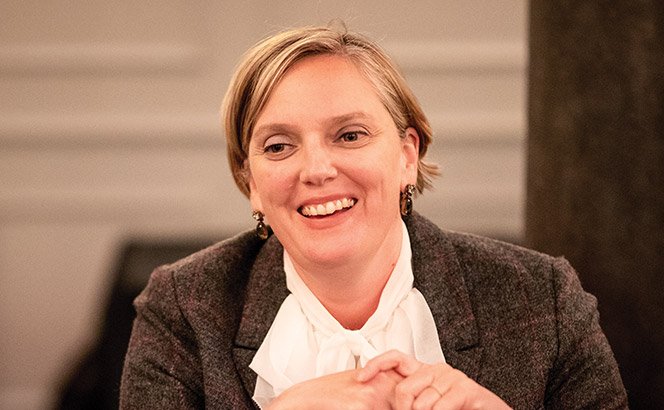
In conversation: Dominic Gyngell, general counsel, Speedcast Industries

GC: How did you get to your position at Speedcast?

Dominic Gyngell (DG): I had been at BT for 13 years when I got approached by Speedcast in 2014. It was really interesting because it was telecoms-related but a much smaller company with big ambitions. It had achieved impressive growth, the company had been around in some form since 2001 but it was only when it was listed on the Australia Stock Exchange in 2014 that it landed on its feet and started to grow an aggressive international strategy.

GC: Were you involved in the company’s listing?

DG: I joined in early 2016 post IPO – it was a steep learning curve for me. I am involved in continuing disclosure obligations in Australia and since then we’ve done a number of things including two more equity raisings in Australia and a refinancing programme where we moved our debt from Australia to the US market.

GC: How have you grown the legal team in that time?

DG: The legal team was small at first, there were just three of us when I joined. Since then we’ve expanded, we have 15 lawyers globally. We provide satellite communications to some pretty remote parts of the world, operating in over 100 countries and with offices in 40.

Our largest markets are the US: we do a lot of work for the US government, large energy companies such as ConocoPhillips. We do work in Southeast Asia and Africa, and dealing with regulators and governments in the US is very different from working with businesses in Myanmar and Kazakhstan. It really varies.

GC: How is the legal team structured?

DG: We are organised regionally, we have a team based in the Americas, one covering EMEA and one in Asia.

GC: What does your job look like on a day-to-day basis?

DG: The role is very diverse: this week I’ve been dealing with labour disputes in Brazil, new customer contracts, board meetings in Angola and Sydney, a property deal in Peru, whilst balancing all the day-to-day operations. Every day is different. My job has changed a lot since I joined when we were a $200million company; today we have revenue of 1 billion US dollars. We’ve gone from 300 staff to 1500 in that time. We’ve got a lot more sophisticated. A big part of my job is working on M&A; we’ve done 15 deals since 2012. We acquired our most recent company last week – one of our largest competitors in the US, Globecomm. They operate in 100 countries.

GC: What sectors do you cover?

DG: Speedcast has four main divisions: maritime, which includes providing telecommunications services to cruise ship operators around the world, and commercial maritime, which covers smaller vessels. Energy is our second biggest division – our main customers are offshore oil and gas companies. We are increasingly serving governments, as well as the military, mining companies and NGOs.

GC: What are the biggest challenges on the horizon for you over the next 12 months?

DG: Compliance continues to grow – we are seeing a lot of change with regards to ethical compliance. Anti-corruption, bribery, regulatory compliance, all remain key issues for our type of business. We have just done a large GDPR programme in Europe, and I expect to be dealing with increasing data protection legislation.

From an internal perspective, we are focusing on integrating the 15 new businesses we have acquired. A large part of this is bringing together different teams, and this will be a challenge getting our systems aligned and dealing with cultural issues.

GC: Have you introduced technology within the legal department?

DG: We’ve just launched a programme to digitise all of our customer contracts onto a single database that can be accessed by the whole legal team and operations. For the first time, we can get centralised data on all of our larger customers and our supplier contracts. We deal with dozens of bids and contracts around the world so we have also automated our approval processes, so that they are all on one system.

Horizons: global trends in employment law, Edition 1: Women in Work

Shifting ground for businesses

As we have seen in 2018, the next high profile public exposée is never more than an unexpected tweet away. Businesses are now subject to an ever-increasing level of public scrutiny, facilitated by an always-on, 24/7 news cycle, amplified by social media-fuelled empowerment of the individual. The resulting series of social campaigns have stoked public awareness on a global scale and created an unforgiving environment for employers.

The ground is shifting under the feet of businesses, with boundaries between employers, workers and the public, in a state of flux. These changes are compounded by generational shifts in culture, a war for talent, increasing demand for corporate transparency and rising customer and government expectations.

‘As the Gender Champion for Eversheds Sutherland International, I am closely involved in our efforts to boost diversity, such as our new female career development program, our target for 30% of partners to be female by 2021 and our leadership team taking direct responsibility for hitting the target. As an employment lawyer I also see many of our clients responding positively to gender balance challenges. It really does feel like a new momentum has been reached and there is no turning back now.’

Diane Gilhooley

One example illustrating the dynamics of this new landscape is the #MeToo campaign against sexual harassment. The campaign, which started last autumn, has been googled in almost every country on the planet. The scandals unfolding on the back of #MeToo have led to a new scrutiny of individuals and the companies they represent. It has also led to greater focus on equality in a work environment in the broadest sense.

As a vehicle for victims to speak out, #MeToo has sparked a revolution; the Time’s Up Legal Defense Fund, raised in response to #MeToo, has already received more than 2,700 requests for assistance, across nearly every state in the US. On the other side of the Atlantic, a government inquiry into sexual harassment in the workplace has resulted in the suggestion of a mandatory duty on employers to take steps to protect workers from harassment and victimisation, with a breach of such a duty constituting an unlawful act and subject to enforcement action from the Equalities and Human Rights Commission (EHRC).

Economic drivers for gender equality in Asia

McKinsey estimates that advancing gender equality across Asian economies could produce a 12% increase over business-as-usual GDP by 2025, making this an important economic issue for businesses, as well as a societal one. While progress has been made, this large GDP discrepancy underscores how much still needs to be done. Furthermore, in contrast to the US and Europe where compliance with anti-discrimination legislation has driven workplace equality, Asian businesses and multinationals are expected to play a greater role than law-makers in delivering change.

‘For my clients, advancing gender equality is not about legal risk – it is about doing the right thing for their workforce and their business. While there are workplace laws to protect women against discrimination in many Asian countries, not all have comprehensive regulation and enforcement is variable,’ says Jennifer Van Dale, head of Eversheds Sutherland’s Hong Kong and Asia Pacific employment practice.

However, there is no one-size-fits-all solution to boosting female recruitment, progression and retention across the region.

Japan is the fastest ageing society in the OECD, making the improvement of women’s employment participation a priority. However, there is a sharp division of labour in Japan, with women doing more than three quarters of the unpaid work and caregiving, while men work very long office hours.

In India, societal issues have similarly resulted in low female participation in the labour market. In white-collar employment, a lack of quality childcare deters female employment and has led to some employers offering childcare support. Likewise in Singapore, cultural attitudes relating to gendered childcare remain and employers are investing in equal-access, family-friendly policies to support further progress.

Van Dale adds: ‘While there are different societal, economic and cultural issues underpinning gender inequality in each country across Asia, there are two consistent regional themes that businesses are seeking to address: lower female representation in quality jobs and in senior positions.’

Amidst these growing pressures, businesses have often appeared flat-footed in response, promoting even further scrutiny from the public and officials. However, the likely impact on future policy and government intervention is significant.

To avoid growing risks around brand, reputation and future talent-shortages, businesses are facing pressure to get more women into work – particularly skilled and senior jobs – close gender pay gaps and create inclusive workplaces. Regulation is playing its part, with new equality reporting duties, targets and related measures being implemented in different jurisdictions.

Managing new expectations requires a comprehensive look at a range of issues if there is to be a real change in culture. Whilst some businesses are comfortable that their diversity records stand up to this new level of scrutiny and expectation, others are not – or can’t be sure.

This article takes a look at gender developments in a global context, alongside a summary of the clear business risks that organisations face by not tackling these challenges. We also include our observations on how these complex issues are affecting organisations in different countries and continents across the globe, with specific examples and input from our international employment team.

Gender developments in a global context

According to OECD research, women are more likely to work on a part-time basis, are less likely to advance to management positions, are more likely to face discrimination, and to earn less than men. The research notes that gender gaps tend to increase with age, reflecting the role that parenthood plays in gender equality – motherhood typically having negative effects on workforce participation, pay and career advancement.

Since 2013, about two thirds of OECD member countries have put in place new gender pay policies involving greater transparency, with companies increasingly required to analyse and disclose their gender wage gaps. Many countries have also introduced measures to encourage fathers to take parental leave.

Early lessons learnt from compulsory gender pay gap reporting in the United Kingdom

A new British law requires larger employers to publish annually their gender pay and bonus gaps, showing the difference between the average hourly pay and bonus pay of men and women.

‘Some employers have real concerns that a continuing gender pay gap will harm staff recruitment, engagement and retention – just when they are already experiencing a skills shortage,’ says Shirley Hall, senior employment partner at Eversheds Sutherland.

April saw the first deadline for organisations to publish their gender pay gap data and it was a bruising time for some brands. As other countries move to strengthen or introduce new gender pay gap measures, what are five early lessons learnt from the British experience?

1. Pay attention. Gender pay disparity has become an executive priority: in our recent survey of senior chief people officers, 45% reported that gender pay disparity was a high or very high priority.

2. Get ahead of the data. Conduct your own informal gender pay reviews to understand your pay gaps. It is better to be prepared, than appear surprised by your own data in the glare of publicity.

3. If you are going to act, don’t delay. While employers cannot change societal issues by themselves, they can address their female talent pipeline.

4. Clear messaging is key. Companies reporting unfavourable pay gaps found it hard to explain the data to their employees, customers and investors. This underlines the importance of effective internal and external communications.

5. ‘What gets measured, gets done’. In 2019 and beyond, comparisons will be made between an employer’s pay data year on year. Where gender pay gaps appear to be static, employers might expect hard questions to be asked.

Meanwhile, a recent Harris survey of US employers found that a third have taken new steps to combat sexual misconduct (Reuters), although the majority reminded employees about existing training or policies.

We know that employers cannot fix the workplace gender challenge on their own. At its roots are social, cultural and economic pressures that influence the educational and employment paths that men and women follow. Governments and the public must play a significant role if change is to happen. Societal pressures also differ by country, demanding a nuanced approach by global employers. However, expectations are growing that businesses will play their part.

Business risks of not acting

Not acting to improve gender equality exposes businesses to reputational, legal and financial risks. These risks have existed for years, but tipping points are fast being reached, and what was acceptable then may not be now. Some employers are being caught off-guard with potentially serious repercussions. The effects of ever increasing media scrutiny have already been felt in the UK, with a growing trend of exposées that have highlighted individual employers as they were forced to disclose their gender pay gaps for the first time.

Breaking down workplace gender stereotypes and parental stereotypes in the Nordics

One way to improve women’s equality at work is to address the parenting divide in countries where women are typically the primary carer. The belief is that a move towards shared parenting would lead to women being less likely to leave work and to experience maternity-related discrimination, so the ‘motherhood penalty’ declines.

In policy terms, the Nordic states have led the way by providing paid, fathers-only parental leave to accelerate culture: Sweden has 90 days’ leave reserved for fathers, Finland has 54 days and in Norway, fathers-only parental leave was extended from 10 to 15 weeks as of 1 July.

Take up of parental leave by fathers is low worldwide, whereas Nordic countries achieve higher rates. Alongside this, some employers have also committed to flexible working practices demonstrably aimed at both men and women.

‘Experience in Sweden shows that parental leave for fathers needs to be well paid for it to be taken up for longer periods than a few weeks,’ says Per Westman, Head of Eversheds Sutherland’s Swedish employment practice.

‘Cultural norms have to change even more to tackle the stigma around men asking for leave. However, Swedish men with prams are a familiar sight, and in some organisations it is frowned upon for fathers not to take their share of leave.’

Employers in countries without Nordic-style, state-paid parental leave may decide to provide their own company-funded leave. This is a strategic decision, weighing the potential costs (company-funded parental leave is typically between 70-100% of basic salary) against the talent, reputational and other benefits and, importantly, the deep-seated change involved to deliver success.

However, boosting the affordability of parental leave is not enough. Employers must also address the organisation’s culture – so that men feel encouraged to take leave. Otherwise, male employees may remain concerned for their career prospects and the new policy may fail.

The use of non-disclosure agreements (NDAs) for allegations of gender discrimination and harassment is another recent example. The #MeToo campaign emboldened some workers to speak out, some breaching their confidential settlement agreements and, in the process, generating a public backlash against their use. Now, the use of NDAs in such situations presents new risks. High-profile NDA cases in the US led to changes in the tax laws relating to payments made under these NDAs. Use of NDAs has also led to allegations that employers prefer to suppress gender diversity challenges than to make improvements.

An effective employer response will typically require more than reminding employees of existing HR policies. Companies whose top management regard inclusion as a competitive advantage, an enabler of growth and as a core part of their organisations’ culture and brand are most likely to succeed (MSCI), particularly as demand for talent intensifies.

Key takeaways for businesses

  • The link between diversity and corporate performance is becoming better understood and is expected to result in increasing investor demands.
  • While societal issues affecting female workplace participation differ by country, there are consistent themes driving gender inequality across employers globally.
  • These include: a lack of women in senior positions; the impact of motherhood and unpaid caring roles on female pay and advancement; too few women pursuing more lucrative science and technical careers; and the global gender wage gap.
  • Addressing such corporate gender inequality issues, particularly where they are substantial, requires strategic engagement from the top, not simply a new HR policy. This is because the causes are often complex, they typically require funding to address, consistent prioritisation to overcome and there is no overnight fix.
  • Some businesses are already making great strides in this area, introducing innovative programmes, publicly setting gender equality targets, reporting on their progress and holding the senior management team to account.

Japan’s New Future

Nowhere is there a more striking example of a global trend towards ageing and falling populations than Japan. Japanese government figures from 2013 put the median age at 45.9, with a fertility rate of 1.43 – below the 2.04 required to maintain population levels. By the end of this century, Japan’s population will have shrunk to 84.5 million, down from 127.5 million in 2017, according to the United Nation’s World Population Prospects 2017 report.

Especially sobering is Japan’s ‘potential support ratio’, or the number of working-age people per retiree. The UN divides the number of people aged between 20 and 64 in each country by the number of over-65s, revealing Japan’s ratio to be 2.1 – the world’s lowest.

Of course, Japan is not alone. Widespread sluggish and slowing population growth means that the engine for the global population will not be the most developed and prosperous countries, but less developed regions. Africa for example, where youthful populations, falling infant mortality rates and rising life expectancy are causing a surge ahead in the population stakes, according to projections in the UN report.

The same report details a global rise in the number of people over the age of 60, most markedly in Europe, where over-60s number 25%.

Asia largely follows this trend. Although predicted to be the second largest driver for future population growth, this growth will slow over time, while the proportion of its population aged over 60 will rise from 12% in 2017, to 24% in 2050, predicts the report.

But for frontrunners, like Japan, this means not just a ticking social security time bomb and potential future tax rises, but many challenges for businesses in the here and now.

A disappearing workforce

The impact on the workforce is most visible in customer-facing sectors, such as retail, or the service industry.

‘What you do notice in Japan is that there’s a higher penetration of people in their 60s and early 70s active in the workforce in service industries. I don’t think they work full-time, because of the social security system, but, for example, the lady that cleans the common areas and the bathrooms, she’s probably 70 years old,’ says John Vigman, general counsel for Japan at Veolia.

Nobuo Kawakami, country legal counsel for Japan at pioneering technology leader, ABB, believes that changing generational aspirations are exacerbating the issue:

‘In Japan, one in every five people is within a decade of retirement. At the same time, the population is declining, and the younger generation do not want to perform monotonous or strenuous jobs or work in harsh environments. In most of the cases, these jobs are not attractive to people who have grown up in a digital world, also they often have lower compensation levels,’ he explains.

‘The service sector needs to evolve its business model. 24/7 business operations are already not sustainable in some areas due to worker shortages, so they’ve been forced to decrease operation hours from early morning to late evening versus 24/7.’

‘In at least three sectors the response has been to start hiring foreign workers.’

The problem is most pronounced in rural towns, where, stripped of young people lured away by the bright lights of cities like Tokyo and without an influx of foreign students, older people are left to keep things afloat. As a result, sectors like agriculture have been particularly hard hit – a 2015 census conducted by the Ministry of Agriculture, Forestry, and Fisheries put the average age of a farmer at 67.

Keep active and carry on

Not all sectors have such a conspicuously greying workforce. But older workers could be set to become a fixture at many workplaces, despite the traditional Japanese workplace model of mandatory retirement at 60.

With Japan’s notably high life expectancy meaning that people can expect to live into their 80s, Japanese people often want to work longer. A 2014 government survey of over-60s, quoted by leading Japanese think tank Nomura Research Institute, showed that more people than in any other group stated that they would like to work for as long as possible.

‘We hired a former employee who was over 60 to help out on a part-time basis (against some internal resistance) and I would have liked him to work more, but because he’s already receiving his government pension, apparently he’s limited in the number of hours he can work,’ says Vigman.

‘I think that’s unfortunate. In other countries you can work and you don’t have to pay the same amount of tax on income received, but here it would apparently affect his overall pension from the government.’

In many cases, the desire to work post-retirement is down to the importance of continued contribution among older people, and the sense of belonging that this fosters.

‘A 60-year-old or a 65-year-old – these people are actually very, very young,’ says Claire Chino, former general counsel of Japanese trading house Itochu.

‘Japan enjoys longevity and there are some very capable people, physically and mentally. I think one issue is how do you actually utilise retirees who are still very active? I was told that when it comes to volunteering, the largest number of volunteers by age bracket and also by gender, are actually men in their 60s and 70s.’

Equally, research has shown a greater willingness among working-age people to work with older people. Nomura Research Institute surveyed almost 2,000 people about their attitude to working with over-65s, and more people reported either being pleased to work with older people or ready to work them with under certain conditions, compared to robots, consultants or foreign workers.

However, despite the Japanese workplace being one of long-term employment – with a wage system based on seniority and a requirement that companies that set a retirement age of below 65 must have a continued employment system to ensure workers are protected throughout their working life – in practice, if they work beyond retirement age, many are forced to relinquish their former title and salary. The government has reportedly made noises towards raising the retirement age, which many may welcome, given the fact that in 2013 it committed to gradually increasing the age at which retirees can claim a state pension from 60 to 65 by 2025. More recently, reports suggest further plans to up this to 71, raising the spectre of an income gap.

Open for guests

Immigration is a contentious topic within Japan, a country which is often said to be 98% ethnically homogenous. But past opposition to immigration seems to be fading, not least among the government, which earlier this year indicated plans for a new ‘designated skills’ residency status for foreign workers in agriculture, social care, construction, hotels and shipbuilding, according to a June 2018 report in the Financial Times.

According to an earlier report in March, in The Japan Times, statistics released by the Japanese Justice Ministry show that foreign nationals resident in Japan grew 7.5% during 2017.

In big cities at least, foreign labour does appear to be visibly on the rise.

‘In at least three sectors (healthcare, retirement homes and convenience stores) the response has been to start hiring foreign workers. The headline countries supplying this labour are the Philippines, Nepal and China, but there are also a respectable number of younger workers from Western countries, including the United States,’ says Chris Drake, former APAC general counsel for a European investment bank, now managing partner of Tokyo law firm Drake Partners.

In Nomura’s predictions, robots feature heavily.

‘I live near Temple University Japan Campus and the closest convenience store is a Lawson, owned and operated by a young Japanese couple. Their two primary support staff at the store are both bilingual American girls, who seem to have settled into a permanent job routine. You would never have seen this even five years ago,’ says Drake.

Nevertheless, even under relaxed conditions, foreign workers will not be allowed to stay permanently, or bring their families over.

‘I think what the Japanese are trying to do is manage immigration so as not to disturb the overall culture. [Foreign workers], unless they’re on some sort of working visa for a limited amount of time, tend to learn the language and adapt, because you have to,’ Vigman explains.

‘In Japan they have the concept of muragaisha or ‘village mentality’ – it’s the idea that you stick together as a village. In my wife’s hometown, every month or twice a month, they all get together and do various civic duties that one would expect from the municipality. There’s no law that requires them to have to do it, but they would never not do it for fear of sticking out. My wife has even travelled back 160 km to her hometown to replace her mother when she is not able to assist in these duties.’

Challenging old mores

Demographic changes with a shrinking workforce and domestic market, mean that old mores are being challenged, bringing opportunities for new models. According to a 2017 article in Nikkei, foreign acquisitions by Japanese companies rose by 30% in 2016, to a record 10.91 trillion yen ($97.9 billion).

‘For several years now, larger, more established Japanese companies in the “mature” local market have realised they have to look overseas if they want to continue to grow their business – and they are getting better at it,’ says Drake.

The potential for e-commerce remains great too, with 48% of older people over 60 owning smartphones in Japan, including some developed specifically for older people. However, the utilisation rate of e-commerce is still slow – under 20% according to Ai Sakata, a member of the ageing industry and senior workforce research team at Nomura Research Institute.

‘Some older people can use e-commerce but most of them cannot reach that level. They can only do telephone or text or email or easy SNS apps,’ she explains.

‘But we expect that future older people, who are getting used to technologies, will have more versatility to start e-commerce. We think it’s not so far in the future that older people will start to do shopping online.’

Do the Robot

Perhaps the most arresting departure from old mores in the Japanese workplace is the introduction of non-human workers, as technology companies step into the gap left by worker shortages.

ABB, the Swiss robot manufacturer, has seized the initiative in Japan, diversifying its customer base to address labour shortages in the food and beverage sector

‘In the past, the majority of ABB’s customer base for robots included large companies such as the major automotive manufacturers and their first-tier suppliers. However, many other industries, driven by both shortages of workers and global competitiveness, are increasingly turning to robot automation. To support these new robot users, ABB takes a strong solutions approach, leveraging both our industry know-how and strong digital offering. This is about much more than simply selling robots,’ says Kawakami, ABB’s Japan legal counsel.

Robot Lettuce

The agricultural sector, which has been hard-hit by falling numbers of farmers, and a drop in production and the food self-sufficiency rate, is also looking to innovation to solve the issues of a changing demographic. In one particular case, innovation has taken the form of automation.

A spokesperson from Japanese vegetable-producer, SPREAD CO., Ltd, explains the company’s ground-breaking new model for producing lettuce – an automated, vertical lettuce farm – and the company’s vision for the future in Japan and beyond.

‘When considering global expansion and constructing multiple farms abroad, we thought it was important that workers from various backgrounds and with various sets of values were able to create a product of the same quality. Therefore, we implemented an automatic system to standardise the working process and quality of the product.

The vegetables are grown in water – hydroponics – with only LED and fluorescent lights, in an environment where temperature and humidity are strictly regulated.

In terms of hygiene, automation reduces risk factors associated with contact between workers and products. Also this technology allows workers to focus on higher-level tasks, and therefore attracts younger people to agriculture. This is important in Japan, since the average age of farmers is 67.

Japan has limited agricultural land, and farming in this way enables highly efficient and stable year-round production. It is resilient against the influence of weather and climate change, as Japan is prone to natural disasters such as typhoons and heavy rain. It is free from pesticides and risk of contamination, and it produces a reduced carbon footprint through a shortened supply chain and reduced waste. It is also replicable anywhere.

In Japan, falling population has caused a decrease of farmers and production, and a decrease of the food self-sufficiency rate. By introducing this sort of innovative agricultural solution, we can both solve issues of productivity and bring a new generation of workers to sustain agriculture in Japan – and decrease Japan’s reliance on imported food moving forward.

Early on there were challenges in making the business profitable, due to a high learning curve for the operations, the novelty of the technology, and the fact that vertically farmed lettuce products had not been sold previously in Japan. Making the business as profitable as it is today was a significant challenge that took several years.

In terms of the product and concept, at first customers have been suspicious of this kind of new product and how it’s produced. However, in-store tasting helped attract a core base of customers that lasts to this day.

Currently Japan is our biggest market and we sell our products at over 2,400 outlets across the country. We aim to expand our business overseas, particularly North America, Europe and the Middle East.

Domestically, we are aiming for a 10% share of the Japanese lettuce market by utilising a franchise/ownership model to establish 20 facilities and a daily production capacity of 500,000 lettuce heads (50 tonnes). Globally, we plan to cooperate with local companies in each country and provide technology and support for distribution and sales. We will develop and propose business schemes applicable to each area.

At the moment, we have one lawyer in our in-house team. There are no significant regulatory challenges.

We are keen on developing new, innovative technologies in-house at SPREAD. Therefore, strategy for the protection of intellectual property is becoming an urgent necessity.’


‘The food and beverage sector, which has many companies across Japan, is a good illustration of this challenge. Normally speaking, these are very small operations with many part-time workers. In extreme cases, we see some processes where workers are in their 60s and 70s who are retiring, and the operations are facing difficulties in finding replacement workers.

‘For example, at some factories foods are picked and placed on a moving conveyor by very efficient robot automation solutions, but then manually packed by people – which is often repetitive and boring work. These same robots can be flexibly programmed with ABB software to take over the packaging, taking out the products from the trays, putting the products in line for post-processes, boxing the products in cartons for shipping, etc. The robots can even use vision systems and sensors to check the quality of the food. The end result is more sustainable operations with less need for people to do unattractive or poorly paying jobs.’

He adds: ‘At the same time, robots can help improve workplace safety without compromising productivity. In the past, robots have always been separated from people by safety fences. The emergence of collaboration automation is changing this constraint.

‘Some robots, such as ABB’s YuMi® are designed to work side by side with people on shared tasks such as small parts assembly automation, while keeping workers completely safe. ABB’s SafeMove2 software allows people to work in closer proximity to robots, while restricting the robot speed and position to keep the worker safe. Both YuMi and SafeMove2 help improve manufacturing flexibility to make more diverse products and remove the constraints of fences from factory floors. Workers are therefore more productive, often in a smaller factory footprint.’

While technology also continues to advance, it is also important to have innovation in business models, too. For example, ABB has done careful risk analysis and adjusted its contract terms to accommodate the different commercial needs and financial resources of smaller manufacturers.

ABB is also looking to digitalisation to provide further opportunities to help its customers realise the full potential of its so-called ‘Factory of the Future.’ A good example is the company’s ABB Ability™ Connected Services, where ABB remotely monitors the health and performance of more than 7,000 robots today in some 750 factories to help prevent breakdowns.

‘These advanced, connected services also help us manage the ageing population challenge. Many factories in Japan have workers with 30 or 40 years of experience who are close to retiring. Their experience and knowledge of solving problems is invaluable,’ says Kawakami.

‘But once they leave the workforce, we have to keep our factories running and productive. By connecting robots to advanced, cloud-based services, we can harvest their knowledge and real-time information to identify and correct breakdowns before they even occur.’

New markets

Even away from the environs of industry and production, Japanese people are beginning to see automation and robots pop up in their everyday lives.

‘You see it in the hotel industry – you’re getting robots able to take your check-in reservation,’ observes Vigman.

But aside from replacing human labour, some predict that Japan’s ageing population could generate whole new markets for businesses. Not only are people getting older, they are living longer – and healthier. Longer working lives mean a prolonged period with income to use for consumption, and Nomura predicts a prolonged ‘active period’, in which people are able to manage without assistance or care post-retirement.

Womenomics

Demographic changes have also turned the spotlight on the role of women in the workplace, with the government voicing support of getting women into the workplace with much fanfare – a movement nicknamed ‘Womenonomics’.

‘One of the major reasons the population is decreasing is because couples are not having children. Men and women are not getting married or they are getting married at a very late stage, and women are choosing to either not have any children or fewer children – they are choosing career over family,’ says Claire Chino, president and CEO of Itochu International.

‘But there’s still the expected role of mothers and women as being the primary care taker of children. Japan is a country that is very, very generous in terms of maternity leave, much more so than, for example, in the US. But the downside of that is that it actually embeds this notion that it should be the mother who raises the children.’

The government has promoted work-life balance in an attempt to quell this perceived choice as part of its many measures to tackle the gender equality divide. It has also urged disclosure of information regarding the appointment of women in listed corporations and has set targets for the advancement of women to managerial and board positions.

The corporate world is doing its own work in this regard, with many large companies offering internal diversity initiatives. And the message is filtering externally too. In 2017, the Government Pension Investment Fund for Japan – the world’s largest pension fund – announced its endorsement of the MSCI’s ‘Japan Empowering Women Index’ (WIN) as a benchmark in its investment strategy.

‘It’s ironic, but the falling population, I think, has made us more aware that diversity is important and, diversity, by the way, is not just about increasing the numbers, it’s bringing more people with different ideas to the table – which ultimately is a good thing for the company, to get away from old mores,’ says Chino.


There is huge potential for ICT solutions to further extend this period, giving rise to a sector called ‘gerontechnology’ – the fusing of ‘gerontology’ (the study of age) and tech.

In Nomura’s predictions, robots feature heavily, for example, mobile servant robots. Sakata also foresees the development of communication robots to help people to hospital appointments by using a ride-share system, assist in grocery shopping via e-commerce, remind them to take their medication, or even just to chat with family members living far away – all of which allow people to stay independent – and happy – for longer.

There are challenges, however. Many of these products seem to be developed by hi-tech start-ups, which lack the marketing channels that allow bigger, more established companies to reach older people. Nomura suggests that start-ups collaborate with bigger companies in order to reach their target market.

‘Big companies can adapt good start-up skills for development, and start-ups can use the channels of big companies to reach older people. Distributors, telecommunication carriers and also infrastructure companies that deliver gas or electricity, have channels to older people, and can be a platform to collaborate with start-ups, and prepare the environment for start-ups to develop and test new technologies,’ says Sakata.

For those with the skills and vision to capitalise on the transforming demographic, businesses in Japan – and those elsewhere, in the many countries whose demographic patterns are following suit – there is opportunity aplenty to enjoy new markets – and stave off future economic woes. And in an embryonic regulatory environment, their legal staff will be well positioned to contribute to shaping a new future.

British academic Lynda Gratton, who wrote The 100-Year Life, a bestselling tome that inspired the creation of a whole new Japanese government body to prepare for the fact that future generations will frequently reach the age of 100, puts it thus:

‘[Japan] is a beacon on how technology can support long productive lives. This creates real opportunities.

Building upon this strong platform will require a different perception of what makes a great life – both at work and at home. The outcome is nothing short of a social revolution affecting everything. The difficulty is that because so much is changing, the role models of the past are of limited use. The career paths and life decisions that worked for earlier generation won’t necessarily work now. So now is the time to seize opportunities.’

Beijing Life Sciences and Healthcare Roundtable 2018

Life sciences and pharmaceuticals have been major areas of growth for China in recent years. With pending regulatory reform likely to stoke further investment and heighten interest, The Legal 500 and GC magazine, in partnership with CMS Beijing, hosted a roundtable to consider the role of Legal in promoting further growth.

A shift in China’s approach to drug review and approval was first on the agenda, as the impact of its implementation was discussed. Under the new system, drugs with ‘apparent clinical value’ – those which are innovative and unique, or innovative and their manufacturing will be transferred to China – are eligible for prioritised review and a smoother, faster path to market.

The shift required close interaction between Legal and business, but representatives working directly in the sector – as well as those from firms specialising in life science investment – agreed that a streamlined process would increase the attractiveness and competitiveness of the domestic market.

Of particular importance was a change to the requirements imposed on foreign producers, who previously were only able to begin testing their drugs in China after they had entered phase two somewhere else internationally. This was previously seen as a prohibitive measure for a number of producers, which has resulted in a number of drugs not making it to China without lengthy delays – if at all. Consensus from the international players in attendance was that this was a game-changing development – one likely to prompt major changes to investment structures and strategies.

Changes to regulation are part of a broader trend evident in China – already the world’s second-largest market for pharmaceuticals, with biotechnology and life sciences target industries for government growth. This was spelled out when biotechnology was committed to in the 12th Five Year Plan – the national plan and blueprint for the impending government term.

A rise in startups has been symptomatic of changes to government policy promoting moving up the value chain – diversifying away from manufacturing and further into the innovation space – with a host of new challenges presented to Legal as a result. Those in attendance pointed to a lack of adequate regulation, particularly where it came to data use and investor protection, as potential roadblocks to future growth and areas of concern for counsel.

If China is to meet the lofty goals set out for the life sciences and pharmaceutical sectors, those in attendance pointed to intelligence regulatory policy and processes, transparency, development of R&D infrastructure and certainty around technology transfer and commercialisation as key elements for success.

PwC ups the ante in legal services with new Fragomen US alliance

Building on the Big Four’s sustained attempts to disrupt the legal services market, PwC has extended its presence in the US through a partnership with immigration specialist Fragomen.

The agreement, announced today (24 September), will see the two entities jointly market their respective immigration services in the US.  The alliance gives PwC access to Fragomen’s considerable stateside firepower, with the firm boasting 16 offices across the country. Continue reading “PwC ups the ante in legal services with new Fragomen US alliance”

Highly-rated SFO GC to join Kingsley Napley while HFW breaks US duck

Alun Milford

Serious Fraud Office (SFO) general counsel (GC) Alun Milford (pictured), who was widely tipped as the agency’s successor to former director David Green, is joining Kingsley Napley as a partner from next year.

Milford has a storied career in public prosecution, beginning at the Crown Prosecution Service in 1992. He then joined the Attorney General’s Office in 2004, where he dealt with contempt of court and unduly lenient sentences. Later occupying a role with the Revenue and Customs Prosecutions Office, Milford subsequently became GC at the SFO in April 2012. Continue reading “Highly-rated SFO GC to join Kingsley Napley while HFW breaks US duck”

Embattled barristers sets Arden Chambers and 4-5 Gray’s Inn Square to merge

Gray's Inn

After sharing a turbulent recent history of departures, barristers chambers 4-5 Gray’s Inn Square is merging with housing and local government specialist Arden Chambers.

Arden denied the merger following questions from Legal Business earlier today (21 September), before publishing a statement a few hours later confirming the merger from 1 October. The new set will initially be known as 4-5 Gray’s Inn Square incorporating Arden Chambers. Continue reading “Embattled barristers sets Arden Chambers and 4-5 Gray’s Inn Square to merge”

New Law leader UnitedLex targets rapid expansion after acquisition by PE heavyweight CVC

New Law

US legal services provider UnitedLex has landed a $500m war chest to capitalise on a ‘multi-billion dollar opportunity’ after private equity giant CVC Capital Partners acquired a majority stake in the business.

UnitedLex has grown to more than 2,700 lawyers, engineers and consultants since it launched in 2006, providing legal services to clients across 18 countries. It says it has signed contracts worth $1.8bn in the last 18 months, including high-profile deals with DXC Technologies and GE. Continue reading “New Law leader UnitedLex targets rapid expansion after acquisition by PE heavyweight CVC”

Comment: For good or ill, Kirkland is now redefining high-end law

Kirkland & Ellis wrecking ball

Though I’ve always known that soul-of-a-law-firm cover features are the biggest draw for our readers, the response to our Kirkland & Ellis epic in July has been striking. Not since ‘Branded’ two years ago exposed the state of King & Wood Mallesons’ European business has a piece in these pages provoked such an intense reaction. Our team did a good job but that also reflects the hold the K&E phenomenon has taken over the industry’s imagination. Having covered the law for a good number of years, I cannot think of a firm that has attracted such strong emotions split between appalled detractors and the growing band battered into submissive admiration.

The critics loathe the outfit in part for upending some accepted notions of how global law firms are supposed to excel. But most of the distaste springs from the potency of a challenge emerging from outside the profession’s established London and New York elites. Kirkland’s success, however, isn’t just about defying norms. In some areas, Kirkland took platitudes of focus, meritocracy and leadership and turned them into realities. Sometimes brutal realities but that’s reality for you. Continue reading “Comment: For good or ill, Kirkland is now redefining high-end law”

Travers makes pension play with Sackers hire as KFC GC Nelson-Smith decamps to WeWork

Sarah Nelson Smith

Travers Smith has made a rare lateral play with the hire of Sebastian Reger to its pensions sector group as KFC loses highly-regarded general counsel (GC) Sarah Nelson-Smith to WeWork.

Travers announced today (20 September) that Reger will be joining the firm from pensions boutique Sackers & Partners, where he had been a partner since 2015 in the finance and investment team. Reger started his career at Magic Circle firm Freshfields Bruckhaus Deringer. Continue reading “Travers makes pension play with Sackers hire as KFC GC Nelson-Smith decamps to WeWork”

Deal watch: Rich pickings for Links as insurance and education sectors mark busy autumn for City elite

Linklaters

It has been a busy few weeks for Linklaters’ transactional team as the firm scooped spots on two multibillion pound deals, in the insurance and education sectors respectively.

Corporate partners James Inglis and Nick Rumsby joined Magic Circle rivals Clifford Chance (CC) and Slaughter and May as US insurance broker Marsh & McLennan agreed to acquire the entirety of UK listed rival Jardine Lloyd Thompson (JLT) for £4.9bn. Continue reading “Deal watch: Rich pickings for Links as insurance and education sectors mark busy autumn for City elite”

Rosenblatt battles Brexit uncertainty in post-IPO financials as it launches litigation funder

Nicola Foulston

In its first financial results since the £43m IPO in May, Rosenblatt has recorded a slight uptick in revenue and profit as it simultaneously launched its own litigation funding arm.

For the first eight weeks of its listed life, Rosenblatt generated £3m in revenue, compared to £2.6m for a two month average in the last financial year. EBITDA edged up from £0.9m to £1m on the same metric while profit before tax was also marginally up: from £0.8m to £0.95m. Continue reading “Rosenblatt battles Brexit uncertainty in post-IPO financials as it launches litigation funder”

M&A impacts of recent antitrust focus on pre-closing integration

In recent years there have been markedly increased levels of scrutiny from regulators over the sharing of sensitive information between competitors in the process of mergers, takeovers, and other corporate transactions. As a result, M&A deal teams are increasingly turning to clean-team arrangements to ensure that a competing business purchaser can review competitively sensitive data during its due diligence, while addressing ‘gun-jumping’ rules and competition law concerns.

One recent example of the risk resulting from sharing sensitive data between competitors is the record fines imposed by the European Commission (EC) in April 2018 on Dutch cable and telecommunications group, Altice, for receiving commercially sensitive information, among other things, from the target businesses involved in the respective transactions prior to obtaining competition clearance (see box ‘EC takes tougher stance… ’).

The EU Competition Commissioner signalled increased vigilance in May last year and the US Federal Trade Commission Bureau of Competition recently issued a warning and guidance about information sharing during
pre-merger negotiations and due diligence.

How does a clean team work?

A clean team is a select group of named individuals (which may include third-party advisers) who review and analyse relevant confidential data. Clean team members should not be in a position to use such information in their day-to-day commercial activities within a competitor — in particular, in competitive planning, pricing, or strategy. Members operate under strict protocols (agreed on a deal-by-deal basis) to ensure the sensitive information is not shared beyond those individuals. In the event of a deal collapsing, clean team members will usually be prohibited from being involved in competitive pricing or being deployed for a given period to a part of the business that competes with the target.

What type of information is handled by a clean team?

Only the most sensitive information needs to be subject to a clean team, such as future pricing and strategic and planning information. Companies should consider whether the information would normally be disclosed to a rival, or whether the information would allow competitors to align their commercial strategies, especially on pricing and future strategy and planning.

Timing of disclosures to be carefully managed

Companies often only release data to a clean team during the latter stages of a transaction, such as an exclusivity period. Releasing information at an earlier stage can raise questions about the interested party’s intentions and the effectiveness of the information protection protocols. Sensitive information of the sort released to a clean team can be used to verify assumptions, rather than form part of early-stage talks.

To summarise

In the current environment, sensitivity over the sharing of sensitive commercial information is greater. The focus has been even stronger post-Altice. Authorities have become more aggressive and the risk of active scrutiny and sanctions has increased. As such, if a transaction contains a strategic element, clean teams can provide an answer.

EC takes tougher stance on ‘gun-jumping’ violations prior to closing

The EC has imposed a record fine of €124.5m on Dutch cable and telecommunications group, Altice, for a series of actions taken prior to the closing of its acquisition of PT Portugal in 2015. This is the largest-ever fine imposed by the EC for pre-emptive conduct – or ‘gun-jumping’ as it is known in EU merger control parlance – and so the decision marks a more aggressive stance towards gun-jumping that deal teams should be aware of.

The EC’s decision relates to Altice’s strategic acquisition of PT Portugal that was notified to the EC under the EU Merger Regulation (EUMR) in February 2015 and ultimately cleared in April 2015 following the divestment of Altice’s overlapping Portuguese businesses, due to substantive concerns raised by the EC regarding a number of telecommunications markets in Portugal.

Two years after the EC’s clearance decision, in May 2017, the EC issued formal allegations against Altice claiming that it had breached the obligation under the EUMR not to implement the transaction prior to clearance. This led to the EC’s decision on 24 April 2018, in which it imposed a fine of €124.5m on Altice for breach of the standstill obligation.

While the full text of the decision has yet to be published, the EC’s press release announcing its decision provides an indication of the infringing conduct, namely:

Certain interim operating covenants in the purchase agreement that gave Altice the right to exercise control over PT Portugal prior to closing (eg, by granting Altice veto rights over decisions concerning PT Portugal’s ordinary business).

In certain cases, Altice actually exercised control over PT Portugal (eg, by giving instructions on how to carry out a marketing campaign and by seeking and receiving detailed commercially sensitive information about PT Portugal).The decision is a stark reminder that purchasers should generally refrain from assuming any role in the target company’s day-to-day operations prior to closing. While integration planning remains legitimate, no integration steps should be implemented prior to closing. The decision also highlights the risks surrounding the exchange of commercially sensitive information prior to closing. In the context of strategic acquisitions, this should only take place within the context of clean-team arrangements.


Key pointers to avoid gun-jumping issues from the outset of transactions

DO keep selling, promoting, and developing your business, competing vigorously with the other party. DON’T consolidate business activities and operations before closing.
DO check with your legal team if you have questions as to the legality of certain activities (such as joint communication or information exchange). DON’T exchange competitively sensitive information between the buyer and the seller during the interim period, particularly if both parties compete with one another.
DO check with your legal team if you feel that any of the restrictions are unworkable (alternative methods are often available). DON’T sit in on the other party’s corporate meetings, or veto or approve the other party’s strategic business decisions.
DO take steps to protect value of investment (which are typically not a concern), eg:‘Ordinary course of business’ clauses which allow the seller to continue running business without interference from the buyer.

‘Material adverse change’ clauses which delineate the buyer’s ability to intervene; these clauses are only a concern if the threshold is so low that the buyer’s consent amounts to running the target business

DON’T co-ordinate sales, marketing, pricing, and the running of the interested parties’ operations.
DO plan for integrating the interested parties’ businesses post-closing (which is generally permissible). DON’T implement integration plans until after closing.
DO negotiate insurance coverage for the target post-closing (which is typically not a concern since the information required to take out a policy is not competitively sensitive). DON’T hire staff for the target business post-closing if the hiring process affects the standalone competitiveness or viability of the target business during the pre-closing period (eg, because it triggers other employees to leave).


The LB100 Comment: Smoke, turmoil and a tonne of cash

'LB100 star' tattooed hands

The latest financial year has not been a vintage period for those wishing the legal industry would fall into concise patterns. Glancing at the LB100, separating the winners and losers by breed is more difficult than at any time over the last 20 years.

But murky as the picture is, some broad outlines can still be discerned. The 2017/18 season was one of the best 12 months of trading since the banking crisis a decade ago reset the legal market. Continue reading “The LB100 Comment: Smoke, turmoil and a tonne of cash”

Start-up snapshots

The In-House Lawyer profiles some of the start-ups bringing a fresh perspective to the legal tech industry


Daniel van Binsbergen, Lexoo, LB282, May 2018
Daniel van Binsbergen, Lexoo
Apperio
Founded: 2012 (as Legal Tender)
Team size: 17
Investment raised: £3.4m
Leaders: Chief executive Nicholas d’Adhemar
Key clients: Dentons, Network Rail, Deliveroo, Octopus Investments

‘The technology I interfaced with as a lawyer was just woeful, I remember at the time some of the tech was ten to 15 years old, and when I go back there it’s still the same stuff,’ Apperio founder Nicholas d’Adhemar recalls. His painful memories inspired the company’s platform, which monitors information related to legal matters to give corporate legal departments real-time transparency on legal fees. ‘We often talk about running your legal department like a business within your company, and people are starting to do that. The number one way of doing that is going out there and looking
at technology.’

Avvoka
Founded: 2016
Team size: Ten
Investment raised: £500,000-plus
Leaders: Directors Eliot Benzecrit and David Howorth
Key clients: FTSE 250 companies, tier 1 investment backs, top 50 law firms

In a space full of tech jargon, one could be forgiven for being sceptical of Eliot Benzecrit’s claim that there is a ‘big difference’ between Avvoka and the legacy players. However, after spending time around his contagious enthusiasm and obvious intelligence, you realise he might be onto something. Avvoka acts as a live-negotiation and analytics tool for contracts, or ‘Google Docs for contracts’, allowing counterparties to negotiate in real-time. Benzecrit is a former lawyer who is one of many of those leaving firms to innovate: ‘You’ve got a lot of disenchanted ex-solicitors who want to do something else.’

Clocktimizer
Founded: 2014
Team size: Eight
Investment raised: €300,000
Leaders: Chief executive Pieter van der Hoeven (pictured)
Key clients: Hogan Lovells, DLA Piper, Clifford Chance, CMS Cameron McKenna Nabarro Olswang

Peter van der Hoeven, Clocktimizer, LB282, April 2018
In a space with more solutions than problems, the start-up world can be disorienting. But Clocktimizer has a refreshingly simple approach, acting as an intelligent timekeeper and time planner in law. It is run by well-regarded chief executive and co-founder Pieter van der Hoeven, another former lawyer, and uses time data to provide more transparent pricing. Clocktimizer helped Hogan Lovells analyse time cards that previously would have taken weeks in just 36 seconds. ‘If there’s a transparency between what the lawyers do and the client’s expectations, it will make for a more efficient legal market.’

F-Lex
Founded: 2016
Team size: Six full-time, three part-time
Investment raised: £120,000
Revenue: Annualised six monthly growth rate 155%
Leaders: Chief executive Mary Bonsor and chief technology officer James Moore
Key clients: Magic Circle and top 50 UK law firms and FTSE 350 companies

‘Anywhere there’s a legal team we want to be able to help,’ says F-Lex chief executive Mary Bonsor, one of the few female founders in the scene, and another ex-lawyer. With 80 clients, F-Lex is matching Bonsor’s enthusiasm – shared by early investor and former Clifford Chance managing partner Tony Williams. F-Lex acts as an online platform that matches paralegals with law firms and general counsel on a short-term basis. Bonsor describes the challenge: ‘As a lawyer you’re terrified of risk, and in a start-up, you have to fail and you have to fail quickly.’

Juro
Founded: 2016
Team size: 12
Investment raised: $2.75m
Leaders: Co-founders Richard Mabey and Pavel Kovalevich
Clients: Deliveroo, Estée Lauder, Nested

‘I know you told me leaving Freshfields was a terrible idea, to do this weird job you can’t understand and can’t tell your friends about it, but I just won an award,’ Juro co-founder Richard Mabey recently boasted to his mother. Mabey’s words reflect the great professional risk in creating a start-up. However, it might have taken quitting Freshfields for Mabey to start bridging the chasm between law firms’ professed appetite for innovation and their more cautious everyday practice. By aiding the creation and signing of contracts through an AI-enabled workflow, Juro looks to make good on its mission statement of making in-house teams more data-driven.

Legatics
Founded: 2015
Team size: <10 Revenue: 45% growth month-on-month Leaders: Founder Anthony Seale and head of business development Daniel Porus Key clients: Allen & Overy, Herbert Smith Freehills ‘It’s one thing to create technology that’s useful for lawyers, it’s a completely different thing for lawyers to actually use it,’ observes Legatics’ Daniel Porus. Legatics is a live deal platform, and Porus feels making it easy to use is essential to achieving the latter. Founder Anthony Seale is sympathetic to lawyers, and understands that for tech to be adopted, it has to be accessible: ‘It needs to be something a lawyer can look at and say, “This is me, this is how I work’’.’ Lexoo Founded: 2014 Team size: 14 Investment raised: £1.5m Revenue: £3m gross revenue annually Leaders: Chief executive Daniel van Binsbergen (pictured, top) and chief technology officer Chris O’Sullivan Key clients: WorldRemit, Vice, Asos, Travelodge, Babylon Health, Faction Skis, and more than 3,000 SMEs and corporates ‘A lot of lawyers, especially corporate lawyers, aren’t enjoying their work. They might like lawyering but they don’t like the way they have to do it,’ says Lexoo chief executive Daniel van Binsbergen. Lexoo works by posting legal matters and within one to two business days three quotes from experienced lawyers will be chosen, before the client can compare and choose the right lawyer. It has a database of about 750 lawyers in more than 40 countries. Ping Founded: 2016 Team size: 11 Leaders: Chief executive Ryan Alshak (pictured) Key clients: Mishcon de Reya ‘I can’t even tell you the visceral reaction I would have when it came to timesheets,’ says Ping chief executive Ryan Alshak. Informed by his two and a bit years as a lawyer, Alshak spearheads Ping, a labour of love which recently saw him turn down his dream job as an in-house lawyer at the NBA basketball franchise LA Clippers. ‘This is the easiest no I’ve ever had to give,’ he told a friend. Ping is an automated timekeeping device that captures detailed time data. Ping then provides analytics and could be law’s best hope for a timesheet-free world. Orbital Witness Founded: 2017 Team size: Five Investment raised: £170,000 (including grants) Revenue: N/A – beginning first pilots Leaders: Co-founders Edmond Boulle, Francesco Liucci and Will Pearce. When Orbital Witness co-founder Edmond Boulle first entered Mishcon de Reya’s MDR LAB, he identified the problem he wanted to solve: ‘The thing that struck us as was you couldn’t see anybody’s desk. Every real estate lawyer’s desk, we worked with them for ten weeks, about 50 of them, was just covered with paper.’ By providing data-driven site analysis featuring satellite imagery, Orbital Witness looks to identify legal risk in property transactions. It’s not quite Star Wars, but it could be as close as the legal profession ever gets.