Taking the gloves off

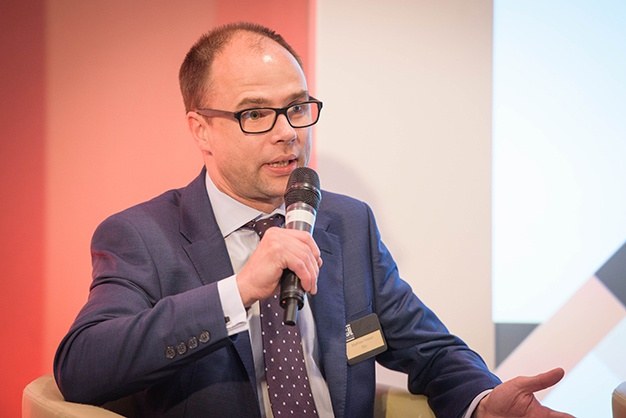
The penultimate session of the 2018 Commercial Litigation Summit drew a large audience to hear the views of the most important players in a major dispute – GCs and senior in-house counsel. This debate featured a panel of two private practice litigators – Jenner & Block’s Jason Yardley and Simon Bushell from Signature Litigation, and two senior in-house counsel – Matthew Hibbert of Sky and Tarun Tawakley of Deliveroo. In the middle was a barrister, moderating – Richard Lissack QC of Fountain Court – and a PR veteran, Tim Maltin. Continue reading “Taking the gloves off”

‘Part of a wider trend’: Flexible lawyering start-up Lexoo secures $4.4m for business development overhaul

Daniel van Binsbergen

Often described as the legal equivalent of Uber, flexible lawyering start-up Lexoo has secured $4.4m in financing to overhaul its global business development.

The backing has been led by investment house Earlybird with additional financing from Forward Partners and Zoopla general counsel (GC) Ned Staple. Continue reading “‘Part of a wider trend’: Flexible lawyering start-up Lexoo secures $4.4m for business development overhaul”

Linklaters sets sights on future talent as it raises trainee and NQ salaries for second time

Linklaters has announced the second increase in its trainee and newly qualified (NQ) salaries this year, with the latter now bringing home £83,000 in basic pay.

NQs have seen their basic pay increase by £2,000 since the firm last increased its rates in May, while trainees in year one have become the highest paid in the Magic Circle after remuneration rose by £3,000 to £47,000. Second-year trainees have seen salaries grow by £3,500 to £52,500. Continue reading “Linklaters sets sights on future talent as it raises trainee and NQ salaries for second time”

‘The right opportunity’: HFW reacts to client demand with strategic consultancy business

HFW

Maritime and insurance specialist HFW has set up a standalone consultancy arm, branded HFW Consulting.

The new business, launched today (3 October), will be headed up by the firm’s director of learning and development, Chris O’Callaghan, and will initially focus on Middle Eastern, Asian and Australian clients. Continue reading “‘The right opportunity’: HFW reacts to client demand with strategic consultancy business”

Disputes round-up: SFO abandons privilege appeal as funder Burford raises £193m

The Serious Fraud Office (SFO) has cut its losses after last month’s landmark Court of Appeal privilege judgment, opting not to appeal the decision.

In the case against the Eurasian Natural Resources Corporation (ENRC), the SFO was denied access to a series of documents that the mining giant claimed were protected by legal professional privilege (LPP).   Continue reading “Disputes round-up: SFO abandons privilege appeal as funder Burford raises £193m”

Workplace law: Doyle Clayton

UK Immigration – Rumsfeld déjà vu

Known knowns, known unknowns, unknown unknowns and…

There are few UK organisations where EU citizens living in this country are not clients or customers or, more importantly, employees. Throughout the private and public sectors – from chief executives through to middle management and minimum wage workers, EU citizens have been a cornerstone. Without them – the economic recovery, our attraction to foreign businesses and, of course, investors and entrepreneurs would all have been weakened. Continue reading “Workplace law: Doyle Clayton”

Kirkland continues inexorable rise with record 122-strong promotions round – including 10 in London

Kirkland & Ellis wrecking ball

In a move befitting of its unstoppable upward trajectory, Kirkland & Ellis  has scored a new record in partner promotions, making up a striking 122 partners, of which 10 are in London.

The overall tally across the Chicago-bred firms 14 international offices is an increase on last year’s mammoth round, which saw 97 new partners created, with 13 minted in the City. Continue reading “Kirkland continues inexorable rise with record 122-strong promotions round – including 10 in London”

Five stand as CC kicks off senior partner race but early favourite Sandelson not in contention

Leadership at Clifford Chance (CC) has over the last 20 years swung wildly between prestige and poisoned chalice but the just-launched race to become the London giant’s new senior partner shows no shortage of candidates.

Former London head David Bickerton (pictured) and ex-Europe chief Yves Wehrli launched their bids to become CC’s next senior partner, Legal Business has learnt. Other prominent figures in the race to replace Malcolm Sweeting after eight years include insurance head Katherine Coates, former capital markets chief David Dunnigan and continental Europe litigation chief Jeroen Ouwehand. Continue reading “Five stand as CC kicks off senior partner race but early favourite Sandelson not in contention”

City job cuts loom as Bakers puts 300-plus business staff under consultation in efficiency drive

Baker McKenzie

Support roles in the City are under threat again as Baker McKenzie has launched a review of its entire London professional and business services (PBS) staff, estimated to include around 350 people.

Kicking off at the end of this month as part of the firm’s drive to improve profitability, the consultation will affect Bakers’ finance, business development, knowledge management, human resources, marketing and communications teams. A spokesperson for the firm said a decision had yet to be reached as to how many roles will be impacted. Continue reading “City job cuts loom as Bakers puts 300-plus business staff under consultation in efficiency drive”

International round-up: HFW opens in Abu Dhabi as Morgan Lewis hires new Tokyo head

Big Law - $100bn and rising

HFW has added a fifth office in the Middle East, launching in Abu Dhabi after a double-partner hire from US firm Reed Smith.

Finance and corporate partners Vince Gordon and Tania de Swart have made the switch, with Gordon previously acting as Reed Smith’s managing partner for the Middle East. Continue reading “International round-up: HFW opens in Abu Dhabi as Morgan Lewis hires new Tokyo head”

Pre-float DWF aims to sustain momentum with exclusive US alliance with 56-partner LA firm

Andrew Leaitherland

DWF’s recent eye for international expansion has been extended to the US through an exclusive association with Los Angeles-based Wood, Smith, Henning & Berman (WSHB).

WSHB is much smaller than DWF, with revenue of just $81m and 56 partners across 22 offices in the US, but DWF managing partner and chief executive Andrew Leaitherland says the firms have a number of mutual clients, particularly international insurance businesses. Continue reading “Pre-float DWF aims to sustain momentum with exclusive US alliance with 56-partner LA firm”

Adviser reviews: Lucozade Ribena Suntory completes first post-merger panel

Briefcase

Eversheds Sutherland has won the role of primary UK and Ireland adviser in Lucozade Ribena Suntory’s (LRS) inaugural legal panel review, with nine other firms also making the cut.

The review was a first for general counsel (GC) Mary Guest since joining the drinks giant from Magic Circle firm Linklaters in June 2017, and it is also the first since LRS was formed after Lucozade and Ribena were acquired by Suntory for £1.35bn in 2013. Eversheds will be top of the list for general matters, with the remaining nine firms offering more specialist advice. Continue reading “Adviser reviews: Lucozade Ribena Suntory completes first post-merger panel”

‘Filling in the gaps’: Bircham Dyson Bell and Pitmans eye ABS transition with merger

Bircham Dyson Bell

The partners of Bircham Dyson Bell and Pitmans have voted for a £50m merger and move to an alternative business structure (ABS).

The pair announced today (28 September) that the respective partnerships had overwhelmingly approved the tie-up, which is hoped will propel them into the top 50 of the UK’s law firms. It first announced the plans earlier this month bolstering flagging revenue figures at both firms and align their complementary practice areas. Continue reading “‘Filling in the gaps’: Bircham Dyson Bell and Pitmans eye ABS transition with merger”

‘It’s a marriage of convenience’: Gordon Dadds to make its big splash as Ince merger talks intensify

Ince & Co

Gordon Dadds has emerged as the unlikely rescuer to ailing Ince & Co, with the two outfits in merger discussions to create the UK’s largest listed law firm.

The seismic move will create a £114m turnover firm called Ince Gordon Dadds. Gordon Dadds is currently in the due diligence stage, but a partnership vote is yet to take place. Continue reading “‘It’s a marriage of convenience’: Gordon Dadds to make its big splash as Ince merger talks intensify”

‘Going gangbusters’: Freshfields’ woes continue as corporate partner Qureshi joins Fried Frank

Freshfields Bruckhaus Deringer

A further exit from Freshfields Bruckhaus Deringer’s City bench has seen corporate and capital markets partner Ashar Qureshi join the London offices of Fried, Frank, Harris, Shriver & Jacobson.

The move sees the well-respected Qureshi leave the Magic Circle firm after four years as a partner in its global transactions practice.  The US securities veteran was seen as a significant string to the bow of Freshfields’ US-qualified offering when he joined in 2014. Continue reading “‘Going gangbusters’: Freshfields’ woes continue as corporate partner Qureshi joins Fried Frank”

In conversation: Supriya Gogia, Legal Counsel, Asics

GC: Tell me about your role and how you came to be at Asics.

Supriya Gogia (SG): Asics opened its Southeast Asia regional headquarters in 2012 here in Singapore. I joined Asics in 2016. Prior to this, I was working for a retail e-commerce company which was a first mover in the region. After a good run with online retail, I was looking to get some hands-on experience in offline retail as well. That’s how Asics happened. Asics has been in the region for six years. It has expanded exponentially during this period. Asics started off fairly early in Europe, and America, and other regions in the world, purely because these regions were seen to be more health conscious and sports-centric back then. This consciousness came to SE Asia in the last 15 to 20 years or so, and now the fitness industry in Asia Pacific is worth a whopping $16.8 billion – the highest value ever. There hasn’t been a better time to be here.

GC: It must be quite interesting for you – as you said you started in the online retail business and then moved offline – what was that transition like?

SG: E-commerce in Southeast Asia has been very hot for the last five years, as it is elsewhere in the world. The only impediment in Southeast Asia is that regulations and laws catch up slowly with technology. Technology is moving much faster than legislation, and this game of playing catch-up sometimes ends up impacting the industry adversely. In-house counsel need ratification for creative business models that companies are trying to implement; when we go to external counsel, they do not necessarily have black and white advice because the industry is nascent, it’s very niche, and there are very few companies which are acting as disruptors and pushing boundaries. At the same time, jurisdictions are in the midst of formalising relevant legislation, which makes it imperative that we work closely with external counsel as well as government authorities. Regulations in different countries in Southeast Asia keep evolving and it’s important for us to understand if any upcoming legislation is going to have an impact, either positive or negative, on existing business plans.

For me, the move from e-commerce has been very interesting indeed. Offline retail is more traditional, organised and risk averse as compared to e-commerce, even regulations concerning offline retail are better set out. There is a lot to learn as counsel because most consumer retail brands take pride in store concepts and their existence, which means both offline and online sales channels are important for consumers. As such, being in a spot which is ever-changing and still very new is quite challenging, but it’s equally interesting if you want to be an industry expert. My experience has been very fulfilling and I think these skills become advantageous along the way. All companies want to be online – most of them are there already – so it is a very interesting prospect for my personal growth and contribution to the retail industry. Omni-channel experience is something that is likely to become more of a necessity than choice.

GC: Do you have any sense of why e-commerce has exploded the way it has, in Asia specifically?

SG: Yes. I feel the reason for that is: one, Asia has a relatively younger population, compared to other parts of the world. And secondly, I feel that when you talk about the fourth revolution, it is different from the first three because the first three began in different parts of the world – the first one started in Britain, the second in North America and so on, but I feel the fourth industrial revolution – and this is completely a personal opinion – it started all over the globe, all at once. For instance, even if Apple is designing a phone in California, there is a manufacturer assembling it in China. It is a very collaborative revolution, where countries are coming together to give the end product to the consumer. This is what makes Asia very relevant in this revolution because it is not left behind, it is in fact playing a very significant role. This e-commerce explosion is also partly due to cheaper labour costs and strengthening of the manufacturing industry in this region. Because labour is cheaper in Asia, we have a growing service industry which is well equipped to support e-commerce operations and a massive manufacturing set-up. These are industries which give a strong foundation to e-commerce.

GC: Asics is looking to increase presence in other markets in Southeast Asia soon – how do these markets differ from those where Asics is already well-established?

SG: Asia is unique in that sense. Not all Asian countries offer seamless market entry for foreign companies, some economies are closed and protected. When a Japanese company like ours wants to establish a foothold – it’s not free entry. For some countries you either need to partner with a local venture or you need to invest additional capital to be able to engage in industry-specific activities. That said, these markets have immense potential for expansion, with a growing middle class and a surge in awareness surrounding fitness and sporting goods. We work very closely with external counsels in these countries since language can be a barrier at times. The majority of government documents in Vietnam, Indonesia and Thailand are in local languages which require local expertise to decipher.

GC: As a large, recognisable brand, intellectual property must be of particular concern. Could you talk a little about that?

SG: Yes. Intellectual property is the most valuable asset for any global company – for consumer goods it’s the most important piece of brand management. As I mentioned before, the bulk of manufacturing for consumer goods is done in Asia, and this comes with a downside for brand protection. There could be instances where one factory might be manufacturing goods for different brands, and no matter how well you articulate the liability clauses, how meticulous your contracts are, there is bound to be leakage. Leakage is when original products are leaked through the factories into open markets. Brands also face issues of counterfeit products, which originate from factories which create copies of authentic products. When you operate in a region that manufactures, you have to be extra cautious of these infringements, which are potential high risks for the brand.

GC: Is there anything that you see coming on the horizon that might affect the industry?

SG: I do think the concept of augmented reality is quite intriguing, as well as the trend of pop-up stores – which is quite common in Asia – where you can try a pair of footwear, get the “touch and feel” of the product and use a tablet or iPad available at the pop-up to order that product. The product could be delivered to your address the very same day. You don’t need to stock up inventory, the space required is minimal, which ensures you don’t pay exorbitant high street rentals and human resources involved are far less. I do foresee this as being a popular way to shop for countries where internet penetration is high.

‘It hasn’t been easy’: Fieldfisher concludes European odyssey with long-awaited Spanish launch

Fieldfisher’s recent frenetic push into key European markets has culminated today (25 September) with a much-anticipated tie-up in Spain with local firm JAUSAS.

The combination, which will operate under the firm’s Swiss Verein structure, gives Fieldfisher access to offices in Barcelona and Madrid under the name Fieldfisher JAUSAS, a long-stated ambition of managing partner Michael Chissick. Continue reading “‘It hasn’t been easy’: Fieldfisher concludes European odyssey with long-awaited Spanish launch”

Levine bids for second managing partner term as DLA kicks off election

Simon Levine, DLA Piper

DLA Piper’s partnership is headed to the polls again for its managing partner election, less than a year after eight partners competed in the firm’s first contested senior partner election in a decade.

Incumbent managing partner and co-chief executive of the global giant, Simon Levine, is standing for re-election. Nominations for candidates close Friday 5 October but if nobody else stands, Levine will be re-elected on 8 October. Continue reading “Levine bids for second managing partner term as DLA kicks off election”

Deal round-up: Travers advises Shazam on Apple buyout as Freshfields and Norton Rose strike gold on $18bn mining merger

In the latest flurry of deals, Travers Smith has represented popular mobile app Shazam on its buyout by tech giant Apple, while a raft of international firms have benefitted from recent transactional activity.

Shazam, which was founded in 2002, is a song recognition app which can identify what music is playing via a phone’s inbuilt microphone. The deal for Shazam, reportedly worth $400m, will see Apple offer the app on an ad-free basis for all users. Continue reading “Deal round-up: Travers advises Shazam on Apple buyout as Freshfields and Norton Rose strike gold on $18bn mining merger”

Tencent On The Dollar

When Brent Irvin joined Tencent as group general counsel nearly nine years ago, the Chinese upstart company was already a domestic tech wunderkind, boasting revenue close to RMB 20bn. But few foresaw the trajectory it would take from there: with record growth in 2017, the company is now valued at more than $477bn.

‘We have always been about combining social and content, but in the beginning we were more games-focused,’ says Irvin.

‘It’s still a huge part of the business but over time we’ve expanded into movies, video, music and other forms of entertainment. We’ve added online finance and payments to our bow as well.’

The story of Tencent’s dramatic growth is becoming a semi-regular occurrence in the Chinese tech world. The country now has nine of the world’s top 20 tech companies. Only the United States is better represented. Among them is electronics company Xiaomi, the world’s fifth-largest seller of smartphones.

‘We’ve grown very quickly from a start-up to become a Fortune 500 company within eight years. It’s like working in a different company every half year,’ says Bin Sun, general counsel at Xiaomi.

Originally an online-only retailer, Xiaomi, which recently floated on the Hong Kong Stock Exchange, opened its first bricks and mortar store two years ago in a bid to compete with companies such as Huawei, Oppo, and Vivo, which began selling smartphone devices offline, increasing competition in the market. This brought a new set of challenges for Xiaomi’s in-house legal team.

‘Our retail stores have grown very quickly. We started out with just one attorney; six months later I had to add a whole team. Our lawyers have to learn different business skills all the time.’

The legal team has grown ten-fold since Bin Sun joined almost three years ago – Xiaomi now has around 80 lawyers based in its Beijing headquarters, with teams outside China based in India, Indonesia and Spain, with plans for other EU countries in the near future. However, the team is still relatively small compared to other Fortune 500 companies, which is a challenge when trying to keep up with the growth of the business.

That challenge is one not dissimilar to that faced by Tencent. Under Irvin’s management, Tencent’s legal team has seen an increase from 20 to 350 lawyers, with many new specialties required to service the growing expanse of business offerings.

‘Different types of business require different types of lawyers. Online finance has become an important part of our business. We were lacking experts in banking regulation, so had to build out new teams. We talk about IP and technology a lot more now, which also requires more weight,’ explains Irvin.

‘One of the differences between us and other big Chinese firms is that we do a lot more overseas deals, outside of China. We have a need for deal lawyers globally – we do a lot of deals in London, New York and California – and it’s not just regulatory work.’

‘When it comes to hiring external lawyers, “knowing the Tencent way” is very valuable. We put a high premium on lawyers who understand our business well. We often end up with relationships based on a lot of volume (in terms of deals), so we want to build long-term relationships and try to be innovative when it comes to billing, rather than just maximising on price.’

Uniquely China?

China is a notoriously tough market to operate in. While President Xi Jinping has pronounced that China is open for business on the international stage, there are still unique roadblocks to building a successful business in China. Between an intellectual property regime that is still finding its feet and the complex regulatory environment, doing business in China can be difficult at the best of times. However, according to Irvin, the challenges for most companies operating in the tech sector are largely the same as you would find globally.

‘I’m American and have worked across various countries, I know a fair number of GCs, and you find a lot of the issues are the same,’ he says.

‘You worry about competition laws whether you’re at Google or Facebook or Tencent – when you make products that improve people’s lives, there’s a certain amount of increased regulatory scrutiny and that is the biggest challenge we are facing now.’

Providing strong leadership is crucial to overcoming such challenges; a skill that Irvin says he has needed to develop quickly in order to meet the changing requirements of his role.

‘I’m not a big fan of one-size-fits-all management. To me, a very important part of leadership is judgement and that’s often very contextual: how to handle certain cases or people or teams,’ he says.

‘We put a high premium on lawyers who understand our business well.’

‘It’s a cliché but you’ve got to hire good people and you’ve got to empower them; there’s no way you can do it yourself once you reach a certain scale. I do not micromanage, so a fair amount of my time is spent making sure we have the right teams and leaders in place.’

This tailored approach to management might be well-suited to the often turbulent life of an in-house counsel in China. Still, for all the differences, the core concerns for counsel stay the same, according to Irvin.

‘The most important thing for me as GC is to understand your business needs and to be able to build a team with strong execution that is highly adaptive. It is challenging to find talent in such a fast-growing environment. We tend to focus on people’s ability to learn and motivation rather than past experience.’

Leveraging Intellect

Bin Sun took over as general counsel during a particularly turbulent time for Xiaomi. In 2016, sales had plummeted and the company fell from first to fifth place in China’s smartphone market. The reasons for this are varied, with reported organisational problems through the supply chain – but one of the main explanations was a reliance on online sales, which plummeted between 2015 and 2016 from 70 million devices down to a reported 41 million.

In an attempt to turn things around quickly, Xiaomi embarked on a new strategy to compete in the bricks and mortar world of offline retail. In addition to its own products, Xiaomi would fill the stores with products developed and produced by start-ups, hand-picked and funded by Xiaomi. The hope was that these start-ups would complement the company’s established products to create an eco-system of digital tech goods that would be enough to lure customers into the Xiaomi stores.

This strategy, together with a concerted push into overseas markets such as India, was designed to pull Xiaomi back to the top of the leaderboard.

However, the international expansion brought its own headaches, and invited patent lawsuits in expansion markets – even some in its home country. In one such case in India, Xiaomi and its distributor, Flipkart, were blocked from importing, marketing and selling smartphones that were infringing eight patents held by Ericsson. It was one of the biggest lawsuits that Xiaomi faced from a major company.

By the time Bin Sun was brought in, Xiaomi had drawn heavy criticism for its intellectual property woes – making her previous role as head of IP at China’s BOE Technology Group a definite advantage.

‘Being able to speak the same language as IP professionals means I can make confident decisions on high-stake matters. It certainly helps in my role as GC. IP law, especially the patent law for tech, is basically the same as the one designed more than 100 years ago when tech was not integrated,’ she says.

‘There is no way you can get complete freedom to operate in hi-tech. Even Apple and Samsung, who have been in the field for so long, are still facing tonnes of litigation every year. I think this will continue in the future.’

When it comes to legal innovation, both Tencent and Xiaomi are well positioned.

Belonging exclusively to the digital space means that this is less of an issue for Tencent.

‘In our business, we are talking mostly about individual copyrights. Tencent Music and Tencent Video – the second largest in China – would not exist if there was wide-scale piracy,’ says Irvin.

‘In the past four or five years, the government and other companies have played a big role in significantly improving digital copyright to a point where I don’t believe there is now wide-scale piracy, and the IP system is good enough to support us.’

The reason behind this is not that Chinese courts are establishing new rights, but that they are enforcing the rights that already exist for copyright owners – and doing so in a relevant way. Nearly 87,000 copyright-related cases were filed in China last year, according to data compiled by China’s Supreme People’s Court – a 15-fold increase from 2006.

Last year, a Beijing court awarded Tencent more than $1m in damages in a copyright infringement case. The defendant, streaming site and hardware manufacturer BaoFeng, was found to have streamed episodes of The Voice of China without permission from Tencent, which had licensed exclusive streaming rights.

Irvin’s experience in IP has proved invaluable when it comes to advising other companies within the Tencent ecosystem too – he sits on the board of music-streaming companies including Tencent Music and Gaana in India.

‘You want a diversity of opinions on a board so for highly regulated businesses having a lawyer on board can have benefits. By itself, just being a GC won’t help you on a board – I had already been a commercially driven deal lawyer, that was my background, so I have a good business sense.’

Driving Innovation

When it comes to legal innovation, both Tencent and Xiaomi are well positioned.

‘We are fortunate. Being a tech company, our attorneys will design the kind of tools we want and our engineers will put them together,’ says Bin Sun.

For larger, more complicated work, the legal team tends to buy in IT systems from the outside market, which tends to be a one-size-fits-all approach.

‘Tech has much more impact on project management and documentation, for knowledge accumulation and transfer it also helps. We are starting to see AI penetrate into legal, but it is yet to become a competent tool that we can use to support daily work.’

At Tencent, the company has recently been asked to work with Chinese courts to use its mobile messaging and social media app, WeChat, as a tool to help the litigation process. Parties to a legal proceeding can now submit documents, verify identification and pay legal fees through the service.

‘You worry about competition laws whether you’re at Google or Facebook or Tencent.’

‘It’s a great opportunity for us to build a product innovation where the client or end users are judges,’ says Irvin.

When it comes to implementing legal tech in-house, the company faces other challenges.

‘One of the issues we faced as a Chinese company is that there aren’t a lot of really good off-the-shelf solutions for IP management software. You can buy them here, but they are in English not Chinese,’ says Irvin.

‘We have developed our own IP management software and set up a litigation system in-house. In the tech space, you are often facing new legal issues – technology develops faster than the law. Solving complex legal issues in new ways or coming up with a framework to address various new regulations are the main two innovations I’m seeing.’

Going public

For Bin Sun and her legal team, Xiaomi’s public debut this summer – the world’s biggest technology float in almost four years – was a steep learning curve.

The team played a key role in influencing the listing terms of the Hong Kong stock market, which historically has not been accessible for hi-tech companies. This changed in April 2018, when the Hong Kong Stock Exchange implemented the largest set of changes to listing rules in decades. The new regime allows the listing of biotech companies that do not meet any of the financial eligibility tests of the main board, high-growth and innovative companies with weighted voting rights structures, and issuers seeking a secondary listing in Hong Kong. The amended law will allow Hong Kong to capitalise on opportunities from up-and-coming biotech companies, which make up a large share of pre-revenue companies seeking a listing. As of June 2018, 26 Chinese tech companies have offered to sell their shares through public offerings.

‘We are lucky that the Hong Kong market is becoming more open and realising the importance of having hi-tech businesses,’ says Bin Sun.

‘It’s very important for a tech company not to be shortsighted – we don’t want our operation to be heavily influenced by the stock market, we want to focus on our long-term goal and continuously grow to become a great company.’

Despite the company’s lower-than-expected valuation – Xiaomi settled on $54bn despite media reports suggesting it had hoped for $100bn – the listing was a huge success for the future of the company.

‘We actively participated in the new amendment to the listing rules in Hong Kong. We were involved in the amendment to that of China mainland – neither had accepted dual-class corporate governance before. We prepared our own IPO project at the same time as working with government officials on the law amendment. It was a very intense time and has made a remarkable memory for the legal team.’