
Significant matters

Pearson revisits adviser panel

Pearson has elected to consolidate its legal adviser panels into new ‘general’ and ‘preferred’ rosters, moving away from specialised panels in a bid to reduce costs. Fourteen firms have won places on the preferred panel, which Pearson says will address ‘day-to-day requirements’, in addition to newer areas not historically covered by external counsel, including US immigration and US employment work. Among firms winning spots on the preferred panel were Charles Russell Speechlys, DWF, Freshfields Bruckhaus Deringer, Herbert Smith Freehills, Littler Mendelson and Morgan Lewis. Those appointed to the general panel were Bird & Bird, Cleary Gottlieb Steen & Hamilton, DLA Piper, Pinsent Masons and Sullivan & Cromwell. The review has been led by general counsel Bjarne Tellmann (below), who emphasised the need for chosen firms to have experience, as well as flexibility over billing. Continue reading “Significant matters”

The discerning customer

In April last year, US-based tech services provider DXC Technology was formed following the merger of The Hewlett-Packard Company’s enterprise division with Computer Sciences Corporation. It was the ideal opportunity for general counsel Bill Deckelman to sit down with senior management and establish what the legal function should look like.

‘To put things simply, it’s too hard for a GC to focus on the administrative side of things while also doing all the strategic stuff,’ says Deckelman. ‘Both the administrative and strategic pieces of the puzzle are becoming more complex and more labour-intensive, and GCs desperately need to think themselves out of the legacy models they have inherited, which were designed to serve completely different business and legal challenges.’

As one of the founding members of AdvanceLaw, a GC-only forum that allows members to share reviews and advice on law firm appointments, Deckelman was interested in taking a new approach to procurement. ‘I realised that the considerations you need to make when appointing counsel have become so complicated that it would be necessary to bring in a full-time person to run the tendering process. The big change in how we are working is that once a panel is selected we will interact with the firms throughout the year, giving them constant feedback on their performance and our expectations.’

A similar approach has been developed by Barclays, says Stéphanie Hamon, head of external engagement for legal. ‘Like any relationship, the client-law firm one can only work on trust and dialogue. You have to set out what you want and give feedback to make sure the other side understands if they are not delivering on it. We should treat our law firms as we do our employees. They’ve got a capability framework that they need to deliver against and to do that we need to give them regular feedback.’


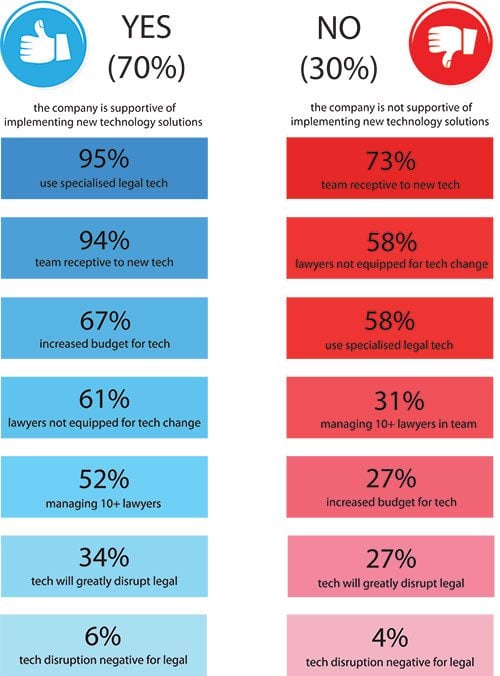
How often do you use alternative fee arrangements over hourly billing?


Do you use specialist pricing or procurement professionals in your legal team?


As a result, Barclays’ current panel review process will be its last. In its place, the bank will look to make a continuous assessment of its law firms.

While Barclays’ buying power is atypical, Hamon hopes the approach can be replicated by others. ‘The more we as a profession approach this in a standardised way, the more quickly the industry is likely to change.’ It is clear, however, that panels remain a popular means of assessing external firms.

Nearly two thirds (63%) of those surveyed had a formal panel in place, while a further 9% were planning to appoint one in the near future. It is also apparent that regular assessment of law firm performance remains a rarity. Nearly half (46%) of respondents said they evaluate outside counsel on an annual basis, while over a third (38%) evaluate performance only at the end of a particular matter. Just 14% said they conducted assessments every six months or more frequently.

“GCs desperately need to think themselves out of the models they have inherited, which were designed to serve different business and legal challenges. ”
Bill Deckelman, DXC


Alongside the push for more frequent evaluation of law firms, larger and more sophisticated legal teams are increasingly willing to enter into a more mature conversation about how matters are priced. ‘I have seen a lot more GCs lately abandoning the demand that firms should be more efficient, which is really just a veneer for demanding deeper discounts,’ comments Casey Flaherty, founder of legal technology consultancy Procertas. ‘If that’s all you’re doing, then legal becomes a mindless procurement function. Strategic sourcing does have a role to play, but it can’t just be about beating people up on price. There are not many tricks in that particular bag. Ultimately, pushing down on costs will erode law firm relationships and also erode the value of the legal team.’
Hamon agrees: ‘Everyone is cost conscious, but getting the cheapest price is not a useful way to procure sophisticated services. We need our law firms to be profitable so they can hire the best lawyers. It’s not about squeezing their margins but working with them to address how they can deliver services in a way that covers gaps in our own offering and adds value to the business.’
National Grid’s Mo Ajaz says clients need to get their own affairs in order before criticising advisers. ‘Poor selling practices are prevalent, but we can’t just look at what the firms are doing and blame them without taking any responsibility for the poor buying behaviour that is equally prevalent among legal teams. Law firms are willing to change the way they work and to put effort into making things better, but we need to be clear about what we want. If you outline the steps you want a firm to take or state with clarity what you want to achieve, they will help you. What’s really interesting is that the firms themselves are now looking to build up their own legal ops offering and provide training to their clients on which parts of the legal process can be done by alternative providers.’


When using alternative fee arrangements, which models do you use?

Deckelman, who recently introduced a legal operations group run by finance professionals to DXC, has seen a similar change in the US. ‘Law firms are beginning to step up by bringing in their own internal budgeting people, often with a finance and accounting rather than a legal background. This trend has come a long way in the last year and will get stronger as law firms figure out that clients are not necessarily demanding lower costs but more rigorous methodologies when it comes to budgeting.’


“In the US, more lawyers are employed by commercial organisations than the 200 largest law firms.”

Casey Flaherty, Procertas


The trend toward measuring law firm performance will also help legal teams reflect on their own work, says Michael Shaw, GC of The Royal Bank of Scotland: ‘In-house lawyers do not normally speak the same language as our business colleagues. They do not necessarily appreciate what great work we do, because we have not been able to communicate that well. Having metrics and processes, driving efficiency, being able to show what we are doing to others has been a real sea change that has professionalised the function.’

Are you currently or planning to conduct legal service delivery redesign projects?

Do you use alternative legal providers?


And, as Flaherty adds, it may be that the in-house wave is about to break. ‘The growth of in-house has been a prominent feature of the legal industry over the past decade or so, but it can’t continue. In the US, more lawyers are employed by commercial organisations than across the 200 largest law firms. We are now looking at huge payrolls for corporate legal teams and we need to ask whether there might be smarter ways of bending the cost curve.’

Which non-legal professionals would be most useful to your team?


Maurus Schreyvogel, chief legal innovation officer at Novartis, believes a symbiotic relationship between law firms, in-house teams and alternative providers will become the norm. ‘Even a company the size of Novartis will need law firms to control big events in M&A and litigation, because it is not cost efficient to have a lot of subject-matter expertise as regular members of the team. However, the same is likely to be true of the more commoditised legal work we handle. We have had good experience with alternative providers who use technology to resource legal work and I believe the market is finally mature enough for this to become the norm. That means the capability of law firms to deploy technology or work alongside outsourcers will become
the key decision criteria when we come to assess their ability to provide legal advice.’

Going places

Leading a global legal team is a complex role and many general counsel could be forgiven for spending all their energy just trying to get the job done. Not so at Michelin. Despite overseeing a legal community of 200 members, comprising lawyers, patent engineers, paralegals and admin staff, spread across 20 countries, group GC Benoit Balmary wanted the team to develop a defined strategy of its own alongside supporting Michelin’s goals. Continue reading “Going places”

Hired help

‘A good general counsel should do three things,’ says National Grid’s Alison Kay: ‘Manage the legal requirements of the business, manage their people and manage their budget.’ But as managing the legal requirements of a large business becomes more time consuming, GCs are increasingly finding it difficult to pay adequate attention to costs and staff. Continue reading “Hired help”

Point break

Legal spend is the second-largest ‘cost centre’ for £21bn global banking giant Barclays. This tantalising statement is in the bank’s 2018 Request for Quotation document, sent to law firms ahead of its final panel review this year and seen by The In-House Lawyer. The document provides detail on what Barclays describes as this ‘sizeable’ legal spend. Continue reading “Point break”

Across boundaries

Alex Novarese, The In-House Lawyer: How do people feel about the service from law firms?

Simon White, Cognizant: There are a lot of individuals I like a great deal but as institutions, I struggle with law firms as a concept.

Alex Novarese: Because?

Simon White: I work at a company that has a large legal team. Over 300 globally. The things that are specialisms for us, we have some of the best lawyers in the world. Areas where we go out to counsel I struggle to get consistency. I do not regard myself as having a relationship with law firms; I have relationships with individual partners.

Lucy Vernall, Funding Circle: I agree entirely. Very often you can have a very good relationship with an individual partner or associate who can give you very good advice, but they involve the rest of the team and there is no consideration around whether that relationship will work.

Charles Sermon, Mereo BioPharma: Consistency across continents in your main markets is key for us.

Michael Siebold, Interlaw: Is there any guidance you could give us to reach that consistency?

Zoë Aldam, Financial Times: Even if there is consistency of quality there is not necessarily consistency of approach. You can get contrasting approaches from lawyers working on the same matter but in different jurisdictions. That’s challenging.

Alex Novarese: What are the structural impediments in the legal industry to improving global service?

Simon Evans, Vesuvius: There are different jurisdictions and different cultures. Some firms address these challenges by moving their people around between offices to ensure consistency. That is one of the solutions.

Lucy Vernall: There is a problem with a lot of lawyers giving a view. It might be OK when you need some black and white advice but when you need something more complex, even in the UK, it is quite hard to get. In the US, it is sometimes hard to get. Certainly, in other jurisdictions it is really hard to get.

Alex Novarese: Are there any jurisdictions where you get better service on a cultural level?

Charles Sermon: We find that because we do a lot of work with US lawyers and UK lawyers and some of the firms that we have worked with do send people from the UK to the Washington office or the San Francisco office, they get experience working together. That is amazingly helpful.

Alex Novarese: It is a cliché to say technical excellence is a given. Is that true?

Simon White: I would never go to a law firm on GDPR.

Alex Novarese: Because?

Simon White: We are all in the same boat – all learning what GDPR is. Most lawyers and law firms do not understand how companies work in terms of process and people. The biggest thing about GDPR is culture change within an organisation. That is not something lawyers sitting in a nice office in the City really understand.

Daniel Lichtenstein, Grant Thornton International: Law firms have industry specialisms. That tends to be attractive to companies in a specific industry. Just because a firm is a global firm I do not think I could assume technical expertise.

Alex Novarese: Hourly billing has been a bugbear for years. GCs are great. We love them. But it is kind of your fault, is it not?

Simon White: It is.

Alex Novarese: What I would take from that is it is in the interest of many GCs to have hourly billing because if it wasn’t, it would have gone already.

Simon White: I am not sure that is right. Law firms are the last professional service industry that is obsessed with T&M. Everyone else is driving to different models. OK, you can throw it back on us as customers and say, ‘Why are you not doing that?’ but other professional service firms we use in consultancy do not do that.

Alex Novarese: Bluechip consultants are value for money?! That is a new one.

Simon Evans: From an in-house lawyer’s view, the best way of controlling fees is to tender for everything because you would reduce the price. You can do that for certain work but not others. It may be too sensitive, too confidential, too urgent. Then, ultimately, the law firms have their own profit models, which are based on time. There is a lot of competition coming in. However, for the bigger ticket work, they still get away with it.

Alex Novarese: There are a lot of transactions that get funnelled to a very small group of law firms, even though it is not six firms that can do it; it is 26 or 56. Ultimately, what does the IBM factor mean? It means somebody did not want to put their name behind hiring somebody other than IBM. And that somebody is sitting around this table.

Simon Evans: You are right. The GC would have to convince the board that a slightly less familiar name is going to do the job well. If they are prepared to pay more, it is less risk on you.

Michael Siebold: I have never understood why lawyers would sell on an hourly basis. Legal advice does not necessarily have to be the cheapest. It has to be worth the price that you are paying. We can price everything. If we cannot, we should not be your firm.

Alex Novarese: How easy is it for people around the table to benchmark market rates for various kinds of job?

Simon Evans: You have a sense of what something should reasonably cost and know that will vary a bit by jurisdiction and law firm, but you think that is probably lower than the law firm’s figure. If you go into a new legal area, then your certainty will be lower but you have probably seen most types of transactions to give you an idea of an appropriate cost.

Alex Novarese: Yet the legal market is stunningly opaque.

Simon White: I do not feel I have any way of benchmarking against what other corporates are paying for similar things. I know what I think is a fair price but if I get three or five firms to pitch for that work, I do not know how that compares to what they then pitched the week before to someone else. It is odd because in the tech industry, benchmarking rates are critical.

Alex Novarese: Is the next stage where you start to build your own Lawyers On Demand?

Patrick Crumplin: That suggests fundamental change in the whole business model, not just how you price a particular project.

Alex Novarese: How do law firms compare in service levels and the issues we have been talking about to banking, consultancy or accountancy?

Lucy Vernall: Banks are not very good at it. They work on a relationship basis. They have their fingers in everything and are instructed because of who is on the board. Accountants, while they charge you on a different basis, are on the sell constantly. Often if you are on a project where you have banks, accountants and lawyers, the lawyers are providing by far the best service.

James Wood, The In-House Lawyer: Has anyone worked with the legal services arms of the Big Four?

Lucy Vernall: Yes. I have not done it for a long time, but I would not work with them again. I did not think their quality was particularly good. The time they come up is when you are dealing with one of the Big Four and they are doing a project for you and they say, ‘We are not advising on the legal bit’ because there is a very narrow scope of work that involves not very much and everything else is outside it. The work that lawyers are doing is fairly simple and I do not think they have done it particularly well.

Charles Sermon: Also, you have to be very careful because if you have an audit risk committee there are certain guidelines on non-audit services. Even if you wanted to use the legal arm of your auditor for services, you are limited as to how much you can do. We do not [use them].

Simon White: They are often not selling legal services. With GDPR, for example, the Big Four have all gone and hired whoever can spell the word privacy. On the legal bit there is not the structure that checks the quality and consistency. You are with a very, very random group of lawyers who do not know whether they are giving legal advice or not.

Alex Novarese: Are clients aware if your advisers operate through a network, or do you just focus on the end result?

Simon Evans: If it is a genuinely multijurisdictional legal practice and the model works, the seamless international service delivered wherever you want it is fine. The danger is if it has weak links and you are trapped into a network that has four good offices and three poor ones.

Lucy Vernall: It potentially is easier if it is properly managed to get good consistency and quality through a network than through a big international law firm, particularly one made up through mergers.

Alex Novarese: Michael, how do you do it?

Michael Siebold: We are non-exclusive in the sense we do not have to use our member firms. We use the best firms locally that we have. Now, we also know what the member firms cannot do. In situations where they are not able to handle something we would ask them to provide somebody more capable. We also do a tri-annual review where we run due diligence, in most cases with a personal visit. On every matter, the sending firm, the receiving firm and, hopefully, the client will tell us whether we did well or not. It is a scale of one to five; three is not good. Two is acceptable, one would be best. On three, we ask what went wrong? Less than that, we talk about whether we have the right member.

Alex Novarese: Law firms never shut up about their culture. Do clients notice it in the service?

Michael Siebold: Again, assuming I understand what you want, I then pick the right people. I can vouch for the quality because my relationship with you would be on the line.

Simon White: Then there is a question about whether you pay for that client management piece of that project management piece.

Alex Novarese: Giving law firms a rest, what do our in-house legal teams do now that they should stop doing?

Daniel Lichtenstein: Not using technology enough. It should be built into how the department works, from billing management to control management. It is also related to GCs needing to upscale their own technical expertise.

Alex Novarese: So much resource is going on lawyers directly, the lawyers you employ or pay externally, rather than other skills, whether technology or other business services.

Daniel Lichtenstein: Yes, but also being able to assess the value-add through technology. There is a great opportunity to integrate technology into everything the GC does.

Simon White: I would also say to my team that we spend too much time looking at the contracts and are missing the wood for the trees. I have just come from a board meeting earlier this week and the board were asking about contracts. We have unlimited liability and they are obsessed with this. That is irrelevant.

Charles Sermon: Automation improving processes and efficiencies might scare some people. I encourage the junior people at the coalface to come up with ideas about how we could be more efficient. I engage them there so it is not threatening to them.

Simon White: AI is a thing we are still in transition in understanding. Five years ago, people thought of automation as robots and humans disappear. People now talk about the smart hand or the smart robot hand. The humanity becomes far more important. I work in a massive tech company but in the last five years is we are employing fewer engineers and mathematicians. We are employing people now who do history, theology and psychology because understanding the human piece on whatever we do is super important. Your juniors may be fearing AI, but it is about thinking about what the new skills they need are. Maybe they do not have to become a lawyer but can introduce new skills.

Alex Novarese: How do people see in-house evolving in the next five to ten years?

Simon Evans: We are going to have to use technology more, which is challenging in getting it right because there is an upfront cost. There is also a separate demographic issue with more law graduates being churned out.

Nayeem Syed, Thomson Reuters: The in-house function will still be important. But it will likely change. There is more regulation, more compliance and more complexity. Business models are being challenged at an unprecedented rate so there is more pressure to do more innovative things more quickly. Our work will focus less on pro-forma contracts or standardised advice. Internal clients and external partners are looking for legal teams to step up and give commercially focused legal views that people at different levels and with different training will understand. Those that can operate comfortably when faced with uncertainty and are willing to apply legal frameworks to new situations to achieve organisational goals will be valued and supported. If you cannot show that, it is more likely that you will be excluded from key discussions and perhaps eventually the organisation itself.

Lucy Vernall: You have to be able to show the data. It is not just about cutting external legal fees. How do you use technology? People want a business partner. You need to be making yourself more efficient.

Simon White: We are in much more of a mixed model moving forward. There is not a single solution to anything. In-house teams are going to contract. Law firms will contract but there are going to be all sorts of other things out there. It is challenging the boundaries of what is and is not legal advice and we are starting to get less hung up on those pieces and understanding whether this is business advice. There is no solution yet but that is where we are heading.

Alex Novarese: Thank you for your time.

The panellists

  • Zoë Aldam Financial Times
  • Ned Beale Trowers & Hamlins
  • Patrick Crumplin Duff & Phelps
  • Simon Evans Vesuvius
  • Daniel Lichtenstein Grant Thornton International
  • Michael Pattinson Trowers & Hamlins
  • Charles Sermon Mereo BioPharma
  • Nayeem Syed Thomson Reuters
  • Lucy Vernall Funding Circle
  • Simon White Cognizant
  • Imogen Lee Interlaw
  • Michael Siebold Interlaw
  • Alex Novarese The In-House Lawyer
  • James Wood The In-House Lawyer

Tumbling into crisis

Corporate crises are on the upswing. A faster-paced R&D cycle, improved but riskier technology, 24-hour news… the list of triggers goes on. But our understanding of such events has not always evolved at the same pace. We speak of a crisis as a single incident but, in reality, a chain reaction will likely ensue – and no sooner than one element appears under control, another pops up. Continue reading “Tumbling into crisis”

City and Wall Street elite get behind legal tech app as the sector eyes consolidation

cyborg

Clifford Chance (CC), Linklaters, Freshfields Bruckhaus Deringer and Latham & Watkins are among 12 City and US heavyweights to get behind a startup project to create an App Store for legal tech products.

The initiative responds to challenges faced by legal professionals with overkill setting in as unconnected products flood the market, forcing lawyers to upload client information and documents on a new platform each time the firm adopts a new tool. Continue reading “City and Wall Street elite get behind legal tech app as the sector eyes consolidation”

Significant matters

Policing in-house counsel

The Financial Conduct Authority (FCA) launched a consultation in January on whether in-house lawyers at finance houses should be policed under the incoming Senior Managers Regime, in an attempt to clarify uncertainties regarding the overall responsibility of an in-house legal function under FCA’s rules. Bringing lawyers under the regime, designed to boost accountability in the City, could potentially usher in yet another front for finance counsel and conflict with the professional regulation of solicitors. Continue reading “Significant matters”

Getting down to business for Enterprise GC

Consider this a call to arms or an acknowledgement that I can use all the help I can get but our team has begun turning its mind to the next Enterprise GC summit, the flagship in-house event from our parent company Legalease. It is, and has been, a group effort spanning teams across The Legal 500 and GC magazine, but this year a little more of the initial work on the conference agenda is falling to The In-House Lawyer and Legal Business editorial team than in the previous three years of the event and we do not want to let the side down. Continue reading “Getting down to business for Enterprise GC”

No great advantage

Alex Speirs: Now less than a year out from the UK’s scheduled withdrawal from the EU, how would you characterise the current state of negotiations?

Dominic Grieve: They’re not going well at all. We are not talking the same language. The UK is seeking a bespoke deal recognising our past membership of the EU, our desire to maintain very close links with the EU in a wide range of fields, to have as near frictionless as possible trade in goods and services, and to participate in a vast range of EU peripheral activities. But we want freedom to operate our own immigration policy, not have freedom of movement, the ability to do third-country trade agreements and the ability to deregulate or change the regulatory framework in areas.

It’s what our EU partners characterise as ‘having your cake and eating it’ – and that is, plainly, what we are asking for. Although the prime minister has altered her position in the knowledge that we might not get everything we want, each time she’s made a major speech, each speech has essentially been that same message. And the response has consistently been coming back from the EU Parliament that they won’t give it to us. This is very predictable. The UK Government’s view is that, at some point, the EU will moderate its position, just as the EU thinks that at some point we will change our position. It’s difficult to see how the positions of both parties will be reconciled.

AS: Why has the UK taken this approach to negotiations?

DG: It shows the reasons people voted to leave and why people have accepted the vote to leave are very complex and often incompatible. You’ve got, within UK society, deeply polarised viewpoints, plus the fact that those who voted remain have been utterly unpersuaded that there is any benefit to leaving.

In the middle of that, you have a government led by a prime minister who voted to remain. She may have been lukewarm about the EU, but she voted remain because she could see leaving was going to be extremely risky, complicated and potentially damaging to the UK economy. But in trying to minimise those risks, she is angering the purest leavers for whom the three things of no freedom of movement, free trade deals and no European Court of Justice [ECJ] are absolutely paramount.

That’s why, having kicked the can down the road for two years, we are now coming to a crisis – time is running out. Otherwise, we careen out of the EU with no deal and then it’s not at all clear what would happen.

AS: Is it more likely than not the UK concludes negotiations with no deal?

DG: It would be very surprising to end up with no deal at all. If we are going to end up with no deal on anything, unable to reach an agreement on the terms of withdrawal, let alone a future framework, we are heading for a potentially catastrophic situation. Catastrophic for us, but pretty catastrophic for the EU, because essentially the ability to trade in goods and services would come to an end. I can’t believe that’s in anyone’s interest, which is why a complete no deal is quite improbable.

If we are leaving without any deal for our future relationships and trade terms, there is a very serious crisis brewing – bad for our continental partners in the EU, but very bad for us. I cannot see a government surviving that. You’d be talking about a general election, a referendum or even extending the article 50 process.

AS: The EU Withdrawal Bill has been a point of contention of late – and an issue which you have been at the centre of. Why has there been such controversy around its negotiation?

DG: It’s important to understand that the EU Withdrawal Bill is not about the terms of our withdrawal from the EU. It is about putting in place a safety net to ensure that on the day we leave the EU, or at least the day we come out of transition, we have a system that will enable us to prevent a legal void when EU laws cease to apply. In theory, it ought not to have been particularly controversial. But it had a number of controversial elements.

Firstly, the way in which you carry out retention of EU law. There were issues around the extent to which the Government was trying to use Henry VIII powers – the power to change primary legislation by statutory instrument. The Government’s argument, which was reasonable, was that because of the timeframe, you would not be able to carry this out without the Government having extensive powers to legislate via statutory instrument. So one big area of debate was: how should those powers be controlled? We introduced amendments that dealt with sifting committees and increased parliamentary scrutiny, and debated how those powers should be restricted.

Secondly, although the Government had been talking about retaining EU law until such time where it had decided what to do with it, there were some elements they chose not to retain at all. That raised important issues, because there are areas of law that have developed in the UK over the past 50 years, like equality law, that are entirely subject to the general principles of EU law and a Brexit would leave these areas entirely unprotected.

The final controversial element was less expected. It gave the Government power to use statutory instruments to implement change to our legislative framework, even before Parliament had approved our withdrawal agreement terms. I considered there was a fundamental objection to doing that. This dovetailed into a wider issue about controlling the process of leaving and particularly the issue about Parliament having a meaningful vote on any deal, and what should happen in the event of no deal, which would be, frankly, a major national crisis.

I wanted to put in place a system to deal with no deal that was predictable. But if we end up with no deal, the idea Parliament can be excluded is fanciful.

Now, on a meaningful vote on any deal, the Government conceded at an early stage that Parliament would have to have such a vote. They’ve now enshrined it in statute after quite a lot of pushing from the Lords and the Commons.

AS: When negotiating amendments to the EU Withdrawal Bill, what were the concerns you were seeking to address?

DG: I was concerned with the oddity that on the one hand, leaving the EU was supposed to be about recovery of Parliamentary sovereignty, while on the other, we were being asked with the EU Withdrawal Bill to hand vast chunks of sovereignty to the executive. That’s always what happens in a political crisis – the centre takes power to try to control what’s going on. I wanted to make sure this bill was properly scrutinised. Nobody in the House of Commons wanted to prevent this bill going through, because it’s clearly vital. If we don’t have it, we’re still going to leave the EU next year. It’s just that when we leave the EU on 30 March, people would wake up to discover that, effectively, vast areas of law had disappeared. We would be living in a lawless environment.

The process is now in place. I would have preferred the amendment I put forward two weeks ago, but then voted against because it was endangering the Government’s survival, which shows the fragility of the environment in which the Government is operating. I wanted to try to put in place a system to deal with no deal that was more predictable. But, it’s a slightly peripheral issue – if we do end up with no deal, the idea Parliament can be excluded from the process of considering this is fanciful.

AS: There are obvious issues on the statutory law front, which we’ve discussed. Is there any sense of what’s going to happen to common law decisions based on the UK being part of the EU?

DG: We are facing a very major change. One of the issues that was highlighted during the passage of the bill was that there had been concerns from senior members of the judiciary about uncertainty with regards to how they were supposed to interpret retained EU law.

The judges were troubled and some expressed concerns, saying: ‘It’s all very well, but we will be the ultimate arbiters of the retained EU law, not the ECJ.’ Also: ‘To what extent is Parliament saying that we should be mirroring the ECJ, or should we be doing our own thing?’

But there is an ambivalence around the whole process of leaving the EU, because on one hand, the Government is trying to uncouple us from the jurisdiction of the ECJ. On the other, there are repeated suggestions that once we are out, we are still going to mirror virtually the entire canon of EU regulatory law, to re-facilitate trade with the EU.

AS: Is there any opportunity for Britain in Brexit?

DG: I can’t say there cannot be some silver lining. If you believe the EU is dysfunctional and may be having problems that could undermine or destroy it in the medium term unless it changes, then Brexit offers greater freedom of national action – if we can get it in terms of our exit deal. It’s worth noting that most of the Government’s effort at the moment seems to be devoted to trying to replicate trade deals we are going to lose. But I don’t think any of those trade deals will replace the loss of trade we are going to experience with our EU partners, who are our closest neighbours and with whom we do most of our business. I don’t really see any great advantage.

The other advantage one hears is that it would give the UK the opportunity to break free of the shackles of EU regulation and deregulate, somehow turning ourselves into the Singapore of the north-east Atlantic. But there are two problems with that: one is that, for our European trade, we are going to continue to have to meet EU norms; and the second is that we could deregulate our services more, so that we would have the opportunity to operate in a much leaner, meaner environment. The trouble is that there doesn’t seem to be much evidence this is what the British electorate wants. Although they talk about EU regulation in a critical way, if asked to identify EU regulation they want to get rid of, they are incapable of doing so.

AS: What impact will Brexit have on Europe in the long term?

DG: Europe has a lot of problems. You only have to see what’s going on in countries like Italy, Hungary, or indeed the phenomena in big players like Germany and France, to see the EU is in crisis. That crisis comes from two things.

The first is that the 2008 economic crash had a profound effect on public confidence as to what the EU’s offer was. The EU’s capacity to get out of that has proven to take much longer than they had wished and the euro, because it skews the economies of some of Europe, means they have not yet succeeded in finding a framework for bringing everybody together. It doesn’t appear to work to the advantage of some countries.

Then you’ve got migration, which is becoming a huge issue that politicians have failed to grapple with. Angela Merkel’s decision to open the borders of Germany to over a million refugees – while I can understand from a moral standpoint – was, as a political decision, a very big mistake and a predictable mistake. It’s clear to me the limits of tolerance of the EU public over migration have been reached and it’s understandable if they see this is just the start of the potential movement of hundreds of millions of people.

Those two things together are toxic. They contribute to the rise in populist parties with simplistic solutions, they ruthlessly undermine the EU’s own ideals and what’s happening in the UK is only a precursor to the difficulty they’ve got. But that having been said, it’s much too early to write the EU off. It’s noteworthy that even the countries with populist governments aren’t talking about leaving the EU. On the contrary, they appreciate that the single market and the advantage of what the EU has created are beneficial if they can solve some of the other issues. The question is, will the EU be able to solve those issues? That is the big issue.

From my view as a remainer, the tragedy is this was a great opportunity for the UK to influence the future of the EU, but because we’re leaving we now have no influence. We are therefore going to be an attached spectator to an unfolding political crisis and period of change over which we have no ability to influence but one which we will be affected by.

From Magic Circle to the High Court

Edward Murray, 60, co-founded Allen & Overy (A&O)’s derivatives practice in 1991 while still a senior associate and was until 2013 the senior partner in its derivatives and structured finance group. On 1 October, The Honourable Mr Justice Murray became one of only three solicitors in history to be appointed directly from private practice as a High Court judge. He will sit in the Queen’s Bench Division. We sat down with the City veteran to talk about an unusual journey.

Continue reading “From Magic Circle to the High Court”

Taking the gloves off

The penultimate session of the 2018 Commercial Litigation Summit drew a large audience to hear the views of the most important players in a major dispute – GCs and senior in-house counsel. This debate featured a panel of two private practice litigators – Jenner & Block’s Jason Yardley and Simon Bushell from Signature Litigation, and two senior in-house counsel – Matthew Hibbert of Sky and Tarun Tawakley of Deliveroo. In the middle was a barrister, moderating – Richard Lissack QC of Fountain Court – and a PR veteran, Tim Maltin. Continue reading “Taking the gloves off”

‘Part of a wider trend’: Flexible lawyering start-up Lexoo secures $4.4m for business development overhaul

Daniel van Binsbergen

Often described as the legal equivalent of Uber, flexible lawyering start-up Lexoo has secured $4.4m in financing to overhaul its global business development.

The backing has been led by investment house Earlybird with additional financing from Forward Partners and Zoopla general counsel (GC) Ned Staple. Continue reading “‘Part of a wider trend’: Flexible lawyering start-up Lexoo secures $4.4m for business development overhaul”

Linklaters sets sights on future talent as it raises trainee and NQ salaries for second time

Linklaters has announced the second increase in its trainee and newly qualified (NQ) salaries this year, with the latter now bringing home £83,000 in basic pay.

NQs have seen their basic pay increase by £2,000 since the firm last increased its rates in May, while trainees in year one have become the highest paid in the Magic Circle after remuneration rose by £3,000 to £47,000. Second-year trainees have seen salaries grow by £3,500 to £52,500. Continue reading “Linklaters sets sights on future talent as it raises trainee and NQ salaries for second time”

‘The right opportunity’: HFW reacts to client demand with strategic consultancy business

HFW

Maritime and insurance specialist HFW has set up a standalone consultancy arm, branded HFW Consulting.

The new business, launched today (3 October), will be headed up by the firm’s director of learning and development, Chris O’Callaghan, and will initially focus on Middle Eastern, Asian and Australian clients. Continue reading “‘The right opportunity’: HFW reacts to client demand with strategic consultancy business”

Disputes round-up: SFO abandons privilege appeal as funder Burford raises £193m

The Serious Fraud Office (SFO) has cut its losses after last month’s landmark Court of Appeal privilege judgment, opting not to appeal the decision.

In the case against the Eurasian Natural Resources Corporation (ENRC), the SFO was denied access to a series of documents that the mining giant claimed were protected by legal professional privilege (LPP).   Continue reading “Disputes round-up: SFO abandons privilege appeal as funder Burford raises £193m”