
Leading lawyers across LA, San Francisco, Seattle and more, unveiled in biggest Legal 500 US Elite rankings yet

More than 1,000 lawyers in key markets across the West Coast, Salt Lake City and Detroit have been recognised in Legal 500’s latest US Elite rankings.

This latest release is the largest set of US Elite rankings to date, with 1,111 leading lawyers at 348 firms receiving a ranking, including 249 firms that were not previously ranked by Legal 500.

The US Elite recognises the best lawyers at firms outside of the global elite, with dedicated rankings for the most prominent practice areas in a wide range of key markets across the country.

The first set of US Elite rankings was released by Legal 500 in February last year, recognising lawyers in New York, Chicago and Washington DC. These rankings were followed by Boston, Miami and Charlotte in April, Philadelphia, Atlanta and Ohio in June and key markets in Texas and the Midwest in October.

The latest Legal 500 US Elite rankings include:

Of all the new markets covered, Los Angeles was the biggest, with 381 individual lawyers recognised across eight practice areas, including key areas for the city including media and entertainment and intellectual property.

San Francisco was the second largest ranking, with 251 lawyers across six practice areas, with key areas for the tech-focused market including intellectual property and data protection.

Top Performers

The firm that achieved most rankings across the entire cohort was Greenberg Glusker, a single-office full-service firm headquartered in Los Angeles, with 27 lawyers ranked across seven of LA’s eight practice areas, including 14 in tier 1.

The other top firms in the Los Angeles rankings were LA-founded US national firm Buchalter, with 20 ranked lawyers including nine tier 1, and Glaser Weil, another LA-bred full-service firm with four offices across California, which notched 16 individual rankings, with 13 in tier 1.

Elsewhere in California, in San Francisco, SF-based Coblentz Patch Duffy & Bass scored highest, with 16 rankings in total, including 3 in tier 1. Second place went to fellow San Francisco full-service firm Shartsis Friese, which came just below with 15 individual rankings, five of which were in tier 1.

The final rankings in California were for San Diego, and here Procopio saw the most lawyers ranked, with nine individuals recognised, of which four were in tier 1.

In Detroit, Honigman, a full-service firm founded in the city, came out on top, with seven lawyers receiving a ranking, all bar one of which were in tier 1.

Seattle-headquartered Foster Garvey and Oregon-headquartered Miller Nash shared the top spot in the Portland rankings, each with seven rankings. Foster Garvey also performed well in Seattle, where it topped the rankings with 10 lawyers recognised, including two in tier 1.

Finally, in Salt Lake City, top spot went to Parsons Behle & Latimer, a locally headquartered firm with offices across Utah and into Idaho, Montana, and Wyoming. The firm saw 15 lawyers recognised across commercial disputes, corporate and M&A, and natural resources & environment,

Also performing well in the Utah capital was Dorsey & Whitney, a full-service firm founded in Minneapolis with a raft of offices across the US, Canada, China, and London. The firm received 14 rankings across all four of the Salt Lake City practice areas, including six in tier 1.

Legal 500 is continuing to build out its US Elite coverage, with rankings covering key markets across the country. Check the US Elite page to learn more.

[email protected]

Top performing firms by ranking

Location Practice Firm Rankings
Los Angeles Banking and finance Greenberg Glusker 4
Banking and finance Frandzel Robins 4
Commercial disputes Susman Godfrey 5
Corporate and M&A Buchalter 4
Corporate and M&A Greenberg Glusker 4
Corporate and M&A Jeffer Mangels Butler & Mitchell 4
Corporate and M&A Massumi + Consoli 4
Corporate and M&A Rutan & Tucker 4
Corporate and M&A Stubbs Alderton 4
Corporate and M&A Thompson Coburn 4
IP Doniger / Burroughs 4
IP Glaser Weil 4
IP Irell & Manella 4
IP Lowenstein & Weatherwax 4
IP Munger, Tolles & Olson 4
IP Russ August & Kabat 4
IP Rutan & Tucker 4
Media and entertainment Greenberg Glusker 5
Real estate Greenberg Glusker 5
Real estate Manatt, Phelps & Phillips 5
Tax Greenberg Glusker 4
Tax De Castro, West, Chodorow, Mendler, & Glickfield 4
White collar crime Bienert Katzman Littrell Williams 4
White collar crime Bird Marella 4
San Francisco Commercial disputes Alto Litigation 4
Corporate and M&A Coblentz 4
Corporate and M&A Gunderson Dettmer 4
Corporate and M&A Cox, Castle & Nicholson 4
Corporate and M&A Shartsis Friese 4
Data protection Lieff Cabraser 4
Finance and restructuring Pachulski Stang Ziehl & Jones 5
IP Bozicevic, Field & Francis 4
Real estate Coblentz 5
Real estate Cox, Castle & Nicholson 5
Real estate Shartsis Friese 5
Real estate SSL Law Firm 5
San Diego All Procopio, Cory, Hargreaves & Savitch 9 (four commercial litigation, three corporate and M&A, two real estate)
Detroit All Honigman 7 (four commercial disputes, three corporate and M&A)
Portland All Foster Garvey 7 (four commercial disputes, three corporate and M&A)
All Miller Nash 7 (three commercial disputes, four corporate and M&A)
Salt Lake City All Parsons Behle & Latimer 15 (two commercial disputes, two corporate and M&A, four IP, seven natural resources and environment)
Seattle All Foster Garvey 10 (two commercial disputes, four corporate and M&A, four real estate)

The best lawyers in Houston, Dallas and more, revealed in latest Legal 500 US elite rankings
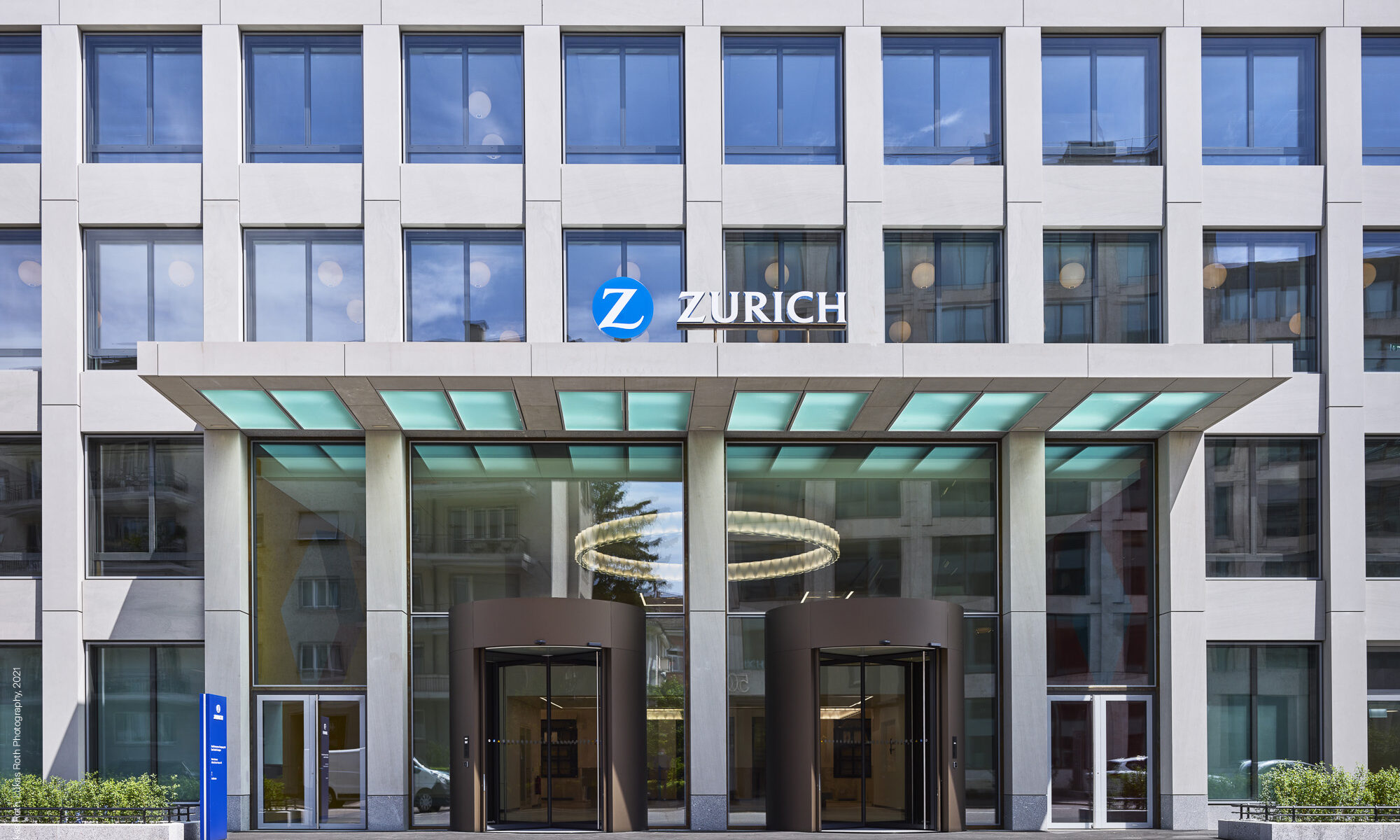
Slaughters and Freshfields lead on Zurich’s fresh £7.7bn bid for FTSE 100 insurer

Slaughter and May and Freshfields are advising on Zurich Insurance Group’s £7.7bn bid for FTSE 100 insurer Beazley.

Slaughters is leading for Zurich on the latest bid, which comes after the Swiss insurance giant made an earlier offer of 1,230 pence per share on 4 January.

That was rejected by Beazley’s board as ‘significantly undervaluing’ the company. The latest proposal has been upped to 1,280 pence per share.

Slaughters is advising Zurich, with the firm’s corporate and M&A co-head Richard Smith and corporate and commercial partner Natalie Cook leading the firm’s team.

Smith is ranked as a leading partner in both the Legal 500 premium M&A and mid-large cap equity capital markets rankings.

On the other side, Freshfields is acting for Beazley, fielding a team including London corporate partners Meredith Bayley and Claire Wills, global M&A co-head Andrew Hutchings and insurance transactions partner Lauren Honeyben.

Slaughters has a history of working with Zurich. At the end of last year, the firm advised subsidiary company Zurich Assurance on a £6bn longevity swap with the BCC Pension Scheme and Metlife, which n 2018 a team acted for Zurich Insurance on the transfer of its pre-2007 UK legacy employers’ liability portfolio to Catalina Holdings.

Freshfields has also handled work for Zurich in the past, leading on the company’s $488m acquisition of a controlling stake in India’s Kotak General Insurance in 2023, as well as its aborted bid to take over RSA in 2015.

[email protected]

Disputes partners predict boom in lateral recruitment ahead of rise in activity

With firms including Proskauer, Orrick and Paul Hastings building up their disputes teams in the US, litigators in London are predicting an uptick in hiring activity, as firms move to grow their practices ahead of an expected rise in disputes work across a range of sectors.

2025 saw a number of high-profile UK decisions that brought new certainty around everything from case certification, to funding and case management. These decisions – combined with the state of the economy – mean partners expect to see more activity in sectors including securities, tech, sports, and restructuring litigation.

Big Tech and the draw of class actions

One area partners are certain is set for a rise in claims is competition class actions relating to Big Tech, building on momentum from the Competition Appeal Tribunal’s (CAT) decision in Kent v Apple last October, in which the Tribunal found the tech giant liable for abuse of dominance in its App Store operations.

‘The decision will be regarded as a boost to the regime as it comes at a time when a number of other claims in this space had encountered significant issues,’ says Jon Gale, head of Ashurst‘s UK dispute resolution practice.

There are already similar claims proceeding in the CAT against tech giants, including Gormsen v Meta, an opt-out class action seeking up to £3bn in damages, Alex Neill v Sony Interactive Entertainment Ltd (seeking £5bn), Dr Maria Luisa Stasi v Microsoft (£1bn), while the Association of Consumer Support Organisations Ltd v Amazon is also seeking damages on behalf of 45 million UK consumers.

‘The combination of litigation funding and the rise of class actions has changed the way hiring works in London’

And, as multibillion-dollar tech companies with deep pockets attract greater scrutiny, many predict that firms, including US firms that have traditionally kept their City offices focused on transactions, will invest more in their London disputes teams.

These firms are unlikely to make any mass pivot towards full-service commercial litigation. But the rise of this type of competition litigation is already having an impact.

‘The combination of litigation funding and the rise of class actions have changed the way hiring in disputes works in the London market,’ says Scott Gibson, co-founder and director at legal recruitment consultancy Edwards Gibson.

Richard Swallow (pictured), head of the disputes and investigations group at Slaughter and May, notes that the changes in the market have also produced a proliferation of disputes-focused firms: ‘There are more claimant firms out there – it used to be only Hausfeld and Leigh Day, but now there are many more firms acting on the claimant side.’

Securities litigation

Partners also predict a heightened appetite for claims under the Financial Services and Markets Act (FSMA), after a key decision that clarified the scope of ‘reliance’ under section 90a of the Act.

The last year saw courts grapple with the meaning and importance of reliance, with conflicting High Court judgments on the application of reliance to passive and index-fund investor claims in Allianz & Ors v Barclays and Various Claimants v Standard Chartered leaving the law unsettled.

Late 2025 saw a significant development in the Privy Council’s decision in Credit Suisse v Ivanishvili, which overturned prior authorities and found that claimants need not be consciously aware of false representation to establish reliance.

‘It has fundamentally reshaped key aspects of the law of reliance’

Stewarts securities litigation head Keith Thomas says the case ‘has fundamentally reshaped key aspects of the law of reliance.’

He continues: ‘This may have quite dramatic effects on what claimants need to show to prove reliance in s90A open market securities cases. The confirmation that there is no requirement to show awareness is likely to lower the threshold for claimants to bring their claims, particularly where they are index or benchmark funds.’

Helen Carty (pictured right), head of the London litigation and dispute resolution team at Clifford Chance, also predicts further activity in FSMA claims: ‘People are naturally watching for falls in stock prices and basing claims on those. That is likely to continue until there is a decision that sets the rules on these claims.’
Further guidance will come in October, when the mammoth Aabar Holdings & Ors v Glencore goes to trial. Thomas says the decision on a number of key untried issues ‘will move the whole jurisdiction forward.’

Pallas Partners founder and managing partner Natasha Harrison agrees: ‘This case will clarify areas of law around corporate disclosure and investor protection.’

Cyber attacks and AI

It’s not all high-value group claims predicted for 2026 though, with partners also expecting growth in smaller, technology-related disputes.

‘We are seeing a really wide range of disputes,’ says Addleshaw Goddard’s global head of disputes Mark Molyneux, pointing to ‘lots of cases about investment IT infrastructure through to cyber attacks and data breaches.’

Aaron Le Marquer (pictured right), head of policyholder disputes at Stewarts, notes that, so far, ‘all of the big cyber attacks have been mostly uninsured and have been settled.’ He argues that full-blown litigation is likely to emerge only in the event of ‘systemic cyber loss.’
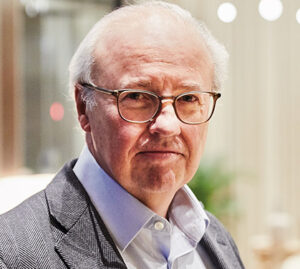
CC’s Carty echoes this note of restraint: ‘We are clearly seeing a large number of cyber attacks, and that has a massive impact on people,’ she says. ‘But in terms of actual litigation, there are practical limits to what remedies are available against the perpetrators.’

Partners are more broadly in agreement that AI and tech adoption are more likely to generate disputes work, with Molyneux pointing to disputes arising from ‘major IT infrastructure refreshes and investment in different forms of technology, including AI.’

The spectre of recession

Underlying all this is the question of recession – and when, or whether, a long-predicted downturn will produce more claims.

Ted Greeno‘The business environment is getting increasingly worse, and if we do head into a recession, there will likely be a lot of restructuring and insolvency work,’ says Ted Greeno (pictured right), co-managing partner of Quinn Emanuel‘s London office.
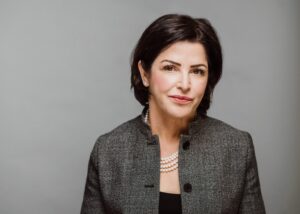
Carty makes a similar point: ‘Economic uncertainty often leads to restructuring and insolvency issues; people have been talking about that for a long time. And it is possible that 2026 may be the year when all of that starts coming through.’

‘Everything that’s been papered over is now starting to come apart’

Even if 2026 did see a recession, this would not necessarily mean an uptick in related litigation any time soon. ‘Litigation happens over a long time frame,’ says Carty. ‘Once you have started proceedings, it might be one to two years, possibly longer than that, before they come to trial. So you want to be reasonably sure you’ve suffered a loss before you incur the cost of actually starting the proceeding.’

Private credit

Tougher economic circumstances also impact private credit. ‘A lot of private equity money went into the market in the last five years,’ says Molyneux. ‘Perhaps that went into investments that haven’t come through or where the price was too high in a frothy market (which of course is part of the portfolio investing) – some of that is unwinding. And you get disputes as a result of that.’
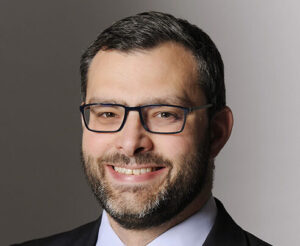
Pallas’s Harrison (pictured right) has a starker warning: ‘Everything that’s been papered over for the most part is now starting to come apart,’ she says. ‘While there isn’t a private credit crisis yet, many are concerned it’s on its way.’

Back in the game: sports

Slaughters’ Swallow points to sport as another significant growth area. ‘There’s a lot of money in sport, so there’s a lot of money at stake. The second reason is that most of the sports disputes are in fact competition law disputes.’

By way of example, Slaughters acted for the Premier League in the expedited legal challenges brought against its rules by Manchester City FC, as well as ongoing commercial disputes in F1 and golf.

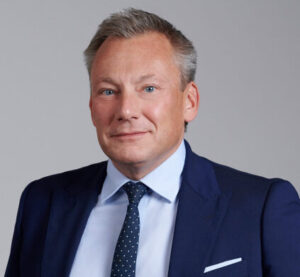
‘Sports law used to be seen as a niche practice area,’ says Ashurst’s Gale (pictured right). But that has changed with ‘investment flooding into traditional sports, and their electronic equivalents.’

‘High-stakes commercial disputes are likely to arise in the sector,’ he says, predicting ‘more litigation and arbitration as club sponsors, broadcasters, associations and even the players and participants in the sports jostle for influence.’

[email protected]

The Slaughters standard: what makes a top quality partner?

‘Most of our clients are entities – be they corporations or partnerships – but these client relationships are, above all, a series of relationships with individuals. You may be acting for one of the biggest global corporations, but ultimately, it’s all about building trust with individuals,’ explains Slaughter and May managing partner David Johnson.

When it comes to the priorities for clients when choosing a law firm, the quality of the individuals who work there is of course high up the list. But while partners can reel off their monthly billings, quality isn’t always an easy metric to quantify.

However, data collected during Legal 500 research offers direct insight into what clients think about the lawyers they use.

Every year, the research team collects thousands of scores from client referees on a range of client service metrics – and for the UK’s biggest law firms, Slaughter and May gets the top score for partner quality. 

Other firms that rank highly on this metric include Withers, Travers Smith, A&O Shearman, and Linklaters, while among the 50 largest law firms in the world, Weil, Gotshal & Manges comes out top, with Simpson Thacher, Skadden,  King & Spalding and Sidley following.

Marks of quality

So what makes a high quality law firm partner? For Johnson – who took over as Slaughters’ second-ever managing partner in August last year – the key qualities of a good partner can be summed up in three points.

As he summarises: ‘Firstly, you want to project the kind of confidence that comes from experience. That air of calm when everybody else is panicking is absolutely key.’



‘Secondly, you need to have absolutely excellent technical ability (this is taken for granted) and be able to demonstrate commercial awareness. You can be the best technical lawyer in the world, but if you can’t apply that to a commercial setting, you are of very limited value, in my view.’

‘Finally, you need to be able to demonstrate leadership – that you can lead a team, and that you can get your team to deliver to the same standard as you.’

If everything works out well, you get to the point where the client thinks, “This is a person I want next to me at the really difficult moments in my professional life.”‘

Among some of the specific Legal 500 practice areas in which Slaughters receives the highest scores for partner quality are power, planning and commercial contracts, while the firm’s partners are also among the top scorers for premium M&A, bank lending and corporate crime.

The client view

One GC at a FTSE 100 company describes Slaughters and ‘a proper bet-the-company firm’, saying: ‘I will never be criticised for appointing Slaughters – the quality of the lawyers there is so good.’

Paul Stebbings, Europe GC at Tate & Lyle Sugars, believes that for in-house counsel, relationships with quality partners are crucial. ‘It isn’t necessarily the law firm – it’s the lawyer within that. If partners cross to another firm and you’ve got a good relationship, then you’d think about going with them.’

Stebbings explains why he sticks with those established relationships: ‘They’re not necessarily the cheapest, but they offer value for money because they’re giving you a more holistic service.’

Sara Mackie, GC at data analytics company JMAN Group and the former group GC at French Connection, defines quality client partners as those who invest in important relationships from the get-go. ‘Good partners will realise early on the strategic value of that instruction and will stay across it,’ she says.

‘I had an example where a partner could just have delegated the work to a more junior member of the team, but they were very involved and came to in-person meetings to talk through what we wanted to achieve,’ she recalls. ‘They were there all the way through the project – they put a lot of investment behind that relationship.’

Johnson agrees that partners need to show that they are all in. ‘You have to make every client feel that they are the sole focus of your attention and care. Rationally, we all know that’s not feasible, because managing multiple clients is a practical necessity, but that’s how a client wants to feel, and I think that’s fair.’

[email protected]

Sullivan & Cromwell lures Weil finance duo in City buildout

Sullivan & Cromwell is pushing forward with its ambitious expansion plans in London, with the firm set to take a pair of London finance partners from Weil Gotshal & Manges.

Legal Business understands that the US firm is set to bring City duo Chris McLaughlin and Alastair McVeigh from Weil, in a move which will reunite them with former Weil London head Mike Francies.

McLaughlin will lead S&C’s private equity sponsor and borrower acquisition and leveraged finance practices in London, while McVeigh will lead the firm’s European private credit offering, including direct and specialty lending.

In a statement, S&C’s firmwide co-chairs Robert Giuffra and Scott Miller said that the news represented ‘a significant step in our strategic expansion in London’.

McLaughlin, who has been at Weil since 2014, is a Legal 500 leading partner for acquisition finance, advising PE sponsors and providers of private credit on acquisition and leveraged finance deals, with a track record of work for clients including Brookfield, Inflexion, Montagu and Apax Partners.

McVeigh – who is also ranked by Legal 500, as a next generation partner for acquisition finance – has particular expertise in private credit, with a focus on direct and specialty lending, working with clients including Ares and Goldman Sachs, while he also has experience of large-scale restructurings. He was made up to partner at the firm five years ago.

The news comes after Francies, who led Weil’s City base for over two decades before retiring from the firm at the end of 2024, was tempted back into private practice to play a key role in S&C’s ambitious City reboot. He joined the firm last September alongside Kirkland & Ellis restructuring partner Kon Asimacopoulos, who is now co-head of the London office alongside John Horsfield-Bradbury.

Asimacopoulos and Horsfield-Bradbury said the hires of McLaughlin and McVeigh marked ‘a major step in the execution of our private capital strategy in London’.

‘They are top-tier lawyers across private equity acquisition and leveraged finance, private credit, direct and specialty lending,’ their statement continued. ‘Together, they will play a key role in the growth of our finance offering in Europe. Their experience and approach align closely with our firm’s global platform and our market-leading U.S. finance practice.’

Since Francies and Asimacopoulos came on board, S&C has made a series of other hires in London, including private equity partner Aprajita Dhundia and tax partner Ian Ferreira from Kirkland, as well as former Shearman & Sterling structured finance specialist Patrick Clancy, who is joining as counsel.

The Wall Street firm has historically taken a very conservative approach to hiring in London. The most recent hire before Francies and Asimacopoulos was the June 2025 addition of former A&O Shearman global financial services regulatory co-head Barney Reynolds.

Reynolds was just the third lateral partner hire for S&C in London since 2013, meaning it has now made twice as many lateral partner hires since September as it did in the 12 years before that.

The elite Wall Street firm has set out a clear ambition to strengthen its London offering and build up its private capital capabilities at a time when competition among US firms for top City talent and high-value transactional work remains intense.

Speaking to LB in September, S&C co-chair Scott Miller emphasised the need for greater scale in London, and cited a 50% increase in headcount as a growth objective for the office.

The firm carried out a strategic review at the end of 2024 which established that it needed to take a more aggressive approach to recruitment in the City.

While London is the firm’s second-largest office globally, it lags New York in terms of scale. As of September, the City office comprised 18 partners and 90 lawyers, compared with 650 lawyers in New York, including 114 partners.

In contrast, Weil has a much larger London base, with around 215 lawyers in the capital, according to the firm’s website. The firm recently made up four London lawyers in its annual promotions round, including finance specialist Kai Zhang.

The London office, which is now co-led by corporate duo David Avery-Gee and Jonathan Wood, has seen a degree of turnover of late, with A&O Shearman funds partner Phil Baynes and Ropes & Gray private equity secondaries partner Simon Saitowitz joining last year following the departure of a trio of senior funds partners to Sidley Austin.

Kirkland also recruited a competition duo from the firm in December, taking partner Nafees Saeed and counsel Chris Thomas.

Weil’s finance practice, which is led by private equity partner Tom Richards, has been added to over the past 18 months with the hire of PE infrastructure partner Simon Caridia from White & Case and Nicola Noël from pension fund PSP Investments.

Weil was unavailable for comment.

[email protected]

Senior Cadwalader litigators exit amid Hogan Lovells merger talks

Two senior litigation partners have left Cadwalader for rivals in the US, as the firm prepares for its merger with Hogan Lovells.

Danielle Tully, who has been a partner at Cadwalader for 17 years and served as co-chair of its global litigation and IP practice, will move to Orrick, while the former chair of Cadwalader’s corporate and financial services litigation team Jonathan Watkins is set to join Proskauer.

Tully’s move out of Cadwalader’s New York office marks the latest defection from the firm to Orrick, after last autumn the firm swiped a debt finance team comprising 37 lawyers, including ten partners, to its offices in London, Washington DC, and Charlotte, the latter of which launched with the hiring announcement.

Meanwhile, Watkins will join the Charlotte office that Proskauer launched with its hire of a four-partner finance team from Cadwalader, also last autumn. Watkins will be the first litigation partner in the new office, which is led by former Cadwalader partner Ron Lovelace.

Now recognised as the second largest banking centre in the US, behind New York City, Charlotte is an increasingly attractive location for firms looking to build out their finance practices.

Proskauer and Orrick’s new offices in the city will continue to compete with Cadwalader, which retains five partners in its Charlotte team.

The news comes as Cadwalader continues its talks to combine with Hogan Lovells, set to be the biggest ever law firm merger, creating a firm with 3,100 lawyers and $3.6bn in revenue.

While Cadwalader is well known for its finance and securitisation practices, Hogan Lovells already has a strong litigation practice in the US. The firm is ranked in tier 1 by Legal 500 for aviation and air travel – litigation and regulation, and tier 2 for both environment litigation and rail and road – litigation and regulation.

Commenting on Watkins’ move, Proskauer’s Lovelace said: ‘We’re building a strong foundation in Charlotte that reflects both local market dynamics and the Firm’s broader client priorities,’

He added: ‘Jonathan’s experience complements our finance and corporate capabilities and strengthens the ways we can partner with clients.’

[email protected]

Kirkland, Simpson Thacher and Latham top LSEG PE rankings as partners look ahead to 2026

Kirkland & Ellis was the top performing firm for PE-backed M&A globally in 2025, advising on 293 deals worth a total of $274.2bn – more than a quarter of total market value, according to data from the London Stock Exchange Group (LSEG).

Simpson Thacher was in second place, while Latham & Watkins took the third-place spot in a year that private equity partners said demonstrated the market’s resilience in the face of economic turbulence.

We saw a number of significant geopolitical and macro events and, while they caused brief pauses as investors assessed the impact, the market has shown a remarkable ability to absorb them and move on. That resilience now feels like the new normal,’ says Kem Ihenacho, PE partner and executive committee member at Latham. ‘It has been an exceptionally busy year and as we look into 2026 there’s a cautious optimism that this pace will continue.’

The top performers for PE-backed M&A

LSEG Top Legal Advisers, PE-backed M&A 2025 – PE-side advisers by deal value

Firm Rank Total deal value Number of deals
Kirkland & Ellis 1 $274.2bn 293
Simpson Thacher 2 $166.5bn 75
Latham & Watkins 3 $136.1bn 231
Paul, Weiss 4 $108.0bn 113
Sidley Austin 5 $104.7bn 79
Fangda Partners 6 $95.6bn 39
Gibson Dunn 7 $66.1bn 62
Morrison & Foerster 8 $61.9bn 33
Ropes & Gray 9 $58.1bn 106
Davis Polk 10 $53.4bn 29

The value of global private equity-backed M&A in 2025 totalled nearly a trillion dollars, LSEG reports, with nearly half of this in PE-to-PE deals.

The numbers were boosted by a resurgence of mega deals into Q3 and Q4, with examples including the take-private of US video games giant EA by a consortium made up of Saudia Arabia’s Public Investment Fund (PIF), Silver Lake and Affinity partners, in a deal valued at $55bn, as well as Macquarie’s sale of Aligned Data Centers to a consortium comprising the AI Infrastructure Partnership, MGX and Global Infrastructure Partners, valued at $40bn.

This high level of activity is encouraging market confidence: ‘That there is large-scale M&A in the US doesn’t definitely mean things are about to go gangbusters but it’s a pretty good sign,’ Will McDonald, a private equity partner at Gibson Dunn observes.

Kirkland’s total deal value equated to nearly 28% of the global market last year – ahead of second-place Simpson Thacher, which had nearly 17% of market share with 75 deals worth a total of $166.5bn.

Latham was in third place, with $136.1bn across 231 deals. However, the firm came top in LSEG’s ranking of PE-to-PE deals, advising on 222 deals worth a total of $105.9bn – well above Kirkland’s $76.3bn across 245 deals.

Similar to its performance in the overall M&A rankings, Freshfields was the highest ranking UK-origin firm for global PE-backed M&A, narrowly missing out on a place in the top ten with 11 deals worth a total of $52.1bn.

LSEG Top legal advisers, PE-backed M&A 2025 – EMEA target, PE-side advisers by deal value

Firm Rank Total deal value Number of deals
Kirkland & Ellis 1 $39.4bn 58
A&O Shearman 2 $32.5bn 44
Latham & Watkins 3 $30.7bn 88
Simpson Thacher 4 $30.1bn 21
Paul Weiss 5 $29.0bn 33
Clifford Chance 6 $22.8bn 46
Linklaters 7 $21.8bn 36
Freshfields 8 $17.5bn 33
Sidley Austin 9 $15.0bn 24
Debevoise & Plimpton 10 $14.1bn 9

UK-heritage firms performed well in LSEG’s EMEA rankings, with A&O Shearman in second place with 44 deals totalling $32.5bn. Fellow magic circle firms Clifford Chance, Linklaters, and Freshfields each also featured in the top ten, in sixth, seventh, and eighth place respectively.

US firms again put in strong performance, however, taking six of the top ten spots, with Kirkland and Latham in first and third place respectively.

Looking for an exit

One PE partner tells LB that one reason for optimistic predictions going into 2026 is that the year marks the fifth anniversary of investments made in the boom year of 2021. ‘Everyone thinks that 2026 is going to be great,’ they say.

However, they add: ‘I don’t think it’s going to be too different to 2025.’

This is because the ubiquity of the five-year PE timeline may be a thing of the past due to the longer hold-times required for assets to reach their target valuations. ‘That classic cycle is not always the case anymore,’ says John Newton, co-lead of Ropes & Gray‘s European PE transactions practice.

Owing to this shift, the private equity sector has been reinventing itself after a quiet few years following the surge of deals in 2021. A burgeoning secondaries market has replaced quick and straightforward exits, often stumped by valuation gaps which demand creative and technical solutions. ‘Years ago you might have had the occasional earn out or a bit of vendor financing,’ says Gibson Dunn’s McDonald. ‘Now I’m seeing those methods on pretty much every deal.’

Though there are glimmers of hope on the horizon as several partners point to European capital markets beginning to sputter into gear as a positive sign for  private equity. ‘There is some optimism coming back in terms of IPOs as a source of exit for large portfolio companies,’ says Freshfields’ head of UK private equity James Scott (pictured right).

‘There’s still nervousness about running formal processes. People still want to avoid being tarnished with a failed process’

Newton also notes that companies beginning to list will be helpful to signal valuations and help narrow the price gaps which have dogged the market.

However, some partners are more cautious: ‘The mid-market’s been quite buoyant [but] anything north of £1bn is difficult. Investment committees are hugely focused on what is the next exit,’ says one partner.

‘There’s still nervousness about running formal processes. People still want to avoid being tarnished with a failed process.’

This reality has meant that asset mangers looking to off-load maturing investments have had to adjust their expectations. ‘The broad theme of 2025 is that, for the first time in a long time, it has become more of a buyer’s market, and sellers are increasingly having to accept that their valuations may not be met,’ says Linklaters global financial sponsors sector co-head Ben Rodham.

This marks a break from the seller’s market of previous years, which saw deals collapsing on valuation discrepancies. ‘But investment committees are still highly selective as to what they will allow people to run hard at,’ Rodham adds.
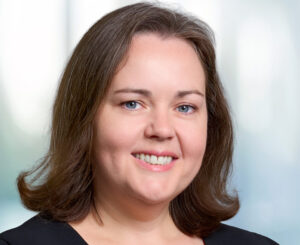
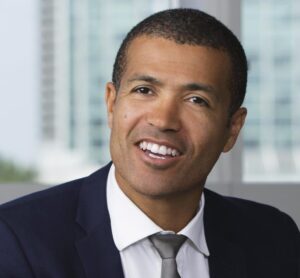
Helen Croke (pictured right), a PE partner at White & Case, agrees with Rodham, and believes the spiky deal flow that defined 2025 is likely to continue into the new year. ‘People are quite rightly cautious,’ she says. ‘They don’t want to sell too low and they don’t want to buy too high … buyers are desperate to buy but sellers aren’t desperate to sell.’

Scott echoes warnings about hangovers from a market favourable to sellers: ‘It has been an environment where people will pay for desirable assets. But you’ve got to be careful,’ he says. ‘If you try to oversell an asset, people will just walk away.’

Ready to deploy

Private equity houses and fund managers have capital to deploy, with Ropes noting in its January 2025 US PE market recap that at the start of the year there was $1.1trn of nascent US private equity money.

But that is only half the story. ‘There is dry power to spend, massively,’ one partner at a US firm says. ‘But there’s nothing to spend it on.’

Stubborn interest rates have meant that houses are having to commit to longer hold times of assets, says Ropes’ Newton, explaining that this situation is ‘inevitable because of these circumstances.’

These conditions have seen partners turn to new mechanisms to keep portfolio companies under management.

Partners recognise that there is a willingness across the market to find solutions and get capital flowing, driven by a need to return funds to investors.  Continuation vehicles such as partial exits and fund-to-fund transfers have  become increasingly popular, a trend partners expect to continue. ‘They are a route to liquidity for LPs without sacrificing overall value if the GP has conviction in the underlying asset,’ says Elizabeth Todd (pictured right), who co-leads Ropes’ European PE transactions practice with Newton.

But these solutions can only go so far. Private equity fundraising fell to its lowest levels in five years in 2025, according to PE data provider Preqin – a shift which has put pressure on smaller houses and increased fund-to-fund acquisitions.

‘People will be shrewd and selective, but everyone is working to get deals over the line’ 

‘It’s not an easy fundraising market but the names at the top of the market have generated consistently strong returns – whether that’s from traditional LPs or new sources of capital, like retail,’ says Latham’s Ihenacho (pictured below, right). ‘Some will look to other sources of capital as they grow their funds under management. We also believe that asset management M&A will continue to be part of the story in 2026.’

Charlie Hayes, Freshfields’ global co-head of private capital in London, makes a similar point: ‘We’ll continue to see the bifurcation in funds that are readily able to fundraise, and those for whom it’s more challenging; there are great teams out there, and I think this year the consolidation of GPs we’ve already started to see will gain pace – there are some in the market as we speak. And in H2, the IPO market will be buzzing with private capital exits – there is a lot to look forward to.’

Other partners are encouraged by the return of the end of year rush: ‘I’d be more positive about a general increase in the market, rather than spikiness,’ Gibson Dunn’s McDonald says. ‘People will be shrewd and selective for sure, but I think within that context, everyone is a bit more willing to get deals over the line.’ 

Clifford Chance’s head of private capital Spencer Baylin also sees reasons to be optimistic: ‘We have seen a steady uptick since April in deal-activity and would hope that the macroeconomics of 2026 should continue to facilitate this,’ he says.

‘A lot will depend on the momentum gained from recent months of successful transactions and exits that give people the confidence to run exit processes themselves.’

Many processes in the end of year rush won’t have closed, so will land early 2026 leading to a strong start to the year, Ben Rodham says. But he cautions that this is just a positive trajectory – much like the start of 2025 – rather than the release of a flood of assets. ‘There needs to be a more positive business environment generally across Europe, and that will be heavily influenced by avoiding any macro shocks,’ Rodham says. ‘If we can avoid any big events in early 2026 then momentum should keep building, but I think we are some way off the dam breaking.’

[email protected]

‘A poisoned chalice’ – SFO director’s early exit reignites speculation over organisation’s future

Serious Fraud Office

‘It is a difficult job to recruit for,’ says Sara George, a white-collar defence and investigations partner at Sidley Austin, as partners debate a likely successor for Serious Fraud Office director Nick Ephgrave after last week’s unexpected news that he is set to step down from his role at the end of March.

 ‘Not many people want to do the job because it is somewhat of a poisoned chalice… It’s very difficult to get cases to court with the current backlog, let alone win these very long cases,’ she adds. 

White-collar partners were taken by surprise when Ephgrave, a former Metropolitan Police officer and the first non-lawyer to hold the role, announced that he would be retiring two-and-a-half years into a five-year term. 

They suggest that his unexpected departure, reportedly for personal reasons, and the hunt for a successor that must now follow is likely to further destablise the SFO, which has struggled to find momentum in recent years, and potentially raises fresh questions about the organisation’s future.

‘Commentators in recent years have called for the abolition of the SFO and its merger into the National Crime Agency (NCA),’ says Louise Hodges, head of criminal litigation at Kingsley Napley. ‘Even when Nick Ephgrave arrived, there was suspicion that his appointment may have been to ensure an orderly merger. This latest news sadly risks reigniting that debate.’

When Ephgrave came in as director the market was optimistic that his recruitment marked a fresh hope for the SFO, which had gained a reputation for being toothless under his predecessor, Lisa Osofsky. 

In Osofsky’s first year the organisation dropped 14 cases – twice as many as the previous three years combined. A reduced appetite for major investigations subsequently led lawyers to diversify their practices to include a diet of sanctions, compliance, private prosecutions and internal investigations work.

During his tenure, Ephgrave has pushed the organisation back into the public eye, carrying out a series of high-profile dawn raids and pushing for policy changes, including introducing financial incentives for whistleblowers. Notably, in December 2024, Ephgrave led the SFO to bring charges against five individuals for complex fraud in a case linked to the collapse of law firm Axiom Ince in the fastest time in the organisation’s history.

‘There was a famous year when the SFO did no raids; Nick’s approach was different, owing to his background as a former police officer,’ says Barry Vitou, head of HFW’s global investigations and white-collar group. ‘These raids cost money and represent investment in the SFO, so that might not square with the SFO being folded into the NCA.’

‘For the last decade or so, each director has had a legal change they have championed, tools marked as “gamechangers”, like deferred prosecution agreements or changes to the Bribery Act. But all of these struggle to fundamentally change the organisation’s performance and the recurring trials and tribulations of the SFO,’ he adds.

The focus will now turn squarely to who could replace Ephgrave, with the Attorney General’s office running the process, which is expected to see an interim director appointed in March.

It is such a demanding job. It might be one of the hardest jobs in criminal law,’ says Polly Sprenger, a corporate crime and investigations partner at Michelman & Robinson. ‘The SFO has minimal resources but faces the most well-resourced defendants, and there is minimal praise when things go well. But, I think it is one of the bravest, most principled and most important roles, to go up against crooks in suits who should know better.’

‘Two months until [Ephgrave] steps down is not a long time to find a replacement,’ adds Vitou. ‘While there will be continuity with the likely appointment of an acting director pending the appointment, inevitably, there is a question of momentum, uncertainty and the unwelcome distraction that goes with a hunt for a new boss. Historically, it is a slow recruitment process, due to the nature of the civil service.’

The Attorney General’s office, the department responsible for the SFO, is expected to initiate the recruitment process for a permanent replacement shortly, and continues to work with the SFO on interim measures to ensure the organisation continues to operate smoothly.

‘I would love to see a really good promotion from within the organisation, it would be a good way to capitalise on the morale boost Ephgrave injected,’ adds Sprenger, who previously worked at the SFO. ‘Victoria Jacobson [case controller] or Emma Luxton [director of operations] perhaps. But not an outsider, whether a police officer or a lawyer. The last promotion to director from within was Robert Wardle and that was 20 years ago.’

‘It doesn’t matter if the SFO becomes part of a larger organisation,’ Sprenger concludes, ‘As long as the job gets done.’

The Attorney General, Richard Hermer, paid tribute to the outgoing SFO director via a statement posted on LinkedIn where he thank Ephgrave for his long career in public service.

[email protected]

Revolving Doors: Sidley and Hogan Lovells swipe Latham partners, as Ropes and Clifford Chance build in Europe

Sidley Austin has rolled into 2026 with yet another hire from Latham & Watkins, bringing over the firm’s former global co-chair of real estate, Jeremy Trinder.

After nearly ten years at Latham, Trinder is the tenth partner to leave the firm’s London office for Sidley in the last 18 months. Last year, Sidley brought in Latham London corporate co-chair David Stewart and capital markets partner Vladimir Mikhailovsky, following up on its 2024 hire of a five-partner leveraged finance team led by Jay Sadanandan and Sam Hamilton.

Additionally, Latham’s London finance co-chair Tania Bedi and high yield duo Scott Colwell and Patrick Kwak also moved to Sidley in 2024.

A spokesperson for Latham said of Trinder’s move: ‘We thank Jeremy for his contributions to the firm and wish him all the best in his next endeavor.’

Hogan Lovells has targeted Latham as well, as it announced Lisa Quelch will join as a partner in the firm’s infrastructure and energy practice.

Quelch has spent six years as an associate at Latham, and prior to this she began her career at HSF Kramer. She has experience working on infrastructure and project financings within emerging markets, with expertise across Africa.

For its part, Latham has made its own spate of hires in recent months, including bringing over three partners from A&O Shearman earlier this month, including the merged firm’s global head of real estate finance David Oppenheimer.

White & Case has made a series of hires across its European and APAC offices. In London, the firm has brought in funds partner Chris Jeanes, formerly a counsel at Akin.

Jeanes has worked on fundraising and secondary transactions, including a €400 million continuation fund for BlackRock as co-lead for private equity firm Seven2, as it financed two assets Marlink and Crystal.

The firm also hired three partners from DLA Piper into its real estate team in Paris, bringing over Antoine Mercier, Sarah Fleury and Romain Guénin. Each has advised on real estate financing and acquisition deals across Europe.

In Tokyo, the firm hired real estate partner Ed Sheremeta, also from DLA Piper. Sheremeta, who has over 25 years experience advising real estate investors, will join the firm’s global M&A acquisitions team, and leaves DLA after becoming co-head of real estate for Japan in September 2024.

Meanwhile in Sydney, W&C welcomed Will Stawell as a partner in its debt finance team. Stawell previously worked at White & Case as an associate from 2013 to 2016, and rejoins after nine years at King & Wood Mallesons.

Shoosmiths has expanded its London banking and finance team with its hires of partners John Dawson and Graham Knight.

Dawson joins after five years at CMS, with previous stints as a partner at both Vinson & Elkins and Clifford Chance, where he advised sovereign wealth investors and banks on international transactions.

Meanwhile, Knight brings particular experience in energy and infrastructure finance, and joins the firm after more than two decades at legacy Allen & Overy and stints in-house at Bank of America and Goldman Sachs.

Osborne Clarke has grown its London corporate practice further with the hire of Sunjay Malhotra, the third partner to join the practice in the past year.

Malhotra joins from Pinsent Masons, where he spent six years advising clients across the life sciences sector on venture capital financings and equity capital markets mandates.

WilmerHale has hired former United Health general counsel Rupert Bondy as partner and co-head of its crisis management and strategic response group in London.

Bondy has worked in-house for 30 years, with experience as general counsel for GSK, BP and Reckitt in the past.

Also swapping an in-house role for partnership is Google senior counsel Sarah West, who has rejoined Baker McKenzie’s dispute resolution team in London. West was previously a senior associate at Baker McKenzie before moving to Google in 2022.

Experienced at handling tech litigation, investigations and compliance, West rejoins the firm with expert knowledge of the Online Safety Act, among other regulations.

Elsewhere, CMS has hired the head of white-collar defence and investigations at Withers, Carl Newman, to its London corporate crime practice.

With over 25 years of experience, Newman has handled several high profile cases, such as defending BargainHunt broadcaster Charles Hanson against assault and controlling behaviour charges last year.

Also in the City, Charles Russell Speechlys has hired K&L Gates real estate special counsel Chiara Del Frate as a partner in London.

Del Frate, who worked across K&L Gates’ London and Milan offices, brings experience working with a number of large corporates and luxury companies across Europe, such as Audemars Piguet, Gucci and YSL.

Winckworth Sherwood has expanded its London tax practice with the addition of Arcangelo D’Apolito from Macchi di Cellere Gangemi.

With five years of experience at the Italian firm, D’Apolito also spent time at both KPMG and PwC as a tax manager, before becoming a partner in 2021. 

Over in Milan, Ropes & Gray has launched an antitrust and foreign direct investment (FDI) practice with the hire of Jacopo Figus Diaz.

Formerly a senior counsel at Italian firm Legance, Diaz also spent time at Cleary’s office in Brussels as an associate. Dual-qualified in both the US and Italy, he has experience working on merger control proceedings before the European Commission and Italian Competition Authority for clients across media, manufacturing and financial services industries.

In Dublin, A&L Goodbody has hired two partners from Hogan Lovells, who will join its financial regulation advisory team. Eoin O Connor, former managing partner of Hogan Lovells Ireland, will head the practice group, while Eimear O’Brien joins as partner.

Meanwhile, Clifford Chance has hired global private capital lawyer Matthias Kerbusch into its Luxembourg office. Kerbusch began his career at Clifford Chance in 2012, but left to become a partner at Dechert in 2022.

He returns to Clifford Chance with experience advising on the formation and restructuring of Luxembourg-based investment funds, with a particular focus on alternative asset classes.

Also in Europe, Dentons welcomed former A&O Shearman counsel Soline Louvigny as a partner in its Paris debt capital markets team. Louvigny spent over 15 years at A&O Shearman, where she focused on ESG issuances and regulatory capital.

Crowell & Moring has hired Liesbeth Truyens into its international trade group in Brussels. Previously, Truyens spent five years as a partner at Belgian firm Schoups, and also has in-house experience in KBC Bank’s dispute resolution team.

Litigation firm Boies Schiller Flexner has hired competition partner Gianluca Faella in Rome. Faella joins after 20 years at Cleary, and his move marks his first partnership position.

Reed Smith has promoted new office managing partners across its European, Middle East and APAC teams. The managing partners include: antitrust lawyer Christian Filippitsch in Brussels, M&A specialists Anders Nilsson in the Middle East and Manoj Purush in Singapore.

The firm has also appointed Singapore-based Tim Cooke as the global chair of its international arbitration practice, succeeding Peter Rosher, who held the position for four years.

Squire Patton Boggs has also hired in Singapore, as the firm brought over DLA Piper’s head of financial services for Asia, Philip Lee, as a partner. Lee has acted as Asia regional head of financial services for the past two years, and before this served as DLA’s capital markets practice lead for APAC.

Over in the Middle East, Ashurst has hired its first real estate partner in the region, Chris Beaumont-McQuillan, who will join the firm’s Abu Dhabi office.

Beaumont-McQuillan will head Ashurst’s Middle East real estate practice, after three years in the same role at BCLP’s office in Dubai. Prior to this, he also worked as partner in Reed Smith’s London team.

Back in the UK, Ward Hadaway has hired corporate partner Paul Wigham into its Newcastle office. Wigham was previously a partner at Weightmans, where he has advised on tech-related M&A and fundraising transactions.

Finally, RWK Goodman has acquired Oxfordshire’s oldest law firm, HMG Law, which has operated for over 200 years in the Thames Valley region.

The two firms are to be based in RWK Goodman’s Oxford office from February, with client services roles unaffected by the combination.

[email protected]

Taylor Wessing and Winston kick off partner vote on transatlantic merger

Partners at Taylor Wessing and Winston & Strawn have started voting on the firms’ planned transatlantic merger, which was announced just before Christmas.

Voting is set to close by the end of the month, with the merger set to go live in May should it receive the blessing of partners at both firms.

The pair announced plans to combine as Winston Taylor in mid-December, with the union set to create a firm with estimated revenue of $1.75bn at the end of the financial year.

Should it go ahead, the merged firm will have more than 1,400 lawyers and 450 partners operating across the US, the UK, Europe, Latin America and the Middle East.

If voted through, the merger will see Taylor Wessing’s UK-led business (which has operations in the UK, Ireland, Dubai and a few lawyers in San Francisco) leave the existing Taylor Wessing verein to join forces with Winston & Strawn as Winston Taylor.

The Netherlands and Belgium offices will leave the Taylor Wessing verein, but will not join the merged firm straight away. Instead they will enter into an agreement to operate under the Winston Taylor brand without being part of the single firm for an interim transition period. The German and French arms will operate independently, while retaining a cooperation and referral relationship with Winston Taylor.

Winston chair Steve D’Amore will serve as chairman of the combined firm, with Taylor Wessing UK managing partner Shane Gleghorn set to become managing partner of Europe and the Middle East.

The firm will have particular focus on major litigation, critical transactions, strategic IP, and private wealth.

In its most recent financial results, Taylor Wessing reported a 15% increase in UK revenue to £283.7m, with UK profit per equity partner (PEP) up to £1.1m.

Turnover for Taylor Wessing’s entire business, including France and Germany, stood at £526.2m (€619m) for 2024-25, up 10% from £480.7m in the previous year’s financial results.

Winston, meanwhile, recorded revenue of $1.27bn (£946m) in 2024, with net profit of $410m and PEP of $3.5m (£2.6m). The firm has 10 US offices and a small presence in London and Paris.

Taylor Wessing has long sought to build a platform in the US, and in 2019 signed a non-exclusive relationship with West Coast tech firm Wilson Sonsini.

Speaking to LB before Christmas, Gleghorn said: ‘We wouldn’t want you to think that the vote is something that is predetermined, but I really do hope that my partners believe the merits of this deal speak for themselves. We’ve both come to deeply admire the respective attributes of our organisations… these are two very strong, financially performing units coming together. That’s why I was totally captivated by this opportunity from the start.’

D’Amore said at the time: ‘I believe that our partners are going to see the merits of this quite clearly. I view this transaction as a consummation of what I have been saying for a long time, which is that Winston needed to be bigger and stronger in London, which is a hugely important market.’

News of the Winston Taylor deal came amid a frenzy of merger activity before Christmas, with Hogan Lovells announcing plans to merge with Cadwalader in a $3.6bn combination and Ashurst agreeing a deal to combine with Perkins Coie. The Ashurst Perkins deal would create a financially integrated firm with revenue of around $2.7bn and roughly 3,000 lawyers worldwide.

Taylor Wessing and Winston declined to comment on the vote opening.

[email protected]

For more, see ‘A merger of complementaries’ or ‘transatlantic panic’? – the market view on Winston Taylor

Gibson Dunn to open in Spain with Freshfields corporate heavyweight

Gibson, Dunn & Crutcher has continued its recent European expansion with the hire of a heavyweight corporate partner from Freshfields to launch a Madrid office for the firm.

Armando Albarrán, who heads up Freshfields corporate/M&A and capital markets groups in Spain, has spent nearly 30 years at the firm.

His practice has a focus on the energy, infrastructure, real estate and telecoms sectors, acting for clients including global private equity firms Cinven and KKR, as well as Spanish corporates such as Amadeus, Naturgy and MasMovil.

‘Armando has advised on many of the most significant Spanish and cross-border transactions,’ said Federico Fruhbeck, co-head of Gibson Dunn’s PE group in Europe. ‘His arrival positions us to advise clients on their most sophisticated Spanish matters, while also working with our London and continental European teams to deliver integrated, cross-border advice.’

The Spain launch tracks with steady growth and considerable investment across Europe for Gibson Dunn. In London, the firm has more than doubled its headcount over the last five years, from 84 lawyers in 2020 to 218 today.

The Madrid office, which is set to open later this year, will be the firm’s first in Spain and seventh in Europe, following last year’s launch in Zurich. It will join longstanding offices in Brussels, Frankfurt, Munich, Paris and London.

Chair and managing partner Barbara Becker described Madrid as a ‘vital European hub for private equity and cross-border M&A, particularly for sponsors and multinationals executing high-value transactions between Europe and the Americas.’

The move is the latest in a series of senior exits for Freshfields across Europe, following the news that four corporate partners – including global co-head of M&A Wessel Heukamp – were joining Latham & Watkins in Germany in December.

Earlier this week, Skadden also announced the hire of former co-global managing partner and senior competition partner Rafique Bachour in Brussels.

Bachour, who has spent over 25 years at Freshfields, recently stepped down from his role as one of three global managing partners at the firm.

[email protected]

In-house moves: Coca-Cola waves goodbye to Wardle after ten years, with new GCs at Meta, giffgaff, and more

Clare Wardle

Coca-Cola Europacific Partners has appointed Svetlana Walker as its new general counsel and company secretary, set to start in the role in April after the departure of long-serving GC Clare Wardle (pictured).

Wardle joined the multinational bottling giant in 2016, when it was formed from the combination of Coca-Cola’s three major bottling companies in Western Europe. She will step down on 1 April 2026 after more than a decade in the role.

Wardle has held a number of senior in-house positions at leading companies, including at multinational retailer Kingfisher, where she was group legal director from 2010 to 2012 and group general counsel from 2012 to 2016.

Coca-Cola Europacific Partners chief executive officer said: ‘Clare’s leadership has been pivotal in shaping the strong legal and governance foundation that underpins our business today. Her strategic insight and commitment have helped the business grow and expand consistently since its creation.’

Walker will step into her new role on 1 April. She joins from packaging manufacturer Klöckner Pentaplast, where she has spent nearly three years as general counsel and chief compliance officer. Before that she spent four years at US consumer goods giant Kimberly-Clark, where she held a number of senior legal roles.

Elsewhere, Sarah Gray has been appointed GC at railway pensions administrator Railpen.

Gray joins from the Post Office, where she most recently served as interim group general counsel for a year, before which she was group legal director for nearly four years. Gray has previously held senior in-house positions at Santander UK and RSA Insurance Group.

Speaking of her appointment Gray commented: ‘It is an exciting time to join Railpen, with reforms underway across the pensions and railway sectors. I look forward to applying my experience in legal, compliance and governance to support the leadership team.’

Gray is replacing Sally-Ann James, who is retiring after over four years as GC. James was previously GC at Metro Bank (UK) and worked as head of contract and commercial at the Co-operative Banking Group before that.

Mobile virtual network operator giffgaff has hired Reena Sedov as GC, replacing Lisa Revitt, who has served as interim GC for the last year.

Sedov joins giffgaff from Virgin Media O2, having most recently served as head of legal – B2B and wholesale. Sedov has worked extensively in the telecommunications sector, holding various senior legal roles at O2 and Tesco Mobile.

Centrica GC Ailsa Longmuir has departed her post at the FTSE 100 energy company and has joined Vodafone as head of corporate and operations.

Longmuir joins from Centrica, where she spent 15 years, progressing through a number of senior roles in the energy marketing and trading department, until being appointed GC of the group’s trading arm, Centrica Energy, in 2023.

In the US, former Microsoft chief legal officer Hossein Nowbar has joined NYSE-listed software company ServiceNow as president and chief legal officer.

Nowbar spent 28 years at Microsoft before stepping down last September, and held a number of senior roles at the company before being appointed CLO in 2023.

Chairman and CEO at ServiceNow, Bill McDermott said: ‘Hossein brings the leadership this moment demands as we accelerate our profitable global growth strategy. Having served as a trusted advisor and strategic partner to senior technology and policy leaders at Microsoft, he has seen firsthand what world-class legal and corporate governance looks like at scale. Hossein represents a strategic addition as we enter our next phase of growth while upholding the trust of our customers, shareholders, and partners worldwide.’

Microsoft saw a further high-level departure at the start of this year, as C.J. Mahoney, corporate vice president and GC, product, services and go-to-market legal, left the tech conglomerate to become chief legal officer at Meta.

The move follows the announcement at the beginning of December that Meta CLO Jennifer Newstead was leaving her post to join Apple.

Mahoney has spent the last five years at Microsoft in a range of top legal roles, including across cloud, AI, US international trade, and Microsoft’s cloud computing platform Azure.

Mahoney also served a two-year stint in government, working in the Executive Office of the President as deputy United States trade representative, between 2018 and 2020, before which he was at Washington DC white-collar defence boutique Williams & Connolly for nearly ten years.

[email protected]

Baker McKenzie, HSF Kramer and Dentons among big winners in new Legal 500 APAC rankings

Baker McKenzie, Herbert Smith Freehills Kramer and Singapore’s Rajah & Tann are among the firms with the most ranked partners in the latest Legal 500 APAC research, which went live yesterday.

The new guide, which ranks firms for 291 practice areas across 22 APAC jurisdictions, are the result of more than six months of research, and include 4,770 practice rankings and 3,635 individual rankings.

More than 150 Baker McKenzie partners are ranked in the new guide, including 23 Hall of Famers across Australia, Japan, the Philippines, South Korea and Thailand – more than any other firm.

Two of Singapore’s top firms are second and third for total ranked partners – Rajah & Tann and Allen & Gledhill, with 99 and 73 respectively, followed by HSF Kramer on 72.

Looking at practice rankings, the top three firms are Dentons, with a total of 80 rankings, just ahead of Bakers on 77 and DLA Piper on 63.

Bakers has more top-tier APAC rankings than any other firm with 43, followed by HSF Kramer with 31 and A&O Shearman on 26.

The total number of practice rankings increased by 17% this year, while the research was informed by more than 4,000 additional referee responses on the previous year.

The APAC coverage also includes the Australia Bar, which features a total of 133 barrister rankings across five practice areas.

New rankings for 2026 include the Maldives, where five firms are newly recognised.

The APAC rankings are separate from Legal 500’s Greater China research, which covers China, Hong Kong, Taiwan and Macau, and which was released late last year.

Legal 500 also this week announced the 2026 Asia Pacific Green Ambassadors, coming on the back of the UK Green Ambassadors identified last year, including lawyers from firms such as Linklaters, Hogan Lovells and Ashurst.

The selection of the new APAC names was based on research into how private practice lawyers of various specialisms are leading the way on decarbonisation and the green transition across Australia, Hong Kong and Singapore.

You can learn more about the 2026 Asia Pacific rankings guide here. If you have any queries about the new rankings, please visit our helpdesk or email us at [email protected], and for more information on our subscription options, please contact Chris Cooke at [email protected].

‘It was seismic’ – the 2025 rulings that will reshape the London disputes market this year

broken scales

The number of claims filed in the commercial court may have hit a five-year low in 2025 but, in other respects, the year was a success for the UK disputes market, with a number of key judgments set to define activity over the years to come.

Data from litigation intelligence provider Solomonic shows there were fewer claims filed in the commercial court in 2025 than at any point in the last five years, with the 361 claim tally down from 529 in 2024 and 784 the year before that.

In the CAT, meanwhile, 2025 was the quietest year since 2020, with 45 claims issued – down from 71 in 2024, and only marginally more than the 42 brought in 2020.

But it isn’t just the numbers that matter; as while claim volumes dwindled, the UK saw some big decisions that will shape the disputes market going forward.

‘At the start of last year, claimant firms will have been looking at the big thematic litigation and saying, it’s about time we got some judgments,’ says one disputes head, reflecting on 2025.

With new certainty emerging in key areas including group actions, the Competition Appeals Tribunal (CAT), and litigation funding, here top partners and market commentators set out the rulings that mattered in 2025 and explain why.

Number of claims filed in the Commercial Court and the CAT, 2025

Taking jurisdiction: Município De Mariana v BHP 

‘There is an increasing willingness on the part of our courts to take jurisdiction over cases that historically they might not have been so interested in taking,’ says Richard Swallow, head of the disputes and investigations group at Slaughter and May, summarising a key trend of recent years.

‘The key,’ he continues, ‘is finding a jurisdictional hook, like a UK-domiciled parent company.’

2025 saw a major development on this front in the November High Court ruling in Município De Mariana v BHP, which held UK parent company BHP Group liable for losses resulting from the 2015 collapse of the Fundão Dam near Mariana, Brazil.

The claim is valued at approximately £36bn, with a second-stage trial on quantum due late 2026 to early 2027. 

The decision was ‘seismic,’ says Ashurst UK dispute resolution head Jon Gale (pictured right), and ‘likely to mean that there will be more mass tort claims brought in England.’

CAT scrutiny: Merricks v Mastercard 

‘The Competition Appeals Tribunal (CAT) continues to be a very attractive jurisdiction for class actions, because of the opt-out procedure, which we don’t have in the High Court save narrowly for representative actions,’ explains Herbert Smith Freehills Kramer disputes partner Natasha Johnson (pictured right).

However, she also notes pressures ‘in relation to funding and an increased focus on costs.’

Ted Greeno, co-managing partner at Quinn Emanuel’s London office, makes a similar point: ‘The collective regime is still, 10 years on, in its infancy, and there remains uncertainty as to various aspects of the regime.’

This uncertainty has seen proceedings move slowly, with capital tied up for long periods of time – a particular issue for investors, given the high cost of CAT proceedings. ‘Cases in the CAT are ridiculously expensive,’ says Susan Dunn, co-founder of Harbour Litigation Funding and chair of industry body the Association of Litigation Funders (ALF). ‘The average budget is in the £20m-£30m range.’

‘Everybody involved decided to air their dirty linen in public’

These concerns over the operation of the CAT were thrown into sharp relief by the final settlement in July of Merricks v Mastercard.

The first large-scale opt-out action issued in the CAT, the claim was brought on behalf of a class of more than 40 million people, and alleged that Mastercard had imposed unlawful fees on transactions between 1992 and 2008.

This year it settled for just £200m – around 1% of its original value of £16.7bn, accounting for interest and inflation.

Funder Innsworth Advisors objected to the settlement and launched proceedings against class representative Walter Merricks, prompting Mastercard to offer to pay Merricks’ costs up to £10m.

One partner describes the affair as ‘outrageous,’ while another commentator says: ‘Everybody involved decided to air their dirty linen in public.’

Freshfields London and Dublin managing partner and antitrust litigator Mark Sansom (pictured right), who led the team that advised Mastercard on the case, highlights the impact of the decision: ‘It was the first settlement in such a big case that’s had to withstand such intense scrutiny, with another party in the room trying to throw stones at it.’ 

He continues: ‘The Tribunal is asserting a broad jurisdiction to look into the way things have turned out at the end of proceedings and, if necessary, revise the entitlement that the litigation funder has to a return.’

Certification questions: Evans v Barclays Bank & Ors, train tickets, and Kent v Apple

The opt-out class actions regime was further clarified by several decisions on certification. 

In December, the Supreme Court upheld the CAT’s denial of certification to an opt-out claim against a group of banks in the long running foreign exchange proceedings in Evans v Barclays Bank & Ors.

‘One key implication of the judgment,’ explains Sansom, ‘is that the Tribunal has more discretion than the Court of Appeal considered was the case to decline to certify claims on an opt-out basis if the merits are weak and if you have a class of people who are frankly big enough and well-resourced enough to pursue litigation on an opt-in basis.’

Earlier in the year, the Tribunal also dismissed three parallel class actions against train operating companies alleging that charging boundary fares to customers with travelcards constituted abuse of dominance. 

Keith Thomas (pictured right), securities litigation practice head at Stewarts, explains the background to the cases: ‘What some claimant firms have done is take what are fundamentally mass consumer claims and used the fact that the defendant has a dominant position to bring the claim within the opt-out consumer competition regime of the CAT, even though the behaviour complained of is not actually competition related.’ 

The decision sees the CAT draw limits on the range of consumer issues that can be packaged as competition claims to access the opt-out class actions regime.

‘We have seen some pushback from the CAT on claims that are more consumer-related in nature and I expect this will continue,’ says Ashurst’s Gale. 

‘The system is bedding down to become genuinely useful’

Many in the industry welcome the decisions. ‘It’s good that the CAT didn’t just wave damages claims through,’ says Therium Capital Management founder Neil Purslow. ‘The fact that some cases that are brought fail doesn’t undermine the legitimacy of the system.’ 

The year also saw positive signs for claimants. In October, the CAT found in favour of the claimants in Kent v Apple, ruling that Apple’s practices with its App Store constituted abuse of dominance.

‘From a claimant’s perspective you would certainly say it’s good to see,’ says Addleshaw Goddard global head of disputes Mark Molyneux (pictured right). ‘We’re 10 years in, and with that result we’re seeing the regime do what it was designed to.’

Dunn echoes this point: ‘It’s good to see some positive outcomes in the CAT. The system is bedding down to become genuinely useful.’ 

From the defendant side, Sansom takes a similar view: ‘What we should all want is a balanced regime where meritorious cases are able to progress towards trial and have their day in court, and claims that are frankly weak, and which are wasteful of costs and the Tribunal’s time, should be filtered out before they get into years of litigation.’

Reversing PACCAR

‘We’re seeing litigation funding being scrutinised, and coming out positively, with its benefits to public policy being recognised,’ says Purslow.

There’s been a cultural shift in the UK,’ says Pallas Partners founder and managing partner Natasha Harrison (pictured right). ‘Litigation funding is a big part of it. It’s fueling it, because the claimants can bring this litigation with little or no downside financial risk.’ 

However, in 2025 the funding market remained chilled in the shadow of the Supreme Court’s 2023 PACCAR decision, which held that litigation funding agreements that calculated returns based on a percentage of final damages constituted damages-based agreements, and were therefore unenforceable. 

‘The PACCAR decision led to a reduction in the use of the English and Welsh courts, and a concern that the UK wasn’t doing everything it could to protect its status as a venue for complex commercial disputes,’ says Burford Capital vice chair David Perla.

He continues: ‘While firms have figured out how best to navigate the multiples-based structure, a legislative fix is necessary, and we are eager for that fix.’ 

‘There’s still £2.5bn pounds of litigation funding in the London market looking for claims’

The Ministry of Justice’s December announcement that it plans to reverse the effects of PACCAR and introduce ‘proportionate representation’ to ensure fairness and transparency was welcomed by many across the industry.

‘Restoring clarity around the enforceability of litigation funding agreements is an important step for the UK’s globally respected legal system, and we welcome the Government’s commitment to providing that certainty,’ says Burford CEO Christopher Bogart.

With reform now back on the legislative agenda, most partners expect funding to become a more settled feature of the disputes landscape in 2026.

As Dunn puts it: ‘Removing one of the big factors driving instability is only a good thing.’

Slaughters’ Swallow (pictured right) estimates that there is still ‘£2.5bn pounds of litigation funding in the London market looking for claims’. At his firm, around half of disputes turnover now comes from defending funded claims.

Harrison is positive about investor appetite: ‘There’s a huge interest in legal assets at the moment. It’s an uncorrelated asset, and that’s very attractive to investors,’ she says.

[email protected]

Ashurst, Linklaters and Clifford Chance ramp up capital contributions as LLPs highlight CC’s CEE spin-off

Ashurst, Clifford Chance and Linklaters all significantly ramped up capital contributions from partners during the 2024-25 financial year, according to accounts filed on Companies House.

The three firms’ accounts show partners paid in at least double the amount of capital contributed during the previous financial year, with this increase most pronounced at Linklaters, where contributions increased five-fold. The firm’s LLP accounts show partners provided £34m in capital contributions last year, an increase of 423% from £6.5m in 2024.

At both Ashurst and CC, partners’ contributions roughly doubled. The largest monetary increase was seen at CC, where partners contributed an additional £100m in capital, rising from £106m in 2024 to £206m in 2025, a 94% increase.

Ashurst’s accounts, which come amid merger talks with Perkins Coie, show capital contributions climbed more than 145% from £3.1m in 2024 to £7.6m in 2025. Ashurst’s accounts also show that the firm’s payments to former members rose from £2.1m to £4.9m. Both this and the increase in capital contributions reflect the growing size and profitability of the firm, LB understands.

CC and Linklaters declined to comment on the increase in capital contributions.

The accounts also highlight a number of other changes across the firms. Most notably, CC’s accounts show that the firm spun its offices in Prague and Bucharest off into separate entities with effect from 1 March 2025, with both offices now operating in association with CC as Clifford Chance Prague Association and Clifford Chance Badea Association.

The firm said in a statement: ‘On 1 March 2025, we moved to a closely integrated, long-term association model with our partners in Prague and Bucharest. This approach enables both offices to invest and grow in ways that best serve their local markets, while continuing to deliver best-in-class, integrated service to our clients as part of Clifford Chance’s global offering.’ 

Looking at the firms’ regional revenue breakdown from the accounts. For CC, Europe accounted for nearly 66% of its total £2.41bn firmwide revenue in FY2024-25, down marginally from 67% the previous year.

Meanwhile, US turnover accounted for nearly 16% of its global total from less than 15%, following a nearly 16% increase to £385m.

Linklaters’ European revenue climbed 4% to £704.4m in 2025, with APAC revenue rising 9% to £277.7m, Middle East turnover climbing almost 17% to £48.5m and UK turnover climbing 11% to £1.06bn – almost half of Linklaters’ total turnover.

The firm’s largest revenue increase was in the Americas, where revenue climbed 27% to £189.1m – roughly 8% of total revenue in 2025.

Looking at previously reported LLP accounts, the Americas accounted for 25% of A&O Shearman’s overall revenue in 2024-25. The figure is marginally higher than Freshfields, where the US brought in 21% of firmwide turnover at £473.3m. This figure made the US Freshfields’ fastest growing region, with turnover climbing 21%.

Ashurst’s revenue from locations outside of the UK, EMEA and APAC grew 7.5% to £60.0m. The firm currently has offices in New York, Austin and Los Angeles with a handful of partners across the sites.

LB previously reported that A&O Shearman’s first accounts post-merger also revealed that partners’ capital contributions more than doubled, totalling £421.3m in 2025. Legacy firm A&O’s 2024 accounts posted £208.9m in capital contributions, by comparison.

[email protected]

Addleshaws leader on corporate ambitions, key clients and why a US merger isn’t part of the £1bn 2030 strategy

Speculation about who’s merging with who has never been higher, but one firm that legal market watchers can cross off their merger list, at least for the next four years, is Addleshaw Goddard.

Andrew Johnston, who took up the firm’s managing partner role in May 2024, tells Legal Business that whatever peers such as Ashurst, Taylor Wessing and Hogan Lovells are doing, Addleshaws has no intention of adding the US to its already ambitious 2030 strategy.

‘Building out a relatively unique, high-quality and well-delivered UK, European and Middle Eastern platform is the priority, rather than looking further afield at a US deal. I’m quite comfortable with others making the choices they are but we’re ploughing our own furrow and that’s the right thing for this business. [The US] isn’t what our partners want and I don’t think it’s what our clients want right now so I’m certainly not second-guessing our strategy because of some activity in the market,’ he insists.

That’s not to say a US deal won’t be part of the longer term plan, of course, as Johnston is clear the firm has to have a strategy for the world’s biggest legal market but, if a tie-up is ultimately on the cards, it won’t be happening anytime soon. 

‘I’ve been very clear that a US merger isn’t on my immediate agenda but it’s a big market and a market that we have to have a clear strategy for. Who knows what choices we’ll decide are the right ones for this business after 2030,’ he stresses.

When Johnston took over, Addleshaws was already in a strong position after a decade of tight leadership under John Joyce. While Joyce took up the management mantle when the firm had a cash deficit, by the 2024 financial year-end Addleshaws had cash reserves of £139m and an international expansion plan that was already well underway. 

‘I didn’t come into the role feeling like the nuts and bolts needed to be changed,’ says Johnston. ‘What I felt was needed was an injection of confidence and ambition into the business and some clarity to our purpose.’

And he has set out to provide partners with this confidence and ambition. At his first partner conference, Johnston announced that Addleshaws was targeting revenue of £1bn by 2030, a number that effectively meant doubling in size.

He admits there may have been some sharp intakes of breath but points out: ‘We’ve been running at double digit growth for five or six years, so it effectively breaks down into 11% annualised growth and [an additional] £100m.’

Johnston is talking with Legal Business in one of the meeting rooms at the firm’s new London office. Located at 41 Lothbury opposite the Bank of England, he says the building is a nod to the firm’s ambition and intent with the AG2030 strategy. The entrance to the Grade II listed building, with its cavernous former banking hall, marbled floor and towering columns, certainly conveys ambition. Like the AG2030 strategy, the building is about eliminating any potential sense of drift in the business. Scale and ambition are part of its strategy.

So far the focus has been on building out existing offices, as well as a handful of launches across EMEA, with the firm launching a Madrid office in 2024 and acquiring Linklaters’ Warsaw office and opening in Abu Dhabi in 2025.

‘We remain open minded that there will be further international expansion; there’s no question about that,’ Johnston says, adding that the firm has made clear its desire to open in the Netherlands. Beyond that he says: ‘We’ll be consolidating the offices we’re currently in … I’m focused on quality not quantity. We need people that can help us move the business forward in a meaningful way.’

He points to this commitment to consistent quality across geographies, clients and practices as a differentiator for Addleshaws. ‘It’s delivering that consistent quality for our clients in any market that we are in, making sure that we continue to grow in the right markets, continue to focus on the right clients, and that’s why clients need to be at the heart of the strategy.’

As part of this, the firm is now focusing internally on an ever-shifting list of 50 key clients which generate a significant percentage of its revenue, aiming to ensure that it is working with these clients across as many practices and jurisdictions as possible. The breakdown of these clients falls evenly across the firm’s key sectors: financial services, which already accounts for around a third of London revenue, retail and consumer and real estate.

With the firm ‘pivoting towards more City-focused practices than we’ve had before,’ the last few years have seen Addleshaws build a structured finance practice, as well as furthering its capital markets capabilities with a triple hire from Pinsents Masons in 2024.

M&A and private equity also form part of this push with Johnston calling private equity, where the firm sits in the top tier of Legal 500’s mid-market rankings thanks to work with clients including TDR and Inflexion, the ‘crown jewel’ of Addleshaws’ corporate practice.

As part of this focus on key clients, Johnston wants the practice to be more pan-European. ‘Now we’ve got a European platform it gives us the opportunity to sell that service in a different way,’ he says. ‘I want to make sure that the work we’re doing is, wherever possible, multi-jurisdictional. It’s one of the practice areas that will make the international platform hang together.’

While the £1bn revenue target may be ambitious, Johnston isn’t just chasing revenue growth: ‘There’s no point growing an attractive top line if the bottom line is going down the pan.’

Though not changing the underlying remuneration system, Johnston knows driving partner performance is important for profitability. As part of this it’s crucial, he says, that the firm is better able to recognise and reward outperforming partners – something the firm is working on addressing.

‘We want to call it a performance mindset rather than a performance culture. You can be a great place to work and still be more crisp about the mindset that sits behind the business … You need to nurture a culture and make sure it doesn’t get away from you.’ For Addleshaws, a core part of this culture means not losing sight of its national spine: London, Manchester, Leeds and Scotland, as it grows internationally. 

Johnston points to a combination of continued domestic focus and international growth as being a winning recipe. ‘Bringing those two things together has been powerful for us. We’ve seen great traction in the Middle East and across some of our European platforms. But that has come off the back of having a really strong focus on growth in the UK,’ he says. 

The business Johnston inherited didn’t call for a radical overhaul. ‘We’ve been a great firm doing really good work for lots of great clients,’ Johnston concludes. ‘What we need to do is have that confidence to tell the market and to tell clients what we’re doing and what we’re capable of achieving.

 ‘The £1bn target isn’t just a great headline. It will create a business of scale, and with scale, I hope we will be a business with choices,’ Johnston says.

[email protected]

Decarbonisation, Data, and DEI – Legal 500’s Asia Pacific Green Ambassadors look ahead to 2026

With the publication of Legal 500’s 2026 Asia Pacific Green Ambassadors, we spoke with some of our featured individuals for a roundup on how the sustainability landscape is expected to develop in the year ahead.

ESG reporting

Changes in the focus and process of ESG reporting will be key in the year ahead, suggests Laure de Panafieu of Linklaters in Singapore: ‘mental health and wellbeing is receiving increased media, regulatory and policymaker attention, making it a core “S” pillar within ESG’.

Listed companies across the region are recognising the importance of incorporating mental health frameworks into their sustainability reports, as this can help mitigate reputational, financial, and legal risks while building and competitive advantage. This is because corporate and legal talent is increasingly seeking out accountable DEI efforts.

De Panafieu also pointed toward the growing use of ‘data and technology to facilitate sustainability reporting’, as AI tools are well-placed to handle huge volumes of ESG data, monitor companies’ climate vulnerabilities and impacts, and map supply chain risk.

Digital infrastructure

2025 saw huge investments in data centre campuses, fibre and telecoms infrastructure, and chip foundries across the Asia Pacific region, with the digital infrastructure sector benefiting from increasingly efficient technologies and the availability of green and sustainable finance.

To James Orme at Milbank in Singapore, echoing global trends, ‘some developers in the region are now looking to create clean or less carbon-intensive behind-the-meter solutions to power data centres’.

Orme suggests that green projects are helping to address two related problems: ‘with negative press around the demands on national power grids, bringing your own clean energy offers a competitive advantage; and, with certain hyperscale customers’ carbon neutral targets, a renewable-powered data centre can be more attractive’.

Environmental law and biodiversity

As Anna White of Corrs Chambers Westgarth in Australia explores, ‘there is a growing appreciation from Australian companies of the interconnectedness of climate, biodiversity and water systems, and the need to adopt integrated approaches that address these challenges holistically in environmental management, policy and corporate strategy’.

Notably, carbon credits will serve as a key area of legal work. Australia’s efforts to align its carbon and biodiversity markets will be met by the impact of its new climate-related financial disclosure regime, which White suggests ‘will continue to enhance climate literacy across organisations and prompt companies to critically assess the role of carbon credits in their decarbonisation strategies’.

Investment funds

Despite a macroeconomic slowdown in ESG investments, Penelope Shen at Stephenson Harwood in Hong Kong identifies ongoing investor and market confidence. Notably, Shen points to how ESG investors, through loyalty to their funds, are helping to create a resilient market. Meanwhile, the Hong Kong SFC is committed to ‘gatekeeping against greenwashing and has continued to collaborate with industry stakeholders to enhance investor awareness and confidence in ESG products’.

Moreover, Shen highlights how ‘the Hong Kong government has reaffirmed its commitment to developing green and sustainable finance’, placing emphasis on the new energy, aviation, and maritime sectors, as well as impact investments. Legal teams can thus look ahead to crucial and pioneering work across fundraising, management, and deployment.

Sustainable finance

Despite some regions tending toward a simplification of sustainability regulation, Gilly Hutchinson at Linklaters in Hong Kong notes that ‘regulators in certain Asian jurisdictions have maintained a steady momentum towards developing their sustainable finance and disclosure frameworks’.

Indeed, Hutchinson anticipates ‘the continued rollout and finessing of sustainability disclosure regimes across Asia in 2026’, with jurisdictions working to integrate the ISSB standards into their domestic frameworks.

As 2026 progresses, legal teams can look to how sustainable finance best practices are being elaborated within their jurisdiction, helping to create workable green solutions that meet investor appetite and help pursue global climate goals.


More Green Ambassadors:

Asia Pacific 2026

Submissions are open for our UK, US and Europe Green Ambassadors:

How we select Green Ambassadors

All submission information

Skadden recruits former Freshfields global managing partner and Latham London KC

Skadden has made a pair of high-profile partner hires in just one day, building its offices in Brussels and London with hires in competition and disputes, respectively.

In Brussels, the firm has hired former Freshfields co-global managing partner and antitrust specialist Rafique Bachour.

The move comes after Bachour, who has spent over 25 years at Freshfields, recently stepped down from his role as one of three global managing partners at the firm.

He had held the position since 2021, working alongside the London-based Alan Mason and Germany corporate partner Rick van Aerssen, as well as senior partner Georgia Dawson.

When Freshfields reappointed Dawson to a second term last year, the firm said Bachour was stepping back from the leadership role ‘to focus on his market-leading client practice’.

During his career he has worked with clients including sovereign wealth funds and multinational corporations on antitrust and regulatory elements of M&A, joint venture and foreign investment deals.

He has recently been advising Canadian mining company Teck Resources on its $53bn merger with Anglo American, a deal which would create one of the world’s largest copper companies. That deal, on which Freshfields is working alongside elite US firm Wachtell Lipton Rosen & Katz, is expected to be approved in February of this year.

Bachour will join Skadden’s antitrust and competition team in Brussels, which currently holds a tier two ranking in Legal 500’s EMEA guide.

The team’s other key names include European practice head Ingrid Vandenborre and Bill Batchelor, both of whom are recognised as leading partners. Fellow Brussels partner Frederic Depoortere retired at the end of 2025.

Of his move, Bachour said in a statement: ‘Skadden’s global reach and standing in the market create an exceptional platform to help clients navigate issues across sectors and jurisdictions. I look forward to working with the firm’s outstanding lawyers worldwide as we support clients facing increasingly intricate regulatory, investigative and geopolitical challenges.’

Skadden executive partner Jeremy London added: ‘Rafique is a prominent and high-calibre antitrust and competition attorney with an exceptional blend of cross-border regulatory experience and strategic, business-oriented thinking.’

‘We have continued to grow in Brussels over the last few years, and his joining will further support our plans for the office and the wider global antitrust/competition Group,’ said London.

Freshfields’ global antitrust, competition and trade group is led by Alastair Chapman, who works alongside London head James Aitken. Key names in Brussels include Andreas von Bonin, who leads the antitrust group in the office, and Onno Brouwer, who jointly heads the firm’s global antitrust litigation group.

A spokesperson at Freshfields said of Bachour’s departure: ‘We wish Rafique all the best.’

Meanwhile, Skadden has also hired Sophie Lamb KC from Latham & Watkins’ London office.

Lamb joins the firm after nearly a decade at Latham, including time spent as global co-chair of the international arbitration practice. She also served as the UK’s representative on the ICC Court of Arbitration until 2022, and is recognised by Legal 500 in the Hall of Fame for international arbitration and as a leading partner in public international law.

She brings expertise acting for clients including major corporates, soverign states, and private equity houses before a range of tribunals and courts.

Her hire brings the firm’s total number of KCs to three, with Lamb joining Europe international litigation and arbitration group head Kate Jackson-McGill KC and Daniel Gal KC

Commenting on the hire, Skadden executive partner London said: ‘Sophie is an exciting addition to our market-leading International Arbitration & Litigation team, which we are continuing to invest in, particularly in the London market.

‘Her experience, deep international networks, and proven track record guiding high-value, cross-border matters further strengthen our ability to provide clients with world-class representation in complex, high-stakes disputes across jurisdictions.’

Lamb added: ‘Skadden’s global platform, its stellar reputation and breadth of experience provide an exceptional opportunity to further support clients navigating challenging international disputes. I look forward to collaborating with my new colleagues across the firm.’

A Latham spokesperson said: ‘We thank Sophie for her contributions to the firm and wish her all the best in her next endeavour.’

[email protected]

Quinn Emanuel posts steady growth in London, with revenue hitting £227m

Richard East

Quinn Emanuel has reported revenue and profit growth in its London office for 2025, with revenue hitting a new high of £227.1m, and profit margin climbing to 68%, as the firm prepares for another busy year in the courts.

The firm’s London office today (13 January) reported revenue up 3% from £220.1m in 2024 to £227.1m, and profit up 7%, from £143.4m in 2024 to  £153.9m, with a profit margin of 68%, up from 65% in 2024.

London senior partner Richard East said: ‘We are pleased to report a very solid performance, matching our standout 2024 results but with improved profitability.  2025 was a fantastic year in which we presided over 11 high court trials, multiple appeals in both the Court of Appeal and Supreme Court and several major arbitrations. Following on from these significant successes, we look forward to sustaining our performance in 2026.’

Headcount figures for the London office remained stable, with a modest reshaping of the broader team.

As of 1 January 2026, the London office comprised 32 partners, unchanged from the previous year, counsel headcount rose by 5 to 12 in total, and associate numbers dipped slightly from 85 to 81.

Key lateral hires over the last year included international arbitration heavyweight and practice co-lead Andrew Savage, who joined from McDermott Will & Schulte in November.

The firm has continued to build into the new year, bringing over financial disputes and investigations partner William Charles from Millbank.

The firm has several major cases lined up for the year ahead. These include representing Aabar Holdings in a shareholder group action against natural resources titan Glencore in October, and acting for car manufactures Hyundai and Kia in the pan-NOx emissions group litigation in the High Court – one of the largest group proceedings ever brought in the UK.

The firm will also be representing two former Arcadia Petroleum executives in a damages claim against the company’s billionaire owner John Fredriksen, following their complete exoneration from a £250m oil trading fraud case in 2024, which the firm also advised them on. 

[email protected]

Freshfields rebuilds German PE with Kirkland hire after four-partner exit to Latham

Freshfields has added four new partners to its private equity and M&A partnership in Germany and Austria as the firm looks to rebuild after the departure of four prominent partners in December, including the firm’s global co-head of M&A.

The additions come in the form of one lateral hire and three partner promotions. Freshfields has also announced that a further two partners already resident in the firm’s other German offices will now split their time to bolster the Munich office.

Private equity partner Florian Sippel (pictured) joins Freshfields’ Munich office from Kirkland & Ellis where he spent a year after completing two years as an associated partner at Germany-headquartered firm Noerr.

Sippel advises PE funds and investors with a specific focus on tech, e-commerce and software and has previously acted for clients such as Blackstone and Permira. Sippel is rejoining Freshfields after seven years there as an associate from 2014 to 2021.

Also in Munich, David Schwintowski has been promoted to the partnership and brings an exclusive focus on transactions in the insurance sector, acting on deals such as Vienna Insurance’s €1.4bn merger with Nürnberger .

Lukas Triechl has also been promoted to partner and will work out of both the Vienna and Munich offices where he will advise on data-driven projects and digital matters, with a focus on the automotive industry. He also advises PE and telecommunication companies on digital infrastructure transactions.

Finally, in Frankfurt, Carsten Bork, who advises PE houses on cross-border transactions in the infrastructure and energy sector, makes partner. Clients of Bork’s include CPP Investments, Brookfield and AXA IM.

‘We are strengthening our overall position in M&A and Private Equity and we increase our deep industry expertise in technology, insurance, and infrastructure,’ said Patrick Cichy, head of Freshfields corporate and M&A practice in Germany and Austria.

The hires come after the shock departures of private equity specialist Markus Paul, Freshfields’ global co-head of M&A Wessel Heukamp, Carten Haak and Verena Nosch, who all joined Latham & Watkins in December.

Paul and Heukamp had spent their entire legal careers at Freshfields and are highly regarded in the German private equity market.

In addition to the hire and promotions, Frankfurt partner Heiner Braun and Stephan Waldhausen, global co-head of the industrials sector located in Düsseldorf, will both spend half their time in Munich to further strengthen the office.

The hires and relocations mean that Freshfields’ Munich office now has over 90 lawyers, including 19 partners.

Braun advises PE clients like KKR, specialises in complex regulatory matters and, in 2024, led on DSV’s €14.3bn acquisition of Schenker.

Waldhausen brings similar credentials; his clients include Porsche SE, Siemens Energy and Deutsche Telekom and he has particular experience in takeovers as well as strong relationships with listed industrial and technology companies.

Global private capital practice group co-head Arend von Riegen said: ‘We are excellently positioned for the future to advise our private capital clients on all topics that are highly relevant to them. We rely on a cross-generational approach, trusting in both established names and emerging talents, all of whom we have trained ourselves – a proven hallmark of quality in the market.’