
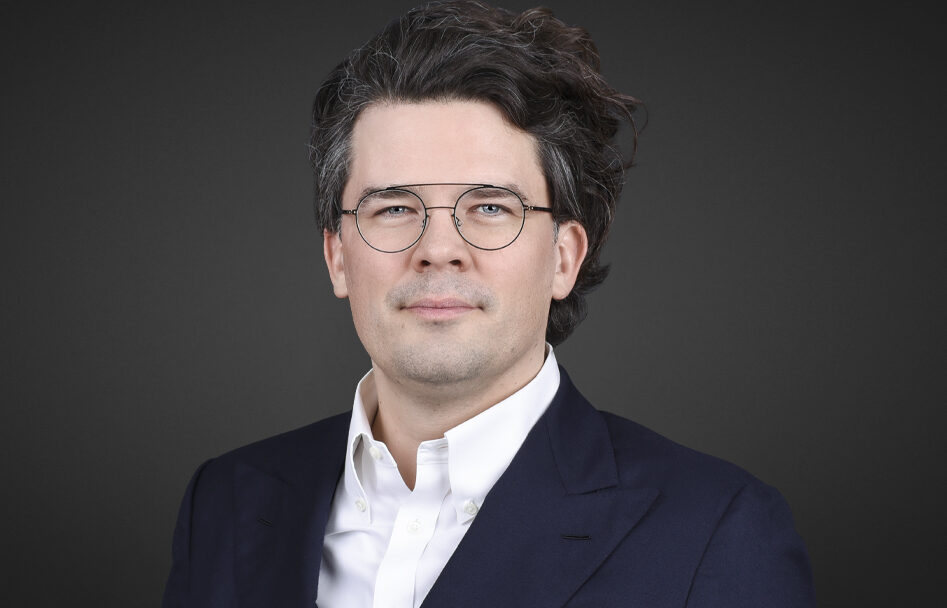
Dr Tadas Zukas, who is concluding his four-year tenure as the global lead senior legal counsel for sustainability at Zurich-based international investment management firm Vontobel, is a member of the Swiss Bankers Association Working Group on Sustainable Finance and an influential voice in the Swiss and European sustainable finance market
People have long predicted that technology will replace lawyers, but with AI now more advanced than ever, legal teams remain crucial players in business dynamics. Why is that? Which parts of the legal function are becoming more valuable in the AI age?
The law, especially the law in action, is more an art than a science. At its highest level of mastery, the art of practising law is about correctly predicting what courts or another relevant authority will in fact decide on a specific legal question in the future. In top-tier business law practice, those predictions are about most complex and novel legal questions, mostly never dealt with before.
Automation tools such as AI and GenAI may be not bad in telling you what judges said on a standard question in the past, especially on simpler questions and derive certain conclusions based on that. But I am sure that the most sensitive, complex and innovative legal work will require creativity and flexibility of the human brain.
Also, a qualified human professional remains at the centre of most areas of classic legal work such as dealing with the gaps in the law, leading negotiations, representing clients in trials and before regulatory authorities, mediating disputes.
I think that such trends as automation of law will further consolidate the role of top-tier in-house lawyers as the responsibility for rendering professional advice will remain with a legal professional.
Furthermore, in the flood of increasingly overwhelming and conflicting information, GCs and lead lawyers will remain key players in their strategic function which consists of timely recognising, filtering out, communicating and helping to manage the most important trends, risks, conflicts, opportunities in law on a global scale.
I believe that in this context the role of such lawyers will become more relevant than ever. These are fascinating times to practise law.
Your role as a senior fellow at the Center for Sustainable Finance and Private Wealth in Zurich means you sit at the intersection of theory and practice. What is one ESG issue that sounds straightforward in theory but becomes difficult to implement inside a real organisation?
If I have to limit myself to just one ESG issue, this would be the time and effort which needs to be invested into ‘upgrading’ a company’s in-house regulatory sustainable finance capabilities not only in legal and compliance, but also in business operations. The speed, breadth and intensity with which the field of modern sustainable finance has been moving on the regulatory front over the past five to seven years, and also the level to which those regulatory and supervisory developments have challenged market conventions, has been truly unprecedented.
In such a rapidly developing field as sustainable finance, operationalisation of new concepts and requirements is a much more challenging task in practice than one thinks looking at it from a theoretical perspective. In the first phase, such an in-house’upgrade’ needs to make sure a firm is capable and enabled to professionally recognise and manage the relevant risks. Building on top of that, state-of-the-art expertise on the sustainability impact side can then be developed, allowing a company to come up with a modernised version of its own unique selling proposition in sustainable finance.
You have previously talked about ESG², where security and geopolitics enter the sustainability equation. Are we entering an era where ESG can no longer be understood primarily as environmental and social? What does this shift mean for in-house legal and compliance teams?
The acronym ESG was brought to life more than two decades ago to refer to three main sustainability matters that are financially relevant for long-term investment decision making. My reference to the second S for security and the second G for geopolitics, was to highlight that the concept of ESG was not invented to mean an exhausting list of sustainability factors. ESG was always designed as a framework to help practitioners operationalise sustainability and have the right focus in doing that.
With my remark on the second S and the second G, I aimed at inviting more in-depth thinking on the topic, move away from ‘tick the box’ culture, which sometimes dominates the modern practice too much. In this context, at a seminar in Zurich, a participant made an observation that there is also a second E in ESG, which stands for economics – a perfectly valid reminder that ESG investing is not philanthropy. So, we ended up with an enriched version of the acronym – ESG², which I found really useful because it deepens one’s thinking about ESG, the concept’s flexibility and evolution.
However, it is important to remember that this does not change the concept’s core, which will remain the focus of legal and compliance teams covering ESG. The brightest legal minds will be constantly challenged by the investors and business needs to go the extra mile in delivering practical solutions. One of the key tasks for in-house legal sustainability teams here is to understand the subtle yet very essential difference between ethical values-driven, financial value-driven and real-world impact-driven investors when applying the umbrella term ESG.
Understanding the difference between sustainability risks versus sustainability impacts in investment decision making is another key task for in-house legal ESG teams. If we take integration of sustainability risk, those additional S and G in ESG may make clear sense. However, they may become much more challenging to deal with as soon as we start talking about consideration of sustainability impact. The ongoing debate on the interplay between the European sustainable finance regulatory framework and the special financing needs of the European security industry is a good real-life case illustrating the challenge.
Looking ahead ten years, what do you think ESG will look like for in-house teams? Do you expect it to be more standardised and trusted, or more contested and fragmented? What would each scenario look like for legal teams?
I think, and hope, that consideration for sustainability impact in investment decision making will become as mainstream as integration of sustainability risks (defined as material financial risks) has become mainstream over the past fifteen years. In addition to that, I expect that the sustainable finance market will have clearer focus on the field’s core which is the environment and especially climate. I also think that transition finance will become a concept which is as well-established as the concept of sustainable finance is today. The focus on transition finance will slowly but steadily continuing to help grow the pie of investment opportunities into assets which are already sustainable.



 ‘The combination of litigation funding and the rise of class actions have
  Helen Carty (pictured right), head of the London litigation and dispute resolution team at
  Stewarts, notes that, so far, ‘all of the big cyber attacks have been mostly uninsured and have been settled.’ He argues that full-blown litigation is likely to emerge only in the event of ‘systemic cyber loss.’
 ‘The business environment is getting increasingly worse, and if we do head into a recession, there will likely be a lot of restructuring and insolvency work,’ says Ted Greeno (pictured right), co-managing partner of
  Tougher economic circumstances also impact private credit. ‘A lot of private equity money went into the market in the last five years,’ says Molyneux. ‘Perhaps that went into investments that haven’t come through or where the price was too high in a frothy market (which of course is part of the portfolio investing) – some of that is unwinding. And you get disputes as a result of that.’
 By way of example, Slaughters acted for the Premier League in the expedited legal challenges brought against its rules by Manchester City FC, as well as ongoing commercial disputes in F1 and golf.
 As he summarises: ‘Firstly, you want to project the kind of confidence that comes from experience. That air of calm when everybody else is panicking is absolutely key.’


 This marks a break from the seller’s market of previous years, which saw deals collapsing on valuation discrepancies. ‘But investment committees are still highly selective as to what they will allow people to run hard at,’ Rodham adds.
 Charlie Hayes, Freshfields’ global co-head of private capital in London, makes a similar point: ‘We’ll continue to see the bifurcation in funds that are readily able to fundraise, and those for whom it’s more challenging; there are great teams out there, and I think this year the consolidation of GPs we’ve already started to see will gain pace – there are some in the market as we speak. And in H2, the IPO market will be buzzing with private capital exits – there is a lot to look forward to.’








 So far the focus has been on building out existing offices, as well as a handful of launches across EMEA, with the firm launching a