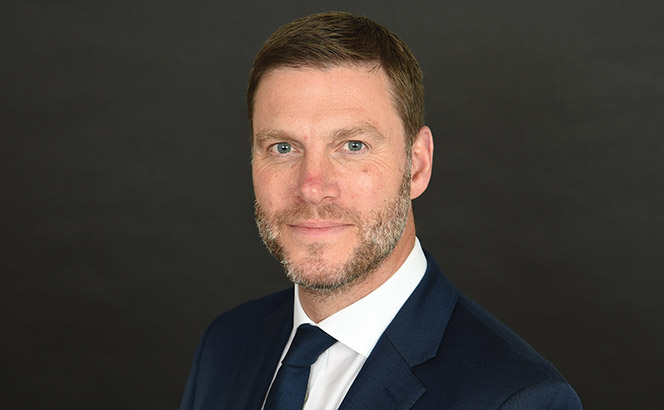
The Epstein files: the lessons all firms need to learn from Brad Karp’s fall from grace

Five days. Five days of journalists poring over hundreds of documents shedding light on the true extent of Paul Weiss chair Brad Karp’s relationship with Jeffrey Epstein. Five days of speculation about his future and five days of damaging headlines before the firm finally confirmed last night that Karp would be stepping down as chairman.

He will, however, be staying on as a partner – at least for now. After three days holed up in emergency meetings, the firm’s board seemingly concluded that while the evidence in the emails was sufficiently damning to make Karp’s leadership role untenable, with no evidence of criminality it was not serious enough for him to be forced out of the firm completely – although the need to manage his client relationships may also have been a factor here.

But while there may be no evidence of criminality or wrongdoing, there’s plenty of evidence of spectacularly poor judgement on Karp’s part, to put it mildly. And, just because something isn’t illegal or depraved,  it doesn’t mean it isn’t bad.

Less than a decade after Epstein pleaded guilty in 2008 to soliciting sex from girls as young as 14, the exchanges show Karp enthusiastically socialising with Epstein, as well as asking him to help his son secure a job with Woody Allen. And, even in the months before Epstein’s death in 2019, Karp appears to have been offering him personal legal advice on a draft court filing relating to his 2008 plea deal to avoid federal prosecution.

All of which, to an outsider, makes the five-day wait for decisive action from Paul Weiss and the three-day wait for Karp to even express regret for what was carefully explained away as just ‘two group dinners in New York City and a small number of social interactions by email’ look pretty long. (As an aside, it’s notable that Karp has not yet expressed any regret in relation to the suffering of the dozens of women and underage girls Epstein was charged with sexually exploiting and abusing).

This was only ever going to end one way once those emails came out.

Examples of billion-dollar law firm leaders getting caught up in scandals of anything like this magnitude are, of course, rare, as are instances of senior figures within elite firms displaying such exceptionally poor judgement. Although given the depressing insight the Epstein files offer into the extent to which men at the highest levels of society have been engaging in such sordid behaviour and blatant degradation of women, more examples would no longer be so surprising.

The truth, though, is that the storm does not need to be as big as that currently surrounding Paul Weiss for firms to be tarnished by failing to act faster.

When facing such serious reputational issues, firms need to get ahead of the problem and organise both their media response and their plan of action far more quickly. Paul Weiss will have wanted to have time to digest all the correspondence for themselves and to line up Karp’s successor, but the endgame always looked like a foregone conclusion as soon as the first stories broke.

And, in practice, the nature of this particular scandal means Paul Weiss should have known it was coming for a very long time.

Given Karp is 66 years old, there should have been plenty of opportunity even for such a popular and charismatic leader to quietly retire before the files were released.

At some point in any reputational crisis, mishandling the problem can become as serious as the problem itself. Stories don’t get smaller the longer they’re out, particularly if the crisis centres on such an emotive subject matter, so firms need to act quickly both in terms of the actions they take and the responses they provide to the press.

Law firms have come a long way since the days of MeToo, both in terms of how they operate and how they deal with the press. But it is still the case that the partnership structure can make it easier for firms to delay taking decisive action, particularly if the matter involves a powerful individual within the firm. Law firms now are the same size as large multinational corporates and, quite simply, this means they need to behave in the same way from a governance perspective.

If law firms aren’t seen to be keeping their own houses in order, how can the clients they’re advising on deals, disputes and corporate governance take them seriously and trust them?

‘Clients don’t want a memo, they want a direct answer’ – the partner who left Big Law to set up a £1.26m PEP boutique

The boutique boom has reshaped large swathes of the London disputes market in recent years, with litigators peeling away from global firms to set up more agile, high-margin practices.

In contrast, the corporate market has remained relatively untouched, with few credible start-ups making their mark – though there are some exceptions.

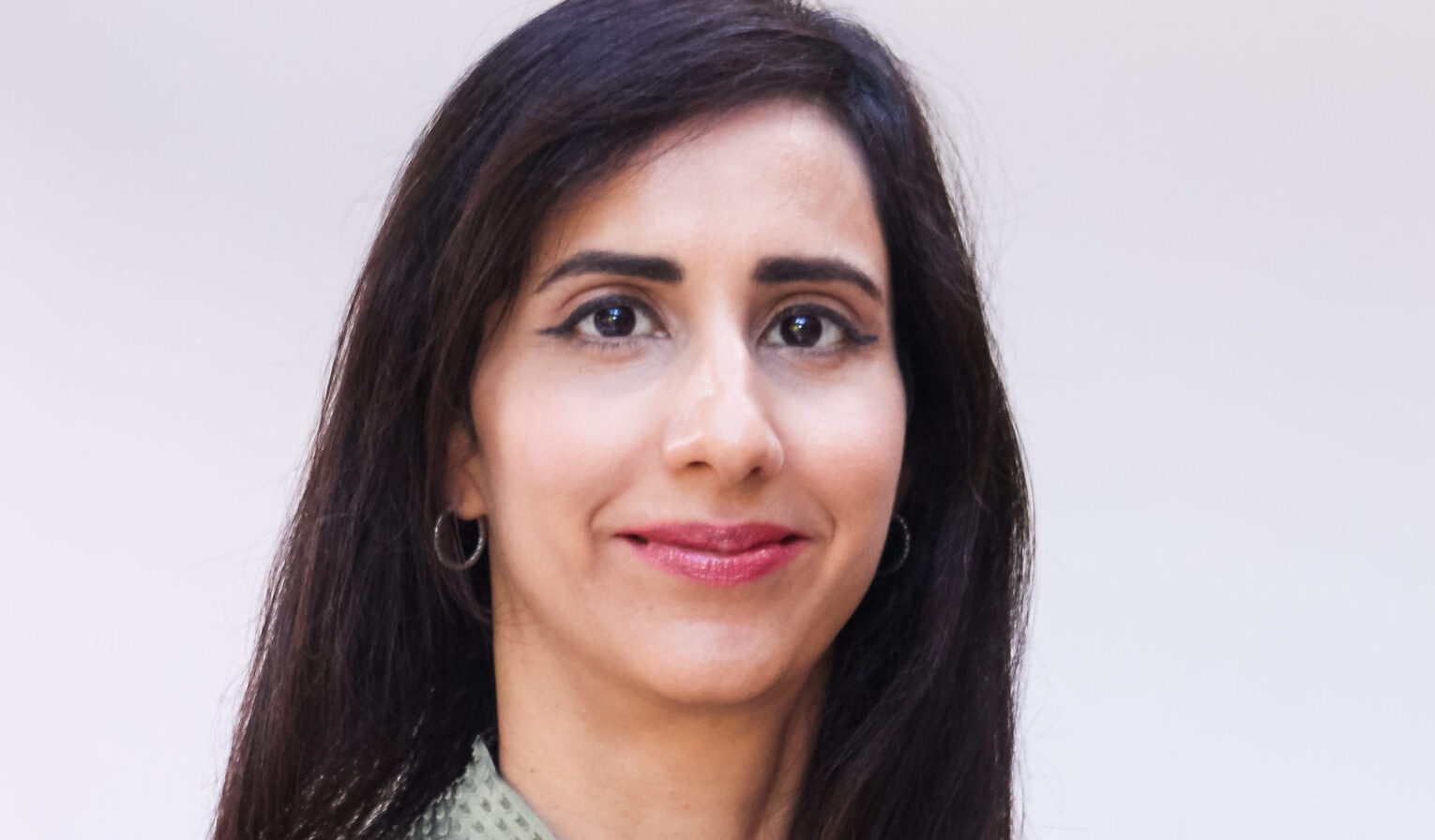
For Angeli Arora, founder of corporate boutique Allectus – the winner of Boutique Law Firm of the Year at the 2025 Legal Business Awards – the imbalance reflects not a lack of opportunity, but a missed one.

Arora set up Allectus in 2023 as the sole employee and partner, a move she acknowledges ‘takes a certain personality and a certain crazy to do.’

But the gamble seems to be paying off. For its first full financial year, to March 2025, the firm posted partner profit of £1.26m, and Arora – still the firm’s sole equity partner – is expecting next year’s figure to be ‘substantially higher.’

The conviction to strike out alone, she says, was shaped by a career spent repeatedly operating in ‘start-up mode’.

After training at Linklaters, she joined US firm Bingham McCutchen, going on to spearhead the firm’s Hong Kong office launch in 2007, making partner just five and a half years after qualifying.

After her practice was absorbed by Akin as Bingham dissolved in 2014, she eventually joined Dentons, where she built its South African offering, becoming Africa lead for the global private equity practice.

In 2021 she returned to London as a partner at Mishcon de Reya, but after building platforms for big law brands for the best part of two decades, she began to ask herself: ‘can I now do this for myself?’

‘That’s never a good reason to start a firm,’ she caveats, ‘there must be a problem you are solving.’

For Arora, that problem lay at the heart of the legal offering itself. ‘It is becoming more commoditised,’ she says, ‘It’s always about chasing high volume or big deals, rolling out transactions. It’s losing that personal touch, the ability to think through complex issues and the trusted adviser role.’

‘The talent war, the salaries, the fees – there is a part of me that says: at what point does it all just explode?’

The areas of strategic advisory work that Allectus was set up to focus on, such as shareholder activism, can sit awkwardly within the large firm model. It demands heavy partner involvement, quasi-litigation strategies, and a willingness to take on big corporates – precisely the kind of work bigger firms are disincentivised from prioritising.

‘A partner is most profitable if they’ve got ten juniors underneath them – and that requires massive transactions,’ Arora says, describing the Big Law leverage model as ‘clunky’ and ‘unwieldy.’

The imbalance is also financial. Scale means a ‘high cost base,’ she continues. ‘Lawyers now have to bring in many multiples in terms of revenue to service the costs. They end up taking home a very small percentage of the work they generate.’

‘If you flip into a lower cost base, you can take home the same number from much lower revenues. Firms are focused on revenue when they should think harder about profit margin.’

Allectus was designed to operate in this gap. But Arora notes that there is ‘no point just adding another firm that does the same as everyone else to the mix,’ or ‘being the cost-effective solution.’

‘That is not what I am out there to do. I am out to be a market leader in my niche,’ she adds.

Hidden behind large brands, too many lawyers at large firms have lost confidence in their own judgement, Arora argues. ‘Clients don’t get a direct answer – they get a memo,’ she says. ‘No one will give you an assessment. Lawyers can be afraid to give opinions beyond restating what the law states.’   

Her approach takes a different tack: ‘When my clients come to me, I will tell them what I truly think,’ she says. ‘They’re coming to me for my experience, my knowledge, and that includes my viewpoint on things,’ she says. ‘It is about not being afraid to give that to your clients. It’s about giving proper answers efficiently.’

The emphasis on independent thinking underpins what Arora describes as Allectus’s ‘grown-up’ culture. In large bureaucratic structures, ‘people don’t necessarily have the freedom to embrace the lawyer they are, but rather fit into what they believe is expected of them,’ she says.

Early mandates suggest the proposition is resonating. Allectus recently advised on one of the largest shareholder activism claims in 2024, targeting natural resources giant Rio Tinto. The campaign secured c.19.35% shareholder support for her client’s resolution, far exceeding typical backing for board-opposed proposals in FTSE 100 companies – a significant result in governance terms.

Arora notes, ‘We illustrated that shareholder activism benefits from a senior-led agile approach focused on navigating complexity and strategy, rather than a scale-driven Big Law model built for volume.’

Other major corporate clients include Canadian shipbuilder Davie, which Allectus has advised on deals including its acquisition of Finnish energy company Enersense Offshore and major shipbuilding assets in Texas.

‘The biggest challenge for a partner wishing to move is ensuring they’ve got a portable book’

Running a boutique, however, comes with its own pressures. Resource constraints are constant, particularly during busy periods. ‘We just work crazily when we have to,’ she admits.

In terms of headcount, Allectus currently comprises two partners: Arora and Ian Frost, a finance partner with more than two decades of experience at Freshfields. The wider team includes senior consultant Andrew Pollard, managing associate Rupert Cullen – who has been at the firm since day one, taking the leap to start-up life after training at Akin – and South Africa qualified consultant Zinhle Hlatshwayo.

Hiring remains the greatest risk to her personality-driven formula: ‘Each hire can have a dramatic influence on the culture that I am creating. I am acutely aware that one misstep could have draconian consequences,’ she says.

But boutique life does offer its own support structures. ‘What I quickly realised is that elite boutique law firms have created a bit of an ecosystem,’ she says. Drawing on specialists, former colleagues, and local counsel across relevant jurisdictions helped her consolidate a network into what Arora describes as a ‘legal platform in itself.’

‘It’s about knowing who to call at the right time, from a talent pool of lawyers that is much broader than just those in your firm,’ she says.

Equally, client loyalty is critical. ‘The biggest challenge for a partner wishing to move is how one ensures that they’ve got a portable book,’ she says. At a large firm, lawyers can rely on institutional backing, but Arora warns this can be a ‘golden cage.’

‘There was a time where each lawyer had their own client book personal to them. That’s got lost in the big brands – and that’s intentional, because they’re creating firm clients that are separate and distinct from the lawyers serving them.’

Having the confidence to know that clients would follow her has been a major confidence-booster, but required courage. ‘The key point is to ensure that you stand by your billable rate and don’t start short-changing yourself,’ she says. ‘You have that confidence in yourself that you’re worth it.’

Looking ahead, Arora expects a multiplication of boutiques in the UK landscape, as pressure builds on mid-market full-service firms caught in between US giants and specialist firms, and this goes back to her initial point: ‘If you strive to be a market leader in whatever you’re doing, then you’ll always retain a place in the market.’

The current model of lots of juniors, she says, is not necessarily sustainable: ‘The talent war, the salaries that are getting paid, the fees being charged, and then AI coming… they’re not going to be able to sustain that model. There is a part of me that says: at what point does it all just explode?’

Arora is keen to stress that the boutique move, however, is not a retreat, particularly for women in law.

Recalling a time when being pregnant was something to be hidden at work, she is emphatic: ‘I don’t want it to be seen as women doing something ourselves because the existing legal market does not offer something suitable. That’s not the truth for me – I am incredibly grateful to my previous firms. The truth is that I believe I can create something interesting and different in the market. And I can do it more efficiently and authentically from a blank canvas. It comes from a positive place, not a negative one.’

Revolving Doors: Three leave Taylor Wessing after merger vote, while Gibson Dunn taps Freshfields for APAC rebuild

Mayer Brown has hired City real estate duo Mark Rajbenbach and Victoria Butcher from Taylor Wessing, ahead of the UK firm’s transatlantic merger with Winston & Strawn.

Butcher joined Taylor Wessing as an associate in 2015, making partner in 2022, and has built a practice advising international clients on cross-border real estate investments, acquisitions, disposals, and financing transactions.

Rajbenbach joined Taylor Wessing in 2017 as partner following four years at Paul Hastings, where he made partner in 2014. He brings particular experience in the hotels and leisure and logistics sector, acting for clients across the US, Europe and Asia.

Dominic Griffiths, Mayer Brown London managing partner, said: ‘Mark and Victoria are highly regarded practitioners with strong profiles in complex, structured and cross‑border real estate matters. Their arrivals further strengthen our market‑leading capabilities in London and complement our global platform, particularly for private capital clients active across the UK, Europe and US.’

The moves make up the second and third partner departures since Taylor Wessing’s merger with Winston & Strawn was approved, with the two firms set to combine as Winston Taylor from May.

The first was the firm’s former head of contentious trusts, Emma Jordan, who joined Stephenson Harwood earlier this week.

Jordan served 11 years at Taylor Wessing, following stints at legacy Wragge Lawrence Graham & Co and Baker & Co.

Also in London, Skadden has tapped Latham & Watkins for international arbitration and litigation partner Samuel Pape. The news comes two weeks after Latham & Watkins co-head of international arbitration, Sophie Lamb KC, also moved to Skadden.

Pape follows Lamb after nine years at Latham, where he made partner in January 2023, having trained at Debevoise & Plimpton. He has built a practice advising on investor-state arbitrations, public international law, human rights and multi-jurisdictional litigation, representing sovereigns and business across a diverse range of sectors including banking, energy, mining, tech and infrastructure.

Elsewhere in the City, Pinsent Masons has added to its antitrust, competition and trade team with the hire of competition partner Alex Stratakis from Van Bael & Bellis.

Joining the previous firm in July 2020, Stratakis served as head of UK competition, advising large corporates on complex competition law matters across Europe.

Akin has hired leveraged finance partner Adrian Chiodo into its London office.

Chiodo joins from Covington & Burling, where he led the leveraged finance practice in Europe. Prior to this, Chiodo served nine years as partner at Latham & Watkins, followed by two at Paul Hastings.

Jones Day made three hires this week, boosting its finance bench in London with infrastructure finance partners Caroline Gregson and Nath Curtis from Osborne Clarke and Gowling WLG respectively.

Meanwhile in Frankfurt, the firm hired capital markets and public takeovers partner Christopher Wolf. Wolf previously spent 14 years at Baker McKenzie, latterly as German head of capital markets. Prior to this he was head of legal at Morgan Stanley Bank AG, spending 10 years at the company.

Back in the City, Reed Smith has strengthened its London office with the appointment of David Brennan as a partner in its global corporate group.

Brennan joins from Gowling WLG, where he was co-head of the technology sector group and partner in its equity capital markets and corporate M&A groups, acting on a broad range of fundraising matters on both issuer and bank side.

Elsewhere, contentious employment and partnership boutique Fox & Partners has tapped Howard Kennedy for litigation partner Nikki Edwards, who brings a practice focus on shareholder conflict, business fraud and corporate disputes.

In Paris, Ropes & Gray has tapped Linklaters for two senior partners, accompanied by eight associates to bolster its transactions and fund structuring offering in Europe.

Tax partner Edouard Chapellier and fund structuring partner Jonathan Abensour both had lengthy careers at Linklaters in Paris – Chapelleir a lifer at 26 years, and Abensour 15, making partner in May 2025.

The move extends the firm’s build-out in Paris, following an office opening in March 2025. The office now hosts 23 lawyers, including five partners.

Also in Paris, Proskauer has hired Laura Bavoux as a restructuring partner. Bavoux joins from French firm Franklin, where she spent over a year as an associate after five years at Weil.

In Frankfurt, Hannah Eckhoff has rejoined Herbert Smith Freehills Kramer as a partner in its disputes practice.

Eckhoff rejoins the firm where she trained, after spending seven years in the dispute resolution team at Freshfields followed by two years in-house at biotech company BioNTech, where she served as director of legal dispute resolution.

Also in Frankfurt, McDermott Will & Schulte has strengthened its bench with its hire of Norton Rose Fulbright banking and finance partner Oliver Sutter.

Sutter spent 16 years at NRF, where he led the German banking practice, following a counsel role at Freshfields. His practice focuses on acquisition, real estate, corporate financings and restructurings.

In Berlin, Baker McKenzie M&A partner Thorsten Seidel has moved to Taylor Wessing Germany, which is not included in the merger between the firm’s UK arm and Winston & Strawn, with the firm’s UK operations splitting from its international verein for the combination.

Seidel brings experience advising on cross-border M&A transactions and corporate restructurings, particularly in the chemicals, life sciences and real estate.

In Düsseldorf, Orrick has hired energy and infrastructure partner Zaid Mansour from Clifford Chance, where he spent 10 years as senior associate and then counsel.

Finally, Morgan Lewis has gone in-house for its latest European hire, bringing on Moderna vice president and head of legal regulatory strategy and global regulatory policy Alex Meier as a partner in Munich.

Over in Asia, Gibson Dunn has tapped Freshfields for a three-partner hire into its private equity and M&A practice groups in Singapore.

Nigel Gleeson was a Freshfields lifer, serving 19 years, latterly as head of Southeast Asia M&A in Singapore. He focuses on PE and M&A transactions for financial sponsors.

Jon Bowden joins following just over two years at Freshfields. Prior to this he spent 10 years as an associate at Linklaters, before making partner at White & Case, where he spent eight years. His practice includes advising clients on PE investments and cross-border M&A, notably in the finance and energy sectors.

Lastly, Alice Boughton joins Gibson Dunn as partner, having spent five years as an associate at Freshfields in London, relocating to Singapore in 2021 and making senior associate in May 2023. Prior to this, she served just over three years as associate at Slaughter and May in London.

The rebuild follows a significant trimming of partner headcount at Gibson Dunn’s Singapore office in 2024, with four partners exiting. The latest partner headcount sits at nine.

Back in London, Seward & Kissel LLP has hired John Benson into its maritime and transportation group as head of maritime finance. Benson joins Seward & Kissel from Watson Farley & Williams.

Fladgate has hired Milan Kapadia in London as the new head of its dispute resolution team.

Kapadia joins from RWK Goodman where he was partner and head of the London disputes resolution team, as well as leading the firm’s banking sector group.

Meanwhile, Browne Jacobson has made a pair of hires, bringing in Phil James from Eversheds Sutherland as head of UK data, and real estate transactions partner Christian Major from K&L Gates.

Shoosmiths has hired payments and financial services regulatory lawyer Manoj Peiris as a legal director, specialising in Web3, blockchain and payments. He joins from Woldpay, where he spent three years as senior legal counsel.

Finally, West End law firm Seddons GSC has strengthened its commercial real estate team with the arrival of consultant David Seal and solicitor Emma Clifford, both from Lawrence Stephens.

[email protected]

Paul Weiss chair Brad Karp resigns from leadership role after Epstein revelations

Paul Weiss chair Brad Karp has resigned as chair of the firm after his longstanding connections to Jeffrey Epstein were revealed in documents released by the US Department of Justice.

Karp, who has led the firm for 18 years, has faced intense scrutiny in recent days after his communications with the late sex offender were made public in the Epstein files.

He will be replaced as chair by corporate heavyweight Scott Barshay, who has been at the firm since 2016, when he joined as global head of M&A from Cravath Swaine & Moore.

In a statement, Karp said: ‘Leading Paul Weiss for the past 18 years has been the honour of my professional life. Recent reporting has created a distraction and has placed a focus on me that is not in the best interests of the firm.’

In the statement announcing the change in leadership, the firm said that Karp ‘will continue to focus his full-time attention to client service at the firm’.

Barshay said: ‘I step into this role with great confidence in Paul Weiss’ continued success. Our strength lies in the talent and dedication of our people and trusted client relationships. Clients come to Paul Weiss because we deliver excellence, and our firm is unified in our commitment to continuing to provide the highest standards of client service.’

On Karp, he added: ‘Brad has made immense contributions to Paul Weiss over his more than four decades with the firm. As chairman of the firm, he transformed Paul Weiss in an unprecedented way to the great benefit of our clients. We are grateful to him for his extraordinary dedication and service over his many years as chairman.”

The Epstein files have uncovered private emails and messages between the convicted sex offender, who died in 2019, and dozens of high profile politicians, business leaders and celebrities.

In one email chain from 2015, Karp describes Epstein as ‘amazing’ after thanking him for an ‘evening I’ll never forget.’

In an earlier statement, the firm said that Karp met Epstein through his representation of Leon Black, the former chairman and CEO of Apollo Global Management, ‘a significant firm client.’

‘During the course of that representation, which spanned several years, Karp never witnessed or participated in any misconduct. Karp attended two group dinners in New York City and had a small number of social interactions by email, all of which he regrets,’ the statement added.

Documents are being periodically released by the DOJ following the passing of the Epstein Files Transparency Act at the end of last year.

Karp has worked at Paul Weiss since he graduated Harvard Law School in 1983, practising in its litigation team. He served as chair of Paul Weiss’ litigation department until 2008, when he was elected as chairman.

At the beginning of last year, Karp was embroiled in controversy as he led Paul Weiss into negotiations with President Trump after executive orders to terminate federal contracts with the firm were announced.

Paul Weiss became the first firm to negotiate a deal with Trump to lift the order, and agreed to provide $40m pro bono support to the administration. Skadden and Willkie also signed similar deals.

After the deal was announced Karp defended his actions in a message to colleagues, where he described the executive orders as an ‘existential crisis.’

[email protected]

Paul Weiss launches Houston office with Kirkland corporate duo

Paul Weiss has opened an office in Houston, led by two corporate partners from Kirkland & Ellis, with one joining as co-chair of global M&A.

Sean Wheeler, a Legal 500 leading partner for energy transactions: oil and gas, will serve as head of the new office as well as global M&A co-chair. He joins Paul Weiss after more than seven years at Kirkland.

Debbie Yee, also an energy-focused M&A partner at Kirkland, will also join the firm.

Prior to Kirkland, the pair spent time as partners at Latham & Watkins, where Wheeler was co-chair of the firm’s oil and gas industry team. Wheeler left for Kirkland in 2018, and Yee followed him a year later, in 2019.

The partners bring with them experience across energy and infrastructure deals, with notable recent work including advising Marathon Oil Corporation on its $22.5bn sale to ConocoPhillips in 2024.

Scott Barshay, chair of Paul Weiss’ corporate practice, said of Wheeler: ‘Sean is the country’s most talented and accomplished deal lawyer in the energy space.’

‘He is the ideal leader to spearhead our expansion into Houston,’ he added.

Paul Weiss joins several other firms that have expanded their footprint with a Houston base, as Sullivan & Cromwell opened its own office there at the start of the year with the hire of Patrick Lingwall, also from Kirkland.

The move comes amidst a spate of activity in Houston, in particular in the energy sector, with the recent $58bn merger of Devon Energy and Corterra Energy creating a new mega-shale operator headquartered in the city.

In a statement, Paul Weiss chair Brad Karp said: ‘Houston is a booming business epicenter that is home to many of our clients.’

He continued: ‘Houston’s dynamic business environment, world-class energy sector and rapidly diversifying economy make it an ideal market for the next step in our firm’s growth trajectory.’

For Paul Weiss, the move is another step in an ongoing wave of expansion that has seen the New York-headquartered firm make significant partner hires since the 2023 London push that has seen it become one of the fastest growing firms in the City.

The news comes as the firm has been embroiled in controversy this week, with newly released files showing communications between Karp and disgraced late financier Jeffrey Epstein.

In a statement from the firm, Karp expressed his regret for his relations with Epstein and denied any misconduct.

[email protected]

Taylor Wessing accounts reveal £10m pay for top earner

Taylor Wessing‘s accounts have revealed that its best-paid partner received more than £10m during 2024-25, as the firm gears up for its transatlantic merger with Winston & Strawn.

The limited liability partnership (LLP) filing for the year to 30 April 2025 comes after partners at both firms voted through their transatlantic merger, with the newly combined Winston Taylor set to go live this May.

The accounts state that ‘the profit attributable… to the member with the largest entitlement was £10,387,583’ – up 34% from the previous year’s top figure of £7,750,000.

Revenue for the LLP, which includes the firm’s UK business, as well as subsidiary undertakings and joint ventures in the US, Ireland, Israel and a branch in Dubai, rose by 15% to £281.5m, up from £244.7m the previous year.

Profit before tax for the LLP was up by 18.5%, from £98.2m to £116.3m.

The firm, which operates under an international verein model, last summer reported total global revenues of £526m for 2024-25. However, the merger with US firm Winston will see Taylor Wessing’s UK business split from the verein, with the French and German arms of the firm retaining the Taylor Wessing brand and operating under a cooperation and referral arrangement.

While Taylor Wessing’s UK profit per equity partner (PEP) figure of £1.1m is significantly lower than Winston’s 2024 PEP of $3.5m (£2.6m), the top earner figure of £10.4m does indicate the the firm already has capacity to suitably reward its best performers.

The accounts also show that staff costs increased by 11% from £92.2m to £102.4m, in part due to an increase in headcount. Total staff increased by 5.4% from 797 to 840, while the number of fee earners increased marginally from 379 to 386.

The accounts state that ‘total remuneration for key management personnel’ was £10.7m, up from £9.3m, without specifying who key management personnel included.

A breakdown of revenue by region was also not disclosed, with the accounts stating that: ‘The board considers that such a disclosure would be prejudicial to the interest of the group.’

At the same time, Herbert Smith Freehills Kramer (HSFK) has also released its UK LLP accounts for 2024-25, the final full year before the transatlantic merger of Herbert Smith Freehills and Kramer Levin, which went live on 1 June last year.

The accounts show a revenue increase of 4% to £1.346bn, and on operating profit of £477.6m, up 9% from £438m.

Last July the firm reported that PEP had grown by 8.6% to £1.428m.

Staff costs increased by 6.5% to £649.1m, as the average number of staff employed during the year rose by 3.3% to 4,566.

The best-paid partner, ‘inclusive of other benefits and payments’, received £3.3m, up 10% from £3m.

The share of profits and salaries awarded to key management personnel – which includes the global CEO, regional and practice leadership, CFO, chief people officer and chief client officer – was £11.3m, up from £8.2m in 2024.

The accounts also provide a breakdown of revenue, with the firm’s UK and US offices contributing 48.5%, marginally down from 49.2% last year. Revenues from Australia inched up from 28% to 28.6%, while Continental Europe, Middle East and Africa was up from 14% to 14.8%. Asia saw a slight dip from 8.8% of total revenue to 8.2%.

The HSFK merger, which went live in June 2025, just seven months after the deal was first announced in November 2024, has created a firm with around 630 partners across 26 offices. Based on Kramer Levin’s account filings early in 2025, the merged firm will have projected revenues of around £1.7bn ($2.3bn), placing it on the fringes of the top 20 firms in the world by turnover.

[email protected]

Gibson Dunn and Sullivan & Cromwell lead $1.25trn SpaceX merger to takeoff

Gibson Dunn and Sullivan & Cromwell have advised on the combination of SpaceX and xAI, two companies privately owned by Elon Musk.

The deal creates a company with a joint enterprise value of $1.25trn, and comes amid reports that Musk may take SpaceX public later this year, in what could become the largest IPO in history, estimated to raise up to $50bn.

Gibson Dunn advised Texas-headquartered SpaceX, with a team featuring some of the firm’s most senior lawyers, including global M&A co-chairs Robert Little and George Sampas in Dallas and New York, alongside capital markets co-chair Hillary Holmes, who co-heads the Houston office.

The team also included corporate, tax, competition, trade and finance partners across Palo Alto, Washington DC and Brussels, with newly promoted competition partner Alana Tinkler representing the London office.

S&C acted for xAI throughout the merger, with a team led by Palo Alto co-managing partner and tech M&A head Mike Ringler and M&A partner Peter Jones.

The firm’s team spanned Palo Alto, Washington DC and New York, with London involvement including antitrust co-head Juan Rodriguez.

Gibson Dunn also advised SpaceX on its September 2025 acquisition of satellite company EchoStar’s full portfolio, valued at $17bn, with Sampas and Little also on the deal team.

For its part, S&C has also worked with other Musk companies in the past, including representing Tesla before the Delaware Supreme Court, where it successfully reinstated the ten-year incentive compensation plan for the CEO last December.

In a statement regarding the merger, Musk said that the combination will allow faster growth for AI, as he plans to build data centres on the moon.

Musk said: ‘My estimate is that within two to three years, the lowest cost way to generate AI compute will be in space.’

‘This cost-efficiency alone will enable innovative companies to forge ahead in training their AI models and processing data at unprecedented speeds and scales, accelerating breakthroughs in our understanding of physics and invention of technologies to benefit humanity,’ he added.

[email protected]

Outgoing Unilever GC set to take up top legal role at Rolls-Royce

Unilever’s chief legal officer is leaving the company at the end of the month to take up the top legal post at British aerospace and defence giant Rolls-Royce.

Maria Varsellona joined Unilever in 2022, after holding several senior legal roles in-house. She will start her new post as chief legal officer at fellow FTSE 100 company Rolls-Royce on 1 March.

Her move to Rolls-Royce comes as the company’s long-serving GC, Mark Gregory, prepares to step down.

Before joining Unilever, Varsellona was GC at Zurich-headquartered electrical engineering company ABB group, having previously spent nearly seven years in senior roles at Finnish telecoms company Nokia. In addition, Varsellona, who began her career in private practice at Greco Law firm,  previously worked at packaging companies Swedish Tetra Pak and Sidel, before joining Unilever.

Gregory has been at Rolls-Royce for more than 20 years, becoming GC in 2015. During this time, he has helped steer the company’s legal team through everything from a high profile Serious Fraud Office investigation, which ultimately led to one of the first ever UK Deferred Prosecution Agreements, a rights issue, to its recent FTSE turnaround as part of CEO Tufan Erginbilgic’s exec team. He is due to leave Rolls Royce at the end of March.

In a post on LinkedIn Gregory said: ‘I’ve had the privilege of serving as General Counsel for over 10 years, working alongside some incredible people, and helping to navigate through some pretty complex and challenging times…
I am going to take some time with my family and friends, reset, and then go again on new adventures.’

Speaking of her move Varsellona commented: ‘After four wonderful years at Unilever, I have decided to step down as Chief Legal Officer at the end of February. It has been a true privilege to support Unilever’s transformation and to work alongside such exceptional colleagues.’

She continued: ‘I have recently found a new source of great inspiration and excitement: On 1st March I will be joining Rolls‑Royce as Chief Legal Officer. It is an iconic company with a remarkable record of excellence, and I look forward to this next chapter and to collaborating with my new colleagues.’

During her time at the helm, Unilever, which owns brands including Dove, Hellmann’s and TRESemmé,  has carried out a number of significant transactions. At the end of last year, Linklaters and Skadden advised as Unilever spun out popular ice-cream business The Magnum Ice Cream Company for $9.2bn. In 2022, the group completed the sale of its tea business, ekaterra, to CVC Capital Partners for €4.5bn advised by Linklaters, while last year the group acquired personal care brand Wild for £230m and men’s personal care brand Dr. Squatch for $1.5bn.

Prakash Kakkad is set to replace Varsellona in the top legal role at Unilever.  Kakkad joined Unilever at the end of 2023 as GC corporate governance & group corporate legal, before being promoted to GC corporate and deputy group secretary nine months later. Kakkad joined the group from Australian mining company BHP, where he served as head of governance -global for two and a half years. Kakkad also worked at Barclays between 2018 and 2021, having joined from the corporate department at Herbert Smith Freehills Kramer, where he began his career.

[email protected]

Pinsent Masons opens in Warsaw with six-partner team

Pinsent Masons is opening in Warsaw, the firm announced today (3 February), with six new partners hired from DLA Piper, Dentons, Greenberg Traurig, and CMS.

The move, which sees the firm open its ninth office in continental Europe, alongside bases in France, Germany, Luxembourg, Spain and the Netherlands, will see Pinsents establish a presence in Central and Eastern Europe (CEE) for the first time.

The new office will be led by real estate partner Bartłomiej Kordeczka and corporate partner Jakub Marcinkowski.

A Legal 500 leading partner for real estate in Poland, Kordeczka joins from Dentons, where he co-led the Warsaw real estate practice and served as office managing partner from 2023 to 2025.

He joined legacy Salans in 2011 before the Paris-headquartered firm merged with legacy SNR Denton and legacy Fraser Milner Casgrain to form Dentons in 2013.

Meanwhile, Marcinkowski joins from DLA Piper, where he was co-head of the Poland corporate and M&A practice. He spent 12 years at CMS before moving to DLA in 2019, and advises leading CEE clients on a range of M&A, PE, and venture capital transactions.

He is also recognised as a leading partner by Legal 500, for private equity.

Among the six hires are a further two senior partners from Dentons: construction practice co-head Piotr Staniszewski, and banking and finance practice co-head Bartosz Nojek.

The exits leave Dentons with 11 partners in Warsaw in both its real estate and banking and finance practices, according to the firm’s website.

Dentons’ real estate team will be continue to be led by former co-head Piotr Szafarz, while Bartosz Nojek has been replaced as co-head of banking and finance by Tomasz Zwolinksi, who will lead alongside current head Mark Segall.

Also joining Pinsents are M&A partner Blazej Zagorski, formerly leader of the German desk practice at CMS, and real estate partner Maciej Jodkowski from Greenberg Traurig.

The move sees Pinsents follow Addleshaw Goddard, which entered the Polish legal market last year with its acquisition of Linklaters’ Warsaw office, also citing plans for further CEE expansion.

Andrew Masraf, senior partner at Pinsents said of the move: ‘Further scaling up our capabilities in Europe in order to meet the evolving needs of our clients remains a strategic objective for us. Poland, as one of Europe’s most resilient and dynamic economies, adds a valuable component to our pan-European offering. It is a key market for a number of our clients, particularly those in Western Europe, and remains an important investment destination in Central and Eastern Europe.’

Marcinkowski added: ‘Warsaw serves as a strategic base for managing English-law governed transactions across CEE, with substantial demand for M&A, banking and real estate services. Our founding team brings extensive experience in all of these areas, setting us in excellent stead to integrate with Pinsent Masons multi-national network and deliver against both local and international client needs.’

The office is set to open by mid-2026.

Pinsent Masons has confirmed that further hires are soon to follow, as founding partners will look to build out their teams.

[email protected]

Skadden and Gibson Dunn lead on $58bn oil and gas merger

Skadden and Gibson Dunn have advised US listed companies Devon Energy and Coterra Energy on one of the biggest mergers in the oil and gas industry.

The $58bn deal combines the Oklahoma City-headquartered Devon with Houston’s Coterra under the Devon Energy brand, creating ‘a premier shale operator’, according to Devon CEO Clay Gaspar.

Skadden advised Devon on the merger, fielding a team led by M&A partners Steve Gill, Mingda Zhao and Emery Choi in Houston, and Dohyun Kim and Elizabeth Gonzalez-Sussman in New York.

The firm’s New York team also includes executive compensation and benefits head Erica Schohn and fellow partner Joseph Penko, as well as Michael Hong (capital markets), Steven Messina (finance) and Trevor Allen (tax), alongside North American antitrust head David Wales in Washington DC.

Gibson Dunn look the lead for Coterra, with a team led by capital markets co-chair Hillary Holmes and M&A partner Tull Florey in Houston, as well as M&A partner Andrew Kaplan in New York.

Houston-based oil and gas co-chair Rahul Vashi and finance partner Shalla Prichard also acted on the deal, working with Dallas office co-head Krista Hanvey, who co-chairs the firm’s employee benefits and executive compensation practice, as well as Washington DC antitrust partner Joshua Lipton.

The deal has been unanimously approved by both companies and is expected to close in Q2 of this year.

The combined company will be headquartered in Houston, and together will own 746,000 acres in the Delaware Basin, an oil-rich region across West Texas and Southern New Mexico.

This deal comes two years after another major oil and gas merger, the $26bn combination of Diamondback Energy and Endeavor Energy Partners, a deal which handed roles to Wachtell Lipton Rosen & Katz, Paul Weiss and Vinson & Elkins.

Oil prices have fluctuated recently amid tensions between the US and Iran, with US President Donald Trump hinting at military intervention.

Since then Trump has stated that negotiations with Iran have made progress, and when markets opened on Monday, oil prices dropped by 4%.

[email protected]

Paul Weiss chair expresses regret over Epstein connections after email revelations

Paul Weiss chairman Brad Karp has expressed regret over his connections to Jeffrey Epstein after communications between the pair were revealed in a extensive release of files relating to the late sex offender.

More than three million pages, images and videos were released by the US Department of Justice on Friday (30 January), after the Epstein Files Transparency Act mandating their release was signed into law last year.

The files contain hundreds of references to Karp, who has led Paul Weiss for 18 years, including an email chain from 2015 in which he refers to Epstein as ‘amazing’ and thanks him for an ‘evening I’ll never forget.’

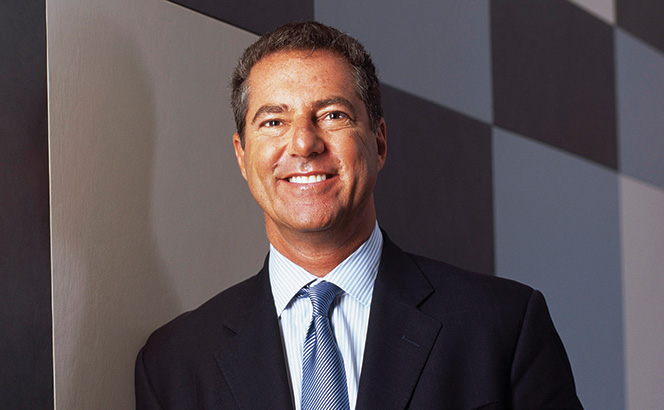
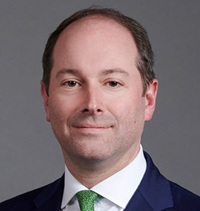
In the email conversation – which took place seven years after Epstein was first jailed for sex offences, including one charge relating to a minor – Karp (pictured) describes his time at Epstein’s house as ‘truly “once in a lifetime” in every way.’

He goes on to say: ‘I hope to be invited again… you are an extraordinary host.’

Karp’s name appears over 500 times in emails and messages, although many of the references come from duplicated email chains.

Karp’s messages to Epstein include a 2014 request for his daughter to accompany him to a film screening with controversial director Woody Allen, while in 2016, Karp reached out to Epstein on behalf of his son, who wanted to work with Allen on film projects.

In a statement, Paul Weiss said: ‘As has been previously reported, Brad Karp met Jeffrey Epstein through his representation of the former chairman and CEO of Apollo Global Management, a significant firm client.’

‘During the course of that representation, which spanned several years, Karp never witnessed or participated in any misconduct. Karp attended two group dinners in New York City and had a small number of social interactions by email, all of which he regrets.’

Karp’s communications with Epstein also include messages relating to ex-Latham & Watkins managing partner Bill Voge and Goldman Sachs general counsel Kathryn Ruemmler, the former global chair of Latham’s white collar defence and investigations practice.

When news of Voge’s shock resignation from Latham broke in March 2018, after he admitted to ‘communications of a sexual nature’, Karp emailed Epstein, saying ‘I really liked Bill Voge’. The following day, Epstein emailed back, asking: ‘Should Ruemmler be chairman of the firm?’.

Karp replied: ‘Kathy would be great and it would be perceived very positively by the marketplace. There are two downsides: (1) the job is truly 24/7 and the demands (travel, client/partner management) of running a global firm like Latham make my job look like a breeze, and (2) related to the demands, it will be impossible for Kathy to practice law.’

‘So my view, Kathy taking this on would be a real mitzvah for Latham, but at a huge personal/professional cost to Kathy.’

Voge was subsequently succeeded as Latham chair and managing partner by corporate partner Richard Trobman, while Ruemmler moved to Goldman as partner and global head of regulatory affairs in 2020, before being promoted to GC in 2021.

The emails also contain email correspondence from Ruemmler (pictured). After a Christmas Day 2015 message in which Epstein asked his assistant to organise a trip for her, Ruemmler says in a subsequent email: ‘Jeffrey is just being wonderful Jeffrey… I adore him. It’s like having an older brother!’

In one email to Epstein in 2019, Ruemmler said: ‘Am totally tricked out by Unc=e Jeffrey today! Jeffrey boots, handbag and watch!’

Speaking to the Wall Street Journal in 2023, Ruemmler said she regretted ever knowing Epstein. The disgraced financier was arrested in July 2019 on charges of sex trafficking. He died in prison a month later.

Karp and Epstein also remained in contact up to 2019. In February that year, Epstein emailed Karp and said: ‘if your buddy Kraft, needs local palm rep. let me know.’

At the time, Kraft Group billionaire Robert Kraft had been arrested in Florida along with 24 other individuals on the charges of soliciting prostitution. He pleaded not guilty to the charges, which were dropped a year later.

Karp had replied to Epstein: ‘I’m sure he’ll need the best there is.’

In the same email chain, Karp later said to Epstein: ‘Another person, former Pres of Citi, John Havens, just called and needs immediate help.’

Havens, the former president and COO of Citigroup, was one of the others charged along with Kraft in 2019. Both denied the allegations and the charges were later dropped.

In April 2019, Epstein also messaged Steve Bannon, President Trump’s former political chief strategist, and said: ‘Need to work magic to get Brad Karp admitted to Augusta Golf Club.’

Bannon replied: ‘The head of Paul Weiss Brad Karp?’

Augusta National Golf Club in Georgia is the home of the Masters Tournament, and membership is invite-only. Members include the likes of Warren Buffett and Bill Gates.

[email protected]

Line to the top: more GCs than ever now reporting directly to their CEO, research finds

More heads of legal than ever now report directly to their CEO, according to new research which also found evidence of clients rethinking their relationships with external law firms due to their political stances.

The findings are contained within the Association of Corporate Counsel’s annual Chief Legal Officers Survey, which surveyed more than a thousand chief legal officers and highest-ranked legal executives around the world, covering 20 industries.

This year, 84% of global CLOs said they now report directly to the CEO or top-ranking executive officer at their company, the highest level on record, up from 79% last year and also above the previous record of 80%.

This upward trajectory was mirrored by European respondents to the survey, with 82% saying they report directly to the company CEO, up from 73% last year.

Introducing the results, ACC president and CEO Jason Brown – the former GC of GE Appliances who took over leadership of the organisation last November – described the trend as ‘a fundamental shift’ and said the office of the CLO was becoming ‘increasingly integrated within the C-suite structure’.

‘No longer merely a defensive gatekeeper focusing strictly on risk mitigation, the modern CLO is an “offensive” asset providing proactive strategic counsel,’ he added.

The report found evidence that legal heads are expanding their strategic influence, with almost half (47%) of respondents noting an increased frequency and depth of engagement in board-level discussions and C-suite strategic planning.

In addition, 62% of CLOs now own or directly oversee the corporate secretary function at their company, up from 54% in 2024.

Another key takeaway from the survey was the impact of political developments on the way top in-house lawyers engage with their external law firms, with 13% of respondents saying that they had changed their approach to evaluating and selecting outside counsel.

This was most notable among European respondents, with 18% saying they had changed their evaluation and selection criteria due to recent political developments in the US, ahead of the US (15%) and Canada (14%).

Of the 13% of global CLOs who have changed their approach, 41% specified that they had added new risk categories to their outside evaluation criteria – including vetting a firm’s political affiliations, public statements or client roster – before instructing them.

In addition, 37% of this group went one step further and reported that they had stopped working with specific law firms due to concerns about their political associations, stances on specific policies, and public profiles.

A number of prominent US law firms have been in the spotlight since US President Donald Trump took office for cutting deals with the administration to avoid the impact of his executive orders.

The report also highlighted the impact AI continues to have on in-house departments, both in terms of skills for legal heads and in the deployment of technology in the department.

More than half (52%) of CLOs said they plan to adopt new tech solutions in 2026, up from 44% last year. Generative AI was highlighted as the top priority, with 69% of respondents saying they would invest more in Gen AI over the next year.

[email protected]

Defining disputes: five blockbuster cases to watch in 2026

After a year in which the courts sent clear signals on how collective and funded claims are likely to progress, the stage is set for 2026 to bring more cases that further push the limits of the UK disputes market.

As long-running disputes move to decisive phases, what matters is not just who wins, but whether the outcome justifies the scale and cost.


A tech showdown in the CAT: Epic Games v Alphabet and Google

In autumn 2026, the Competition Appeal Tribunal will hear a consolidated trial of three claims against Google and its parent company, Alphabet, in what is shaping up to be the CAT’s most complex multi-party case to date.

The first, Epic Games v Alphabet, filed in 2020, saw the creator of Fortnite bring a claim alleging Google abused its dominance in the UK Android app distribution market by forcing app developers to use the Google Play store and its Google Pay billing system, which typically carries a commission of 30%.

The second claim, Elizabeth Coll v Alphabet & others, filed in 2021 by class representative Elizabeth Coll, represents nearly 19.5 million UK Android users in opt-out proceedings seeking over £1bn in damages for alleged overcharging on apps and in-app purchases, again alleging abuse of dominance in the Google Play store.

Lastly, in Rodger v Alphabet & others, Professor Barry Rodger is leading a collective action on behalf of roughly 2,200 UK app developers for similar anti-competitive practices by Google, including inflated commissions and exclusionary conduct.

The trial is listed for approximately 14 weeks from September 2026.

This case crystallises the CAT’s growing role as a forum for global tech disputes, with the current value of claims in the CAT against Google and Apple alone exceeding £30bn.

The outcome will inevitably dictate strategy for both claimant and defendant-side firms in future claims.

Beyond liability, the proceedings are ones to watch as management of aggregate damages methodologies will be tested, an area that drew criticism in early CAT litigation. The outcome of the two collective proceedings, Elizabeth Coll and Rodger, will be of particular interest to funders, for whom the question remains whether returns will match the time and capital required to sustain mega-claims through trial.

The legal line-up

For the claimants, class representative Elizabeth Helen Coll v Alphabet & others: Brick Court’s Mark Hoskins KC and Matthew Kennedy, Monckton’s Ronit Kreisberger KC and Antonia Fitzpatrick, One Essex Court’s Gideon Cohen and Fountain Court’s Hannah Bernstein, instructed by Hausfeld partners Lesley Hannah, Joanna Christoforou and Daniel Hunt.

For the claimants, Epic Games v Alphabet & others: Brick Court’s Colin West KC and David Scannell KC, instructed by Norton Rose Fulbright partners Caroline Thomas, Susanna Rogers and Mark Tricker.

For the class representative in the related case of Rodger v Alphabet & others: XXIV Old Buildings‘ Bethanie Chambers, Brick Court’s Robert O’Donoghue KC and Sarah O’Keeffe, Monckton’s Anneliese Blackwood, and Fountain Court’s Daniel Carall-Green, instructed by Geradin partners David Gallagher, Jennifer Reeves, Patrick Teague and Anthony Ojukwu.

For the defendants, Alphabet, Google, Google Ireland, Google Commerce and Google Payment (Google Asia Pacific and Google UK are also included as defendants in the Rodger v Alphabet & others proceedings): Monckton’s Josh Holmes KC, Kassie Smith KC, Jack Williams, Jenn Lawrence and Luke Kelly, and Hailsham Chambers’ Jamie Carpenter KC, instructed by RPC partners David Cran, Chris Ross and Rathi Thiagamoorthy.


Below the surface: Various investors v Glencore, Ivan Glasenberg and Steven Kalmin

The landmark shareholder group action claim against natural resources titan Glencore is set to reach a conclusion as investors head to the Commercial Court in October for a much-anticipated liability trial.

The UK-domiciled, Swiss-headquartered company and its subsidiaries first came under SFO scrutiny in 2019, following a co-ordinated global investigation into allegations of bribery, corruption, and fraudulent misconduct in South America, Africa and the US dating back to 2006.

For Glencore, this resulted in a 2022 indictment, a guilty plea to seven counts of unlawful activity, and over £1bn paid out in fines globally.

Now four sets of institutional investors are bringing multibillion-dollar ‘stock-drop’ claims under sections 90 and 90A of the Financial Services and Markets Act 2000 against the company, its former CEO Ivan Glasenberg and current CFO Steven Kalmin. The shareholder liability claim rests on alleged ‘untrue and misleading statements’ in the company’s prospectus and arose because of ‘Glencore’s failure to disclose that bribery, corruption and fraud were prevalent in the business activities of key operating subsidiaries.’

The case will be watched closely across the litigation market for what it indicates about the ever-evolving law of reliance; crucially, how proof of reliance may be established where passive investors relied on the integrity of the market and price formation.

Keith Thomas, head of securities litigation at Stewarts, highlights its importance, saying that ‘the decisions on a number of key untried issues will move the whole jurisdiction forward’ – provided, he adds, that the case does not settle, a hallmark of 2025 securities claims.

The legal line-up

For the Legal & General claimants: Brick Court’s Mark Howard KC, Maitland’s David Mumford KC and James Kinman, 4 New Square’s Robert Marven KC, and 3VB’s Philip Hinks, instructed by BCLP partners Ravi Nayer, Ben Blacklock and Rhys Corbett.

For the claimant, Aabar Holdings: Fountain Court’s Bankim Thanki KC, Nicolas Damnjanovic, Kit Holliday and Sam Burns, and 3VB’s Adam Kramer KC, instructed by Quinn Emanuel partner Julianne Hughes-Jennett.

For the Stewarts claimants: 3VB’s Andrew Onslow KC, One Essex Court’s Richard Mott and Sabrina Nanchahal, and 4 New Square’s Usman Roohani, instructed by Stewarts partners Keith Thomas, Elaina Bailes, Harry McGowan and Joe Mitchell.

For the defendant, Glencore: 4 Stone Buildings’ Richard Hill KC and Greg Denton-Cox and Brick Court’s Tony Singla KC, Kyle Lawson and Jacob Rabinowitz, instructed by Clifford Chance partners Luke Tolaini and Kelwin Nicholls.

For the defendant, Glencore CFO Steven Kalmin: Fountain Court’s Patrick Goodall KC and Rebecca Loverage, instructed by Hogan Lovells partner Philip Parish.

For the defendant, former Glencore CEO Ivan Glasenberg: One Essex Court’s Laurence Rabinowitz KC, Alexander Polley KC and Andrew Lodder, instructed by Steptoe partners Zoe Osborne and Angus Rodger.


Controlling the flow: the Thames Water restructuring

The long-running dispute over the Thames Water rescue returns to the courts in 2026, in one of the most complex restructurings to date.

After years of financial distress, last year Thames Water received a £3bn emergency financing package designed to stabilise the utility short term and avert insolvency. But the court-sanctioned plan was only a temporary solution.

This year, the utility is working toward a longer-term restructuring plan, seeking court approval for one that addresses underlying capital structure and more than £22bn in liabilities.

The first hearing, anticipated in spring 2026, will consider creditor class composition and jurisdiction. A second ‘sanction’ hearing, likely in summer 2026, will determine whether the restructuring plan should be approved and imposed.

The new plan is likely to be hotly contested. Key issues include creditor-on-creditor pressures, valuation disputes, allocation of losses between debt classes, and the extent to which public interest considerations and regulatory obligations should influence the court’s approach.

The stakes are high. Failure to secure approval revives the prospect of a Special Administration Regime (SAR), a route yet to be tested, and one that carries significant political and financial consequences. The outcome will have implications not only for Thames Water but its diverse stakeholders – including Ofwat, the Government, US hedge funds, environmental advocates, and two state-backed Chinese banks.

Other implications include complex valuation methodologies, class selection under Part 26A, and investor confidence in UK infrastructure.

The legal line-up

For the Class A ad hoc group of creditors: South Square’s Adam Al-Attar KC and Edoardo Lupi, instructed by Akin partners Barry Russell, Emma Simmonds, Emma Butler, Kambiz Larizadeh, Alex Harrison and Sam Brodie.

For the plan company, Thames Water Utilities Holdings: South Square’s Tom Smith KC, Charlotte Cooke and Andrew Shaw, instructed by Linklaters partners Rebecca Jarvis, Mark Nuttall, Max Krasner and Euan Clarke.

For the bank supporting creditors: South Square’s Stephen Robins KC, instructed by A&O Shearman partners Tim Conduit, Katrina Buckley and Nick Lister.

For Thames Water: Erskine Chambers’ Andrew Thornton KC and South Square’s Georgina Peters, instructed by Freshfields partners Neil Golding and Lindsay Hingston.


Show me the money: Municipio de Mariana v BHP, phase two

In a significant development for the UK mass tort landscape, BHP’s application for permission to appeal the High Court’s November 2025 liability ruling was recently refused, clearing the way for a quantum trial in October 2026.

The High Court last year found the natural resources giant liable for the 2015 collapse of the Fundão Dam in Brazil that killed 19 people and caused widespread environmental devastation.

Slaughter and May acted for BHP during the liability proceedings, while claimant boutique Pogust Goodhead secured victory for the 600,000 claimants in the largest opt-out class action claim to date and a decisive moment for parent-company liability claims brought in the UK in respect of overseas harm.

With the appeal now closed off, October 2026 will see the claimants seek damages at a value of £36bn, facing off against BHP’s freshly mandated legal counsel, Herbert Smith Freehills Kramer, which replaced Slaughters in late December.

The hotly anticipated decision on quantum will be seismic for the future of the fashionable class action proceedings that populated both the High Court and the CAT in 2025.

Now we will see exactly how much the case was worth, testing not only valuation methodologies in mass tort litigation but the economic sustainability of class actions of this scale. If damages fall significantly short of topline figures, as occurred in Merricks v Mastercard, the outcome could force a recalibration of claimant strategy in future group actions.

The legal line-up

For the claimants: One Essex Court’s Alain Choo Choy KC; Twenty Essex’s Andrew Fulton KC, Alma Mozetic and Jonathan Ketcheson; Temple Garden’s Russell Hopkins and Anisa Kassamali; Cornerstone Barristers’ Hannah Taylor; Serle Court’s Jonathan McDonagh and Sophie Holcombe; and Blackstone Chambers’ Antonia Eklund instructed by Pogust Goodhead’s Jonathan Wheeler alongside Caroline Narvaez Leite, Tom Ainsworth and Rafaela Conte.

For the defendants: Herbert Smith Freehills Kramer, led by Alan Watts.


Dieselgate: Various claimants v Mercedes-Benz Group, Volkswagen, Ford Motor Company, Nissan Motor Co

After nearly ten years of controversy, the Pan-NOx emissions group litigation – or ‘Dieselgate’ – is finally poised to see some movement in 2026.

The group action brought on behalf of over a million diesel car owners against five of the world’s largest car manufacturers accused of manipulating emissions tests kicked off in the High Court in October 2025, with liability to be decided in mid-2026.

The scale and breadth alone make this case one of the most closely watched group actions in recent years. If the claimants win, the compensation phase could lead to billions in payouts, and set an important precedent for consumer-environmental litigation.

Beyond quantum, the litigation is expected to test the effectiveness of the UK’s collective redress regime in handling complex data-heavy disputes involving multinational defendants and long-running regulatory investigations.

The legal line-up

For the claimants: Blackstone Chambers’ Tom de la Mare KC and Ben Jaffey; Henderson Chambers’ Oliver Campbell KC, Rachel Tandy and Freya Foster; 3VB’s Adam Kramer; 2 Temple Gardens’ Gareth Shires, Jessica van der Meer, Sam Stevens and Anna Dannreuther; and Matrix Chambers’ Joanna Buckley, Kate Boakes and Catherine Arnold instructed by Pogust Goodhead’s Anna Varga, Erika Saluzzo, Oliver Shipway, Matthew Newbould and Melissa Ferrari, Hausfeld’s Nicola Boyle, and partners from Milberg London and Leigh Day.

For the defendants: Brick Court’s Tom Adam KC, Richard Blakeley KC, Zahra Al-Rikabi and Camilla Cockerill  instructed by HSFK’s Natasha Johnson, Alan Watts, David Bennett and Philip Lis for Mercedes-Benz Group; Blackstone Chambers’ Brian Kennelly KC and Rayan Fakhoury instructed by Freshfields partners James Roberts and Simon Duncombe for Volkswagen; Monckton’s George Peretz KC and 2 Temple Gardens’ Ben Phelps instructed by McGuireWoods partners William Boddy and Chloe Steele for Ford Motor Company; Monckton’s Anneli Howard KC and One Essex Court’s Stephen Auld KC and Simon Gilson instructed by Hogan Lovells partners Matthew Felwick and Valerie Kenyon for Nissan Motor Co; Fountain Court’s Leigh-Ann Mulcahy KC and Brick Court’s Charlotte Tan instructed by Cleary partners James Brady, Kathryn Collar and Pablo Mateos Rodriguez for Vauxhall; Crown Office Chambers’ Alexander Antelme KC and Richard Sage and Brick Court’s Fred Wilmot-Smith instructed by Signature partner Tom Snelling for Renault.


Addleshaws accounts shed light on multimillion-pound office scale-up

Addleshaw Goddard spent more than £8m on building improvements, office equipment and refurbishments last year, as the firm continues to upgrade its offices across the UK and Ireland, accounts filed with Companies House reveal.

The total spend of £8.27m includes £4.41m on leasehold improvements, £2.37m on office and computer equipment and £1.49m on fixtures and fittings.

The total sum for 2024-25 is 142% more than the equivalent figure of £3.41m for the previous financial year. The most notable increase is in leasehold improvements, where expenditure more than quadrupled.

Addleshaws has made a series of significant investments in its offices and infrastructure in recent months. Last year it moved into new offices in Dublin, enabling it to accommodate over 200 people across 27,722 sq ft – 42% up on the firm’s previous footprint in Ireland. The firm originally entered the market in 2022 via a merger with domestic firm Eugene F Collins.

Last December the firm also moved into new London headquarters at 41 Lothbury, a Grade II listed building opposite the Bank of England. Managing partner Andrew Johnston previously told LB the building speaks to the intent of the firm’s 2030 strategy, which has a more corporate focus.

The entrance to the building, with its marbled floor, high ceiling and floor-to-ceiling columns, is the former banking hall which once belonged to London & Westminster Bank (now NatWest). The building has a 1,350 sq ft fitness studio, a ‘cooling wall’, and 8,000 sq ft of roof terraces.

The firm has also recently completed a move into new offices in Glasgow, taking 83% more space, with an Edinburgh move to follow.

As recently reported by LB, the firm is exploring changes to remuneration and bonus allocation to better be able to ‘disproportionately recognise and reward’ those partners who are performing exceptionally well.

The accounts show that profit before partners’ remuneration rose from £205.8m to £212.8m, while expenditure on partner remuneration grew from £79.8m to £87.6m.

The amount received by the firm’s best-paid partner during 2024-25 was £2.157m, slightly down from last year’s top figure of £2.338m.

Capital contributions rose from £7.5m to £11.1m, on the back of the average number of partners rising from 344 to 388. Staff costs rose 9% from £192m to £210m as the average number of fee earners and support staff grew 3.8% from 2,320 to 2,410.

In addition, the accounts also show that the firm paid less tax during 2024-25, with both UK corporation tax and overseas tax decreasing, meaning the overall tax charge fell from £4.8m to £3.5m.

[email protected]

Mishcon de Reya elects new-look leadership team

Mishcon de Reya has elected a new managing partner and two executive partners in a new-look leadership team for the firm.

Daniel Naftalin, the chair of the firm’s top-tier employment practice, will take over from current managing partner James Libson this summer after securing what the firm said was ‘a strong mandate’ from partners.

Naftalin, who already has a role on the management board, joined the firm in 1998, making partner in 2004. His clients include a number of FTSE 100 CEOs, alongside hedge fund partners, Premiership football managers and players.

Speaking on the appointment, Naftalin said: ‘I am so delighted and excited that my partners have put faith in me to lead this exceptional firm. I care deeply about Mishcon de Reya, its people, what it stands for, and its place in an increasingly competitive market. I will work tirelessly to ensure that the firm is even stronger at the end of my tenure that it is today.’

He will work alongside an incoming executive partner duo of white-collar crime and investigations head Johanna Walsh, and real estate litigation head Daniel Levy, both of who also sit on the management board.

Walsh and Levy will support Naftalin in the management of the firm and the delivery of its strategic objectives, while also continuing their client work.

The appointments come after the unveiling last autumn of Mishcon’s new five-year strategy, which is built around strategic growth in three key sectors – the innovation economy, private wealth and private capital, and real estate.

The firm also noted in a statement that it would retain its focus on being a ‘disputes powerhouse,’ alongside embracing AI and building on ‘significant international client work’.

Managing partner James Libson said at the time: ‘Our new strategy will give us greater alignment and focus, to concentrate our efforts on strategic sectors, disputes, and firmwide practice excellence, and the ability to deliver at scale.’

Libson has been managing partner since 2020, when he was appointed in an uncontested process. He succeeded Kevin Gold, who subsequently took up a five-year post as executive chairperson, before becoming head of international.

The firm added that it will now begin the process of appointing a new chair for the employment department.

Taylor Wessing and Winston partners approve May merger

Partners at Winston & Strawn and Taylor Wessing have voted through their transatlantic merger, with the newly combined Winston Taylor set to go live this May.

The tie-up will create a firm with more than 1,400 lawyers and revenues of around $1.65bn, with Winston’s 2024 revenues of $1.27bn (£950m) boosted by Taylor Wessing’s UK turnover of £284m.

The merged firm – which will be led by Winston chairman Steve D’Amore as chair, with Taylor Wessing UK managing partner Shane Gleghorn taking a role as Europe and Middle East managing partner – will likely sit just outside the top 50 in the Global 100 revenue rankings, and will have particular focus on major litigation, critical transactions, strategic IP, and private wealth.

The deal will see Taylor Wessing’s UK operation split from its international verein, with the French and German arms of the firm retaining the Taylor Wessing brand and operating under a cooperation and referral arrangement.

However, Taylor Wessing’s Netherlands and Belgium arms have agreed a deal to operate under the new Winston Taylor brand, and in the statement confirming the merger, the firm said that it was ‘anticipated that the Netherlands and Belgian regions will, over time and subject to approvals, fully integrate into a single firm with the US and UK operations of Winston Taylor’.

Taylor Wessing’s UK-led business also includes the firm’s teams in Ireland, Dubai and San Francisco.

In a statement announcing the deal, D’Amore said: ‘The decisive, overwhelming support from our partnerships reflects a shared passion and commitment to meeting our clients’ desire for a unified team across the Atlantic.’

Gleghorn added: ‘This combination creates a transatlantic law firm in the major hubs of innovation and capital in the US, Europe, and the Middle East. Our clients require a firm with premier teams in those hubs in relation to critical transactions, litigation, IP and private wealth.’

‘Our partners, therefore, voted in favour of the combination because both firms have an absolute commitment to achieving our clients’ objectives, and that focus will be the foundation of our shared success.’

D’Amore previously told LB that he saw the deal as ‘a consummation of what I have been saying for a long time, which is that Winston needed to be bigger and stronger in London, which is a hugely important market.’

The two firms have very distinct geographical footprints, with overlap in only four locations around the world: London, Brussels, New York and San Francisco.

Both firms have small bases in Brussels, while in the US, Taylor Wessing has had a presence in San Francisco and New York since 2014. In London, Winston has a relatively low headcount relative to most US firms, with just 26 lawyers.

The two firms do have a wide gap in profits per equity partner (PEP), with Winston posting PEP of $3.5m (£2.6m) for 2024, more than double Taylor Wessing’s UK PEP of £1.1m.

For more, see:

Beyond the deals: how clients rate London’s top M&A teams

In the battle for London market share, the City M&A scene is one of the most competitive, with top UK practices coming under increasing pressure from uncompromising US counterparts.

While the deal value rankings tell one side of the story – with Latham & Watkins and Kirkland & Ellis taking the top two spots for 2025 – that data doesn’t give the full picture.

So for a different perspective on the City’s best deal teams, Legal Business took a deep dive into Legal 500 research to see which M&A departments were the highest rated by clients. (The following data is based on referee responses from Legal 500’s M&A: upper mid-market and premium deals research.)

Commercial knowledge

For commercial knowledge, Slaughter and May comes out top, ahead of Skadden and White & Case in second and third place.

The firm, which is known for advising more FTSE 100 companies than any other, had a role on the UK’s largest M&A deal of 2025, according to LSEG – advising a consortium of shareholders of Pension Insurance Corporation on its £5.7bn sale to Athora Holding.

Slaughters also led on the fourth largest UK M&A deal last year, guiding global instruments company Spectris through competing bids before its eventual £4.7bn acquisition by KKR.

Richard Smith (pictured), the co-head of Slaughters’ corporate and M&A group, sets out how the firm beds in client relationship. ‘We focus on our clients knowing us institutionally. They know a lot of partners across the firm, over our different practices, so they are being covered by the firm as a whole and that institutionalises the relationship,’ he explains.

‘There’s no internal politics about whose client is whose,’ Smith adds. ‘It’s a “one team” effort, fostered and enabled by our unique partnership culture and lockstep pay model.’

The firm placed seventh in LSEG’s 2025 rankings for UK M&A deal value, handling 50 deals worth a total value of $52.9bn.

Quality of partners

Slaughters also ranks highly for quality of partners, second only behind Macfarlanes and just ahead of Weil Gotshal & Manges.

Deal highlights for Macfarlanes during 2025 included advising Banco Sabadell on its £2.65bn sale of TSB to Santander, while the firm also acted for Stonehage Fleming and Stanhope Capital on their merger with US wealth advisory company Corient, which created a $430bn wealth management family office.

Macfarlanes M&A head Jessica Adam (pictured) said: ‘We place a deliberate emphasis on the very highest quality of advice, so it is encouraging to see that this is reflected in client feedback.’

She continued: ‘High value M&A demands clear judgement and practical insight, which requires a close understanding of our clients and their objectives. Our M&A partners are involved in every aspect of our clients’ most important transactions, bringing technically robust advice and real world deal experience to complex, cross-border and strategically significant deals.’

Partner availability and engagement

As well as strong client reviews for its commercial knowledge, White & Case has the highest score for the availability and engagement of M&A partners.

The US firm rose up the UK M&A deal value rankings last year, moving to sixth place from 20th in 2024, with roles on 77 deals including the fifth largest UK M&A deal of the year, according to LSEG – data centre development company Yondr Group’s $5.74bn acquisition by investor groups Digital Bridge and La Caisse.

Another international firm scoring highly in this category is Baker McKenzie, which handled a number of major mandates last year, such as advising Walgreens Boots Alliance on the carve-out and reorganisation aspects of its $23.7bn acquisition by Sycamore Partners. Global M&A head Jannan Crozier attributed the team’s strong showing to its emphasis on the ‘human connection’ in an industry where expertise is expected.

Overall client service

Another corporate team making a strong impression is Weil’s London M&A practice, led by City co-head David Avery-Gee (pictured), which shot up the LSEG M&A value rankings from 44th to 24th after handling 30 transactions valued at $16.5bn.

The firm worked on 2025’s second biggest UK M&A deal, advising insurer Convex Group on its $7bn (£5.2bn) sale to Onex and AIG, and it has already made headlines in 2026 with its role as lead adviser to Glencore on its potential $260bn merger with Rio Tinto, which could become the biggest M&A deal of all time.

While much smaller than many of its City peers, a clear pointer as to why the London team is punching above its weight lies in the assessment from clients.

The team scores in the top three for team quality, partner availability, and billing transparency – and, taking all metrics together to give an overall client service score, it comes out top above all of its peers.

[email protected]


All of the scores in this article are compiled from referee responses collected during Legal 500 research. Benchmark scoring for our other client service criteria is also available. Please contact [email protected] if you would like to know more.

The silk class of 2026: ten names to note

This year’s silk round, announced last week, saw 96 successful applicants make the grade, and this March they will make their way to Westminster Hall to accept their letters patent as they officially assume the status of King’s Counsel – the designation for elite advocacy in England and Wales.

As always, there is a broad mix of specialisms, experience and personalities on show – here, Legal 500 Global Bar editor Will Tolcher picks out ten notable names who will be making that journey to Westminster on 23 March.


Ravi Aswani, 36 Stone

Ranked in the top tier for both shipping and commodities in Legal 500, international arbitration specialist Ravi Aswani has a practice to match his prominence as a flag-bearer for that practice area, and the Bar more broadly on LinkedIn, where he is a prominent voice. The winner of the shipping, commodities and aviation junior of the year at the Legal 500 Bar Awards 2025, he is active as both counsel and arbitrator in these areas.


Rosemary Davidson, 6KBW College Hill

The only barrister of the top tier of the Legal 500 extradition ranking to make silk in this year’s round, Rosemary Davidson has of late been instructed by the Crown Prosecution Service in cases involving high-profile requested persons, including the long-running extradition proceedings concerning the late Autonomy CEO Mike Lynch, as well as politically sensitive matters such as requests for extradition to Ukraine.

Away from this area, she was also involved in the R (W80) v Independent Office for Police Conduct case concerning the appropriate test for self-defence in police disciplinary proceedings, including as sole counsel for the officer at Court of Appeal level – the matter concerned the death of Jermaine Baker, who was fatally shot while part of a plot to break out two prisoners being transported to Wood Green Crown Court.


Timothy Killen, 3 Verulam Buildings

Ranked in the top tier for insurance and reinsurance in Legal 500’s London coverage, in addition to four other rankings, Killen is also notable for his work in the Dubai International Financial Centre, including unled work – as evidenced by his ranking in the top tier in the Commercial section of Legal 500’s English Bar in the Middle East and victory as commercial junior of the year at the 2024 Legal 500 MENA awards. He joined 3VB in October 2025, having moved from 2 Temple Gardens.


Christopher Knight, 11KBW

Public Law junior of the year at the 2025 Legal 500 Bar Awards, Christopher Knight has been active across the most politically sensitive public law cases – appearing both for claimants and as part of government teams led by Sir James Eadie KC.

Of late he was instructed for the claimants in R (ARC Time Freehold & ors) v Secretary of State for Housing, Communities and Local Government – a challenge by freeholders to the leasehold enfranchisement reforms. Government side work of late included a successful appearance in Hora v United Kingdom, in which the vexed issue of voting by serving prisoners returned to the European Court of Human Rights once again.


Alasdair Mackenzie, Doughty Street Chambers

Alasdair Mackenzie is notable as being the sole junior barrister with a Legal 500 ranking for immigration in this year’s silk round, reflecting the constrained market for silk work in a significantly privately-funded area.

His track record includes representing a number of Tamil asylum seekers in the British Indian Ocean Territory who were eventually transferred to the UK, and prior to that he was involved in the Rwanda plan litigation.


Laura Newton, Brick Court Chambers

Winner of commercial litigation junior of the year at the 2025 Legal 500 Bar Awards, Laura Newton is one of four silks from Brick Court chambers in this round. In 2025 she was the top junior for the appellants in the NIOC v Crescent Gas case in the Court of Appeal, in which a technical point of trusts law became the latest skirmish in a decade-long dispute over a long-term gas agreement which included an arbitral award against NIOC to the tune of $2.5bn, and has also had roles in blockbuster cases such as Mozambique v Credit Suisse (also known as the Tuna Bonds case). In an unusual case – unled and pro bono – she represented three people subjected to director disqualifications in Montserrat in an appeal to the Judicial Committee of the Privy Council.


Caroline Pounds, Quadrant Chambers

A nominee for shipping, commodities and aviation silk of the year at the 2025 Legal 500 Bar awards alongside Aswani, as is typical in this practice area, much of Caroline Pounds’ work has been in confidential arbitrations – including sitting as an arbitrator.

However, one highlight of her junior career in court was being part of an all-Quadrant team in first the Admiralty Court and then the Court of Appeal in the litigation concerning the salvage of the Ever Given. Pounds will be appointed alongside Quadrant Chambers stablemate Gemma Morgan, in a year when more women than men ranked in Legal 500 for shipping and energy have been appointed silk.


Nehali Shah, One Essex Court

Nehali Shah’s appointment comes as no surprise, with her top-tier rankings in Legal 500 for international arbitration, banking and finance and energy, as well as a tier two ranking for commercial litigation. Of late she has been representing the claimants in Credit Suisse Virtuoso SICAV-SIF v Softbank, a case concerning the collapse of Greensill Capital, as well as representing the estate of Mike Lynch in civil litigation over HP’s purchase of Autonomy.


Professor Philippa Webb, Twenty Essex

Professor of public international law at the Blavatnik School of Government at Oxford, Philippa Webb receives a substantive appointment to King’s Counsel for her work in that field, for which she won International Law Junior at the most recent Legal 500 Bar Awards. Her practice spans inter-state disputes, international human rights matters and investor-state disputes. Of late regarding the latter, she appeared on her feet in the UK Supreme Court in Infrastructure Services Luxembourg S.A.R.L and another v The Kingdom of Spain concerning submission to the UK’s jurisdiction for the enforcement of ICSID arbitral awards.


Nicholas Wilkinson, 1 Hare Court

One of three junior barristers ranked by Legal 500 for family: divorce and financial remedy, Nicholas Wilkinson has a track record of the kind of heavyweight, high net worth, financial remedy litigation one would expect from a senior junior at 1 Hare Court. Unled and instructed by Howes Percival, he represented the father in W v C, a High Court Schedule 1 case involving two French nationals and, prior to that, represented a Jordanian princess in Al Hussein v Al Maktoum case, a claim by financial provision against her ex-husband, the Ruler of Dubai.

Trading places: latest US laterals for Simpson Thacher, Dechert and A&O Shearman

Simpson Thacher & Bartlett has made an eye-catching hire from Wachtell, Lipton, Rosen & Katz, recruiting M&A partner Alison Preiss in a rare lateral departure for the storied Wall Street firm.

Preiss, who had been at Wachtell since 2005 and a partner since 2016, joins Simpson Thacher‘s New York office, bringing significant experience of advising boards and senior executives on both buy and sell-side M&A.

While lateral moves out of Wachtell are uncommon, the firm has seen a number of exits over the past year, including M&A partners Viktor Sapezhnikov and Zach Podolsky to DLA Piper and Latham & Watkins respectively, as well as finance partner John Sobolewski, who also joined Latham.

Elsewhere, Dechert has hired senior trial lawyer Jim Wetwiska from Akin to launch a Houston office for the firm.

Wetwiska, who spent 22 years as a partner at Akin, focuses on complex litigation in sectors such as energy, product liability and software.

Dechert’s move into Houston comes alongside the hire of a 20-partner team from McDermott Will & Schulte which will see the firm launch offices in Chicago and Dallas.

Meanwhile, exits are continuing at Cadwalader ahead of its merger with Hogan Lovells, with fund finance partner Leah Edelboim understood to be joining Sidley.

Edelboim, who made partner at Cadwalader in 2021, specialises in a broad range of fund finance structures in both borrower and lender-side matters.

Another Cadwalader fund finance partner, Christopher Montgomery, has departed to join King & Spalding’s finance and restructuring group in New York. Montgomery spent four years at Cadwalader’s office in Charlotte and brings experience advising lenders and sponsors on fund finance products.

Paul Hastings, which this week announced the hire of four partners from Cadwalader and Haynes Boone to launch in Charlotte, North Carolina, has also hired Mayer Brown antitrust partner Gail Levine for the firm’s Washington office.

Levine, who co-led Mayer Brown’s global antitrust and competition practice during her five-year stint, advises Fortune 500 companies and PE firms on all aspects of antitrust review. She also has expertise in government investigations on the back of her previous role as deputy director of the Federal Trade Commission’s Bureau of Competition.

Finally, A&O Shearman hired an M&A and private equity partner from Kirkland & Ellis to grow its Chicago office which opened last year. Valentine Bleicher, who joined Kirkland as a partner in 2021, brings experience advising on sponsor-side M&A matters across public and private markets. Bleicher is also fluent in French and regularly advises French sponsors and corporates on US transactions.

[email protected]

Northern heavyweight Brabners to open in London with double hire

Nik White

Leading Northern firm Brabners has announced plans to move into London with the hire of two partners to launch a permanent base in the capital.

The firm, which last year won Regional Law Firm of the Year at the Legal Business Awards, has recruited Forsters corporate partner Stuart Hatcher and gunnercooke disputes partner Russell Strong for the new office, which will open in mid-2026.

The base will become the firm’s fifth office alongside Liverpool, Manchester, Leeds and Lancashire.

Hatcher has spent just under six years as a partner at City firm Forsters, before which he was a partner at PwC. He specialises in advising privately‑owned businesses and also has a focus on sport, holding a role on the board of Brentford FC.

Strong’s experience includes four years as a disputes partner and head of international at Grenwoods Legal, followed by a short stint at gunnercooke.

The pair will work alongside existing London-based real estate and tax partners Ross Shine and Euri Yoon.

Managing partner Nik White (pictured above) said: ‘Launching in London is a landmark moment for Brabners. It allows us to build a presence in the capital while staying true to our values, strengthening our offering to clients and playing our part as an engaged and responsible member of the London business community.’

The move follows a period of sustained growth for the firm, which also won Firm of the Year at last year’s Legal 500 Northern Powerhouse Awards.

Its most recent expansion saw it open in Leeds in 2022, and has posted double-digit revenue growth in each of the last three years, reaching £60.2m for 2024-25.

In its announcement of the new London office, the firm said the move came ‘at the end of a year defined by strong financial performance, with revenue surpassing £60m, profits increasing and our team approaching 600 colleagues.’

Corporate transactions accounted for a significant share of its work by value, with the firm advising on deals worth £500m across the first half of 2025.

The firm is also well-known on the litigation front, making headlines in 2022 for its role successfully defending Coleen Rooney in the high-profile ‘Wagatha Christie’ libel case.

CEO Robert White added: ‘This year’s financial performance provides a fantastic springboard as we begin the next phase of our growth – most notably marked with our entry into the London market.’