‘The merger is working’ – HSF Kramer on its US corporate push

Ernest Wechsler, HSF Kramer’s US managing partner for corporate, is bullish about the firm’s growth prospects in the US.

Speaking shortly after announcing the hire of a three-partner M&A team from Paul Hastings in New York, he tells Legal Business: ‘The merger is working out even better than we hoped… I deal with inbound inquiries on almost a daily basis.’

Since legacy Anglo-Australian firm Herbert Smith Freehills merged with the US’s Kramer Levin in June 2025, the combined firm has been on a mission to bolster its ranks in the US.

Global CEO Justin D’Agostino told Legal Business last September that the firm was targeting the addition of around 20 lateral partners in the US across key practices such as corporate and energy. Six months later, the latest hires, who focus on energy, infrastructure and mining, mean it is already halfway there.

‘Energy and infrastructure is an area where legacy HSF is dominant in many of the global markets and we had been undersized in the US,’ notes Wechsler, who was head of corporate at legacy Kramer Levin. ‘To enhance the platform we had to broaden it out and deepen it in a number of areas, but also to add capabilities to create more synergies.

‘To proactively service the firm’s [mining] clientele that are global when they do business in the US, we need add this special talent.’

The firm had already added private equity partner Damian Petrovic from Schulte before the merger went live, with his recruitment adding synergies between his mining clients and legacy HSF.

Wechsler points to mandates including advising UK insurer Hiscox on a US acquisition and advising Third Point Investors on its combination with Malibu Life Reinsurance as examples of how the firm’s US corporate practice has been benefiting from the combination since it was announced. The complex Malibu Life deal involved a London-listed fund, an acquisition and an IPO and, according to Wechsler, is ‘something our team in the United States never would have seen [without the merger]’.

Looking ahead to further growth, Wechsler says there are likely to be more hires in M&A, private equity and restructuring, where legacy Kramer Levin was ranked Tier 1 for both corporate and municipal work. ‘Private equity and restructuring is strong in the US, both are being successful so it makes sense to continue to invest,’ he says.

The US practice is currently working with a ‘major private equity fund’ on a confidential matter, with Wechsler adding that ‘but for the combination, we would not be doing the transaction.’

HSF Kramer currently has US offices in New York, Washington DC and Silicon Valley, but leadership has made clear its ambition to add a base in Texas, a key location for energy and infrastructure, either through an additional tie-up or a team hire.

‘Legacy HSF is a dominant player in that market and needs to have the same level of resources [in the US],’ Wechsler says. He adds: ‘It’s hard to say we’re going to invest without thinking about Texas. The team from Paul Hastings have extensive experience in this area, and they will help lead the growth in this practice, be that in Texas or New York.’ In October, the firm advised investment manager PIMCO on its investment in a $2.3bn liquefied natural gas pipeline in Texas.

When the merger was announced, the rationale was clear: to service HSF’s global clients in the US and for Kramer to gain a global footprint. Since the merger went live, however, an additional pipeline of work has seen deals flowing from the firm’s Asian platform into New York.

‘The corridor between Tokyo and New York is very active,’ Wechsler confirms. ‘So we have partners locally liaising with clients on their time zone while we’re executing transactions in the US.’

Back in September, D’Agostino billed HSF Kramer as ‘the first transatlantic and transpacific law firm.’ ‘Being both transatlantic and transpacific has proved to be a real differentiator. It will take a bit of time, but we will be a firm which is truly balanced globally, with a third of our business in the US, a third in the UK and EMEA, and a third in APAC,’ he told Legal Business at the time.

As the firm approaches its first anniversary on 1 June, all new laterals will embark on a tour of the firm’s regional offices to aid integration and smooth service delivery for clients.

Earlier this month, HSF Kramer announced that its partnership had voted through a new integrated remuneration system, which will come into effect from the new financial year on 1 May.

On this, Wechsler says that from the beginning of merger talks legacy HSF made it clear a global profit pool was required. ‘This needs to have one global remuneration system, and when you add jurisdictions, the remuneration system needs to be able to address each of those.’

HSF Kramer US hires since merger announcement:

Jilan Kamal, Litigation – from US Attorney’s Office (April 2025)

Damian Petrovic, M&A – from Schulte Rother + Zabel (April 2025)

Kyle Ortiz, Restructuring – from Togut Segal & Segal (June 2025)

Brian Shaughnessy, Restructuring – from Togut Segal & Segal (June 2025)

Burr Eckstut, IP – from White & Case (September 2025)

John Elias, Anti-trust – from Department of Justice (October 2025)

David Pearl, Anti-trust – from Axinn Veltrop & Harkrider (March 2026)

Robert Leung, M&A – from Paul Hastings (March 2026)

Mike Huang, M&A – from Paul Hastings (March 2026)

Daniel Grossman, M&A – from Paul Hastings (March 2026)

[email protected]

S&C, Kirkland, Skadden among Q1 M&A leaders as megadeals drive activity

With 2025 delivering one of the strongest-ever years for M&A, expectations for the year ahead were high.

After a wave of $10bn-plus transactions pushed total deal values above $1trn for both Q3 and Q4 of 2025, partners were confident that 2026 would get off to a strong start.

And so far, that momentum has held, with megadeals continuing to drive activity. Preliminary global data from LSEG shows total M&A value has once again surpassed $1trn in Q1, with geopolitical pressures – not least the conflict in the Middle East – doing little to dent confidence.

Although the quarter’s figures are not yet finalised, Q1 2026 has already outpaced the same period last year, with total value up nearly 8% from $953.5bn in Q1 2025 to $1.03trn.

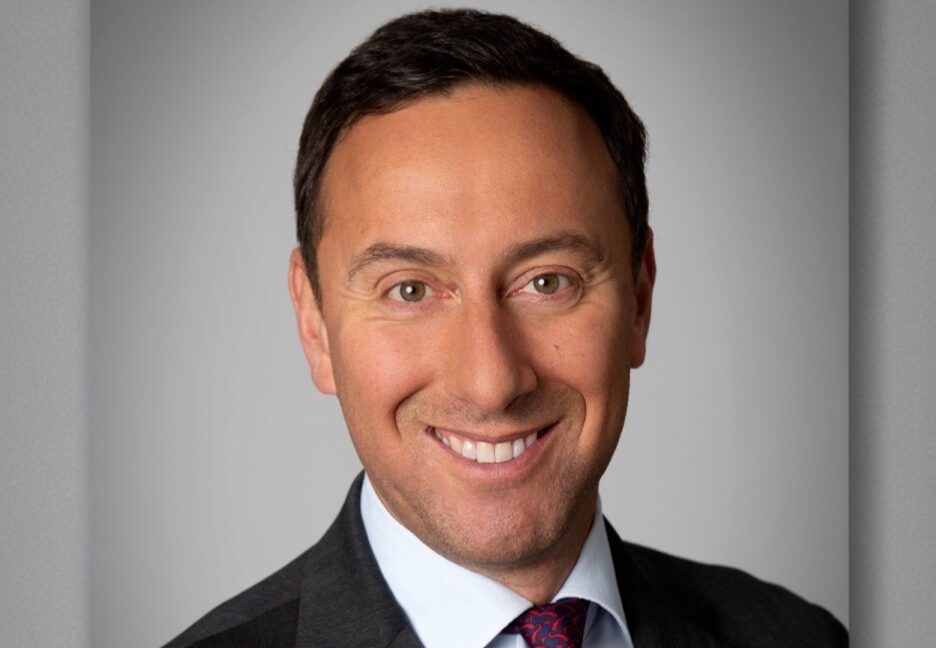
Clifford Chance Americas corporate head Benjamin Sibbet (pictured) is bullish on the outlook for premium M&A: ‘It’s clear that the M&A market is fully reopened – at least at the top end.’

‘Conviction and confidence are definitely back – particularly for large strategic transactions in which boards are confident in their long-term vision and the strategic direction of the company, and they’re prepared to allocate capital accordingly.’

‘A lot of the deals that are being announced are not the product of a six-month process – they’re the product of years of strategic thinking to find a deal that works,’ he concludes.

While value is up, volume is down, as was the case for 2025, with the preliminary figures showing global deal count still below 10,000, a result that could make it the slowest quarter by deal volume in over a decade.

With just 9,772 deals recorded so far, Q1 could deliver the lowest number of deals since Q1 2014, the last time quarterly deal count was below 10,000.

For elite law firms, the data tells a similar story: lower volumes, but strong performances from firms focused on big-ticket mandates.

Top firms for global M&A: Q1 2026

Firm Rank (Q1 2025 rank) Total deal value Number of deals
Sullivan & Cromwell 1 (1) $177.7bn 36
Wachtell Lipton Rosen & Katz 2 (21) $149.6bn 23
Kirkland & Ellis 3 (2) $137.8bn 149
Gibson Dunn & Crutcher 4 (13) $129.1bn 57
Skadden 5 (7) $111.6bn 49
Fried Frank 6 (23) $93.9bn 16
Davis Polk 7 (6) $92bn 27
Clifford Chance 8 (9) $91.7bn 28
Latham & Watkins 9 (4) $89bn 129
Simpson Thacher & Bartlett 10 (14) $85.2bn 46

Sullivan & Cromwell is top of the value rankings for Q1 2026, acting on 36 deals worth a combined $177.7bn, ahead of Wachtell Lipton Rosen & Katz, which acted on 23 deals worth a total of $149.6bn.

One firm that is delivering on both value and volume is Kirkland & Ellis, which ranks third with 149 deals worth a total of $137.8bn.

Kirkland corporate partner David Higgins says he has seen a continuation of many of the key trends from the end of 2025.

‘Private capital investors continue to focus on exit opportunities as they seek to return capital to limited partners ahead of fund raises,’ he says. ‘Exits are coming in all shapes and sizes from IPOs, full and partial sales to continuation vehicles.’

Fellow corporate partner Matthew Elliott cites data centres, digital infrastructure and defence as particularly active sectors, while also noting the cooling impact of AI on some valuations.

‘In terms of sectors, we have seen that there are some headwinds around certain types of software deals and businesses that are felt to be at risk from AI – but on the flipside, there has been strong demand for sports assets and AI-related targets,’ Elliott adds.

Skadden is another strong performer for Q1, with 49 deals worth a combined $111.6bn, enough to secure fifth place in the global rankings, and the firm is also the top-ranked US firm for Europe deal value, placing fifth behind Slaughter and May, Linklaters, Herbert Smith Freehills Kramer and Freshfields.

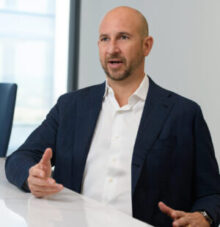
Global transactions head Lorenzo Corte (pictured) says the momentum of last year has carried into 2026 – particularly at the top end of the market.

‘Geopolitical uncertainty has inevitably introduced some caution, but it hasn’t fundamentally derailed activity. Instead, we’ve seen the market become more selective and strategic. Clients are willing to wait but also prepared to execute quickly when the right opportunity arises.’

The most notable feature of the current market is the continued divergence between value and volume. We’re seeing very high aggregate deal values, but fewer transactions overall – with activity concentrated on larger, more strategic deals.’

‘AI and AI-related infrastructure are among the dominant drivers of activity. That extends beyond technology into data centres, semiconductors and the energy and utilities assets required to support that buildout, which reflects a broader shift in how capital is being deployed across the digital economy.’

Top firms for UK M&A: Q1 2026

Firm Rank (Q1 2025 rank) Total deal value Number of deals
Slaughter and May 1 (10) $42.9bn 5
Herbert Smith Freehills Kramer 2 (13) $32.4bn 8
Linklaters 3 (22) $28.3bn 12
Freshfields 4 (6) $25.4bn 9
A&O Shearman 5 (11) $20.5bn 15

Clifford Chance (CC) is the top-performing UK-headquartered firm in the global rankings, placing eighth with roles on 28 deals worth a total of $91.7bn, including a headline-making mandate for Nuveen on its £9.9bn acquisition of British asset manager Schroders.

On the trend for megadeals, Nigel Wellings (pictured), co-head of CC’s European corporate group, says: ‘Bigger players are trying to get bigger.’
‘Even large players in many markets are trying to acquire further scale to compete globally, for example transactions seen in the asset management sector. Much of the activity is consolidation involving the biggest players in a sector.’

However, he cautions: ‘It is still too early to determine how the Middle East conflict may influence investment appetite. Oil price volatility and inflation could slow the market if businesses once again face uncertainty over their energy costs for the next six months,’ he adds. 

James Howe, co-head of European M&A at Simpson Thacher, says 2026 has got off a ‘roaring start’ despite geopolitical turbulence, with the team advising on 46 deals worth a total of $85.2bn.

‘Volumes have dipped due to a widening of pricing in the credit market, geopolitical instability and the impact of the evolving AI landscape – but deals are still happening across various sectors such as services, tech, financial services and healthcare,’ he adds.

‘Investors have conviction in different sectors and will continue to do so.’

The firm recently took a key role for Nordic Capital on its majority investment in fintech company TradingHub, and also advised AI startup Faculty on its $1bn acquisition by Accenture in January.

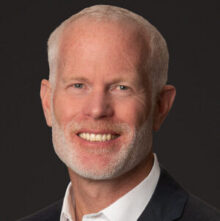
Geoffrey Bailhache (pictured), co-head of European M&A at Simpson Thacher says: ‘We’re navigating a period of uncertainty, which can feel challenging – yet investors remain exceptionally well‑positioned to adapt.’

‘As clarity begins to return, history shows that investors consistently regain their stride and move ahead with renewed confidence.’
Underlining the megadeal theme, Slaughter and May is the top ranked firm for both European and UK M&A, securing those top spots with roles on just eight and five deals respectively.

Those roles have included advising Vodafone Group on the sale of its 50% interest in Dutch joint venture VodafoneZiggo to JV partner Liberty Global, as well as acting for Schroders across from CC on the Nuveen acquisition.

Slaughters earned up to £23.5m in fees for its work on the Schroders deal, according to deal filings, and also received as much as £25m for its work for Zurich Insurance Group on its $11bn takeover of insurance rival Beazley, another of the biggest deals of the quarter.

[email protected]

Knights in merger talks to create £200m firm

David Beech

Listed UK firm Knights is in talks to take over South East firm Moore Barlow, a deal which could create a combined £200m national firm.

Moore Barlow, which generated revenues of £42.3m during 2024-25, operates from six offices in London, Guildford, Lymington, Richmond, Southampton and Woking.

The firm was formed by the merger of regional duo Moore Blatch and Barlow Robbins in 2020.

Knights, meanwhile, posted revenues of £162m year, and has more than 30 offices across the UK. It has expanded rapidly in recent years with a series of mergers and acquisitions, with 2025 deals including takeovers of three home counties firms – Rix & Kay, IBB Law and Birkett Long.

In a statement, the firm said: ‘Knights maintains regular dialogue with a number of law firms and confirms that it is currently in discussions with Moore Barlow LLP regarding a potential acquisition.’

‘However, there can be no certainty that any transaction will be agreed, nor as to the terms of any such transaction,’ it added.

A spokesperson for Moore Barlow said of the news: ‘Moore Barlow regularly evaluates potential growth opportunities in the evolving legal landscape. However, we do not comment on market rumour or speculation and have nothing further to add at this time.’

Knights, which placed 44th in last year’s LB100, is one of the UK’s few listed law firms, after floating in 2018. The firm has since completed more than 20 acquisitions of smaller UK law firms.

Moore Barlow, meanwhile, fell out of the LB100 last year ranking after posting revenue growth of just 2%. The firm has nine top-tier Legal 500 rankings across the South East, in areas including family, clinical negligence and employment.

[email protected]

Quinn Emanuel posts third year of double-digit growth as revenue hits $2.8bn

Quinn Emanuel has posted a 12.6% increase to its topline in its third consecutive year of double-digit growth, with revenue of nearly $2.8bn.

Net income grew even more, with a 16% increase to $1.8bn, pushing the US litigation giant’s profit margin up nearly two percentage points to 65%.

Profit per equity partner (PEP) was up 10.6% year-on-year to $9.5m, despite a 5.1% increase in equity partner headcount, to 187.

Total headcount declined 8.7% from 1,236 in 2024 to 1,128. This reduction helped drive a sharp 23.4% increase in revenue per lawyer (RPL), which approached $2.5m.

Total partner numbers remained the same as 2024 at 293 partners, with growth in the equity tier offset by a reduction in non-equity partners, down 8.6% to 106 from 116.

This shift was reflected in a decline in non-equity compensation, which dipped 4.1% from $230m to around $220.7m, while average compensation rose 13.8% to more than $6.8m.

At the same time, the firm’s total number of fee earners – including both lawyers and non-lawyers – rose nearly 7% to 1,445.

In London, revenue in GBP rose 3% from 2024, hitting a new high of £227.1m, with the office’s profit margin climbing to 68%, up from 65% the previous year.

Total partners as of January 2026 remained unchanged in the London office,  sitting at 32.

Quinn also made notable hires in London, bringing over McDermott Will & Schulte’s international arbitration practice co-lead Andrew Savage in November, and continuing to grow into 2026 with its hire of financial disputes and investigations partner William Charles, who joined from Milbank in January.

Notable mandates for Quinn over the last year include its victory in a July 2025 trademark dispute for OpenAI against Open Artificial Intelligence and its founder, Guy Ravine.

The firm also secured victory in the Delaware Supreme Court for long-standing clients Elon Musk and the directors of Tesla, reinstating a ten-year incentive compensation plan that had previously been rescinded by the Delaware Chancery Court. At the time of the initial decision the pay package was valued at $56bn.

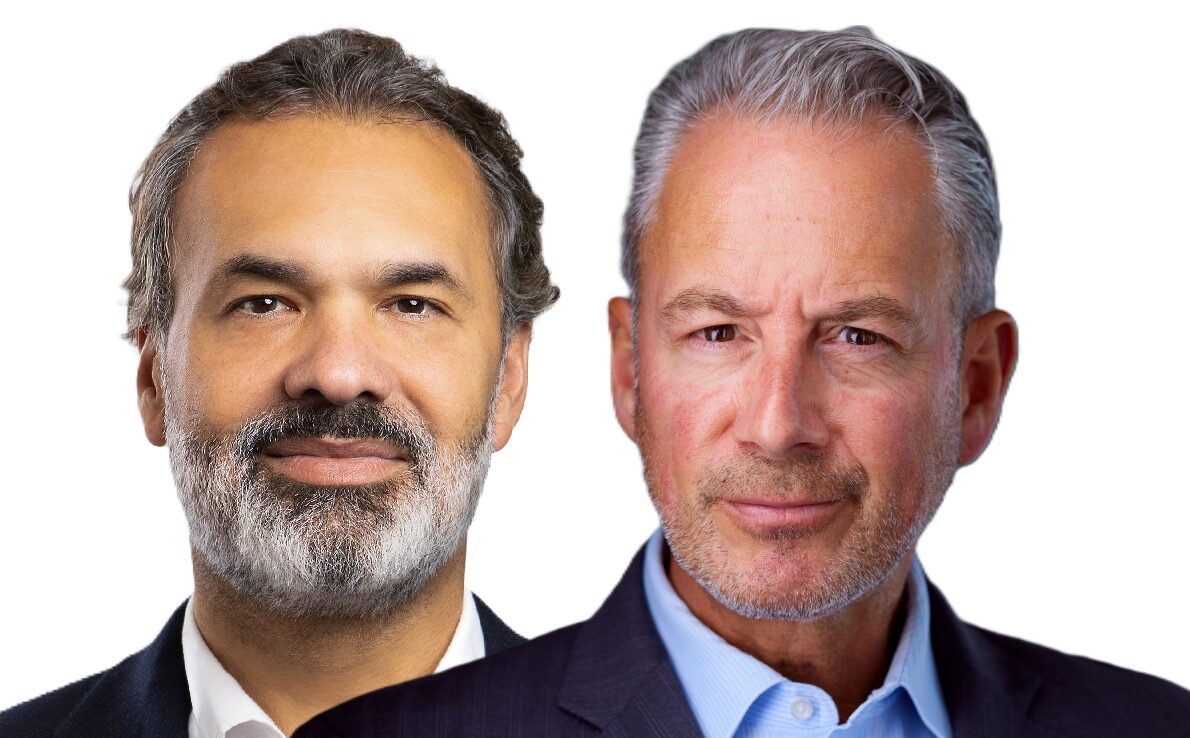
Quinn Emanuel is led by co-managing partners Bill Burck (pictured left) and Michael Carlinsky (pictured right), with founding partner John Quinn as executive chairman. The firm maintains 33 offices globally, following the closure of its offices in Perth, Australia and Doha, Qatar in 2025.

[email protected]

Trophy mandates and client plaudits: Weil’s London M&A team hits its stride

The year may have got off to a turbulent start, but Weil Gotshal & Manges’ London corporate team is having the run of its life in Q1 2026.

Led by London office co-managing partner David Avery-Gee, who joined from Linklaters in 2019, the M&A team has won roles on some of the biggest public and private M&A deals announced this quarter.

Significantly, these mandates include roles for listed UK corporates more commonly linked with the largest UK players.

This was particularly evident in Weil’s role opposite A&O Shearman advising mining giant Glencore on its subsequently aborted merger talks with Rio Tinto – a deal that could have created a $260bn industry leader.

Although the deal was aborted, the mandate was a coup for Avery-Gee and his team, cementing longstanding ties with Glencore that began when Avery-Gee was a partner at Linklaters.

Speaking to LB, Avery-Gee says Weil’s lead on the deal marks a notable shift in the London corporate scene.

‘Historically, a transaction like Glencore/Rio would invariably have been led by two magic circle firms, so to have been put into the position to lead on it was a significant and exciting moment for the team,’ he says.

Avery-Gee brought his magic circle connections to the Wall Street firm in 2019, and has been focused on transforming Weil’s City corporate practice into a serious player in the London market since.

The team now comprises four partners, with Avery-Gee working alongside Murray Cox, who joined from Slaughter and May in 2021, Sarah Flaherty, who moved from Linklaters in 2023, and Jack Gray, who made partner in January this year.

The group may be small, but partners have been busy. In addition to the Glencore mandate, they have won a first-time M&A deal advising Harbour Energy plc on its $3.2bn acquisition of US-based LLOG Holdings, worked on Advent’s €7.8bn acquisition of InPost and advised American Securities alongside US colleagues on its $3.25bn sale of CPM Holdings and ASP MWI Holdings to Rosebank.

Also notable is Avery-Gee’s role advising Balderton Capital on its investment into Wayve, the autonomous driving company, during a funding round in February of this year, which raised £1.5bn.

‘A really unique structure’

Unlike some firms, Weil’s 50-strong team of associates and counsel in London work across both public M&A and private equity.

It’s a move that Avery-Gee believes is an effective differentiator. ‘We have a different structure in our corporate practice when compared to other firms, meaning lawyers are exposed to a broader range of corporate transactions.’

‘In our view, it’s necessary to have a variety of work to stay motivated and engaged,’ he adds.

In addition to keeping associates happy, he also thinks this is a selling point for clients.

‘It’s a really unique structure, which we believe adds to the client experience, as our lawyers are more commercially rounded and experienced,’ he says.

And it appears clients would agree, as Weil’s corporate team was recognised as a top-performing corporate practice based on client feedback collected by Legal 500 on its premium M&A rankings in London.

Commenting on the recognition, Avery-Gee says: ‘We were thrilled to be recognised by our clients as a leading corporate practice in the areas of quality and client service and ranked number one overall.’

Hoping to maintain this momentum, Avery-Gee is grappling with how to implement AI to help the team evolve and meet client needs, with a number of associates involved in AI initiatives.

‘We’re focused on creating an environment where AI and emerging technologies can be integrated thoughtfully into our practice,’ he says.

‘It’s about understanding and anticipating where the market is going and using technology in a way that enhances efficiency and the service we deliver to clients,’ Avery-Gee concludes.

Trading Places: Ropes hires Freshfields levfin co-head as top Kirkland litigator retires

Freshfields’ leveraged finance global co-head Allison Liff has left the firm to join Ropes & Gray in New York.

Liff joined Freshfields in 2022 from Weil, where she spent almost a decade as a partner, returning to the firm after six years as managing director and associate general counsel at Goldman Sachs.

She was appointed co-head of the UK-based firm’s global leveraged finance group in 2023, alongside London banking partner Alexander Mitchell.

The move marks the ninth lateral hire Ropes has made in New York since the start of this year. February saw the arrival of a four-partner restructuring group from Fried Frank led by Rachel Strickland, along with finance partner Eliza Riffe Hollander, also from Fried Frank.

In January, finance partner Michael McGuigan joined from Debevoise & Plimpton, antitrust partner Marta Kelly joined from Paul Weiss, and litigation partner Noah Yavitz joined from Wachtell.

‘Allison’s proven ability to guide clients through complex acquisition financings with practical, business-oriented solutions makes her an exceptional important advisor on the most consequential deals,’ said firm chair Julie Jones.

Meanwhile, preeminent litigation partner Jay Lefkowitz is set to retire from Kirkland & Ellis this spring, after more than 30 years at the firm.

Lefkowitz is especially notable for his work in the life sciences sector, including two wins for pharmaceuticals clients in the US Supreme Court, with Mutual v. Bartlett (2013) and Pliva v. Mensing (2011) both decided 5-4 in favour of Lefkowitz’s clients.

He also served as an adviser to presidents George H.W. Bush and George W. Bush, helping craft the latter’s policy on stem cell research.

However, the US Department of Justice’s (DOJ) release of files relating to the late disgraced financier and convicted child sex offender Jeffrey Epstein has placed both Lefkowitz’s and Kirkland’s work under scrutiny in recent weeks.

In addition to Kirkland’s advice on the non-prosecution agreement Epstein made with federal prosecutors in Florida as part of his 2008 plea deal, the files also showed personal communications between Epstein and Lefkowitz.

Kirkland has also seen a pair of partner departures across the continent, with Simpson Thacher & Bartlett hiring Christina Bae in Los Angeles and Jacob Ruby in Houston.

Both partners will join the new capital structures solutions practice that Simpson Thacher established last month with its hire of Dallas-based partner David Nemecek, also from Kirkland.

Bae first made partner at Kirkland in 2019, and returned to the firm in 2023 after a two-year stint as vice president of BlackRock. Ruby, meanwhile, will move from Kirkland’s Salt Lake City office, where he made partner last year.

Both partners bring experience advising on a range of capital structure matters, including liability management exercises, special situations, and private credit transactions.

Simpson Thacher has also added to its Washington DC office, bringing over Linklaters head of Latin America arbitration Christian Albanesi.

Albanesi joined Linklaters in Paris in 2014 after seven years at the ICC International Court of Arbitration, and made partner in Washington DC in 2021.

He brings more than two decades’ experience in complex and cross-border international arbitrations, with a particular focus on Latin America and the energy and infrastructure sector.

Skadden has made a pair of hires from Paul Hastings, bringing in finance partner Scott Heard in New York to lead its private credit practice, and restructuring partner Matthew Murphy in Chicago.

The latter rejoins Skadden after spending more than a decade there as associate and counsel before moving to DLA Piper as a partner in 2011. He joined Paul Hastings in 2015, and worked closely with Heard over the last decade on complex transactions including acquisition financings, restructurings, and liability management exercises.

Also in New York, Ashurst has added a four-partner finance and restructuring team as it continues its US push ahead of its proposed merger with Perkins Coie.

Jeris Brunette, Mark Dendinger, Rebecca Keep and William Ebert all join from Bracewell, and bring notable expertise in the energy, infrastructure, and commodities sectors, with experience on a range of matters including acquisitions, project financings, restructurings, and liability management transactions.

Their arrival follows other US hires for Ashurst including Rossie Turman III, who joined the global loans practice from US national firm Lowenstein Sandler last September, and fellow global loans partner Joe Giannini, who joined from Norton Rose Fulbright in July.

Earlier this week, the firm also brought over a three-partner private equity team from Goodwin in London.

Finally in New York, longtime Cravath, Swaine & Moore corporate investigations and white-collar defence partner Benjamin Gruenstein has left the firm to launch his own boutique, Gruenstein Law.

Gruenstein served 14 years as a partner at the Wall Street firm, and was a founding member of the investigations and regulatory enforcement practice, representing clients in US and cross-border government and internal investigations.

Meanwhile in the nation’s capital, Herbert Smith Freehills Kramer has hired antitrust partner David Pearl from boutique firm Axinn, Veltrop & Harkrider.

Pearl made partner in 2024, and previously spent three years in the Department of the Treasury after leaving Jones Day as an antitrust associate in 2014. He brings experience advising on antitrust matters including litigation, investigations, and merger control.

The hire follows the firm’s addition of senior competition partner John Elias, former deputy assistant attorney general at DOJ, who also joined in Washington DC last October.

Mayer Brown has added a six-partner litigation team from McGuireWoods across Houston and Washington DC.

Yasser Madriz, the former office managing partner of McGuireWoods’ Houston office, joins the firm’s litigation and dispute resolution practice, focusing on commercial litigation, commercial energy and transactional disputes.

Miles Indest and Jason Huebinger also join the litigation and dispute resolution team in Houston, while Meghaan Madriz joins the corporate and securities practice, advising clients on trade secret issues, wage disputes, employment structures and matters arising from M&A and commercial transactions.

Also joining the firm are litigators Gregory Knock, who splits his time between Houston and Washington DC, and Wolf McGavran, based in Washington DC.

On the West Coast, Mayer Brown also hired Jared Huffman from Morgan Lewis, where he was a partner in the private investment funds formation practice.

Goodwin is opening a Newport Beach office in Orange County, bringing in three partners from Jones Day to launch the office: litigators Richard Grabowski and Ryan Ball, and cybersecurity partner John Vogt.

The trio brings experience defending companies in class actions, investigations, and disputes involving issues relating to cybersecurity, privacy, technology, trade secrets and consumer financial services, with notable work including the successful defence of Experian Data Corp in a 2023 government enforcement action brought over a nationwide data breach.

The office will be Goodwin’s ninth in the US and its 18th overall, and expands the Boston-headquartered firm’s West Coast presence, which includes bases in San Francisco, Los Angeles, Santa Monica and Silicon Valley.

The firm also added to its bench in New York, hiring funds partner Olya Kurilovich from Clifford Chance, where she was a counsel.

In San Diego, Sidley Austin has hired corporate and securities partner Steve Przesmicki from Cooley, where he spent 25 years.

He has particular experience in the technology and life sciences industries, and advises on matters including Securities and Exchange Commission (SEC) and corporate governance matters, private and public financings, M&A, IPOs, and venture capital financings.

Arnold & Porter has added real estate partner Rhys Hefta to its Seattle office. Hefta joins from K&L Gates, where he spent 15 years advising commercial real estate lenders on purchases, sales, joint ventures, workouts and restructurings.

He will reunite with former colleagues who joined Arnold & Porter when the firm launched its Seattle office in July 2025.

Also on the West Coast, Orrick has hired Gina Marek as a partner into its Silicon Valley technology and transactions team. She joins from Gunderson Dettmer, where she spent 16 years, latterly as strategic licensing and transactions group co-chair.

In Los Angeles, McGuireWoods has hired SEC Los Angeles regional director Gary Leung and audit defence lawyer Jodi Lopez. They both join the firm’s securities enforcement and regulatory counselling practice group.

Leung most recently led the SEC’s LA regional office and division of enforcement, overseeing lawyers investigating and litigating federal securities violations in the region. He rejoins McGuireWoods after leaving for the SEC in 2012.

Lopez was a lifer at Sidley Austin, joining the firm in 2004 and making partner in 2012. There she represented accounting firms, public companies, private equity firms and their directors and professionals in regulatory and litigation matters involving accounting, disclosure and tax issues.

McGuireWoods also hired in Chicago this week, bringing over healthcare and life sciences partner Gregory Fosheim from McDermott Will & Schulte.

Finally, Clyde & Co has opened an office in Highland, Indiana, hiring Renee Mortimer as office head. She joins from Lewis Brisbois, where she spent seven years defending insurers and corporates in injury and liability claims.

[email protected]

Freshfields and Covington advise as Merck acquires US biotech company Terns for $6.7bn

Freshfields has scored a lead role in another US acquisition by pharma giant Merck, this time on the sell-side, advising California-based biotech company Terns Pharmaceuticals on its sale for an approximate equity value of $6.7bn, with Covington & Burling advising Merck.

Last summer Freshfields acted on the buy-side as Merck bought respiratory-focused pharmaceutical company Verona Pharma for $10bn. Latham & Watkins advised Verona.

The Freshfields team for the Terns deal, announced this morning (25 March), is led by corporate M&A partners Damien Zoubek and Jenny Hochenberg in New York.

The duo also led on the deal last summer, with assistance from UK corporate partners Rhys Evans and Kate Cooper.

Zoubek and Hochenberg joined Freshfields from Cravath in 2021 and 2022 respectively. Each is recognised by Legal 500 as a leading partner for $1bn+ M&A deals.

Meanwhile, Covington is advising Merck on the deal. The team was led by Washington D.C. partners Catherine Dargan, head of the firm’s corporate practice, M&A partner Drew Fischer and New York corporate partner Alicia Zhang.

Terns Pharmaceuticals is a clinical-stage oncology company, and its acquisition will give Merck access to a new treatment Terns is developing for leukemia, as Merck is reportedly seeking to expand its portfolio before 2028, when patent protection for its leading cancer treatment Keytruda expires.

The deal is the latest in a string of M&A activity from Merck. In addition to its acquisition of Verona last year, in 2023 it was advised by Paul Weiss on its $10.8bn purchase of autoimmune disease-focused Prometheus Biosciences, and in 2024 it acquired ophthalmology biotech company EyeBio, advised by Gibson Dunn.

The deal is expected to close in the second quarter of 2026.

[email protected]

HSF Kramer picks up three-partner corporate team from Paul Hastings in New York

Herbert Smith Freehills Kramer has hired a three-partner corporate team from Paul Hastings in New York, in the biggest stateside hires yet for the recently merged firm.

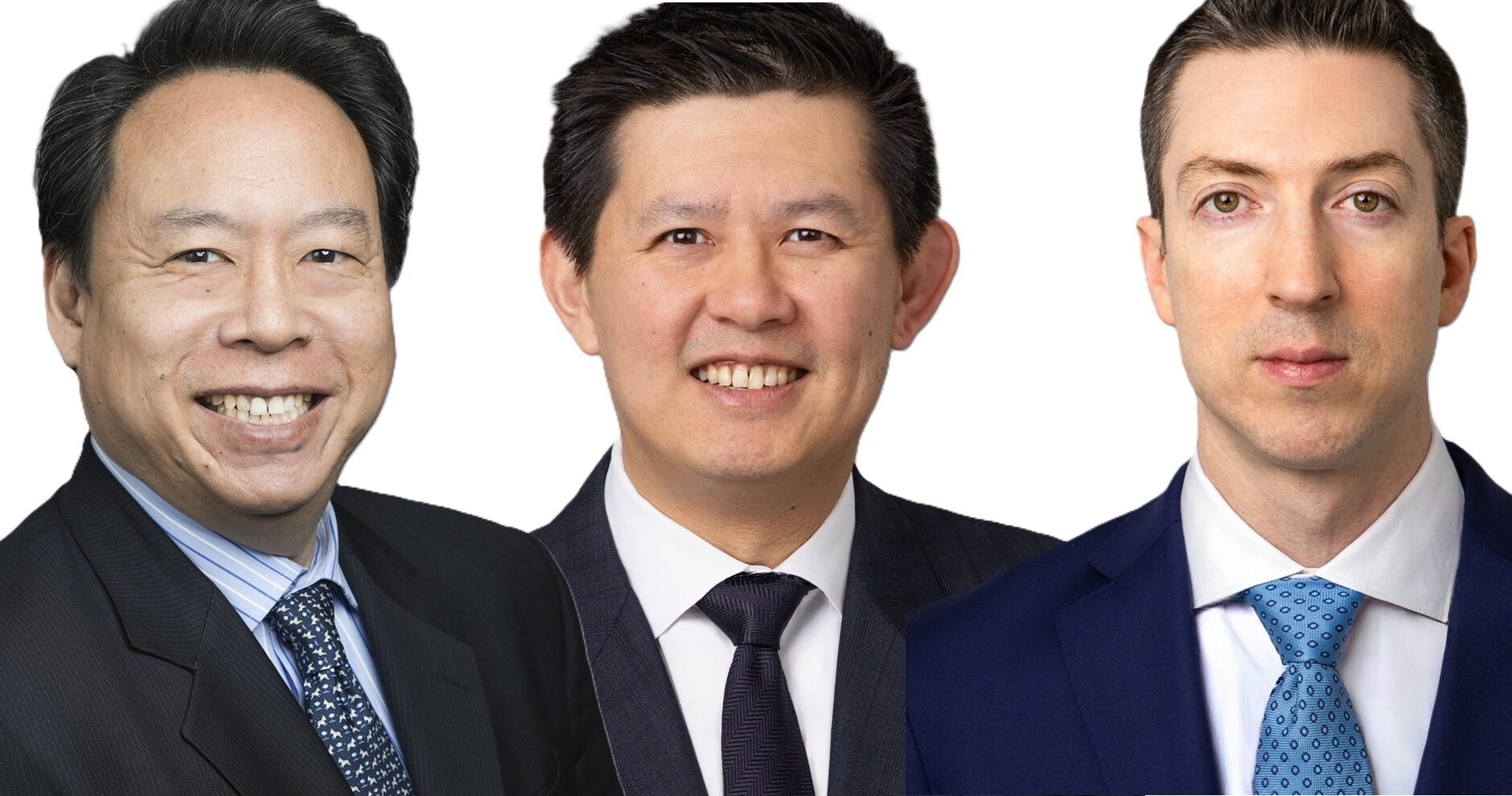
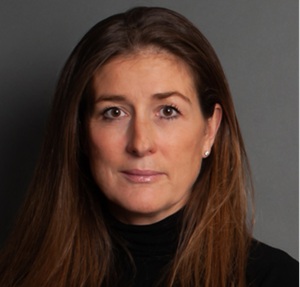
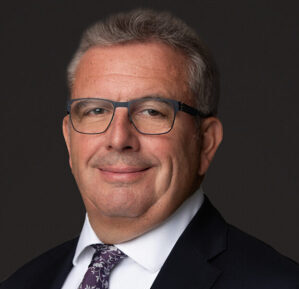
The hires include Robert Leung (pictured left) – a Legal 500 leading partner for corporate and M&A work for international firms in Latin America, who joins HSF Kramer as its new head of energy, mining and infrastructure in the Americas.

Making the move with him are Mike Huang (pictured centre) and Daniel Grossman (pictured right), who both joined Paul Hastings as associates in 2017 after leaving Boies Schiller Flexner alongside Leung, who was a partner at BSF. 

Jason Hill, who also moved from BSF to Paul Hastings in 2017, and was of counsel at the latter firm, is also joining HSF Kramer, as a counsel.

The team brings experience advising public and private companies and investors on a range of complex cross-border matters, with a focus on energy, infrastructure, natural resources, and mining.

‘Team hires are always exciting,’ said global CEO Justin D’Agostino. ‘Adding this level of strategic M&A talent further strengthens our US platform and underscores our commitment to long-term investment and sustained growth in the region.’

He continued: ‘Their top-tier experience enhances our ability to deliver high‑impact advice on domestic and cross‑border transactions. We are deepening the capabilities our clients need to navigate increasingly strategic and complex transactions in the US and globally.’

US executive partner Paul Schoeman added: ‘These three partners have the background and skill sets vital for growth to enhance our M&A platform, especially in the rapidly changing energy, infrastructure and mining sectors.’

The hires mark a major step towards HSF Kramer’s post-merger goal of building out its US transactional capabilities. Last September, D’Agostino told Legal Business that the firm aimed to add around 20 partners stateside in key practice areas including energy as well as private equity, bankruptcy and restructuring, and technology.

Since the merger between legacy HSF and legacy Kramer Levin went live last June, the firm’s US hires include restructuring partners Kyle Ortiz and Brian Shaughnessy, who joined from New York bankruptcy boutique Togut Segal & Segal, technology and IP partner Burr Eckstut, who joined from White & Case as US head of tech transactions, and a pair of antitrust hires in Washington DC: John Elias from the Department of Justice in October, and David Pearl from boutique Axinn Veltrop & Harkrider last week.

The firm has also been open about its desire to grow in Texas to maximise its energy capabilities, with D’Agostino telling LB last year that the 20 partner target ‘doesn’t include a Texas build.’

He continued: ‘All options are on the table for us there. It could be anything from organic growth to looking for another law firm to combine with HSF Kramer.’

[email protected]

Revolving Doors: Paul Weiss grows funds practice as A&O Shearman welcomes Paul Hastings London partner

Paul Weiss has continued its London buildout with the addition of funds partner Nathalie Sadler from Dechert.

Sadler spent 14 years at Dechert, making partner in 2023, and advises on the structuring, establishment and management of private investment funds.

‘Nathalie brings deep experience advising fund sponsors across a range of asset classes, and we are excited to welcome her,’ said chairman Scott Barshay, who took over from Brad Karp earlier this year.

Barshay recently established a new executive committee, appointing London head Neel Sachdev and New York partners Matthew Abbott and Katherine Forrest as vice-chairs. New York partners Angelo Bonvino and Brian Hermann are also members of the committee.

Goodwin has seen a third partner exit this week with financial restructuring partner Simon Thomas joining Eversheds Sutherland after seven years at the firm. Thomas acts on domestic and cross-border matters for funds, corporates and lenders, and has experience across industries including biotech and energy.

The news comes just days after private equity duo Ian Keefe and George Weavil decamped to Ashurst after joining Goodwin from Travers Smith in late 2024. The pair joined Ashurst alongside Michael Miranda, who had most recently been a PE partner at Goodwin, spending a decade at the US firm after joining in 2015, and leaving last summer.

A&O Shearman has hired employment partner Suzanne Horne from Paul Hastings. Horne joins after 15 years at Paul Hastings and brings experience advising in the High Court on business protection matters, among other areas.

Elsewhere in London, Jones Day has added banking and finance partner Nichola Foley to the firm’s financial markets practice. Foley was previously a partner at Morgan Lewis where she spent the best part of a decade after making partner in 2021.

South East firm Cripps has hired Radius Law founder and former Mercedes-Benz UK general counsel Iain Larkins as a partner. Larkins spent 12 years at Radius and joins alongside other members from Radius’ commercial and tech practice.

In Riyadh, Akin has hired founding partner and co-head of Addleshaw Goddard’s Saudi Arabia office, Ibrahim Siddiki. Siddiki spent three years as a partner at Addleshaws and two years at Bracewell in Dubai before that. He joins Akin as co-managing partner of the office.

A range of firms was active in Brussels, where Clifford Chance hired David Ballegeer from Linklaters into its global financial markets practice. A Legal 500 Hall of Famer for banking, finance and capital markets in Belgium, Ballegeer starts at CC next month after nearly two decades at his former firm.

White & Case hired Jonathan Entrena into its global antitrust practice and global technology industry group as a partner. Entrena joins from Amazon, where he was most recently associate general counsel and director of the EU competition team.

In Brussels, Vinson & Elkins launched its first office in continental Europe in the Belgian capital, bringing over antitrust partner May Lyn Yuen from Hogan Lovells to lead.

Yuen joins after nearly 12 years at Hogan Lovells, where she made partner in 2022. ‘Our antitrust practice has earned a reputation for helping clients navigate their most consequential competition matters. Adding capability in Brussels reflects our commitment to both our cross-border investigations and transactional practices,’ said firm chair Keith Fullenweider.

Finally, in Australia, Squire Patton Boggs has hired energy partner Michael Brady into the firm’s corporate practice in Perth. Brady, an experienced commercial and securities lawyer, joins after a four-year stint at HWL Ebsworth and was previously at Hogan Lovells.

[email protected]

‘The US are taking over’ – will DLA’s integration shift the balance of power?

‘The US are taking over.’ This is the verdict of one ex-DLA Piper partner on the news that the firm is set to dissolve its longstanding Swiss verein in favour of closer integration, with US head Frank Ryan becoming global chair on top of his co-CEO role with UK managing partner Charles Severs.

Explaining the changes to Legal Business earlier this month, Severs and Ryan said the introduction of a new global holding structure and changes to governance and partner incentives were aimed at driving cross-border collaboration.

In a market where financial integration has become the norm for transatlantic mergers, they argued that closer integration would allow DLA to operate ‘through a single lens’ and better compete on a global stage.

The verein debate

The news has received mixed reviews from the market. The straightforward interpretation is that the firm’s move has simply been driven by the evolution of the global legal market in the 20 years since DLA’s verein was created by its three-way combination with US firms Piper Rudnick and Gray Cary Ware & Freidenrich.

According to CM Murray partnership expert Zulon Begum, DLA’s decision could be viewed as a sensible call that reflects the fact that Swiss vereins – which enable firms to combine quickly by avoiding tough conversations around aligning governance or partner pay – are simply not as popular as they once were.

As Begum puts it: ‘In a market increasingly dominated by exceptionally profitable, fully integrated global players, many firms are now recognising that true competitiveness requires far greater alignment – particularly around culture and remuneration. The pressure to operate as a genuinely integrated business, rather than a loose federation of practices, has never been stronger.’

One partner at a rival verein adds: ‘When [vereins] first came in, they were great for establishing connections. Now, however, firms have a choice. They can either abandon them or pool profit.’

The implication for DLA is that by ditching the verein and introducing an aligned compensation structure with shared KPIs, the firm will improve its ability to incentivise partners to work together.

Culture clash?

However, some former partners and rivals suggest the move is essentially a ‘preliminary step’ towards a full financial merger – ‘a way of getting people comfortable’ that commits the firm to a full union ‘in all but name’.

And with Ryan holding the global chair role, and US partners making up three of the five positions on the new global leadership team alongside Severs and Ryan, they argue that the balance of power now sits with the US.

They suggest that this could result in the US requesting cuts to less profitable international offices in a bid to drive up the profitability of the international partnership ahead of full financial integration.

As the former partner above warns: ‘The US are taking over. They could press a button and decide which offices and practices stay and which get cut.’

‘Because of the size of the market and structural profitability, the US verein is strong enough financially to dictate what they want,’ says another ex-partner.

A third source suggests the imbalance may not just be financial but also cultural, with the international verein’s identity as a full-service entity potentially under threat if cuts like this were to happen, with any scaling-back potentially triggering departures the firm would not want to see.

They add: ‘European partners with an international client base could leave for firms that prioritise collaboration.’

A meeting of equals

Not all see the shift as one-sided, with some inside the firm suggesting that in fact it reflects greater alignment between both sides of the business and represents the strongest integration proposal for the international side of the business in years.

Speaking to LB previously, Ryan said DLA has no intention of retreating from its scale, or closing offices, adding: ‘Having deep, deep domestic expertise in this world is critical to being able to serve clients in this more fractured world, as globalisation is under pressure.’

LB understands that in contrast to the criticism above, the US will not be able to impose significant change on the international partnership without its consent. It is thought that the new governance structure means that a large majority of both the exec and policy committee would need to agree before the firm could push ahead with any significant decisions, such as office closures.

In Begum’s view: ‘Since the initial merger, the combined firm has likely harmonised to a degree, allowing both sides to test the relationship in practice and build confidence in operating as a more integrated, cross‑border business rather than two parallel organisations.’

‘The firms that can present themselves as being much more strategically and financially integrated will achieve greater brand recognition and can probably command better rates and high profitability,’ she continues.

Another source adds: ‘It won’t make a dynamic difference to DLA’s brand, but partners are hopeful it will drive profit.’

Irrespective of the thinking outside the firm, for now, leadership will be focusing on making sure that DLA partners are all on board ahead of the April vote that requires the approval of at least 75% of the international partnership.

Without this, the firm will not be able to make the global investments its leaders think necessary to stay competitive or, in the words of Severs, remain a ‘destination for talent.’

[email protected] 

Dechert posts 27% PEP hike as expansion drive continues

Dechert has posted robust results for 2025, with revenue up 7% and profit per equity partner (PEP) increasing by more than a quarter.

For the calendar year, the US firm saw revenue reach $1.6bn, while PEP grew even faster, rising by 27% to hit $6.1m.

Earlier this year, co-chairs Mark Thierfelder and Dave Forti were reelected to their leadership roles for a second term, which will run to 2031.

Commenting on the results, Thierfelder said: ‘2025 was another exceptional year for Dechert, rooted in unwavering partnership with our clients and a relentless ‘all in’ commitment to stewardship and excellence from our people.’

‘At the very heart of our strategy is a focus on what our clients, some of the smartest people in the business world, are doing and helping them lead. We are immersed in the key sectors we serve, consulting on first-to-market financial products, structuring precedent-setting deals in private capital and real estate, propelling ventures that drive progress in life sciences and technology and representing our clients in high-stakes litigation,’ he continued.

News of the financial growth has come alongside continued expansion for the firm, including the opening of offices in Chicago in Dallas alongside 20 hires from McDermott Will & Schulte.

The firm is also one of the latest to invest in the Houston market, announcing the launch of an office in January with the hire of Akin trial lawyer Jim Wetwiska.

In total, the firm has already hired 30 lateral partners in 2026.

Meanwhile, in its most recent round of partner promotions, the firm made up 17 lawyers around the world, up from 13 the year prior.

Of these, funds specialist Matthew Duxbury was the sole promotion in London, while fellow funds duo David Layden and Dan Morrissey were promoted in the firm’s Dublin office.

On the firm’s future growth, co-chair Forti said: ‘We proudly celebrated Dechert’s 150th anniversary in 2025 and have started on our next 150 years in growth mode tied to our strategic priorities: deepening our steeples of excellence, further investing in our key markets, to growing in sectors like accounting, and strengthening our commitment to talent development and technological innovation.’

‘With the support of our clients and our people, we are looking forward to another strong year,’ he concluded.

[email protected]

Ashurst restocks PE with three-partner Goodwin team as Perkins merger nears

Ashurst has sought to bolster its private equity capabilities with a team hire from Goodwin, as the firm looks towards its planned merger with Perkins Coie later in the year.

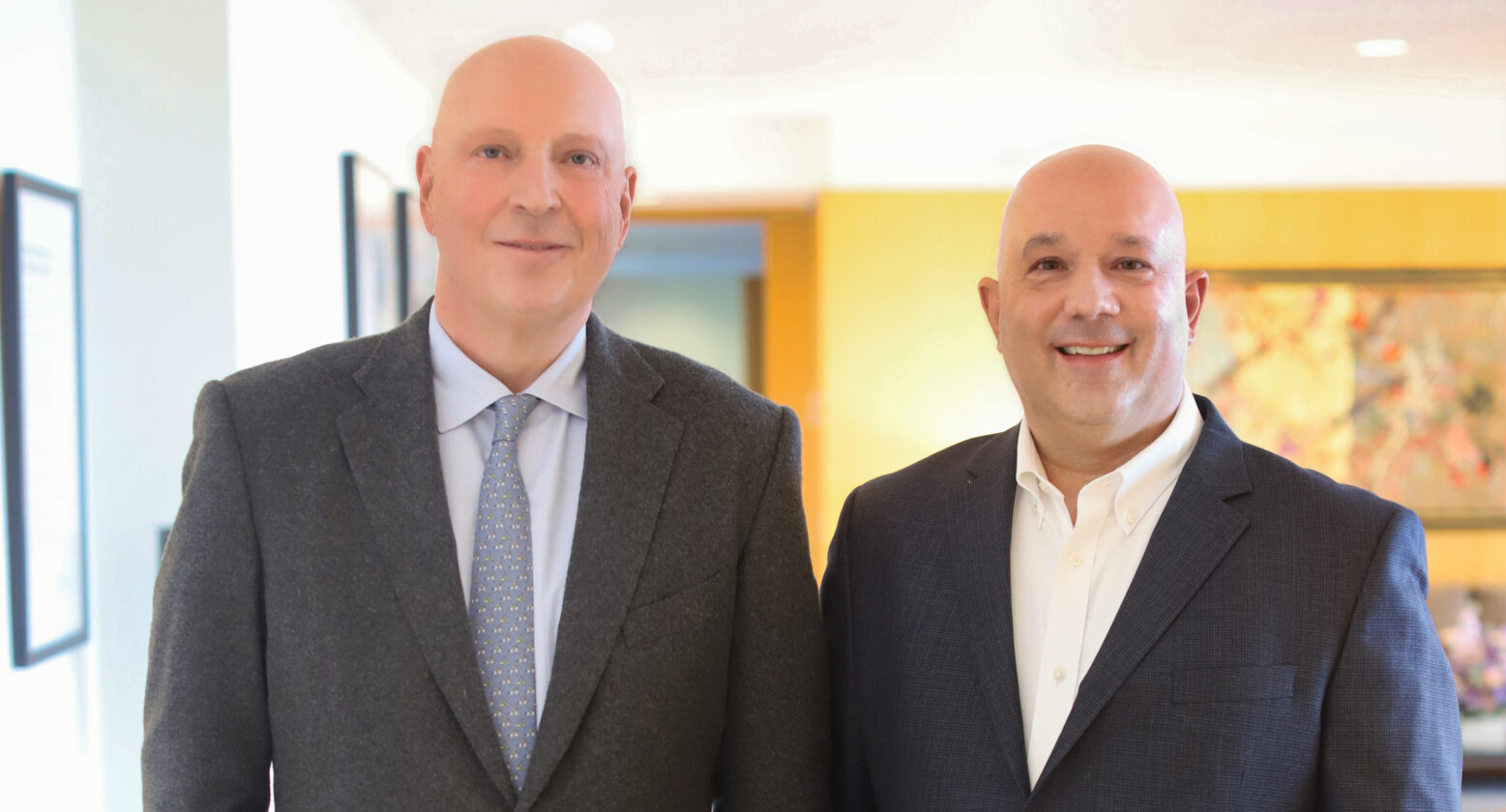
Partners Ian Keefe (pictured middle) and George Weavil (pictured left) move to Ashurst from Goodwin – the firm they joined in November 2024 from Travers Smith, where they had spent over 15 years each. The third partner, Michael Miranda (pictured right), spent a decade at Goodwin and left the firm last year.

All three partners are joining Ashurst’s private capital team in London.

Keefe and Miranda bring extensive experience in cross-border PE transactions, with Keefe focusing on providing advice to management teams across the life-cycle of sponsor-backed transactions, and Miranda adding expertise in growth capital investments and technology. Weavil strengthens the firm’s sponsor-side bench, with his main roster of clients being alternative asset managers, institutional investors and corporates.

The firm’s head of corporate Jason Radford said of the hires: ‘The timing reflects the significant opportunities we see in the market. George, Michael and Ian each offer expertise across the full range of sponsor-backed transactions, making them a natural fit to accelerate our growth in this space.’

Radford said the firm will be targeting the full range of PE mandates, from leveraged buyouts and growth investments through to exits and portfolio company work, as well as alternative asset managers, founders and management teams across the UK and continental Europe.

‘It is a great piece of news for Ashurst,’ one legal recruiter told Legal Business. ‘Hiring in the private equity space is difficult and there is always going to have to be a compromise in teams you can attract. Though they left after just over a year, and that doesn’t look great, Ashurst believes they’re good lawyers and that Goodwin, with its American rates, simply wasn’t the right platform.’

At the end of last year, Goodwin hired a three-partner PE team from Paul Hastings, fronted by Legal 500 mid-market PE Hall of Famer Anu Balasubramanian.

Meanwhile, Ashurst, which was previously known for having a leading private equity practice in the city, has been adding to its bench.

Earlier this month the firm brought Heidi Blomqvist into its partnership from White & Case, where she was a counsel. Blomqvist is an infrastructure M&A lawyer, a key area of focus for the firm.

Her hire followed Amy Barker, who joined Ashurst as a partner last November from Linklaters, where she was a managing associate, and Christy O’Connell, who joined in June from Cleary, where she was a counsel.

Commenting on the hires of Keefe, Weavil and Miranda, Ashurst CEO Paul Jenkins said: ‘The European private equity market is entering a new phase of growth, as firms look to deploy capital in increasingly sophisticated transactions. This trio strengthens our capability to deliver advice on these integrated, cross-border matters.’

The firm lost its tier 1 Legal 500 ranking for mid-market PE in the 2023 research, and dropped to tier 3 in the 2025 research, where it remains. Further back, its private equity capabilities suffered a major setback when global head of corporate Stephen Lloyd left the firm in 2013 and when former leader Charlie Geffen quit for Gibson Dunn alongside Mark Sperotto in 2014.

After a challenging period in which Ashurst saw declines in both revenue and profit per equity partner (PEP) in 2015 and 2016, the firm stabilised, returning to consistent growth and breaking £1bn in revenue for the first time last year. But its PE challenges continued. In 2024, it saw the departure of global PE co-head David Carter and Braeden Donnelly, who both headed to O’Melveny & Myers.

Since its planned merger with Perkins Coie was announced in November, Ashurst has seen a handful of departures. PE partner Markjan van Schaardenburgh left for DLA Piper earlier this month, and capital markets duo Simon Bullock and Stuart Rubin headed to Baker McKenzie last November.

If partners approve it this spring, the merger will create a top 20 firm in Ashurst Perkins Coie, with combined revenue of $2.7bn. The recruiter noted that: ‘Although the merger gives Ashurst very little additional finance capability, on the M&A side it does give them access to large American corporates on the West coast, though it will still be a challenge to translate these to mandates in the UK.’

Speaking about the synergies of the merger, Ashurst’s Radford said the combined corporate platform – that will fuse Ashurst’s focus on M&A, energy and infrastructure and ECM work with Perkins’ leadership in the technology business space – will create ‘a premier, tech-enabled, full-service practice with true transatlantic depth.’

Perkins counts major corporates including Amazon and Boeing among its key clients. However, it is still involved in ongoing litigation with the US government after the administration targeted the firm with an executive order attacking its hiring practices last year.

The US firm first opened in London in summer 2024, setting up an office under former White & Case PE partner Ian Bagshaw, who returned to big law after leaving his firm in 2021.

[email protected]

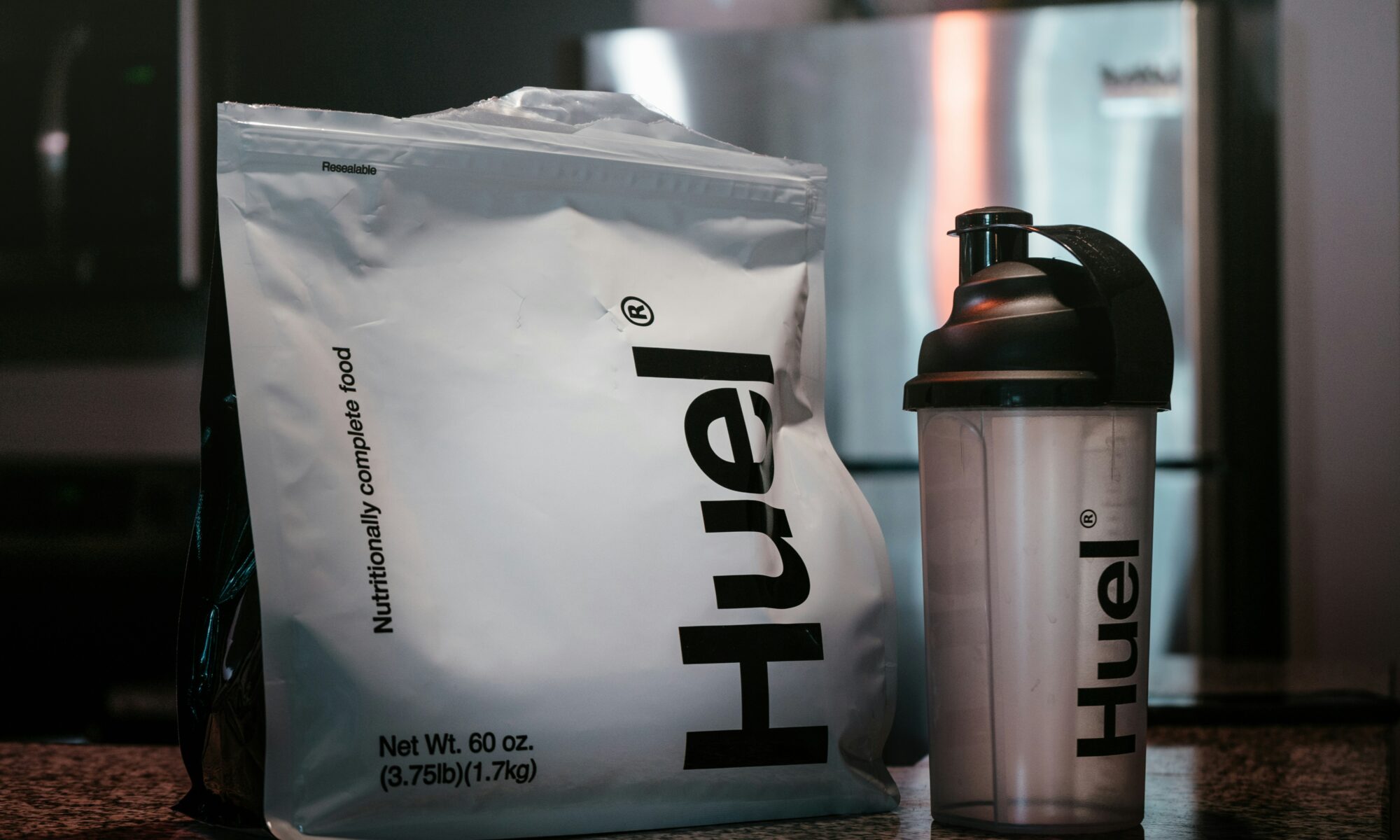
Pinsents and Freshfields in the mix as Danone eats up Huel for €1bn

Pinsents Masons has advised nutritional drink brand Huel on its sale to French food and beverage company Danone for €1bn, with Freshfields acting for the acquirer.

Pinsents has acted as counsel to the brand – best known for its protein meal replacement drinks lauded by time-poor professionals – from its initial funding round in 2018 to this final exit.

On the sale, the firm advised founder Julian Hearn, who established the company in 2015, as well as the senior management team and lead Huel investor Highland Europe.

The London-based team was led by retail and consumer head Tom Leman and private equity partner Ben Elliott. Also involved were tax partner Peter Morley and competition partner Alex Stratakis, who is dual-qualified in the UK and the EU.

Commenting on the closure of the deal, Ben Elliott said: ‘To have advised a business from its earliest investment round all the way through to an exit on this scale is a privilege and a clear sign of the strength, resilience and ambition we see in innovative, high‑growth consumer brands.’

He continued: ‘Huel’s journey reflects the promise inherent in the UK’s VC ecosystem and is a study in how businesses can scale globally, attract world‑class institutional capital, and reach landmark outcomes without leaving the UK.’

Meanwhile, Freshfields advised Danone, also with a London-based team, with M&A partners Sundeep Kapila and Andy Robinson leading, and support from tax partner Peter Clements and people and reward partner David Mendel.

Freshfields has previously advised Danone on a range of matters across jurisdictions, including its 2011 acquisition of the baby food and nutrition business of the Wockhardt Group, and an international trade receivables securitisation transaction, with a team involving New York finance partner Jerome Ranawake.

Pinsents, which is ranked in tier two in Legal 500’s Retail & Consumer ranking, has advised on a number of notable deals in this space, including the sale of sportswear brand Sweaty Betty to US footwear manufacturer Wolverine in 2021 for £300m.

This latest acquisition is part of Danone’s Renew strategy, which sees the French-listed company deepen its reach into the market for food and beverage products with a health slant.

Last year, Danone acquired a Belgian brand, The Akkermansia Company, that is known for its focus on state-of-the-art biotics.

[email protected]

Wexler looks to barristers and investigations as legal tech startup prepares for Series A funding

Litigation legal tech platform Wexler is diversifying its client base towards barristers’ chambers and investigations, as the startup looks towards a new funding round and US growth.

The ‘fact-finding’ technology that helps disputes lawyers establish the facts of a case is beginning to see uptake among barristers, according to co-founder and CEO Gregory Mostyn (pictured). ‘We have a large barristers’ chambers as a client which we will hopefully announce soon as well as a few more in the pilot phase,’ he said. ‘We see strong growth in that sector.’

In September, the company raised $5.3m in seed funding, at the same time as it unveiled Wexler Real-Time, a live fact-checking tool. Though Mostyn told Legal Business there are ‘imminent’ plans for a Series A funding round, the CEO explained that Wexler didn’t necessarily require additional capital, but that another raise would accelerate the company’s already rapid growth.

Mostyn’s focus is now pivoting from product development to rollout, as Wexler looks to grow market share and tap new markets. ‘We have a deep and detailed product but we want to double down on our go-to-market, especially in the US,’ he said.

This extends to an aim to crack the domestic US market, with Mostyn referencing ‘national US firms, as well as global firms with offices in London.’

The platform’s revenue grew by 15x in 2025 and is on track to grow 2.5x by the close of Q1, Mostyn said.

Clifford Chance was Wexler’s first major law firm client, with the magic circle firm committing last March to extend its partnership after a six-month pilot. Since then, Wexler has added Addleshaw Goddard, HSF Kramer and Goodwin as clients – with more on the way.

‘We’re working with some really large firms under NDA at the moment, which we’ll be announcing soon,’ Mostyn said.

Mostyn, whose father is a retired high court judge, co-founded the company with CTO Kush Madlani, and together they developed the platform to extract relevant facts from troves of documents and arrange them in a narrative.

‘LLMs are not good at this kind of temporal reasoning or understanding, sequencing events or noticing an inconsistency because someone was aware of a fact before they said they were,’ Mostyn explained.

Last month, US AI company Anthropic launched a new plugin for its Claude model for tasks that have seen more focus in the legal tech space such as document review, creating some anxiety that a widely accessible, and currently free, tool may begin to rival the focused legal tech firms.

For Mostyn, however, Wexler’s strength is that it is a ‘bespoke and custom’ tool to solve a particular pain point rather than a more general platform, and others in the legal tech space argue that a platform designed for legal offers advantages that a plugin for a general model cannot.

‘But nonetheless,’ Mostyn said, ‘It’s not a niche solution, it is the core exercise of a disputes lawyer.’ There are several other companies targeting disputes work, including Clearbrief in the US and Crimson in the UK, which is currently a part of A&O Shearman’s legal tech incubator, Fuse.

‘New entrants to the market is a good sign, there’s validation in the market,’ Mostyn said.

Mostyn is also confident that Wexler offers a product that provides distinct benefits. Madlani created Wexler by joining multiple LLMs to operate in sequence in what Mostyn called an ‘iterative’ process.

‘We have a fact extraction pipeline,’ said Mostyn, ‘which rationalises and elucidates facts from these complex datasets.’ As part of this process, Wexler’s platform deliberately includes 10-15% more items in the ‘fact-bank’ of a case than a human would pick out, to avoid any omissions of material that might be important to a case.

On top of this, Wexler has ambitions beyond legal, too. ‘We are interested in any areas you need a factual matrix,’ said Mostyn, referring to insurance and investigation work. ‘Facts are the engine that powers the rest of the products.’

[email protected]

Freshfields and Hengeler lead on UniCredit’s €35bn Commerzbank takeover bid

Freshfields and Hengeler Mueller have taken lead roles on UniCredit’s €35bn takeover bid for Commerzbank, an approach which has been met with resistance from the German bank.

Freshfields is advising Italy’s UniCredit, with global managing partner Rick van Aerssen leading the firm’s team alongside fellow Frankfurt corporate partner Sabrina Kulenkamp.

Elite German firm Hengeler is acting for Commerzbank, which has released a statement saying that the offer ‘has not been aligned with Commerzbank’ and ‘is not coordinated with us’, adding that ‘the exchange ratio expected in the announcement does in fact not include a premium for our shareholders.’

Hengeler’s team includes three corporate partners, Hartwin Bungert and Christian Strothotte in Duesseldorf and Daniela Favoccia in Frankfurt.

Bungert has a longstanding relationship with Commerzbank, having advised on the bank’s 2009 merger with Dresdner Bank, as well as on talks over a potential merger with Deutsche Bank a decade later.

Freshfields has worked with UniCredit on a number of matters in recent years, including advising the bank on the refinancing of a €350m credit facility for German-listed space and technology company OHB.

The role is a coup for Freshfields’ Germany team, which recently saw a number of senior departures, including a four-partner private equity team which quit to join Latham & Watkins last year.

The bid by UniCredit is an attempt to bring Commerzbank to the negotiating table by raising the Milan-based bank’s stake to the 30% threshold under German takeover law. UniCredit currently holds 26% in direct shares and a further 4% in swaps. The bank said that the move signals an ‘openness for dialogue’.

[email protected]

Passing judgement: how clients rate London’s top commercial litigation teams

In the London commercial litigation market, securing a role on a high-stakes dispute can keep a practice busy for many months, and sometimes years.

As such, building a reputation as a go-to firm for major cases can anchor a disputes practice for the long haul. And with technical ability taken as read at the top end of the market, client service is often the differentiator as to whether firms win or lose the brief.

Drawing on anonymised client feedback gathered by Legal 500, Legal Business has analysed which premium commercial disputes departments make the strongest impression on clients. (The following data is based on referee responses from Legal 500’s premium commercial litigation research.)

Quality of associates

Bird & Bird comes out as the highest scoring firm for associate quality, ahead of Travers Smith and Clifford Chance.

Sophie Eyre (pictured), who co-leads the firm’s international dispute resolution group alongside Jonathan Speed, attributes this to two deliberate features of the practice: deep sector expertise at junior level and intentionally lean teams.

Rather than operating a broad disputes pool, Bird & Bird channels associates into sector groups as they progress, allowing them to build specialist knowledge early. The result, Eyre says, is that ‘associates become the market‑leading lawyers in that particular sector,’ a distinction she considers especially valuable given the soaring cost of commercial litigation in the City. ‘For clients, anyone can be a good litigator. It’s being a good litigator with the sector expertise that makes the difference.’

This structure also accelerates responsibility. Associates ‘are able to run cases at an earlier stage, rather than being a cog in a large wheel,’ she explains. That approach was reflected in a recent win in the Commercial Court, in which all claims against five Bird & Bird clients were dismissed in a wide-ranging fraud case brought by the ultra-high-net-worth Montezemolo family over €50m invested in an online fund.

The team – led by Eyre, alongside senior associate Matt Pack (who was subsequently promoted to legal director), associate Stephen Allen and a trainee – illustrated the model in practice.

For Eyre, this level of autonomy is a key reason the firm retains its talent. ‘We do not haemorrhage associates to other firms,’ she says. In fact, she claims the opposite is true: ‘There are a lot of associates clamouring at our door, particularly from the magic circle.’

Tom Sprange QCQuality of partners

King & Spalding’s commercial litigation team is also highly rated, ranking top for partner quality, ahead of Hogan Lovells and Macfarlanes in second and third.

The group is co-led by London managing partner Tom Sprange KC (pictured) and Sarah Walker, and its 12‑partner bench includes four silks – an asset Sprange sees as a defining advantage. ‘Clients like the fact that the people who have the case on the first day are the same all the way through to the final closing arguments,’ he says.

Fellow disputes partner Sarah Walker says of the feedback: ‘We’re very hands-on; we are very much on the front line. Clients have access to partners all the time, and that is the value to them.’

Sprange notes how the role has evolved: ‘When I first started, partners were very grand. They didn’t get their hands dirty. I think that has completely flipped around.’

The firm added to its bench of London litigators last year with the hire of A&O Shearman partner Jonathan Swil, and secured successful results in a series of high-profile matters. Among them was a decade-long $325m oil trading fraud dispute brought by Farahead Group Holdings and its owner John Fredriksen against – among others – King & Spalding clients Steven Kelbrick and his company Attock Oil.

The case was notable as one of the first instances of a defendant in a fraud claim successfully countersuing the original claimant. King & Spalding will continue to advise Kelbrick as he now pursues damages, with a hearing scheduled for April.

Appropriate resourcing

Heavy-duty cases often require large teams, making appropriate resourcing critical to delivering the level of service clients expect.

On this metric, Clifford Chance receives the highest scores from clients, just ahead of Travers Smith and Hogan Lovells.

CC’s UK commercial litigation team, which includes 30 partners and 130 associates, is led by solicitor advocate Jeremy Kosky (pictured), who describes the firm’s approach to resourcing as ‘simple’.

‘We build teams with the right blend of senior insight and specialist expertise to give our clients’ advantage – with clear accountability and efficient delivery that is consistently of the highest standard,’ he says.

In 2025, the team secured victories in some of the largest claims to go through the courts, including multibillion-dollar recoveries for aircraft lessors following the detention of aircraft after the Russian invasion of Ukraine, and the defence of ING Bank in a €200m sanctions dispute. The firm has also continued its defence of Glencore in the largest active stock-drop securities class action in the UK market.

Overall client service

Taking all metrics together – from team quality to value, billing and efficiency – to give an overall client service score, Travers Smith comes out as the highest scoring practice, followed by Hogan Lovells and CC.

Of the 15 most closely watched commercial disputes recorded in the Solomonic database, which monitors the UK’s most significant and high-profile cases, Travers is leading on three. These include representing Hewlett Packard Enterprise (HPE) in its high-profile fraud claim arising from its acquisition of Autonomy. Having won on liability, in 2025 the High Court assessed HPE’s losses at more than $1bn, making it one of the largest fraud cases heard in the UK.

Travers also represented Glencore’s former chairman, Tony Hayward, in investor claims related to the 2011 IPO. The claims against Hayward were settled, with remaining proceedings listed for autumn 2026.

The firm’s 44-lawyer dispute resolution department is led by Heather Gagen, who puts the client endorsement down to its ‘personalised’ and ‘bespoke hands-on service’ for clients.

‘I think our ability to read people empathetically is what puts us apart,’ she says. ‘As a firm and as a partner group, we are low ego. We collaborate with and listen to our clients, understanding what they want and how that might change over the course of a long-running mandate.’

Gagen also emphasises the full-service firm’s integrated approach to contentious work, citing a further 37 lawyers who do contentious work in their respective practice areas, and often collaborate with the disputes team.

‘That is one of our strengths,’ she says. This structure ensures clients ‘have access to market-leading practices across the whole of the rest of the firm.’

[email protected]

Kirkland becomes world’s first $10bn law firm as PEP hits $11m

Kirkland & Ellis has become the first law firm in history to make more than $10bn in revenue, riding a 20% increase to hit $10.56bn, up from $8.8bn last year.

Profit per equity partner (PEP) also rose by 20% to reach a record $11.1m, putting clear daylight between it and its closest rivals in the Global 100.

Latham & Watkins, its closest competitor in revenue terms, last year reported PEP of $7.1m, while other comparable US peers such as Davis Polk, Simpson Thacher and Paul Weiss all have PEP in the $7m-$8m range.

Kirkland has now more than doubled its revenue over the last five years, up from $4.83bn in 2020, while PEP has grown by nearly 80% over the same period.

In total, the firm added more than $1.75bn to its top line during 2025 – a figure equivalent to the entire revenue of a global top 40 law firm, and larger than Cleary Gottlieb, Debevoise & Plimpton and Eversheds Sutherland.

The firm’s staggering performance has been driven in large part by Kirkland’s  pre-eminence in big-ticket M&A and private equity, with the firm taking the top spot on LSEG’s list of principal advisers by deal value for 2025, with 745 deals worth a combined total of $830bn.

It also came second in the UK, acting on 85 deals worth a total of $81.7bn.

M&A intelligence platform Datasite ranked two Kirkland partners in its top ten PE dealmakers in North America. New York corporate partner Maggie Flores ranked seventh, acting on seven deals worth a total of $52.9bn, while Texas-based executive committee member Andrew Calder ranked eighth, handling two deals worth $51.9bn.

Major roles for the firm during the year included advising an acquiring consortium on the $55bn purchase of US video game company Electronic Arts – the largest take-private in history – while it also acted for Kimberly-Clark on its $49bn acquisition of Tylenol maker Kenvue, the former consumer healthcare division of Johnson & Johnson.

The firm’s 20% PEP increase came despite a modest increase in equity partners, up 3.8% to 595, with total partners up 9% to 1,823.

Compensation for non-equity partners – of which the firm has 1,228, comprising around two-thirds of its total partnership – increased by 15.6% to $960.47m. The firm increased its non-equity partner ranks by 11.3% during the year.

Revenue per lawyer also increased by double digits, up almost 11% to $2.55m. Net income grew by 25% to $6.62bn, giving the firm a profit margin of 62.7%.

Significant developments during 2025 included a launch in Philadelphia with the hire of a five-partner mass tort team from Skadden, while other notable hires include Latham global real estate practice head Michelle Kelban, who joined in October.

Earlier in the year it also picked up a Boston-based M&A team from Skadden, which in October led for Avidity Biosciences on its $12bn acquisition by Swiss pharmaceuticals company Novartis.

The firm did also see a number of departures over the year, with notable exits in London including restructuring partner Kon Asimacopoulos, who left in September to take a new role as co-head of Sullivan & Cromwell’s London office.

More recently, financial restructuring heavyweight David Nemecek, regarded as a market leader for his work for distressed companies, left to head up a new capital structure solutions practice for Simpson Thacher in Dallas.

However, the firm has continued to grow into 2026, launching in Nashville in February with a four-partner litigation team.

[email protected]

‘We needed more flexibility’ – Georgia Dawson on reshaping Freshfields for the future

‘We are future-proofing our business to meet a transformative time, protecting what defines us, evolving where we need to and ensuring we remain a destination for our global clients and talent,’ Georgia Dawson tells Legal Business, three months into her second five-year term as Freshfields senior partner.

Even before she became the first female senior partner of a magic circle firm back in 2020, it was clear to Dawson that Freshfields Bruckhaus Deringer (as it was then known) needed to change to secure a position in the global elite.

‘We needed to move more quickly, look at new opportunities, and evolve the firm for the future,’ she recalls. ‘The firm is 280 years old, and it’s been successful over a long period of time, but the question became: what are we, as the current generation of partners, going to do to evolve the firm? What should the priorities be? So we developed a strategy around a few different areas.’

Five years on, the change she has already presided over is far-reaching. From a rebrand that saw the firm drop Bruckhaus and Deringer from its name, to ramping up investment in the US, through to her personal involvement in the firm signing an amicus brief supporting firms targeted by US President Donald Trump’s executive orders – a move which set Freshfields apart within the global top 20 – Dawson has been busy.

‘You have to reward and incentivise the whole machine’

Recently, she has been particularly busy driving through a sweeping overhaul of the firm’s partner compensation system that takes Freshfields further away from traditional lockstep than ever before, in a bid to ensure it remains an attractive destination for the best lawyers.

The overhaul ties in with two of the three core planks of Freshfields’ strategic priorities – empowering its people and growth.

‘What has made us successful and will continue to make us successful is having bright, able people who can pivot,’ says Dawson. ‘We need to hire people who can deal with what now feels like the new normal, whether that’s changes in regulation around AI, or unpredictable government behaviour or conflict. We need to make sure that we’re hiring people who don’t have a fixed mindset and can grow and evolve.’

She is transparent that the firm’s ambitions to hire and to keep the very best talent has required changes to its remuneration structure, with profit per equity partner (which stood at around £2.3m for 2024-25) still some way behind the $5m average for the world’s top 10 firms.

The overhaul, voted through by partners in the autumn, is intended to make it easier for Freshfields to compete for the strongest partners at the top end, while also ensuring it doesn’t lose future stars.

‘You need the firm’s infrastructure to support the strategy,’ explains Dawson. ‘If it doesn’t, you’ve got a misalignment, you’re trying to pull in one direction on the strategy, and your machine just doesn’t keep up.

‘Sticking with something that doesn’t support your strategy doesn’t make sense. The key question for us was: did our then existing system allow us to attract and retain the best partners? If not, what were our options?’

‘We’re doing this to attract and retain all of the talent we have’

With nothing off the table at the discussion stage, the overhaul has been wide-reaching. Partners have voted in a new salaried partner tier that is already making it easier to promote and hire in new partners and, crucially, simplifies the process for the newly named ‘compensation committee’ to move pay for individual partners up or down.

Significantly, the overhaul gives the firm what one partner describes as ‘total flexibility’, removing the notion of a top-of-lockstep hard cap on potential earnings for stars in priority areas like the US or particularly competitive practices such as private capital.

Explaining the motivation for the overhaul, Dawson says: ‘We needed more flexibility than we had. We had a partner consultation that was entirely open, transparent and robust, to talk about a range of different options. We debated it all. We’ve tried to come up with something that’s efficient, fair and where partners have a good sense of the rationale behind the overall approach.’

Although she would not be drawn on the detail, partner profit shares will be assessed based on their contributions across collaboration, leadership and clients. ‘We’re doing this to attract and retain all of the talent that we have. Our partners work with and rely upon a massive group of partners and colleagues, and you have to reward and incentivise the whole machine, otherwise nobody can perform at their best.’

‘We’ve designed it to provide more certainty, clarity of pathway and fair compensation relative to that balanced scorecard contribution.’

Since the new remuneration system has been approved, the firm has seen a spate of partner exits, particularly in Europe, but Dawson, like other partners inside the firm, is confident that it provides the flexibility Freshfields needs to compete.

‘The US was where we needed to create scale’

With remuneration dealt with, the firm can return to focusing on evolving the rest of its business around its strategic priorities.

‘We’re focusing on three pillars of growth, empowerment and efficiency,’ she says . ‘The growth piece is the client and client service piece; empowerment is our people proposition; and efficiency is the firm’s infrastructure, data, technology and innovation.’

While Freshfields no longer releases financial results during the summer reporting season, its LLP accounts for 2024-25 show revenue grew by 6% during the year to £2.25bn, while net profit dipped slightly.

Over the longer term, however, global revenue has increased by more than 40% between 2021 and 2025, with the US – the geography the firm has prioritised most to compete at the highest level globally – seeing revenue soar by 172% to £473.3m over the same period.

‘The US was the region where we needed to create scale and bring in skills that we didn’t have, so that we could create as strong a platform there as we have everywhere else,’ says Dawson. ‘If you go back six years, we had two locations in the US – New York and Washington DC. Today, we have six, and we’ve almost tripled our headcount.’

The firm opened in Boston last year, having already opened in San Francisco and Silicon Valley, alongside a services centre in North Carolina.

Significantly, for a firm that has faced accusations that European partners may not always have been in complete support of the scale of investment in the US, there is now evidence of some client relationships transferring to Europe. Examples include the firm’s German practice last year advising BASF on the sale of its coatings business to Carlyle.

With the transactional side of the business already significantly enhanced through hires such as the 2024 recruitment of Latham private equity partners Neal Reenan and Ian Bushner, and a host of other hires across its now network of offices, the growth priority across the Atlantic will be on the disputes side going forward as it moves to replicate what it has in London in the US.

‘Will there still be growth? Yes, but will it be at the same pace and scale? Possibly not,’ confirms Dawson. ‘Now it’s about building out the bench in particular areas. There’ll be some additions on the transactional side, but I would definitely expect more on the disputes side. We have a large investigations and disputes practice in London and I’d want us to build something similar in the US.’

Growth is also evident in the practices and sectors the firm has put at the heart of its strategy: TMT, life sciences and, of course, private capital. Over the last five years, revenue from the tech sector is up by 231%, private capital is up 71% and life sciences is up 65%. While the firm is aiming for cross-practice work for these clients, it advised on more than $500bn of transactions across its key sectors in 2024-25.

‘From a practice group perspective, we chose a few areas where there is significant demand from clients for legal services on a global basis – to play to our footprint strength. We’ve tried to really double down on technology; while other focus areas include life sciences, as well as private capital,’ she says.

‘We need to learn new approaches and think differently’

Staying competitive requires more than growth, though, and Dawson is clear that the efficiency part of the strategy is increasingly important for firms wanting to boost profitability and remain relevant.

Freshfields was one of a number of firms to make job cuts last year, with up to 19 Manchester paralegal roles impacted in a business services overhaul that is also seeing the firm investing in new technology including AI.

Dawson says of the efficiency drive: ‘We’ve been looking at our business services. How do we run the firm? What are all the systems that we need? And trying to modernise that to make sure we’re best in class. So it’s been a pretty comprehensive overhaul.’

‘[On the technology front] things are changing so quickly. We’re trying not to be too conservative, so we’ve got a whole bunch of pilots of different technology and AI products. We’ve got a partnership with Google so that we can accelerate our learning and collaborate with them, and we have our lab that continues to produce incredible products.’

‘So we’re looking at, how do we further evolve those products? How do we scale them? How do we use them in a way that’s helpful for clients?’

She acknowledges that the impact of AI on in-house legal teams and future demands for external advice is something firms cannot afford to underestimate. It’s one of the reasons Freshfields is part-way through a large-scale client listening exercise looking at expectations around service delivery and pricing.

‘How do we deliver and price things in a way that leaves clients feeling like it was a positive experience because Freshfields was by their side?’ she asks.

‘The legal industry was ripe for disruption 10 years ago. AI is going to disrupt all businesses, including the legal industry,’ she says. ‘I don’t see that disruption has to be a negative though – it’s about how we respond. We are continuing to work on the business model; we’ve been moving away from the hourly rate towards more alternative fee arrangements and fixed fees for the last five years. We need to learn new approaches and think differently.’

‘It’s about accelerating the pace of change’

Speaking to Dawson earlier this month, it’s clear she is aware that the firm’s ability not only to think differently about the market and itself but to implement the changes needed to evolve will be critical for its future success.

As such, she has no plans to rest on her laurels, and her focus for the next five years is very much to build on the strategy she set out back in 2020,

‘It’s about accelerating the pace of change. In some areas, it’s about polishing and refining what we’re doing and fine-tuning; in others, learning from the successes and the mistakes of the last five years,’ she says. ‘I’m a competitive person, I have reasonably high standards and we’re not where I want us to be yet, so we’re going to be pushing on.’

‘We need to make sure that the firm is resilient, sustainable and that people see this as the best possible platform for them,’ she concludes.

White & Case boosts PEP by 10% as firm pushes towards $5bn revenue goal

White & Case has posted an 8.5% revenue increase for 2025 to reach $3.6bn, as the firm continues to progress toward its target of $5bn by 2028.

Profit per equity partner (PEP) jumped 10% to $4.4m over the year, while revenue per lawyer (RPL) climbed 6% to $1.4m.

While the picture is broadly positive, growth across all three metrics was slightly slower than last year, when RPL rose 10%, revenue grew 12.5%, and PEP surged 27% to pass the $4m mark for the first time.

‘If you take a five-year look, our progress is clear,’ said vice chair of the firm Oliver Brettle (pictured). ‘Global revenue is up 51%, PEP is up 46% and RPL is up 29%, so we’re hopeful that we’re well on our way to achieving our strategic goal of $5bn.’

In London, the firm achieved record revenue, with turnover in the capital climbing to approximately $584m, an increase of 5.5%. Over five years, the increase stands at $187m, or 47%.

UK growth was driven by similar factors as firmwide, said London office executive partner Inigo Esteve, including private capital – an area that the firm has prioritised, setting up a global private capital industry group last summer, led by New York-based global private equity head Oliver Brahmst, and Emily Brown and Gareth Eagles in London.

Notable deals for the London office in the last year included advising the underwriters on Scotland-headquartered FTSE 100 energy company SSE’s £2bn equity placing, and advising Deliveroo on its acquisition by DoorDash, completed last October for £2.9bn.

Brettle said the firm’s strategy consists of three pillars focusing on key areas of growth: ‘US capabilities, running a strong business through greater financial discipline and modernisation, and building a collaboratively cohesive culture.’

The firm’s global presence is key to its strategy, Brettle explained, with half of its revenue last year coming from cross-border matters. ‘We have 43 offices in 29 countries across six continents. We have that reach, and making sure that we realise the value and the benefit of that whole firm is an incredibly important part of our strategy.’

Yesterday, LB revealed that last year the firm made changes to its performance evaluation criteria. Partners are assessed on financial results, client engagement and collaboration.

Towards the end of March, partners will find out how these updated criteria interact with the firm’s partner credit system – revised in October 2024 – to affect their share of the equity.

Last summer, the firm hired Legal 500 Hall of Fame partner Helen Croke from Ropes & Gray, though prominent PE partner Ross Allardice departed to Latham & Watkins soon after.

White & Case also lost a total of eight energy and infrastructure partners around the world to Paul Hastings since George Kazakov and Din Eshanov left the firm in the spring.

However, towards the end of the year the firm picked up tax duo Arun Birla and Jiten Tank from Paul Hastings, where Birla was a former London head.

[email protected]

RPC leads as UK car park operator NCP goes into administration

RPC has picked up the lead advisory role on the collapse of one of the UK’s largest car park operators.

National Car Parks Limited (NCP), which manages approximately 340 car parks nationally and employs 682 people, has gone into administration, with PwC’s Zelf Hussain, Rachael Wilkinson and Toby Banfield appointed as joint administrators.

RPC is a regular adviser to Japanese-owned NCP and is now advising PwC as administrator. Nigel Collins, corporate partner and head of the Japan desk at the firm, is leading on the matter. Collins is ranked as a leading partner in the Legal 500 M&A: Lower Mid-Market Deals, £100m-£750m for London.

He is a long-term adviser to NCP and has been advising the group on its ongoing restructuring and previously went on secondment to its executive team in 2023.

NCP has been struggling with reduced demand since the COVID-19 pandemic.

PwC’s Hussain said: ‘NCP has faced a challenging trading environment over several years, with changing consumer behaviours impacting volumes, and a high fixed cost-base leading to trading losses.’

He continued: ‘Our priority on appointment is to ensure continuity of service while we undertake a detailed review of the business.’

All parking sites will remain open and staff in their posts as the administrators explore options for the company going forward.

In 2017, the company was sold by the Macquarie European Infrastructure Fund II to Park24, a listed Japanese strategic buyer.

[email protected]

Photo by Sean Nufer on Unsplash.