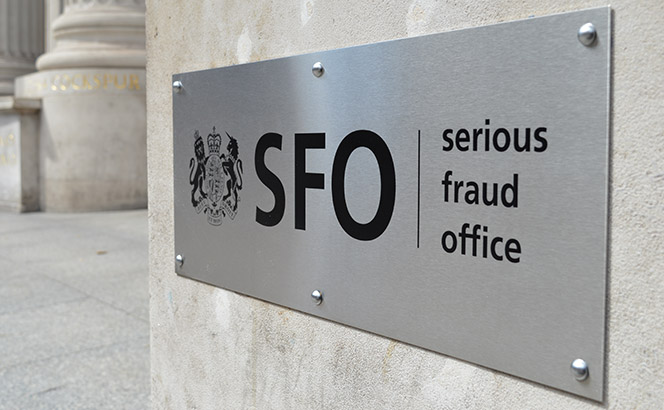
‘It is a difficult job to recruit for,’ says Sara George, a white-collar defence and investigations partner at Sidley Austin, as partners debate a likely successor for Serious Fraud Office director Nick Ephgrave after last week’s unexpected news that he is set to step down from his role at the end of March.
‘Not many people want to do the job because it is somewhat of a poisoned chalice… It’s very difficult to get cases to court with the current backlog, let alone win these very long cases,’ she adds.
White-collar partners were taken by surprise when Ephgrave, a former Metropolitan Police officer and the first non-lawyer to hold the role, announced that he would be retiring two-and-a-half years into a five-year term.
They suggest that his unexpected departure, reportedly for personal reasons, and the hunt for a successor that must now follow is likely to further destablise the SFO, which has struggled to find momentum in recent years, and potentially raises fresh questions about the organisation’s future.
‘Commentators in recent years have called for the abolition of the SFO and its merger into the National Crime Agency (NCA),’ says Louise Hodges, head of criminal litigation at Kingsley Napley. ‘Even when Nick Ephgrave arrived, there was suspicion that his appointment may have been to ensure an orderly merger. This latest news sadly risks reigniting that debate.’
When Ephgrave came in as director the market was optimistic that his recruitment marked a fresh hope for the SFO, which had gained a reputation for being toothless under his predecessor, Lisa Osofsky.
In Osofsky’s first year the organisation dropped 14 cases – twice as many as the previous three years combined. A reduced appetite for major investigations subsequently led lawyers to diversify their practices to include a diet of sanctions, compliance, private prosecutions and internal investigations work.
During his tenure, Ephgrave has pushed the organisation back into the public eye, carrying out a series of high-profile dawn raids and pushing for policy changes, including introducing financial incentives for whistleblowers. Notably, in December 2024, Ephgrave led the SFO to bring charges against five individuals for complex fraud in a case linked to the collapse of law firm Axiom Ince in the fastest time in the organisation’s history.
‘There was a famous year when the SFO did no raids; Nick’s approach was different, owing to his background as a former police officer,’ says Barry Vitou, head of HFW’s global investigations and white-collar group. ‘These raids cost money and represent investment in the SFO, so that might not square with the SFO being folded into the NCA.’
‘For the last decade or so, each director has had a legal change they have championed, tools marked as “gamechangers”, like deferred prosecution agreements or changes to the Bribery Act. But all of these struggle to fundamentally change the organisation’s performance and the recurring trials and tribulations of the SFO,’ he adds.
The focus will now turn squarely to who could replace Ephgrave, with the Attorney General’s office running the process, which is expected to see an interim director appointed in March.
‘It is such a demanding job. It might be one of the hardest jobs in criminal law,’ says Polly Sprenger, a corporate crime and investigations partner at Michelman & Robinson. ‘The SFO has minimal resources but faces the most well-resourced defendants, and there is minimal praise when things go well. But, I think it is one of the bravest, most principled and most important roles, to go up against crooks in suits who should know better.’
‘Two months until [Ephgrave] steps down is not a long time to find a replacement,’ adds Vitou. ‘While there will be continuity with the likely appointment of an acting director pending the appointment, inevitably, there is a question of momentum, uncertainty and the unwelcome distraction that goes with a hunt for a new boss. Historically, it is a slow recruitment process, due to the nature of the civil service.’
The Attorney General’s office, the department responsible for the SFO, is expected to initiate the recruitment process for a permanent replacement shortly, and continues to work with the SFO on interim measures to ensure the organisation continues to operate smoothly.
‘I would love to see a really good promotion from within the organisation, it would be a good way to capitalise on the morale boost Ephgrave injected,’ adds Sprenger, who previously worked at the SFO. ‘Victoria Jacobson [case controller] or Emma Luxton [director of operations] perhaps. But not an outsider, whether a police officer or a lawyer. The last promotion to director from within was Robert Wardle and that was 20 years ago.’’
‘It doesn’t matter if the SFO becomes part of a larger organisation,’ Sprenger concludes, ‘As long as the job gets done.’
The Attorney General, Richard Hermer, paid tribute to the outgoing SFO director via a statement posted on LinkedIn where he thank Ephgrave for his long career in public service.









 So far the focus has been on building out existing offices, as well as a handful of launches across EMEA, with the firm launching a


 Cadwalader’s key names for structured finance in the US