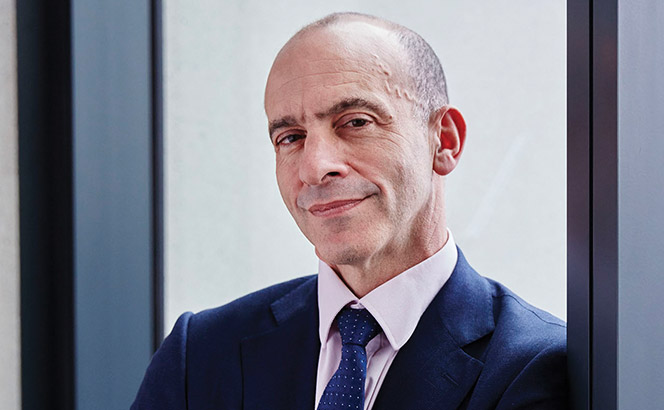
Making an impact: Simisola Obatusin

Photo credit: Thomas Donley, New York

The experience of living in Nigeria and going to school in the States shaped my interest in international law. I thought practicing law could be a profound way to change the society you live in. It is the foundation of society. That’s why there’s often an aspirational aspect to the work of lawyers – they want to use the law to make people’s lives better.

My background is in international relations and international development. I also spent some time working for a human rights NGO, and saw how you could use the law to advocate for people whose interests are in some way sidelined. I became a corporate lawyer because I wanted to develop my understanding of the corporate legal landscape. I want to be involved in creating laws and regulations that can promote a society’s economic development. This practice gives you a very strong grasp of how the international global economy works, how capital moves and how business leaders make important decisions.

Prior to joining Clifford Chance, I did not expect that certain aspects of my work would be as interesting as I have found them to be. Almost anything can interest me, so long as it’s plugged into the international economy.

What I personally value is when people invest in me as a junior lawyer. We have a senior associate on one of my teams who I really like working with; not only is he smart and eloquent, but he gives me very good feedback. When he sends comments about my work, he says, “If you want to know why I made these edits, feel free to come by my office,” and he always takes the time to check in about what I’m doing.

The desire for work-life balance is strong in my generation of lawyers. Being able to explore personal interests makes us better lawyers and generally more interesting to work with. It’s stressful sometimes, and you can be consumed by the long hours, but you don’t want to burn out. I try to get to the office super early on busy days, as it’s when I am most productive. I find that getting a jump on my work makes more time in the evening for the other things I want to do.

I’m involved with the firm’s Black and Latino Subcommittee, and it’s been fun working with the other associates in a different context, such as planning our celebration of Black History Month. I also enjoy doing pro bono work because of the skillset, people and organizations it exposes me to. Getting involved can make a big law firm feel smaller. It also means you are making a different kind of investment in your firm.

Connect the dots: Hyunhee (Rachel) Park

Photo credit: Thomas Donley, New York

Working in a marketing role for a multinational company before law school was a great decision. I spent five years at Samsung Electronics in South Korea and came away with a real head start in transitioning to the law. I got to see how a company is run from the inside, and I learned what it means to provide service. And because of the nature of Samsung’s business, I was exposed to strategic sectors, such as tech and consumer, which law firms are targeting in their own businesses.

Although marketing and law do not seemingly overlap, I brought many lessons from my previous experience when I entered the legal industry. In becoming part of another global organization, I also found many similarities between the two roles. One aspect of my firm that really appealed to me was the regular collaboration with our offices in other parts of the world. And I came here with a good understanding of how building positive relationships with colleagues can maximize efficiency and provide the best possible work product for our clients.

What I’ve come to understand is that any business is a people business. As a junior lawyer, you constantly need help from others in order to get things done. And it’s important not to lose sight of the fact that you’re never just turning in an assignment; you are playing a role by contributing to part of something bigger.

I am always reminding myself to keep a positive attitude and never do a sloppy job. When you’re putting a product out there for somebody else to use, whether it’s a smartphone or a purchase and sale agreement, it’s not just about the quality of the product, but how you handle the entire process of your business dealings. As a junior attorney, there’s a level of pressure that comes with facing the responses to your work from clients as well as senior colleagues. Everything you do – no matter how big or small the task – is going to leave an impression. And where clients are involved, that impression won’t just be of yourself, but your entire organization.

I have learned the importance of connecting the dots – that everyone you encounter is a potential mentor, friend and client, and every experience and relationship you build with another colleague is an opportunity to grow. Viewing all of that as something connected can help you focus on the best parts of any job, because whether it’s skills or relationships, you’ll always gain something valuable, and each point will guide you to the next.

Advocate: Christina Profestas

Photo credit: Thomas Donley, New York

I always wanted to be an attorney, but thought it was important to consider other options before deciding on a path that I would follow for a very long time. I sought out a variety of experiences, including internships in communications and hospitality, and even working at a talent agency. Finally, I interned for a judge and was just inspired. That’s when I was sure that I wanted to practice law.

I studied English literature in college and have always loved reading, writing, research and analysis, as well as oral advocacy. I wanted to use those practical skills in my work, and so decided to become a litigator.

Our clients come from a diverse range of industries, and they all do business differently. I learn something new with every case, often things I never imagined. It’s interesting and very rewarding. Along the way, I’ve come to appreciate the importance of developing a professional network, which is strongly reinforced at my firm and something that junior lawyers are being more proactive about these days.

I see the value of mentorship. It has always been important to work hard and do your best, but now there is also a direct emphasis on seeking out mentors and learning how to get help, especially when there’s a case or project that you want to work on. Then it’s about being an advocate for yourself.

As a first year, I worked with people who were very generous with their time. I always felt comfortable dropping by their offices with a question, and they took time to give me thoughtful answers. On one occasion, a senior associate and I were working on a large project. We sat and had lunch, and even though she was so busy, she still took the time to ask: “How are you? Are you enjoying the work? Is there anything else you’d like to be doing?”

This made a huge impression on me. It showed that she cared, not just about the work, but about my professional development – and not just in the context of a single case, but more broadly and long term. As a second year, I’m making a concerted effort to be there in the same way for our first years.

I think of the law as an institutionalized field in some ways, especially when you look at long-held aspects such as the standardized law school curriculum and bar process. In other ways, it is very dynamic. Law firms must evolve with the times. I love being part of a new generation in a well-established profession.

At this stage, it’s all about small victories – doing well on an assignment, being reliable and feeling useful.

The team: Thomas Rossidis

Photo credit: Thomas Donley, New York

Becoming a lawyer wasn’t a simple decision for me. In college, I started as an arts and sciences major but found it was too broad and didn’t give me a clear sense of direction. I switched into an industrial and labor relations program, which was described to me as a people-focused major that taught students about workplace issues, including the dispute resolution process – a natural precursor to entering the law. I interviewed for a paralegal opportunity before law school, thinking it would be useful to get law firm experience and perspective. This is advice I would give to any undergraduate considering a career in law.

As a freshman, I was fortunate to meet an alumnus who has been an influential mentor ever since. He was my sounding board as I considered internship options after my sophomore year – helping to sharpen my focus and playing an instrumental role in landing my first legal position. This relationship changed my life, and I aspire to being able to give back to another in the same capacity someday.

Almost every big law firm does transactional work, but they do it with different models and approaches. I’ve played on sports teams my whole life, so when I was looking at firms, I wanted that same kind of collegial atmosphere. I got the sense here that I would be joining a team – a firm with a familiar culture that I could learn and grow in.

Since joining, that culture has been demonstrated in more ways than one. From a professional standpoint, senior associates and partners take a creative approach to coaching junior lawyers. They give detailed and transparent deal-specific feedback on our work product, as well as providing a deeper understanding of larger issues and market practices. Our practice groups offer monthly lunch meetings where junior associates can ask questions and engage in lively discussion. More importantly, we learn about the business side of transactions, which provides deeper insights into our clients’ perspectives and decisions. My view is “the earlier the better” in helping junior associates reach the point where we are contributing greater value; it increases satisfaction and is good for our business.

On a personal note, the firm encourages community service as a high priority. I served on the board of a charity that supports first responders and was grateful for the firm’s understanding about the time commitment. Over the years, I’ve also supported a non-profit called Ice Hockey in Harlem. It holds an annual tournament for large firms across North America to face off on the ice rink and raise funds for a charity that supports hundreds of inner-city students with free hockey programs. It was amazing to see my colleagues at all levels join me in forming our inaugural ice hockey team, which is very cool – no pun intended!

Go big: Kate Timmerman

Photo credit: Thomas Donley, New York

I come from a rural town in Queensland, Australia. I grew up on a farm and originally wanted to focus on agricultural law. But as I followed my leads, I found myself working as a general corporate lawyer in Brisbane. The size of the Brisbane legal market is relatively small, which makes it a lot tougher to specialize in any one discipline, especially early in your career. Five years later, through a connection from my former firm, a colleague who had moved to Clifford Chance some years earlier made an introduction that led to an offer, and I took the opportunity to join her team in New York.

When I joined the private funds group here, I had a number of transferrable skills – and plenty more to learn. It’s been challenging, but we have a strong support network, and the team’s willingness to help me get up to speed has made it an enjoyable process.

Throughout my studies and legal career, I’ve embraced opportunities to further my skills, which have often required relocation and adjustment. Those transitions always involved more than just learning a new practice area with a new firm. It’s also about the small things, like finding somewhere to live, establishing a support network, adjusting to life in a new country and a new city. I was lucky to have joined an international firm with colleagues who have not only been there and done that, but are happy to make sure everything goes as smoothly as possible for me.

I’ve been struck by the amount of flexibility we’re given – something the current generation of lawyers will only further develop. A lot of this is driven by the use of technology and making day-to-day tasks as automated as possible. On the one hand, it allows us to work remotely and enter into arrangements that can ensure there’s a balance between our personal and professional commitments – but I think the real value here is that it allows lawyers to continually up-skill and focus on activities that are going to enable them to provide meaningful and tailored advice to our clients.

Starting out in Australia, I was so very focused on a rigid set of goals: joining the best law firm, becoming a senior associate, progressing to partner. But once I started working toward those goals, I realized they only represented my perception of what success looked like, not what I really wanted to achieve. In reality, having the flexibility to learn new skills and using them to develop my career was more important. And I didn’t have to lose sight of my goals, just figure out the best way to approach them.

The Shoulders of Giants: Brian Yin

Photo credit: Thomas Donley, New York

Growing up, I had no idea I would end up being a lawyer. In high school, I was focused on math and science. I didn’t know any lawyers and never thought about the law as a career path.

In college, I took some public policy classes and became interested in education. After graduation, I worked as a teacher and later joined an organization focused on education policy. It was only then that I began to see how much power there is in understanding the law. My colleagues often talked about how they wished they had legal training or that there was a lawyer around for them to consult. I went to law school so I could become that resource. Instead, I ended up falling in love with the law.

Work-life balance is not about finding time for work and time for “life.” Being a lawyer is a core part of my identity. It is hard work and can involve long hours and lots of stress, but it is also very fulfilling. I wouldn’t be doing it if I didn’t enjoy it. At the same time, it is important to me to be a man of faith and to spend time with the people I love. These things make me a better lawyer. I don’t see these aspects of my life as separate; for me, work-life balance is about integrating them.

I recall a project I worked on around Easter that had very tight deadlines – early mornings and all-nighters. It was important to me to celebrate the holiday at church, and my teammates encouraged me to do so. I worked until I had to leave for church and then came back to the office afterwards. I was touched that my colleagues understood what this meant to me, and it motivated me to work even harder.

Our people are really what makes working here special. Everyone I have worked with has genuinely focused on teaching and mentorship. Whenever a partner or senior associate gives me an assignment, they take the time to explain how it fits into the bigger picture. As junior lawyers, we want to have an impact – to know that the work we do is important. This culture gives us confidence that we are part of the firm’s mission and overall strategy. It inspires me to be a better lawyer, to be a fierce and effective advocate for our clients.

One of the most important concepts in the law is building on precedent – we stand on the shoulders of giants. I am where I am now because of the people who came before me. My goal is to be a giant for those who come after.

Afterword: Evan Cohen

Photo credit: Thomas Donley, New York

Our first collaboration with our friends at GC magazine and The Legal 500 – Advice To My Younger Self – profiled 20 highly regarded women lawyers who shared tips for success with those about to begin their own journeys. What’s exciting about Their Voices is that it flips that narrative. This time, it’s our rising lawyers helping legal industry veterans – partners, general counsel, law school professors and others – gain new insights in a world that increasingly requires fresh perspectives.

In conceptualizing this project, we started with the premise that today’s lawyers are incredibly agile – not only in their ability to work effectively from almost anywhere, but also in their openness to new ways of thinking and problem solving. From the time they were old enough to lift a mobile phone, they’ve been tied together by technology and global networks, which makes tuning out and turning off increasingly difficult. And yet, most of them manage to achieve an enviable level of balance in their lives.

Perhaps the reason this new generation of lawyers is so adept at navigating change is that rapid transformation is all they’ve ever known. Those of us further along in our careers have had to dispatch some long-held beliefs and modify our approaches to embrace a new normal. It’s not always a comfortable proposition, but we are finding our way – sometimes with help from the very people we lead.

“Today’s lawyers are incredibly agile – not only in their ability to work effectively from almost anywhere, but also in their openness to new ways of thinking.”

It’s hard to believe that 2019 marks the beginning of my fourth decade as a lawyer and my twentieth year as a partner at Clifford Chance. I’ve seen a lot and learned a lot, including the importance of eschewing labels. Each generation receives its own moniker – Baby Boomer, Gen X and the like. But if this book tells us anything, it’s that lawyers of every generation have many more traits in common than differences that separate them.

I couldn’t be prouder to call the lawyers in this book my colleagues. They are bright, motivated, hard-working, client-focused and civic-minded – just like the generations that preceded them. Best of all for me as a managing partner, they are part of a much larger group of associates who have their own equally impressive stories to tell.

The profiles in Their Voices: Insights from Today’s Rising Lawyers inspire me to remain flexible and welcome what’s next. I hope this book helps you to do the same.

Evan Cohen, Americas regional managing partner, Clifford Chance

SRA attempts to prosecute A&O lawyer over controversial Weinstein gagging deal

Zelda Perkins

An Allen & Overy (A&O) solicitor has been recommended for prosecution by the Solicitors Regulation Authority (SRA) over a controversial non-disclosure agreement (NDA) drafted for film producer Harvey Weinstein.

SRA chief executive Paul Philip confirmed today (3 April) that it aims to prosecute an unnamed lawyer from the firm, and is awaiting confirmation from the Solicitors Disciplinary Tribunal (SDT) as to whether the prosecution will proceed. Such considerations from the SDT tend to not take longer than six months. Continue reading “SRA attempts to prosecute A&O lawyer over controversial Weinstein gagging deal”

Revolving Doors: Akin Gump does the double, Kirkland boosts funds and Sidley recruits crime veteran as US firms power lateral market

City of London

Akin Gump Strauss Hauer & Feld led the way in the City lateral market last week after hiring two funds partners from O’Melveny & Myers’ City arm, while Kirkland & Ellis and Sidley Austin also made senior hires.

Daniel Quinn and Aleksander Bakic start their new roles at Akin Gump today (1 April), after the duo decamped from Allen & Overy’s prospective merger partner O’Melveny. Both focus on private equity transactions, and will work in the firm’s investment management practice and transactional platform in London. The Texas-bred Akin Gump, meanwhile, also announced the hire of Allen Shyu in Beijing, who joins from Stephenson Harwood. Continue reading “Revolving Doors: Akin Gump does the double, Kirkland boosts funds and Sidley recruits crime veteran as US firms power lateral market”

Lead sponsor message – RPC: The essential ingredients

James Miller

James Miller, RPC’s managing partner, looks at what makes the high performers in this year’s GC Powerlist

Vision, purpose, focus. In my experience as a managing partner, these are essential ingredients for high performance organisations; essential ingredients for high performance teams; and essential ingredients for high performance individuals. Continue reading “Lead sponsor message – RPC: The essential ingredients”

Sponsor message – Fox Rodney Search: Improving the representation of women at GC level in the FTSE

Fox Rodney Search

The business case for greater gender diversity has only increased the need for transformation in executive and functional head roles. Yet women are still far from being equally represented in the top legal position at FTSE companies. Progress has been made in the FTSE 100, but in FTSE 250 companies there is a lack of collective understanding of what it takes to maximise the potential of senior female legal leaders. Continue reading “Sponsor message – Fox Rodney Search: Improving the representation of women at GC level in the FTSE”

Sponsor message – The Law Society of Scotland: Representing Scotland’s GC community

The Law Society of Scotland

The Law Society of Scotland is the professional body for over 11,000 Scottish solicitors. With our overarching objective of leading legal excellence, we strive to excel and to be a world-class professional body, understanding and serving the needs of our members and the public. We set and uphold standards to ensure the provision of excellent legal services and ensure the public can have confidence in Scotland’s solicitor profession.

Continue reading “Sponsor message – The Law Society of Scotland: Representing Scotland’s GC community”

Sponsor message – TheJudge: Removing the pain and reducing the cost of bringing your dispute

TheJudge

If a business is to capitalise on the potential asset they hold in the shape of a good legal claim, at a time when boards are increasingly focused on managing legal spend, it is vital that a general counsel can identify the most cost-effective way to engage their external lawyers and protect the business against heavy costs in the event of a loss.

Continue reading “Sponsor message – TheJudge: Removing the pain and reducing the cost of bringing your dispute”

Introduction: Risky business

David Eveleigh, Elizabeth Messud, Neil Murrin and Sonya Branch

There is a certain irony to be had in the fact that the best general counsel (GCs) these days are so highly regarded because they are not lawyers in the traditional sense. Increasingly, the conversations the Legal Business team had while researching the 2019 GC Powerlist were about branching out into other areas, with risk management oft-cited. ‘Be a lawyer, but don’t act like a lawyer,’ was uttered more than once.

And this approach is not just reserved for the FTSE 100 companies. This holistic focus has touched both the smallest and largest legal teams. On the start-up side, banking app Monzo combined its GC and chief risk officer role for Dean Nash, who is filling the dual position on an interim basis. Donny Ching, the long-established GC of Shell with a more than 1,000-strong in-house legal team, has also had to embrace risk to a greater degree. Continue reading “Introduction: Risky business”

Methodology and criteria

GC Powerlist UK 2019

The research process for the GC Powerlist has grown substantially since the first report was published in 2013, and now encompasses online nominations as well as substantial interviews with senior general counsel (GCs) and private practitioners.

The first stage for the 2019 report began in early December with the launch of an online survey to canvass recommendations for outstanding GCs. Continue reading “Methodology and criteria”