
Mind the gap(s) – more of the same old inequality and fudged statistics prevalent in Big Law

Richard Foley

The second season of gender pay gap reporting has again laid bare the stark disparities between men and women throughout the legal sector. However, with only two rounds of reporting to look at so far, the trajectory of pay equality in legal is still difficult to ascertain. Instead, conversations have turned to the value of reporting gender pay in of itself, particularly given the lack of common methodology in gauging the numbers.

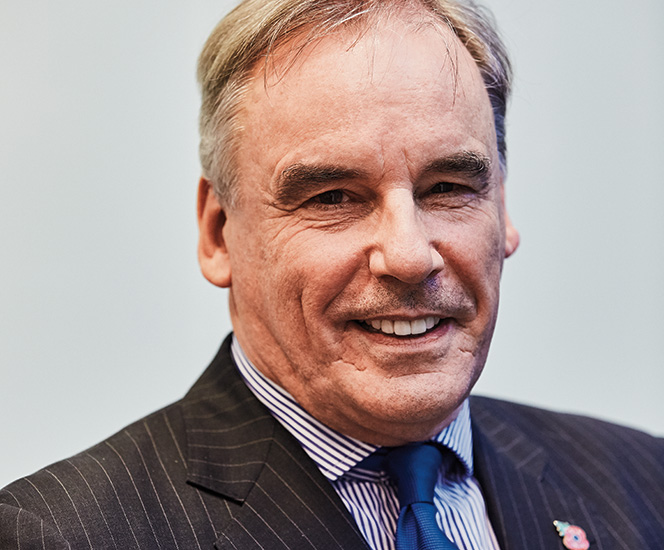
These concerns are not new to the latest reporting round. In March 2018 Pinsent Masons senior partner Richard Foley (pictured) criticised the current regime’s lack of consistency in reporting benchmarks. The Law Society later in November 2018 called for uniformity in gender reporting, publishing guidelines on how firms could provide more clarity on the issue. Recommendations included firms distinguishing between equity and non-equity partners, publishing a full-time equivalent (FTE) compensation gap based on the full financial year and reporting on partner bonus schemes. Continue reading “Mind the gap(s) – more of the same old inequality and fudged statistics prevalent in Big Law”


No alarms and no surprises – Behind the Mindful Business Charter

Any lawyer of a certain vintage can recall the dawn of the BlackBerry age, the watershed moment at the turn of the Millennium that meant you could always be on call. It was a blessing and a curse.

But the initial freedom of being able to work anywhere at any time has become a crippling 24/7 expectation for some, with the inability to ‘switch off’ being an oft-cited issue. Continue reading “No alarms and no surprises – Behind the Mindful Business Charter”

Sponsored briefing: The world-class disputes space the City’s been waiting for

Int Arb

A message from the chief executive of The International Arbitration Centre

As London’s newest dispute resolution centre, The International Arbitration Centre (IAC) is delighted to sponsor the Disputes Yearbook. It is no exaggeration to say that over the last ten years London has risen to become the new home of international arbitration, offering a selection of firms and chambers, partners, barristers and QCs, and a deep pool of supporting counsel, funders, and experts. Continue reading “Sponsored briefing: The world-class disputes space the City’s been waiting for”

Corporations with benefits – Assessing the rise of US public benefit companies

When looking for good in the world, corporate governance law is not the most obvious place to train your eye. However, there is a sizeable band of corporations – thousands, in fact – who have opted to start just there, using corporate governance as a springboard to the greater good.

Shareholder primacy, often cast as the villain in corporate scandals or blinkered business decisions, operates on the theory that the job of directors and management is to maximise returns to investors. In turn, corporate law is traditionally viewed as a contract between corporations and investors that the company will, in the balance of law, deliver the highest return. Continue reading “Corporations with benefits – Assessing the rise of US public benefit companies”

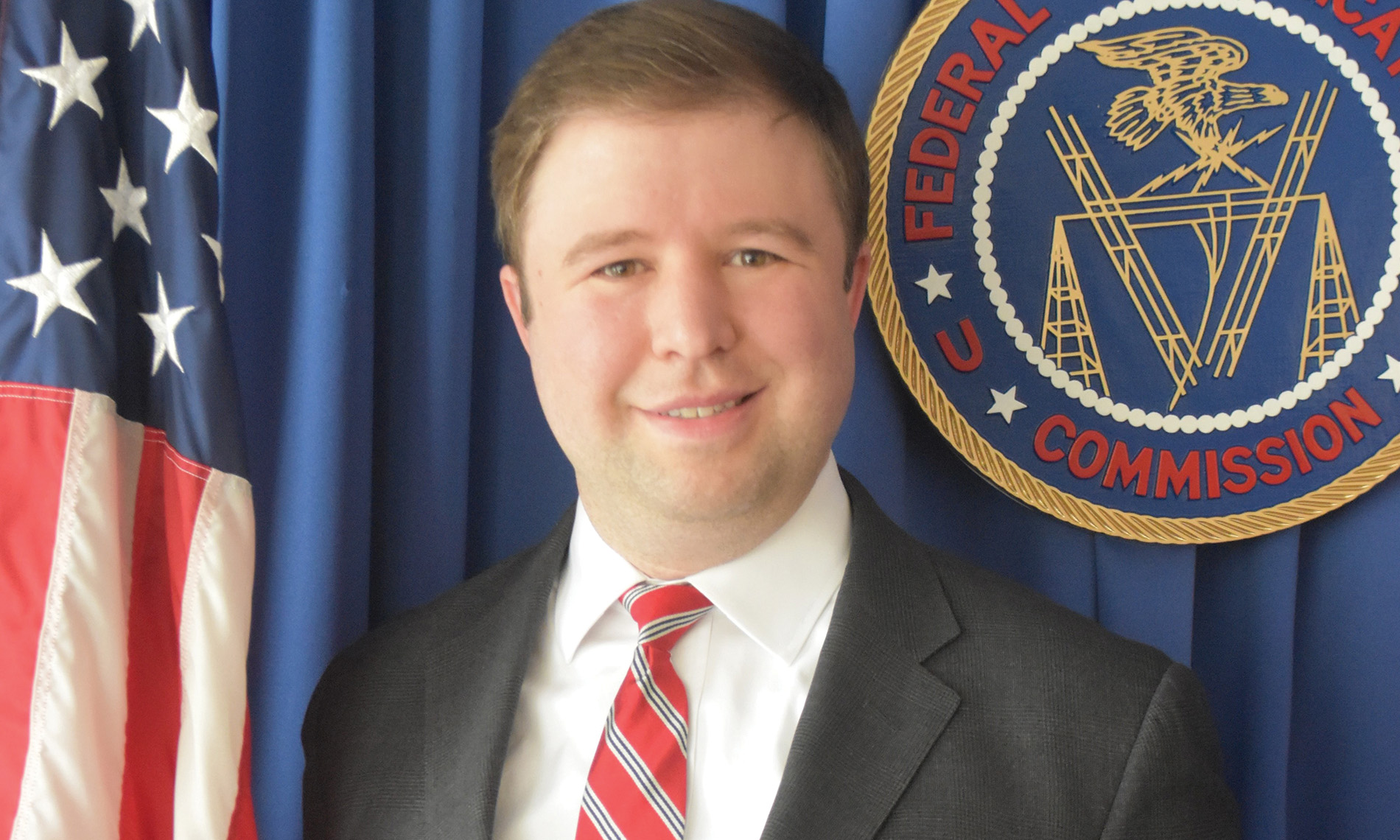
Tom Johnson, Federal Communications Commission

I have always been attracted to public service. A number of my colleagues from my time at Gibson Dunn had gone on to serve as solicitors general in state attorney generals’ offices. Those offices provide unparalleled opportunities, such as the chance to argue appeals and challenge areas in which the federal government has exceeded its powers and placed onerous regulatory requirements on the state. So I was very grateful to have been offered the opportunity to work in the West Virginia solicitor general’s office.

In 2017, I became the general counsel (GC) of the Federal Communications Commission (FCC). I am primarily responsible for two components – reviewing Commission rules and orders to ensure they are legally sustainable, and defending those actions in court. I also oversee units that deal with fraud and bankruptcy issues, as well as various internal issues like employment matters. In West Virginia, I supervised four or five attorneys at any given time. Now, I oversee a team of more than 70 lawyers, so I’ve had to focus a lot more on learning how best to allocate my time and how best to delegate. Continue reading “Tom Johnson, Federal Communications Commission”

The Middle East: The rough with the crude

The global economy is slowing and so too is the Middle East. In April, the International Monetary Fund (IMF)almost halved this year’s growth forecast for the MENA region to 1.3%, from its previous estimate of 2.5% in October 2018. Dragging everything down is the oil sector – particularly in Saudi Arabia – US sanctions in Iran, and geopolitical tensions in other economies such as Iraq, Syria and Yemen.

But such downgrades are no surprise for lawyers in the region. ‘There is no doubt the region is going through a downturn,’ says Richard Gimblett, resident managing partner of the Dubai arm of Holman Fenwick Willan (HFW), which has more than 50 lawyers across its offices in Riyadh, Dubai, Kuwait City and Abu Dhabi. ‘The volatile price of oil obviously hasn’t helped. These are still largely petro-economies, although they are trying to diversify.’ Continue reading “The Middle East: The rough with the crude”

Picking up the pieces – the risk debate gauges the #MeToo era

Niamh Counihan

A clear focus on a number of #MeToo episodes among City law firms has led to a close examination of culture by risk teams as well as wider discussion of reputational damage and the extent to which this can be measured.

We gathered leading risk experts from some of the UK and international firms in the eye of the storm to debate what steps can be taken not just to deal with reputational fallout but to ensure it doesn’t happen again. Continue reading “Picking up the pieces – the risk debate gauges the #MeToo era”

Letter from Iberia – Despite turbulent politics, Madrid lawyers sustain bullish mood

In spring 2018, Legal Business found the Madrid legal elite still recovering from a jolt that unsettled the local establishment. As one of the best-regarded deal makers in Spain, Juan Picón had at the end of 2017 given up his role as DLA Piper senior partner to join Latham & Watkins as Madrid head and Latin America co-chair.

Off the back of three consecutive years of GDP growth above 3% and mounting interest from international investors, Spain had been moving back onto the radar of leading international firms – the list of those stepping up investment in the country going well beyond the US giant to range as wide as Allen & Overy (A&O) to Fieldfisher. Some believed signs of renewed investment would shake up the staid local talent market and bring fresh challenges to the elite independents – Uría Menéndez, Garrigues and Cuatrecasas. Continue reading “Letter from Iberia – Despite turbulent politics, Madrid lawyers sustain bullish mood”

Can law tech’s big beasts Lexis and Thomson stay on top in a changing industry?

Digital whales

So ubiquitous have two companies become in legal tech circles that they are rarely discussed directly, just accepted as facts of life, like gravity or air. Those two are, of course, LexisNexis and the legal division of Thomson Reuters, which have over the last 30 years positioned themselves as the dominant providers of the informational ‘plumbing’ law firms require to ply their trade.

For LexisNexis that key moment came in the 1970s when an arm of the Ohio State Bar Association commissioned a project to deliver an information service exclusively aimed at legal research, named Lexis. During the same decade West Publishing was Lexis’ main competitor, using a computer-assisted legal research project that would later be branded Westlaw. Continue reading “Can law tech’s big beasts Lexis and Thomson stay on top in a changing industry?”

Law Tech Special: Fake rugs and drill bits – Incopro eyes brand protection dominance

Simon Baggs

Seven years after Wiggin set up IP technology company Incopro, it has raised $21m and expanded to protect more than 600 brands, Hamish McNicol reports

Simon Baggs, co-founder and chief executive of online brand protection provider Incopro, has a friend who designs and sells high-end rugs for tens of thousands of pounds. Within days of a visit to a trade fair in China, however, there were fake replicas of her product available on e-commerce giant Alibaba.com. Continue reading “Law Tech Special: Fake rugs and drill bits – Incopro eyes brand protection dominance”

Law Tech Special: The final throes of the Wild West? Contract management bids to move into the mainstream

Emily Foges

Companies with thousands of contracts want to not only store them, but manage and learn from them too. It is not just about in-house legal teams, however, Hamish McNicol reports

The International Association for Contract & Commercial Management, a 55,000-member representative group spanning 177 countries, estimates that the average company loses more than 9% of revenue a year to contract-related issues. More than half of this is due to poor contract quality, its research in 2018 concluded, with other factors including poor contract management and contracting costs. Continue reading “Law Tech Special: The final throes of the Wild West? Contract management bids to move into the mainstream”

Inflection point – Ashurst steps back from the brink but can the revival last?

It was not all plain sailing,’ reflects Ben Tidswell, Ashurst’s chair, on the aftermath of its 2013 merger with Australia’s Blake Dawson. ‘But partners saw what we were trying to achieve and most wanted to be part of that. Now the firm is enjoying the success of that.’

Tidswell speaks with the palpable relief of one whose darkest days are behind him. The merged firm is now on the brink of revealing its best financial showing to date after years of indifferent or poor performance. Tidswell may well celebrate given the upheaval that preceded this inflection point, dwarfing any woes suffered by City rival Lovells following its 2010 union with Washington DC’s Hogan & Hartson. Continue reading “Inflection point – Ashurst steps back from the brink but can the revival last?”

The Client Profile: Christine Dekker, McDonald’s

Christine Dekker

Chicago-born Christine Dekker’s decade-long run as legal counsel for McDonald’s has seen her relocate from the US to Shanghai for work in 2014 on a gamble that paid career dividends, ultimately earning her the role of general counsel (GC) for the UK and Ireland three years later.

As vice president-GC for the restaurant chain’s Chinese market, Dekker had played a prominent role in handling the sale of a $2bn equity interest in the China and Hong Kong business to strategic investors. In Shanghai she ran a team of 23 lawyers but also found time to travel to smaller Chinese cities, not to mention visit the odd local potato farm. Continue reading “The Client Profile: Christine Dekker, McDonald’s”

Vital signs – the passing of old Ashurst holds new life

Sometimes in institutional terms, something has to die before something new can live. The good news for Ashurst, as chronicled in this month’s cover feature, is that the City player is showing vivid signs of renewed life, with the firm set to post by far its best performance after a decade that has been plain bad. After the low points in late 2016 and early 2017, level-headed people were asking how long this could continue before decline became outright calamity.

The obvious caveat – and it is a substantial one – is that this has come largely by building on the ruins of what Ashurst was: a storied, corporate-driven City player with enviable history and a cohesive culture. What has emerged as the old edifice progressively crumbled is unrecognisable against Ashurst circa 2009. Thanks to its controversial merger with Blake Dawson, the shape and practice mix of the business has radically changed. Its once-vaunted private equity team has been battered down to functional coverage across Europe – the final blow to any borderline claim to first-division status being Freshfields Bruckhaus Deringer’s five-partner Paris raid two years ago. And most of the big-name corporate figures have left over the years or retired – most recently Robert Ogilvy Watson and Simon Beddow – leaving a core corporate practice generating around 20% of its income; on paper, you would expect a firm of this heritage to be doing over 30%. Continue reading “Vital signs – the passing of old Ashurst holds new life”

Being most things to most clients just isn’t sustainable

Alex Novarese

Years ago, in the immediate wake of the banking crisis, I wrote a column on the notion that top London law firms, having pursued consolidation and growth for the preceding quarter century, had fallen out of love with being big. The argument was that they were increasingly focused on segmentation – meaning tighter focus on their core markets – than consolidation. I have made duffer calls over the years, but in retrospect only one of those points, on losing faith with growth, was substantively borne out. The second observation about a more clearly-segmented legal industry emerging has largely not come to pass. Major London firms have consistently eschewed growth strategies with generally poor results. But no matter the structural pressures building on the legal industry, they have yet to get used to the idea of being more rigorously focused on core markets. Incremental chipping – ditching a bit of structured finance here, a little employment disputes there – is about as good as it got.

Yet there is an increasingly salient argument to be made that major law firms have two broad approaches that look sustainable if they wish to be major forces in high-end law. The first is to operate closer to the classic partner-driven model – a simplified regime based on low leverage, partner-heavy service, and being focused in a relatively small number of markets and geographies. This is a stance successfully applied by many of the more potent US-bred law firms expanding in Europe. Continue reading “Being most things to most clients just isn’t sustainable”

The Mindful Business Charter: In praise of baby steps

meditating businessman in hectic office

The name, the Mindful Business Charter, does not in itself inspire huge confidence but, judging the legal profession on its willingness to at least try to address stress and mental health pressures, the initiative still constitutes pretty much law’s quality-of-life cutting edge.

The venture, first put together last year by Pinsent Masons, Addleshaw Goddard and Barclays, was an attempt to draw up a charter setting out what clients and law firms should reasonably expect of individual lawyers. A kind of rules of engagement, if you will, for not running your people into the ground. Continue reading “The Mindful Business Charter: In praise of baby steps”

The Last Word – Best foot forward

As bellwether Forsters opens the 2018/19 financial reporting season in the UK announcing steady revenue growth, we ask law firm leaders for a progress report

A decent year

‘We don’t have an enormous exposure to M&A. It makes up about 10% of our business, but the sense is people are getting used to the new normal. No one really knows what is going on with Brexit, but they’re just getting on with it and there are deals out there. I dislike the phrase cautious optimism, but it’s been a decent year. The challenge for firms will be finding active clients; we have been looking further afield than we would have done years ago.’

Paul Roberts, managing partner, Forsters Continue reading “The Last Word – Best foot forward”