Former Travers managing partner Lilley joins Deloitte Legal as employment head

Deloitte, London

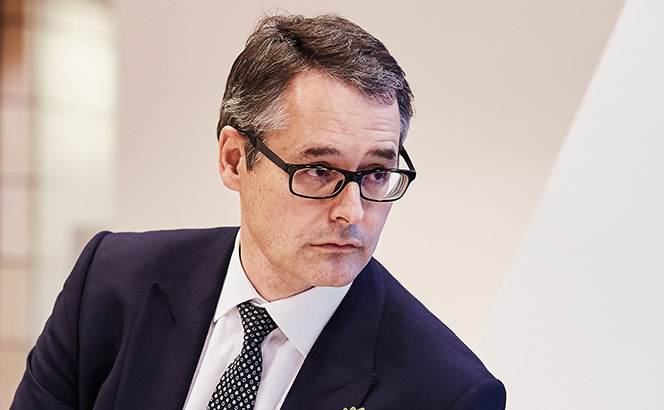
Big Four accountancy firm Deloitte has bulked up its UK legal bench by hiring Andrew Lilley, the former managing partner of Travers Smith, to spearhead its employment practice.

Lilley will now focus on building the firm’s employment presence in the UK, as Deloitte joins its Big Four counterparts in further expanding its domestic legal capability. Lilley joins alongside Squire Patton Boggs employment partner Liz Pierson. Continue reading “Former Travers managing partner Lilley joins Deloitte Legal as employment head”

‘An incredible opportunity’: DWF flexes New Law arm with BT managed services contract

Sabine Chalmers

DWF has landed its first major post-IPO client win after securing a five-year managed legal services mandate for BT’s insurance and real estate work.

Up to 40 lawyers from BT’s in-house legal team of nearly 400 staff could transfer from BT to DWF by the end of this year as part of the deal, which saw DWF chosen ahead of 25 other providers following a year-long process. Continue reading “‘An incredible opportunity’: DWF flexes New Law arm with BT managed services contract”

Simmons gets on the legal technology and data Wavelength with start-up acquisition

Jeremy Hoyland

Simmons & Simmons has made a rare acquisition in the form of legal engineering start-up Wavelength for an undisclosed sum.

Wavelength – which claims to be the first Solicitors’ Regulatory Authority-regulated legal engineering business in the world – uses data science, technology and design to assist on projects in the legal industry. The acquisition will see Simmons look to expose the London and Cambridge-based team to its client base. Continue reading “Simmons gets on the legal technology and data Wavelength with start-up acquisition”

Revolving doors: City move for Weil as HSF adds duo in South Africa

In a quiet week for lateral recruitment, Weil, Gotshal & Manges hired from Ashurst in the City as other firms made notable moves further abroad.

In London, Weil expanded its banking and finance practice with the hire of Paul Stewart, currently at Ashurst. Stewart has experience in domestic and international finance transactions as well as leveraged acquisition finance and debt restructuring. Continue reading “Revolving doors: City move for Weil as HSF adds duo in South Africa”

Spin-offs likely as Mishcon ‘considering all options’ for a capital raise

Mishcon de Reya is considering options for raising capital in a bid to fund its ‘ambitious plans’ for growth, including a possible initial public offering (IPO).

Sky News reported on Saturday (20 July) the firm is looking to either list on the stock exchange or sell a stake to a private equity investor to raise capital. Continue reading “Spin-offs likely as Mishcon ‘considering all options’ for a capital raise”

A long-time coming: Shepherd and Wedderburn lands in Dublin amid Brexit uncertainty

Paul Carlyle

Shepherd and Wedderburn has become the latest firm to set up shop in the Republic of Ireland in response to Brexit.

The new office, announced today (22 July), has been launched in a bid to protect European client business and will be led by Paul Carlyle (pictured), the Scottish-headquartered firm’s head of media and technology, alongside media and technology partner Joanna Boag-Thomson and Gordon Downie, head of regulation and markets. Continue reading “A long-time coming: Shepherd and Wedderburn lands in Dublin amid Brexit uncertainty”

Dealwatch: Kirkland and CMS drink in $3bn pub group takeover as Slaughters and Latham analyse Moody’s disposal

Slug & Lettuce, Lincoln

In the customary rush to get deals over the line before the summer lull, the City and US elite have this week lined up on big-ticket transactions including the sale of Moody’s Analytics to Equistone and Slug & Lettuce owner Stonegate’s $3bn acquisition of pub company Ei Group (EIG).

Kirkland & Ellis fielded a team led by corporate partners David Holdsworth and Stuart Boyd to advise buyer Stonegate as it acquired EIG, the largest owner of pubs in the UK. Stonegate, which was formed when funds managed by private equity group TDR acquired 333 managed pubs from Mitchells & Butler, also owns high street brands including Walkabout and Yates. Continue reading “Dealwatch: Kirkland and CMS drink in $3bn pub group takeover as Slaughters and Latham analyse Moody’s disposal”

Two Clydes lawyers suspended for alleged financial breaches

Solicitors Regulation Authority SRA

Clyde & Co has suspended two lawyers, including a partner, while alleged breaches of accounting rules are investigated.

The firm said today it had recently referred two lawyers to the Solicitors Regulatory Authority (SRA) regarding alleged breaches of obligations in the SRA handbook, including its Code of Conduct and the Accounts Rules. Continue reading “Two Clydes lawyers suspended for alleged financial breaches”

Death and taxes: UK legal and accountancy firms hand over £19bn to the public purse

PwC

The legal and accounting sectors contributed an eye-catching £19.1bn in tax to the UK economy in 2018, suggests a new report from lobby group TheCityUK.

The report published today (18 July) estimates the figure to be a 6.8% increase since 2016, with law and accountancy firms’ business models resulting in a higher tax contribution compared to their corporate counterparts. Firms’ employment taxes made up the lion’s share of the payments, measuring at £7.4bn, with partnerships providing a boon to the public finances. Continue reading “Death and taxes: UK legal and accountancy firms hand over £19bn to the public purse”

Thomson Reuters makes ‘transformational’ HighQ acquisition as ContractPodAi raises $55m

Jim Leason

Thomson Reuters has snapped up legal software provider HighQ, making good on plans to bolster its cloud-based software products after selling its legal managed services arm, Pangea3, to EY.

Thomson Reuters’ president and chief executive Jim Smith said the firm plans to integrate London-based HighQ with its own information services, enabling it to sell the product to ‘thousands’ of large and medium-sized law firms and corporate legal departments. Continue reading “Thomson Reuters makes ‘transformational’ HighQ acquisition as ContractPodAi raises $55m”

Baker McKenzie steps up to associate pay war with 20% NQ salary uplift

standing on coins

Baker McKenzie has become the latest law firm to put its newly-qualified (NQ) solicitors in line for a six-digit pay package with an eye-catching 23% increase to its starting rates.

The firm announced today (17 July) it is raising its basic NQ package from £77,000 to a minimum of £95,000, with performance-related bonuses bringing earnings to over £100,000. Continue reading “Baker McKenzie steps up to associate pay war with 20% NQ salary uplift”

Paul Hastings targets private equity again with Hogan Lovells trio

Anu Balasubramanian

Paul Hastings has made a significant private equity play at the expense of Hogan Lovells, hiring a three-partner transatlantic team.

Ed Harris – who led Hogan Lovell’s private equity practice in the City – joins alongside Leanne Moezi in London, while Virginia-based partner Adam Brown joins Paul Hastings’ Washington office. Continue reading “Paul Hastings targets private equity again with Hogan Lovells trio”

TLT banks 7% revenue lift as £500k experimentation fund beds in

David Pester

TLT has its sights on the £100m revenue barrier after adding nearly 50% to its top line over the last five years and having ring-fenced £500,000 to invest in enhancing its offering.

The Bristol-based LB100 firm said today (17 July) its revenue for the 2018/19 financial year was up 7% to £87.6m. That is 48% higher than in 2014 and more than double its 2012 turnover. The firm does not announce an unaudited profit figure but it is expected to have similarly grown: last year, profit rose 22% to £23.4m. Continue reading “TLT banks 7% revenue lift as £500k experimentation fund beds in”

Gateley clears £100m ‘psychological barrier’ as incoming CEO pledges more of the same

Michael Ward

The incoming chief executive of the UK’s first listed law firm, Gateley, says he reflects a ‘comforting continuance’ of the strategy which has seen the firm grow to more than £100m in revenue and nearly 1,000 staff.

Gateley today (16 July) confirmed earlier guidance its revenue had surpassed £100m by reporting a 20% increase in turnover to £103.5m in the year to 30 April 2019, up an impressive 67% from when it listed in 2015. Profit after tax lifted 11% to £13m, as fee-earner headcount rose 20% to 610. Continue reading “Gateley clears £100m ‘psychological barrier’ as incoming CEO pledges more of the same”

Italian job: HSF hires two partners from Paul Hastings in Milan energy drive

Scott Cochrane

Herbert Smith Freehills (HSF) has hired a six-strong energy and infrastructure team from Paul Hastings, with two partners and four associates joining the Anglo-Australian firm in Milan.

Lorenzo Parola will decamp Paul Hastings, where he chaired the firm’s EU energy and infrastructure practice, and is joined by Milan-based partner Francesca Morra. Parola focuses on energy projects development, while Morra has experience on energy regulation and competition law. Continue reading “Italian job: HSF hires two partners from Paul Hastings in Milan energy drive”

Revolving doors: Baker McKenzie expands £40m City tax practice as Eversheds makes multiple hires

City of London

In a muted week for lateral recruitment, Baker McKenzie and Eversheds Sutherland made hires in the City, while Eversheds also grew on the continent.

Baker McKenzie hired tax partner Prabhu Narasimhan to its London office. Narasimhan joins from White & Case and has experience in advising and delivering cross-border mandates, acting for corporate, private equity and family office clients globally. Continue reading “Revolving doors: Baker McKenzie expands £40m City tax practice as Eversheds makes multiple hires”

Change was necessary: Ashurst joins the war for talent with 9% NQ pay raise

City stalwart Ashurst has followed suit with peers in the Square Mile to raise the salary for newly-qualified solicitors (NQs), upping the ante to £105,000 including bonuses.

The move will mean a 9% pay increase for NQs, who were previously in line for maximum remuneration of £96,600, effective from the 2020 financial year. Continue reading “Change was necessary: Ashurst joins the war for talent with 9% NQ pay raise”

Project India

project-india

As the world’s second most populous country, India accounts for 17.5% of the world’s population. It lags behind China by just over 50 million – a hair in the grander picture. And it’s rapidly catching up: on an annual basis, India’s population growth rate of 1.2% is more than double that of China – as the latter still tries to recover from the rigours of its one-child policy.

But while population growth is largely seen as a means of economic development, so too can it signal demise. The burden on cities, services, and infrastructure must be both navigated and alleviated if a rapidly growing population is to reach its full potential. The need is such that the infrastructure question was a cornerstone of this year’s election, with impending change already apparent: the Bharatiya Janata Party, led by returning Prime Minister Narendra Modi, pledged $1.44tn towards infrastructure in stark contrast to its primary opponent, the Congress party, which instead planted a flag on the war on poverty and the battle to create jobs.

These projects – and the negotiations, deals and relationships behind them – are quite unlike anything that legal teams in other industries might face on a regular basis. Often spanning years, bordering on decades, helping guide these projects to fruition requires a different kind of legal management – and, for the teams that can thrive in this space, it provides the opportunity to play a vital role in the ongoing development of one of tomorrow’s most critical economies.

National Importance

When it comes to the development of infrastructure, the work being done by legal teams takes on an added importance, especially in a country such as India, where the infrastructure question is so closely tied to the nation’s future economic prospects. According to the India Brand Equity Foundation, India requires over $777.73bn worth of investment in infrastructure by 2022 if it is to enjoy sustainable development. And there is much work to do. Despite its massive potential, in 2018, India ranked at 44 out of 160 countries ranked in the World Bank’s Logistics Performance Index, a measure of countries’ performance in categories such as trade and transport infrastructure, and competence of logistics services.

The issue of electrification, for example, is one of the foremost priorities for India’s infrastructure, not least due to the fact that India’s 263 million farmers – those least likely to be connected to the grid – represent one of the country’s most significant voting blocs. A scheme to electrify all households in India by December 2018 garnered much attention when it was announced in September 2017. This was no small undertaking: government surveys at the time counted 40 million households without power. The goal was deemed by the Prime Minister’s Office as satisfied in December 2018, though the target was trimmed to encompass only those households who had applied for the scheme – some 25 million – and millions of households remain without.

‘Most of the countries who have experienced GDP growth have been coupled, historically, with increases in electrification. You have to provide power for industries to run, and for people to be employed,’ explains Tejal Patil, general counsel for South Asia at GE. Patil has advised many areas of GE’s multifaceted business, and as such, has seen the many ways in which infrastructure affects conditions on the ground.

‘When you are working on real Indian projects, you feel like you are in the mainstream.’

‘The power sector is huge in India because of the size of the population – as is the case with industries like aviation and healthcare. A lot of what is being generated here is being consumed domestically, and that’s the enabler for GE – it plays a crucial role as enabler in critical growth sectors, which is really exciting.’

Being a critical adviser in an industry at the centre of the government’s largest concern – infrastructure – means that business is good and counsel are busy.

‘The government being interested in infrastructure is actually the best thing to happen to all construction companies, and that’s why so many international companies have come into the markets,’ explains Rashmi Kathpalia, legal head at TechnipFMC India.

‘It’s the opening of the infrastructure sector, which is very important to the growth of the country. When you are working on real Indian projects, you feel like you are in the mainstream, and contributing to the development of the country – because the country is nothing without its infrastructure.’

Grappling with Government

It is therefore critical that projects are awarded to contractors with the ability to deliver them to prescribed timelines and tightly managed budgets. In that respect, the government has its own role to play in ensuring India’s vision for the future is realised. As a contract partner, it is in the government’s interest to be as supportive as possible, something that Kathpalia has seen first hand.

For TechnipFMC, a recent example is the award of contracts for two fertiliser plants in Jharkhand. Enormous undertakings, the plants are designed to produce 2200 tonnes of ammonia and 3850 tonnes of urea per day – two products in high domestic demand. The project’s status as one of national importance has helped TechnipFMC throughout its lifecycle.

‘These fertiliser projects have been promoted by the Prime Minister’s Office. There was a public sector consortium entity that was created for the bidding, and because it comes with the promotion of the Prime Minister’s Office itself being interested in these two fertiliser complexes, the ministries work very well and very fast – negotiations are very fast,’ explains Kathpalia.

‘Government tenders can oftentimes take very long initiating and proofing and, at the end of it, the timelines that are required can become very difficult to achieve. In that case, very often what happens is that it is delayed for some reason – oftentimes leaving the contractor quite helpless. This can enact clauses included which mean you are not going to be paid any compensation for any delays, despite whether or not you are at fault.’

‘But if the Prime Minister is interested in that particular project then it becomes a lot easier for the whole process to conclude, so that the execution actually starts and concludes within the timelines – because they release the finances fast enough and, as we complete our work, the finances keep coming in with each phase.’

Relationships are key, and disputes must be approached carefully.

This is echoed in Patil’s experiences at GE, particularly when it comes to energy infrastructure projects, though she admits that having over 60% of the company’s work coming from the government has its pain points to go along with the positives.

‘There are pluses and minuses. I think one part of this is the entire government process. It is a public tender process that leaves little or no room for negotiation. The terms and conditions are pretty much set in stone and must be adhered to. There is a window to attend pre-set meetings where everyone sits together and explains their deviations. It’s not really a private contract, so from a legal standpoint it’s more about managing the risk rather than negotiating a very beneficial position. If all the bidders meet the technical specifications, then the one with the lowest price wins – there’s no other negotiation,’ she explains.

‘As the government is interested in infrastructure development, the size of these projects ensure focus. So, if you have obstacles or difficulties during the project execution, they can be addressed at the highest level since the government too becomes a key driving force to ensure successful completion of the task.’

Legal Engineering

When a large construction company closes a deal with the government to deliver a critical infrastructure project, the agreement between the two parties is often a far different creature to a typical B2B contract. These are agreements, for example, to build and maintain miles upon miles of railroads for a number of years, often decades. The in-house teams drafting and negotiating these agreements therefore need to have a firm grasp on the operational requirements of the project. What amounts of materials are required? How much labour will the project call for? Does the company have the technological capabilities required to deliver the project on time and on budget?

Kathpalia explains that all of these requirements mean her department must be of a different character to your typical legal team.

‘We have to understand how robust the project execution team is to be able to undertake that task, and so it’s not just regulatory. Our exposure is not just in terms of the price, but each contract comes with a particular timeline stating that it has to be concluded in X number of months. If our team is not going to properly assess the number of man hours required, or the price, or procurement requirements, or things like that, then we would be completely out of pocket,’ she says.

Socially Responsible Development

Recognising the potential for big industry to adversely impact the local communities in which it is operating, TechnipFMC has established a corporate social responsibility programme called Seed of Hope. The goal is to accelerate inclusive growth of the local communities in which TechnipFMC lives and works. Legal head Rashmi Kathpalia is a member of, and adviser to the programme committee.

‘In the spirit of “giving back” to society, TechnipFMC’s corporate social responsibility initiatives and our flagship sustainability programme, Seed of Hope, is very close to my heart,’ she explains. ‘It supports communities, advances gender diversity and promotes respect to the environment through various initiatives.’

The thrust of the programme is built in alignment with TechnipFMC’s overall sustainability agenda. Thanks to the efforts of the programme, TechnipFMC has achieved the following:

  • More than 6,600 children reached through education support in local primary schools
  • Over 12,000 people benefitted from mobile healthcare units
  • Over 750 youth trained in vocational trades including welding, fitting, and computing
  • More than 800 women trained on sustainable livelihood-generating opportunities such as computing, tailoring and stitching
  • 1,900 schoolgirls benefitted through STEM mini-science centres and labs in Mumbai, Chennai and Gujarat
  • •100 biogas plants installed, leading to sequestration of 250 metric tonnes of C02, mitigating global warming
  • An annual volunteer day where employees are encouraged to volunteer towards the company’s social initiatives

‘If you look at the bigger picture, when we assess the contract and then price the contract, when we understand the risks within the contract and we understand the full scope, legal is not just understanding what the contract says, legal has to understand from the risk and the project execution department what the exposure is. If, for example, it’s a revamp [of an existing facility], we cannot afford for the property that already exists to be damaged. Sometimes the owner may be having the indemnification for it, sometimes not, sometimes we may get insurance cover for it, sometimes not. So we have to work with that.’

GE’s Tejal Patil voices a similar sentiment: ‘In terms of anticipating risk, you cannot review these contracts in a vacuum – there has to be a return on experience. For example, you need the supply-chain members telling you whether they can supply something in time in order for you to accept a liquidated damages clause. If a lawyer reviews contracts in isolation, sitting at a desk, you’re never going to be able to assess the true risk.’

Building – and Maintaining – Bridges

For those companies delivering enormous infrastructure projects to India, the list of potential clients is a short one. The majority of the work will come from the government directly, but even in those instances where a company like Tata Steel, GE or TechnipFMC will be contracting with other private entities, there are very few players in the market with which to engage. Because of this, relationships are key, and disputes must be approached carefully.

‘Traditionally, India is a litigious country and the process of dispensation through the legal system is slow. Most companies will be straddled with a number of cases. Depending upon the industry, the portfolio of cases varies,’ says Dipali Talwar, former group general counsel of Tata Steel, who also spent several years at Pfizer.

‘I think the requisite skills for lawyers and particularly in-house counsel would be their ability to take a proactive call on risk and foresight to ensure no dispute arises in the future. Counsel must excel in applying their judgement on current legal trends, impending legislation as applied to their industry and, more particularly, the business process and agenda of the corporation they are part of. The unique ability and opportunity of the in-house counsel is to be able to prevent disputes or non-compliance. In-house counsel should also be able to partake in discussions on an area where impending legislation may result in change.’

Another wrinkle in the disputes issue is the complexity and long-term nature of these projects, where all too often it’s not until years down the track that grounds for dispute are discovered.

‘When the going is good, everything is good,’ explains Kathpalia. ‘It’s only at the end of the project that you realise you are out of pocket, or that you have been short-changed and you want to raise the claim, whether it’s against the owner, or against your consortium partner or a sub-contractor. This means that, as a team, we have to be engaged and ensure we are operating partners throughout the lifecycle of the project.’

Because the industry runs on low-volume, high-value, project-based contracts, there are very few bridges available to be built and burned. Fortunately, this is a reality that is largely accepted by all corners of the sector.

‘Most sectors are small and close knit, so it’s important to find a way to collaborate and have meaningful dialogue and resolution with relevant stakeholders – be it the government, competitors, vendors, channel partners or customers,’ says Talwar. ‘It is often not worth the cost or the time to enter into formal disputes – litigation or arbitration.’

‘The organisations are used to supplier disputes,’ adds Patil. ‘Even if you have a dispute, it doesn’t prevent you from getting the next order, because they understand that it can sometimes happen in large contracts. The public sector undertakings in India don’t like to settle claims (sometimes even large claims) during execution – account reconciliation is usually at the end of the project. It may be ok for a large corporation like ours but, from a cash-flow perspective, for a smaller company, it gets challenging if the payments aren’t made in time or the dispute isn’t settled along the way.’

The focus must shift from reacting to disputes themselves to preventing them in the first place.

Given the cost associated with pursuing disputes in this industry, and the particular need to protect vital relationships, the focus must necessarily shift from reacting to disputes themselves to preventing them in the first place. This, explains Kathpalia, is an art in and of itself:

‘While there are many companies that will put some amount towards disputes expenses, we rely more on our execution: that our execution should be so masterful that we should not have to go into claims at the end of the project; to bring it to light on a regular basis so that the client too can assess what the changes are. And so, I hope I’m not speaking too soon, but so far we do not have any litigation or arbitration pending as far as our projects are concerned.’

Arbitration

One less adversarial method of dispute resolution is, of course, arbitration – a mechanism that is becoming more common in these industries. But the usefulness of an arbitration clause is restricted by the infrastructure that is in place in the relevant jurisdiction, and India, like many countries, is beefing up its capacity to meet the needs of businesses in this respect.

A judicial committee convened in 2017 highlighted the barriers to the development of arbitration in India: namely the time taken for such proceedings to progress through the courts, and what was called ‘an excess of judicial involvement’. The committee recommended a reformation of arbitration in India with a view to establishing the country as a globally competitive arbitration destination. These recommendations were approved and resulted in amendments to the Arbitration and Conciliation Act 1996. Among the changes were the establishment of the independent Arbitration Council of India to promote the use of arbitration and other alternative dispute resolution methods, and the introduction of time limits for the presentation of submissions before arbitral tribunals.

‘Arbitration as an alternate dispute resolution avenue is growing. There are about three new arbitration centres which have been established in the last few years. You have the Delhi Arbitration Centre, the Mumbai Arbitration Centre, and a couple of private arbitration centres, and they’re expanding with many retired judges and lawyers on their panels. Where there is still a bit of a gap, is technical expertise,’ says Patil.

‘For disputes of this nature, you need a technical person on the panel. Recently we have some good experiences. Major disputes tend to use what we call ad-hoc arbitration, where one party appoints one arbitrator, the other party appoints a second and then a third who is chairman of the panel is appointed by both. These usually tend to be retired judges of the Supreme Court, High Court or eminent jurists.’

These ad-hoc arbitrations – as opposed to institutional arbitrations held in the kinds of large centres now opening – are still the primary preference in India, despite a finding by PricewaterhouseCoopers and Queen Mary University of London in 2008 that 86% of global arbitral awards in the preceding ten years had been from arbitral institutions. The committee was sceptical of the use of ad-hoc arbitrations in its 2017 report, citing the time taken for such arbitrations to conclude and the high costs associated with them. But with a concerted effort by the Indian government to make institutional arbitration a viable option, this may change.

‘The positive change we’re seeing is the government moving towards institutional arbitration in its contracts. In the past, there were contracts stipulating a single arbitrator, who would be a government employee,’ says Patil.

‘These three centres are growing. We have not used them, but we are looking into their services as more government contracts are incorporating them now.’


Infrastructure Agenda for the New Government of India

infrastructure-india

GC: What do you think should be the priority areas/sectors for the re-elected Indian government?

Shailendra Singh (SS): The long term priorities of the government should be environment, affordable housing, drinking water and sanitation, waterways development, financial inclusion and development of hard infrastructure.

Capital investment in hard infrastructure development, drinking water and sanitation, renewable energy and energy efficiency schemes, among others should be in focus. Electricity distribution should be another focus area.

GC: Which steps taken by the previous government in the infrastructure sphere need a further push by the re-elected government?

SS: Over the years, the speed of road construction has become the benchmark for India’s infrastructure creation. Now, the central government has set in play a new integrated infrastructure programme, which involves building roads, railways, waterways and airports. The centre has also been trying to leverage roads, railways and waterways to bring India’s logistics costs down to 8%, to make the economy competitive. India has long grappled with high logistics costs at 14% (as a percentage of product cost), which make exports uncompetitive vis-à-vis those of China, where logistics costs are about 8-10%.

The last five years have seen massive spending in roads, railways, water, irrigation and urban infrastructure. Where roads are concerned, 52 projects worth 37,019 crore were awarded between 2015 and 2018, under the new 30-year lease toll-operate-transfer (TOT) model introduced to recycle capital and auction operating road assets to private equity investors.

With the view to reducing India’s carbon footprint and ensure faster movement of goods, inland waterways are being explored as an alternative. The continued push for transport through waterways is required to make it competitive and a viable option. The development of terminals at Varanasi, Sahibganj and Haldia, and the development of NW-1 needs to be expedited.

shailendra-singh
Shailendra Singh, partner, Advaita Legal

Further, to ensure faster and more predictable enforcement of contracts, the arbitration and other alternative dispute resolution mechanisms have to be given a recognised statutory basis. Sectoral regulators promised for certain infrastructure sectors such as MRTs and coal should be implemented as soon as possible.

GC: What are the key areas of focus in the power sector and what steps can be taken to increase usage of renewable energy and ensure global commitments to reduce India’s carbon footprint?

SS: Reforms in the power sector are necessary to ensure that all stakeholders improve their financial health. The regulatory commissions have to be made more professional to implement in spirit the mandate of the Electricity Act, too.

With regards to the renewable energy sector, while the mandate under the existing laws is clear on renewable purchase obligations that must be met by the distribution licensees in the procurement mix; the enforcement of the deterrent needs improvement. The distribution licensees must be held to strict renewable procurement obligations, as well.

GC: What are your thoughts on the potential of public-private partnerships (PPPs) and the impetus that the government should give?

SS: Funding India’s wide-ranging, $500bn programme of infrastructure expansion over a five-year period is likely to be beyond the means of total government funding, so policies have been designed to facilitate private investment to the maximum level possible. If the Indian government’s targeted level of private sector involvement and investment are met (approximately 30%), the quantum of funding required would be around $150bn – dwarfing the investment achieved over the past decade.

The government has, in the last three years, undertaken some noteworthy steps to strengthen the PPP framework and the enabling ecosystem in India. This includes formulation of guidelines for new innovative PPP models, with due consideration to the extant risk outlook and investor appetite, like monetisation of publicly-funded highway projects worth approximately 35,600 crore under TOT and construction and expansion of over 60 highway projects under Hybrid-Annuity-Model (HAM). With the implementation of PPP models like HAM and TOT, the government has taken over the project implementation risk and thereby revived the interest of private players and financial institutions to a considerable extent. Furthermore the government has liberalised the exit policies for concessionaires to free up equity for re-investment into new projects, approved the policy of railway station development through PPP and is currently in the process of formulating suitable PPP policy for newer sectors and asset classes.

Some of the other measures include the setting-up of a National Infrastructure Investment Fund (NIIF) to channel foreign institutional funds into infrastructure; introduction of a PPP component in the new metro policy; amendment of the Arbitration and Conciliation Act 1996 to make dispute resolution more cost-effective and time sensitive; 2.11 lakh crore plan to recapitalise public-sector banks aimed at reviving bank-lending; and introduction of ease of doing business (EODB) state-level ranking, to help the government to push through reforms in sectors that are primarily state subjects.

GC: What legal impediments do you foresee for a prospective investor in infrastructure?

SS: For any prospective investor, certainty of the regulatory regime is of prime importance. Regulated sectors generally assert the rules of the game upfront and there is regulatory certainty of the trends that one can expect in the sector. To improve investor confidence, sectoral regulators need to be actually set up – a mere policy announcement will not do. This also assumes significance since there is an arms-length distance between the government and the participants of that sector. Therefore, existing sectoral regulators such as AERA need to be strengthened and new ones for urban transport and coal, for example, needs to be set-up to increase investor confidence.

Also, overlapping jurisdictions in the context of multiple statutes needs to be addressed. For example, the Specific Relief Amendment Act that was recently notified seeks to cover a gamut of infrastructure projects within its ambit that are specified in the Schedule to that Act. However, a bare reading of the Act raises three primary concerns: one, the said statute is applicable to a ‘contract relating to an infrastructure project’, making it sweeping in nature to potentially include within its ambit sub-sub-contractor(s)-level project agreements. Second, since the provision is limited to suits for specific performance under the Specific Relief Act, it may have a limited impact since any contract that has an arbitration clause would effectively be out of its ambit. Third, since many, if not all, infrastructure sub-sectors annexed to the Schedule of the Amendment Bill are governed by their respective sectoral regulators, the interface between sectoral regulators, the players/elements of the sectors that are regulated and the contractors who can avail the protection provided under the proposed regime would throw complex and myriad legal issues.

From a contracting perspective, the contracts in the infrastructure contract need to be more balanced and both the oncessionaire and the authority must share risk and reward appropriately. The idea that all risks need to be passed on to the concessionaire, while tempting, from the government point of view must be resisted to produce much more bankable documents and to encourage global participation.

GC: What are your thoughts on the recent amendments to the Commercial Courts Act and its implications for infrastructure development?

SS: The government, on 3 May 2018, promulgated an ordinance amending the Commercial Courts, Commercial Division and Commercial Appellate Division of the High Courts Act, 2015 (Act). These amendments are an attempt to expand the scope of commercial courts in India. It reduced the dispute value that can be settled in the commercial courts to 3 lakh rupees from the earlier 1 crore rupees limit, and, it introduced mandatory pre-institution mediation.

sudipta-bhattacharjee
Sudipta Bhattacharjee, partner, Advaita Legal

This would bring a large number of disputes within the ambit of the commercial courts which were previously outside their scope. It appears that the intent is to meet the parameters used to gauge enforceability of contracts in the World Banks’s Ease of Business Report, since the cases considered for the report are the ones with claim values worth 200% of income per capita or $5,000, whichever is greater. With this change, it is expected that the data of the commercial courts constituted under the Act would now be used as the pecuniary jurisdiction starts from 300,000 crore. However, specifically as it regards infrastructure, it would have limited impact since the cases that would fall within the realm of the Act would be disputes arising at the SLA level and the key project contract and the disputes thereof would still be the subject matter of the sectoral regulator.

GC: What are your views on the impact of the GST regime on the infrastructure sector?

SS: The biggest bugbear that GST poses to the infrastructure sector is the restriction on availment of credit of input side GST, if it has been incurred for construction of ‘immoveable property’ (other than ‘plant and machinery’, as defined). For several large infrastructure projects which are coming up on a PPP basis, the cost of the construction of the project assets is significant – the GST incurred on this cost of construction being unavailable as credit against output GST by the project SPV leads to significant spikes in project cost, followed by litigation to invoke ‘change in law’ provisions under the relevant concession agreement to pass on the cost to the end-customers/users. This aspect ought to be remedied soon if investment in infrastructure, especially on a PPP basis, is to be boosted.

Further, while no GST is payable on advances for goods, GST becomes leviable on advances for services even though the credit of such GST incurred on advances for services is available at a later point when the services are actually received. This is effectively the proverbial double whammy, leading to significant cash-flow issues, especially for construction-sector players.

More specifically, ambiguity prevails over applicability of GST on concession agreements for construction of roads, especially under the HAM, which needs to be clarified along with clear guidelines about recouping such GST (if any) by the private concessionaires from National Highways Authority of India (“NHAI”), the nodal agency of the Indian government in charge of construction of national highways.

Also, there prevails a lot of ambiguity apropos GST applicability in solar and wind power projects despite several representations and recent amendment. Here too, we at Advaita Legal have represented the Wind Turbine Manufacturers’ Association before the Delhi High Court, seeking to achieve greater clarity and a more beneficial GST implication for wind power projects.

GC: What are the key contractual disputes that are arising out of the Goods and Service Tax regime?

SS: In our experience, there are a number of instances where contractual disputes have arisen owing to the onset of GST:

  • Impact of ‘change in law’ benefit: in calculating the change in contract price necessitated by a ‘change in law’, disputes frequently arise as to whether there is actually an increase in tax burden or the other contracting party is trying to profit from a change in the tax regime. Disputes of this nature are not only leading to arbitration claims but also to scenarios where the recipient threatens the supplier with a complaint to the anti-profiteering authority as a strategy to avoid arbitration.
  • Delay as an excuse to nullify a ‘change in law’ benefit: construction contracts provide that in the case of a delay on the part of the contractor, the employer is not liable to pay increased tax rates or new taxes. Therefore, if the employer is able to prove that the project was delayed by the contractor then the whole incremental tax cost due to GST or any change in GST rate will have to be borne by the contractor. However, establishing such a delay is a lengthy process often leading to arbitration, and until then the contractor has to bear the burden of incremental taxes. This is emerging as a serious challenge in large construction contracts.
  • Forcing the contractor to adopt or continue old contracting structures: before GST, the conventional wisdom in tax structuring of contracts involved splitting a turnkey scope of work into separate supply and services contracts. However, after GST such structuring has mostly been rejected by advance ruling authorities, who treat the multiple contracts together as one composite or mixed supply. Such collapsing of separate contracts leads to a higher GST liability and unless a clear indemnity is pre-negotiated, this leads to heated contractual disputes (and at times arbitration claims) in respect of such incremental GST liability.

The foregoing is not to say that contract structuring is are longer possible under GST – however, the principles underlying such structuring are often different under GST; the difference in such principles and the concept of ‘substance’ needs to be duly factored in, while planning any contract structuring.

  • Forcing the contractor to pass on input credit agreed in the contract pre-GST: often, long-term contracts entered pre-GST would contain a stipulation that the contractor pass on a specified quantum of input tax credit to the customer. The amount agreed would, of course, be based on the earlier pre-GST tax regime and common sense would dictate that, post-GST, such terms should either be specifically re-negotiated or be agreed between parties as irrelevant or unenforceable owing to a change in the law. Unfortunately, many customers are pressing hyper-technical contractual interpretations to force the contractor to pass on the same pre-agreed quantum of input credit, failing which, arbitration claims are being raised or threatened against such contractors.
  • Disputes on GST on liquidated damages: it has been internationally recognised that no GST can be levied on liquidated damages as they are in the nature of compensation or damages. However, Indian tax authorities (as well as advance ruling authorities) have taken a different stance. This leads to disputes between the contracting parties as to whether GST is leviable and other related issues.

In conversation: Dr Akhil Prasad, Director, Country Counsel – India and Company Secretary, Boeing India

GC: Can you tell me a little bit about your background and what it was that prompted you to work in the law?

Akhil Prasad (AP): I’m a first-generation lawyer. My father was a medical practitioner and my mother was a professor, so neither of them were in the legal field. I faced a lot of failures in my early life. I wanted to do medicine, I applied to many colleges, but I could not get through. Then I switched my CV from science to commerce; I did very well in my Commerce Bachelor’s degree, but then I failed miserably – I could not get admission into MBA colleges. I could clear all written exams, but I could not clear the interviews.

So I thought, let’s try my luck with law, and thought ‘let’s internationalise law’, which is usually a local profession. And as the luck would have it, I did company secretary in India and UK, Bachelors and Master’s degree in Law in India, a PhD in Commerce and doctorate in Law in India, Solicitor of England and Wales, a Masters of Law from Northwestern University, USA and Business Administration from IE Business School, Spain. So it kept on growing. Now I am grateful that my organisation has sponsored me to go and study at Wharton for the advanced leadership programme.

It has been a long journey of about 25 years, during which I have been fortunate to work as general counsel and a member of the board of directors of some really big names. I started with Xerox (1993-2000), then I did my stint with Electrolux (2000-2002), then I did General Motors (2002-2005), then The Walt Disney Company (2005-2007), Fidelity (2007-2013) and now Boeing (since 2013). It has been a really diverse experience across different industries, a big learning, but it turned me into a corporate lawyer with specialisation in M&A – although, in India, in the legal function, it’s everything under the sun.

GC: Once you made that decision to pursue law, what made you go and work for a corporation rather than work in a law firm or as a litigator?

AP: I initially wanted to go in for practice, but I lost my father very early so it was more that I had to support the family – me and my mother and my wife. I took the rather safe course of a general counsel, so to say, rather than venturing out into a more risky legal practice. It was 25 years ago since I found that the practice side was risky, so I became a corporate secretary, at Xerox. Having been exposed to a multinational like Xerox, I kept on educating myself about various types of corporate law in India, and then international laws, as I grew in my career with different companies. International law became very, very important to me, and then I started to like corporate life more than the practice side, because the corporate side gives you a lot of diversity, a lot of management and business opportunities, and the chance to work with people having diverse capabilities, not essentially within the legal domain. So that was something I started to enjoy.

GC: You’ve done a lot of postgraduate study, including a doctor of laws in media piracy. Can you tell me about that area of interest?

AP: In fact, I have two PhDs: one PhD in Commerce, the other is a doctorate in Law. My PhD in Commerce began when I started my career with Xerox and, in those days – ‘95, ’96 – there was no interconnection of stock exchanges and investors faced lots problems, so my research was about better international practices overseas and how India can learn and adapt, mostly on the investor protection side.

The doctorate in Law in media piracy began when I became the general counsel for Disney, and that was in 2005. Whether it’s music, film or publications, there is rampant piracy in media, so I decided to look at some of the actions that should be taken in terms of enforcement, which should help develop the media business. For example, one of the things I wrote about in my thesis at that point of time was distribution of music. About 95% of music and a large number of films were prone to piracy, so one of the recommendations was that we should have some secure form for distribution of music and films. The music industry has since seen a transformation with digital distribution platforms like those offered by Amazon, Apple, Netflix, Star and others, which are secure distributive forms, and they have minimised the piracy and enhanced consumer experience with digital content. Film and music streaming is big business now, and Disney too is making lots of commitment in this area.

GC: Studying for two PhDs must have been enormously time-consuming outside of your actual day job?

AP: Yes, as I did all my education while working (no study leaves), it did stretch my day to 20 hours a day – it was a lot of effort. But effort well spent, and I think I’m quite happy with what I’ve done so far.

GC: As you’ve touched upon, you have worked in a variety of different sectors. How has that been? Have you found that the legal role differs substantially across those sectors?

AP: I have been very careful in my career that I don’t label myself, so I never repeated an industry. When I looked for other opportunities, I was really fortunate that my employers looked at me as a legal specialisation, who could fit into any business. About 70% of my role was as a corporate lawyer, as a general counsel. But it also gave me a 30% opportunity to learn the business and adapt myself to the legal requirements of that particular kind of industry. Xerox was office automation, Electrolux was white goods, General Motors was automobiles, Disney was media, Fidelity was IT, ITES and private equity and, now, Boeing is aerospace and defence. So I enjoy my role as a general counsel, having worked for different industries and learned about their business aspects, which keeps one’s mind fresh and you are able to learn and contribute better.

I have been very careful in my career that I don’t label myself, so I never repeated an industry

GC: Are there any particular learning points that stand in your mind from individual sectors that have helped you grow as a lawyer?

AP: I feel that any lawyer will always be valued in the organisation if you are able to do a lot of problem solving, which may or may not pertain to legal problems alone. When you are a general counsel, your capability should be to be able to build up trust and confidence in your business partners, and that personal confidence comes with good research. Always you should have a mind to develop yourself and learn more about your business. The general counsel, sometimes, is the only person who knows about law in the management team, so he or she is a person who has to really translate law into something which can be understood very easily by the management team and other stakeholders. At the same time, the general counsel has to have an open mind to understand the business requirements, because unless you understand business it will not be possible for a general counsel to be able to offer value to the management team. The general counsel has to have a broader mindset: to learn more and be able to contribute more is essential. Further, I treat all my colleagues as my clients and all of them deserve my best services.

GC: Are there any major trends in the aerospace and defence that are impacting on your role as country counsel?

AP: The world is shrinking, and more so in the digital space and the artificial intelligence space. It’s a disruptive, competitive environment. For example, if you look at aerospace, it is not only a domain for very few companies, there are companies like Google, there are companies like Tesla, who are wanting to enter. Then there are the high-growth companies like Facebook and Apple and others. I think, to be successful, it is very essential for anybody, even a lawyer or general counsel, to really understand technology, as it has become a very integral part of any business. So it is essential for all of us to be able to embrace technology and we have to adapt to technology.

The second most important thing is communication, which is extremely critical to be successful in today’s world. A general counsel and his/her team should be able to effectively communicate with all colleagues in the organisation and should be able to explain law in a way they would understand and absorb.

The third thing I would say is responsiveness. Whenever there is a demand or a requirement of your client, it has to be done with urgency, the advice has to be qualitative, and it should be something which reaches your client immediately. In today’s world, anyone who can respond to the client’s need with urgency, quality and solving problems will be highly appreciated. Technology has made our environment faster and world smaller without boundaries, so response to client’s needs should be immediate and with a sense of urgency.

GC: What are challenges that you’re dealing with day to day in your role?

AP: Some major challenges in any industry are the regulations, especially when we are dealing with products or services which are highly regulated. The most important challenge is to be able to navigate business effectively amid the regulatory landscape. Whether it’s business in India, whether it’s in the US, or in China, a general counsel will be successful if they are able to swiftly navigate business across various geographies. Law is a very local subject, unlike other functions like finance or sales, which are more global, so today’s general counsel should make law as a global and international subject, through research and connections across the globe. That is why a general counsel’s biggest challenge is to be able to really understand the various landscapes of regulations across the world and be able to facilitate business growth, especially for global businesses.

GC: What areas of regulation are most impactful at the moment?

AP: Data is supreme for everyone. Therefore, I would say that the most important regulation is one on data privacy, which has enormous implications. Data collection, import-export across geographies, storage and deletion, per the global developments on data privacy, would require a lot of attention and diligence. We are looking at major initiatives that Facebook, Amazon, Apple, Netflix, WhatsApp, Microsoft and others are putting in this area, as the world is getting more and more sensitive on how companies manage data, and this has already become a huge risk factor for those who are not able to manage it well. Thus, data protection regulations, would require a lot of attention and focus from the general counsel’s office.

GC: Looking forward, what’s next on your plate over the next year or so?

AP: I am making a very conscious effort that I should be able to provide better and varied services to my clients. My ambition is to learn more on the business and management side, to learn more on the side of products and services that are being offered by my employer. I want to devote a lot of time educating myself on the finer aspects of business and management, and that is where I see I will be devoting my energies – to be able to provide better and varied services to my employer.

GC: Do you ever envisage yourself moving into a more business-related role?

AP: I would definitely like to look at myself on the business side. Having done legal for most of my career, if I am able to become a business leader one day that would be something which I really want to achieve.

GC: Is there another PhD on the horizon for you, do you think?

AP: You never know! You never know, because knowledge definitely helps you. Education and learning is what I will always continue. And what I have seen is, the more you do research, you train your mind and you learn new things, and that new learning automatically gets translated into better services for your client.