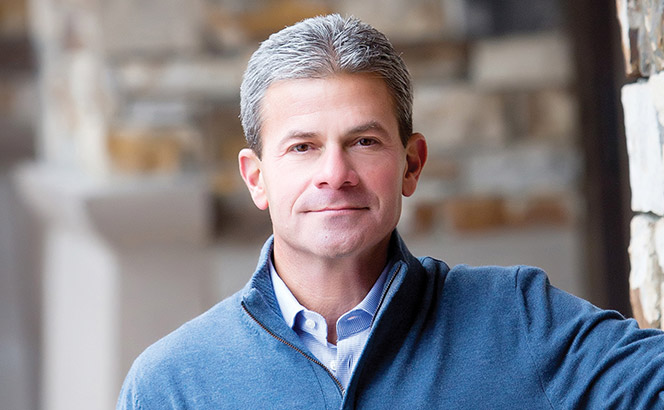
Chris Young, General Counsel, Ironclad, Inc

Chris Young

Diversity is particularly important in the legal profession, because the charge of the attorney is to zealously represent their clients, most of whom are from a diverse background. Part and parcel of representing any client is to understand their frame of mind, experience and thinking, so you can empathize with and better represent them.

On the corporate side, diversity is important because companies are essentially building and shipping products, and the buyers of those products are everyday people – people from different racial and ethnic backgrounds, sexual orientations and genders. Building a game-changing product requires creativity and I believe that diversity is a necessary element of creativity. And from a pure business standpoint, any company would want to understand and effectively sell to the broadest swathe of people they could possibly reach, so it’s important to have a diverse group around you determining the go-to-market plan.

Diversity also makes sense from a social equity standpoint. There is no such thing as a level playing field – some people start off two steps ahead, some people start off three steps behind. We need to provide every qualified person an opportunity to practice in the upper echelons of law; if we pay forward our good fortune, they will too. That’s how institutional change happens. As legal professionals, we ought to be mindful of and intentional about ensuring that our respective organizations are diverse.

My approach isn’t very mysterious, nor is it complex. While I think issues of race, gender, sexual orientation and inequality are complex subject matters that often result in uncomfortable, but absolutely necessary conversations, my approach is straightforward. As a general counsel, I have the ability to hire in-house and retain outside counsel, and so I need to be intentional about diversity and leverage my influence to build a diverse organization, both internally and externally.

In my mind, advancing diversity isn’t completely about quotas or explicit affirmative action, it’s about setting aside internal biases and prejudices when interviewing a candidate. Look beyond their credentials and determine how they will uniquely enrich your organization’s business and culture. Check at the door your preconceived notions of what a ‘perfect candidate’ looks like – select the best and brightest diverse candidates.

Let’s say you are hiring for in-house legal counsel and you especially appreciate pedigree and work experience. When it comes to pedigree, there are going to be far more non-diverse candidates coming out of the top-tier law schools than there are diverse candidates coming out of those same schools. The same goes for experience; there are going to be many more non-diverse lawyers at a top law firm, a top-tier corporation or coming out of a prestigious judicial clerkship than there are diverse lawyers. So hiring is about much more than simply checking boxes and seeing which candidate looks like the safest bet. The more intentional path is to determine whether someone has the core competencies to do the work and whether they have demonstrated other attributes that signal they would be a constructive contributor to your organization. Those other attributes could be intellectual curiosity, integrity, drive, empathy, grit, passion or demonstrating they have overcome hardship. These are qualities that aren’t reflected on a LinkedIn profile, but are absolutely critical if you’re trying to build a legal department reflective of a company culture that cares very much about diversity. At Ironclad, we have teammates from Yale, Berkeley and Harvard law schools working side by side with non-college graduates, all of whom bring diverse talent with technical, design, legal backgrounds, and more.

Externally, there are times when I make an express request to outside counsel for a diverse attorney not only to be assigned to the matter, but also to take on substantive work and to be afforded the opportunity to assume significant responsibility, if not a leadership role. I also make sure that we maintain a roster of diverse outside counsel. I participate in minority bar associations and, having been part of a community of diverse lawyers for quite some time, I have been fortunate enough to build long-term relationships with tremendous lawyers who also happen to be lawyers of color. When there’s an opportunity to hire those lawyers, that’s who I go to first, not only because they’re diverse, but because I can trust them, and I know the work they do is of the highest quality.

What’s incredibly powerful about Ironclad is that we have built and are growing a community of general counsel throughout the United States who can come together at Ironclad-hosted dinners and leadership roundtable sessions. When that happens, a lot of issues are discussed, including diversity, so we are able to advance the cause not only by discussing the issue explicitly, but by bringing people together and allowing them to connect and foster and further relationships.

I do not think diversity is rocket science, I think it’s relatively straightforward. We all have the power to diversify our respective legal teams, and we all have the power to ensure that our outside counsel look like and have had similar experiences to a broader cross-section of America.

At Ironclad, we are incredibly proud of our people – we were recently recognized as one of the most diverse start-ups in Silicon Valley, and I think we received that recognition because we’re intentional about each individual who joins our rapidly growing team. About half of our company are women and the vast majority of our executive team are affiliated with a minority group or groups. Diversity is something that we think is mission critical. But it’s also something we don’t talk a lot about. While I think that shedding light on the topic of diversity is necessary, it’s not sufficient. You can’t just talk the talk, you need to walk the walk. As the old adage goes ‘actions speak louder than words’. Here, action means being intentional about and executing on a diversity plan. As we continue to scale our organization at Ironclad, people and culture are the most important, North-Star elements to us. Friends refer friends; folks want to work with diverse people and have conversations at work and outside with peers who have had a different experience than they’ve had.

I’m a black male who has mostly grown up in a predominantly white profession. I live and breathe diversity every day – I’m the subject of it – and when I came to Silicon Valley for the first time four years ago, I was unpleasantly surprised by the lack of diversity. It really became obvious when I started sitting in the boardroom and going to start-up- and tech-related events. I think one of the major issues is that there is a lack of incentive on the part of many Silicon Valley leaders to intentionally diversify their respective companies. Until the conversation shifts from ‘diversity is a great thing’ – which many of us believe and know to be true – to ‘it makes business sense and here’s why’, I’m not sure we’re going to see significant, near-term change.

While meaningful progress has been made by individuals and groups to address the dearth of diversity in Silicon Valley, we haven’t seen much in the way of progress vis-à-vis the diversity reports released by the larger tech companies in the Bay Area. When I see that, often as the only person of color or underrepresented minority in the room, it poses a personal challenge and sense of duty to leverage my influence to effect the change that I want to see in the world – but on the micro level. A lot of people think that if you can’t effect wide-reaching change, then your efforts are for naught. But I actually believe that we can all make little bits of change on our own – and the most logical place to start is at our own companies and in our own legal departments. If we collectively do that, I suspect we will finally start to see the needle move on diversity.

Looking to the future, I think it would behoove leaders in the legal profession to not only hire, nurture and grow diverse attorneys and ensure that outside counsel are diverse, but to invest in aspiring law students and young attorneys of color; help an aspiring law student prepare for the LSAT and apply for law school; take a chance on a young, law firm attorney and let them manage one of your legal matters; hire someone who might not check all the boxes, but who you know has the raw talent to have an outsized impact. I’m a firm believer in investing in individuals and that if all of us invest in an individual or two early on in their career, that’s the type of work that results in long-term change.

At the end of the day, it’s really about opportunity, plain and simple. I think that the best we can all do in order to advance diversity is to give diverse lawyers an opportunity, and then help them recognize and make the most of those opportunities.

Doing the Job

Much is spoken in diversity and inclusion circles about the importance of ‘tone at the top’, and several of our participating senior in-house counsel shared their lived experience of the impact CEOs can have when they not only support, but advocate, for change.


‘We have found that when the CEO and the leadership team is consistently visible and vocal on D&I issues – where they’re showing up and speaking up at diversity events, including it in their employee town halls and talking about it whenever they can – it’s one of the engines that propels D&I forward within the company,’ says Wesley Bizzell, senior assistant GC at Altria Client Services Inc.


The in-house legal team may not necessarily be the first port of call for those looking to promote a D&I agenda, but most of the counsel we spoke to felt that inclusion and the general counsel’s office can be natural bedfellows. 


In fact, Hugh Welsh, general counsel at DSM North America, believes that in-house departments can turn any cognitive dissonance arising from a lawyer raising issues to their advantage in furthering diversity and inclusion. 


‘Typically, law departments are very risk averse. You may have law departments that are very actively involved in sexual harassment training, hostile workplace training and things like that, but from a corporate defensive position – essentially to afford the company an affirmative defense,’ he explains.


‘At a superficial level, there’s an appearance of a conflict but I think that when you have lawyers who are willing to speak emotionally and meaningfully about the importance of these issues, you move beyond compliance. Compliance and new rules and new processes are in many respects the worst way to drive that change. To make meaningful change, you have to change the culture and so to have the lawyers out in front on many of these issues goes a long way to changing the culture, because what they are about to say is so unexpected.’


In his own organisation, Welsh has played a role in bringing certain inclusion issues into the corporate context.


‘To make meaningful change, you have to change the culture.’

‘What I had experienced was that conversations around those very emotional but very topical issues stopped the moment you crossed the threshold of the corporate door. So we held a meeting at our New Jersey headquarters called an “authentic leadership summit”, specifically focused on creating a safe environment to have conversations in a corporation around #MeToo, Time’s Up and Black Lives Matter, in partnership with the Tri-State Diversity Council, and I can say it was an immensely provocative, deeply emotional and very effective meeting. The panel answered one question and then three hours later we were done – because of the audience participation.’”


The notion of corporate culture in itself can be inherently nebulous, but nearly all of those we spoke to as part of the research for this report felt that in-house legal teams are well positioned to be agents for change inside their respective businesses. 


‘Legal teams are in a position of strength to lead by example, because people do listen and I think it can have significant weight – so using that for good, and to express strong corporate values is really worthwhile,’ says Kate Karas, formerly senior associate general counsel at Lending Club.


One example of how legal departments can be well placed to lead on societal diversity can be seen at Hewlett Packard Enterprise’s legal team, which worked with the Girl Scouts of the USA to create a cybersecurity badge, to encourage young girls’ interest in a cybersecurity career. 


But the variety of ideas and activities showcased in the pages of this report points to there being no blueprint for a successful initiative – instead, what is key is an intentional and sustained commitment to furthering inclusion and diversity.


‘I have a sign that hangs above my computer that asks, “What good shall I do this day?” That’s really how I look at it: what can I do to advance the issue in both big and small ways on a daily basis,’ says Bizzell.


While a positive – albeit broad – North Star, Bizzell does however highlight some essential elements for inclusion, particularly for LGBTQ individuals: namely inclusive policies that clearly protect all diverse individuals – for example, clear anti-discrimination policies for sexual orientation, gender identity and gender expression – parity in benefits, and an expanded talent pool.


‘[Diversity and inclusion] is a complex issue and we need to address it like a complex issue, in a multi-dimensional way, throughout the career trajectory of an attorney from the law school and recruiting stage to the executive committee decisions,’ he says. 


The pipeline


The earlier inclusion starts the better, and school can also be a powerful tool to recruit members of diverse communities into the legal profession. Connie Brenton recalls her ‘life-changing’ visit to Southern University Law Center, where students are recruited for ‘grit and gratitude’:


‘You don’t walk into a room for an hour-long training and walk out unbiased.’

‘Many of them have had jobs for a long period of time, so they have a sense of what it is to work, alongside a passion for what they are studying and why they are studying. There’s a true desire to make a real difference in their communities. There’s an aspiration to learn and be exposed to a multitude of experiences so that they can bring that back and uplift their communities,’ she says.


The experience sparked the ‘Community of Legal Interns’ – a scheme to provide free online training to interns across the globe, thereby circumventing many issues that diverse students face when accessing high-quality training and opportunities, and investing in the future profession.


‘There’s opportunity in terms of creating the next generation of attorneys who have a fundamental connection with one another and a focus on diversity and inclusion from before they graduate. It becomes part of their DNA prior to even completing their legal training – so who knows what that will look like in another ten years?’ she reflects.


As diverse students and interns complete their education and enter the world of recruitment and employment, opportunities abound for law firms and legal departments to continue leveling the playing field in term of inclusion and diversity. 


To combat the universal human temptation to recruit and promote in our own image, Diversity Lab created the Mansfield Rule, inspired by the NFL’s Rooney Rule, which mandates that 30% of internal and external candidates considered by law firms for senior roles must be diverse. The Mansfield Rule for law firms has proved popular and effective, with 100 firms piloting its newest iteration and recently published results showing notable increases in the diversity of candidate populations and the composition of leadership ranks. Diversity Lab recently launched the Mansfield Rule: Legal Department Edition with 20 legal departments that are applying the Rule’s framework to their recruitment, retention and promotion processes, including hiring outside counsel.


‘We are very focused on the Mansfield Rule, which requires organizations to commit to considering diverse candidates in recruiting, developing and promoting people into leadership,’ explains James Chosy, general counsel at U.S. Bank.


‘Our in-house version just rolled out, and we were one of the first companies to agree and sign on – we’re very proud to be on the leading edge of that. We’ve since taken things a step further, and have actually asked about 40 of our leading law firms to formally commit to the Mansfield Rule.’


Conscious of the unconscious


The major thread in D&I approaches is that of unconscious bias training, in recognition of the fact that everyone has biases that affect their decision-making, often to the detriment of a diverse and inclusive working environment. But is it effective?


Not in isolation, says Caren Ulrich Stacy, founder and CEO of Diversity Lab.


‘You don’t walk into a room for an hour-long training and walk out unbiased. If it took 40 years to create the biases that you hold, there’s no chance that in one hour, or two hours or even five hours, you’re going to eliminate or even minimize those biases,’ she says.


‘Research shows that when you go to unconscious bias training, most people see something they could do different or better, they see that there is bias, but they think it’s much worse in everybody else than them. They leave and they say, “Wow, my colleagues are really biased, I have this little thing I have to work on but everybody in this group is really biased!”’ 


Private Practice Perspective: From Bystanders to Upstanders: Standing Together For Inclusion


What does it really mean to cultivate an inclusive culture? How do we engage more of our employees in our diversity efforts? Like many organizations, these are questions that Weil’s diversity committee grapples with to accelerate change.


In 2015, I embarked on a series of conversations with a cross section of internal constituencies as well as with external experts and diversity professionals at other organizations. What I heard was a desire for a broader range of colleagues to take an active role in diversity efforts and to speak up when issues arise. When I spoke to colleagues about engaging in inclusion, they expressed a desire to get involved but were fearful of saying or doing the wrong thing. 


Upstander@Weil is designed to inspire and empower all attorneys and staff globally to stand up for inclusion in the workplace, community and at home. Upstanders are allies, supporters, and advocates for people and communities who share a different background or identity than their own. To prompt bystanders to take action, tools and training are essential.


Weil promotes an Upstander culture with an internally created Upstander action guide detailing over 50 behaviors and an internet page with over 40 resources. The action guide includes behaviors that our affinity group members want from their colleagues. The effort was officially launched during Weil’s Global Diversity Month in November 2015. The kick-off event was video conferenced globally featuring a keynote address by executive partner Barry Wolf, a cross-office panel of internal ‘Upstanders’, and the debut of an internally produced video highlighting attorneys and staff of all levels. 


The centerpiece of our rollout was the 2016 annual mandatory diversity training requirement, utilizing interactive diversity theater with professional actors and guided group discussions to bring the Upstander behaviors to life. 


Following feedback that being an Upstander for racial diversity is particularly challenging, we devoted the 2017 training to ‘Talking Boldly About Race: Being an Upstander in a Time of Cultural Unrest’, facilitated by Verna Myers. 


While the Upstander initiative was developed entirely in-house, it is replicable in all kinds of organizations, large and small, across sectors. During the internal launch, we engaged clients to help motivate the firm to embrace the universal power of allyship, and later we shared our framework with clients to spread the Upstander message and tools. 


Weil’s leaders lead by example. Each affinity group has a management committee sponsor who is not a demographic member of that group. 


Four years after the launch of Upstanders@Weil, the term is in the Oxford English Dictionary, clients embrace the concept, and nearly 90 Weil attorneys and staff received Upstander@Weil awards. Everyone plays a role in cultivating an inclusive culture and all organizations can benefit from empowering all to be Upstanders.Meredith MooreGlobal Director of DiversityWeil, Gotshal & Manges LLP


Upstander Definitions


Oxford English Dictionary: A person who speaks or acts in support of an individual or cause, particularly someone who intervenes on behalf of a person being attacked or bullied. 


Facing History and Ourselves: An Upstander embraces the challenge to speak out, do the right thing, and make decisions that help create positive change in our world. They make a conscious choice to step in instead of stand by.

Upstander Actions


Listen up: 


  • Learn, read, ask questions and discuss to step into the shoes of someone of a different demographic group. 

  • Inclusion examples: request dietary preferences/restrictions; use gender neutral language when inviting guests; ask about holidays for scheduling; ask for preferred pronouns.


Show up: 


  • Attend, actively participate, and contribute to diversity programs. 

  • Inclusion examples: attend events where you’ll be in the demographic minority; join a board for a cause unrelated to your background; bring your colleagues who might not feel comfortable to diversity programs. 


Talk up: 


  • Lift up careers by sponsoring, opening doors, making connections and finding opportunities for colleagues of different backgrounds.

  • Inclusion examples: ensure diversity in panels and guest lists; equitably distribute office housework; mentor and sponsor across difference.


l

Speak up: 


  • Identify and interrupt bias and stereotyping, even if unconscious or subtle, whether in the moment or shortly after the fact.

  • Inclusion examples: highlight when a woman or person of color’s idea is overlooked and someone else gets credit; say something when you suspect that unconscious bias may impact how a person is evaluated. 


When undertaking any form of diversity training, in particular with unconscious bias, a key consideration is to ensure that individuals aren’t made to feel isolated or blamed. 


‘Sometimes bias training portrays that, which is problematic, because it makes them feel alienated as opposed to making them feel like allies,’ says Ulrich Stacy.


‘If you reinforce training with rewards and some of those things we know change behaviors, then it can have an effect, but not many law firms and legal departments tend to take that next step.’


The leading GCs we spoke to were aware that unconscious bias comes into play not just in the recruitment process, but in the day-to-day decisions taken by leaders that impact on the career progression of diverse individuals. To combat this, for example, Verona Dorch, chief legal officer at Peabody Energy, is intentional about nurturing the career progression of her team-members, even if they have not yet considered it themselves.


‘There are unconscious biases that can come into play, like the halo effect – someone looks like you, so you may be more willing to sponsor them or almost overlook deficiencies. It’s important to me that everybody is given that level of sponsorship and that I’m there advocating for people who others may not be advocating for,’ she says.


‘I want to make sure people are giving folks that may not fit their definition of someone that should be developed that opportunity too. It really is, I think, taking that broader chance on people, including those who may look and think different from you, but do deserve a seat at the table.’


The supply chain


As well as forming key partners, law firms are frequently a training ground for future in-house attorneys. In-house teams have for some time now been leading the charge in driving inclusion and diversity across the profession, enriching the profession with some creditable results. Law firms are often subject to much finger wagging by in-house teams, but the best supplier diversity schemes attempt to get under the skin when understanding a law firm’s culture, rather than simply relying on a set of numbers.


‘I want to talk to some of the female or minority associates and partners. I’m very keenly interested in what happens when fifth- or sixth-year female associates decide to have children. What does the firm do to bridge that time so that talented associate is not set back on the partnership track? I find that, more often than not, they do nothing, which to me is an indication of what the culture in the organization might be,’ says Welsh.


‘I would love to see them have a senior partner at the firm assigned to them as a sponsor so that they have the sense of security that there is a senior partner at the firm who’s looking out for them, and they’re not going to get sidetracked or derailed, or put in a position where they feel like they have to opt out because they don’t have the protection that maybe a male lawyer in the law department would feel they have. Somebody to share with them what’s going on day to day, even if they can’t be there every day, so they continue to feel connected both emotionally as well as factually as to what’s going on at the firm, and that they continue to get choice assignments and choice client contact.’


Chris Young, general counsel at Ironclad, Inc, takes a similarly thoughtful and long-term approach when considering the external counsel he uses for staffing matters.


‘Externally, there are times when I make an express request to outside counsel for a diverse attorney not only to be assigned to the matter, but also to take on substantive work and to be afforded the opportunity to assume significant responsibility, if not a leadership role,’ he says.


‘I’m there advocating for people who others may not be advocating for.’

‘I also make sure that we maintain a roster of diverse outside counsel. I participate in minority bar associations and, having been part of a community of diverse lawyers for quite some time, I have been fortunate enough to build long-term relationships with tremendous lawyers who also happen to be lawyers of color. When there’s an opportunity to hire those lawyers, that’s who I go to first, not only because they’re diverse, but because I can trust them, and I know the work they do is of the highest quality.’


At CBS Corporation, data tracking is taken to a particularly granular level, providing nuanced detail which can then be used to understand and drive impact. Naomi Waltman, associate GC for litigation, explains the team’s system of tracking the diversity of law firms through billing software, ensuring a detailed understanding of who is working on CBS matters and, by extension, tracking the team’s own contribution to the diversity space. 


‘I do my best to ensure that all our matters for which we retain outside counsel are staffed with diverse teams, and that our outside counsel guidelines reflect our commitment to diversity and our expectations that law firms assign diverse teams to our matters,’ she explains.


‘We’ve instituted a system where we can track the diversity of law firm timekeepers working on each of our matters through our billing software. That allows us to hold firms accountable and also to measure how we are doing as a department on diversity. In addition, our outside counsel guidelines state that we expect firms to staff our matters with diverse teams. When law firms come in for a pitch, we reiterate that expectation.’


Measuring progress


Many of the in-house counsel we spoke to for this report underlined the importance of data in tracking diversity performance – particularly with regard to the selection of outside counsel – but some were keen to point out that metrics can say little about inclusion and the career progress of individuals, and must be carefully interpreted to take account of the incremental nature of change. 


‘One of the things I always fear is if you get too strict on measures, it takes such a long time to make change that I’m afraid to throw out the baby with the bath water, as they say. We’re so worried about showing improvement that if we don’t, we’re going to fear that it’s not working and stop tracking the diversity data and focusing on the metrics,’ says Carrie Hightman, chief legal officer, NiSource Inc.


‘But, in fact, it takes time to make change and so a lot of the work that we focus on at the company is how do you know that you’re making progress and making sure that measures are not just backwards-looking but forwards-looking. The last thing you want to do is presume you’ve failed and then stop the program when, in fact, change is very gradual.’ 


Many agreed on the importance of some measure of qualitative assessment to complement the quantitative, especially when investigating the complexities of building an inclusive environment among both external and internal colleagues.


‘I think most law firms have the best intentions when it comes to diversity and they generally do a good job attracting diverse classes of summer associates and new lawyers. That is not translating to more diversity at senior ranks and in partnerships, however. I think the problem is a lack of mindfulness and realizing that extra effort and attention is needed to make sure that diverse talent is getting the opportunities that will lead to promotion,’ explains Kimberley Harris, general counsel of NBCUniversal.


‘Law firms need to identify their talented mid-tier diverse associates and put thoughtful effort behind their development. It’s not enough simply to bring them into the building – you have to focus on making sure that they continue to develop and advance.’


Tribunal finds against Freshfields partner in high-profile misconduct case

Freshfields Bruckhaus Deringer

Freshfields Bruckhaus Deringer restructuring partner Ryan Beckwith engaged in sexual activity with a junior female colleague in circumstances in which she was ‘intoxicated to the extent that her judgment was impaired’, the Solicitors Disciplinary Tribunal (SDT) found today (10 October).

The SDT said at a hearing this morning that Beckwith knew or ought to have known that the junior member of staff was intoxicated and her judgement impaired and that he knew or ought to have known that his conduct was inappropriate. The verdict followed a seven-day hearing that has attracted a stream of headlines. Continue reading “Tribunal finds against Freshfields partner in high-profile misconduct case”

Clapping with one hand: clients continue to lag as another 12 law firms join Mindful Business Charter

meditating businessman in hectic office

The Mindful Business Charter is ‘clapping with one hand’ until more businesses adopt the mental health initiative, with in-house legal departments making up less than a quarter of the 38 signatories.

The charter, devised by banking giant Barclays alongside law firms Pinsent Masons and Addleshaw Goddard, added another 17 organisations today (10 October). It aims to cut down on workplace practices that contribute to stress and poor mental health among lawyers, such as encouraging people to be clear in emails when they need a response if sent outside business hours and not expecting people on annual leave to be on call. Continue reading “Clapping with one hand: clients continue to lag as another 12 law firms join Mindful Business Charter”

Weil’s City office sees 23% profit hike as top-earning partner takes home £1.7m

Weil Gotshal & Manges London office

The City office of Weil, Gotshal & Manges increased revenue 15% from £126.1m to top £144.8m during 2018, the firm’s recent LLP accounts show.

Operating profit surged 23% to reach £70m as the partner profit pool increased 27% from £51.8m to hit £66m in the 2018 financial year. The City office’s top-earning partner took home £1.72m on the back of the profit increase, a 41% increase on the previous year. Continue reading “Weil’s City office sees 23% profit hike as top-earning partner takes home £1.7m”

Norton Rose enters associate pay war putting NQs in line for £114k paycheque

Norton Rose Fulbright

Top-performing newly qualified (NQ) solicitors at Norton Rose Fulbright (NRF) will be in line to take home up to £114,000 as the firm becomes the latest to increase its starting rates amid an escalating war for associate talent in the City.

NRF confirmed today (9 October) a 9% rise to its NQ basic salary to £87,500 effective in January 2020, with bonuses of up to 30% on top of that. Continue reading “Norton Rose enters associate pay war putting NQs in line for £114k paycheque”

Stake in the ground: Pinsents bolsters alternative services with project management division

Dee Tamlin

Pinsent Masons has launched a client and legal project management division as it continues to ramp up investment in non-legal services.

The firm said today [8 October] it had launched the division of more than 20 project managers, led by head of client and legal project management Dee Tamlin (pictured). That team has largely been built up since May last year and won mandates in the UK, Europe and South Africa, with the firm now looking to invest further through recruitment in the UK, Asia-Pacific and Middle East. Continue reading “Stake in the ground: Pinsents bolsters alternative services with project management division”

Dentons double merger adds 300 lawyers to create ‘first truly national US law firm’

Elliott Portnoy

Dentons will have more than 1,000 lawyers across 33 US markets following the latest in a long line of tie-ups announced since the start of the summer.

After expanding in South America, Asia Pacific and Africa through ten mergers since July, the globetrotting firm has announced it is to combine with 175-lawyer Midwest firm Bingham Greenebaum and 140-strong Pennsylvania-bred Cohen & Grigsby. Continue reading “Dentons double merger adds 300 lawyers to create ‘first truly national US law firm’”

Joining the club: Eversheds hires Hong Kong litigation partner from Slaughters

Hong Kong illustration

Eversheds Sutherland has recruited Slaughter and May litigation partner Mark Hughes in a rare departure for the Magic Circle firm.

Hughes acts on litigation cases in Hong Kong as well as the wider Asia-Pacific market, while also acting on international arbitration matters and cross-border investigations by criminal and regulatory authorities. Continue reading “Joining the club: Eversheds hires Hong Kong litigation partner from Slaughters”

Revolving doors: McDermott hires Hogan Lovells private equity head as Dechert loses partners in London and Paris

Selecting recruits

The lateral market maintained momentum last week as McDermott Will & Emery hired from Hogan Lovells with both Addleshaw Goddard and Paul Hastings targeting Dechert.

McDermott added Hogan Lovells’ global private equity head Tom Whelan. Whelan, who is experienced in private equity life cycle, has worked with private equity sponsors, multi strategy funds and corporates. His work includes advising on buyouts, M&A, bolt-ons, restructurings and refinancings through to exits. Continue reading “Revolving doors: McDermott hires Hogan Lovells private equity head as Dechert loses partners in London and Paris”

International round-up: DWF recruits five partners for Düsseldorf as CMS expands in Africa

Düsseldorf

DWF has made its second post-IPO international office opening, hiring a five-partner team in Germany, while CMS has added two firms in South Africa and Kenya to its network.

DWF said today (7 October) it was opening its fourth German office in Düsseldorf after recruiting the entire office of Marccus Partners, consisting of 10 staff – including five partners. Marccus – which is not listed in any of the recognised legal directories for Germany – specialises in company law, M&A, insolvency, banking and finance, real estate and tax. One of the hires, Norbert Knüppel, will be DWF’s executive partner of the new office. Continue reading “International round-up: DWF recruits five partners for Düsseldorf as CMS expands in Africa”

Big deal: Weil makes symbolic London play with hire of Linklaters M&A star Avery-Gee

David Avery-Gee, Linklaters

In a rare marquee hire for Weil, Gotshal & Manges, Linklaters M&A star David Avery-Gee (pictured) is joining the US firm’s City office.

The hire is a standout move for Weil, which has failed to gain meaningful traction on lofty ambitions to bolster its corporate practice in London to support the office’s managing partner, Mike Francies, who has been acting for some time as the firm’s chief M&A practitioner. Continue reading “Big deal: Weil makes symbolic London play with hire of Linklaters M&A star Avery-Gee”

UK and Belgian bars sign agreement as concerns mount for the profession in no-deal Brexit

EU cliff edge

The Brussels Bar and four other legal professional bodies will lobby the Belgian government to ensure UK lawyers don’t lose their right of audience in the country’s courts in the event of a no-deal Brexit, according to a memorandum of understanding signed this week.

The move comes as a report published today (4 October) stated that a no-deal exit at the end of the month would result in an ‘irreducible amount of legal uncertainty’ that would be bad for both UK business and the rule of law.  Continue reading “UK and Belgian bars sign agreement as concerns mount for the profession in no-deal Brexit”

Bakers makes eleventh City lateral in last year with Ashurst corporate hire

Jason Radford

Ashurst’s global head of corporate Jason Radford (pictured) is unfazed by the loss to Baker McKenzie’s prolific City hiring spree of corporate partner Nick Bryans and has pledged a sustained investment drive to maintain the firm’s recent financial rebound.

An Ashurst-lifer and partner since 2005, Bryans is joining the London office of Bakers. He follows ten other laterals the expansive firm has made already in London over the last year. He was head of the Ashurst’s Middle East practice in Dubai from 2007 to 2010 and a member of the firm’s Japanese practice group. Continue reading “Bakers makes eleventh City lateral in last year with Ashurst corporate hire”

Kirkland smashes promotion round record for elite firm with 141 new partners and 16 in the City

riding on a Kirkland & Ellis wrecking ball

The world’s highest-grossing law firm Kirkland & Ellis has unveiled the largest partner promotion round ever seen by a top legal practice, making up 141 partners, including 16 in the City.

The move continues the Chicago-bred giant’s dramatic ascent, adding 19 to last year’s eye-catching 122-strong round and comes at a time when many peers are restricting partnership to push up partner profits. Continue reading “Kirkland smashes promotion round record for elite firm with 141 new partners and 16 in the City”

Rigotti to stand down in 2020 as HSF starts search for a new leader

Herbert Smith Freehills (HSF) CEO Mark Rigotti is to stand down from his role next year, with the firm now priming itself to select a new leader once his term ends on 30 April.

The firm’s council will be the body appointing the new CEO, and is at the early stages of launching a selection process for Rigotti’s successor. The new incumbent will occupy the sole CEO position after the firm switched from a dual model in 2017. Continue reading “Rigotti to stand down in 2020 as HSF starts search for a new leader”

Hogan Lovells’ International business slims down headcount amid 8% revenue growth

hogan lovells office

Profits at Hogan Lovells’ non-US business rose 11% to £281m last year as it slimmed down lawyer headcount by 37 in 2018, the firm’s LLP accounts have shown.

The accounts published today (2 October) show revenue from the firm’s offices in 21 countries outside the States grew 8% to £860m in the year to December 2018, up from £798m the previous year. Continue reading “Hogan Lovells’ International business slims down headcount amid 8% revenue growth”

Guest comment: Has ‘far more assertive’ Supreme Court over-reached in Miller 2?

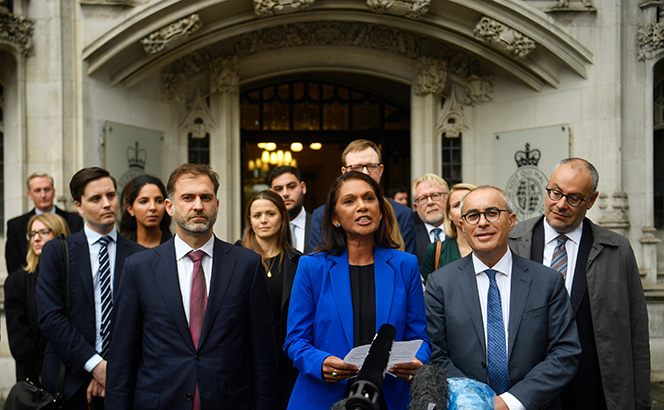
Gina Miller

For some, Miller 2 is the most significant constitutional case for centuries. For others, just another act in the Shakespearean tragedy or comedy that is Brexit. As an editor of the UK Constitutional Law Blog I have found that lawyers made just as much fuss about the first case brought by Gina Miller in relation to Article 50 as they have over this recent decision. And yet still the constitution carries on; apocalyptic predictions of its demise are surely exaggerated?

It can certainly be argued that it takes more than a high-profile litigator, even one who gets two bites of the cherry (forgive the pun), to overturn our 800-year old constitution. But Miller 2 is, jurisprudentially, very different from Miller 1. It will take time to assimilate the various strands of the decision and we also wait to see whether the courts use it as a launch-pad into further political space. But simply in terms of its reasoning and robust language it already represents a far more assertive judicial attitude to Crown-Parliament relations than we have seen before. Although dressed up as a defence of Parliament, make no mistake, the Court is asserting its own constitutional position under the guise of being Parliament’s trouble-shooter. And if the Supreme Court follows up with further strident interventions in other areas of political decision-making, for example surrounding implementation of the ‘Benn Act’, the consequence could be a self-transformation of our highest appellate court into a constitutional court, comparable to other politically-engaged judicial powerhouses around the world. Continue reading “Guest comment: Has ‘far more assertive’ Supreme Court over-reached in Miller 2?”

Fantastic platform: TLT managing partner Pester to stand down after 19 years

John Wood

Long-standing TLT managing partner David Pester is to be replaced by corporate head John Wood (pictured) after 19 years in the top role.

The Bristol-based LB100 firm said today (1 October) Wood, who has been at TLT since 2000 and head of corporate since 2003, will take over from April next year. Pester will remain at the firm in a strategic role to be specified later. Continue reading “Fantastic platform: TLT managing partner Pester to stand down after 19 years”

Financial centre: Three Crowns chooses Middle East for first office since launch

Manama, Bahrain

Boutique arbitration firm Three Crowns has opened a Middle Eastern office in Bahrain, its first expansion since being founded five years ago.

Three Crowns opened in Washington, Paris and London in April 2014 after being set up by former Freshfields Bruckhaus Deringer arbitration partners Constantine Partasides, Georgios Petrochilos and Jan Paulsson as well as former partners from Jones Day, Covington & Burling and Shearman & Sterling. Continue reading “Financial centre: Three Crowns chooses Middle East for first office since launch”