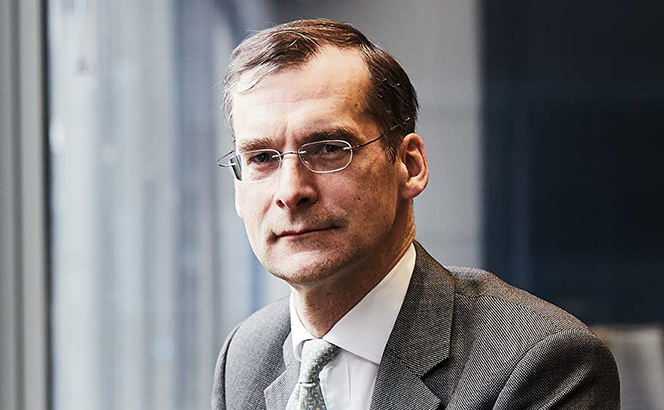
Abdelrazzaq AI Shurbaji, Citibank

I believe that being an in-house legal counsel here in Jordan and working within the banking and finance sector requires a good understanding of financial technology and electronic banking. Despite its issues, the use of technology within the industry is growing, so it is essential for in-house lawyers working in this field to have a good background in, and a sound understanding of, laws surrounding new technological innovations.

There are a lot of new laws and regulations in Jordan that support the financial industry. But a challenge is that a lot of the people living in Jordan are still not used to the concept of electronic banking. They still need time to understand how it works. For example, the majority of Jordanians still need time to understand how to pay their bills online – many of them still feel like they need to physically go to the bank to pay their bills. This makes the development of financial products here in Jordan particularly challenging.

The laws supporting the integration of Fintech are also growing. The laws surrounding electronic transactions, including the use of e-signatures, are also developing. I believe this is the start of the boom that will transform our industry.

Nevertheless, in-house lawyers are working in areas where there are sometimes a lack of legal regulations. If we look at the introduction of electronic transactions and the use of e-signatures here in Jordan, the laws around that are still developing. I think if laws are implemented in the right way, this will be a great advantage to all parties – including customers, companies and banks – and for all manner of transactions.

In general, some of the new laws implemented in Jordan revolve around income tax law, security rights in moveable property law and insolvency law. For instance, we have recently had new income tax laws introduced, which say that there is a new amount that should be paid to the government as income tax from a range of entities – this includes banking and finance companies. This may impact business here in Jordan because the amount might be considered very high. As a result, I think businesses will think very carefully before investing any money.

Most of the time I work autonomously, but sometimes I like to share experiences with colleagues who are dealing with similar challenges. When new regulations are introduced within the banking and finance sector, I like to share my opinion, as well as learn from the knowledge and experience of other colleagues who are working in the same industry. Sometimes there will be a need to go to external counsel at times when we need to obtain detailed advice on a particular issue.

Despite all of the challenges, one of the biggest advantages of working in Jordan is the security it provides. The business environment in Jordan is safe, stable and secure, especially when compared to some of the countries that surround it. This is a big advantage for Jordan. A lot of countries situated around it are experiencing a lot of challenges. By comparison, Jordan has emerged as an attractive place in the Middle East to work and to invest.

We do not have an abundance of natural resources here in Jordan. I think one of the things that support Jordan’s economy is investment opportunities. We have a lot of projects related to solar and other renewable energy. These projects are supporting the industry here in Jordan. n

Commentary | Qudah Law Firm

MACRO-ECONOMY

Jordan is a small-sized country that has emerged as the “business capital of the Levant”. The free market economy of Jordan has grown 7% annually since 1999.

Due to the implementation of liberal economic policies, Jordan has become one of the most competitive Middle Eastern economies. Jordan boasts a modern and developed banking system and is attracting significant foreign investment. Long-term sovereign credit ratings are positive and stable. Along with financial-sector policies that are intended to enhance competition and efficiency, banking supervision and regulation generally conform to international standards.

Over the past year, the government has worked to consolidate the country’s fiscal situation and macroeconomic environment, put under pressure also by the large influx of Syrian refugees.

Jordan is ranked 5th in the region and considered the most favorable in terms of economic risk and has less of a security risk than other regional competitors according to the Heritage Foundation.

Incentives and advantages outside the development areas and the free zones

Production inputs necessary for exercising economic-industrial or vocational activities that are exempted from the custom duties and are subject to the general sales tax in accordance with the provisions of the General Sales Tax Law in force if such activities are imported or locally purchased, provided that Income & Sales Tax Department should refund such tax paid for such activities within (30) days from date of submission of a written refund request thereof. If Income & Sales Tax Department fails to refund such tax within such period, then it shall pay (9%) interest on an annual basis.

Production requirements and fixed assets, and production requirements and the dual-use fixed assets necessary for exercise of economic-industrial or vocational activities that are exempted from the custom duties, where the general percentage provided in the General Sales Tax Law to be reduced to (zero) if such sales are imported or locally purchased, provided that the beneficiary is registered at Income & Sales Tax Department.

The services that are subject to the general sales tax in accordance with the provisions of the General Sales Tax Law in force if such services are imported or locally purchased, provided that Income & Sales Tax Department should refund such tax paid for such services within (30) days from date of submission of a written refund request thereof. If Income & Sales Tax Department fails to refund such tax within such period, then it shall pay (9%) interest on annual basis.

The goods required for the following economic activities that are exempted from the custom duties and are subject to the general sales tax by (zero) if such goods are imported or locally purchased, namely:

Agriculture and livestock; Hospitals and specialized medical centers; Hotels and tourist facilities; Entertainment and tourist recreation cities; Communication centers; Scientific research centers and scientific laboratories; Artistic and media production; Conference and exhibition centers; Transport and/or distribution and/or extraction of water, gas and oil derivatives using pipelines; Air transport, sea transport and railways

The income tax payable in the less developed regions in the Kingdom shall be reduced as to the economic-industrial & vocational activities and the economic activities to a percentage not less than (30%) , and the provisions in connection thereof shall be determined pursuant to a regulation to be issued for this purpose; which determines:

    • The regions that enjoy income tax deduction and category of each region according to their economic development level.


    • The economic activities that are excluded from benefiting from income tax deduction.


    • The deduction ratio that the economic activity enjoys according to the region in which the activity is exercised.


    • Foundations, standards and conditions of enjoyment of income tax deduction.


    • Duration of enjoyment of income tax deduction.


    • Foundations, standards and procedures of extension of duration of income tax deduction.


    • Incentives and advantages inside the development areas and the free zones.


The income tax shall be (5%) of the taxable income of the Registered Establishment realized from its economic activity inside the development area.

The income tax shall be (5%) of the taxable income of the Registered Establishment realized from its economic activity in the industrial sector.

The Registered Establishment shall benefit from any operative tax exemptions in the Kingdom concerning the exports of goods and services to outside of the Kingdom.

This shall not apply to the income realized by banks and telecommunications companies that have individual licenses, as well as the financial brokerage companies, and financial companies including the companies that exercise exchange, financing or financial leasing business, and consultation & financial and tax audit companies, transport companies (sea transport, railways, and road freight transport), insurance and reinsurance companies, basic mining and extraction industries, generation and distribution of electricity, and transport and/or distribution and/or extraction of water, gas, and oil derivatives using the pipelines.

The general tax provided in the General Sales Tax Law shall be reduced to (zero) as to the goods and services purchased or imported by the Registered Establishment for the purpose of exercising their economic activity inside the development areas.

The goods’ providers registered under the General Sales Tax Law in the Kingdom may demand refunding the general sales tax that has been previously paid for the goods sold to the Registered Establishments existing in the development area.

The goods and services originated in the development area and are sold to the remaining regions of the Kingdom shall be subject to the general sales tax.

(7%) sales tax shall be collected from value of sale of services to be determined pursuant to the regulation issued for this purpose when being sold for consumption in the development area.

Sales of goods that are subject to the special tax including vehicles, tobacco, and its products, alcohol and beer shall be subject to the sales tax and custom duties collected in the Kingdom when being sold for consumption in the development area.

The Registered Establishments that exercise an economic activity in the development Area – the materials, equipment, machines, supplies, and construction materials in connection with building, constructing, preparing and furnishing all types of projects established by such Registered Establishments in the development area, including the spare parts required for their permanent maintenance, and the goods imported to the development area for the exercise of the economic activity or exported by such economic activity to outside of Kingdom – shall be exempted from the custom duties, except for exports fees, service fees, and the wages payable in accordance with the legislation in force.

The goods produced or manufactured in the development areas that meet conditions of the Jordanian origin shall not be subject to the custom duties and other fees and taxes when being placed for consumption in the local market.

Incentives and advantages inside the free zones

The Registered Establishment that exercises an economic activity in the free zone shall be exempt from income tax on the profits realized from the following activities:

    1. Exporting goods services to outside of Jordan.
    2. Transit trade.
    3. Selling and transferring goods inside boundaries of the free zones.
    4. Providing and supplying services inside the free zone.


The will also be exempt from income tax on salaries and allowances of non-Jordanian employees working in the projects executed in the free zone.

Exempted from custom duties and all taxes and fees on the goods exported from the free zone to markets other than the local market, and on the goods imported to the free zone including materials, equipment, machines, supplies, and construction materials in connection with building, constructing, preparing and furnishing all types of projects established by such Establishments in the Fee Zone including the spare parts required for their permanent maintenance. The exemption shall not include the service fees.

Granted exemptions from the licensing fees, buildings and lands taxes, and revenues of paving, organization and improvement concerning the buildings and constructions established in the free zone.

Be permitted to transfer the foreign currencies and their profits from the free zone in accordance with provisions of the legislation in force.

Be permitted to move the machines, equipment, materials, goods, and supplies required to establish, operate or expand any project and the profits realized thereof to outside of the Kingdom in accordance with provisions of the legislation in force.

DEVELOPMENT AND FREE ZONES

The Investment Commission oversees a number of special economic zones, distributed in various locations in the Kingdom and our Investment Window provides simple and fast registration and licensing services to companies operating in development zoznes and free zones.

Free zones facilitate transit of goods, stimulate economic activity and play a significant role in contributing to strengthening Jordan’s position as a centre for trade. Foreign investment in development zones and free zones enjoy 100% foreign ownership, facilitated visa permits, and return of capital and profits to the country of origin.

Specific benefits enjoyed by development zones and free zones are listed below.

DEVELOPMENT ZONES:

    • 5% income tax for income generated from all economic activities undertaken in the zones.


    • 5% income tax for income generated from all economic activities undertaken in the zones.


    • Income tax exemptions on profits generated from certain economic activities.


    • 5% income tax for income generated from all manufacturing activities.


    • Enjoy export tax exemptions offered in the Kingdom on goods and services.


    • Reduction to (0%) on sales tax for goods and services used by the enterprise for business purposes within the zone with no guarantee.


    • 7% sales tax on specific services offered by registered establishments in the zone when offered therein.


    • Customs duties exemption except on certain goods.


FREE ZONES:

    • Income tax exemptions on profits generated from certain economic activities.


    • Exemptions from land and building taxes as well as service charges for street paving, planning and improvements.


    • 0% sales tax on services offered by registered establishments in the zone when offered therein.


    • 0% sales tax on goods consumed by registered establishments in the zone for business purposes.


    • Income tax exemption on foreign workers remunerations.


  • Exemptions from customs duties.

INVESTOR FRIENDLY ENVIRONMENT

The Jordanian government has focused on reforms and investment policy aimed at:

    • Liberalization of trade, investment procedures, and elimination of trade barriers.


    • Encouragement of foreign investment.


    • Encouragement of private sector investment.


    • Privatization of previously-owned governmental projects.


    • Implementation of stronger trademark and copyright laws.


    • Reduction of import tariffs.


  • Equal treatment to both Jordanian and non-Jordanian investors, non-Jordanian investors have the right to own any project in full or part, and engage in any economic activity in the Kingdom, with the exception of some trade and contracting services which require a Jordanian partner.

Foreign investments enjoy incentives and benefits offered by the Investment Law, including exemption from custom duties, general sales tax and in some cases reduction on income tax:

    • No restrictions on foreign ownership except in a limited number of economic activities where a Jordanian partner is required.


    • Investments in Development Zones and free zones can be wholly owned by foreign investors.


    • Foreign investors enjoy privileges and guarantees, including national treatment, free movement of capital, protection against expropriation and options to resort to alternative dispute settlement mechanisms.


    • Foreign Investments enjoy facilitated registration and licensing services provided by the Investment Window, in addition to support in obtaining visas and residency permits for investors, their families and employees as well as other services


    • No restrictions on capital transfers and repatriation of profit.


  • 117 nationalities in industrial and service sectors own companies in Jordan.

According to the investment law of 2014, Non-Jordanian investors may:

    • Remit all or some of the foreign capital in convertible currency under the legislation in force.


    • Transfer revenues and profits of his investment to the outside of the Kingdom.


    • Liquidate his investment or sell or dispose of his economic activity or his share or stocks in such activity, provided he should fulfill his obligations to any third parties or the Official Bodies in accordance with the legislation in force.


    • Manage his economic activity in the manner he deems appropriate and through the persons he chooses, and the concerned bodies should provide the facilities necessary for this purpose.


    • The non-Jordanian Investor shall be awarded the same treatment as the Jordanian Investor.


  • The non-Jordanian workers working in any economic activity may transfer their salaries and compensations to the outside of the Kingdom pursuant to the legislation in force.

STREAMLINED PROCEDURES AND INVESTOR FRIENDLY POLICIES

JIC’s Investment Window aims to provide a single place service to license the economic activities in the Kingdom and review and simplify the licensing procedures.

Authorized Representatives from 16 public entities have the power to issue the license and take necessary actions in that regard. Through this service window, an investor can register and license his/her project in Jordan and acquire both investor residency and facilitation of work permits for required labor.

SECURITY AND STABILITY

Despite regional turmoil, Jordan continues to be a point of attraction for foreign investors who view the country as an oasis of peace in a volatile region and continuously tries to maintain stability, moderation, and security.

According to the World Economic Forum’s Global Competitiveness Report 2017-2018; Jordan is considered a safe and stable country by both global and regional standards. Jordan boasts a high level of security and stability and is able to overcome challenges and boost its strategic and economic partnerships.Jordan is 22nd most secure country in the world and the second safest country in the Arab world according to the Gallup Law and Order Study of 2018, which was preceded only by Egypt. Based on a survey conducted in 2017, Results are based on telephone and face-to-face interviews with approximately 1,000 adults, over the age of 15 and a total of 142 countries and areas.

Pundits lauded the ranking, which, they stressed, is a remarkable achievement for Jordan and a testimony to the country’s resilience and ability to face security challenges amidst a turbulent region.

In the 2017 index of the Legatum Institute, Jordan ranked 92 out of 149 countries and in security and safety, Jordan ranked 65 and was higher than the regional competitors such as Saudi Arabia 74 Egypt 116 and Turkey 133.

Lebanese Republic

Lebanon in the 21st century represents an evolving nation that has had to overcome major political and commercial challenges. Situated in the Levant on the easternmost part of the Mediterranean Sea, Lebanon serves as a busy economic and cultural centre for the region, but one that is underpinned by a relatively small legal market. But, in-house counsel have been playing an important role behind the scenes in supporting businesses across a variety of industries.

It's a no-brainer

High literacy rates, coupled with low operating costs – at least compared to other Middle Eastern countries – have allowed Lebanon to cultivate a thriving business community of both local and foreign corporations. Capitalising on Lebanon’s potential, consulting giant PwC runs its Middle East legal headquarters from Beirut.

‘It is unusual to have multinational enterprises and multinational companies base their legal teams in Lebanon. That's an unusual thing, even though it has worked really well for PwC,’ says Fayez Khouri, general counsel, Middle East at PwC.

‘The majority of legal work conducted by PwC revolves around countries like the UAE and Saudi Arabia. Lebanon is a very small chunk of the work that is being done.’

Being based in one country while also being asked to serve many others can be challenging. Using Lebanon’s capital as a base, Khouri often spends time travelling between the UAE, Saudi Arabia and the UK, and managing a team of 12 people across the Middle East has given rise to its own set of challenges.

‘The difference working in the Middle East is you are working with so many different types of laws. As a legal team, we operate within 17 different legal jurisdictions. Although we cover 12 territories, some territories, like the UAE, have several different jurisdictions.’

While being located in a hub serving many jurisdictions can be difficult, it also means that the human resource available is high quality and oftentimes abundant.

‘Lebanon is reputed for the quality of its human resources, especially in the banking industry,’ says Maya Abboud, head of legal compliance at Banque Libano-Française.

‘The high level of education plays an important role. We are a multicultural country, we speak three languages and we have a huge amount of diversity. This is why many investors see Lebanon as a hub for their business. The banking and finance industry has always been a reliable partner to these investors.’

Another factor making Lebanon an attractive business centre is location: geographically, Lebanon is very well connected to the rest of the Middle East, sitting along the eastern shore of the Mediterranean Sea.

‘First, Lebanon’s geographical location is considered by many investors as an ideal strategic hub. It is said to be the gate to the Middle East, especially in matters of international trade,’ explains Abboud.

‘The link to other countries, flight-wise, is very good. People can fly back and forth if they need to – from an financial point of view it makes sense, from a talent point of view it makes sense,’ adds Khouri.

A confluence of factors make Lebanon’s prospects as a commercial hotbed for the region – both in the near and further future – promising ones. The port of capital Beirut connects Lebanon, Syria, Jordan, Iraq and Iran to the wider Middle East and the world beyond – an already critical shipping nexus, which will be of increasing importance with the eventual reopening of Syria for business and the flow-on effects of China’s Belt and Road Initiative both adding to the port’s necessity.

Does size matter?

The Lebanese legal market is a smaller market compared to other Middle Eastern countries, and, as a result, the in-house legal sector is also significantly smaller.

‘What is unique is that there are not as many multinational in-house lawyers as there would be if you were in Dubai or Riyadh or other GCC (Gulf Cooperation Council) cities,’ says Khouri.

Being based in Lebanon has not slowed down legal operations. The in-house legal team at PwC has still successfully serviced the Middle East whilst being located in a smaller legal market. Instead, what have been challenging are the differences in laws within Lebanon and the Middle East compared with other legal markets, such as the UK.

‘In the Middle East, you are much more of a generalist. A lot of concepts that exist in England do not actually exist in the Middle East. For example, the concept of indemnity is not as common here. We can argue about having it in, or having it out, and what are the repercussions of having it in, or having it out. But, in the Middle East, the concept of indemnity does not really exist,’ says Khouri.

There are a plethora of legal concepts in English law that are yet to be addressed within the Middle Eastern regulatory framework. From a legal perspective, this presents a barrier for in-house counsel working across several jurisdictions. But those who we spoke to for this report say that the region is moving towards implementing stricter and more thorough rules and regulations for businesses to follow.

The devil is in the detail

Khouri believes the key to managing auditing regulations across different jurisdictions is for in-house counsel to be up to date and at the forefront of any regulatory changes. At PwC, audit work is at the core of the business, making compliance a key consideration – and one which must be done to high international standards.

‘The auditing profession is highly regulated, so we have to always be very mindful of what the regulators are saying, and what they are doing, and how they monitor the work we do. That opens us up to a significant amount of inspection and supervision,’ says Khouri.

‘If something should go wrong with one of our clients where we have done an audit, we need to be at the forefront of trying to supply information to regulators.’

The trend toward higher regulation is seen throughout the Middle East, and Lebanon is no exception. For instance, the global movement surrounding the need for more transparency and compliance within the banking and financial sector has gained significant momentum in Lebanon. Abboud’s role as head of legal compliance at Banque Libano-Française reflects a shift in banking process:

‘The central bank of Lebanon requires banks and financial institutions to have a compliance department, which should include a legal compliance division,’ explains Abboud.

‘This trend is not specific to Lebanon, it is widespread across the world. Whenever you have a sector with growing regulations at a very fast pace, you need to be able to handle them properly. You need specialists with a legal background in order to understand and interpret the laws and regulations and work on their proper implementation. That is why the profession is evolving very, very fast.’

In such an active regulatory environment, process becomes key. As general counsel at PwC, Khouri has the responsibility to implement systems that ensure compliance with regulations and allow for requests from regulators to be met quickly and easily.

‘If you know you are going to be asked to produce documentation by a regulator, you have to be very organised: you need to know where all your documentation is kept; you need to be able to access it; you need to have a set-up where you can review the documentation to ensure you are sending the right documentation to the regulators,’ says Khouri.

‘You need to be very internally aware of where things are and who the right people within the organisation are to assist you with getting that information.’

Insuring the future

The rise of stricter compliance regulations throughout the insurance industry reflects this shift in priorities.

Relative to the size of the country, the insurance and reinsurance industry in Lebanon is surprisingly active.

‘The Lebanese market is ranked as the 70th largest insurance market in the world with a penetration rate of 2.36%, which does constitute a very good performance knowing that Lebanon is only the 112th country in the world in terms of population,’ says Robert Habchi, claims and legal manager at Nasco Re Holding.

Nasco Re Holding is a leading insurance broker in Lebanon and in the Middle East and Northern Africa. Having started his reinsurance career six years ago, Habchi has overseen a surplus of insurance claims.

‘I believe that we have entered into an era in which compliance is starting to dominate our field with strict regulation at all levels, from internal auditors through to the expectations of clients and partners,’ says Habchi.

‘Compliance is becoming further important, particularly in light of the ongoing environment in the Middle East, suffering from regular political crises.’

The Lebanese insurance and reinsurance sector is a very mature industry. There are 51 insurance companies licensed in Lebanon, says Habchi. Therefore, adapting to new industry trends is essential to staying competitive.

‘If you want to survive in such a fierce and competitive environment, you have to question yourself, and adapt to our modern world.’

Team effort

The Middle East as a region does not operate in isolation. As well as grappling with the drivers of regulatory change that come from within the region, in-house counsel based in Lebanon are also required to react to global trends and issues. One of the most significant in recent times has been the introduction of the General Data Protection Regulation (GDPR). Coming into force in 2018, the GDPR is a regulation protecting the privacy of European citizens. It also includes the transfer of personal data outside of the EU.

‘Most recently, the introduction of the GDPR in Europe has been important. Even though it doesn't have a direct effect on the Middle East, there are aspects of it that we need to pay attention to,’ says Khouri.

‘The world is a very small place, it’s not country by country anymore – you are dealing across borders and across jurisdictions. So I think the introduction of the data protection regulations has brought about a lot of changes. We have had to change our standard form contract, we have had to change our policy.’

The effects of the GDPR on Lebanese business practices are a reflection of the rise of digitalisation within the country. In-house counsel in the region are required to adapt to these changes, especially when undertaking cross-jurisdictional activity.

A job to be done

In-house counsel across a variety of industries in Lebanon play an important role in supporting big business. As legal systems evolve, legal advisers remain at the forefront of changing regulations and industry practices. Yet the legal market is still relatively small in Lebanon.

When observing legal practices from a broader view point, Habchi observes key similarities throughout the Middle East.

‘The main difference, I would say, would be on the “emotional side” of Middle Eastern individuals, who have a certain sense of developing personal relationships, with a specific need to meet face to face with their interlocutor.’

The reliance on personal relationships and connections is an important consideration for in-house counsel operating within the Middle East. Yet as the industry continues to change at such a rapid pace, there will always be a place for skilled and talented in-house lawyers within Lebanon. n

Fayez Khouri, PwC

I am originally from Lebanon – I lived there until I was about nine years old. After that, I moved to the UK and have spent the majority of my life in the UK. I am an English-trained solicitor. I qualified with my solicitors practising certificate in 2000. I did my two years of training in London, where I worked up until 2007. Then I moved to Dubai and lived there for five years, before moving to Beirut. Now in Beirut, I have been living here for the last seven years.

Now I am general counsel of PwC in the Middle East. I run a team of 12 people. We have eight team members based in Beirut, we have four in Dubai and we have one in Saudi Arabia.

I deal with a lot of important matters that concern leadership: regulatory matters, litigation matters and company restructuring matters. I spend a lot of time in between Beirut, Dubai and Saudi Arabia in order to carry out my role, which includes managing my team.

The majority of PwC’s work – like many multinational companies – means that although we are based in Lebanon, we deal with legal matters all across the Middle East. In fact, Lebanon is a very small chunk of the work that is being done by PwC. The majority is in Saudi Arabia, but we oversee these matters from both Beirut and Dubai.

PwC operates within a specific business environment. I would say that we deal with a lot of regulatory issues given PwC is primarily known for its auditing work. The auditing profession is highly regulated, so we have to always be very mindful of what the regulators are saying, and what they are doing, and how they monitor the work we do. That opens us up to a significant amount of inspection and supervision.

If something should go wrong with one of our clients – especially when we have done an audit – we are at the forefront of trying to supply information to the regulators. Sometimes we get brought into litigation when a company is in financial difficulties. So we have to be very careful and mindful of how we deal with inspections, questions and queries.

Another thing which is part of the business environment is the way things are done in the Middle East from a contractual point of view. You end up dealing with a lot of government clients and public sector clients. Therefore, there is usually very little flexibility when it comes to negotiating contracts.

One example is when we provide services to governments – we try to use our standard form. But governments in the region do not accept that, they have their own forms they prefer to use. They are also not very open to negotiating terms on their standard form. So you end up having to accept terms that are not ideal for the company. As a result, you have to manage the risk within the organisation. So instead of being able to be protected from a contractual point of view, you have to be extra careful. You always have to manage risk, but you have to manage it even more carefully when the contractual protections are not sufficient. n

Maya Hardini Abboud, Banque Libano-Française

I started my career as a lawyer with diversified experience, before moving to Banque Libano-Française (BLF) in 2007 to start my in-house career as a legal consultant. BLF is a top-tier bank that is well reputed for its strict compliance with laws and regulations. It also owns a financial institution, Libano-Française Finance, which operates on the financial markets. In 2013, I was named head of legal compliance division and given a different set of responsibilities and tasks. My role now is to ensure Banque Libano-Française Group’s compliance with all applicable laws and regulations, whether Lebanese, foreign or international. This means, inter alia, making sure all applicable laws and regulations are duly observed, identifying any non-compliance and remediating it, as well as watching out for new laws and regulations, analysing them, interpreting them, disseminating them to all relevant parties and following up on their implementation.

The banking and financial sectors are very heavily regulated. The central bank of Lebanon requires banks and financial institutions to have a compliance department comprising of a legal compliance division – independent from the legal department.

We are continuously witnessing changes at a very fast pace in the legal and regulatory environment. Therefore, the biggest challenge is to keep up to date with all relevant laws and regulations, including any amendments that occur, not only at the local level but also internationally. Our bank has subsidiaries in other countries, so we have to stay abreast of any changes in the legal environment in these other countries as well, including case law, as well as the latest regulatory trends. We need to think ahead of such trends and prepare ourselves for the implementation of new regulations.

Another challenge is interpreting international law or foreign laws and regulations and finding ways to comply therewith where necessary, without breaching local laws.

To overcome those challenges, as a legal compliance division, it is essential to have the broadest possible spectrum of knowledge in laws – not only specifically in our field, but also in those that might have an impact on the general business environment. We also need to raise awareness within all levels of the institution as to the importance of compliance and as to non-compliance risks.

It is also very important, as part of the business practice of any legal compliance specialist, to maintain good communication with regulators, one that is based on trust and on dialogue.

We sometimes resort to external counsellors, especially on special issues or for questions related to foreign laws.

With the continuing evolution of regulatory environments in the last years, and the expected evolution in the coming years, the need for qualified legal compliance professionals who are able to properly interpret laws and regulations and to instruct institutions on how to implement them will continue to grow. n

Commentary | Law Offices of Naoum Farah

Law Offices of Naoum Farah (“LONF”) was founded in 1975 and has grown dynamically. It is an independent and well-established law firm in Beirut serving a niche of clients by offering a wide range of customized legal services. LONF is reputed for its professionalism and excellence in the quality of its service topped with a timely follow-up, highest dedication, insight and expertise in addressing complex legal issues. It is considered as one of the leading multidisciplinary law firms in Lebanon.

LONF has developed worldwide distinguished relationships with key firms in all of the major jurisdictions. Its close collaboration with firms established in the Middle East enables it to provide widespread and bespoke legal services for local and international clients throughout the region.

LONF is ranked by the Legal 500 “editorial and ranking” among the first leading firms in dispute resolution and Commercial, Corporate and M&A fields.

LONF’s notable professional and long-standing relationships with prominent law firms in the Arab countries especially in Syria, Iraq, Jordan and the Gulf qualifies it significantly to represent and advise the most important international enterprises that will be shortly involved in the reconstruction venture of Syria and Iraq. Thanks to its geographical position, Lebanon has always been a gate to the hinterland. This makes of Beirut, its capital, an ideal and strategic hub through which the future reconstruction projects will start and transit. In this endeavor, Lebanon’s privileged location is solidly backed up by his advantageous taxation system and his solid and resilient banking system – and banking secrecy – which has survived all the political and security turmoil and surrounding blows.

MEMBERS

Naoum Farah, Founder and Managing Partner: He was the adviser of the late President Elect of Lebanon Mr. Bashir Gemayel and the former President Amine Gemayel; he was the former Secretary General of the Association for the Constitution and Liberty in Lebanon, and he is the President and co-founder of “Memoria” association (collects and archives documents referencing the Lebanese contemporary war). He is a member of the International Arbitration Institute (Paris)- IAI and the International Bar Association (IBA). He acted repeatedly as member of arbitral ad hoc tribunals in domestic arbitration and counseled on ad hoc arbitrations.

LONF groups (10) members, all of whom provide legal services in Arabic, English and French. They have extensive experience in dispute resolution, corporate and commercial and are well versed in drafting contracts and providing diversified legal opinions.

OVERVIEW: LEBANON

The business and economic environment in Lebanon became more challenging in 2019. Factors such as the armed conflict in Syria, continued turmoil in the region, mass influx of Syrian refugees to Lebanon, high fiscal deficit and high level of public debt have heavily affected the Lebanese economy, its infrastructure and social services. Unprecedented cross-sectarian demonstrations have gripped Lebanon since 17 October 2019, demanding a complete overhaul of a political system deemed incompetent and corrupt. The anti-government protests that have paralysed the country for more than three weeks and have led to the resignation of the cabinet, a key demand of the protesters requesting the formation of a new cabinet of technocrats, anticipated parliamentary elections and the recovery of looted state funds.

The government is more than ever facing many challenges on various levels, predominantly political, economic and social, which are urging Lebanon to implement and apply a tangible policy of dissociation from regional conflicts. Reforms have to be introduced as a pre-requisite for Lebanon to be able to benefit from the offerings of an ‘international conference in support of Lebanon Development and Reforms’ (CEDRE) hosted in Paris in 2018. Nearly 50 states and international organizations participated in CEDRE, as well as representatives from the private sector and civil society. The objective of CEDRE was to support the development and the strengthening of the Lebanese economy as part of a comprehensive plan for reform and infrastructure investments. In particular, targeting national debt is of primary concern: Lebanon is one of the world’s most indebted countries, with public debt estimated at 141% of GDP in 2018, according to credit ratings agency Moody’s.

In parallel, in October 2017, the government had requested for McKinsey to conduct a study of a future for Lebanon’s Economy under the title Lebanon Economic Vision.

In order to meet the commitments made at CEDRE and in line with the McKinsey plan to stimulate Lebanon’s stagnant economy, the House of Deputies ratified the 2019 state budget, which contains a string of austerity measures, including cuts to public spending and tax hikes designed to slash the deficit, a key demand of the international community and donors.

The Budget Law adopted a range of measures aiming to fight tax evasion by establishing a new exhaustive definition of tax evasion (article 57) which was introduced among the definitions of the Code of Tax Procedures (Law Nº 44/2008) and instituting an obligation upon Municipalities to conduct field surveys of businesses and professionals in order to compile tax information and transmit it to the Ministry of Finances.

Under international pressure and popular demands backed by academics and intellectuals, Lebanon is urged to enact radical and adequate reforms by adopting key economic, social financial, fiscal and administrative reforms to bolster its weak economy and to fight corruption. Such reforms are deemed a prerequisite to unlocking over $11bn in grants and soft loans pledged by international donors at CEDRE, including the World Bank, which pledged $4bn in soft loans to Lebanon, making it the biggest single donor at the conference.

The government is also urged to continue on working to implement the two major CEDRE commitments it has made: the fiscal and the energy sector reforms.

Lebanon has indeed promised to reduce its deficit-to-GDP ratio by at least 1 percentage point per year for five years, and to make structural reforms in the government and sectors including electricity. In this respect, the government committed to forming the National Electricity Regulatory Authority. The body mandated by Law 462/2002 was never formed.

On the other hand, the House of Deputies enacted three Laws to create an ecosystem where companies and startups can prosper, develop and attract foreign investments:

    1. Law Nº 81/2018 on electronic transactions and personal data, covering, among others, the legal requirements on electronic documents and evidence and the electronic commerce.


2. A legislative effort was also carried out to modernize the corporate law, which has led to the enactment of:


      • Law Nº 85/2018 which updated the Decree N. 46/83 on off shore companies: this law has ratified the establishment of a single shareholder off-shore company, being either an individual person or a legal entity. The single shareholder manages the company or appoints one or more directors.


      • Law Nº 126/2019, the main innovation that came into force on 1/7/2019, reformed and amended a large portion of the Lebanese code of commerce as follows:


        • Some formalities were reformed, including electronic means for the registration of a company. Such electronic formalities will be mandatory two years after the entry into force of law (1/7/2019).


        • Several amendments for joint stock companies (SAL) were enacted, including decreasing the minimum number of Lebanese members in the board of directors to one third instead of the majority. The law also allowed splitting the role of the chairperson and the general manager, while allowing the appointment of directors from outside the pool of shareholders.


        • The law adopted regulations pertaining to preferred shares and Global Depositary Receipts (GDR) in addition to detailed regulations concerning mergers and demergers.


      • In addition, the Law Nº 126/2019 requires the declaration to the commercial register of beneficial owners of the companies.
    • Furthermore, the Law Nº 126/2019 introduced the ability for an individual person to establish a single partner limited liability company.

5 November 2019

Sultanate of Oman

Since the first shipment of oil out of Oman in 1967, the Sultanate’s economy has been largely driven by oil and gas revenue. While that in itself is far from unique to the region, in some respects, Oman does stand alone. It is the largest oil and gas producer in the Middle East that is not a member of the Organization of the Petroleum Exporting Countries (OPEC), and has the longest-serving ruler in the Middle East, Sultan Qaboos bin Said Al Said, who has been in power since 1970.

Strategically located at the mouth of the Persian Gulf, Oman has been labelled as the Switzerland of the Middle East. The country has managed to maintain a peaceful outlook, despite sharing a border with war-torn Yemen, and being situated between powerful rivals, Saudi Arabia and Iran.

Oman also overlooks one of the most important oil and gas shipping lanes in the world, the Strait of Hormuz. In 2018, an average of 21 million barrels of oil were transported through the Strait every day according to the U.S. Energy Information Administration, accounting for a fifth of the world’s oil and linking crude producers in the Middle East with markets across the world.

‘The Middle East is heavily dependent on oil revenue, so whenever oil prices are high then, largely speaking, countries in the Middle East are doing well – although the reverse is true as well,’ explains Richard McLaughlin, general counsel of Oman Oil Company Exploration and Production (OOCEP). OOCEP, a subsidiary of the Oman Oil Company, focuses its activities towards upstream and midstream investments in Oman and abroad.

Growing pains

Oman’s oil and gas exports play a crucial role in driving the country’s economy. In a bid to maintain industry growth, the Omani government is introducing new laws aimed at encouraging private, international companies to continue to invest.

For example, a new law, labelled the Foreign Capital Investment Law, was revealed in July 2019, and will come into force at the start of 2020. It includes a raft of changes, all with the express purpose of making the Sultanate more attractive for foreign investment. The new regulations removed minimum capital restrictions on foreign investment, and allow for overseas investors to retain 100% ownership over their investments.

‘Everybody understands that you cannot rely on oil all the time. It will be depleted, and then the question is how you diversify your business. So Oman is following the UAE and Qatar and other countries who are doing that. So that is interesting in a sense that they are welcoming foreign investment,’ says one in-house counsel working in the oil and gas sector.

‘Foreign entities have limited options at present, for example, they can enter into joint venture agreements with local entities. So we join with foreign companies and enter into joint venture agreements with investors. Currently, in Oman, there's a lot of investment from Korea, China and, to a certain extent, France and other European companies.’

Though it is generally felt by in-house counsel across the region that this is a step in the right direction, if Oman is going to be successful in attracting larger pools of foreign capital, there will be further legislative shifts required.

State owned, state controlled

The oil and gas sector in Oman, as in most regions across the Middle East, is heavily regulated by the government. Unsurprisingly, that influence changes the way in-house counsel across the region must operate.

‘It brings a different dynamic – there is a lot of interaction with government, especially when it comes to oil and gas – and different government agencies have different drivers. Although you are a commercial entity, there are a lot of factors to consider. I think that’s something you need to learn pretty quickly when you are working in a government-dominated sector, because it’s not just the commercial interests that you have to consider all the time,’ says McLaughlin.

‘For example, if a company was thinking about releasing a drilling rig as it no longer needs it, the associated personnel that might have been employed to use it will also be no longer needed. A commercial company would say that it no longer needs that drilling rig anymore and it would terminate the contract and move on. In a government agency, employment is a big factor to consider. They may decide that the best option is actually to keep the drilling rig, and ensure all of those people remain employed.’

Balancing between government objectives and commercial obligations is key to success for in-house counsel working in Oman and across the Middle East.

Crudely opaque

The nature of the industry impacts everything, from the kinds of partnerships being entered into to the minutiae of the legal team’s day to day.

‘Although we are part of a larger group, we have our own autonomous structure. We have numerous joint ventures inside and outside of Oman,’ says McLaughlin.

‘We also have a lot of joint ventures with a lot of the big industry players: Shell, BP, Eni, Total Occidental, etc – so quite a range. In particular, we have acted on many transactions over the past few years, some of which were amongst the biggest in the sector.’

Working for a government authority lends itself to further considerations. When representing Oman, Orpic – a downstream business line for the oil and gas sector – has to ensure it legally complies with laws in other nations.

‘One legal challenge we have is to ensure that we comply with the applicable foreign laws as we extend our footprint abroad. Currently, Orpic has established offices in Turkey, India, Singapore, and China. Therefore, it is more critical for us to understand the laws in each country,’ says Elina Mohamed, general counsel of Orpic.

‘On the commercial law side, there are anti-corruption, antitrust and money laundering, laws for example, which can extend beyond your local jurisdiction. So those are what we call in law, “laws with extraterritorial effect”. This means that these laws can affect you, even though your principal business is based in Oman.’

In a bid to ensure legal obligations remain consistent across the business, Mohamed plays a key role in overseeing compliance protocols across Orpic: ‘As part of our compliance initiative, we make it a practice to have a face-to-face meeting with our advisers and lawyers in foreign countries. We are also trying to improve our compliance function internally, as compliance becomes more important as you start going abroad and expanding your business outside Oman.’

It is imperative that laws focused on preventing bribery and corruption, especially those which extend across jurisdictions, are complied with. Even if a transaction is deemed legal in Oman, it also needs to be deemed legal in the jurisdiction the business is associated with. Understanding these differences is essential for in-house counsel working in the Middle East and can present a steep learning curve for those who trained outside of the region.

Lorenzo Bruttomesso, head of legal at LNG LLC, started his career in his native South Africa, before moving to Oman in 2008 following eight years spent in private practice.

‘The essential difference, from a legal practice perspective, is that South Africa is a common law jurisdiction, whilst Oman is a civil law jurisdiction. In addition, there is no doctrine of judicial precedent in Oman.’

‘Agreements concluded between Omani and international entities are thus governed by predominately English law, with dispute resolution by arbitration, usually to be held in London, Paris or Singapore.’

Another factor is that despite the volume and size of commercial transactions, Oman has a small legal market compared to other countries in the Middle East, so in-house counsel have less choice when seeking the assistance of external legal advisers.

‘There are not that many international law firms here, so that reduces options at a local level, whereas, say, if you were in Dubai, that really would not be an issue. So that is quite different, but not a huge issue. It’s meant that we are not massively reliant on external counsel,’ explains McLaughlin.

Watts next

Fluctuating oil prices have long been a contentious issue across the Middle East. A combination of a prolonged global downturn and steady resource depletion has forced Oman to refocus its economic agenda.

The Oman Power and Water Procurement Co (OPWP) is a governmental body and the sole procurer of electricity and water capacity for the Sultanate, and is expressly aiming for Oman to become a regional leader in sustainable energy. Launching several major projects, OPWP hopes that as much as 30% of the Oman’s energy demands will be filled by renewable energy by 2030.

To meet this target, the OPWP announced in a 2019 press release the launch of its latest solar energy projects: ‘In line with Oman’s vision to diversify fuel sources through the use of clean energy for power generation, Oman Power and Water Procurement Company… is pleased to announce the launch of two solar Independent Power Projects (IPPs) in Oman. This launch follows the successful tendering of OPWP’s first utility scale solar IPP.’

‘With Oman’s continuous growth, implementation of wider scale solar power projects based on the IPP model will allow OPWP to achieve its objectives of sustainably providing power generation capacity.’

The Authority for Electricity Regulation Oman (AER) – Oman’s power sector regulator – has also taken steps towards encouraging homeowners in Oman to install rooftop solar panels. Its 2018 annual report outlines specific subsidies received by homeowners who have installed solar panels:

‘Article (18) of the Sector Law implements a mechanism through which the Ministry of Finance provides electricity Subsidy calculated by the Authority to licensed suppliers on an annual basis.’

In particular, the report highlights the Sahim 1 and Sahim 2 projects, which encourage large households and businesses to install solar panels: ‘During the first phase of the Sahim project customers that installed rooftop PV solar systems, at their own cost, were allowed to be compensated for PV electricity exported to a licensed system at the relevant approved Bulk Supply Tariff.’

Improving on the system, the AER implemented further allowances by enabling the privatisation of the energy sector. Oman’s shift towards renewable energy coincides with a global movement towards green energy, explains Mohamed: ‘Because of various issues worldwide, everybody is conscious of the fact that everybody has to be disciplined in terms of health, safety and environment.’

The road ahead

With a population of only 4.4 million people, Oman has transformed itself into an oil and gas trading hub. Regardless of its geographic location, the country has remained a safe and secure business and commercial centre.

‘As a country, Oman is very safe and secure. In fact, the 2019 Expat Insider survey, which was released by InterNations, ranked Oman at the top on the list of both the safest and the friendliest countries in the world for expatriates to live and work,’ outlines Mohamed.

‘But, at the same time, it also has its own challenges in terms of raising funds and attracting foreign investment.’

Nevertheless, in-house counsel in the region have witnessed continued efforts by the government to diversify Oman’s revenue streams – from law changes, to boosting foreign investment, and to increasing renewable energy initiatives.

‘Working as in-house counsel in Oman, there are both pros and cons. Specifically, some of the legal frameworks and regulations in Oman are still being developed and there are a lot of areas that require clarification,’ summarises Mohamed.

‘The flip side, of course, is that it also gives room for lawyers to argue on the interpretation of the existing law.’

Oman is an emerging market and, as such, provides opportunities to lawyers that would not be available in less developed markets. As Oman develops as a country, in-house counsel across the nation are exposed to unique and varied issues, challenges and opportunities. n

Lorenzo Bruttomesso, Oman LNG LLC

I am a multi-discipline corporate, commercial, projects (including financing), compliance, and oil and gas lawyer and I strive to be a trusted partner, guardian and team member to the organisation, management team and board of directors for legal and compliance support. My role is head of legal at Oman LNG LLC, thus leading, managing and developing an effective legal team to cater for the needs of the company.

Our challenges are including, but not limited to:

  • the implementation of robust compliance procedures to ensure that we are dealing and transacting with third parties who do not pose risk to Oman LNG and our stakeholders from a sanctions, bribery and corruption perspective;
  • adherence to the latest business practices and ISO standards, including ISO 45001;
  • keeping abreast of and complying with international laws and regulatory frameworks applicable to our international transactions, including retaining international legal counsel who have branches or offices within the jurisdictions where our trading partners conduct business, including anti-competition regulations;
  • the legal department being an integral part of the decision-making process.

Leading, managing and developing a small but effective legal team necessitates interacting and collaborating with external counsel, especially in matters of complex international finance transactions, multi-package plant construction projects, international acquisitions and mergers, and complex litigation and international arbitrations. External counsel also serve as the first port of call in relation to any legal and regulatory changes impacting the industry or jurisdictions where the company’s business is conducted, such counsel being local and international, depending on the needs.

Having been a practising attorney, notary and conveyancer for two decades prior to moving in-house has been very beneficial in my in-house roles, and is reflected in my relationship with and how I interact with various external legal counsel.

Having worked in South Africa previously, the essential difference, from a legal practice perspective, is that South Africa is a common law jurisdiction whilst Oman is a civil law jurisdiction. In addition, there is no doctrine of judicial precedent in Oman. Agreements concluded between Omani and international entities are thus governed by, predominantly, English law with dispute resolution by arbitration, usually to be held in London, Paris or Singapore.

Situated outside the Persian Gulf, Muscat is a business- and family-oriented city, with associated amenities. The Sultanate is home to diverse environments and topography, namely mountains, valleys, deserts and coasts, and flora and fauna unique to the Arabian Peninsula. The diversity and uniqueness of these environments are important with respect to sustainable growth and development, and they attract visitors, tourists, working professionals and families alike. Oman is often referred to as the Switzerland of the Middle East due to the fostering of neighbourly and peaceful relations. n

Richard McLaughlin, Oman Oil Company Exploration and Production

Oman, like many countries in this region, is highly dependent on oil revenues. Oman produces about a million barrels of oil per day, and about 80% of it is exported, mainly to China. The rest is exported into the local market to make petrol and aviation fuel.

Oman Oil Company Exploration and Production is only about 10 years old. It acts as both operator and non-operator in Oman and overseas. When the government issues exploration and production blocks here in Oman, the government often reserves for itself the ability to ‘back in’ to the development later. So they allow the foreign entity, usually, to invest and look for oil or gas and then if there is a successful development, the government can ‘back in’ at that point. We have been the de-facto recipient of those back- in rights, so we work very closely with the Ministry of Oil and Gas, either as a partner to incoming investors or as a party to these agreements.

My role is broad and covers the spectrum of general counsel, work and this includes significant commercial activities and transactions. A key challenge with large transactions is timing and resourcing them properly, because at times we have had numerous transactions happening simultaneously – so that can be a stretch, resource wise.

In Oman and the Middle East more widely, government entities are very influential. So if you look at Saudi Arabia, the United Arab Emirates, Kuwait and Oman as examples, government-owned entities are highly visible. That is different from other places I have worked and brings with it a different dynamic.

There is a lot of interaction with the government and numerous other agencies as a result. Different government agencies have different drivers which have to be taken into account. Although you are a commercial entity, there are a lot of factors to consider. I think something you have to learn pretty quickly when you’re working in a government-dominated sector is that it is not always solely about commercial interests – and that’s quite different for many counsel.

Most of what we do is done in-house because we are specialist oil and gas lawyers. But we do seek external help from time to time. The usual things we seek external assistance on are either large transactions where we are looking for additional resource or large disputes.

Most oil and gas transactions, financings and partner agreements are governed by English law, but we often need a combination of English law and local law advice. The local law elements tend to be less significant in the overall context, but nevertheless they need to be checked. n

Commentary | Al Busaidy, Mansoor Jamal & Co

2019 has been a year of change for those conducting business in the Sultanate of Oman, as the government continues with its plans to strengthen and diversify the country’s economy in the face of regional instability and a world moving towards a post-oil future.

Some of the key changes to the business landscape that have occurred during 2019 include the introductions of a new Commercial Companies Law, RD18/2019 (CCL); a new Privatisation Law, RD 51/2019 (Privatisation); a new Public Private Partnerships Law, RD52/2019, (PPP); the issue by the Omani Capital Markets Authority of the Takeover and Acquisition Regulations for public joint stock companies listed on the Muscat Securities Market, Decision No. 2/2019, (Takeover Code); and changes to the Omani tax system, which have seen both the temporary suspension of the application of withholding tax and the introduction of new ‘sin taxes’ on the consumption of products such as tobacco and alcohol.

In our view, the most significant of the changes has been the introduction of the new Commercial Company Law, (CCL). While this new law is not a complete departure from the old law, it has made sweeping changes to the establishment and administration of commercial entities. Some of the more interesting changes introduced include:

    • The introduction of a new commercial entity known as the single member company. This new type of entity allows for the establishment of a limited liability company with a sole shareholder;


    • The removal of certain restrictions concerning the issue of preference shares, previously only possible at the time of a company’s incorporation;


    • The requirement that holding companies be established as Joint Stock Companies, resulting in more detailed organisational and administrative structures; and


    • The introduction of specific provisions relating to Sukuks, recognising the growing importance of Sharia compliant finance as a source of funding for companies in Oman.

The CCL came into force on the 17 April 2019 and there is a transition period of one year for companies to make the necessary changes. As a result AMJ has been busy advising clients seeking to make their organisations compliant ahead of the 17 April 2020 deadline.

While many of the changes introduced by the CCL are seen as a welcome attempt by the government to streamline corporate structures and improve the appetite for foreign investment, specific provisions regarding the implementation of some of the changes remains uncertain. That said, the CCL provides that the Ministry of Commerce and Industry are to publish Executive Regulations by the 17 of April 2020 and the expectation is that these regulations will clarify the current uncertainties.

To further the government’s objective of diversifying the Oman economy, the new Privatisation and PPP Laws seek to improve the process for introducing private investment into public services. While the Privatisation Law refreshes the methods by which the government of Oman can sell certain of public assets to private operators, the PPP Law introduces a new framework whereby the government can invite private sector operators to provide government services – a new innovation in the Oman market and one that is likely to prove tempting to international investors with expertise in re-invigorating the provision of government services. As with the CCL, certain aspects providing for the implementation of the Privatisation and PPP Laws remain unclear, with the detail to be provided in the form of Executive Regulations over the course of next year.

With respect to capital markets, the Omani Capital Market Authority, CMA) has recently issued a Takeover Code. Under the Code, a person who intends to acquire 25% or more of the voting rights of a company listed on the Muscat Securities Market is obliged to make an offer to all the remaining shareholders of the target company. The requirement of a mandatory offer is also triggered when a person (alone or in concert) holding 25% of the voting shares or voting rights increases its stake by acquiring additional shares carrying more than 2% of the voting shares of the target company in any 6 month period from the date of first purchase. The provisions of the Code will therefore be a material consideration for any potential investor looking to take a controlling stake in a publicly listed company and brings the Oman capital market more in line with international norms on the conduct of takeovers, something that will be welcomed by international investors and shareholders alike.

Royal Decree No. 9/2017 introduced key changes to the Oman Income Tax Law (Royal Decree 18/2009) (“Tax Law”) including the introduction of new categories of payment attracting withholding taxes such as dividends, interest and the provision of services which previously were not taxable . The accompanying Executive Regulations issued by Ministerial Decision No. 14/2019 have clarified that withholding tax only applies to joint stock company dividends and investment funds. Consequently, no withholding tax is payable on profit distributions by LLCs. Furthermore, the CMA announced on the 15th of May 2019 that, pursuant to a Royal directive, withholding tax applicable to dividends distributed by the Omani joint stock companies to its foreign shareholders and interest on foreign borrowings stands suspended for a period of three years from 6th of May 2019. The Secretariat General for Taxation subsequently issued a circular on the 11th of June 2019 confirming the suspension. Also this year, Royal Decree No. 23/2019 introduced an excise tax, known as the ‘sin tax’, which taxes the consumption, on health grounds, of alcohol, tobacco and energy drinks. While the impact of these changes to the Omani tax system in 2019 are still to be fully felt, they are adding to the overheads for the tourism and hospitality sectors.

Looking towards 2020, the big change will be the introduction of the new Foreign Capital Investment Law, RD 50/2019 (FCIL). While this law was promulgated on the 1 July 2019, it will not come into effect until 1 January 2020. Importantly, the FCIL appears to remove the requirement for a minimum 30% Omani ownership in a commercial company. As such it appears that full foreign ownership may be permitted in respect of certain economic activities once those activities have been determined by the Omani Ministry of Commerce and Industry.

Lastly, over the past few years, we have noticed a more assertive CMA in its role as regulator and custodian of the Oman capital markets, as it looks to expand these markets. It will be interesting to see how it seeks to develop these over the next 12 months in the context of a number of planned, high-profile Initial Public Offers.

State of Qatar

The State of Qatar is an independent emirate located along the western coast of the Arabian Gulf. Among its vast shale and crude oil stockpiles, the country is known to have the third largest natural gas reserve in the world. Since becoming independent in 1971, Qatar has used its considerable natural resources to transform itself into an economically flourishing nation in the Gulf.

In a bid to become less vulnerable to the boom and bust cycles of oil and natural gas prices, Qatar has shifted its focus from the energy sector towards developing a robust financial industry and infrastructure portfolio.

In recent times, however, geopolitical pressures have forced the country to diversify its economy. In 2017, the United Arab Emirates, Bahrain, Saudi Arabia and Egypt cut diplomatic trade ties with Qatar, claiming – among other allegations – it supported terrorism. Although these claims have been vehemently denied by Qatar, a land, sea and air blockade remains in place today.

Despite the blockade, Qatar has maintained steady economic growth. According to Nasser Al Taweel, chief legal officer of Qatar Financial Centre Authority (QFCA), there are positives to be derived from the incident.

‘It was a major event that happened in the State of Qatar, but speaking about it three years after the blockade, it was a very good thing that it happened to us, simply because it was a wakeup call,’ explains Al Taweel.

‘It made us think a lot more about the future, thinking about cost efficiency in terms of whatever goods or services we need. It forced us to think about building our financial sector in a more robust manner and to think about depending less on others.’

Compared to neighbouring nations, Qatar has been slow to develop its now thriving economy. Making up for lost time, Qatar’s rich history has enabled it to adopt a uniquely global outlook as it continues to develop at a rapid pace.

‘The country has only become rich in the last 20 years. That has resulted in very quick changes, not just in the business environment, but to the economy and the look and feel of the city,’ says Christopher Berlew, chief legal officer of Qatari Diar.

As a result, in house counsel have been playing a crucial role behind the scenes to assist and facilitate such rapid change.

The build up

A major driver for change occurred in 2010, when Qatar won its bid to host the 2022 FIFA World Cup. The decision secured Qatar’s place in history as the first Middle Eastern country to host the event, while refocusing the nation’s infrastructure development agenda.

Leading legal operations for the property development branch of the State of Qatar’s sovereign wealth fund, Qatari Diar, is Christopher Berlew.

‘As part of the state sovereign wealth fund, we are quite a large player in the market here and we are playing an integral part to the preparations for the 2022 World Cup,’ he says.

‘We are building the Lusail City project, which is an enormous new city just north of Doha, which will become the new administrative capital of Qatar.’

The development will hold numerous sports arenas, five training fields and will be the location of the main stadium for the 2022 World Cup. Construction plans also include 22 hotels with fully equipped facilities to host teams, spectators and visitors.

‘We are ramping things up to get the key parts of the Lusail City project finished and operating by the time of the World Cup. The pace will continue to pick up until 2022 – the games are sort of at the end. We are targeting for everything we are building to be ready in the middle of summer, this time in three years.’

With the construction of several major stadiums and housing developments under way, Qatar has made a significant investment into upgrading its infrastructure networks. As the general counsel overseeing these developments, Berlew believes acting on behalf of a sovereign wealth fund gives rise to its own set of challenges and considerations.

‘What makes it uniquely interesting and challenging is: a sovereign wealth fund is not purely an economically rational actor. It doesn’t just chase the highest returns. It does not behave like a purely private investor. Although it has an interest in making good returns on the State’s money, it is interested in getting some perhaps non-monetary returns from some of its investments – whether that be diplomatic or charitable.’

On the right track

Experiencing similar challenges is Stephen Hibbert, general counsel of Qatar Rail, a state-owned and operated enterprise. Joining the team in 2012, Hibbert was tasked with the legal challenge of overseeing the construction of Qatar’s multibillion-dollar rail network.

‘In terms of the legal challenges, they were setting up and running a company and drafting all of the contracts from square one,’ he says.

“What makes it uniquely interesting and challenging is: a sovereign wealth fund is not purely an economically rational actor.”

‘This is not like Sydney Trains or National Rail, where you’ve got suites of contracts and you’ve got a library of technical specifications. Actually, nothing existed. You’re starting from a blank sheet of paper.’

The rail network is comprised of three major projects: the Doha Metro, the Lusail Tram, and the Long Distance Rail, which will connect to a wider rail network.

‘The legal challenges were primarily concerned with the drafting of big, complex contracts for an environment which had never seen this type of work before, and for contractors coming from overseas, many of whom had never worked in Qatar before.’

From a legal standpoint, the sheer management of such an endeavour would be a challenge for any in-house lawyer. Drawing from his past railway work in Australia and Asia, Hibbert explains that the key to success is providing support on every level.

‘We put people inside with government agencies, payment organisations, within the department of environment and we engage with them directly with the supply chain at various points, to make sure that our contractors were successful.’

Making financial cents

In addition to major infrastructure developments, Qatar has worked to strengthen its economy by building a robust and steady financial sector.

‘The financial sector in Qatar has been very stable. It’s one of the more stable financial sectors I think regionally, and I think it would be fair to say in the world. The financial sector is strong and is growing,’ explains Nasser Al Taweel, chief legal offer of Qatar Financial Centre Authority (QFCA).

The QFCA is a platform within which investors and business owners can set up a company in Qatar. It consists of an independent regulator, as well as an independent judiciary – which includes a civil and commercial court, in addition to a regulatory tribunal.

‘The QFCA has its absolute autonomy when it comes to regulations, when it comes to establishing businesses, when it comes to issuing licences,’ explains Al Taweel.

‘The role of chief legal officer at QFCA, in addition to the normal ins and outs that chief legal officers do – like ensuring contracts are drafted and reviewed, providing legal advice, managing legal matters and defending their organisations against any litigation – we have the role of the regulator.’

QFCA provides an independent legal and business framework that promotes the development of a capital market. Al Taweel believes an autonomous system that serves the interests of both regional and international investors will only strengthen Qatar’s economy.

‘For the system to work, what we need to do is have our own laws and regulations. Putting in these laws and regulations is the responsibility of the legal department. Therefore, we spend a lot of time basically drafting these regulations, making sure that they work, which is a completely different beast altogether compared to drafting a contract,’ says Al Taweel.

‘When I draft a contract, it’s a bilateral agreement, or sometimes multilateral. But when you have unidentified parties when you draft a law, it’s completely different, it’s a completely different set of skills.’

Although building a parallel and separate financial body is a challenge, it is an essential element needed in order to keep up with – and further promote, particularly internationally –Qatar’s economic growth story.

‘Since our financial sector is developing so rapidly, a lot of the development of that is a legal development. So, we are talking about amending laws, amending regulations and hence forth. I am involved in a number of committees, a number of engagements outside the boundaries of the QFCA, mainly to try and assist in basically upscaling the financial sector in the State of Qatar,’ says Al Taweel.

‘It’s not easy to make changes and improvements in any system, let alone the financial system, which is normally hard to amend and change because there are so many interests involved.’

A hotel takeover

In addition to establishing a secure financial sector, the State of Qatar has developed an enviable property portfolio – which is only set to expand in coming years. Overseeing part of this growth story is legal director of Katara Hospitality, Kushagra Priyadarshi.

‘Katara Hospitality is owned by the sovereign wealth fund of Qatar, which is the Qatar Investment Authority. They hold almost all of the luxury real estate in almost four continents. They also have a huge portfolio of luxury real estate in this country, which is Qatar,’ explains Priyadarshi.

Qatar’s property portfolio is currently valued at over USD$15bn and includes iconic hotels such as the Plaza in New York, the InterContinental Amstel Amsterdam, The Savoy in London, Raffles Hotel Singapore and The Peninsula Paris – just to name a few.

“Qatar is full of opportunities, endless opportunities. Every day you have something new. We are a very vibrant country, with a very young leadership.”

‘Most of the legal work happens from the head office where I am stationed. My work includes any transactional plus legal and compliance work that relates to all our properties and portfolios, which are basically under my oversight,’ says Priyadarshi.

‘My job here includes a whole spectrum of hospitality and luxury real estate work, which includes overseeing any mergers and acquisitions, any and all sorts of financing which relates either to deposit financing, corporate financing, acquisition financing, treasury matters and all of that. Then any litigation disputes.’

Katara Hospitality manages over 75 subsidiaries, which are spread all across the world. Managing these jurisdictions has been one of the biggest challenges, explains Priyadarshi.

‘One of the key challenges is the interaction between all of these different jurisdictions. Since all of it is being managed through the central location here from the head office [Doha], we need to have an overview of all jurisdictions and how they interact with each other to come up with a comprehensive legal strategy of compliances and conformity across these jurisdictions.’

Financing the future

Considerable oil and gas reserves, wise infrastructure investments, and a strong financial sector have secured Qatar as one of the wealthiest countries in the world on a per capita basis, and general counsel have played a vital role behind the scenes advising and assisting upon the nation’s continued growth.

‘I think a country that is undergoing a major development and a major improvement of their systems – for that country there will always be a role for in-house counsel,’ explains Al Taweel.

‘Qatar is full of opportunities, endless opportunities. Every day you have something new. We are a very vibrant country, with a very young leadership that is ambitious, that wants to change for the better and that is very well educated.’

The opportunities available to general counsel are also a reflection of Qatar’s outward-facing business agenda. Hosting the 2022 FIFA World Cup is not only a breakthrough for the Middle East, but strengthens Qatar’s global outlook.

‘I think the World Cup is going to change the map,’ says Al Taweel. ‘It’s going to change the way people are looking at business and the State of Qatar. I think a lot of people are now encouraged, compared to before Qatar was hosting the World Cup.’ n

Christopher Berlew, Qatari Diar

Qatar is quite a small country, but because of its wealth and strategic importance, not to mention a World Cup coming up, it has a much more global outlook than would normally be the case for such a small country, and such a small market.

I work as the chief legal officer of Qatari Diar, which is the property development arm of the State of Qatar sovereign wealth fund. We are wholly owned by the Qatar Investment Authority, which is the main sovereign wealth fund – and we engage in real estate property development and some investment, both here in Qatar – which is a big part of our operations – but also around the world.

Now we, as part of the state sovereign wealth fund, are quite a large player in the market here. We’re an integral part of the preparations for the 2022 World Cup, because we are building the Lusail City project. This is an enormous new city we are building just north of Doha (the existing capital), which will become the new administrative capital. It is also the home of the main stadium – the lead flagship stadium for the World Cup – which is where both the ceremonies and the final game will be played. We’re building a lot of the infrastructure that will be used as part of the 2022 World Cup, too.

We’re currently investing – and have already invested a huge amount of money – in Lusail, and we are really ramping things up to get it finished, but it is very much a work in progress. There are key parts of the Lusail City project that have been identified as priorities, that need to be finished and operating by the time the World Cup commences. So are a lot of things that go on with that. In terms of challenges, it really is to mobilise and get the necessary plans done, get the contractors mobilised and ensure that everything is finished in time.

The World Cup was awarded to Qatar back in 2010. Since then it has contributed in a major way to the process, which was already going on. Qatar is a very small country and began to develop quite late – even later than some of its neighbours here in the region.

The country only become wealthy in the last 20 years. That has resulted in very quick changes – not just in the business environment, but to the economy as well as the look and feel of the city. The options that are available to people, the size and composition of the population, have all changed, so it’s been a massive shift – not just to the business environment, but in all aspects of Qatar.

What you have is a country where the leadership is trying very hard to make up for lost ground and develop quickly into a modern country that can eventually sustain itself without relying so heavily on petrol dollars for its income. That means massive investment in infrastructure, education and housing. It means building a modern city with a modern outlook, and everything to take the country past and beyond the years after the World Cup.

The pace will continue to pick up until 2022. We are targeting for everything we are building to be ready in the middle of summer in three years’ time. Inevitably there will be delays, but the pace will continue to pick up until then. n

Stephen Hibbert, Qatar Rail

I started with Qatar Rail in February 2012. As of August 2019, we have just opened the first metro line in Doha and we look forward to opening the rest of the network, 37 stations – 31 of which are underground – by November 2019.

One of the great challenges for Qatar Rail is doing a railway project in a country that has never seen a train, has no laws relating to railways, no rail safety and no experience in anything in rail. Everything you work on is like starting on a blank sheet of paper.

In terms of some statistics, during the course of the project we brought into the country 21 tunnel boring machines – which has gone into the Guinness World Records. We tunnelled 140km under the city of Doha to build the network. To do that in a country with the heat in summer, that’s a real challenge – and, at its peak in 2018, we had 84,000 people working on the project. So the sheer management of that in any country would be tough.

With regards to the legal challenges, we were setting up and running a company and drafting all of the contracts from square one. This is not like Sydney Trains or Network Rail, where you’ve got suites of contracts and you’ve got a library of technical specifications. Rather, nothing existed – so we had to import it all. Qatar Rail is a company that consists of people who have been working on rail projects all around the world.

The legal challenges included drafting big, complex contracts for an environment which had never seen this type of work before and for contractors coming from overseas – many of whom had never worked in Qatar – to undertake these type of projects. So they were complex from a technical specifications point of view and an engineering point of view. They were a challenge certainly from conditions of contract, the contract style and approach to the procurement.

The challenges in the Middle East, firstly, is the environment; it is quite hostile for three, or four, or five months of the year. Secondly, everything depends on the maturity of the industry you’re working in; if you are working on a rail project in Qatar, then the supply chain can be challenging. For example, the local industries have never made precast concrete rings – let alone 4 million of them. We have never imported tunnel boring machines, set them up and run them under the city. If it’s a fully designed, architecturally specified hotel, then it’s fine. But when it’s new, and it’s different – every aspect of it is a challenge. The government authorities who have to issue approvals and review designs and documents may never have seen some of these things before, so they needed support at every level. We put people inside with government agencies, payment organisations, within the department of environment, and we engage with them directly with the supply chain at various points, to make sure that our contractors were successful. n

Commentary | Sultan Al-Abdulla & Partners

As part of its effort to diversify its economy away from a reliance on petroleum, the State of Qatar has initiated numerous market liberalisation programmes to make foreign investment into the country more attractive. While these programmes were at various stages of implementation, the imposition of the blockade by some neighbouring countries has ultimately driven home the importance of creating more opportunities for foreign investment and put these programmes on the fast track. Additionally, with construction on the infrastructure for the FIFA World Cup 2022 continuing apace, most of the roads, metro and stadia infrastructure is nearing completion. As a result, Qatar’s economy has largely recovered from the blockade’s effects thanks to a number of recent developments.

The cornerstone of Qatar’s foreign investment legislation is Law No. 1 of 2019 (‘Foreign Investment Law’). Previously, the amount of permissible foreign shareholding was 49% of the shares in a limited liability company (unless permission for a higher shareholding has been granted by the Ministry of Commerce and Industry). The Foreign Investment Law no longer limits such higher share ownership to companies operating in a limited number of sectors. A foreign shareholder may now own more than 49% in a commercial company operating in any sector (with the exception that an LLC may not engage in banking or insurance business, and foreigners are prohibited from acting as commercial agents). However, we expect that obtaining special dispensation for a higher shareholding by foreigners will be easier under the new law. Further, participating in real estate trading is no longer prohibited to foreigners.

Another significant recent development has been the almost total abolishment of the ‘kafala’ or sponsorship system in Qatar. Prior to this development, expatriate employees were not permitted to leave the country without the permission of their employer. As of 28 October 2018, expatriate employees may travel freely in and out of the country (unless they are one of the 5% of employees designated by the employer that still require an exit permit).

In addition, as part of its drive to make Qatar a more attractive investment location, the Qatar Free Zones Authority was established to supervise several new free zones the first of which, Ras Bufontas, is expected to come online in September 2019. The free zones offer significant investment incentives, including bespoke legislation that permits 100% foreign ownership, tax-free operations for a period of 20 years, and a first-class infrastructure.

For those investors seeking a longer-term investment, Qatar has recently promulgated Law No. 13 of 2018, enabling foreign investors to obtain permanent residency status. The following types of current residents are eligible for the permanent residency permit: (i) residents who have a normal residency permit, have resided for 10 continuous years in the country, and were born in Qatar, and (ii) residents who have a normal residency permit, have resided for 20 continuous years in the country, and were born abroad (i.e. outside of Qatar). New applications for permanent residency permits will be reviewed by the Ministry of Interior, with a limit of 100 such permits being issued per year. All applicants must be fluent in Arabic.

Qatar has also enacted Law No. 3 of 2019, amending the Civil and Commercial Procedural Law (‘Amending Law’). Under the Amending Law, several amendments were introduced to speed up court rulings and other procedures related to experts. The enforcement of judgments will be conducted through a new department named the Enforcement Management Department, with enhanced procedures to ensure efficient handling of enforcement. The Amending Law also provides that the parties to a dispute will not be allowed to adjourn the proceedings for the same reason more than twice and such an extension, if granted, will not exceed two weeks, potentially decreasing the duration in reaching finality for cases.

Qatar’s construction sector has seen tremendous activity in anticipation of the FIFA World Cup in 2022. Although the World Cup construction continues unabated, the number of construction disputes before local courts and arbitral tribunals has increased exponentially, leading to increased case work for local firms.

While Qatar has been working to diversify and liberalise its economy, it has not neglected its energy sector. As the leading exporter of natural gas, Qatar’s energy sector has seen several significant developments. Late last year, Qatar announced that it was leaving the Organization of the Petroleum Exporting Countries (OPEC). Additionally, the lifting of the moratorium on development of the North Field, the world’s largest non-associated gas reservoir, and the implementation of the North Field Expansion Project by Qatar Petroleum, should boost Qatar’s liquefied natural gas output from 77 million tonnes to 110 million tonnes. The front-end engineering design contract for the project has already been awarded and Qatar Petroleum expects to issue onshore engineering, procurement and construction contracts by year end.

According to the International Monetary Fund executive board, Qatar has successfully adjusted to the economic impact of the blockade. As Qatar’s economy continues to grow, more foreign investment opportunities will become available, increasing its appeal. By continuing to pursue further market liberalisation and introduce additional incentives for foreign investors, Qatar is on track to continue its rise as a leading destination for doing business both regionally and globally.

Kingdom of Saudi Arabia

Despite Saudi Arabia often being compared to neighbours such as the UAE, the Kingdom stands alone in the region in many respects – culturally and economically. But the winds of change blowing in from the rest of the Gulf are making their mark and, if the Kingdom can be compared to the likes of the UAE, it is because the ruling classes are embracing change as a necessity – albeit the speed and shape that such change is taking may be unique.

The headline differentiators are inherently contradictory: on the one hand, you have Saudi Arabian women being granted the right to drive amidst a swathe of liberalisations; while on the other hand, you have Skype and WhatsApp – both rapidly becoming key tools in the arsenal of businesses around the world – being banned in the Kingdom. But to focus on the areas where Saudi Arabia may be lagging behind some of its closest neighbours is to paint an incomplete picture of a country that, in actuality, is undertaking a rapid period of modernisation. At the centre of this transformation are the general counsel (both born locally and expatriated from abroad) who are finding ways to partake in the oncoming new era, which is providing opportunities to meaningfully affect the course of business in Saudi Arabia to a degree rarely seen in other jurisdictions.

Saudi Vision 2030

Like many other countries in the region, Saudi Arabia has been vocal about its plans to create and introduce the next era for the country. Unlike, say, the UAE’s Vision 2021, however, Saudi Arabia’s equivalent – Saudi Vision 2030 – is both much newer and operating on a longer time scale.

Introduced in 2016 by Crown Prince Mohammed bin Salman, the vision is intended to reduce the Kingdom’s dependence on oil, diversify its economy, and massively invest in public infrastructure across the country, with a focus on healthcare, education, recreation and tourism. This has created a flurry of development across the country, with a frenzy of economic activity vastly changing the physical and metaphorical landscape of Saudi Arabia.

‘Saudi Arabia has initiated five-year development plans since 1975, so that the recent 2030 vision plan of modernisation is built on the progress of its antecedents, so that each generation benefits from the progress of the past,’ explains Dr Saleh Al-Oufi, general counsel at Taqnia Holding.

‘Nevertheless, a new generation of leaders brings with them new challenges and impetus for development, such as the Crown Prince unveiled Vision 2030 – an ambitious programme of development for the Kingdom. The Crown Prince noted that “Our Vision is a strong, thriving, and stable Saudi Arabia that provides opportunity for all”.’

A key part of the diversification of the Saudi Arabian economy is the growth of the private sector, which is unusually small compared to the Kingdom’s substantial public sector. Saudi Arabia has fought to achieve this by reducing red tape, improving the efficiency of the courts, and lowering the barriers for foreign entities to enter the Saudi Arabian market. As the private sector does grow, so too does the chance for in-house counsel – both locally born lawyers looking to leave the public sector or foreign lawyers that have been lured to the country by increasing opportunities – to play a meaningful role in business within one of the region’s most exciting economies.

‘The region is so dynamic, with things constantly changing all around us. It’s not just social, not just economic and it’s not just political. There are so many aspects of change,’ says Shaun Johnson, director (legal) of Vision Invest (formerly ACWA Holding) in Riyadh.

‘Saudi is transforming into one of the world’s most competitive economies and attracts expat workers from around the globe,’ adds Farah Zafar, chief legal officer for the Public Investment Fund of Saudi Arabia.

“The region is so dynamic, with things constantly changing all around us. It’s not just social, not just economic and it’s not just political.”

‘As a result, the working environment is very multicultural and welcoming. The people of Saudi Arabia are just amazing – they’re hospitable, hardworking, focused and are looking to the future in so many ways. They are witnessing a transformative era in their history and the excitement and momentum is infectious. This results, therefore, in an opportunity to exchange cultures across people, ideas, and experiences, in order to learn and grow together – to achieve the unimaginable.’

Al-Oufi echoes this sentiment and is bullish on the opportunities enjoyed by in-house counsel thanks to Saudi Arabia’s ambition.

‘I see my role and the role of every legal professional increasing, as the Vision 2030 outlines economic development among several specific goals and initiatives for the Kingdom to achieve,’ he says.

‘In the economic sector, regulations have been streamlined to encourage foreign investment and that will lead to the emergence of key opportunities for partnership in a number of industries such as manufacturing, and technology transfer. These efforts will provide all Saudi legal professionals better opportunities to participate in the execution of Vision 2030 for the Kingdom of Saudi Arabia.’

Shaun Johnson began his career working in private practice on large infrastructure deals in Australia. Finding himself working in a similar industry in Saudi Arabia, Johnson is in a unique position not only to contrast the in-house role with that of his former life, but also to contrast Australia’s approach to infrastructure development with that of Saudi Arabia’s.

‘Working in the Middle East is a stark contrast to working in other jurisdictions and with other governments. In prior roles I’ve experienced situations where some objectives relating to infrastructure were good for the national interest, but those objectives would often get mired in political football. Of course many Middle Eastern countries are not ruled by elected parliaments, but the unimpeded political desire to want to do better is certainly present,’ he explains.

‘When we look at some of the ambitious development programmes in Saudi Arabia, what we’re basically asking is, is this supported from the top down? And I think what we’ve got here in this region, and in particular in Saudi Arabia, is that the top are saying, “We are ambitious because we want the world’s best practice. We want to achieve international standards. How can you help us make this become a reality?” So there is a strong desire and a willingness to make things happen. That is what Saudi Arabia set out in their Vision 2030 publication. The next step has to be how to implement it. I think public sector capacity building, privatisation and private sector corporatisation will allow both the public and private sectors to achieve the national goals. Of course that’s going to take a bit of time, but I see progress happening every day.’

Megaprojects

The efficiency and drive from the top to transform Saudi infrastructure has manifested in a number of large-scale megaprojects, that not only would usually have been achievable under these timeframes, but perhaps not achievable at all. These giga-projects form a core part of Vision 2030 and include initiatives such as the planned Neom, a smart city powered entirely by renewable energy sources that is expected to cost in excess of USD$500bn, as well as an entertainment resort in Riyadh named Qiddiya, which is expected to cost USD$8bn. All are designed to effect Saudi 2030’s ambition of increasing spending across a diverse array of industries within the Kingdom.

Farah Zafar is chief legal officer for Amaala, a giga-project launched by the Public Investment Fund of Saudi Arabia. Set to play a key role in the delivery of Saudi Vision 2030, Amaala is intended to serve as an ‘uber-luxury’ tourism destination, ultimately covering 3,800km2 of land, mixing the natural (and largely unseen, globally speaking) beauty of the Kingdom with state-of-the-art construction.

‘Amaala will curate truly authentic end-to-end journeys for its visitors and transcend national boundaries, to conceptualise, build and operate an integrated destination that shall become a year-long, exclusive, by-invitation-only, global, purpose-driven community of connoisseurs, pioneers and thought leaders, all connected by a shared commitment to the practice of advancement of arts and culture, wellness and environmental preservation,’ she says.

Given the gargantuan size of these giga-projects and the average length of time to completion (Phase 1 of Amaala is set to open Q4 2020, with a final completion date set for 2028), the need for a steady hand is great. For Amaala, Zafar is that steady hand and, as with many in-house legal roles, the boundaries of Zafar’s responsibilities have long since expanded beyond a purely legal remit.

‘As chief legal officer for Amaala, I am responsible for creating and establishing the regulatory and governance framework required to deliver luxury resorts of this nature in the Kingdom, together with all legal, commercial, construction, infrastructure, development and investment matters thereof,’ explains Zafar.

The role is varied, to be sure, but Zafar brings a wealth of experience managing similar infrastructure projects in the region. This experience includes working directly for the Engineers Office of His Highness Sheikh Mohammed Bin Rashid Al Maktoum in Dubai, serving as the head of capital transactions for Dubai Holding – where Zafar was able to bring in AED 11.3bn worth of project capital to the city – and has acted on behalf of the governments of Dubai, Oman, the Emirate of Ajman and Qatar.

‘I feel as if my past experience has culminated in me being blessed with this role, as I see everything with the clarity required to make Amaala successful from a feasibility, investment, infrastructure, development and construction stand point, not just legal,’ she says.

“I believe recruiting lawyers from different backgrounds and training provides for an excellent working environment.”

‘I am therefore in a unique position to be able to support each and every work stream in Amaala, provide the platform of what they need to deliver,and, with this in mind, I actually drafted a comprehensive project plan which details 1177 deliverables and over 34 work streams to be delivered over the next 9-12 months. That is called clarity.”

Clarity is a word often associated with Saudi Arabia’s vision for the future, and so it is easy to understand why someone with Zafar’s background has been entrusted with a project so vital to that future.

Barriers

Although there is plenty of drive from the top and a glut of talent on the ground able to give teeth to that change, there are still barriers standing between Saudi Arabia and its 2030 Vision.

While Saudi Vision 2030 is intended to ween the Kingdom off oil, the fact remains that it is the largest oil exporter in the world – being home to the second-largest petroleum reserves and fifth-largest natural gas reserves in the world. As such, the status of Vision 2030 is largely contingent on the stability of regularly fluctuating resource prices. Saudi Vision 2030 was announced at a time when oil prices were hitting troughs, and the need to diversify was both apparent and easily sold to the country at large. Oil prices have been steadily rising since that trough and, as such, initiatives aimed at curbing oil dependence (such as fuel tariffs and related price increases) are not as easy for Saudi society to digest.

There is also the purely logistical consideration of the capability of a relatively newly opened business sector to facilitate the kinds of changes envisioned by the Government.

‘There’s a strong desire there and there’s a willingness to make things happen – Saudi Arabia has set this out in its Vision 2030 mission statement – but the next step has to be how do you implement it correctly and efficiently,’ cautions Johnson.

‘I think the public sector is getting up to speed, but putting those processes in place to allow the private sector to come in and help the government achieve its goals will take a little bit of time – but it is happening.’

Culture

To many, Saudi Arabia might be most easily distinguished by its conservatism, which frames public life in a way that isn’t seen to the same degree elsewhere in the region. But this, as with the business sphere, is changing, according to Zafar.

‘The legal arena in Saudi Arabia is taking great strides towards increased diversity. I myself am a major champion of diversity in the workplace, having built a team consisting of women and men from all corners of the world, including the Middle East, Europe, Africa and South America,’ she explains.

‘I believe recruiting lawyers from different backgrounds and training provides for an excellent working environment, as there is rarely a legal issue that arises which one of us hasn’t come across or managed. It is great to also see the increase of women in the workplace in the Kingdom and the talented Saudi women that are big contributors, hardworking and incredibly professional across sectors.’

Dr Al-Oufi agrees, and sees this as an inevitable change in the coming years, as Saudi Arabia works towards its lofty Vision 2030 goals – a factor which will inevitably require the gradual opening of the Kingdom.

‘In general, Saudi Arabia will become a more open society, with more modern education and healthcare, which are the fundamentals of any society. In addition, employment opportunities for both male and female will expand, as society will become more open and accepting of a working environment in which females and males work side by side.’

Shaun Johnson, Vision Invest

I’m now in my fourth year in Riyadh. I think the training that I received in private practice in Australia and the UK has certainly helped me in terms of the transactional side of things in Saudi Arabia. But I think what really helped enormously were my last few years in the UK working in-house. I began to really hone in on developing my skills within a corporate at a senior level, and I have now been able to deploy best-practice methodologies and principles at a senior level within my role here in Saudi. The thing is, some companies here in the region have very sophisticated legal departments, some don’t, and many have functions that sit in the middle. I think when you come to the Middle East from a mature/sophisticated professional environment, you should be able to add inherent value on an individual basis. However, the key to making your success sustainable will depend on how much you’re able to implement, transfer and embed your best practices within that environment to carry on when you’re gone.

One of the things that I enjoy the most about working in this region is that you have an opportunity to add value at a very senior level, and perhaps in a more effective manner than you might do if you were working in a larger westernised organisation that has multiple layers of bureaucracy. I’m not saying that bureaucracy is a bad thing, as sometimes that’s the only way you can control large organisations. But I think in this region we have a fantastic opportunity to really influence best practice as companies start to mature and institutionalise certain ways of working.

The Vision 2030 document came out in 2016, mapping out the next 14 years. So it’s not an overnight process, it’s a long-term process, and I think, as a consequence, there can be certain frustrations that creep in. I’ve seen people who come here as expats and maybe stay for a year or two and then think, ‘This isn’t moving as quick as I’d hoped’. And I have to say to a lot of them: what did you expect? This isn’t the UK, this isn’t the US: there’s a whole paradigm shift happening here so you need to be here for the long term, you’ve got to evolve with it. I think one of the things this region absolutely values is longevity and loyalty in terms of staying in the region. I see a lot of advisers flying in on a Sunday morning and flying out at the end of the week – and that might work for some, but those who live and breathe the market here will find that that’s where the real value comes from. In terms of enablers, working in the Middle East is a stark contrast to working in other jurisdictions. In prior roles, I’ve experienced situations where some objectives relating to infrastructure were good for the national interest, but those objectives would often get mired in political football. Here, the politics are of course of a different nature, but there is unequivocal support from the top down to improve the country by stating what these foundations and pillars are in Vision 2030. This political will therefore becomes the enabler as Saudi Arabia is constantly changing and challenging the status quo in order to become world’s best practice.

So there is a strong desire and a willingness to make things happen. That is what Saudi Arabia set out in their Vision 2030 publication. The next step is implementation. I think public sector capacity building, public sector privatisation and private sector corporatisation will allow both the public and private sectors to achieve the national goals. Of course that’s going to take a bit of time, but I see progress happening every day. n

Dr Saleh Al-Oufi, TAQNIA

The Saudi Technology Development and Investment Company (TAQNIA) was established in June 2011 by Royal Decree to localise technology in Saudi Arabia and commercialise outputs of R&D centers. TAQNIA invests in technology that contributes towards Saudi Arabia’s economic diversification. TAQNIA is owned by the Public Investment Fund (PIF), which drives strategic and sustainable diversification enabling growth in different industries in Saudi Arabia. TAQNIA exerts all of its efforts to be fully aligned with Saudi Vision 2030.

My role as a general counsel is guiding and monitoring the legal affairs activities in TAQNIA Holding and its subsidiaries. As a general counsel for more than 17 years, our legal department work relates to guiding the company to its objectives. To be more illustrative, in recent years the role of our department has broadened far beyond narrowly defined legal matters to encompass such things as risk, compliance, finance, regulation, human resources, and business issues. Our department is becoming increasingly involved in matters that are not strictly legal, such as risk management and business strategy, especially in the area of risk management.

Saudi Arabia has initiated the 5 years development plan since 1975, so that the recent 2030 vision plan of modernisation is built on the progress of its antecedents as each generation benefits from the progress of past. Nevertheless, a new generation of the leaders brings with them new challenges and impetus for development, such as the Crown Prince unveiling of Vision 2030, an ambitious programme of development for the Kingdom. The Crown Prince noted that “Our Vision is a strong, thriving, and stable Saudi Arabia that provides opportunity for all”. Accordingly, I see my role and the role of every legal professionals is increasing as the Vision 2030 outlines economic development among several specific goals and initiative for the Kingdom to achieve. In the economic sector, regulations have been streamlined to encourage foreign investment, and that will lead to the emergence of key opportunities for partnership in a number of industries such as manufacturing, and technology transfer. These efforts will provide opportunity will provide all Saudi legal professional better opportunities to participate in the execution of the 2030 Vision of the Kingdom of Saudi Arabia.

For my role – or for that of any legal professional – it will make for a better environment to work with the changes that have been made and improvement to laws and regulations in the Kingdom. TAQNIA will have more opportunities for business as the 2030 Vision mandates localisation of any government-made contract which may reach 45% of the contract value and thats excellent for those companies that are well established in technology development like TAQNIA.

In general, Saudi Arabia will become a more open society, with more modern education and healthcare, which are the fundamentals of any society. In addition, employment opportunities for both male and female will expand, as society will become more open and accepting of a working environment in which females and males work side by side. n

Commentary | Hatem Abbas Ghazzawi & Co

2018 has witnessed many developments, reforms and initiatives towards promoting growth in the private sector and attracting foreign investment into Saudi Arabia. In line with Vision 2030, the government is working towards improving the Kingdom’s rankings in the World Bank’s Doing Business report. The 2018 Doing Business report cites Saudi Arabia for its reforms in several areas, including enforcing contracts, protecting minority investors and making it easier to trade across borders.

Tayseer, a government committee consisting of over 20 government entities created with the objective of improving the business climate for the private sector, has played an important role in effecting reforms and increasing the efficiency of government services. Such reforms include the introduction of instant municipal licences for certain activities, the issuance of building permits within 15 days in certain instances, and reducing the requirements for incorporation of companies.

Another noteworthy initiative is the Small and Medium Enterprise General Authority ‘Munsha’at’, which is a government authority created for the purpose of encouraging and supporting local entrepreneurship by providing financial support, consultation services and exemption from selected incorporation requirements to small and medium-sized enterprises. As legal counsel advising both Saudi clients and foreign investors, we find ourselves updating our memos regularly with respect to incorporation requirements, as the Kingdom’s efforts towards simplifying the incorporation process for all types of companies are ever increasing.

Furthermore, many applications that were previously filed manually are now filed electronically, pursuant to the Kingdom’s efforts to achieve a ‘digital economy’. In 2018, the National Committee for Digital Transformation and subsequently the National Digital Transformation Unit were created to oversee this important pillar of the Kingdom’s Vision 2030. This digitisation initiative has proven to be efficient, but at times challenging, specifically when there is no room for adjustments when making selections from drawdown menus.

It is difficult to summarise – and sometimes even keep up with – the changes and reforms taking place in Saudi Arabia, which in addition to the above include many major developments such as the introduction of Value Added Tax (VAT) in the beginning of 2018, as well as introduction of a bankruptcy regulation. This places responsibility on legal counsel to ensure that their advice to prospective clients is up to date and to ensure that existing clients remain in compliance with applicable regulations and requirements.

United Arab Emirates

Internationally, the Middle East is often seen – at least in a commercial sense – to revolve around the United Arab Emirates. In many ways, it does. For a combination of reasons – mostly financial – the country’s business environment has matured at a speed far beyond its neighbours. That the UAE largely shares a legal history with the rest of the Middle East makes the country a fascinating case study: why has the UAE managed to position itself as a hub for international commerce, when many of its neighbours have not?

Big brother UAE

‘As in-house counsel for this region, you’re operating in an environment which Transparency International will tell you is some of the most challenging,’ describes Bruce McAlister, general counsel for GE’s Global Growth Organization. ‘The UAE, obviously not. The UAE is far more mature and the ease of doing business, and business conduct, is very good.’

It’s this maturity that has allowed the UAE to become the region’s business paragon, with the commercial certainty that follows. For a company looking to invest capital in the region, a jurisdiction in which avenues of dispute resolution are clear and plentiful, and in which the legal system is accessible and, above all, fair – is critical.

‘For the region, it is very much on a jurisdictional basis. In the UAE, you have a good judiciary here. You’ve got a good, competent judiciary, and you’ve got good arbitration and mediation forums. So you have the ability to predict the outcome,’ says McAlister.

‘The UAE obviously have spent a lot of time training up their judiciary and spending a lot of money and resources on it.’

This maturity isn’t by accident, and it extends to nearly all facets of business life in the UAE. Seeing the opportunity and knowing what a barrier uncertainty can be, the UAE has made a concerted effort to develop its business and legal infrastructure to encourage businesses, both local and international, to set up in the country – and stay there. While vestiges of older times still exist in this respect, the UAE has moved fast – and continues to do so – to achieve its goals.

‘The UAE is highly regulated,’ continues McAlister. ‘It has looked to best practices around the world in terms of regulation. So for example, for nuclear, the regulations of creating a nuclear authority and nuclear regulatory bodies were all taken from best practice and from regulations that have been permeating throughout the world.’

For instance, the bones of UAE’s labour laws have been in place since 1980 – a time vastly different from the current era of towering skyscrapers and hundred-million dollar super yachts. It is no surprise then that these have been a priority for the governments in UAE, and this year. The last 24 months have seen a slew of proposed and enacted regulations, as well as decrees to flesh out the underlying law – bringing in concepts such as multiculturalism and anti-discrimination. This is part of a wider push by the government to sell the country as a tolerant one – in fact, 2019 has been designated by the government as the ‘Year of Tolerance’. This interplay between the definition of a goal and the willingness by the arms of government to enact meaningful change in order to achieve it has been characteristic of the UAE, and goes a long way towards explaining the country’s meteoric rise on the world business stage.

Paved without gold

Today, the UAE’s reputation precedes it. However, the legal infrastructure supporting the country and its towering skylines began life further afield in Egypt. This, say general counsel, has informed the legal development of the Emirates and Dubai in particular – and still colours business today, as the country sources best practice from all over the world to build a haven most compatible with international investment.

‘The Gulf Cooperation Council (GCC) legal systems are mostly based on Egyptian systems,’ explains Fady Zedan, senior counsel at Kuehne + Nagel. ‘When the Gulf was coming up, they hired Egyptian law professors to put the constitutions, the legal systems in place. Some countries actually developed to the point that they ran faster than Egypt – for instance, Dubai – and some stayed in the same position they were in 40 years ago.’

“The last 24 months have seen a slew of proposed and enacted regulations, as well as decrees to flesh out the underlying law.”

Because of this quirk of history, the UAE’s constitution prescribes a civil law jurisdiction, and distinguishes between two sources of law – those at the local level (passed by the individual emirates that make up the UAE) and those at the federal one (passed by the federal government and applicable across the Emirates). As in other civil law jurisdictions, the legal principles on which the country is governed are codified as opposed to sourced eclectically as in common law. When the UAE constitution was enacted in 1971, it was inheriting the civil code of Egypt, which itself was largely built even earlier, at the start of the 20th century.

‘If you look at this civil law for example, they have a civil procedural law, which talks about procedure. And you have the civil law itself, which talks about the rules and the substance of the law. Now, for the whole of the GCC – let’s say Qatar, Saudi, Kuwait, the UAE – take the Egyptian law, and you’ll find the exact same article but with a different number,’ Zedan explains.

‘If you compare the dates, you’ll find that the Egyptian law was put in when the British were in Egypt in the 20s and 30s. Here, it’s the 70s, but it’s pretty much the same thing. Whenever I am faced with a legal issue in the Middle East, I know that whatever I know in one country will be reflected in the law of another country, but under a different article.’

This combination of the rigidity of civil law and the inheritance of Egypt’s ageing legislation is not conducive to a bustling destination for international business. But, despite similar beginnings, experiences of these legal systems differ greatly between each country in the Gulf. This, Zedan says, is because of innovation and, in particular, the UAE’s willingness to modernise.

‘Take Kuwait, for example. If you go to Kuwait, you will find that the legal system and the government regulatory environment is similar to Egypt – it’s like a photocopy. Here in the UAE, it started like this, but then they developed. I think innovation plays a big part in this – the e-courts, the e-filing systems – these help a lot in terms of efficiency,’ he says.

‘In Egypt, you can have a labour case go up to seven years, and then you get a final verdict. Here in the UAE, you can get it in a year, maximum.’

The efficiency comes at a cost – quite literally. Whereas filing a dispute with courts in Egypt will cost very little, in the UAE, things are more expensive. This may deter would-be litigants to a degree, but the efficiencies that courts in the UAE have been able to achieve have changed the perception of dispute resolution when compared to Egypt, where the threat of a multi-year court battle is real, and enough to make parties consider other, more amicable resolutions.

‘Dubai made a more efficient system – how the cases get assigned to the judges, how the judges manage their time. Yes, some people still complain about how slow the justice system is in Dubai and in the UAE. But, in the UAE especially, I think compared to the rest of the region, it’s very developed.’

Position of general counsel

What results from all of the legal history, rapidly expanding infrastructure and ferocious desire by government to be seen as a suitable business destination, is an environment in which in-house counsel are critical – and one in which the top stakeholders recognise their value.

‘I would say there has been some maturity and understanding of legal’s role,’ explains Zedan. ‘You see this in companies which were outsourcing everything to the law firms – now they are hiring general counsel.’

Like the rest of the Gulf, the UAE suffered during the global financial crisis. As a newly developed nation, the tumult of that time forced business to confront issues it had largely managed to avoid during its prosperity.

‘There were lots of disputes about collections – companies not paying each other. And at this point, I think they realised the problem – you know, are contracts in place? What safeguards do we have? It wasn’t like the good old days where the money was flowing all around the GCC and everyone was happy, and everyone was being paid on time,’ explains McAlister.

‘I think that from [the UK], there was clearly a push by the in-house legal team to get recognition, to get onto the board. Here, it’s a pull. The board, having to deal with the types of issues [that you deal with in this region], have pulled the general counsel onto the board, pulled to place senior counsel into leadership positions and realised very quickly that they needed competent lawyers to be able to handle it.’

Local hospitality

The history of the UAE – and the same is true of much of the wider region – is such that, regardless of the dispute resolution infrastructure in place, business tends to lean away from disputes. While this was easier pre-financial crisis, a culture of relationship preservation has remained.

“The DIFC is an answer to those wanting to do business in the region, but are unable or unwilling to submit to the civil system, with its rigid and often outdated laws.”

‘When I look back in terms of our major disputes in the region, it’s always none – I mean, there’s very few. I don’t know if that’s just a reflection of the folks that we deal with or the nature of the specific industry we’re in,’ says Dzul Bakar, vice president and general counsel at Shelf Drilling.

‘In our business, I think there is this view, from a service contractor point of view, that we are interested in long-term work with the client. Invariably, there will be some disputes, but we try and resolve it as amicably as possible. No doubt, sometimes, from a contractual point of view, you feel strongly that you are entitled to something, but in the interests of future work, you compromise.’

International hospitality

The UAE and, in particular, Dubai, have never seen the need to eschew their local jurisdiction entirely in order to attract foreign investment. It has shown there that the two are not mutually exclusive. An often negotiated point in any cross- border deal is choice of jurisdiction and law, and Dubai has recognised this and created a way to make life easier for those doing business within its borders. The city of Dubai built the Dubai International Financial Centre in 2004 as a special economic zone. Operating as an independent jurisdiction, the DIFC has its own civil and commercial laws, which are codified in English and default to English law in the case of any uncertainty.

‘This is where Dubai played it smart, because they made the DIFC. If you are coming from the UK, or coming from another common law jurisdiction and you’re establishing a company, you might be hesitant to go through the local legal system; you still have the choice to use common law. You don’t have to be based in the DIFC to submit to the law of England and Wales,’ explains Zedan.

The DIFC is an answer to those wanting to do business in the region, but who are unable or unwilling to submit to the civil system, with its rigid and often outdated (having been inherited from the Egyptian system) laws. It is being used to great effect too, growing in popularity each year. In 2018, the DIFC reported a record-high 437 new company registrations, a 15% increase in active registered companies to 2,137, a 15% increase in financial-related firms registering with the DIFC to 625 (including over 80 registered fintech companies), and an increase in net profit of 11%, raising the profit to USD$88m. These numbers put the DIFC squarely on track to meet its ambitious goal to triple in size by 2024. The global appeal of a zone such as the DIFC is also apparent in the diversity of the businesses it houses: the Centre reported that at the end of 2018, the DIFC’s resident companies are 36% Middle Eastern, 33% European, 11% from Asia and 10% American, with the remaining 10% from other countries.

GC abroad

Despite the lengths to which the Emirates has gone to ensure a comfortable business environment, it’s still an adjustment for the flock of legal personnel that find themselves serving in the UAE. The differences are still there. But, after all, it isn’t homogeneity with the rest of the world that draws expat general counsel to Dubai and the UAE. It is the challenge of difference.

‘One of the reasons why I wanted to move was that I was very much a Swiss product, and I knew that at some point people would potentially challenge me in my ability to adapt,’ explains Joanne Fischlin, head of corporate, external and legal affairs for Microsoft’s Gulf operations. After spending the first years of her in-house career in various Swiss companies, she made the move to Dubai as the senior legal counsel for Firmenich in 2013.

‘You know, as a female, if you go to the Middle East and you’re successful, it pretty much clears that question out of any line of questions in your future career.’

‘I think the big difference when I moved to Dubai is more the cultural sensitivity; understanding the codes and things like not taking offense if you have to get out of the room for the males to make the compromise because they just won’t do it in front of a female. You have to understand that sometimes you’ll be confronted with situations where you’re just going to have to accept that it’s not the way it’s done In your country, and it’s nothing against you, it’s just culturally different.’ n

Bruce McAlister, GE Global Growth Organization

I’ve been with GE just over 20 years. In that time, 14 have been in the UK and now over five have been in the Middle East.

I think the challenge of being able to operate here from a multinational corporation is with distance from headquarters; as soon you have distance from headquarters, it slows down the ability to react, while at the same time your commercial deals progress quicker. You want fully empowered, competent, experienced legal counsel being able to do some of your deals. The size of the deal, in this region, especially the type of infrastructure projects that we get involved with (which are in the health, power, aviation, and removal sectors) are large. They can run from hundreds of millions to billions of dollars.

I think the role of the general counsel in this region is multi-faceted. You are having to tackle a lot of issues, and there is scarcity of resources. So when you have to build up a team that is competent and qualified, you are fighting for resources and I think the key thing is, it will be resources from the region. My experience has been that being able to have an Arabic speaker is important – someone that can understand the laws in these countries. Most of [the laws] are codified, but you need someone that can understand Arabic and deals with the customers, but also deals with the laws. Because you are contracting out of the local office and you’re working with the government, you’re contracting under the local laws.

There’s a requirement for steady hands – someone that has had the experience to be able to sift the business leadership – so the business leadership was constantly looking for that trusted adviser to drive strategy, be that commercial strategy adviser, fill that stewardship role of being able to protect the brand and reputation. You’re operating in a region which Transparency International will tell you is one of the most challenging – but, within that, the UAE obviously not. The UAE is far more mature in terms of ease of doing business and business conduct – it is very good. But you leave the UAE and it becomes very challenging. If you look at the likes of Iraq, Egypt, Tunisia and Pakistan – those are difficult jurisdictions to operate in.

In terms of the stewardship role, there’s a lot of challenging work that you’re undertaking when you’re dealing with large engineering deals, B2B-type arrangements and large consortium agreements. We’re always dealing with partners, and you’ve got to be very careful about who you select as a partner, because you know we all are subject to the extraterritorial reach of the Bribery Act and the Foreign Corrupt Practices Act.

We know that obviously there is a legal side to this, but your brand can be impacted so badly by choosing the wrong kind of a partner to go into a major transaction with. It’s quite a role to try and do here in the Middle East. It’s work keeping your company and its resources safe. If you’re operating in some of these countries, you’ve got to make sure you’ve got a safe environment for your employees, that you know your employees that are coming into that country, and you’ve considered all the measures that are required to protect them when they come in. n