
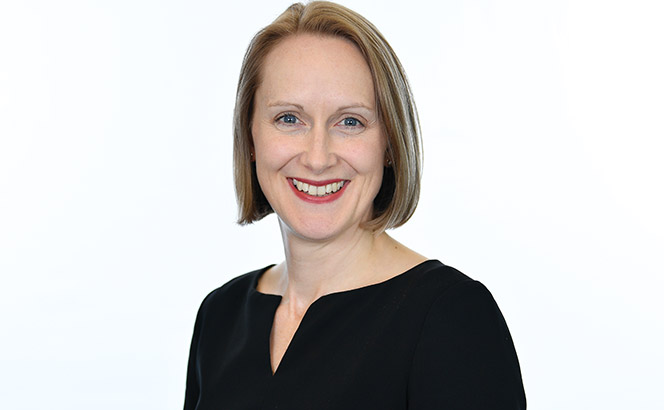
Susan Garrett
Partner, dispute resolution
E: [email protected]
Continue reading “Sponsored firm profile: Addleshaw Goddard”

Continue reading “Sponsored firm profile: Addleshaw Goddard”
Cash-rich funders; conflict-free boutiques; class actions aplenty. While some predict another economic downturn on the horizon, providing an uptick in conventional litigation work, these themes have defined the more eye-catching disputes of the past year. Add to the mix an increase in cyber-related litigation and accusations of fraud and regulatory missteps against some of the leading firms’ key institutional clients, and a kinetic disputes scene emerges.
Many of these developments are US imports, particularly class actions and a more aggressive approach to accusations of fraud. These US-style claims are often being pursued by disputes boutiques increasingly allying themselves with external funders. As a result, the stranglehold City bluebloods have over big-ticket litigation has loosened, while some feel only two or three of the smaller players are of sufficient quality to cause real disruption (see our boutiques report). Continue reading “Perfect storms – Cases of the year”
Stewarts’ Marc Jones discusses the implications of crypto-assets for the litigation sphere
The chances are that in January 2009, when the first bitcoin was mined, nobody reading this article had heard of bitcoin, crypto-currencies, blockchain or smart contracts. Less than a decade later in late 2018, the World Bank raised $110m by selling a ‘blockchain-operated debt instrument’. This instrument runs on a private version of the Ethereum blockchain, which creates, allocates, transfers and manages the bond to maturity using distributed ledger technology. Continue reading “Sponsored briefing: Disruption, disintermediation and disputes”
Manoj Singh and Nilava Bandhopadhyay give an overview of the new Indian Arbitration and Conciliation (Amendment) Act
India is one of the fastest growing major economies, even during the present global economic slowdown. A number of ambitious regulatory reforms have recently been launched by the government, resulting in India ranking 63rd in the ‘Doing Business 2020: World Bank Report’ – a jump of 65 places – since 2014. The growth of the economy, has brought with it a multitude of complex, commercial disputes, making commercial litigation inevitable. Being a global economic powerhouse, and in the interest of integrating with the international business community, Indian laws have repeatedly been amended to keep India on par with legal regimes in other leading commercial law jurisdictions. A testament to this is the recent Arbitration and Conciliation (Amendment) Act, 2019, which endeavours to make India a global hub of business by giving effective solutions for dispute resolution through international commercial arbitration. Among others, the amendment seeks to institutionalise and streamline the process of arbitration in India by establishing the Indian Council of Arbitration. The Indian judiciary, too, has played its part by pronouncing a number of judgments aimed at making the country more ‘pro-arbitration’. A catena of judgments – past and recent – have upheld the doctrine of minimal judicial intervention enshrined in section 5 of the Arbitration and Conciliation Act, 1996. This article examines some of the recent legislative changes and judicial changes that seek to transform India into a global commercial litigation hotspot. Continue reading “Sponsored briefing: The changing paradigm of commercial disputes in India”

Richard Harris assesses the challenges facing financial services businesses in Australia
The regulation of financial services businesses in Australia stands at an extraordinary confluence of separate but interrelated developments that represent a profound shift in the regulatory landscape. Continue reading “Sponsored briefing: Financial services regulation in Australia at boiling point”

Zeena Saleh, associate, and Chris Brennan, partner, at White & Case on corporate culture
The concept of corporate culture was the focus of much discussion at the Legal Business Financial Regulatory and Disputes Summit 2020 (the Summit). Since the 2007/08 financial crisis, culture is a concept that has become an increasingly important priority for financial services firms and conduct regulators across the globe. There is no doubt that firms and their senior managers are more aware of the importance of ensuring a good corporate culture throughout their business. However, with more reports of financial and non-financial misconduct within the market, it seems likely that regulators will consider further work needs to be done.
Continue reading “Sponsored briefing: A cultural shift – has the fallout from the financial crisis changed corporate culture in financial services or is there still work to be done?”
Pinsent Masons discusses exciting times for UK patent litigation in 2020 and beyond
For the past four years, Brexit has dominated the legal headlines as well as the popular press. It would be remiss in 2020, the year in which the UK leaves the EU, to fail to acknowledge its significance. However, despite the political and economic uncertainty, we patent lawyers are confident that 2020 will see business as usual in the UK courts. Continue reading “Sponsored briefing: Business as usual in the UK courts”

Michel Kallipetis QC was the International Academy of Mediators (IAM) representative at the drafting of the Singapore Convention. He provides a brief overview of the Convention and some analysis from a mediator’s perspective
The Grand Ballroom of the Shangri-La Hotel in Singapore was the proud setting for the momentous occasion on 7 August 2019 when the United Nations Convention on International Settlement Agreements Resulting from Mediation (Singapore Convention) was signed by no less than 46 states. It was a spectacular conclusion to three years’ work and consultation by UNCITRAL’ s Working Group II. Since then six other states have also signed. Notable signatories are the US, China, Russia and India; notable absentees at the moment are the UK, Canada, Australia and the EU. The Convention will come into force six months after three states have ratified the Convention. At the time of writing, two states have ratified the Convention: Singapore and Fiji. The Singapore Convention responds to the demand from a growing body of mediation users for an enforcement mechanism applicable to mediated settlement agreements in cross-border disputes. It is to be hoped that the UK, once untrammelled by the provisions of the European Union Treaty signed in Maastricht, will feel able to join the major economic trading nations and sign the Convention. Continue reading “Sponsored briefing: The Singapore Convention – The mediator’s perspective”
Independent Mediators manages the practices of nine of Europe’s leading full-time civil and commercial mediators. The mediators joined forces to form a dedicated mediation ‘chambers’ which offered a new model for independent mediation practice.Independent Mediators manage the practices of nine of Europe’s leading full-time civil and commercial mediators. The mediators joined forces to form a dedicated mediation ‘chambers’ which offered a new model for independent mediation practice.
They are acknowledged as leading mediators in The Legal 500 and Chambers & Partners. In addition all have been welcomed into the Legal 500 Hall of Fame. They all feature in the international directory Who’s Who Legal: Mediation, which recognises the world’s leading commercial mediators. Three of our mediators feature in a list of those selected by Who’s Who Legal as ‘Global Elite Thought Leaders’ in mediation. Recognition of our standing in the international mediation sector was cemented when Independent Mediators were awarded Mediation Firm of the Year 2019 and Bill Marsh was awarded Mediator of the Year 2019 by Who’s Who Legal at their annual awards ceremony.
Our mediators cover a wide range of commercial disputes in almost every sector of business and law. Values range from tens of thousands to multi-billion pounds and are between parties from all walks of life and all over the world, including companies both public and private, national governments, public bodies/authorities and group actions. The mediators regularly travel all over the UK and internationally for mediations.
The mediators are self-employed and independent, and share a central service to administer all their mediations, offering clients the advantages of:
The structure ensures maximum convenience and speed for clients with minimum overheads. Our aim is to make the process of appointing a mediator as straightforward as possible.







L-R, top to bottom: Charles Dodson, Phillip Howell-Richardson, Kate Jackson, Michel Kallipetis QC, Jonathan Lloyd-Jones, Mark Lomas QC, Bill Marsh, Andrew Paton and Nicholas Pryor
Independent Mediators
International Dispute Resolution Centre,
70 Fleet Street,
London, EC4Y 1EU
Tel: +44(0)20 7127 9223
Email: [email protected]
Web: www.independentmediators.co.uk

Diane Bandon-Tourret and Esther Vogel discuss healthcare regulation in France
Healthcare companies have been used to dealing with several different types of litigation in France. Continue reading “Sponsored briefing: French litigation relating to the healthcare sector – legal trends”

Jane Colston discusses how the legal world is wrestling with technology regulation
As technology becomes increasingly sophisticated, making every aspect of our lives more streamlined and efficient, the legal world is wrestling with how best to regulate that technology in a way that does not stifle innovation but allows humans to understand and keep control of technology, and make sure it is applied in a way that takes into account human morals and ethics. Continue reading “Sponsored briefing: Surveillance capitalism”

The team at Pinheiro Neto discuss Brazil’s civil procedure code
Brazil’s Civil Procedure Code (CPC), enacted in 1973, provided for a very few opportunities in which the litigating parties could agree on changes to procedural aspects of the case, eg the choice of forum (forum conveniens) and the conventional stay of the developments for a certain period. Continue reading “Sponsored briefing: Parties’ ability to agree on procedural aspects of a lawsuit under Brazilian law”

António Magalhães Cardoso and Sara Nazaré discuss IP Court challenges
Going back to the 2000s, disputes arising from the enforcement of industrial property rights were to be tried before the Court of Commerce, which also handled matters relating to bankruptcy, and many other issues involving commercial companies’ legal disputes and issues. The Court of Commerce was completely overloaded with the work that the latter involved and all the cases involving industrial property rights, especially patents, in light of their complexity, were completely clogged. The situation was so critical that preliminary injunctions were being filed against the actual infringement of patent rights and the Court of Commerce was taking more than two years to serve the defendants. Continue reading “Sponsored briefing: IP litigation in Portugal – from the ’00s to the ’20s”

Grant Thornton UK’s Michael Barber considers the progression of the forensic accounting profession and looks ahead to what may be in store in the coming months and years
Forensic accountancy. The term strictly refers to accountants whose work supports legal proceedings of various kinds. This is not dissimilar to the way that a forensic pathologist might provide expert evidence to the court. Only forensic accountants substitute corpses for cashbooks and scalpels for sale-and-purchase agreements (SPAs). Continue reading “Sponsored briefing: From Barings to Bitcoin, the forensic accounting market – past, present and future”
The disputes and investigations team at Gilbert + Tobin specialises in assisting clients to navigate complex and significant contentious issues. We work closely with our clients to develop an approach best suited to achieving their objectives and the protection of their interests. We understand that litigation should always be a last resort but, where necessary, needs to be handled strategically and commercially, and with jealous regard to your reputation.
Our lawyers have been and continue to be involved in Australia’s most high-profile commercial disputes, litigation, investigations and inquiries. Clients come to us for our sophisticated and strategic litigation and dispute resolution services across a broad range of legal areas. We work closely with clients to deliver focused, timely and cost-effective solutions. Continue reading “Sponsored firm profile: Gilbert + Tobin”

Basham, Ringe y Correa on key white-collar and fraud offences in Mexican law
Basham, Ringe y Correa SC is a full-service law firm with a strong presence in Latin America and is the Lex Mundi representative for Mexico. The firm’s clients include prominent international corporations, many of them on the Fortune 500 List, medium-sized companies, financial institutions and individuals. Basham’s preventative and strategic consulting in all law practice areas allows the firm to offer its clients effective, complete and timely solutions to their concerns. The firm’s in-depth knowledge of the international as well as the domestic market gives it the solid base and perspective needed to offer fully integrated and tailored solutions to every client. The firm’s lawyers actively participate in worldwide associations, as well as in international transactions, something that has promoted the exchange of information and experience. Basham, Ringe y Correa is aware that each client requires objective counselling, experience and professionalism. The firm’s lawyers are well-known leaders in their respective fields of specialisation and are committed to providing legal services at the highest standards of quality. Continue reading “Sponsored briefing: A guide to white-collar offences”

Shoosmiths’ specialist team of litigation, international arbitration and dispute resolution lawyers, based in 13 locations across England, Scotland and Northern Ireland, helps clients redress the balance – maximising value, minimising risk and enhancing reputations.
Through our unique advisory services solutions and award-winning litigation services offer, we provide early practical and pragmatic advice to minimise risk and avoid disputes arising. Continue reading “Sponsored firm profile: Shoosmiths”

Maltin PR discusses the key role of litigation PR in large commercial disputes
Continue reading “Sponsored briefing:
The rise of litigation PR”

Harbour Litigation Funding on the growth of alternative funding
It has been over 20 years since a law was passed allowing litigation funding. While many are still ambivalent about this form of funding, citing recent industry scandals and anxieties about becoming a more litigious society, each year thousands of claimants secure compensation for their losses, thanks largely to this route.
Continue reading “Sponsored briefing: The coming of age of litigation funding”

Stewarts’ Mo Bhaskaran and Pia Mithani discuss the huge growth in international fraud
Fraud thrives in systems that permit secrecy and anonymity. Technological innovation and the continued growth of international trade are allowing fraudsters to use increasingly opaque and complex techniques. The globalisation of finance has allowed such activities to grow to jaw-dropping levels.
Continue reading “Sponsored briefing: 2020 fraud –
Is the picture any clearer?”