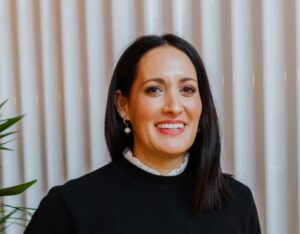

 ‘Ultimately, bribery is bad for business,’ says Sidley London white collar partner Sara George (pictured) about why US President Donald Trump’s move earlier this year to halt prosecutions under the Foreign Corrupt Practices Act could hinder rather than help companies.
But while it is too soon to predict the true impact of Trump’s executive order on business, it is not too soon to predict the impact of less enforcement work on US white collar lawyers – less work.
‘Unless you’re a drug dealer or a terrorist, you can basically do what you like with impunity in the US now,’ says one London white collar partner.
But US lawyers’ potential loss could be London’s gain. ‘This is an opportunity for the Serious Fraud Office to fill that gap,’ says Ashurst white collar partner Judith Seddon.
A welcome opportunity
It’s an opportunity that London partners have been waiting for for some time. Two years into Nick Ephgrave’s term as director of the SFO, the organisation is yet to return to the major investigations and lucrative mandates of the David Green era between 2012 and 2018.
While activity has picked up on where it was under Ephgrave’s predecessor, Lisa Osofsky, it still requires some nous for teams to create new revenue streams.
As Seddon explains: ‘We’ve all become used to the SFO not being terribly active. We get our mainstay of work from other sources.’
During Osofsky’s first year at the SFO, the organisation dropped 14 cases – twice as many as over the previous three years combined. Her reduced appetite for major investigations led lawyers to diversify their practices to a diet of sanctions, compliance and internal investigations work – a trend that persists today, even though cases have picked up somewhat.
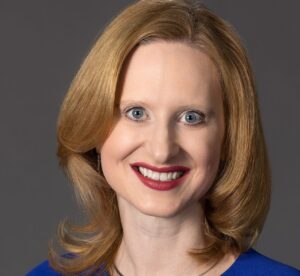
 A raft of legislative changes from the Economic Crime and Transparent Act 2023 has created new sources of work. ‘We’ve seen a real uptick in compliance work coming out of the “failure to prevent fraud” offence (FTPF),’ says Joanna Dimmock (pictured), who joined Dentons from Paul Hastings in February, before pointing out that ‘it will be interesting to see how quickly that first prosecution comes to court.’
Given that it took around eight years for the first prosecution under the Criminal Finances Act, partners predict that there will likely be a long lead time before any prosecutions are made under FTPF, which came into effect in September.
‘How many prosecutions FTPF leads to remains to be seen – it depends on a number of factors,’ says Seddon’s Ashurst colleague Neil Donovan.
Activity levels may not yet be surging, but it is clear that partners are generally more positive about former Met Police assistant commisioner Ephgrave than Osofsky, even without any additional work thrown over to London by the shifting politics in the US.
‘His focus is to make the SFO a more aggressive organisation,’ Dimmock says. ‘The corporate guidance is much more targeted than we’ve seen before in terms of encouraging prompt self-reporting […] I wouldn’t say it’s on par with the DOJ, but it’s much closer than we’ve ever seen before.’
With proposed reform including plans to financially incentivise whistleblowers, Dimmock is hopeful. ‘I think he’s trying to find his feet… to try and get back to where they were before in terms of bigger, collaborative prosecutions with international agencies.’
‘If you drive at 90mph up the A40, do you wake up the next day and report yourself for speeding?’
Others though as less convinced that companies will heed the call to self-report to the SFO. HFW white collar partner Barry Vitou does not think the new guidance does enough to incentivise corporates to self report. ‘People need to feel that there’s a real risk that they’re going to get found out and that it’s going to be bad, and therefore there needs to be a significant distinction between what people get if they get found out versus if they self report. The reality is I just don’t think it’s there.’
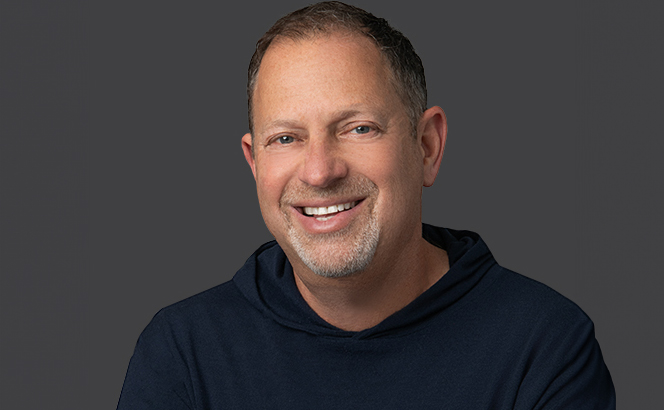
‘I’m fortunate to be involved with a couple of [SFO] matters, but there’s not as much going on. The shoes have dropped,’ Vitou (pictured) says of the market for larger mandates. ‘And they will continue to drop because that’s the nature of the beast. Is it my daily staple? No.’
When Vitou arrived at HFW four years ago, he set out to target non-UK work due to question marks over activity levels in London. ‘I think the reality is that for most people in this space, you’ve got to be able to generate work.’
‘If you’ve got a compliance practice, you can make it go a bit, but you’ve got to have clients that are prepared to pay for compliance, and the way things have changed in the US, the ability to get a budget for compliance is reduced.’
Regulatory investigations and corporate crime: top firms for client service
Every year, Legal 500 gathers hundreds of thousands of scores from clients on a range of criteria, providing detailed insight into the service they get from their law firms. The top-scoring firms for some of the headline metrics are highlighted below.
Both ends of the spectrum
 Utilising firmwide platforms has become increasingly important for maintaining activity, as Latham & Watkins partner Pamela Reddy (pictured) explains. ‘We have really deep relationships with corporate counsel – if they have an issue, they’ll pick up the phone to their trusted adviser.’ In her view, these ties generate enforcement work with agencies such as the SFO or the CPS, but also filler work, such as due diligence for major deals.
At the other end of the spectrum to Latham are the niche criminal firms that ‘are always going to be getting really good work,’ defending individuals according to Reddy. ‘You’ve got to be at either end of the spectrum – there’s a chunk in the middle where I’d be nervous if I worked at those firms.’
Going down the more niche route is Polly Sprenger, a private prosecution expert who left Addleshaw Goddard this summer to set up a London practice for US firm Michelman Robinson alongside Ruth Paley from Eversheds Sutherland and John Gibson from Cohen & Gresser. All three previously worked at the SFO together.
‘Any day a client has to call us, it’s the worst day of their life,’ Sprenger (pictured) says, ‘That means there is not a lot of due diligence done on the fees that are charged. ’
‘It’s a real carpet salesman approach to legal services’
The firm is operating on a different model to both the large firms and the boutiques, bringing together lawyers with outside experts to help defend clients.
 ‘The SFO has lawyers, accountants and investigators working [together] for the prosecutors – you should have the same for the defence,’ Sprenger (pictured) says.
‘It’s a real carpet salesman approach to legal services, where you’re looking at the demand and then creating the supply; the opposite to having a team of 30 and then going looking for big enforcement cases.’
The idea is that reduced outsourcing and a more bespoke approach can deliver better value for clients.
Over at Sidley, George believes it’s a model that could work. ‘The firms doing well are the firms where it’s very easy to pivot, where you can do FRC, FCA, NCA, SFO, whatever. If you are just pure crime, I think it’s really hard to make a living at the moment.’



 As one of only 12 LB100 firms to post double-digit increases for both revenue (11.7%) and PEP (12.2%),