How would you describe the current state of the Turkish legal market?
In two words, ‘fragile’ and ‘optimistic’. For the last half decade Turkey has been busy with national security, all types of elections, geopolitical developments and positioning, global mind games and, consequently, a recessed economy. Such uncontrollable developments are naturally pressing on business law and the legal market. Due to the above stated facts there have been several conditions precedent over the investment climate that negatively affect the legal market.
Given Turkey’s recent economic problems and the government’s new 5% growth target, how is this affecting your clients and what adjustments are they making given the current investment/economic climate?
All clients have been repositioning their status while revising business plans and budgets as the conditions are redealt with. Export and new markets are main ways out for manufacturing businesses as the Turkish lira has been devaluing over the past year. As a general overview, apart from clients’ short term, midterm loans have been restructured in a lot of big names in the Turkish market where our clients may have benefited. Clients aim to be transformed to sharp sharks from big whales by trying to increase profitability rather than revenues via certain measures such as cost cutting, reduction of headcount, prolonging maturities and other measures over procurement.
How can you and your clients mitigate the risks should there be an economic downturn?
Generally, they have been extremely diligent over their risk management in order to avoid potential unexpected disputes. They reduce national sales since there may be collateral problems with their dealer or clients. Therefore, they have been transformed conservatively by reducing their appetite for risk. Since collection and maturity are two big problems in the national market, they try to increase their liquidity. As stated above, they also experience certain day-to-day measures when trying to increase their export, while exploring new markets as much as possible. Furthermore, potential collaborations, alliances and partnership opportunities have been increased, since clients need market expansion.
What practice areas are busy and why, and which are the biggest originators of work, and why?
In the beginning of 2019, we have been appointed by two leading conglomerate companies in Turkey active on wide areas of business such as FMCG [manufacturing, fast-moving consumer goods], energy and logistics. As we also advise them on dispute resolution, litigation and employment, we took over more than 3,000 files from ten different law firms. That means our dispute resolution, litigation and employment departments have been very busy.
As a compliance department, we have also been appointed by several worldwide big names on wide areas of practice such as technology, FMCG, entertainment and cryptocurrency. Therefore, the compliance team is always busy and this is also an optimistic development regarding Turkey, with newcomers considering entering the market.
The M&A department has always been regularly active, especially for the last three to four years as we have been into ten law firms on deal counts under reputable tracking platform records. Despite the negative developments stated above, the first two to three quarters of the year were slow, however there have been optimistic developments that will keep our teams busy.
What changes have you noticed this year in the type and origin of work?
M&A work has slowed down due the stated political, geopolitical and financial developments, while dispute resolution, employment and compliance work have been substantially increased. We have the advantage of being a full-service firm with a strong, multi-skilled team.
Do you anticipate a resurgence in infrastructure/project finance?
Not in the short term as the market has reached saturation. However, there may be a spring in the mid term.
How is the local dispute resolution market – what types of disputes are prevalent?
Always busy even if the clients try to reconcile and diligently mitigate the risks. Our dispute resolution department both focuses on mass commercial disputes and employment disputes from well-respected clients, but also a high number of niche, unique cases that may turn into litigation battles.
The Turkish central bank’s drive to reboot growth, slashing benchmark rates by 7.5% since July and offering incentives for banks to offer credit – what impact is that having on bank advisory work?
Unfortunately, that was not efficiently reflected in the real market, excluding restructurings.
Which sectors are of most interest to M&A/private equity investors?
Export-oriented manufacturing, technology, e-commerce, services, energy and F&B [food and beverage].
What Turkish legislation has provided an impetus to foreign direct investment (FDI) and in which sectors?
There are certain legislations that were brought in for simplifying the investment climate, employment incentives and increasing free zones. However, there were also legislative developments questioned by foreign investors, such as limitations on contracts with foreign currencies, which kept legal world very busy. Currently VW’s choice of Turkey as a greenfield hub will certainly be a great indicator for FDI.
As the Turkish energy sector is being rapidly reshaped, what opportunities does this provide?
The market has been energetic for the last two years due to national tenders on renewable energy. Such tendered projects will most probably be the subject of takeovers that will increase the energy M&A market.
What impact is there for Turkish companies in compliance with global regulations and new national regulations, eg Turkish Data Protection Law, modelled on GDPR?
Data protection compliance in line with GDPR has been a trending topic since 2016. However, apart from highly affected sectors such as healthcare, banking, insurance and retail, international companies and some conglomerates have high corporate governance and awareness levels. More than 50% of the Turkish business world is not yet compliant with legislations. That has kept a new legal services market despite the cost concerns of the business world, especially when considering the high amount of consequences in administrative, financial and legal due to non-compliance.
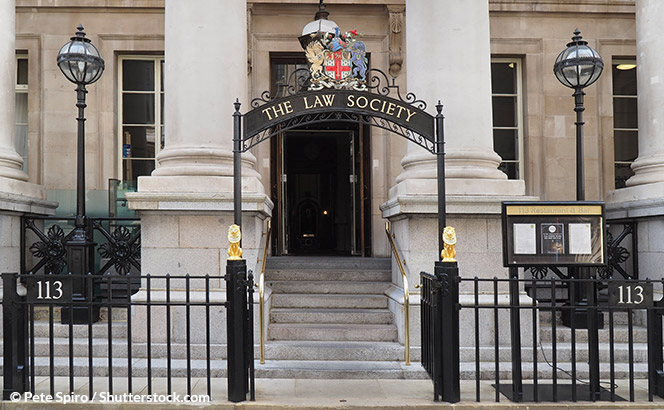
Firefighters were called out to The Law Society’s headquarters over the weekend after a major fire broke out, damaging the historic building late on Saturday, 1 February.
The fire was brought under control early on Sunday, with no injuries sustained as a result. The alarm was sounded on Saturday night after the annual Junior Society dinner was held at the premises, 113 and 114 Chancery Lane in central London. Continue reading “‘Deeply upset’: Law Society’s historic HQ suffers damage after outbreak of major fire”
Morrison & Foerster (MoFo)’s City revenue has lifted 25% for a third consecutive year, outpacing a strong global showing and kicking off US reporting season with a showing of expansive City growth.
The firm’s revenue increase to £38.6m comes amid a 10% global increase in the last fiscal year, from $1.04bn to $1.15bn. Meanwhile, revenue per lawyer grew 4% and profit per partner grew 5% to the highest levels in the firm’s history at just over $2m. Continue reading “MoFo ups City revenue an impressive 25% as US reporting season begins”
Operating profits at CMS Cameron McKenna Nabarro Olswang rose 20% to £192.8m after the firm restructured its Hong Kong and Turkish offices, the LLP accounts have revealed.
Norton Rose Fulbright (NRF) also filed its LLP books this week (31 January), showing a £2m decrease in revenue in its EMEA business to £480.7m following a move to the US calendar year-end in 2018. Continue reading “LLP: CMS lifts profit amid Hong Kong and Istanbul restructuring as year-end move dampens NRF’s turnover”