‘Impossible to predict’ coronavirus fallout sees Gateley cancel £3m dividend and suspend guidance

Michael Ward

Listed law firm Gateley has withheld more than £3m in shareholder payouts to keep hold of cash with activity dented by the Covid-19 pandemic.

The firm said today (24 March) it would cancel its interim dividend of 2.9 pence a share, which was due to be paid at the end of this month, in order to ‘maximise the group’s short-term liquidity’. The total interim dividend due to shareholders, including the firm’s partners, was about £3.4m, up more than 11% on last year. Continue reading “‘Impossible to predict’ coronavirus fallout sees Gateley cancel £3m dividend and suspend guidance”

Revolving doors: Orrick adds four-partner WFW projects team as Taylor Wessing invests in employment bench

Pinsent Masons

After an eventful week and with many lawyers  working from home until further notice, City firms and US rivals continue to ramp up hires as Orrick, Herrington & Sutcliffe, Taylor Wessing and Pinsent Masons all made hires in London.  

Orrick appointed a four-partner team to its energy and infrastructure practice in London from Watson Farley & Williams. The team includes energy and infrastructure partners Evan Stergoulis, Simon Alsey and Ravinder Sandhu, as well as real estate partner Simon Folley. Stergoulis will co-head the firm’s global renewables practice.  Continue reading “Revolving doors: Orrick adds four-partner WFW projects team as Taylor Wessing invests in employment bench”

City leaders take drastic action as coronavirus spreads turmoil across European states and economies

David Patient

Nathalie Tidman and Thomas Alan assess the impact of the pandemic on the profession as the world battens down for a health crisis

‘Things that are happening today you wouldn’t have believed a week ago,’ reflects David Patient, Travers Smith’s managing partner. Indeed. The outbreak and rapid spread of the coronavirus has in a matter of weeks transformed from background concern to a health crisis unknown in modern times, with countries scrambling worldwide to handle the outbreak. Continue reading “City leaders take drastic action as coronavirus spreads turmoil across European states and economies”

More gloom for Freshfields as another disputes partner exits after internal investigation

Freshfields Bruckhaus Deringer

Freshfields Bruckhaus Deringer has suffered yet another setback after disputes partner Tom Snelling was dismissed from the partnership following an internal investigation.

The move will be an unwelcome addition to the City giant’s woes as the legal industry and the world at large grapples with unparalleled reversals wrought by the ever-escalating coronavirus pandemic. Continue reading “More gloom for Freshfields as another disputes partner exits after internal investigation”

‘There’s no coronavirus playbook’:  Relief at emergency measures but law firm leaders predict worst is yet to come 

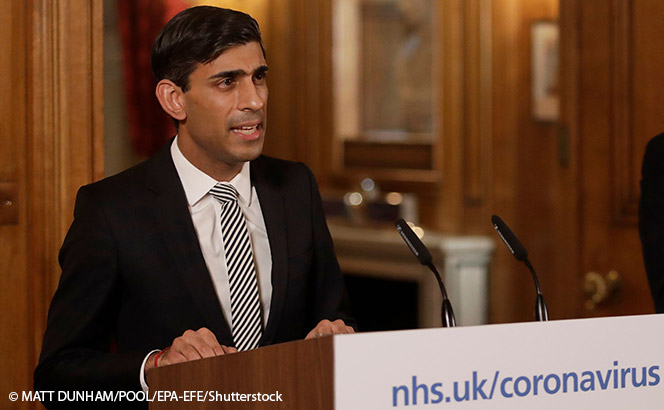
Rishi Sunak

Law firm leaders have responded positively to the UK chancellor of the exchequer Rishi Sunak’s ‘unprecedented’ level of state protection in response to the coronavirus but warn it will need to be the tip of the iceberg.  With the pandemic showing no sign of being contained, the economic impact is predicted to be much deeper than in the last financial crisis.

The package to support businesses and employees announced on Friday (20 March) followed on from a £30bn rescue operation in the budget earlier this month and includes drastic measures to prevent companies going into liquidation as the impact of Covid-19 continues to send global economies into a tailspin.   Continue reading “‘There’s no coronavirus playbook’:  Relief at emergency measures but law firm leaders predict worst is yet to come “

‘No crown jewels’ but firms rally with coronavirus advice to steer clients through crisis

As cases of the coronavirus accelerate, law firms including Mayer Brown, Eversheds Sutherland, Allen & Overy (A&O), Mishcon de Reya, Hogan Lovells and Fieldfisher have established COVID-19 working groups to help clients.

The moves come after swathes of firms ordered employees to work from home in the City and around the world in an attempt to contain the spread of the disease, which has so far racked up 244,553 confirmed cases globally and claimed 10,031 lives. Cases in the UK have ratcheted up at an alarming rate, with 2,716 cases and 137 deaths reported at the time of writing, with the UK government poised imminently to impose a lockdown to stem the spread. Continue reading “‘No crown jewels’ but firms rally with coronavirus advice to steer clients through crisis”

Comment: Coronavirus will brutally strip away the profession’s illusions

coronavirus under the microscope

The longer you do this job, the more your mind wanders to the big moments – recessions, terrorist attacks, political shocks, wars. Yet as I sit here typing this leader in a near-deserted London office, the majority of our team working from home as we try to put this issue to bed, it is a struggle to recall anything that compares to the coronavirus pandemic spreading through the world.

We face unprecedented times – hyperbole typically flung around with abandon until you realise with shock that this time it applies. As I write, London and New York, those famous global cities and the world’s two dominant legal hubs, look within days of total lockdown. Continue reading “Comment: Coronavirus will brutally strip away the profession’s illusions”

‘Under-funded and ill-served’ courts face pressure to adapt as coronavirus hits the justice system

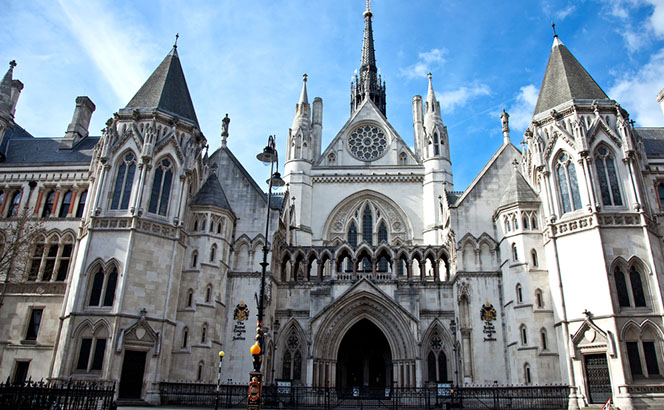
Royal Courts of Justice, London

Courts in England and Wales have made changes to their practices as the Lord Chief Justice joins those dismissing claims the courts can operate as normal as the spread of coronavirus widens.

The justice minister Chris Philip said this week courts would be ‘operating as normal’ despite guidance from the Prime Minister Boris Johnson warning people to avoid unnecessary journeys and to work from home where possible. Continue reading “‘Under-funded and ill-served’ courts face pressure to adapt as coronavirus hits the justice system”

Slaughters makes up seven in the City with bulked-up promotion round

Steve Cooke

City blueblood Slaughter and May has promoted seven partners in the City and one in Hong Kong following an increased promotion round, with corporate receiving the lion’s share.

The promotion round sees London land four additional corporate partners, with one apiece going to the firm’s infrastructure and natural resources, investigations and financing practices respectively. In Hong Kong the one promotion came in corporate. Continue reading “Slaughters makes up seven in the City with bulked-up promotion round”

‘Inevitable distractions’ hit BCLP revenue and profit in lean post-merger debut

Lisa Mayhew

Bryan Cave Leighton Paisner (BCLP) endured a challenging debut year as a fully-merged entity, as the cost of integration weighed on growth.

Turnover was down 2% to $874.1m from the $899.4m the firm posted for 2018, the year legacy Berwin Leighton Paisner and Bryan Cave finalised their transatlantic union. Net income was also down almost 4% to $228m. Continue reading “‘Inevitable distractions’ hit BCLP revenue and profit in lean post-merger debut”

Latham and Hogan Lovells move to remote working globally amid alarming coronavirus spread

hogan lovells office

Latham & Watkins and Hogan Lovells have become the latest law firms to ramp up their response to the increasingly global spread of COVID-19 by sending all their staff home.

The news comes as the number of casualties continues to rise around the world, with the latest figures reporting over 200,000 confirmed cases while the death toll has passed 8,000.  Continue reading “Latham and Hogan Lovells move to remote working globally amid alarming coronavirus spread”

Kirkland remains world’s highest-grossing law firm in becoming first to surpass $4bn

Gherkin

Kirkland & Ellis has added $390m to its top line to trounce Latham & Watkins once again as the world’s highest-grossing law firm, as global turnover surged to $4.15bn.

The Chicago-bred giant today (18 March) revealed results for the 2019 financial year, revealing a 10% hike in revenue from $3.76bn last year. Profit per equity partner (PEP) reached $5.2m, up 3% on the $5.04m for 2018. Kirkland’s head count grew 13% in 2019 with revenue per lawyer dropping 2% to $1.6m from $1.63m the previous year. Continue reading “Kirkland remains world’s highest-grossing law firm in becoming first to surpass $4bn”

Greenberg strengthens City restructuring practice in preparation for economic downturn

Greenberg Traurig has continued its London recruitment push, this time hiring from Baker McKenzie to strengthen its City restructuring practice as firms look to hedge against increasing economic uncertainty. Bakers’ co-head of global restructuring and insolvency Ian Jack has left the firm for Greenberg after more than two decades, bringing with him extensive experience in restructuring as well as banking and financial transactions.

The hire comes as many in the industry anticipate a demand for restructuring and insolvency lawyers amid the disruption caused by the coronavirus. Greenberg executive Chairman Richard Rosenbaum commented: ‘I have been around a long time, but all countries, businesses and law firms are no doubt facing an unprecedented period of disruption, change and challenges. We just concluded our strongest year on record by any measure, and began 2020 in the same manner, but we all know we are facing new challenges given the coronavirus, oil price wars, stock market gyrations, and the uncertainties stemming from all of those circumstances.’ Continue reading “Greenberg strengthens City restructuring practice in preparation for economic downturn”

Revolving doors: Akin Gump adds to levfin bench as Eversheds and TLT hire disputes partners

Kim Koopersmith

In a week that saw firms on high alert due to coronavirus, the City lateral market has maintained a steady pace as Akin Gump Strauss Hauer & Feld appointed a finance partner and both Eversheds Sutherland and TLT added to their dispute resolution benches.

Akin Gump added leveraged finance partner Amy Kennedy from Gibson, Dunn & Crutcher in London. Kennedy represents private equity sponsors in leveraged buyouts, as well as banks and other financial institutions. She has worked in sectors including oil and gas, telecoms, real estate and retail. Continue reading “Revolving doors: Akin Gump adds to levfin bench as Eversheds and TLT hire disputes partners”

Coronavirus impact worsens as Reed Smith sends staff home and Taylor Wessing shuts City office

Reed Smith

Law firms around the world have been forced to take ever more radical measures in an attempt to contain the spread of COVID-19, with Reed Smith asking its staff to work from home as Taylor Wessing closed its London office after a member of staff tested positive.

Reed Smith confirmed to Legal Business today (13 March) all its global staff is working from home as a precaution against the spread of COVID-19, although the firm’s offices remained open. Continue reading “Coronavirus impact worsens as Reed Smith sends staff home and Taylor Wessing shuts City office”

‘All about the future’: Paul Hastings reaps investment rewards with double-digit London growth

Arun Birla

Paul Hastings recorded another year of double-digit growth in its City office to surpass $100m, amid a more muted performance globally.

The firm grew turnover 16% in London to $107.2m, an improvement on last year’s 14% rise. Globally, revenue hit $1.26bn following a steadier 4% uptick, compared to a 9% rise over 2018. Profit per equity partner, meanwhile, rose 5% to $3.41m across the firm. Continue reading “‘All about the future’: Paul Hastings reaps investment rewards with double-digit London growth”

In Conversation: Rupert Skellett, General Counsel, Beggars Group

GC: Tell us about your pathway into law?

Rupert Skellett (RS): I initially read English Literature at University and ended up working in book publishing for Penguin. But, I decided that wasn’t for me, and I felt that I needed some kind of “skill” that would make me employable: I was great at analysing and reading literature, but, not really much else. So, I completed a law degree at City University of London and then went to bar school and then a commercial set of chambers. When my pupillage finished, I didn’t fancy going to the bar, so I managed to get a job in Simkins, in their music department. I was there for a year or so.

Then, I went to work for a sole practitioner- James Rubenstein- who worked from his flat in West Hampstead, which was a bit weird, but it was great because it was very hands on sort-of- training: I’d sit about two yards away from him in his office. His clients included a few record labels, one of which was Domino, and another was Beggars. I ended up doing a lot of Beggars’ work. So when Martin Mills, the owner of Beggars, decided he wanted an in-house person, I’d already been doing the job for a couple of years and essentially, I was the natural choice. I will have been at Beggars for 20 years in January.

GC: Tell us about your work day, what items fall under the realm of legal at Beggars Group?

RS: Well for me, the priority of the work is to find new recording artists to sign. That is basically the goal, the one thing we all strive for. What we try and do is sign independent, alternative music and that’s generally UK or US based. Although, that is slightly changing in recent years. The idea is: that we don’t find acts which we think are going to sell loads and loads, instead we sign acts because we like them; we think they’re interesting; and we think that people should hear them. That’s the most exciting part because you go to see an act play live, and then hopefully you negotiate with them and sign them. So, that’s obviously a big part of the job: negotiating the terms of the deal and drafting the recording agreement. A lot of my work, apart from negotiation, is drafting in-house, probably more so than private practice. It’s a specialism, certainly for a music in-house role.

GC: What’s involved in the negotiation stage?

RS: You’ll often be in competition with a bunch of other labels, the artist’s lawyer will be representing the artist and then they will be representing various terms they have in other offers from other labels to you. Then, you have to decide whether you want to match them or not. There are things we can offer that other labels can’t: we very much pride ourselves on being a global company and that means we’re able to offer a really good deal to artists, because none of the revenue we receive goes through an inter-company royalty matrix—which other major labels operate. This is our distinct advantage.

We also sign far fewer acts than other major labels in order to really concentrate on each act. The way we’re set up is that we have our own people on the ground in every major record market in the world–who only work on our releases. We can bring a real focus to pushing, promoting and marketing our artists, much more so than other major labels. If you sign to a major label in the UK, you don’t really have much assurance, that you as an artist, are going to get any priority when your record is released in the US: you basically have to try and persuade your UK label to convince your US label to get behind you. Whereas, with us, it’s much more top-down. The company is run from New York and London, what we sign is prioritised throughout the world.

GC: You’ve been working for Beggars Group for around 20 years now, how has the music industry changed in those years?

RS:  The industry has changed massively in the last twenty years. For a long time, it was in the doldrums. For the first 15 years of this century, the global record industry kept on going down and down, to the point where it basically became half of what it was in the heyday years of the 90’s, with CD’s and the rest of it. The problem was piracy. Piracy was a huge problem which came with the internet. There were attempts in the early 2000’s to license various services and they didn’t really get off the ground. So, for a long time we were fighting piracy and tech companies who didn’t value rights in the same way that we do- so that was a real problem. But, since 2015, the global record industry started to grow again and that’s down to the streaming services—Spotify initially, then Apple Music and Deezer, for example.

GC: Tell me more about these streaming services, how have they changed the market?

RS: Spotify specifically– because it provides a free service and has basically removed any need for anyone to pirate any music. There’s no real excuse to pirate and it’s a lot more convenient. Still, there’s a certain amount of technological knowhow that you need to pirate music. However, things the music industry has been doing, in terms of blocking pirate sites, has helped. Trying to get search engine companies to cooperate with that, is quite tough. So, that’s what I was saying about trying to persuade tech companies to play nice with rights. That’s been a major challenge, but there are signs that is improving. But, it’s down to those efforts in the industry and also the availability of companies like Spotify, who have a great service—you basically have all of the world’s music at your fingertips, in a nice, easy way to find music.

GC: You mentioned piracy a past challenge to the music industry, what are the current challenges that you face today as a GC?

RS: What’s really interesting about today, is that when I was a teenager and in my early twenties, I was really into dance and house music. And, you couldn’t get it anywhere—it was really hard—there were a few record shops in London—a handful outside of London, there were barely any radio stations—and that was really exciting. But, now you have the exact polar opposite problem, you don’t have scarcity, you have too much content—so much content. Every day, hundreds of thousands of tracks are uploaded on Spotify.

GC: That must be quite difficult for you when you’re searching for talent, there’s so much content out there, where do you begin?

RS: This concerns going down the path of monitoring data. That’s obviously quite easy to do now, because there’s so much data out there and so many data collecting systems. Other record labels quickly initiate their flagging systems for anything that looks as if it’s doing quite well and they just sign whatever is on that data system. Whereas, we still definitely operate on the basis of seeing the artist play live, meeting them, getting a feel for their vision and obviously whether we love their music or not. So, the massive challenge is, even if you do sign the artist, how do you get that artist content above the tidal wave of other content that’s out there? That’s something that we’re really good at, because we are quite niche, and we have this global army of fans who promote an artist’s music. That is the real challenge now: the enormous amounts of content generated, which is down to cheaper recording processes and distribution. I mean, anyone can upload content, get a distribution partner and then have your music up on Spotify.

GC: Has social media had an impact on the growth of an artist?

RS: Social media is very important to an artist’s career now. But, you can experience a problem where you’re massive on social media but that doesn’t translate into consumption or sales of recorded music. So, you need to be careful that you tie them all together properly. There’s a lot of “well, why you can’t do this?” promotion, and it’s a constant battle between “promotion” and rights exploitation, and getting paid for rights exploitation. If you’re exploiting rights, you need to pay for them, because that’s our business and that’s what we thrive on.

GC: You spoke earlier of royalties and licenses. What’s the role that you play in the acquisition of a song?

RS: We have a publishing company, but we, the record company, handle the recordings—this is a separate copyright to the song itself. So, our music publishing company handles rights and acquires rights to songs. They sign song writers to exclusive song writing agreements. I’m involved in that side of things: the signing of song writers, in much of the same way as the record side; helping negotiate terms with the publishing company and then drafting the agreements. But, in terms of licensing songs, for instance, if someone were to use one of the songs in a TV program, or in a computer game, then we have a global licensing department who handles those things.

GC: You said that you work with alternative music, so you have a couple of clients from the UK grime scene, who have in the past, been faced with criminal allegations, how do you deal with that? What are the ramifications when clients face criminal proceedings?

RS: We’re as supportive as possible, where we can be. Mostly this is an issue for the manager and the artist lawyer, not us as the label.  But I do remember that with Giggs, when we were about to sign him in 2006, the Metropolitan Police phoned us up and told us not to sign him. But, we went ahead anyway, because, we thought it was wrong to deny him of the chance of generating a professional career as a recording artist. Yes, people might make mistakes, but you have to give them a chance to change, it didn’t make any sense for us to say: “you’re going to be punished for the rest of your life for something you did when you were younger.”

GC: If you could give yourself one piece of advice at the start of your career, after you qualified with your law degree, what would that be?

RS: Be careful what you wish for.

In Conversation: Dan Webster, Group General Counsel, Harrods

GC: Tell me about your pathway into law?

Dan Webster (DW): I studied law at the London School of Economics and went to law school in Chester. I got a training contract at what is now CMS Cameron McKenna. I qualified in litigation, stayed a couple of years at CMS and then then moved to SNR Dentons. I stayed there for a few years and then decided I wanted a change. To my surprise, an opportunity came up to be an in-house litigator at Harrods where the then owner was famously very litigious. Once at Harrods, I quickly realised that I was meant to be an in-house lawyer, and over time, I’ve evolved into a commercial, corporate, employment, IP all-rounder.

GC: Could you tell me a little about that change from private practice to in-house law? How did you find that transition?

DW: I was brought in initially as an in-house litigator. It quickly became apparent that there was a demand for more general in-house work and perhaps less than a full time job available for litigation work. So, I was very happy to broaden my skillset, I wasn’t someone who wanted to stay specialised. I was very happy to become more like a legal equivalent of a GP—if I can make a comparison to the medical profession. The fact that you can kind of turn your mind to most legal tasks, I found that very interesting, and I really enjoyed the variety. Therefore, I really embraced the opportunity to try and be an all-rounder within an in-house practice, as opposed to a specialist litigator.

GC: What does your role as an ‘all-rounder’ at Harrods entail?

DW: I oversee the legal function for the entire Harrods group. This includes commercial, corporate, IP, marketing and consumer work. I look after all the company secretarial work for the group too. I’m also data protection officer, which is probably quite unusual for a GC. I oversee all the GDPR related work. I’m also responsible for the trade mark and domain name portfolio.

GC: Tell me a little about your team and how they assist in the aforementioned work?

DW: I’ve got five lawyers, a contract manager and a paralegal (who we are currently recruiting). In addition to that, I’ve got responsibility for the data protection team, which is currently two professionals. I try to lead by example: by working hard and by having high standards. I tend not to micromanage and let talent flourish. I always seek to be approachable and supportive and to make work enjoyable for my team.

GC: What is a typical working day like for you?

I’m not sure that there is a typical working day, but this is one of the great things about being an in-house lawyer—it’s not repetitive and it’s unpredictable. You learn to expect the unexpected. You might come into work with a list of tasks you’d like to get done that day, but it’s highly unlikely that you’ll actually get through that list without the phone ringing repeatedly with queries and urgent tasks you’ve not anticipated. So, a lack of predictability is something which is a reality of being an in-house lawyer—but also one of the best things about being an in-house lawyer.

GC: How has your role as a GC changed throughout your time in the industry?

DW: I think the volume of work to be done has grown. There’s much more multitasking to do and perhaps a wider appreciation of the GC role and the legal function.

As I mentioned earlier, the legal department at Harrods absorbed the previous company secretary department and I’ve been appointed data protection officer. So, the GC role from my perspective, has become broader and more compliance focused. Even aside of my role as data protection officer, the legal work relating to data protection and data security has become a much bigger consideration during my period as a GC.

As I said, the Harrods business has grown, and so has the volume of legal work. There’s also been a shift towards keeping more of the work in-house and towards upskilling, rather than outsourcing. As a result, the legal team which I manage, has grown and all of us have had to become more versatile and more efficient.

I’ve noticed that during my period as a GC here, the legal department is increasingly seen as more of a general value-add, rather than just a legal function. We often take on more of a general role in the business projects we work on, rather than being limited simply to providing legal advice.

Being a GC is hard work and I don’t think it’s the easy option, when compared to private practice, if it ever was.

GC: Tell me about how you’re planning to use technology in your field?

DW: Another thing that’s sort of changed, is that we now have more of a focus on technology. Indeed, at Harrods, we’re currently trialling a contract management tool. It’s very early stages, but one of the contracts which we use repeatedly is a concession contract: we have many, many companies that operate concessions—effectively shop-in-shops— in Harrods, and it’s a complicated commercial arrangement. We have a fairly long concession contract. So, we are trialling technology which allows us to populate a precedent concession contract based on various different options, depending on the specific commercial deal you’ve struck on with a concession. The idea is that it will save us a lot of time and provide greater efficiency. But, as I’ve said, it’s quite a complicated agreement to do through a contract management tool. We are in the early stages, so it would be much too early to say whether it is a success or not.

GC: Could you tell me a little more about the work you do concerning trade marking?

DW: Well, Harrods has around 700 trademarks throughout the world. We need to protect our brand which obviously is very valuable. It’s one of the most famous brands out there and definitely one of the most famous retail brands in the world. The trademark acts as a deterrent to other organisations using our brand without our permission. It also means that if someone does try and use our brand without our permission, we’re able to enforce our trademark to stop this infringement.

GC: You spoke about your role within data protection, tell me about this?

DW: Companies the size of Harrods are required to appoint a data protection officer, and I took on that role for Harrods. I was appointed in the period before GDPR came into force. Therefore, I was involved in helping to manage the GDPR compliance project along with a data protection team. I am now responsible for the ongoing GDPR compliant operation of the Harrods organisation—assisted by the data protection team and plenty of other people within the Harrods organisation.

GC: Going off the back of that, is compliance a challenge for you and your team?

DW: I’ve talked about the company secretarial role and those challenges, but, we’ve got additional regulation in other areas as well. We have annual reporting obligations required by the Modern Slavery Act, and since 2019, we’ve got governance reporting obligations courtesy of the Companies (Miscellaneous Reporting) Regulations 2018. We’re also helping to prepare Harrods for the imminent introduction of IR35 which will impact on private companies who instruct consultants. As GC, I also attend the annual audit committee meeting and work closely with our internal audit and anti-money laundering team. Overall, there’s quite a lot of compliance work involved in my role, and that of the wider legal team.

GC: What are the current challenges you face at Harrods at the moment?

DW: The business never sleeps, so it’s genuinely a constant challenge—but, I wouldn’t have it any other way. The work-life balance can be an issue, but it focusses you to be efficient in the way that you work.

As well as business as usual, there’s always one or more major project to work on. At the moment, we’ve got a store-wide refurbishment project; we’ve been collaborating with Farfetch.com in relation to the new Harrods.com website; and we have two new business we are trialling away from the store: H Café and H Beauty.

Two years ago, one of the projects concerned divesting ourselves of four non-retail subsidiaries. All of these deals were being worked on simultaneously and in fact all of them completed around Christmas 2017, which was a memorable juggling act.

GC: What is in the pipeline for Harrods?

DW: We’re nearing the last stages of the store refurbishment project, we’ve recently reopened our food halls and a state of the art new beauty room. We’re revamping our chocolate room very shortly. We’re re-platforming the Harrods.com website which will be launching early this year. We’re trialling an H Café concept in Henley, which is both a café and a click-and-collect location, with changing rooms upstairs. We’ll be opening two H Beauty shops this year, this is a very exciting new beauty concept and effectively a new brand which we’re building from scratch.

GC: What have been the high points whilst working at Harrods?

DW: I’ve been very luck to work here during a period of rapid change, which has bought Harrods success and growth. Throughout this period there’s been drive, ambition and innovation. I’ve been very fortunate to be in the organisation at this time. Some recent highlights include the projects I’ve mentioned earlier. But another high point is my current team—I’m very lucky to have such talented and dedicated colleagues.

GC: If you could go back in time, when you were starting off your career in law, what would you tell yourself?

DW: I’d say try and get an in-house secondment as a trainee or junior solicitor. This will give you an early insight into both sides of the legal profession: private practice and in-house. This will help you plot your career path and give you a valuable insight into how businesses really work.