Next Tuesday (30 September), the great and the good of the legal profession will gather at the Grosvenor House Hotel to celebrate their achievements over the last year at the Legal Business Awards.
After another busy year for company legal departments, 10 teams across banking, finance, retail, sport, mining and real estate are in the running for the prestigious In-House Team of the Year category.
The work those teams have handled this year ranges from high-value mergers to DE&I initiatives – here, we take at who’s in the running and why.
 Anglo American
Over the last year, Anglo American’s legal team has played a central role in responding to the £34bn takeover bid by competitor BHP, as well as the fallout from such a high-profile approach.
After BHP gave up on its takeover ambitions in May 2024, the Anglo legal team refocused its efforts on the company’s new strategy, which included the divestment of its steelmaking coal and nickel businesses and the demergers of its diamond (De Beers) and platinum businesses.
While simultaneously juggling multiple divestment processes, the team has also been instrumental in assisting the copper and polymetallic Sakatti project in Finland, which is set to deliver minerals that support the green transition across Europe.
 Banco Santander
Banco Santander’s legal team has been heavily focused on using artificial intelligence to increase efficiency, with AI solutions now deployed to analyse cross-border legal risks, provide quantifiable litigation reports and automate other repetitive tasks.
These systems have contributed to a 20% reduction in case resolution times as well as a 15% increase in internal client satisfaction resulting from the use of improved self-service tools – improvements which have also led to significant cost-savings.
The bank is also committed to diversity, equity and inclusion, with women making up almost 60% of its legal team. Initiatives aimed at fostering a more supportive environment include its ‘One Legal Team’ culture, which aims to help individuals feel part of a larger, unified team, and the the Mundo Santander programme, which allows lawyers to gain international experience by spending up to six months in different locations around the world.
Barclays and Tesco Bank
It has been a busy year for Barclays and Tesco Bank, which this time last year were two separate entities. On 1 November, Barclays UK finalised its acquisition of Tesco Bank’s retail business, bringing a range of personal banking products for four million customers into Barclays UK’s retail banking operation.
The legal teams on both sides were involved in the transaction from start to finish, playing a crucial role in the smooth integration of £8.3bn in consumer loans, £6.7bn in deposits, four million customers and 2,600 employees.
 BT
BT
Throughout 2024, BT’s legal team had its hands full defending numerous complex claims. In Le Patourel v BT, a claim was filed on behalf of 3.7 million BT customers alleging that the telecoms giant had abused its dominant market position by charging excessive prices for their fixed-voice services. This was the first collective action competition case to come to trial in the UK and was extremely high value, with damages of £1.3bn being sought.
After a collaborative effort from BT Legal’s litigation, competition, data and consumer teams, the claim was successfully defended, with the Competition Appeals Tribunal finding that BT’s prices did not breach of competition law.
The legal team also successfully defended an appeal brought by DAF Trucks in the landmark trucks cartel case, with the Supreme Court refusing DAF permission to challenge a multimillion-pound damages award to BT.
Goldman Sachs
Goldman Sachs earned a nomination for its Birmingham legal team, which has grown significantly since it was established in 2021, and now makes up 15% of the EMEA legal division’s total headcount.
The team was involved in notable mandates in 2024, including the first two private aircraft financings for private wealth clients in the EMEA region, the implementation of the EU Digital Operative Resilience Act in collaboration with the teams in Frankfurt and The Hague, and co-leading on the development of a new globalized client agreement for Transaction Banking (TxB) clients.
 Newcastle United Football Club
Newcastle United FC (NUFC) has had a successful year both on and off the pitch, with the football team finishing fifth in the Premier League and qualifying for the Champions League, as the legal team worked on a raft of critical and sensitive issues, ranging from handling first-team player Sandro Tonali’s worldwide suspension by the Italian Football Federation, to supporting the club’s entry into multi-year partnership agreements with adidas and JD Sports.
Perhaps most notable was the team’s defence against a high-profile CAT claim from Sports Direct, which alleged that NUFC had breached the Competition Act 1998 by abusing its dominant position in failing to supply Sports Direct with a 2024-25 NUFC replica kit, and by its exclusive agreement with JD Sports, which the claim alleged had the effect of foreclosing Sports Direct from the market for NUFC’s replica kit.
The team was successful in its defence, with both the CAT and the Court of Appeal rejecting Sports Direct’s application for an interim injunction to require NUFC to supply it with replica kit for the 2024-25 season.
 PepsiCo UK
The small but mighty team at PepsiCo UK has had a stellar year in 2024, executing major partnerships and sponsorship deals despite its small size – just three lawyers, a paralegal, and an administrative assistant.
The team was instrumental in the successful launch of PepsiCo’s first ever alcoholic product – a pre-mixed ready-to-drink beverage mixing Captain Morgan spiced rum and Pepsi Max. The team handled complex issues including trademark licensing and handling secret product recipes to deliver the product in collaboration with Diageo.
The year also saw PepsiCo’s Foods business win its bid to become a global sponsor for both the FIFA World Cup 2026 and the FIFA Women’s World Cup 2027, with the team forging a path through large-scale negotiations over a period of more than six months.
At the same time, the team expanded on its diversity and inclusion initiatives, offering both a four-week summer internship to three students from diverse backgrounds, and a new PepsiCo UK Employee Future Lawyers Programme, which offers family members of the company’s factory workers training and long-term mentorship from the company’s legal team, providing a pathway into the legal field.
Resolution Life
Another team which has had a busy year is the legal function at Resolution Life, led by chief counsel and head of strategic partnerships Claire Singleton, who is also in the running for the GC of the Year award.
Among the many achievements for the team last year, its acquisition by Nippon Life stands out. The Japanese insurer agreed a deal to acquire 100% of Resolution Life’s shares for $10.6bn, a deal which required the legal team to contend with a highly intricate transaction structure, and comprehensive due diligence and disclosure processes.
The deal was made even more complex by the combination of the company’s Australian operations with Nippon’s existing Australian business to form a joint venture.
A further key highlight was the successful listing of $500m in Tier 2 debt securities on LSE’s International Securities Market, while the legal team has also been busy finalising numerous reinsurance growth transactions and negotiating multiple bespoke fee deals with key relationship firms which have generated significant cost reductions.
Rightmove
The past 12 months have been eventful for estate property portal Rightmove, as huge legislative changes in both the property and digital space have kept new GC Emma Parr and her legal team busy.
Parr joined in April 2025, and her team has had much to contend with. Among some of the major changes were the introduction of the Renters’ Reform Bill, the Online Safety Act, and the Economic Crime and Corporate Transparency Act (ECCTA), all of which led to the largest overhaul of the company’s general terms & conditions to date.
The legal team has also been at the forefront of AI implementation, which has seen major efficiency gains across operations. Rightmove also aims to support the next generation of talent – despite having a small legal team of five, the company currently offers fully-funded training contracts to junior team members.
 Rolls-Royce
Last year saw a continuation of Rolls-Royce’s multi-year transformation project as the company shifts its focus towards strategic growth in the areas of combat, transport and submarines.
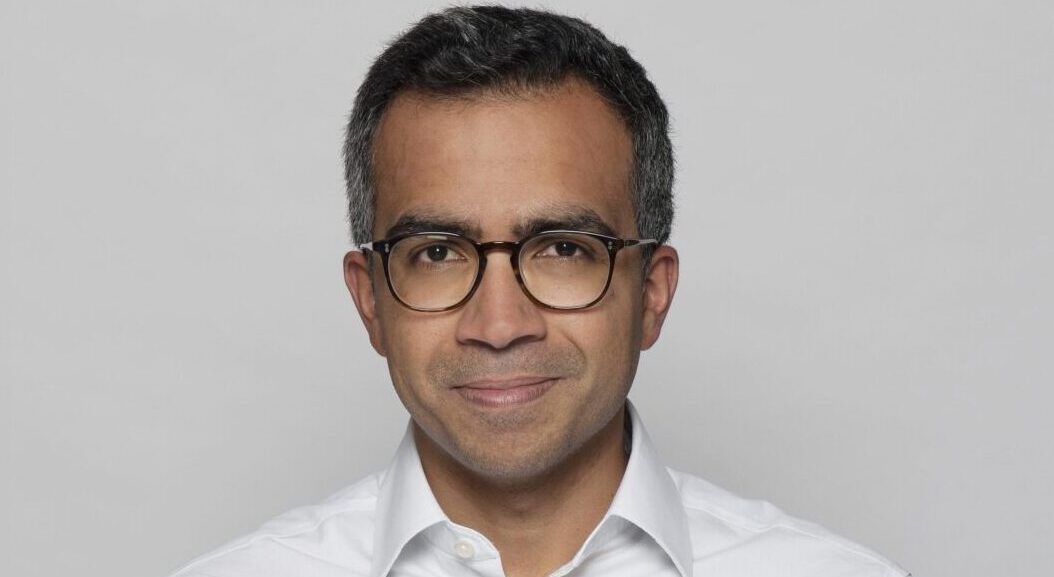
The legal team – led by long-serving GC and corporate affairs director Mark Gregory (pictured) – has played a key role in various non-core disposals, including the sale of its naval propulsors business to Fairbanks Morse Defense. Other key projects have included the largest single contract the MoD has ever signed: the Unity contract, which will see Rolls-Royce support the Royal Navy’s nuclear submarine fleet.
Internally, the team has also undergone a transformation with a focus on improving efficiency and making the organisation more cost-competitive. The company has introduced a new and leaner organisational structure which will improve operational efficiency, while also introducing methods to improve contract profitability.
Click here for more information about the Legal Business Awards.
[email protected]









 Response rates for London referees saw a double-digit increase this year, with rising by almost 12% to a new record high of more than 31,000.


 Burges Salmon
 Osborne Clarke
 Russell-Cooke
 Taylor Wessing