
A&O Shearman and Freshfields both make up nine London lawyers in latest partnership rounds

A&O Shearman and Freshfields have unveiled their latest crop of partner promotions, with nine London lawyers getting the nod at both firms.

Thirty-three lawyers have made the grade at A&O Shearman, a slight decrease on the 40 made up across both legacy firms on the merger go-live date in May last year, when 32 Allen & Overy lawyers and eight from Shearman & Sterling were promoted.

M&A saw the largest intake, with 10 new partners added, three of who are based in London – Tina Barazandeh-Nejad, Aoife Mac Dermott and Fatima Al-Shawaf.

The other six London promotions include three in debt finance, with one each in asset finance and real estate, as well as the promotion of senior associate Thomas McGuffie, a founding member of the firm’s markets innovation group, a team of lawyers, technologists and developers who collaborate to devise innovative solutions for large-scale client issues.

Four of the 33 promotions are in the US, shared between New York, Dallas and Washington DC, with nine spread across the the firm’s European offices, four in APAC and two in Dubai.

In a statement, managing partner Hervé Ekué said that the geographical spread of the promotions reflected the firm’s ‘continued investment in developing our market-leading offering across markets, products and sectors.’

Energy, natural resources, and infrastructure was the second most prominently represented practice with five promotions, while debt finance, litigation and investigations, and real estate each saw three apiece.

The promotions come after the newly merged firm conducted a post-merger strategic review, which saw it end its consultancy business, close its South Africa office and announce plans to cut roughly 10% of its partnership, with LB reporting in January that more than 100 partners had left the firm since the combination.

Meanwhile, fellow magic circle firm Freshfields has promoted 25 new partners around the world, marking a slight increase from last year’s figure of 23, but a reduction from 30 in 2024 and 27 in 2023.

The firm’s dispute resolution and global transactions practice groups are the best-represented in this round, with nine partners each. Antitrust, competition and trade saw three elevations, while the people and rewards and tax practice areas have been both bolstered by two new partners.

The nine London promotions were divided between dispute resolution (five) and global transactions (four). After the UK, Germany was the second-biggest beneficiary with six new partners divided between the firm’s Frankfurt, Hamburg and Düsseldorf offices.

In the US, a focus of significant investment for Freshfields in recent years – and its fastest-growing region, with revenue up 26% from £311m to £391m last year – the firm has made up three lawyers, all based in New York.

Beyond this, the Brussels office elevated two lawyers to the partnership, while Abu Dhabi, Singapore, and Amsterdam each saw one new partner added.

As with last year, 52% of the promoted partners are female, meaning the firm is continuing to meet its 2021-26 global gender diversity targets for new partners to be at least 40% women.

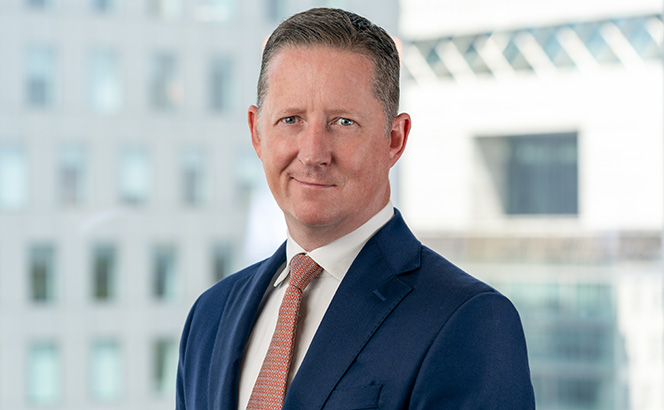
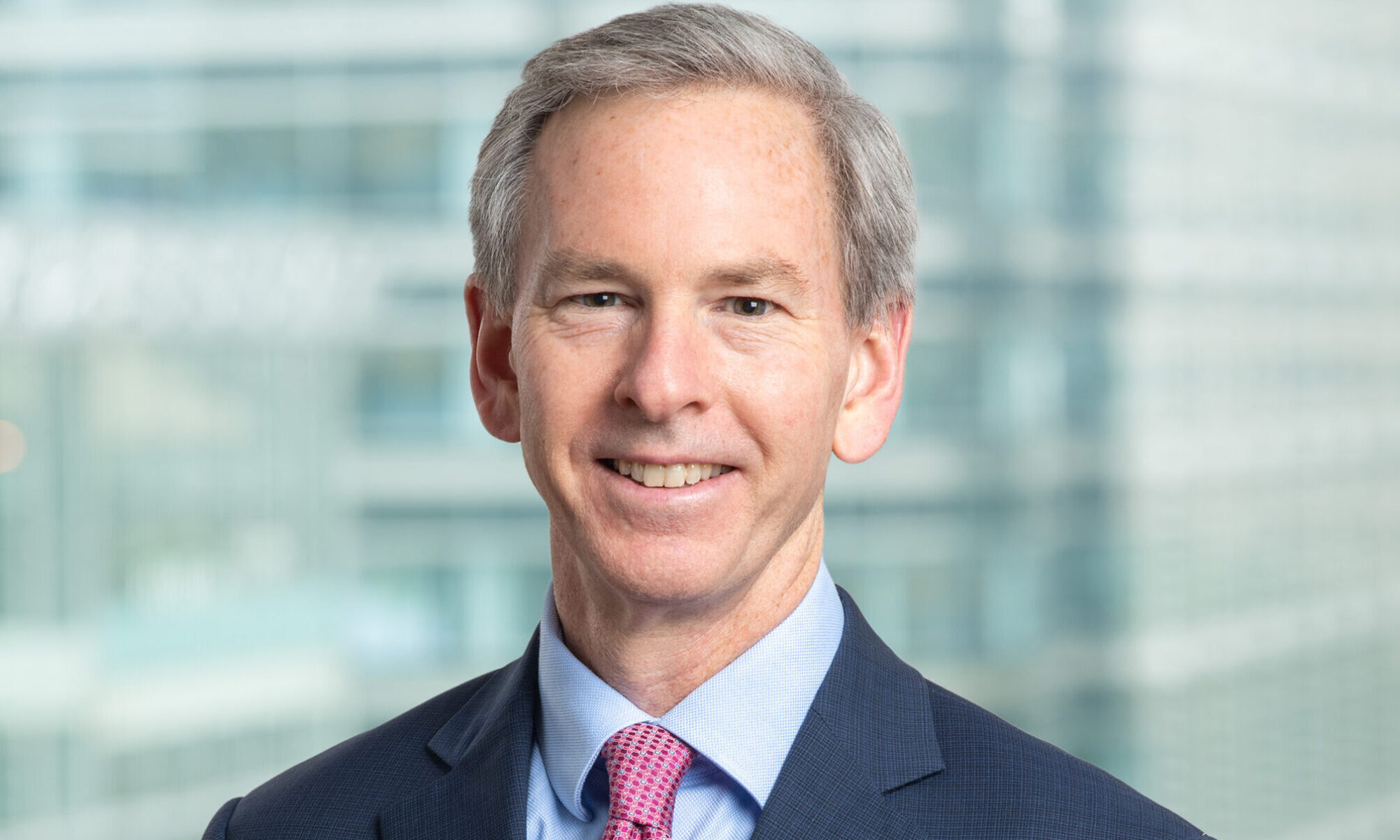
Senior partner Georgia Dawson (pictured) said in a statement: ‘This cohort of new partners deliver market-leading legal expertise for our global client base. They bring with them the insight, ambition and leadership that will help guide the firm and our teams into the future, shaping how we grow, evolve and continue to deliver for our clients.’

Elswhere, Dentons has confirmed its latest round of promotions across the firm’s UK, Ireland, and the Middle East business. A total of ten lawyers have made the grade, including four in London, two in Milton Keynes, and one each in Edinburgh and Glasgow. Dubai was the only non-UK office to see any partner elevations, with two lawyers made up.


Partner promotions in full

A&O Shearman

Ferhat Afkar, ENRI, Jakarta
Jackson Allen, ENRI, Perth
Tina Barazandeh-Nejad, M&A, London
Matthew Brown, Tax, Washington D.C.
James Bryson, Global Financial Markets, New York
Tomas Bury, M&A, Bratislava
Mike Campbell, ENRI, Dubai
Richard Chamberlain, ENRI, Dubai
Jackie Donald, M&A, Perth
Evgenia Erakhtina, Asset Finance, London
Temilope Esho, Debt Finance, London
Vittoria Faraone, Funds and Asset Management, Luxembourg
Michael Fink, Real Estate, Düsseldorf
Paul Fortin, Litigation and Investigations, Paris
James Green, Debt Finance, London
John Hibbard, Tax, New York
Benjamin Lacourt, Funds and Asset Management, Paris
Jules Lecoeur, M&A, Paris
Xin Ni Lim, Debt Finance, London
Simone Lowes, M&A, Sydney
Aoife Mac Dermott, M&A, London
Billy Marsh, Litigation and Investigations, Dallas
Thomas McGuffie, Markets Innovation Group, London
Tzvetomira Pacheva, ENRI, Paris
Alessandra Pala, Global Financial Markets, Rome
Emma Perrin, Real Estate, London
Sebastian Remberg, M&A, Hamburg
Kayleigh Sanders, M&A, Amsterdam
Hauke Sattler, Restructuring, Hamburg
Fatima Al-Shawaf, M&A, London
Pol Theisen, M&A, Luxembourg
Pieter Tieskens, Real Estate, Amsterdam
Charlotte Willemer, Litigation and Investigations, Frankfurt

Freshfields

Aaron Green, Antitrust, Competition and Trade, Brussels
Janet Lang, Antitrust, Competition and Trade, Brussels
Alvaro Pliego Selie, Antitrust, Competition and Trade, Amsterdam
Ramya Arnold, Dispute Resolution, London
Rohit Bhat, Dispute Resolution, Singapore
Nicholas A. Caselli, Dispute Resolution, NY
Joshua Kelly, Dispute Resolution, London
Emily Knight, Dispute Resolution, London
James Raeside, Dispute Resolution, London
Katharina Shingler, Dispute Resolution, Frankfurt
Stefanie Spancken-Monz, Dispute Resolution, Düsseldorf
Jessica Steele, Dispute Resolution, London
Meredith Bayley, Global Transactions, London
Michael Black, Global Transactions, London
Cristina Esteve, Global Transactions, Madrid
Carsten Haak, Global Transactions, Frankfurt
Kate Hatcher, Global Transactions, London
Jeff Jay, Global Transactions, NY
Jon Scurr, Global Transactions, London
Charlotte Stevens, Global Transactions, Abu Dhabi
Daniel von Bülow, Global Transactions, Frankfurt
Elodie Favre-Thellmann, People & Reward, Paris
Judith Römer, People & Reward, Hamburg
Sarah Katz, Tax, NY
Sebastian Röger, Tax, Frankfurt

Dentons

James Francis, Asset, Trade & Export Finance, London
Faris Shehabi, Dispute Resolution, Dubai
Kirsty McBirnie, Corporate Lending & Real Estate Finance, Edinburgh
Lorna Henderson, Corporate Lending & Real Estate Finance, Glasgow
Tom Hanson, Litigation & Arbitration, London
Tasmyn Brittlebank, Projects, Milton Keynes
Torquil Law, Projects, London
Hazel Shakur Quinn, Real Estate, Dubai
Lorna Rogers, Real Estate, Milton Keynes
Anna Brown, Technology, Media & Telecoms, London

[email protected]

Top UK firms ramp up New York M&A hiring with fivefold increase in three years

Top UK firms have increased their New York M&A partner hiring fivefold since 2021, according to transatlantic recruiter Macrae’s 2024 Legalscape report.

The firms collectively hired 11 lateral M&A partners in the city in 2024, compared to two in 2021 and none in 2020.

The figures also show a significant increase in the number of M&A partners being recruited more generally in New York, with the number of M&A laterals to top US, UK, and international firms climbing from 45 in 2021 to 65 in 2004.

UK firms represented 17% of last year’s hires, compared to just 4% of those made in 2021.

New York-based Macrae partner Jon Truster said the increase in M&A recruitment activity is partly down to firms’ willingness to up top-level remuneration.

‘The top of compensation changed at the beginning of last year, to around $25m’, he said. ‘Certain firms were able to take advantage of that. Paul Weiss in particular was able to be quite aggressive, and was a big beneficiary of that.’

Paul Weiss was the most active firm tracked in Macrae’s data, making six M&A partner hires in New York. The steady uptick in compensation has also seen more lateral hiring from traditionally conservative firms like Simpson Thacher, which came in joint third place for 2024 with four hires.

No group of firms has increased its hiring at the rate of the erstwhile magic circle, however.

Legacy Allen & Overy took a different tack with its major transatlantic merger last year – but each of the other three international magic circle firms features among Macrae’s top hirers for New York M&A.

The London-headquartered firms also saw no New York M&A partners leave in 2024, compared to one exit per year in 2023, 2022, and 2020, and two in 2021.

Market perception of the firms’ progress however remains mixed. ‘The magic circle firms are definitely being more aggressive in the US’, said one New York M&A partner at a US firm, before concluding that they remain ‘a work in progress.’

Firms by most New York M&A partner hires

Firm New York M&A partners added
Paul Weiss 6
Freshfields 5
Loeb & Loeb 4
Simpson Thacher 4
Clifford Chance 3
Linklaters 3
Holland & Knight 2
Hunton Andrews Kurth 2

Linklaters opened the year with its high-profile January hire of a six-lawyer team from then-Shearman & Sterling, including partners M&A partners George Casey, Heiko Schiwek, and Gregory Gewirtz.

Legal 500 $1bn+ M&A Hall of Famer Casey, now Linklaters’ global chairman of corporate, served as global managing partner at Shearman from 2018, and since joining Linklaters has worked on deals including leading the team that advised Rio Tinto on its $6.7bn acquisition of Arcadium Lithium last October.

Freshfields, meanwhile, was the most active UK firm with five M&A hires, putting it second overall, behind only Paul Weiss.

Its biggest recruits of the year were Latham private equity M&A partners Neal Reenan and Ian Bushner, who joined in March as global private capital co-head and US private capital head respectively.

The firm also added to its junior benches. In January it hired Sanjay Murti, who made partner at Cravath in 2022 – ‘on the junior end, but nonetheless a force to be reckoned with’, according to one commentator – as well as Kirkland partner Steven Li, another Cravath alum, who left that firm in 2021 as a senior associate to join Kirkland as a partner.

It rounded out its number with its June 2024 hire of Kirkland M&A partner Joshua Ayal.

The hires saw Freshfields continue an aggressive New York buildout that has seen it snatch a clutch of high-profile laterals in recent years, from a Cleary team led by Ethan Klingsberg in 2019 through the 2021 hire of Damien Zoubek from Cravath to co-lead the US corporate and M&A practice alongside Klingsberg.

Both Klingsberg and Zoubek are Legal 500 leading partners for $1bn+ deals, with Jenny Hochenberg, who joined from Cravath in 2022, ranked as a next-generation partner.

Klingsberg’s hire has proved pivotal for Freshfields’ US strategy. Already, in 2025, he is leading the team advising Google, once a key client of Klingsberg’s at Cleary, on its prospective acquisition of Wiz, valued at $32bn.

Working with Klingsberg on the deal are M&A partners Denny Kwon, who joined the firm from Covington in Silicon Valley last April, and Li.

Clifford Chance, meanwhile, is in joint fourth place with three hires. The firm hired White & Case partner Chang-Do Gong – now US M&A co-head – in May, in a play that has seen the firm bring over more M&A talent from White & Case into 2025, with Bryan Luchs joining in March and Robert Chung following this week.

In addition to Gong, the firm rounded out its 2024 hires with O’Melveny PE partners David Schultz and Vince Ferrito, in October and November respectively.

[email protected]

Revolving Doors: Sidley picks up Latham City corporate co-chair, two leave HSF in London, and A&O Shearman readies Chicago launch

Sidley Austin made waves in London this week with another senior partner hire from Latham & Watkins, bringing over Latham’s London corporate co-chair David Stewart (pictured).

Stewart is the ninth Latham partner to join Sidley in the last eight months, following the August move of a five-partner leveraged finance team led by Legal 500 acquisition finance Hall of Famer Sam Hamilton and leading individual Jayanthi Sadanandan, the October hire of capital markets partners Scot Colwell and Patrick Kwak, and the December hire of Latham London finance co-chair Tania Bedi.

‘We have a very specific way we integrate laterals,’ Sidley management committee chair Yvette Ostolaza told Legal Business. ‘By the time you join the firm, you’re well-positioned to succeed. Dave is an example of that. We wanted someone who can help us grow our cross-border practice, and Dave fits that role perfectly.’

She continued: ‘We aim to continue to invest and grow key industry verticals including tech, life sciences, energy/infrastructure, and private equity.’

London managing partner Tom Thesing added: ‘We’re in expansion mode. There will be more hires in the near term.’

Though Latham also saw Silicon Valley partner Tony Richmond depart to become chief legal officer at American Airlines, the firm was also active, bringing over London A&O Shearman structured finance duo Franz Ranero and James Smallwood.

Ranero is a Legal 500 Hall of Famer for securitisation.  His arrival with Smallwood deepens Latham’s expertise in collateralised loan obligations, and adds to a total of more than 100 partners to leave A&O Shearman since the Allen & Overy-Shearman & Sterling merger was announced in 2023.

Hot on the heels of its own transatlantic merger approval vote, Herbert Smith Freehills also saw two London partners leave, with PE partner Joseph Dennis set to join Dechert and Legal 500 product liability defendant leading partner litigator Philip Pfeffer moving across the Atlantic to join Jones Day in New York.

Also active in London was Weil, which hired PE secondaries partner Simon Saitowitz from Ropes & Gray. Saitowitz returns to the US firm after leaving as an associate to join Fried Frank as a partner in 2017, and moving to Ropes & Gray in 2022.

Meanwhile, Paul Weiss hired Legal 500 fund finance next-generation partner Cameron Roper from Proskauer, marking the acquisitive US firm’s first fund finance hire in London.

Baker Botts hired Vinson & Elkins global project finance practice head Nabil Khodadad as head of project finance for its international office. Khodadad made the move with counsel and Legal 500 oil and gas leading associate Alistair Wishart, who joins Baker Botts as a partner.

Shoosmiths hired Bird & Bird real estate finance partner James Salford, while Crowell & Moring hired AI and emerging tech specialist Emma Wright into its Privacy and Cybersecurity Group from Harbottle & Lewis. A Legal 500 leading partner in artificial intelligence, IT and telecoms, and industry focus: tech, media, and telecoms, Wright is also co-founder and director of the Interparliamentary Forum on Emerging Technologies and an executive committee member of the global UNESCO Women4Ethical AI platform.

DWF saw the departures of insolvency and restructuring partner Natasha Atkinson and finance and restructuring partner Matt Williams to Pillsbury and Taylor Wessing, respectively. Finally in London, Wedlake Bell hired corporate partner Hollie Gallagher from Broadfield, formerly BDB Pitmans.

In New York, Clifford Chance continued to build its New York corporate M&A benches with the hire of Robert Chung. Chung is the third corporate M&A to leave W&C for CC in the Big Apple in a year, following Bryan Luchs this March and Chang-Do Gong, who joined the firm last May and now co-heads its US M&A practice.

Meanwhile, A&O Shearman readied to launch its Chicago office, the firm’s tenth in the US, with its hire of Mayer Brown energy and infrastructure partners Paul Astolfi and Katy McNeil.

Astolfi joined Mayer Brown as a partner in 2010 and served as co-head of its global projects and infrastructure group. He is based in Dallas and spends significant time in Chicago, where McNeil, who made partner in 2023, works full-time. A&O Shearman will launch in Chicago ‘subject to requisite approvals’.

Also opening a new office was Fenwick, which established a presence in Boston with its hire of a three-partner life sciences IP team from Cooley comprising Matthew Pavao, Heidi Erlacher, and Chen Chen.

Finally in the United States, Brown Rudnick launched in Los Angeles with a four-partner hire from US firm Stubbs Alderton & Markiles, bringing litigators Daniel Rozansky and Nicholas Rozansky into its brand and reputation management group, as well as corporate and M&A partner Jonathan Friedman and litigator and trial counsel John De La Merced.

In Europe, King & Spalding hired Brussels data, privacy, and security partner Charles-Albert Helleputte from Squire Patton Boggs, where he was EU practice head and global data privacy, cybersecurity, and digital assets team co-chair. Helleputte is the third partner to join K&S in Brussels, following Baker McKenzie trade duo Arnoud Willems and Bregt Natens in February.

Meanwhile, Jones Day hired a four-lawyer team from RocaJunyent in Madrid led by banking and finance partner José Luis Pita da Veiga Subirats.

Finally, this week LB waves goodbye to two of its own, with city editor Elisha Juttla and reporter Anna Huntley both leaving the team. We wish them all the best.

[email protected]

FCA unveils £20m legal line-up, with Clifford Chance and Eversheds among firms not reappointed

FCA SIGN

The Financial Conduct Authority has updated its legal services framework with a new four-year panel running from 1 April 2025 until 1 March 2029, valued at up to £20m and featuring 14 law firms.

Clifford Chance, Norton Rose Fulbright, Eversheds Sutherland, Pinsent Masons, Clyde & Co, and Clarke Wilmott all featured on the FCA’s previous panel but have not been reappointed. 

Ashurst, Dentons, DLA Piper, Mills & Reeves, Burges Salmon, Bevan Brittan, Broadfield, Kingsley Napley, and Gowling WLG have retained their places.

The framework also features five new firms: Addleshaw Goddard, CMS, Fieldfisher, Brodies, and TLT.

Although the new panel includes one fewer firm than before, the estimated spend of £20m, according to a government website, marks a significant increase from the City watchdog’s previous four-year framework. That earlier framework, which ran from August 2020 to June 2024, had a contract value of £8.6m.

As previously, the framework is divided into two lots: public law and corporate and commercial law. The FCA took bids from firms that wished to appear on the roster between July and September 2024, with the panel initially expected to take effect from January 2025.

It has been an eventful period for the regulator. Despite strong criticism of the City watchdog from an all-party parliamentary group report in November, with its leaders branded ‘opaque’ and ‘unaccountable’, FCA CEO Nikhil Rathi was reappointed by the Chancellor of the Exchequer, Rachel Reeves, for a second five-year term running to 2030 earlier this month.

Last month, the watchdog decided against bringing in new diversity and inclusion rules for financial firms. While the move was explained as a way of decreasing the ‘regulatory burden’ in the context of the government’s drive for economic growth, it came in the context of a widespread retreat from diversity policies across the financial and legal sectors in the face of pressure across the Atlantic from US President Donald Trump.

[email protected]


Partner promotions down to multi-year lows as HSF, Eversheds, and Taylor Wessing announce 2025 numbers

Herbert Smith Freehills, Eversheds Sutherland, and Taylor Wessing announced their 2025 partner promotions, with total numbers down at each firm.

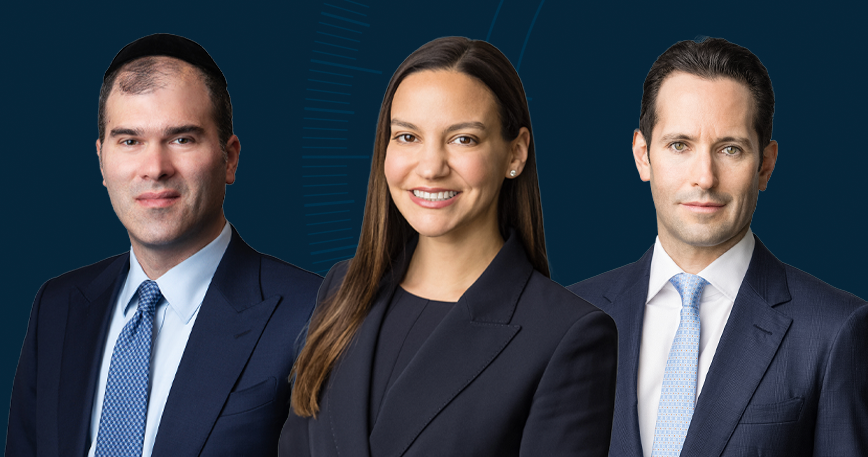
Hot on the heels of its transatlantic tie-up with US firm Kramer Levin being voted through by the partnership of both firms, HSF announced the promotion of 19 partners (pictured above), effective from 1 May 2025, down from last year’s number of 27.

Five are based in the firm’s London office, while a further seven are in Australia, spread around the firm’s offices in Melbourne, Brisbane, and Perth.

Energy, identified as a ‘jewel in our crown’ by HSF CEO Justin D’Agostino in a November interview with LB, was a major theme of the promotions, with five of the promotions involving energy specialists and a further two involving partners with expertise in mining.

HSF also made 23 lateral partner hires this year, with Düsseldorf the largest beneficiary, having welcomed five new partners.

‘I am delighted to welcome our new cohort of exceptionally talented lawyers into the partnership’, said D’Agostino in a statement. ‘As we embrace an exciting future as Herbert Smith Freehills Kramer, our new partners enable us to build on our existing strengths and to add depth to our global offering and client relationships. I am confident they will achieve great success as partners.’

Elsewhere, Eversheds Sutherland (International) elevated 23 lawyers to the partnership, 52% of whom are women. The number represents a significant decrease from last year’s firm record of 40, and is also down from 2023’s total of 29 and 2022’s total of 31.

British partners dominated the round, with six promotions in London, four in Birmingham,  two each in Nottingham and Newcastle, and one each in Manchester, Leeds, and Cardiff, adding up to 74% of all promotions.

CEO Lee Ranson said in a statement: ‘Our 2025 newly promoted partners have exceptional legal talent and an unwavering commitment to developing deep and trusted relationships with our clients. I have no doubt that together these new partners have the drive, vision and energy to help shape a successful future for our global firm.’

Finally, Taylor Wessing announced a total of ten partner promotions for 2025, six of whom are women. The number represents a notable decline from last year when 18 partners were made up. The figure is the lowest since 2020 when five partners were made up.

Four of the 10 are London-based and two are based in Dublin, while the firm’s Hamburg, Brussels, Amsterdam, and Vienna offices saw one promotion apiece.

Global co-chair and UK managing partner Shane Gleghorn said in a statement: ‘We are delighted to announce our 2025 cohort of new partners and senior counsel whose expertise and leadership will be focused on delivering the highest levels of service to our clients.’

Full list of partner promotions by firm

Herbert Smith Freehills

Emily Coghlan, Melbourne – Digital Legal and Legal Technology
Michael D’Agostino, Melbourne – Projects
Eliza Eaton, London – Energy
Maxwell Herman, New York – Product Liability and Complex Torts
Thomas Herman, Paris – Energy and Infrastructure
Gabby Herron-Cartwright, Brisbane – Energy and Infrastructure
Tamanna Islam, Sydney – Financial Services Regulation
Hannes Jacobi, Frankfurt – Energy, Infrastructure and Real Estate Finance
Rémi Jouaneton, Paris – Corporate Crime & Investigations and Compliance
Geoff Kerrigan, Perth – M&A and Mining
Madeleine Miller, Melbourne – M&A
Eunice Park, Sydney – Commercial Litigation and Investigations
Nicolas Pol, Paris – Commercial Litigation and Insurance
Camille Puech-Baron, Brussels – Competition, Regulation and Trade
Krishna Shorewala, London – Funds and Asset Management
Charlotte Whight, London – Energy and Infrastructure
Joe Williams, London – Competition Disputes and Economic Regulation
Shaun Williamson, London – M&A and Mining
Li-Lian Yeo, Sydney – M&A, Private Equity and Restructuring, Turnaround & Insolvency

Eversheds Sutherland

Mike Birkett, London – Corporate
Shelley Evans, Cardiff – Corporate
Peter Greenall, London – Banking
Steve Jennings, Dubai – Corporate
Anne-Louise Lawrence, Birmingham – Restructuring
Sheena Wells, London – Banking
Nicolette Sanders, London – Commercial
Monika Zejden-Erdmann, London – Competition
Michał Wojciechowski, Warsaw – Public Contracts
Michael Hardiman, Birmingham – Employment
Nerys Ireland, Birmingham – Employment
Chloe Themistocleous, Manchester – Employment
David Williams, Newcastle – Employment
José Pedro Alberca, Madrid – Financial Services Disputes and Investigations
Alexander Cook, Leeds – Commercial Dispute Resolution
Daniel Jackson, Nottingham – Financial Services Disputes and Investigations
Samantha Miller, Birmingham – Real Estate Litigation
Carlos Pires, London – Commercial Dispute Resolution
Duncan Watt, Hong Kong – Commercial Dispute Resolution
Roberta Wertman, Abu Dhabi – Construction Litigation
Karen Mutton, Nottingham – Planning
Kathrin Paulet, Dusseldorf – Core Real Estate
Kate Sutton, Newcastle – Core Real Estate

Taylor Wessing

Richard Faichney, UK – Corporate Technology and Life Sciences
Johanna Götz, Germany – Technology, Media & Telecoms
Lacy Gratton, UK – Corporate Real Estate & Private Capital
Dannie Hanna, Ireland – Corporate
Jo Joyce, Ireland – Technology, IP and Information
Andrew Payne, UK – Patents
Clare Reynolds, UK – Technology, IP and Information
Marie Keup, Belgium – Brands & Advertising and Copyright & Media Law
Martijn Loth, Netherlands – Tech & Data
Carmen Redmann-Wippel, Austria – Banking & Finance

[email protected]

Kirkland, Latham, A&O Shearman among latest to cut deals with Trump administration

Five more top US and international firms have cut deals with US President Donald Trump, offering a combined total of $600m in pro bono and other legal work in exchange for protection from potential executive orders, according to posts on the president’s Truth Social account on Friday (11 April).

Kirkland & Ellis, A&O Shearman, Simpson Thacher, and Latham & Watkins have agreed to provide $125m in legal services each, while Cadwalader has agreed to $100m.

The news comes a week after Skadden cut its own deal offering $100m in pro bono services, followed by Willkie on 1 April and Milbank on 2 April. These eight firms  were among 20  contacted by the Equal Employment Opportunity Commission (EEOC) on 17 March requesting detailed data on all applicants and hires since 2019.

Paul Weiss became the first firm to reach an arrangement with the administration on 21 March, agreeing to provide $40m in pro bono services in return for an executive order against it being dropped.

The new deals bring the total value of pro bono and free legal services work secured by the administration to $940m.

According to Trump’s posts, all five firms have pledged their pro bono services ‘to causes that President Trump and the law firms both support and agree to work on’, including providing assistance to veterans and public services, ensuring fairness in the justice system, and combating antisemitism.

The president has also mused publicly about enlisting the firms to work on coal leasing deals, as well as using them to represent the administration in trade policy negotiations over sweeping tariffs that have sent ripples through the global economy since they were first imposed on 2 April.

According to the site, the firms have also agreed to drop what the President’s posts called ‘illegal DEI discrimination and preferences’, and affirmed that they would not deny representation to clients ‘because of the political views of individual lawyers’.

In exchange, the administration announced that the EEOC has withdrawn the letters it sent to the firms on 17 March requesting detailed data on all applicants and hires since 2019.

The administration has also agreed not to pursue any claims related to issues of hiring and employment practices’ compliance with discrimination legislation raised in the EEOC letters.

Firms are cutting pre-emptive deals to protect themselves from both EEOC enforcement and further executive action.

Of the firms to have come to arrangements with the administration so far, only Paul Weiss was subject to an executive order directed against it. The order suspended all security clearances held by Paul Weiss employees, directed federal agencies to review and terminate all contracts with Paul Weiss, and limited Paul Weiss personnel’s access to all federal buildings.

In an email to staff published by David Lat on his Substack ‘Original Jurisdiction’, Paul Weiss chair Brad Karp described the order as an ‘existential crisis’, and argued that the deal was the best way for the firm to fulfil both its obligation to its clients and its ‘fiduciary duty’ to its employees.

Some firms, however, are fighting the orders, with Perkins Coie, WilmerHale, and Jenner & Block each achieving court rulings placing a temporary hold on the orders issued against them.

Last Friday, Susman Godfrey became the fourth firm to file suit against the administration, arguing in its complaint that: ‘Unless the Judiciary acts with resolve – now – to repudiate this blatantly unconstitutional Executive Order and the others like it, a dangerous and perhaps irreversible precedent will be set.’

‘Put simply’, the complaint continues, ‘this could be any of us.’

Several associates have publicly resigned from firms that have made deals with the administration, along with Paul Weiss special counsel for pro bono Steven Banks and Willkie senior counsel (and longest-serving lawyer at the firm) Joseph Baio.

While no current partner has resigned from any of the firms in protest, Goodwin partners Neel Chatterjee and David Cross established Law Firm Partners United (LFPU), an informal network for partners at top 200 firms to organise and speak out for the rule of law.

At time of writing, LFPU has nearly 600 members on LinkedIn.

The president’s social media posts announcing the most recent batch of deals closed with a statement attributed to Kirkland chair Jon Ballis, A&O Shearman senior partner Khalid Garousha, Simpson Thacher executive committee chair Alden Millard, and Latham chair and managing partner Richard Trobman.

‘Today, our Firms reached an agreement with President Trump and his Administration, including the U.S. Equal Employment Opportunity Commission (EEOC)’, the firms said.

‘We have resolved this matter while upholding long-held principles important to each of our Firms: Equal Employment Opportunity; providing pro bono assistance to a wide range of underserved populations, and ensuring fairness in the Justice System; and representing a broad spectrum of clients on various matters. We look forward to a continued constructive and productive relationship with President Trump and his team.’

[email protected]

Almost 400 partners join group for Big Law to challenge Trump executive orders

Nearly 400 partners have signed up to Law Firm Partners United (LFPU), a group for partners at top 200 firms to speak out for the rule of law in the face of the Trump administration’s war on big law.

‘The Purpose of this Group is to Bring Together Partners at AMLAW 200 law firms to find ways to express our point of view on the rule of law when our firms choose to lie silent’, LFPU says on its LinkedIn. ‘There is a saying that Democracy dies in silence. The goal of this group is ensure that we protect democracy by not being silent.’

The group was established by two Goodwin partners: Silicon Valley IP partner and former executive committee member Neel Chatterjee, listed as the group’s admin on LinkedIn, and Washington DC antitrust and competition partner and first-chair trial lawyer David Cross.

At the time of going to press, 390 partners have signed on since LFPU was formed on Sunday (6 April), from firms including Latham & Watkins, DLA Piper, Morrison Foerster, Wilson Sonsini, and Paul Hastings.

Partners who join the group act as individuals and do not represent their firms, and the group aims to provide a space for internal discussion as well as to coordinate outward-facing statements and action.

One of the responses the group is considering is filing an amicus brief on the executive orders against law firms, which are currently being challenged in the courts by Perkins Coie, WilmerHale, and Jenner & Block.

Conversely, firms including Paul Weiss, Willkie, Skadden, and Milbank have cut deals with the administration to get the orders rescinded.

Last Friday, Munger, Tolles & Olson and litigation boutique Elmer Stahl filed an amicus brief on behalf of more than 500 firms in Perkins Coie’s suit. Freshfields was the largest international firm to sign the brief, joined also by firms including Covington & Burling, Arnold & Porter, and Crowell & Moring.

The failure of many large firms to lend their support helped prompt the establishment of LFPU.

In a post on LinkedIn, Chatterjee said: ‘I originally set a goal of 100 lawyers. With the encouraging response, I would like to see us reach 500.

‘Please spread the word, and encourage people to join. Our first stop is consideration of filing an amicus brief on some of the EOs targeting law firms. We have not yet decided whether the group wants to do it, but if you want to share your voice, now is the time.’

He concluded: ‘As always, we are acting as individuals and not on behalf of our law firms.’

Cross reshared the post, adding: ‘If you’re a partner at an #AmLaw200 firm, please join us at #LawFirmPartnersUnited. Now is the time for lawyers to individually speak up about the unlawful attacks on our profession and the rule of law. This organization is intended to give a voice to individual partners in #BigLaw in their personal capacity.

‘There are tens of thousands of AmLaw200 partners. Collectively, we can make our voices heard and protect the rule of law — before it’s too late.’

[email protected]

Meal Deal Maker: LB lunches with top City partners – Clifford Chance’s Melissa Fogarty

In Legal Business’s new Meal Deal Maker series, Melissa Fogarty, co-head of Clifford Chance’s corporate practice, reveals her sandwich of choice from Pret, reflects on what’s shaped her dealmaking over the past two years, and explains how she stays calm on big deals. 

She also shares some of the best ways she’s celebrated a deal closing (karaoke included), and why nothing beats unwinding by cooking a roast dinner for her children.

Check back in for more Meal Deal Maker interviews in the coming weeks – with top dealmakers from Skadden and Freshfields up next – and as always, get in touch* if you’re interested in taking part.

Hungry for more Meal Deal Maker videos? Please check out our previous interviews with Weil’s Tom Richards and Willkie’s Gavin Gordon.

*top dealmakers only

Howdy Saudi: why Riyadh is now the centre of attention for firms targeting the Middle East

The Middle East has long been an attractive destination for international law firms, but when it comes to expansion plans there’s a clear winner for the hottest place to be right now.

Ever-increasing numbers of UK and US firms have been piling into the lucrative Saudi market, with Pinsent Masons, King & Spalding, Akin and BCLP among the firms announcing Riyadh launches in the first quarter of 2025 alone.

The influx follows Saudi Arabia’s 2023 legal reforms which permitted overseas firms to open offices without a local partner as long as various conditions are met.

These include a minimum of 70% of lawyers needing to be Saudi nationals and 70% of advisory work needing to take place within the Kingdom, with no Saudi legal work outsourced to other countries.  Additionally, at least two partners from each foreign firm are required to reside in Saudi for a minimum of 180 days a year.

Around 15 international firms have already secured licences to operate in Saudi, with many more awaiting approval, all pinning their hopes on securing transactional, disputes or regulatory work as Saudi Arabia accelerates its economic diversification under its ambitious Vision 2030 development plans.

‘The country’s fast-growing economy and abundant investment opportunities across the wider Middle East region make Saudi Arabia an attractive destination for law firms,’ says Stuart Paterson, Middle East managing partner at Herbert Smith Freehills, which launched its Riyadh office in 2023 as one of the first international law firms to obtain a foreign law firm licence.

‘I’d struggle to think of many markets right now that are more dynamic than Saudi’  – Adrian Bell, CMS

Tremendous potential 

‘I’d struggle to think of many markets right now that are more dynamic than Saudi,’ adds Adrian Bell, joint managing director for Asia and the Middle East at CMS.

‘Vision 2030 is shorthand for the wide-reaching reforms happening in the country – social, built environments and legal. The opportunity for law firms to support these changes is massive,’ states Richard Dupay, a partner in BCLP’s Dubai office.

The sheer size and breadth of the Vision 2030 plans means international firms are well placed to secure lucrative mandates.

‘Given the scale of these ambitions, you need top international law firms involved,’ says Salman Al-Sudairi, chair of Latham & Watkins’ Saudi Arabia practice. ‘These firms bring significant global expertise in sectors that are core to Vision 2030, such as sports, tech, healthcare, energy, and financial services.’

‘With all the sporting events, ski resorts, high-end luxury hotels, and massive opportunities in energy and infrastructure, Saudi offers tremendous potential. It’s an entrepreneurial place, and people want to be involved,’ Bell concurs as he discusses the movement of firms into the market.

And it isn’t just transactional work that’s booming. ‘There have also been some notable trends in disputes and litigation,’ points out Paterson. ‘As countries here embark on ambitious infrastructure projects, the complexities have contributed to a growing demand for dispute resolution services.’

‘These progressive legal reforms contribute to the Kingdom’s emergence as a technologically advanced, business-friendly jurisdiction’ – Stuart Paterson,  Herbert Smith Freehills

Former Eversheds Sutherland International CEO Lee Ranson – who is taking up a new Middle East-focus role in Dubai this month after stepping down from his leadership post – points to a broader shift in the global landscape, particularly following the US elections: ‘The world is finding different axes; not always centred around traditional American influence. The region is establishing its own identity, which is attracting investment from diverse markets.’

Saudi Arabia’s legal reforms are helping to accelerate this shift, by making the kingdom more attractive to international investment. ‘One of the main reasons for codifying the law was to create a transparent, predictable regulatory framework to attract foreign investment,’ says Farida Sadiq, partner and head of UAE regulatory practice at BCLP. ‘These progressive legal reforms not only bolster individual rights and privacy but also contribute to the Kingdom’s emergence as a technologically advanced, business-friendly jurisdiction,’ Paterson adds.

Heart of business

Within Saudi, Riyadh is the clear destination of choice for firms wanting to enter the market.  ‘The concentration of power and control in Riyadh is significant, which is why firms are drawn to it,’ says Ranson. ‘Over time, investment may expand to other cities, but initially, businesses focus on where they believe key decision-makers are located.’

Bell agrees, noting: ‘Riyadh has become the capital city for commerce. Most of our clients are based there, and it seems to be the heart of business in the country. Compared to other cities, it has the infrastructure and has developed into that central hub.’

‘The Riyadh office will reflect the myriad opportunities in the surging Saudi Arabian market,’ says Fahad Alarfaj, Riyadh office managing partner at King & Spalding, pointing to: ‘a host of important investment opportunities, especially in equity and debt facilities, both conventional and Shari’ah-compliant.’

Bell points out that some industries, particularly in the energy space, are based outside Riyadh so, over time, firms may add bases elsewhere. ‘Some energy and oil and gas companies, in particular, are located outside of Riyadh, so we may look into opening a smaller, representative office elsewhere as time goes on. We remain open-minded and opportunistic.’

‘Vision 2030 isn’t just about Riyadh – it encompasses the entire nation. So, It’s important not to limit your focus to just Riyadh or Jeddah’ – Farida Sadiq,  BCLP

Sadiq likewise stresses a broader perspective: ‘Vision 2030 isn’t just about Riyadh – it encompasses the entire nation. So, It’s important not to limit your focus to just Riyadh or Jeddah.’

For some firms, Riyadh is becoming not just the heart of their Saudi operations but their Middle Eastern operations more broadly. Latham was one of the first  firms to establish under the regional headquarters initiative. ‘Having this licence has obvious practical advantages, but it also aligns with what we are trying to strategically achieve – approaching the Middle East as one unified operation, rather than having separate operations in different markets,’ Al-Sudairi explains.

At CMS, Bell also highlights Saudi’s growing importance as a headquarters location: ‘Two years ago, most of our growth was in the UAE, but now most of our hiring is in Saudi Arabia. We’ve likely reached a point in the UAE where growth will slow until Saudi catches up.’

Others though are keeping their options open. Alarfaj maintains that expansion in Saudi isn’t coming at the expense of other Middle Eastern offices, such as Dubai or Abu Dhabi. He explains: ‘Riyadh, alongside Dubai and Abu Dhabi, has always been a critical aspect of our wider Middle East presence.’

As the firm continues to grow, some local and regional refinements may be necessary, but their approach remains balanced: ‘the philosophy is not an ‘either-or’ but a ‘two-pronged’ approach,’ he adds.

Independence or not?

Saudi Arabia’s recent legal deregulation has prompted different strategies among international law firms: some are seizing the opportunity to operate independently, while others prefer maintaining local partnerships.

CMS, which had a longstanding relationship with a Saudi firm, saw the deregulation as a turning point to operate independently and open in Riyadh. ‘We saw our move there as a combination of a really exciting market full of opportunities and deregulation that allowed international law firms to operate independently for the first time,’ says Bell.

He adds: ‘Initially, the main challenge we faced was the requirement to have two expat partners spend at least 180 days on the ground in Saudi to get our license.’

For firms like Eversheds Sutherland and King & Spalding, going it alone didn’t align with their commitment to the local market, instead opting to continue operating in the region through joint ventures. ‘Given the nature of the Saudi market, having a strong local presence is crucial for navigating and building connections. Our local partnership has been hugely beneficial, and we see no reason to change it,’ explains Ranson.

‘We are proud of our history and accomplishments in Saudi Arabia. The shifting market dynamics, however, meant we required a larger team on the ground.’ – Fahad Alarfaj, Riyadh office managing partner, King & Spalding

King & Spalding on the other hand, has taken a different approach by merging with local firm Abdulaziz H. Al Fahad & Partners despite being granted both its foreign law firm license and RHQ license: ‘King & Spalding established a presence in Riyadh back in 2007 and we are proud of our history and accomplishments in Saudi Arabia. The shifting market dynamics, however, meant we required a larger team on the ground,’ says Alarfaj, ‘A merger meant we could reach both critical mass and have a full-service team in place in a single agreement.’

BCLP, also opted for a combination approach, fusing with KSA USA to strengthen its presence with plans to open offices in both Riyadh and Al-Khobar later this year. ‘We’re not launching in Saudi; we’re returning,’ says Dupay. ‘Sam Eversman was one of the partners that helped set up Bryan Cave [the US firm which merged with Berwin Leighton Paisner in 2018 to create BCLP] in Saudi in the ’80s, so for him and for us, it feels like a full-circle return.’

Pinsent Masons, after years of partnership with Alsabhan & Alajaji (SJ), has opted to operate independently as Pinsent Masons Saudi Arabia Law Firm LLC, but will continue close collaboration with Alsabhan & Alajaji. ‘Opening as a single entity in Riyadh was the next step in our strategy,’ a spokesperson at the firm says. ‘Even though we’re now operating as a single entity, we will continue to work with SJ on projects where our expertise is complementary.’

Talent wars

The region’s opportunities mean firms are finding it easier to find international talent willing to relocate. ‘I sent an email to my team in London asking if anyone was interested in a secondment to Saudi, expecting just a few responses here and there, says CMS’s Bell. Instead, I got 12 people – ranging from junior to very senior, male and female, single and with families. The variety of responses is a clear indication of how exciting people perceive the market to be.’

‘This is a market that needs top international talent and having more of these firms enter the region is important’ – Salman Al-Sudairi, Latham & Watkins

While international talent may be eager to work in the region, the 70% quota on local lawyers means recruitment competition can be intense. ‘Competition is a good thing, and the arrival of more international firms is elevating the offering for the market. This is a market that needs top international talent and having more of these firms enter the region is important,’ says Al-Sudairi. ‘International law firms need to continue investing in developing local talent – working with local universities to provide more learning opportunities and access to experienced lawyers. We’ve been doing this for a long time, and I hope new entrants into the market continue this approach.’

Sadiq emphasises the role of Saudisation – which aims to create employment opportunities for Saudi nationals – in developing local talent: ‘Saudisation is a great way to develop Saudi’s next generation of top lawyers, giving them a broader understanding of international best practices. We’re excited about the opportunities it creates to bring in and nurture local talent.’

She continues, ‘More and more people, especially women, are going to university both locally and abroad, and there’s definitely a growing interest in pursuing law. While there will always be competition for talent, I don’t think there will be a shortage of local talent eager to join international firms entering the market.’

Dupay adds, ‘Many students and professionals with a Saudi background are rightfully proud of their country’s growth and want to see its success. They’re incredibly excited to work with us, just as we’re excited to work with them.’

Bell highlights the importance of securing young talent. ‘We’re focused on capturing young talent through early-stage recruitment, like sponsoring events at key universities in Riyadh,’ he says, while also acknowledging the challenge of finding experienced local Saudi partners who fit the culture of an international law firm.

Culture is a consideration on both sides: ‘Of course, some people may feel they wouldn’t fit in,’ says Ranson. ‘That could be due to cultural differences, or it might simply be related to the climate – there can be various reasons. Ultimately, we have no shortage of people interested in the opportunities Saudi presents, but it’s not for everyone.’

Dipping toes

For many firms, staying competitive in Saudi Arabia means aligning with the priorities of Vision 2030. ‘It’s not about being full-service, but matching market demand with the expertise we have,’ says Bell. ‘Staying competitive means concentrating on areas of Vision 2030 where the firm has distinct strengths, including construction disputes, sports law, tourism, and renewable energy.’

Dupay adds, ‘They’re building a whole new nation with well-publicised giga-projects, new power plants and desalination plants, critical infrastructure including roads, rail, and expanding and building new airports. This aligns with what our firm has always supported – the built environment.’

Lee Ranson

‘There will certainly be ups and downs, with some firms doing well and others less so, but overall, my outlook on the market and the region remains very favorable,’ – Lee Ranson, Eversheds Sutherland

With ongoing development, opportunities for law firms are plentiful. As projects shift from the planning to delivery phase, Ranson highlights the growing need for legal services.  ‘My long-term view is a positive one regarding market development. There will certainly be ups and downs, with some firms doing well and others less so, but overall, my outlook on the market and the region remains very favourable.’

Bell, however, predicts that the market will begin to level off: ‘Right now, many firms are just dipping their toes in the water, but without a certain level of commitment, I believe we’ll see market consolidation. There will likely be a slowdown in new entrants, and I suspect some firms will leave Saudi in the next three to five years.’

‘Sometimes, there’s an unrealistic expectation that firms will automatically get business just because they are well-known elsewhere. You have to be patient – developing a reputation takes time,’ says Al-Sudairi. ‘There’s a large influx of firms right now, and in some ways it’s similar to the UAE 15-20 years ago. Those that were patient and committed for the long run have done well, others have retrenched over the years. It takes a clear vision, hard work, and commitment,’ he concludes

Firms with Saudi foreign law licences as of March 2025

Pinsent Masons
Herbert Smith Freehills
Baker Mckenzie
Latham & Watkins
Clifford Chance AS&H (50:50 joint venture)
Dentons
King & Spalding
Squire Patton Boggs
Kirkland & Ellis
Clyde & Co
Addleshaw Goddard
Greenberg Traurig
Quinn Emmanuel
A&O Shearman
Gibson Dunn & Crutcher
White & Case
Norton Rose Fulbright
CMS
Ashurst

Firms with regional headquarters licences as of March 2025

King & Spalding
CMS
Baker McKenzie
Greenberg Traurig
Clyde & Co
Latham & Watkins
Kirkland & Ellis
White & Case

[email protected]

US firms in rude health as Simpson Thacher, Gibson Dunn, Paul Hastings and others enjoy double-digit hikes

A clutch of US firms have recorded double-digit financial growth for 2024 after a strong 12 months for the Stateside elite now reckoning with the upheaval of President Trump’s return to office.

While the impact of Trump’s sweeping tariffs, executive orders against major firms and crackdown on diversity policies have made for a bumpy start to 2025, the financial results for 2024 to have emerged so far present a much more positive picture.

Simpson Thacher was among the firms that saw both revenue and PEP rise by double digits, according to reporting from law.com, with revenue rising 24% to $2.9bn and profit per equity partner surging 19% to $7.66m.

The New York-headquartered firm built out its leveraged finance bench in London last year, hiring Legal 500 acquisition finance next-generation partner Dan Peach from Linklaters in November and leveraged finance partners Bryan Robson and William Gwyn from Sidley Austin in December, with the latter co-head of Sidley’s leveraged finance practice.

Major matters handled by the firm during 2024 included acting for KKR on its establishment of a joint venture with T-Mobile for the $4.9bn acquisition of Metronet, as well as advising Blackstone on its $1.7bn bid for Japanese digital comics company Infocom.

The US firm also recently opened an office in Luxembourg with a trio of hires from A&O Shearman and Clifford Chance.

Meanwhile, Gibson Dunn generated $3.6bn in revenue in 2024, up nearly 16% on 2023’s figure, while PEP soared by more than 28% to $7.2m.

An active 2024 saw the firm add London laterals including restructuring partner Lisa Stevens from Freshfields in January, former Linklaters leveraged finance co-head David Irvine in April, private equity partner Will Summers from White & Case in September, and M&A partner Will McDonald from Jones Day at the end of the year. 

New London office heads Rob Carr and Osma Hudda, who were installed at the beginning of the year, told LB they plan to continue to grow the firm’s litigation and transactional practices in the City.

Elsewhere, Paul Hastings has seen its top line rise to $2.2bn, up 23% from last year, while PEP hit $6.7m in an increase of nearly 25%.

The firm continued to grow in 2025, hiring White & Case infrastructure partners George Kazakov and Din Eshanov last month, with Eshanov brought in to co-head the firm’s new office in Abu Dhabi.

It also added three significant laterals from Weil last year, with Shawn Kodes joining the New York office as co-chair of asset-backed finance in April, and banking and finance partner Reena Gogna and structured finance specialist Brian Maher joining in London in June and August respectively.

Among other US firms, Perkins Coie saw more modest revenue growth, with its top line rising 4% to approximately $1.26bn, with PEP up by 16% to $1.9m.

The Seattle-based firm also generated around $830,000 (£650,000) in revenue from its London office during the year, according to law.com reporting. The base opened in May 2024 with the eye-catching hire of former White & Case private equity chief Ian Bagshaw, who returned to law as Perkins Coie’s London managing partner after leaving White & Case in 2021.

More recently, the firm has found itself at the centre of the Trump administration’s escalating battle with big law, opting to litigate to fight the 6 March executive order issued against it rather than cutting a deal with the president as firms including Paul Weiss and Skadden have done.

The firm’s legal fight against the executive order has received the support of over 500 firms, including Freshfields, who signed onto a legal brief in support of the action last week.

Elsewhere, Orrick saw an increase of nearly 9% in revenue to $1.59bn, while PEP jumped nearly 17% to $3.63m.

The San Francisco-bred firm hired the former head of legacy Shearman & Sterling’s Italian M&A practice, Fabio Fauceglia, in May last year. Fauceglia joined with a team of six lawyers including of counsel Leonardo Pinta and five associates. The head of legacy Kramer Levin’s life sciences practice Irena Royzman also joined the firm’s New York office last April, several months before Kramer announced its plans to combine with Herbert Smith Freehills.

Finally, Chicago-bred Mayer Brown saw revenue nudge up by just under 4% to hit $1.98bn, with PEP up over 14% to $2.8m.

In London, the firm hired tax partner Sam Riesenberg from KPMG’s Washington National Tax practice last April, and corporate and securities partner Ross Montgomery from Dechert in November.

It also shuttered its Mexico City office at the end of October, ending a nine-year presence in the city.

With US firms averaging a 6.5% increase in billing rates last year according to the Thomson Reuters Institute’s 2025 Report on the State of the US Legal Market, the fastest acceleration since the global financial crisis, the healthy figures are perhaps no surprise.

Thomson Reuters data also show the average US law firm experienced a 2.6% increase in demand last year. A figure that, when placed against the average increase of 0.1% in annual demand growth from 2007 to 2023, also helps to explain why 2024 was such a strong year for the legal sector.

[email protected]


Kirkland and Freshfields hit $100bn for Q1 M&A as tariffs derail new year optimism

With financial markets reeling in response to the sweeping tariffs announced by US President Donald Trump, M&A partners are braced for yet another sustained period of upheaval – while also focusing on the positives.

‘Even though nobody knew precisely what was going to happen, and even though there was a known unknown, the fact that we have some specificity has now removed that known unknown,’ said White & Case UK public M&A practice head Patrick Sarch.’

‘There’s at least a benchmark. There wasn’t one before the tariffs were announced.’

The administration imposed a tariff of 10% on all imports to the US from the UK – the minimum rate imposed on any country, compared to 20% on goods from the European Union and 34% on goods from China, which, when combined with an earlier 20% levy, add up to a total of 54%.

The reaction to the tariffs has been pronounced, with worldwide stocks tumbling and the S&P 500 ending last week down more than 9% – its worst week since the height of the Covid pandemic in March 2020.

While Trump’s unprecedented intervention will provoke yet more uncertainty in transactional markets, in the run-up to the US election there had been widespread hopes that 2025 would see an M&A revival, and according to LSEG data, the first quarter of the year had been a strong one for M&A, with global activity up by 15% year-on-year – the strongest Q1 since 2022.

LSEG’s global principal advisor rankings show strong performance from US powerhouses, with Kirkland & Ellis in first place by total deal value, advising on 153 deals with a combined value of $103bn.

By far the best performing UK-headquartered firm was Freshfields, which placed second after acting on 33 deals with a total value of almost $101bn. The only other magic circle firm to feature in the top 25 global principal advisors was Clifford Chance, in 22nd place with 34 deals worth $22.2bn.

The top five was rounded out by Davis Polk in third, Latham & Watkins in fourth and Cravath in fifth place. Wachtell fell from first place last year to ninth, with Skadden down from second to twelfth.

Global principal advisors announced (by deal value)

Firm Rank (last year) Total deal value Number of deals
Kirkland & Ellis 1 (5) $103.1bn 153
Freshfields 2 (10) $100.9bn 33
Davis Polk 3 (14) $77.7bn 40
Latham & Watkins 4 (4) $67.7bn 132
Cravath 5 (47) $57.5bn 15

Global principal advisors announced (by number of deals)

Firm Rank (last year) Total deal value Number of deals
Goodwin 1 (3) $17.3bn 171
Kirkland & Ellis 2 (4) $103.1bn 153
Latham & Watkins 3 (5) $67.7bn 132
Cooley 4 (2) $24.4bn 102
Holland & Knight 5 (9) $1.65bn 91


‘People last year were predicting a big uptick in 2025’, said Freshfields global M&A practice co-head Andrew Hutchings (pictured top). ‘It was always my view that it would be more of a steady march back.’

In the wake of the tariffs, he continued: ‘There will inevitably be a period of relative caution as people wait to see the impact, as well as what any responses will be.’

Despite this, M&A partners argue that deal markets will remain resilient. ‘Across my career there have been a number of dislocating events’, said Hutchings. ‘Whether it was the global financial crisis, Brexit, the pandemic – in each case, the markets tend to reorganise themselves.’

Some also argue that, as crises become more frequent, M&A markets are less inclined to wait for a stability that may never come – uncertainty has become, in one partner’s words, ‘a new normal’.

In this environment, thought turns to opportunities. In particular, said Sarch, ‘investors with risk appetite can do very well’.

He continued: ‘We’re talking to clients who might want a foot in the door in the US or the EU, or for whom the UK might be interesting as almost an offshore jurisdiction outside the EU trading bloc and, hopefully, with a reasonable trade deal with the US.’

Sarch also pointed to a need ‘to reconfigure supply chains, especially in strategic national security-relevant areas’ as a driver of M&A.

For Hutchings, too, ‘If a company needs to reorganise the way in which its supply chain works or where it’s conducting its manufacturing, that can drive a level of activity.’

Geopolitical changes may also see shifts in the global M&A balance. According to LSEG data, US target M&A was down to 43% of total dealmaking in Q1 – a five-year low. Europe and Asia Pacific, by contrast, were each at three-year highs, up 12% and 59% respectively.

Freshfields also performed well in the European deal rankings, claiming the top spot with 31 deals worth a total of $67.4bn. White & Case was in second place, with Kirkland, Sullivan & Cromwell, and Latham rounding out the top five.

Among UK headquartered firms, Clifford Chance ranked tenth, with A&O Shearman in 13th, and Linklaters in 21st.

Any European involvement announced (by deal value)

Firm Rank 2025 Total deal value Number of deals
Freshfields 1 (6) $67.4bn 31
White & Case 2 (3) $49.6bn 49
Kirkland & Ellis 3 (25) $44.7bn 29
Sullivan & Cromwell 4 (8) $43.4bn 12
Latham & Watkins 5 (10) $43bn 46


The same geopolitical factors mean defence will likely be a centre of activity, while financial services – the joint first most active sector in Q1 alongside technology, with 19% of total M&A each – will likely remain hot, as flows of capital, unlike flows of goods, are not subject to tariffs.

‘Many people thought things would settle down towards the end of last year, with the elections out of the way and interest rates coming down’, said Hutchings. ‘That thinking is now destabilised. But businesses can’t afford to stand still. Maybe there are more risk factors, maybe execution is more complex. But it won’t mean that people won’t do transactions.’

[email protected]

Revolving Doors: Milbank signs up infrastructure trio while Travers hires new restructuring head

City of London

Milbank has ramped up its City infrastructure capabilities with the hire of a trio of partners from White & Case.

Katie Hicks – a Legal 500 leading partner for infrastructure: M&A and acquisition financing – Tim Sheddick and Tom Pound are making the move less than four years after joining White & Case from legacy Shearman. The trio also previously worked together at Baker McKenzie, where Sheddick had been a partner since 2006.

Hicks made partner on moving to Shearman in 2019, while Pound was made up at White & Case two years ago. The team work with sponsors and lenders on infrastructure acquisition financings and refinancings, advising clients across Europe on both public and private M&A in the sector.

Elsewhere, Travers Smith has appointed Mandip Englund as its new head of restructuring and insolvency. Englund, who will join the firm in May from Fried Frank, brings expertise across the full spectrum of restructuring and insolvency, including financial restructuring, distressed investing, and formal insolvency proceedings.

Eversheds Sutherland has expanded its technology, media, and telecoms practice with Legal 500 ranked leading individual Simon Kenyon.

Joining after 27 years at DLA, where he was co-lead of its international technology disputes practice, co-head of its UK technology disputes practice, and lead UK litigation partner in its India group, Kenyon brings with him experience on complex technology and outsourcing disputes, advising both users and suppliers of IT, commercial, and outsourcing services.

Mark Davenport, partner and co-head of global litigation & dispute management at Eversheds Sutherland, said: ‘Our aim is to deliver cutting-edge and comprehensive TMT dispute resolution advice to our clients across multiple jurisdictions, locally and globally.’

‘Simon’s extensive experience in the TMT sector and strong relationship networks form the ideal combination to help drive our success in this highly competitive space,’ he continued.

DLA Piper has appointed corporate and regulatory adviser Charles Rix to its international insurance team in London. Rix joins from Keystone Law, where he was a partner for a year following a nearly 23-year tenure at Hogan Lovells. He brings almost 30 years of experience advising global insurance companies on complex cross-border mergers and acquisitions, insurance business transfers, business restructurings, and regulatory matters.

​Jones Day has appointed Paul Jones to its energy practice in London, joining from Addleshaw Goddard. Jones has over 18 years of experience across the full energy value chain, focusing on upstream oil and gas, LNG, and energy transition projects. ​

‘Paul has advised a number of leading companies in the energy sector on high-stakes transactions and projects,’ said Jeff Schlegel, who leads Jones Day’s energy practice. ‘In addition to his track record in private practice, he has also worked as the head of legal operations for a major oil company in the Middle East, giving him a real and practical understanding of what it takes to support clients in the pursuit of successful commercial and legal outcomes.’

In a dual hire, Nabil Khodadad and Alistair Wishart have joined Baker Botts’ project finance group in London, with Khodadad taking on the role of head of project finance for the firm’s international offices.

Previously global head of project finance and head of the Middle East and CIS practice at Vinson & Elkins, Khodadad brings experience advising on high-profile projects across sectors including oil and gas, petrochemicals, pipelines, conventional and renewable power, mining, and energy transition. Wishart specialises in energy and infrastructure projects, with expertise in negotiating engineering, procurement, and construction (EPC) contracts.

Ashurst has grown its London real estate team, hiring Lee Foxcroft from Mishcon de Reya. With experience in real estate joint ventures and co-investment structures, Foxcroft handles complex, high-value transactions for private capital clients, including significant data centre and senior living deals.

In its private funds group, Proskauer has hired Duncan Woolard, who brings decades of experience across a variety of asset classes, with particular expertise in private equity, private credit, and real assets.

Woolard’s arrival continues a strong lateral growth streak for Proskauer’s private funds group, which has welcomed 11 partners across New York, London, and Paris since the start of 2024, including James Oussedik and Delphine Jaugey in London.

Leaving his role at A&O Shearman, where he previously led legacy Shearman & Sterling’s London litigation practice, Jonathan Swil has joined King & Spalding’s international disputes practice as a partner.

Bringing extensive experience advising financial institutions, corporates, and professional services firms on a range of UK and cross-border disputes, he has been involved in several high-profile cases, including the trial of one of the largest financial frauds in history and a significant anti-suit injunction and arbitration claim.

Swil’s departure is the latest in a series of exits from A&O Shearman, which, according to Legal Business research, recorded more than 100 departures in January since the merger was announced in 2023.

‘The convergence of contentious financial services regulatory enforcement and litigation is a growing issue for many major financial institutions, and adding Jonathan further reinforces our ability to help clients navigate these challenges, ’said Wade Coriell, co-leader of the firm’s international disputes practice group.

In its Paris office, King & Spalding has hired corporate, finance, and investments partner Delphine Guillotte, from Bredin Prat, bolstering the firm’s finance and restructuring practice.

Guillotte advises both French and international clients on a broad range of financing matters, including acquisition financing, leveraged buyouts, corporate and leveraged financing, credit facilities, and debt restructuring transactions.

Elsewhere in Europe, Macfarlanes has hired Foad Hoseinian as a competition partner in its Brussels office from Gernandt & Danielsson. With over 15 years of experience advising on merger control and regulatory matters in Brussels and London, he assists clients in M&A negotiations and on all aspects of market regulatory law before regulators.

Hoseinian also brings unique EU litigation experience, having worked at the European Court of Justice for six years.

[email protected]

HSF and Kramer Levin partners vote through $2bn transatlantic tie-up

Partners at Herbert Smith Freehills (HSF) and US firm Kramer Levin have voted in favour of their landmark merger, paving the way for the creation of a  financially integrated $2bn transatlantic powerhouse.

The union was confirmed today (4 April) following a partner vote, and will see the pair combine as Herbert Smith Freehills Kramer.

In a statement, HSF senior partner and chair Rebecca Maslen-Stannage hailed the merger as ‘a historic and long-term commitment from both firms to pursue our future together as one combined firm’, with global CEO Justin D’Agostino describing it as a ‘major milestone’, adding that the new firm’s ‘combined offering, global reach and scale means we will be able to deliver more effectively for our clients.’

The deal cements HSF’s longstanding ambition to expand in the US, a central goal of its 2022 growth strategy. Based on 2023-24 revenues, the merged firm will sit within the top 20 globally, housing over 2,700 lawyers, including some 640 partners across 25 offices worldwide.

Roughly 120 of those partners are in the US, instantly gifting HSF, which made US expansion a central plank of its 2022 growth strategy, a larger presence than most of its UK peers.

The partner ballot opened on 24 March, with HSF holding partner briefings about the union in its offices around the world between 26 March and 1 April. The firm needed to secure the vote of at least 75% of partners in order for the deal to go ahead.

The two firms announced their planned merger on 11 November last year, stating at the time that the deal was expected to go live on 1 May. However, the firm has now announced that completion of the combination is expected to take place on 1 June.

At the time the deal was announced, HSF CEO Justin D’Agostino (pictured) hailed the proposed merger as a ‘winning trifecta,’ highlighting: ‘global disputes and global transactions on day one, a high-quality US law firm, and alignment over ambitions for growth.’

He continued:  ‘Our twin engines of transactions and disputes set us in a different category of firm. We’ll be very strong in disputes globally, very strong in transactions globally, and then you add the investment,’ D’Agostino said.

HSF currently has a small, disputes-focused office in New York, while Kramer has nearly 300 lawyers in Manhattan, as well as bases in  Washington DC, and Silicon Valley, with a base in Texas already on the growth agenda.

The combined firm also plans to bolster its private equity practice in New York, expand its bankruptcy capabilities to align with Kramer Levin’s top-tier US reputation, and strengthen its class actions, antitrust, and tech-sector practices, particularly in Silicon Valley.

While the geographic reach of both firms means that, unlike A&O Shearman, there is little office duplication, the exception was Paris, with the spinoff of Kramer Levin’s Paris office – which has now joined Morgan Lewis – taking place before the merger vote.

A number of other Kramer Levin partners have also opted against joining the combined firm. Earlier this week, Hogan Lovells confirmed the hire of four Kramer Levin litigation partners in Washington DC – Gary Orseck, William Trunk, Jennifer Windom, and Matthew Madden. Orseck and Windom were co-managing partners of the US firm’s DC office; Orseck also chaired the litigation practice, while Windom was co-head of the healthcare practice group.

Partners at rival firms told LB that the hard work comes now with integration. ‘They have a lot of work ahead of them – particularly around attracting clients and creating a solid business rationale for why clients should engage with them,’ said one London managing partner.

Another senior figure with transatlantic merger experience warned that this will take ‘time and effort,’ ‘they’ll need to ensure both firms align culturally, that their strategies mesh, and that the integration process works smoothly.’

However others stressed the advantage the deal gives HSF over UK peers. It gives them ‘a distinct advantage,’ said one recruiter. ‘People will now be looking at firms like Simmons & Simmons and Ashurst, who haven’t yet made similar moves.’

The merger also sets the stage for further US-UK tie-ups. ‘This could actually make it easier for other international firms to negotiate full mergers with mid-sized US firms, something that would have been much harder even five years ago,’ noted one law firm leader. ‘Larger US firms might start looking for merger candidates as well, realising that waiting may not be in their best interest.’

[email protected]

‘Years of progress risk being undone’ – half of legal profession feel their employer is not doing enough on DEI

As scrutiny of diversity policies continues to rise in the US, a new survey of legal professionals has found that around half feel their employer is not doing enough on DEI.

Amid US President Donald Trump’s targeted attacks on law firms and other businesses, InterLaw Diversity Forum – a network of legal professionals from law firms, chambers, and corporates and financial institutions – this February canvassed almost 200 people from in-house teams and international, US, and UK-headquartered firms, with the research taking place after the Trump administration had already signed multiple executive orders taking aim at DEI in the days following his inauguration.

The results evidence widespread concerns about the future of DEI in the legal profession, even before the Trump administration escalated its attacks on law firms with a wave of executive orders against firms.

This culminated in the launch of an investigation into 20 of the biggest law firms in the world for alleged discrimination in relation to their DEI recruitment practices, with the US Equal Employment Opportunity Commission requiring firms including Kirkland & Ellis, Latham & Watkins, Freshfields and A&O Shearman to provide detailed information on all applicants for jobs since 2019.

The responses to the InterLaw research paint a picture of an increasingly concerned profession, with 50% of respondents feeling their employer is not doing enough on DEI, and 75% of those surveyed expressing a desire for their employer to reaffirm their commitment to diversity, inclusion and fair treatment’.

The survey also notes anecdotal evidence of anxiety and reduced morale. ‘I feel really disempowered for myself and upset about the long-term damage that the rollbacks will do to the talent pool across the industry’, said one respondent.

‘It’s almost as if everyone will now question how and why we have these jobs’, said another. ‘Is it merit or because of the colour of our skin, our gender, or another protected characteristic?’

The data backs this up, with more than a quarter of respondents feeling uninformed and unsupported, placing their feelings at a one or a two on a five-point scale (16% and 12% respectively). Twenty-nine percent of respondents felt well informed and supported, with 13% scoring five and 16% scoring four.

The report also found appetite for employers to take a public stance on DEI, with one respondent saying: ‘I would love it if [my employer] actually affirmed their commitment to DEI publicly, but the atmosphere is so challenging I do not think they can.’

In its report summarising the finding, InterLaw Diversity Forum – which is led by co-chairs Daniel Winterfeldt, EMEA and Asia GC at investment bank Jefferies and Patti Kachidza, GC at foreign exchange company Monex Europe – highlights the importance of a data-focused approach to DEI communications, with both qualitative and quantitative data used to identify issues faced by underrepresented groups and communicate the benefits of DEI policies, ensuring that they are not perceived as ‘a zero-sum game or a threat to meritocracy’.

‘One of the reasons the targeting of law firm diversity and inclusion efforts feels so unsettling is that years of progress to create a fairer and more inclusive landscape risk being undone’, said InterLaw Diversity Forum executive director Justine Thompson (pictured above).

One of the loudest themes coming from InterLaw Diversity Forum’s survey, and our wider engagement with the UK legal sector, is that recent events have created uncertainty, fear and anxiety for staff at all levels.’

She continued: ‘Against a complex backdrop in this space with many competing interests, law firms must not lose sight of the potential impact their decisions may have on their talent.’

InterLaw Diversity Forum intends to carry out more research on ongoing sentiments around DEI in the coming months  – if you would like to take part, you can get in touch via the network’s website.

[email protected]

Meal Deal Maker: LB lunches with top City partners – Weil’s Tom Richards

In Legal Business’s new Meal Deal Maker series, Tom Richards, co-head of Weil’s London finance practice, reveals his favourite meal deal and discusses everything from what he enjoys most about being a deal lawyer to his go-to snack for powering through long negotiations. 

He also shares how he celebrates a deal closing, his top tips for staying calm under pressure, and his love for Tangfastics.

Check back in for more Meal Deal Maker interviews in the coming weeks – and get in touch* if you’re interested in taking part.

*top dealmakers only

DLA breaks $4bn milestone with double-digit growth in revenue and PEP

DLA Piper office, Aldersgate

DLA Piper has posted another year of double-digit growth, marking its eighth consecutive year of revenue expansion. Global revenue rose 11% to $4.2bn in 2024, passing $4bn for the first time, while net income increased by 12%.

Profits per equity partner (PEP) climbed 11% to $3.4m, with the firm’s equity partner headcount holding steady with a marginal increase of just 0.6%, according to reporting by law.com. This follows a decline of over 10% last year, which saw numbers fall from 373 to 334.

This builds on a strong performance in 2023, when the firm recorded a 4% revenue increase on 2022 to reach $3.7bn, marking a near 35% rise since 2019. PEP also rose by double digits in 2023, up 12% to $3.1m, reflecting steady profitability despite market fluctuations.

DLA continued to build in 2024, increasing its total lawyer headcount with several high-profile lateral hires in 2024, including Legal 500 corporate restructuring and insolvency Hall of Famer Adam Plainer, who joined the global restructuring practice in London in November.

The year also saw leadership changes at the firm, as Simone Levine stepped down after a decade as international managing partner and global co-CEO. On 1 January, Charles Severs took over as managing partner, ushering in the firm’s next phase of leadership.

DLA further invested in its talent by promoting 63 lawyers to the partnership across its 37 offices in 2024’s promotions round, announced last April. Litigation led the way, accounting for nearly a quarter of promotions with 16, followed by corporate (13), finance, projects and restructuring (11), and intellectual property and technology (10).

DLA continued to expand in 2024, launching a Düsseldorf office in April as part of its push into the German market. Looking ahead, the firm plans to continue deepening investments in key practice areas and geographies.

[email protected] 

Artificial intelligence, general counsel and how new tech is shaping the future: the Legal Business AI Summit

An audience of more than 150 in-house counsel, as well as private practice lawyers and other tech enthusiasts, gathered in Westminster last week for the inaugural Legal Business AI Summit.

The event, held at the QEII Centre and sponsored by LexisNexis, Burges Salmon and Taylor Wessing, covered a range of issues across the AI spectrum.

Emma Dickin, head of public sector practice area group and in-house sector strategy at LexisNexis, opened the summit with a keynote speech discussing how legal technology, up to and including Gen AI, has changed the way lawyers work over the years.

The first panel: ‘Horizon Scanning: What GCs Need to Know’, explored the role AI can play in helping companies stay ahead of the curve in today’s fast-moving world.

The panel was moderated by LexisNexis sales director Kingsley Daniels, who was joined on stage by Colt Technology Services deputy GC Alessandro Galtieri and London Stock Exchange Group senior legal director Nayeem Syed, who discussed how Gen AI can help organisations track the vast amount of information needed for effective horizon scanning, filtering out ‘the signal from the noise’ to determine which data is worth attention.

Burges Salmon director and solicitor advocate Tom Whittaker chaired the second panel: ‘AI regulations – where are we, where are we going, and how to navigate’, joined by Burges Salmon senior commercial lawyer Madelin Sinclair McAusland, EBRD principal counsel Barbara Zapisetskaya, Informa AI governance manager Federico Marengo and Fountain Court barrister Jacob Turner.

The panel opened with Sinclair McAusland inviting the audience to consider whether the current lack of cohesive AI regulation in the UK is a help or hindrance, and went on to discuss the impact of the EU AI act and possible signposts as to the UK government’s regulatory intentions.

This was followed by an in-depth discussion about the impact standards such as ISO 42001 can have, despite not being part of law.

The third panel of the day: ‘How companies are leveraging AI, and what role the GC plays in that’, saw Dickin return to the stage joined by Fremantle chief legal officer Matt Wilson, Boston Consulting Group managing legal counsel Luis de Freitas, Aviva head of legal group digital and data protection Daisy Godfrey, and Crafty Counsel founder Ben White.

The panellists shared how AI is used in their industries and discussed practical approaches to its implementation. They highlighted unexpected benefits, such as increased job satisfaction among in-house lawyers who automated routine tasks and potential shifts in lawyers’ roles as a result of this automation.

Next up, Taylor Wessing head of product liability and product safety Katie Chandler led the day’s fourth panel: ‘AI disputes – discussing recent cases and the takeaways for business’. Chandler was joined by Taylor Wessing partner Xuyang Zhu, BenevolentAI general counsel and company secretary Will Scrimshaw, and Cloudera VP and head of legal EMEA Alexandra Gartrell.

The panel examined the AI disputes landscape, discussing the current state in the UK and beyond. They explored reasons for the relative lack of AI disputes in the UK and how and in which areas this might change in the future. The discussion then shifted to practical strategies for mitigating risk and identifying where some risk may be justified.

After a break for lunch and networking, Simmons & Simmons partner Peter Lee chaired a panel titled: ‘AI governance – how to operationalise AI risk management’. Lee was joined by Society for Computers and Law AI committee vice chair Shanthini Satyendra and Simmons managing associate Wil Dunning.

The panel explored various AI governance approaches, weighing the pros and cons of assigning responsibility to different corporate functions. They also discussed the positive impact of the AI literacy article in the EU AI Act, the role of lawyers in shaping AI strategies beyond compliance, and the necessity of aligning AI governance with an organisation’s principles and purpose.

Next, LexisNexis knowledge lawyer Rob Muskett chaired the day’s sixth panel: ‘Privacy and cybersecurity – data protection concerns around AI’

Muskett was joined by Hogan Lovells partner Nicola Fulford, Taylor Wessing partner Christopher Jeffrey, and ZoomInfo chief strategist for privacy and AI Simon McDougall.

The panel examined issues such as algorithmic bias, unfair outcomes in data processing, transparency challenges posed by black-box systems, and cybersecurity risks. They also discussed emerging legislation, including the EU Data Act, and practical strategies for organisations operating at the frontier of current regulation.

Finally, Legal Business data editor Ben Wheway led an interactive session featuring Microsoft AI technical specialist Theresa Yurkewich Hoffmann, Arreoblue field chief data officer Rob McKendrick and Kainos head of AI ethics and governance Suzanne Brink.

The four presented interactive questions to the audience, highlighting real-world examples with ethical implications, such as: “Would you use AI to extrapolate data not explicitly disclosed in candidates’ CVs?” They then unpacked and explored the issues raised by these questions.

To view all the pictures from the day, and for more information on the event, please view the summit website.

For more, see ‘We’ve had a lot of “holy cow” moments’ – how gen AI is shaking up the legal industry.

[email protected]

‘I’ve seen too many young talented women shy away from a law firm job’ – Latham’s Alex Kelly on making it to the top

Alex Kelly is global vice chair of Latham’s private equity and investment funds practice, based out of the firm’s New York office. Ranked by the Legal 500 as a leading partner for private equity, she joined Latham in 2008 after graduating from New York University School of Law. Here, she discusses everything from the skills needed to succeed in PE through to her advice to women who want to get to where she has.

What do you most enjoy about practising law and your practice in particular?

I enjoy being a trusted adviser to clients and helping them navigate difficult situations and achieve their objectives.

What are the top three skills you need to succeed as a private equity partner?

Clients want lawyers who not only have exceptional substantive expertise and market knowledge, but who are problem-solvers that will work with, not against, their counterparties to get a deal to the finish line as efficiently as possible.

 How has the profession changed since you started out?

The legal profession continues to evolve. When I started, there was a more defined timeline and track for career progression. Today, it’s widely accepted that there are various paths to making partner – lawyers will still need to meet the same standard, but there is more flexibility as to how (and how long it takes) to get there, which has been particularly beneficial for women who are more likely to need to ramp down at various stages of their careers.

As I look around today at the successful women in the profession, there is not one model for how they achieved their success, which I think is highly encouraging for young associates who have access to more data points and more examples of how different partners make it work.

What does it take to get to the top in a global firm and how did you manage it?

Achieving the highest levels of success in any profession demands substantial commitment, prioritisation and dedication, regardless of gender. [My career success] was – and still is – the product of a lot of hard work and dedication to my clients and the firm.

How important is it for firms to offer career flexibility ? 

Allowing flexibility isn’t just a nice thing to do, it’s also a strategic advantage. Without flexibility, we artificially shrink our talent pool to those lawyers who fit a certain profile or mould.

What’s your career advice to women specifically?

I’ve seen too many young talented women shy away from a law firm job not because they do not want the job in the present, but because they look into the future and become overwhelmed at the prospect of juggling the demands of the job with what they envision they will want in their personal lives in the future.

My advice is always to not make career-limiting decisions in the present based on how you think you might feel in the future. Instead, make choices that maximise optionality so that you have the freedom to pursue whatever path you want to choose when you have more information.

Life takes many twists and turns; it is hard to predict how the future will unfold and even harder to predict how you will feel when it does.

Paul Weiss hires Akin disputes head for London litigation launch

Paul Weiss is set to hire Richard Hornshaw, Akin’s international head of disputes, to kickstart a litigation team in London. 

Hornshaw, recognised as a Legal 500 leading partner for premium commercial litigation, represents financial institutions in cross-border disputes, with a focus on finance and securities law, as well as restructuring and insolvency. 

His move reunites him with former Akin colleague Liz Osborne, who joined Paul Weiss back in July to launch its restructuring practice. 

On the same day news of Hornshaw’s arrival broke, Paul Weiss also added a partner to its London tax team with its hire of Deeksha Rathi from Slaughter and May, where she spent seven years as an associate. 

Since making headlines with its English law launch in November 2023 via the eye-catching hire of a Kirkland team led by debt finance star Neel Sachdev and private equity partner Roger Johnson in summer 2023, the office has expanded more than 200 lawyers – nearly doubling in size in just over a year. 

The City office has made hires across M&A, debt finance, restructuring, antitrust, high-yield finance, IP, tax, and financial regulation. 

Recent deals from the London team include advising PE giant Bain Capital on its acquisition of software company Namirial from Italian private equity firm Ambienta. The deal, announced last week, is reportedly valued at €1.1bn and is led by Sachdev and Johnson, alongside debt finance partner Kanesh Balasubramaniam. 

The London litigation launch comes as Paul Weiss has made headlines for its chair Brad Karp’s striking a deal with the Trump administration on 21 March. The agreement included commitments such as providing the equivalent of $40m in pro bono services in exchange for relief from a stringent executive order that restricted the firm’s activities. 

On Hornshaw’s departure, an Akin spokesperson said the firm ‘wishes him well in the future’. 

Paul Weiss has been approached for comment. 

[email protected]

Opinion: Why UK corporates need third party funding more than ever before

Litigators, funders and policy groups are submitting responses to the Civil Justice Council (CJC) review of third party funding, the most significant review of the UK’s funding regime for many years. In this article, Hausfeld commercial disputes co-heads Ned Beale and Lucy Pert discuss why the UK’s wider economy needs funding now, more than ever

This January, Chancellor Rachel Reeves vowed to go ‘further and faster’ to boost the UK economy, stating that economic growth is the government’s number one mission.

And there is no better place for the government to incubate growth than in the legal sector. According to TheCityUK, in 2023 the sector contributed £37bn to the UK economy, equivalent to 1.6% of real gross value added, and posted a trade surplus of £7.6bn.

That £7.6bn is the result of centuries of history over which English common law has been established as one of the world’s most widely utilised legal systems, as well as the professionalism of British judges and arbitrators, and the entrepreneurship of British lawyers and firms promoting their services internationally. This success also reflects law and financial services going hand-in-hand as the UK continues to be the world’s largest financial services net exporter, with a trade surplus of £78.9bn in 2023.

These two jewels in the UK’s economic crown come together in the form of third party funding. This is funding for litigation and arbitration by investors. It enables impecunious claimants to pursue even against the largest defendants and gives well-resourced claimants flexibility to take litigation costs off balance sheet. UK third party funders’ assets under management are reported to have seen a ten-fold increase in their assets since 2012, amounting to £2.2bn in 2021. They are now likely significantly higher.

From shipping to insurance to flotations, the UK has a proud history of pioneering financial markets. The UK is rapidly emerging, alongside the US and Canada, as one of the leading global hubs for litigation funding. Every year sees UK funders expand their portfolios and teams, funding both UK and international actions. This is exactly the type of British financial and legal innovation that will grow our economy. It is entirely aligned with the Chancellor’s growth agenda.

We believe that the CJC review should be focusing on promoting the growth of third party funding, and building on the success the sector has already achieved. There is low-hanging fruit, including fixing problems the Supreme Court’s PACCAR judgment has caused and upgrading the Damages-based Agreements Regulations so they work in practice.

Beyond that, we think the CJC should tread lightly. In our experience, funders are typically more risk adverse than clients and only fund meritorious claims, where budgets are proportionate, against defendants who can pay. If the government can create an environment attractive to funders, more capital will grow the market and make funding less expensive.

That should not engender a US-style claims culture because of how funders themselves assess risk and the checks and balances that already exist in this jurisdiction such as the ability of defendants to strike out vexatious claims and costs shifting. Indeed, from a defendant side perspective, funding drives litigation efficiency and certainty. Funders typically want a streamlined procedure aimed to promote early settlement and judgment as soon as reasonably possible. Funders also require full after-the-event cover for the defendant’s costs. This advantages defendants who benefit from the costs and time saving of a faster process and having security that any adverse costs orders will be met.

There is also a wider benefit to UK society. We celebrate the British rule of law. However, that only has meaning if justice is accessible. Scandals like the Post Office and Interest Rate Hedging Product mis-selling demonstrate that without litigation funding individuals and SMEs will never get justice, let alone equality of arms. That is more important than ever in the age of big tech oligopoly. Funders facilitate group and collective claims that offer claimants cost and risk-free representation that would otherwise be impossible.

Already impacted by Brexit, the UK legal sector must maintain its position at the forefront of international disputes. Competition from other jurisdictions is increasing, whether the Netherlands’ collective regime, jurisdictions with less expensive legal systems, or the Dubai International Financial Centre, Singapore International Arbitration Centre and other commercial courts and arbitration hubs internationally. Growth should not come at the expensive of access to justice – happily, third party funding promotes both.

Ned Beale and Lucy Pert are co-heads of commercial disputes at Hausfeld.